

 Antarctica
 Argentina
 Bolivia
 Chile
 Colombia
 Ecuador
 Guyana
 French Guiana
 Falkland Islands (Malvinas)
 Paraguay
 Peru
 Suriname
 Uruguay
 Venezuela
 Germany
 Austria
 Belgium
 Croatia
 Denmark
 Slovakia
 Slovenia
 Spain
 Finland
 France
 Greece
 the Netherlands
 Hungary
 Ireland
 Iceland
 Italy
 Luxembourg
 Norway
 Poland
 Portugal
 the United Kingdom
 the Czech Republic
 Sweden
 Switzerland
 Turkey
 Bermuda
 Canada
 the United States
 Greenland
 Mexico
 Saint Pierre and Miquelon
 the Dominican Republic
 Japan
 South Africa
 Egypt
 Australia
 Fiji
 New Zealand
 Papua New Guinea
Illustrative images. The pictures in this guide are illustrations based on the real place, not photographs, and may differ from it.


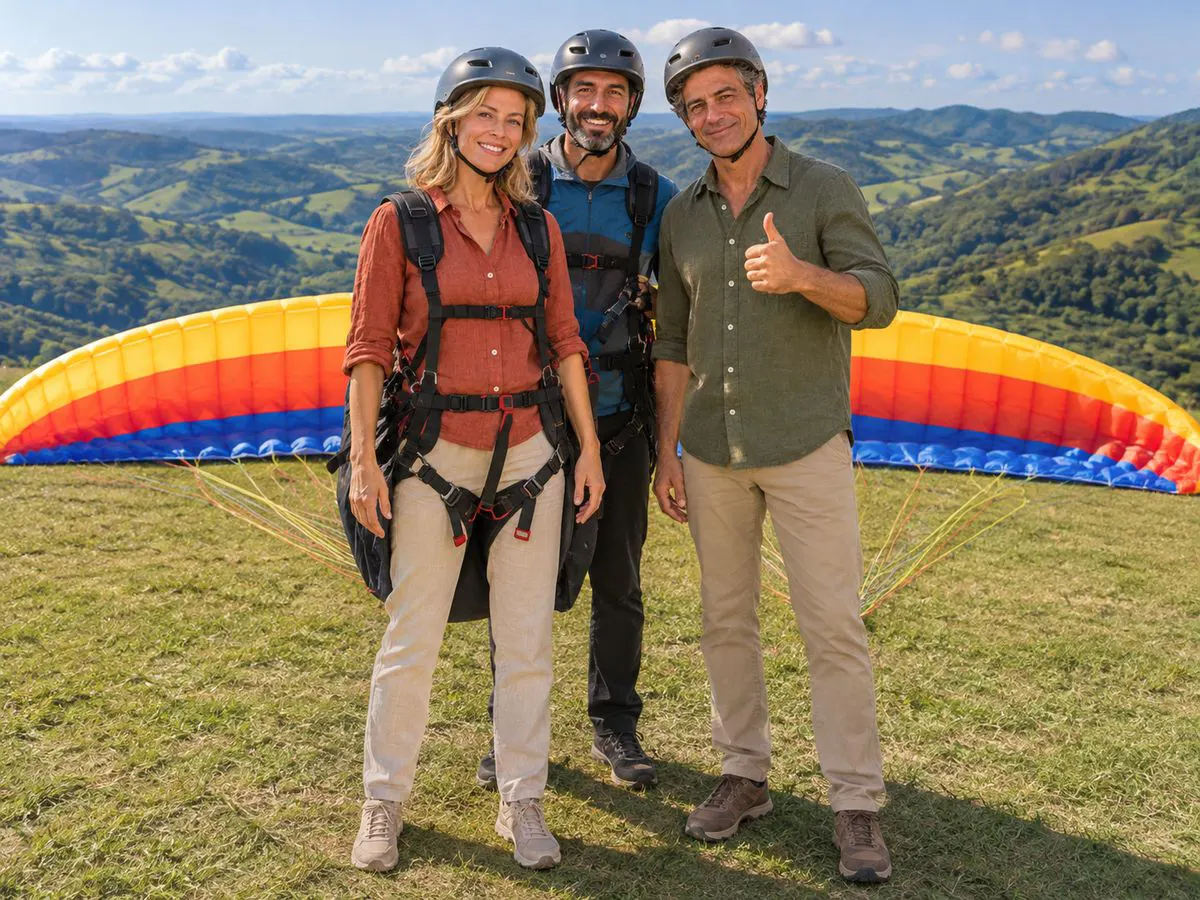
Adventure travel
Free flight
In tandem flights, the passenger goes with a licensed pilot who launches from the top of a ridge.
Free flight is unpowered flight, in a hang glider or a paraglider. The pilot launches on foot from a ramp on a hilltop and uses wind and thermal currents to stay aloft. For visitors, the gateway is a tandem flight: you go as a passenger, attached to the same gear as a licensed pilot, and you don’t need to know anything.
From above you can see the whole region, with only the sound of the wind. It’s an activity that depends on the weather more than any other, so it requires some flexibility in your schedule.
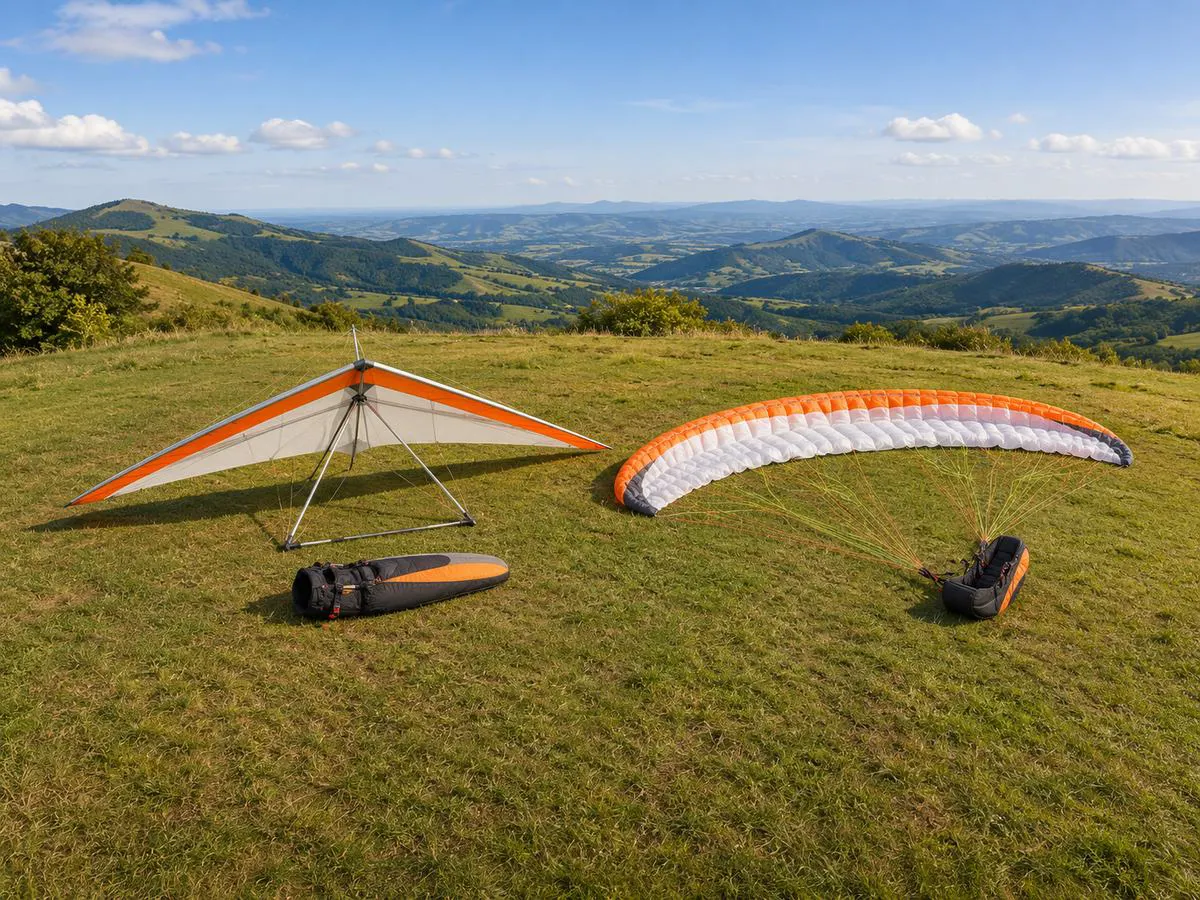
Hang glider or paraglider
A hang glider has a rigid frame of tubes and a stretched wing. Pilot and passenger fly lying face down, side by side, and takeoff is a short run down the ramp. The flight is faster and more direct.
A paraglider is a fabric wing with no rigid frame that inflates with the wind. Pilot and passenger sit in padded harnesses, the passenger in front. Takeoff is a quick walk, and the flight is slower, with time to look around and take photos.
The choice comes down to taste. People who want the sensation of flying like a bird tend to choose a hang glider; those who prefer a calm, seated flight choose a paraglider. Not every site offers both.
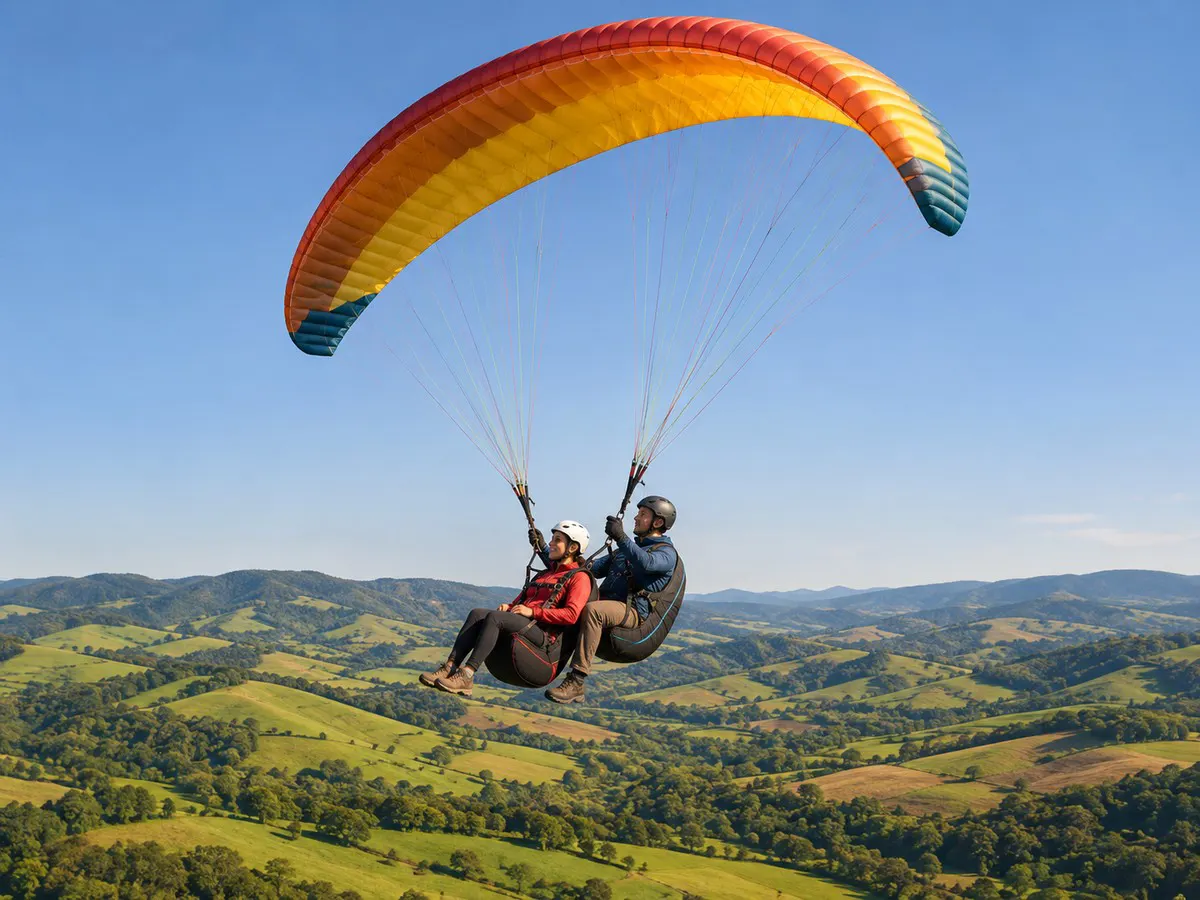
What a tandem flight is like
The passenger gets a helmet and a harness and hears the instructions: run with the pilot at takeoff, don’t stop or sit down before the time, and lift your legs at landing. The pilot checks the connections and waits for the right wind, which can take minutes or hours.
In the air, the flight lasts from a few minutes to nearly half an hour, depending on the day’s conditions and the location. On days with good updrafts, the pilot gains altitude and extends the flight. Landing is in a marked area, a beach or a field.
Many pilots offer photos and video with a camera mounted to the gear for an extra charge. Holding a loose phone in your hand is not allowed.
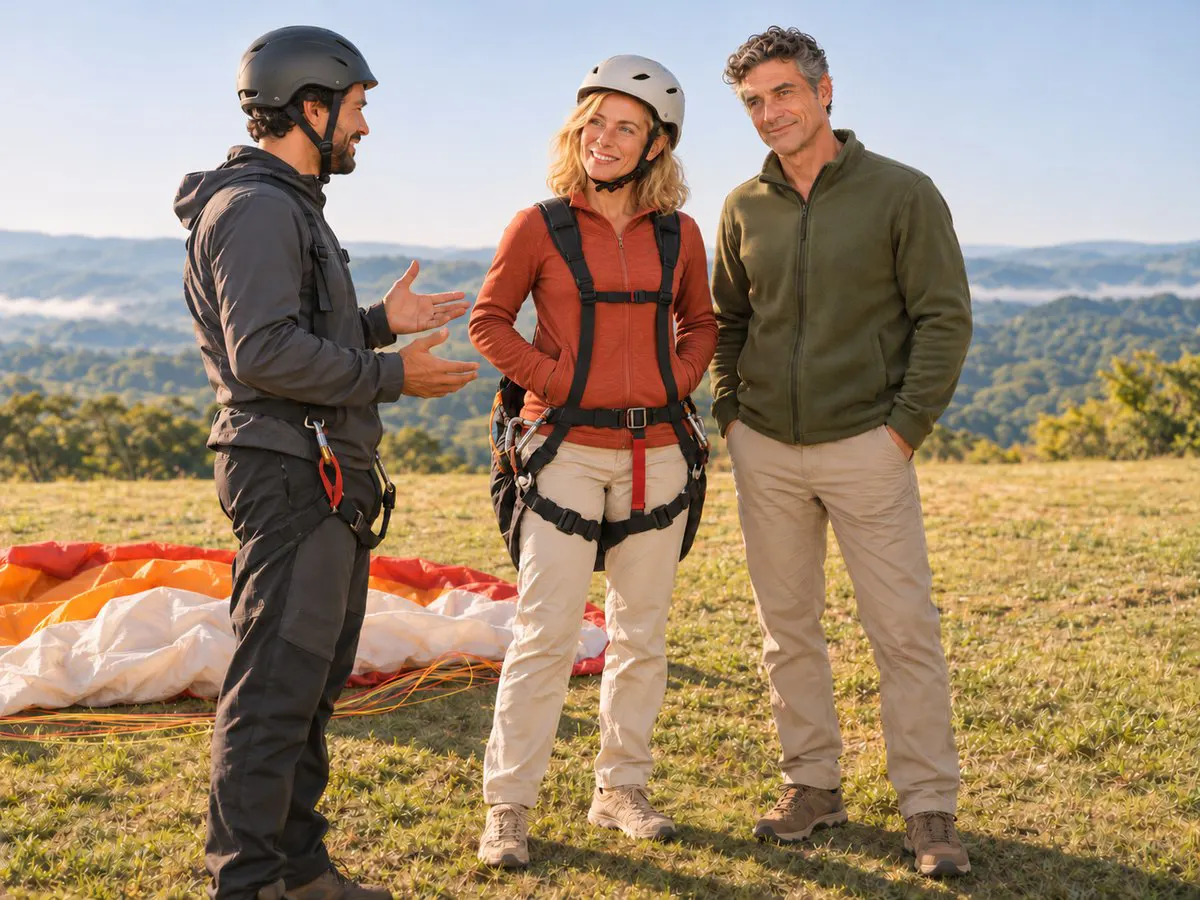
Who can fly
Limits are set by the pilot and the equipment. There is a maximum passenger weight, which varies between hang glider and paraglider and with the day’s wind, and a minimum age, with guardian authorization required for minors. Give your weight and age when you reserve to avoid surprises at the ramp.
No special fitness is needed beyond being able to run a few steps. Pregnant people and anyone with heart or spine problems or recent surgery should consult their doctor and tell the pilot. Those afraid of heights often feel less odd than they expect, because in flight there is no close ground reference like at the edge of a building.
Wear pants, closed sneakers and a light jacket: up high it’s windy and colder than below. Sunglasses with a strap help.
Safety and weather conditions
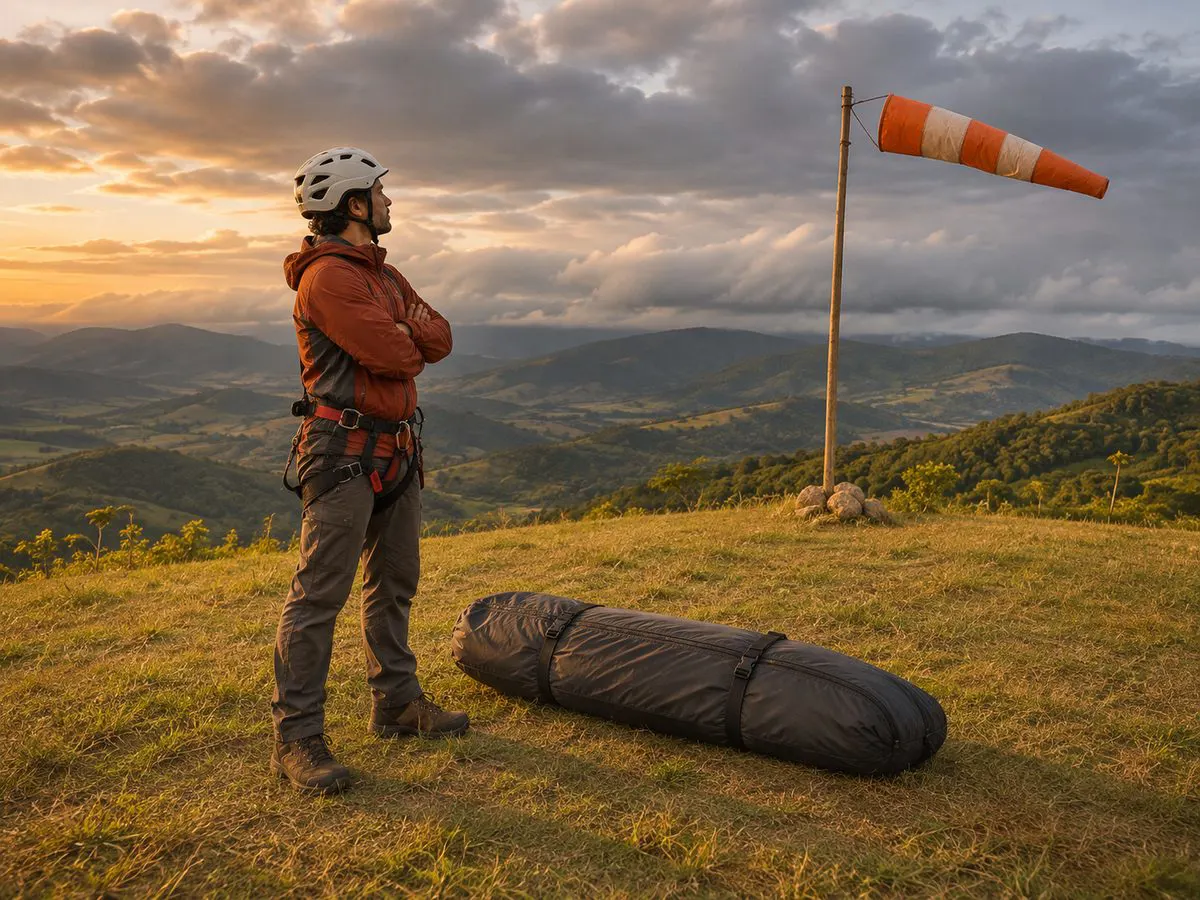
Free flight is a risky sport, and what makes it acceptable for the passenger is the combination of an experienced pilot, well-maintained equipment and the right decision about weather. Too-strong wind, wind from the wrong direction, rain and low clouds cancel the flight. Postponing is part of the pilot’s job.
In Brazil, pilots are certified by the Brazilian Free Flight Confederation, and tandem flying requires a specific endorsement. On ramps managed by clubs, only pilots authorized there may fly with passengers.
Because it depends on the day, the flight may be rescheduled more than once. Leave one or two buffer dates in your trip and agree in advance what happens if none of them work out.
Where to fly in Brazil
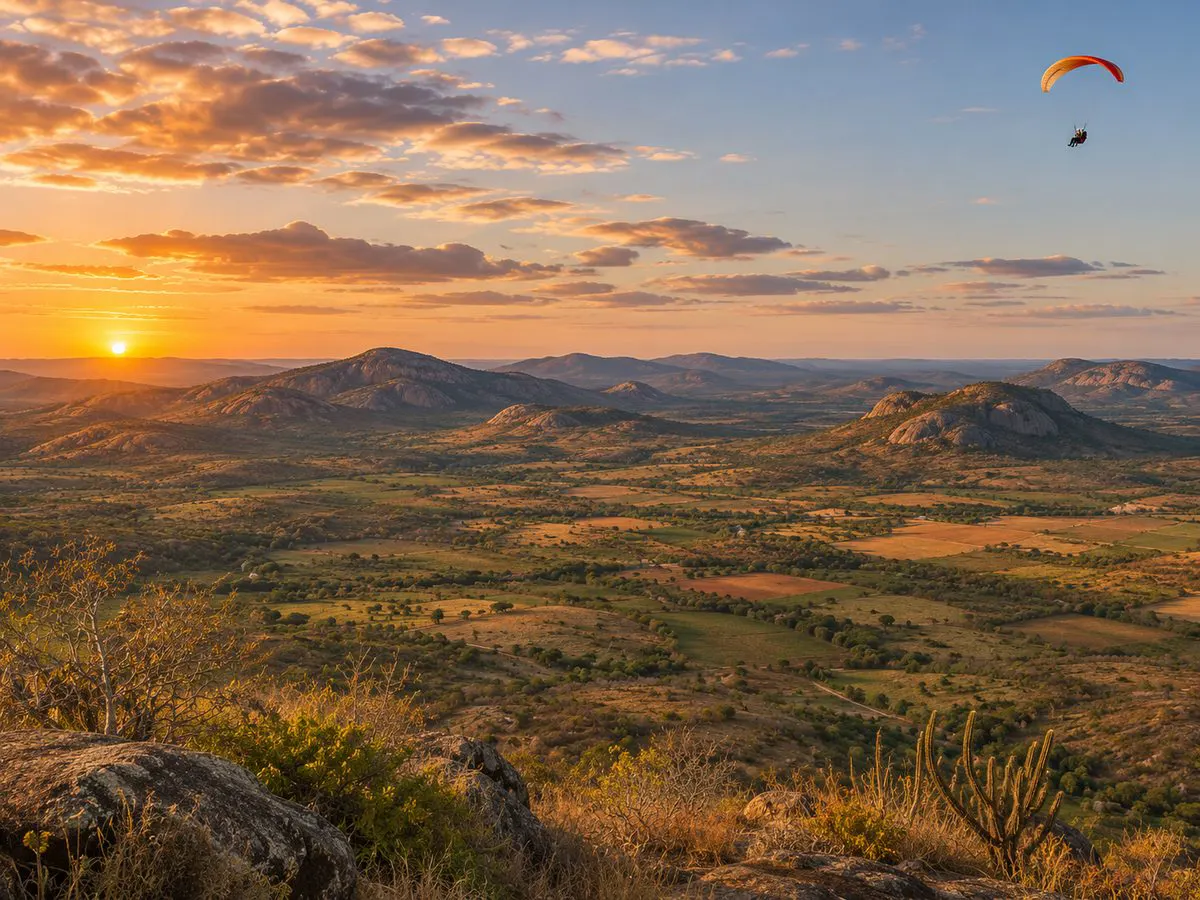
In Rio de Janeiro, tandem hang glider and paraglider flights launch from the Pedra Bonita ramp above the forest and land on São Conrado beach.
Espírito Santo has several inland ramps: Ubá and Apeninos ramps in Castelo; Cachoeira Alta in Alfredo Chaves; the Mirante Ramp in Vargem Alta; Pedra do Urubu in Viana; Rampa da Liberdade in Afonso Cláudio; and Pedra da Colina in Pancas, among the rock outcrops.
On the Minas Gerais–São Paulo border, Pico do Gavião, between Andradas and Águas da Prata, has a free-flight ramp. Socorro, in the Circuito das Águas Paulista, has paragliding flights from the town’s hills. In Governador Valadares, Pico da Ibituruna hosts competitions, and Quixadá, in the Ceará hinterland, is among the country’s most cited free-flight sites. The towns are shown on the map on this page.
Not every ramp runs tandem flights every day: check with the club or local pilots before you go.
How to choose the pilot
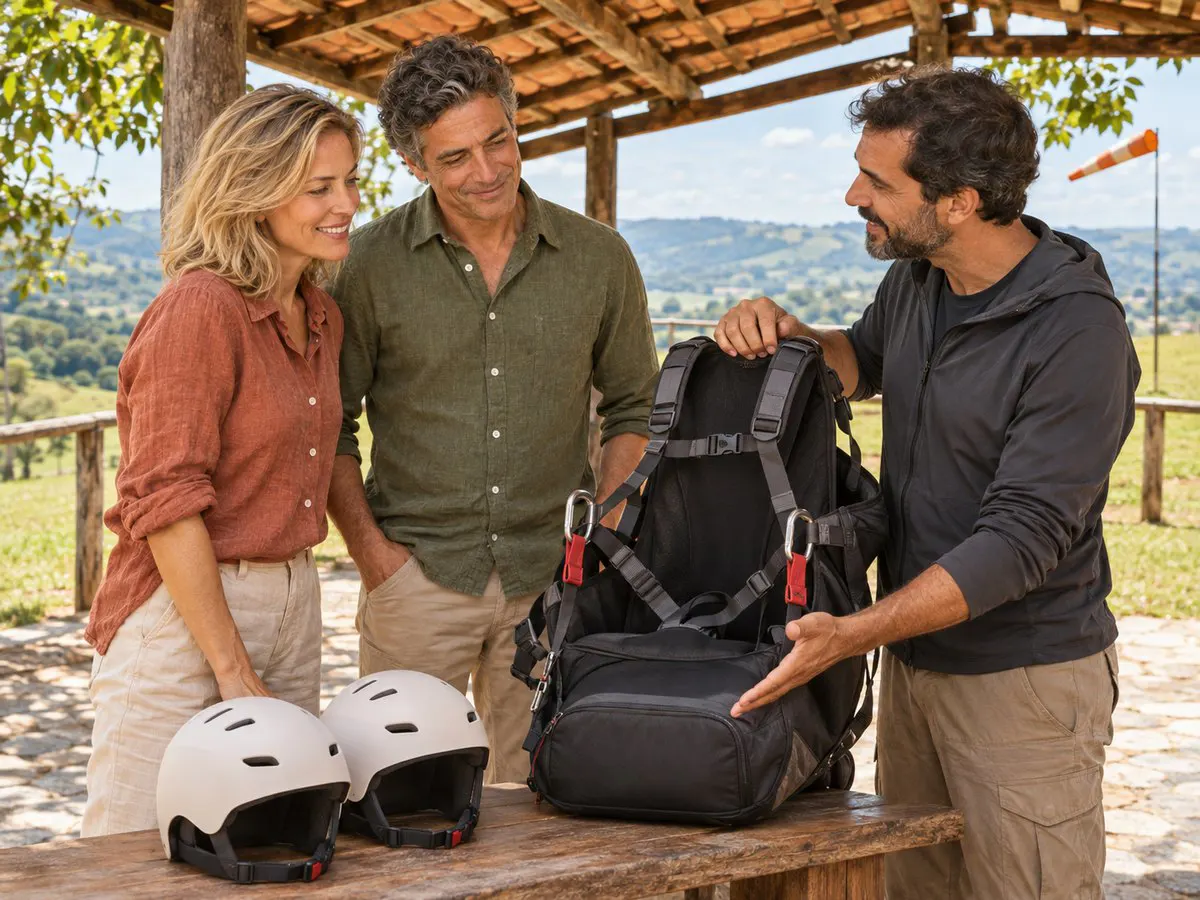
Ask whether the pilot holds a tandem endorsement from the Brazilian Free Flight Confederation and whether they are authorized by the club that manages the ramp. Ask how long they’ve flown there, whether the equipment has an emergency parachute and whether passenger insurance is provided.
Agree in advance on the meeting point, transport to the ramp, return from the landing and the rebooking policy. Be suspicious of anyone who guarantees a flight in any weather.
The price varies with the type of equipment, the location, the expected duration and extras such as photos, video and transport. Some ramps charge a separate use fee: check the current rates.
Frequently asked questions
What is free flight?
It’s motorless flight in a hang glider or paraglider, launched on foot from a ramp. In tandem flight, an inexperienced passenger flies with a certified pilot who controls the equipment from start to finish.
What’s the difference between hang glider and paraglider?
A hang glider has a rigid frame and is flown lying down, at higher speed. A paraglider is a fabric wing and is flown sitting, more slowly. In both cases the passenger is attached to the pilot.
Is tandem paragliding dangerous?
Free flight carries risks, reduced when the pilot is tandem-certified, the equipment is in order and takeoff is only made in appropriate weather. That is why postponement due to wind is common and must be respected.
What is the maximum weight to fly in a paraglider or hang glider?
Each pilot will tell you the limit, which depends on the equipment and the day’s wind and is usually lower for hang gliders than for paragliders. Give your weight when you reserve.
Is there a minimum age for tandem flight?
Yes. Pilots and clubs set a minimum age, and minors need guardian authorization. There is no maximum age: health condition is what matters.
How long does a tandem flight last?
From a few minutes to nearly half an hour in the air, depending on location and the day’s conditions. With travel to the ramp and waiting for the wind, allow at least a half-day.
What happens if the weather is bad?
The flight is postponed. Strong wind, rain and low clouds prevent takeoff. Arrange rebooking when you reserve and leave a buffer date in your trip.
Can someone who is afraid of heights fly?
Many people who are afraid of heights fly without discomfort, because in the air there is no sense of standing at a cliff edge. The tensest part is the takeoff run, which lasts only a few seconds.
Where to go: Free flight
Pick a region or a state on the map, or type what you are looking for, to see the cities and who offers it in each.
-
Conde PB
Praia de Tabatinga.
-
Afonso Cláudio ES
Rampa da Liberdade, para parapente e asa-delta.
-
Alfredo Chaves ES
Rampa de Cachoeira Alta.
-
Castelo ES
Rampa de Ubá, a 902 metros de altitude, e Rampa dos Apeninos.
-
Vargem Alta ES
Rampa do Mirante.
-
Venda Nova do Imigrante ES
Morro do Filetti.
-
Viana ES
Rampa Pedra do Urubu.
-
Andradas MG
Pico do Gavião, a 1.663 metros, com rampa de voo livre.
-
Cambuquira MG
Pico do Piripau.
-
Rio de Janeiro RJ
Voo duplo de asa-delta e de parapente a partir da Pedra Bonita.
-
Teresópolis RJ
Colina dos Mirantes.
-
Águas da Prata SP
Rampa do Pico do Gavião, na divisa com Andradas.
-
Caraguatatuba SP
Morro Santo Antônio.
-
Santo Antônio do Pinhal SP
Pico Agudo.
-
Socorro SP
Voo de parapente a partir das serras do município.
-
Carlos Barbosa RS
Morro do Diabo.
-
Nova Petrópolis RS
Ninho das Águias.
-
Rio dos Cedros SC
Morro São Bernardo.
-
Timbó SC
Morro Azul — Parque Natural Municipal Freymund Germer.
More activities in Adventure travel

Beyond the guide


