

 Antarctica
 Argentina
 Bolivia
 Chile
 Colombia
 Ecuador
 Guyana
 French Guiana
 Falkland Islands (Malvinas)
 Paraguay
 Peru
 Suriname
 Uruguay
 Venezuela
 Germany
 Austria
 Belgium
 Croatia
 Denmark
 Slovakia
 Slovenia
 Spain
 Finland
 France
 Greece
 the Netherlands
 Hungary
 Ireland
 Iceland
 Italy
 Luxembourg
 Norway
 Poland
 Portugal
 the United Kingdom
 the Czech Republic
 Sweden
 Switzerland
 Turkey
 Bermuda
 Canada
 the United States
 Greenland
 Mexico
 Saint Pierre and Miquelon
 the Dominican Republic
 Japan
 South Africa
 Egypt
 Australia
 Fiji
 New Zealand
 Papua New Guinea
Illustrative images. The pictures in this guide are illustrations based on the real place, not photographs, and may differ from it.


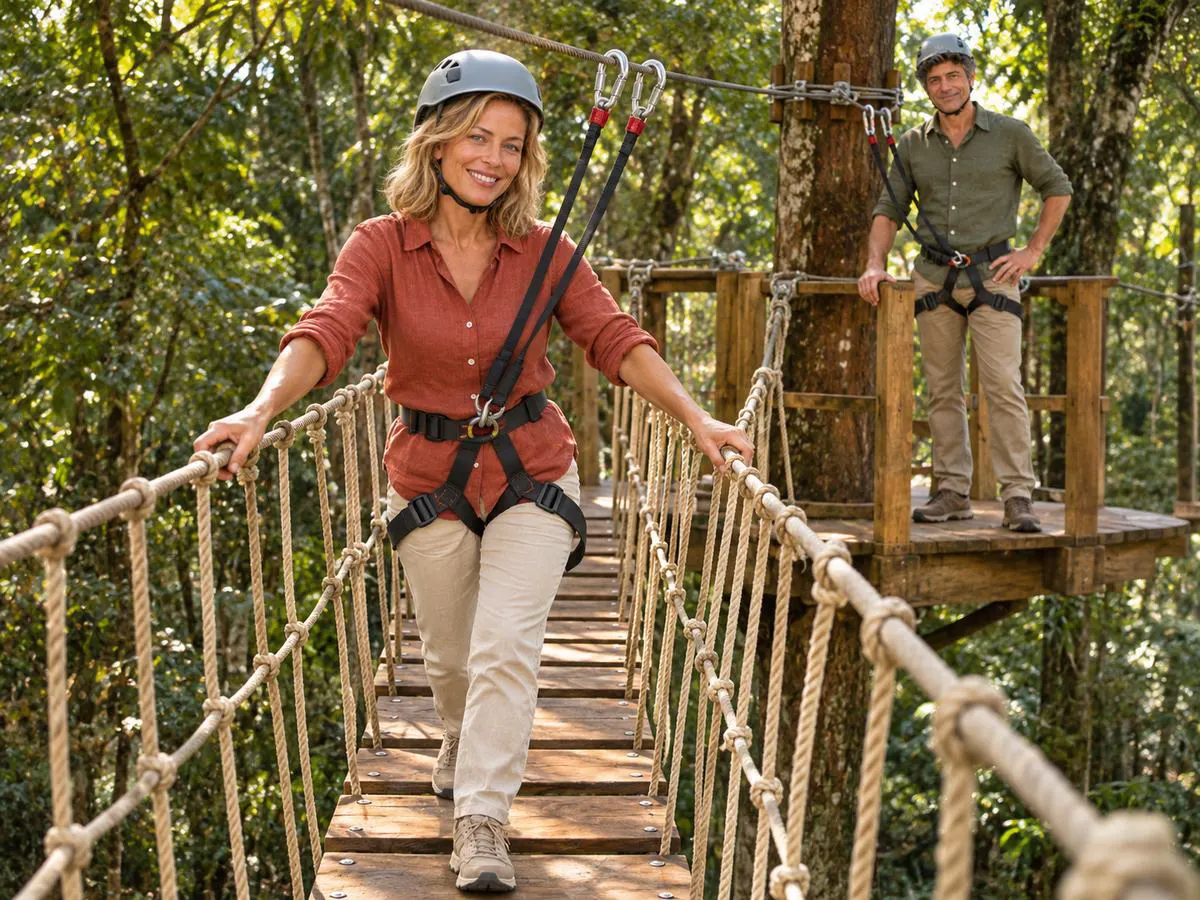
Adventure travel
Zipline and treetop course
Sliding while attached to a steel cable over a valley or crossing bridges between the treetops.
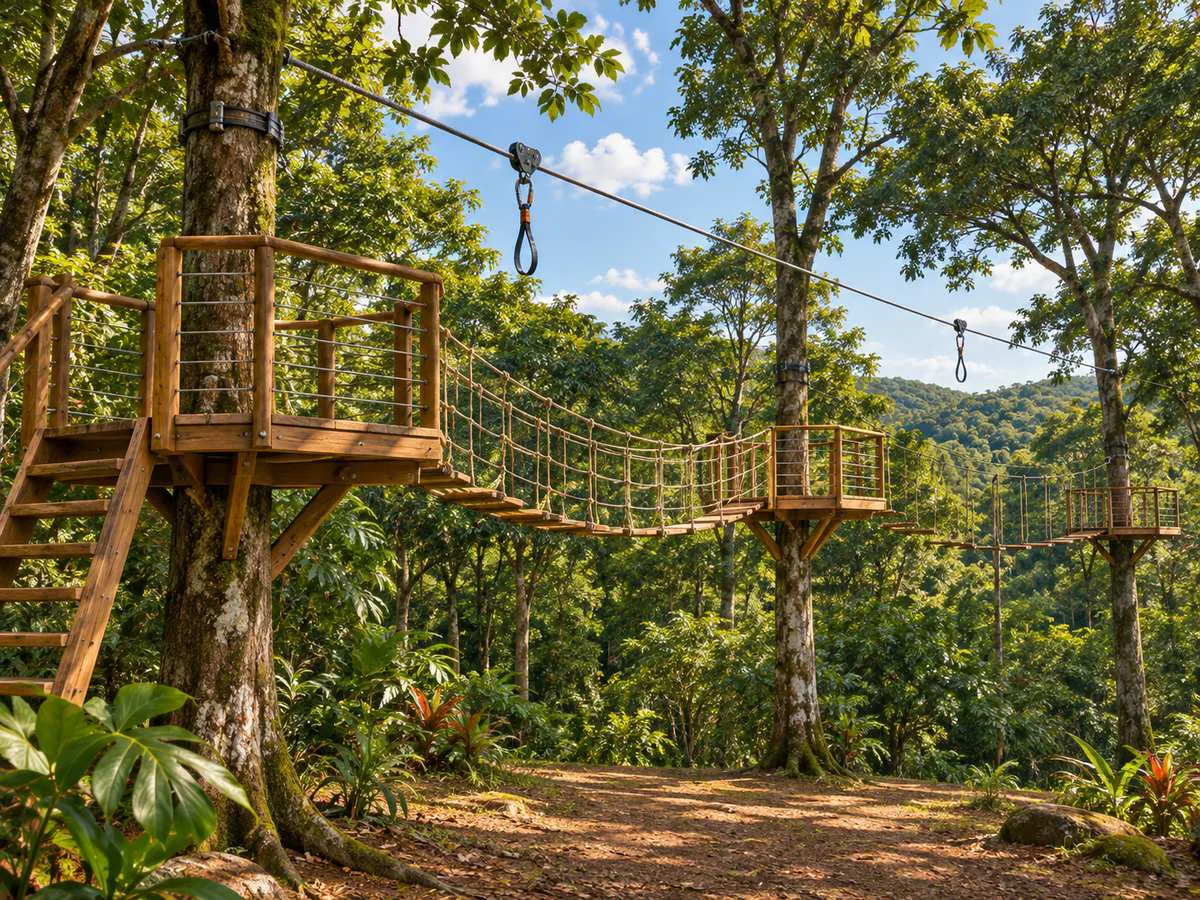
Ziplines and treetop courses are adventure activities done at height while attached to steel cables. On a zipline, you slide from a high point to a lower one, sitting in a harness connected to a pulley. On a treetop course, you walk a route of bridges, nets and walkways set among the tree canopies or between posts.
They’re often located in the same adventure park and serve as an introduction for people who’ve never done anything like this. They don’t require technical skill: they require willingness to climb a ladder and trust the equipment.
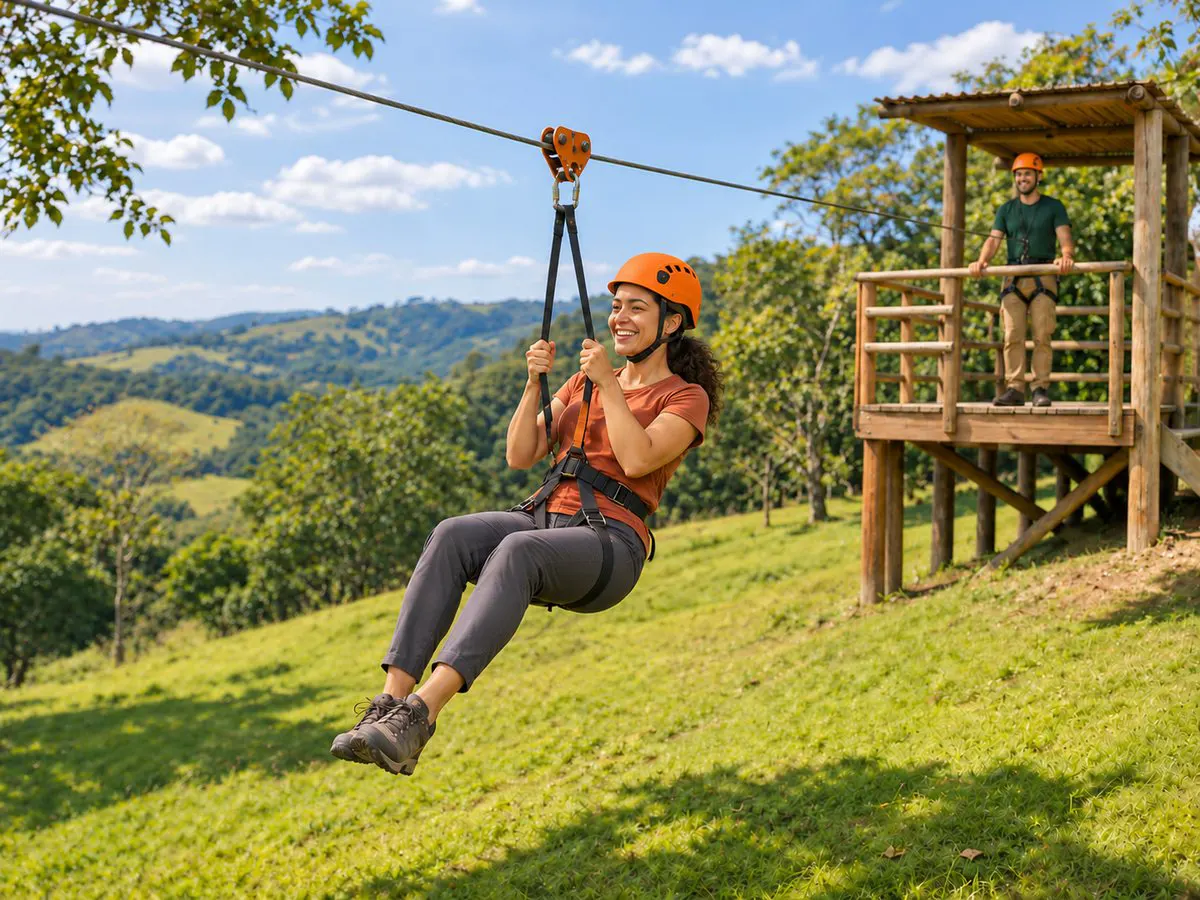
How the zipline works
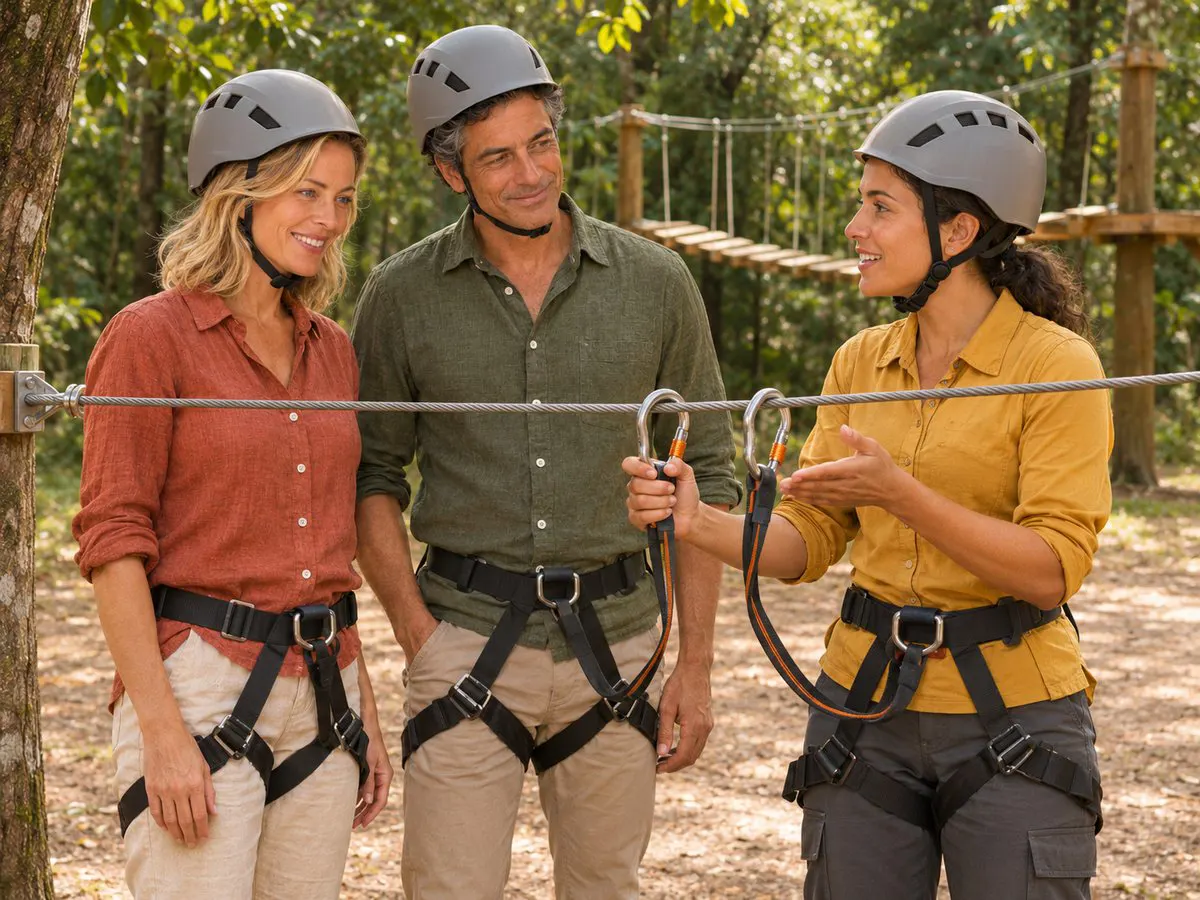
The visitor puts on the harness and helmet, climbs to the launch platform and is clipped to the cable by a guide. The descent uses gravity: you sit, relax your body and hold the points indicated. Braking is handled by the system or by a guide at the landing.
There are short ziplines of a few seconds and others that cross valleys, measuring hundreds of meters. Some are done sitting; others are done lying face down, in a flying position. On routes with multiple sections, a short walk connects one platform to the next. In some parks, two people descend side by side on parallel cables.
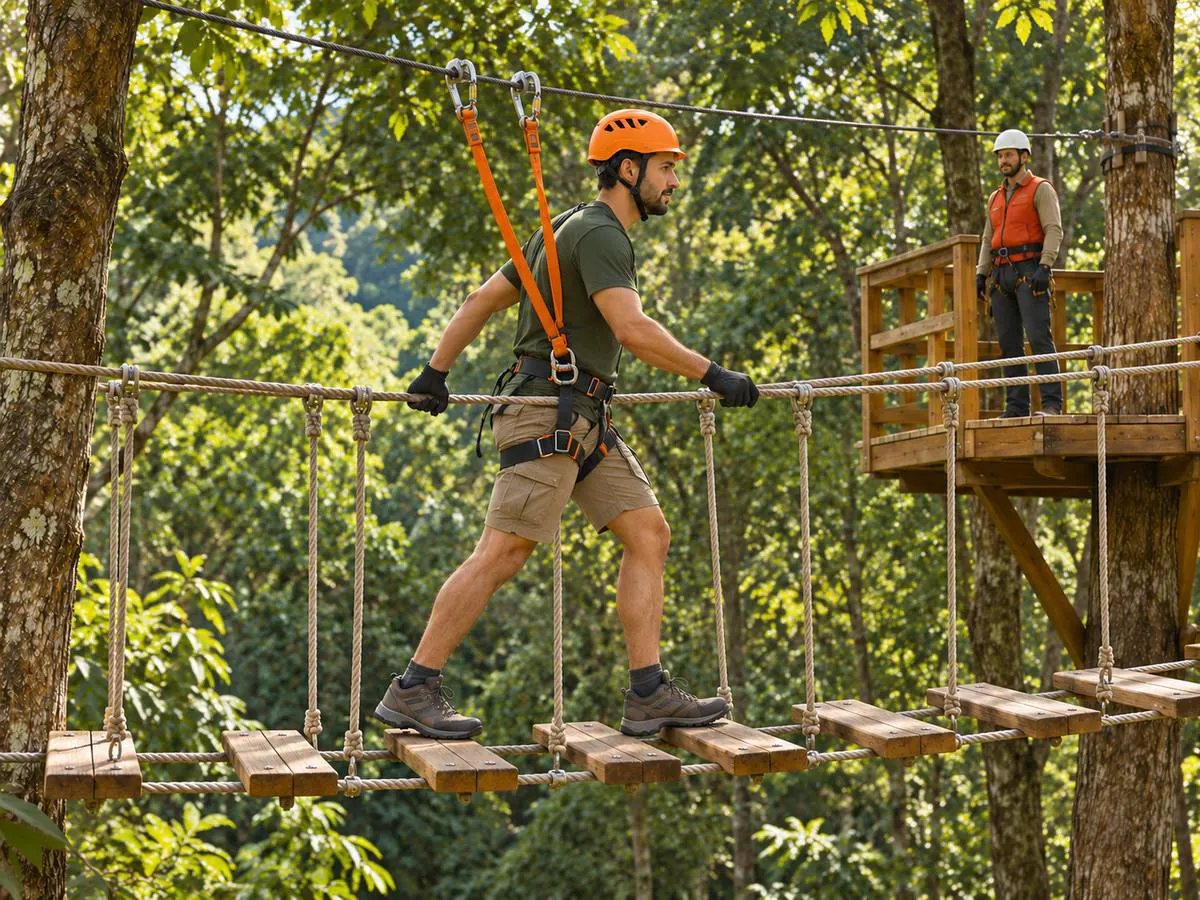
How the treetop course works
The course is a sequence of high-altitude crossings: plank bridges, rope bridges, nets, suspended logs, a single cable with handrail. Each crossing ends at a platform, and many routes finish with a zipline. You remain clipped to a safety cable, the lifeline, at all times with two lanyards and carabiners.
Parks divide courses by height and difficulty. Children’s courses are a few meters off the ground, with an adult accompanying from below. Adult courses go higher and require balance and some arm strength. Before starting, everyone goes through a practice course near the ground to learn how to use the carabiners.
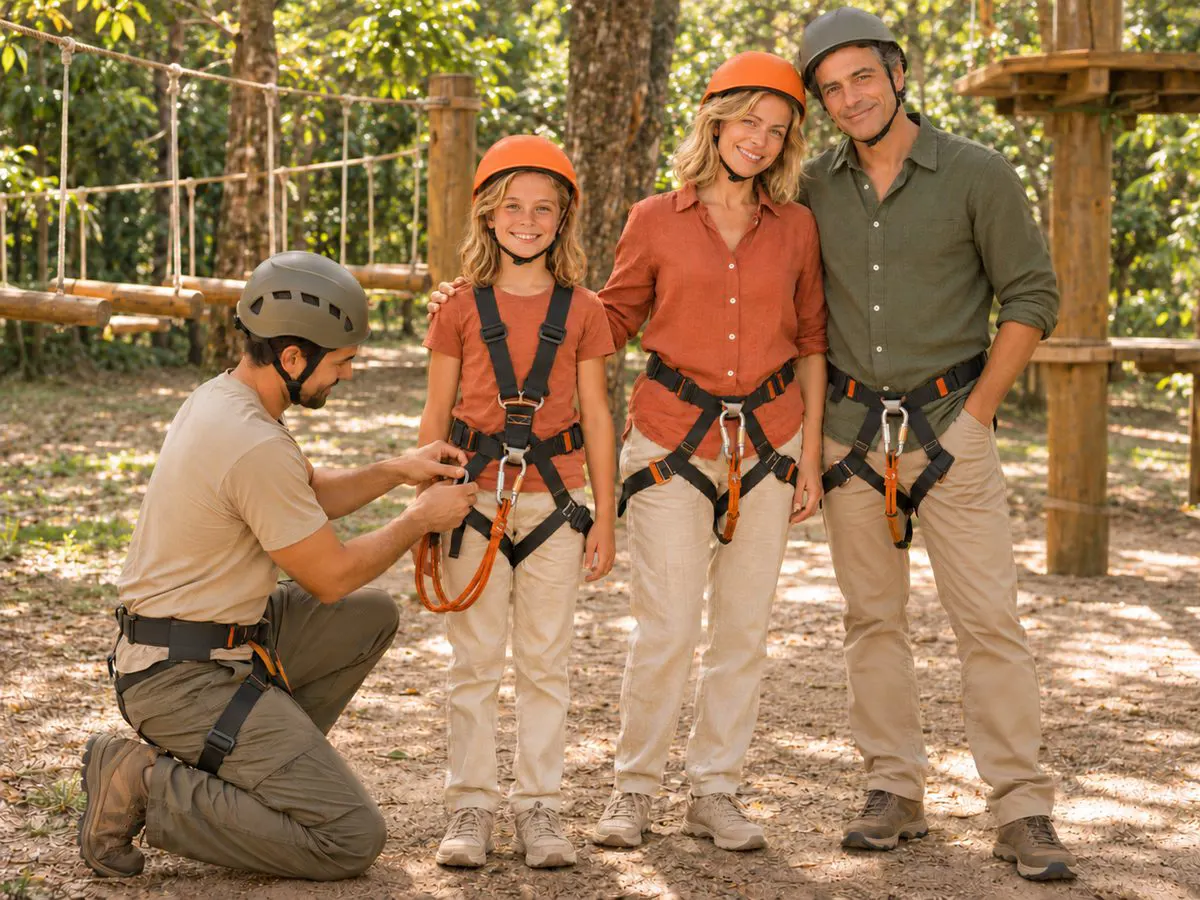
Age, height and weight: who can do it
There is no single age limit. Each park sets minimum and maximum age, height and weight for each course and each zipline, because the harness must fit and the brake is calculated for a weight range. Young children usually have their own course; on some ziplines they descend together with an adult.
People with a fear of heights can start on the lowest course and decide later. On the zipline, the hardest moment is the first step; after that, the equipment does the work. Pregnant people and those with back or heart problems or recent surgery should consult the park before buying.
Clothing and safety
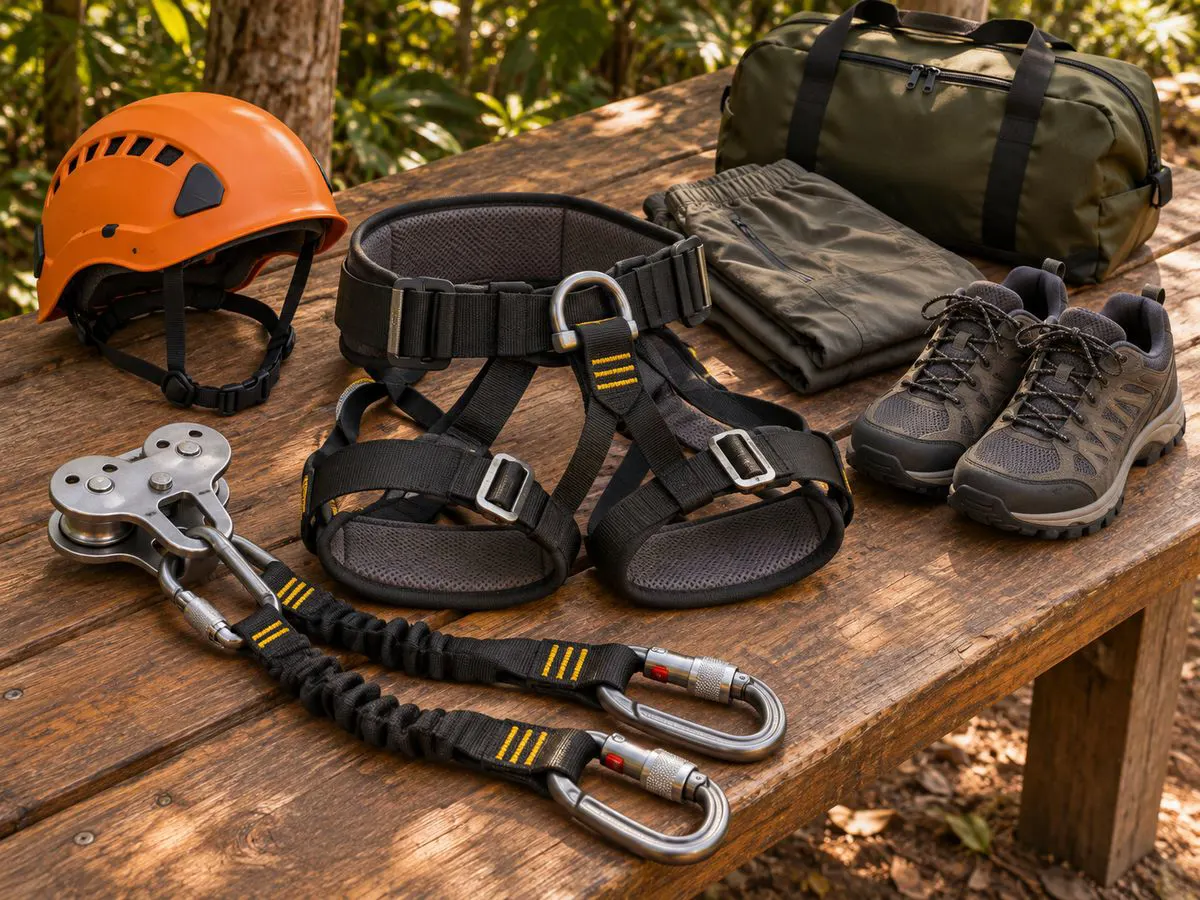
Recommended clothing is workout wear: long pants or long shorts, t-shirt and closed sneakers tied well. Flip-flops and sandals are not allowed. Long hair should be tied up, and pockets should be empty: phone, keys and glasses fall easily and need a strap or must be left in the locker.
The equipment belongs to the park: harness, helmet, lanyards, carabiners and pulley. The main rule on the treetop course is never to unclasp both carabiners at the same time; some parks use systems that prevent that. On the zipline, hands should stay away from the cable and the pulley.
Light rain generally does not stop the activity. Lightning and strong wind do: in those cases the park suspends the courses, and rescheduling follows the rules agreed at purchase.
Where to do zipline and treetop course in Brazil
Brotas, in the interior of São Paulo, offers ziplines and treetop courses in its adventure parks. Socorro, in the Paulista Water Circuit, has treetop courses and ziplines and is popular with families. In Campos do Jordão, in the Mantiqueira Range, an adventure park has a long zipline.
In the Serra Gaúcha, Canela has an adventure park with ziplines and treetop courses. In Alto Paraíso de Goiás, in Chapada dos Veadeiros, the treetop course is set in cerrado vegetation. The towns appear on the map on this page.
How to choose the park
A good park explains the rules before the sale: age, height and weight for each course, duration and what happens in the event of rain. On site, check for instruction before climbing, guides on the platforms and equipment in good condition, without frayed webbing or cracked helmets.
It’s worth asking whether the operation follows the Brazilian technical standards for treetop parks, which cover installations and operation, how often cables and platforms are inspected and whether insurance is included. Adventure tourism companies should be registered with Cadastur, the Ministry of Tourism registry.
The price varies with the number of courses or ziplines included, the duration and the time of year. Many parks sell each activity separately or in packages with others: check the current price list.
Frequently asked questions
What is the difference between zipline and treetop course?
On a zipline, you slide along a steel cable from a high point to a lower one. A treetop course is a walking route at height with bridges, nets and walkways. Many treetop courses end with a zipline.
Is zipline dangerous?
In a park that follows the standards, with inspected cables, trained guides and correctly adjusted equipment, the risk is low. Visitor precautions are to respect weight and height limits, tie back hair and follow the instructions.
What is the minimum age for treetop courses and ziplines?
Each park defines its own, by course. There are children’s, low courses for small kids accompanied by an adult, and high courses requiring a minimum age or height. Confirm before you go.
Is there a weight limit for ziplines?
Yes. The system is calculated for a weight range, with minimum and maximum that vary from one zipline to another. The park provides the limits and may weigh visitors at the entrance.
Can someone with a fear of heights do the treetop course?
They can try, starting on the lowest course. You stay clipped to the safety cable for the entire route, and guides help you descend if you do not want to continue.
What to wear on the treetop course?
Workout clothes, with long pants or long shorts, and closed sneakers tied well. Hair tied back, empty pockets and no flip-flops, sandals or loose accessories.
Does the treetop course require physical fitness?
The low courses and the ziplines do not. High adult courses require balance and some arm strength, and can take more than an hour.
Where to go: Zip-lining and tree-top courses
Pick a region or a state on the map, or type what you are looking for, to see the cities and who offers it in each.
-
Iraquara BA
Gruta da Pratinha.
-
Alto Paraíso de Goiás GO
Arvorismo em área de cerrado.
- Poços de Caldas MG
-
Miguel Pereira RJ
Terra dos Dinos.
- Rio de Janeiro RJ
-
Brotas SP
Tirolesas e percursos de arvorismo nos parques de aventura.
-
Campos do Jordão SP
Parque de aventura com tirolesa de 800 metros.
-
Socorro SP
Arvorismo e tirolesas nos parques de aventura.
- Bento Gonçalves RS
-
Canela RS
Parque de aventura com tirolesas e arvorismo.
- Três Coroas RS
-
Balneário Camboriú SC
Parque Unipraias.
- Praia Grande SC
- Urubici SC
More activities in Adventure travel
Beyond the guide


