3 cities

 Search
 Brazil
 Argentina
 Bolivia
 Chile
 Colombia
 Ecuador
 Guyana
 French Guiana
 Falkland Islands (Malvinas)
 Paraguay
 Peru
 Suriname
 Uruguay
 Venezuela
 Germany
 Austria
 Belgium
 Croatia
 Denmark
 SlovakiaSlovenia
 Spain
 Finland
 France
 Greece
 the Netherlands
 Hungary
 Ireland
 Iceland
 Italy
 Luxembourg
 Norway
 Poland
 Portugal
 the United Kingdom
 the Czech Republic
 Sweden
 Switzerland
 Turkey
 Canada
 the United States
 Mexico
 the Dominican RepublicTurkey
 South Africa
 Australia
 Fiji
 New Zealand
 Papua New Guinea
Region · Alpine Slovenia
The Soča River between Bovec, Kobarid and Tolmin, the Idrija mercury mine, the vineyards of Goriška Brda and the Vipava Valley, and Nova Gorica.
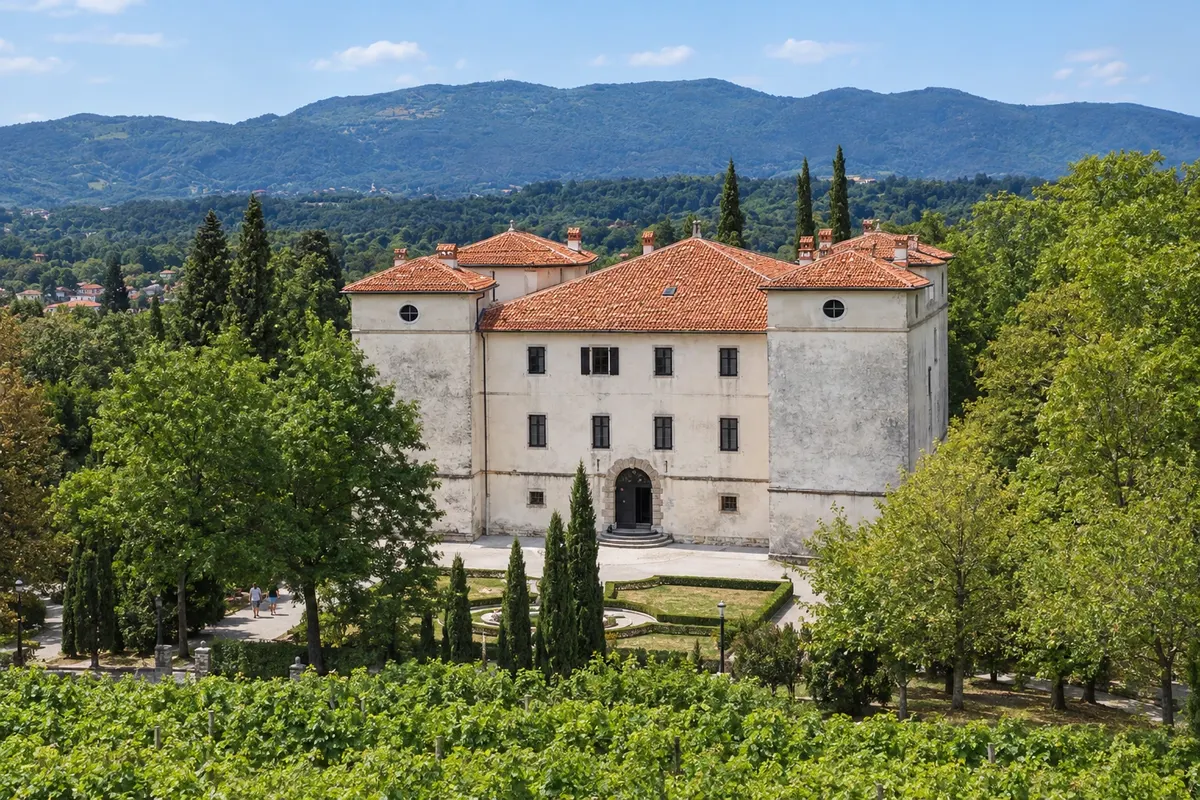
In the photo: Kromberk Castle, in Goriška.
Illustrative images. The pictures in this guide are illustrations based on the real place, not photographs, and may differ from it.

The region
Goriška occupies the western part of Slovenia, along the border with Italy. To the north, the Soča River descends from the Julian Alps through a narrow valley; to the south, the hills of Goriška Brda and the Vipava Valley open out toward the Friuli plain. Nova Gorica, the largest town, forms a single urban area with the Italian Gorizia, divided by the border.
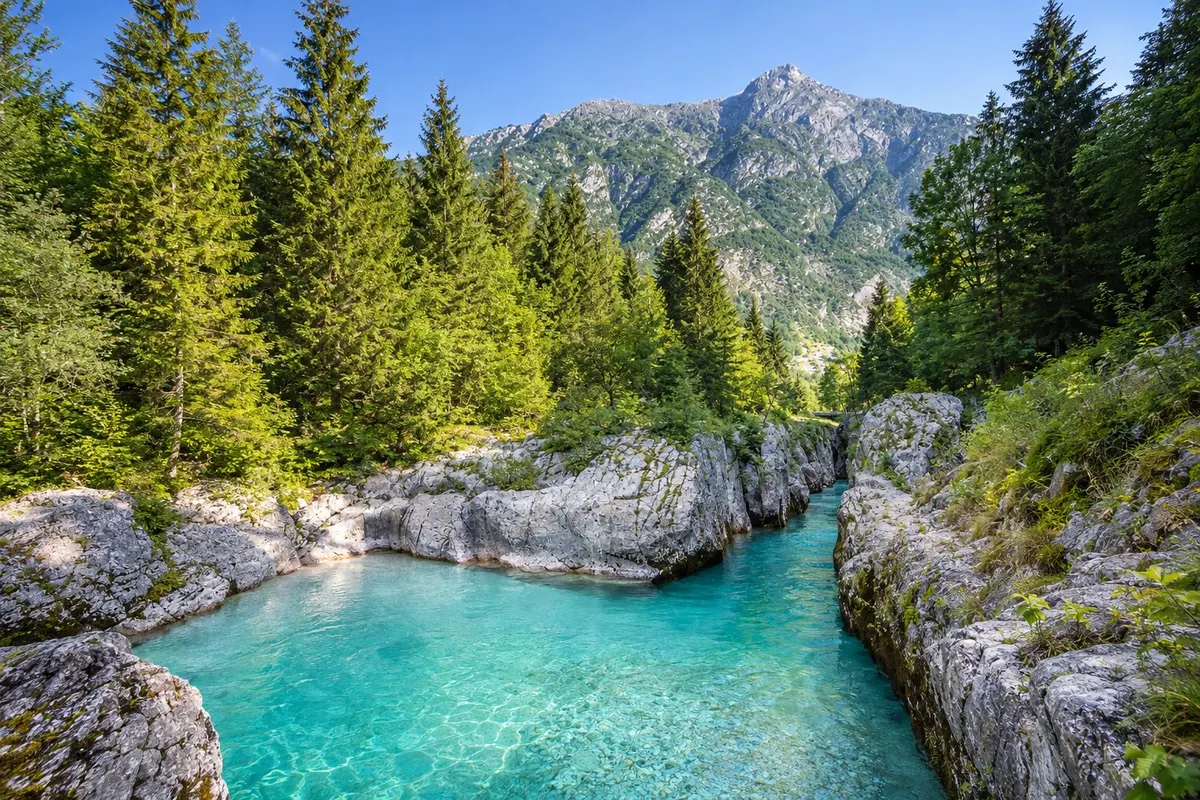
The Soča is known for the emerald-green color of its water. Bovec is the base for rafting, kayaking and canyoning, and the Mangart road climbs from there up toward the summit. In Kobarid, a museum tells the story of the Isonzo Front—the Italian name for the Soča—where Italian and Austro-Hungarian armies fought from 1915 to 1917; the Kozjak waterfall is near the town. Tolmin has the Tolminska korita gorges, at the entrance to Triglav National Park.
In the eastern part of the region, Idrija mined mercury for more than five centuries, and the mine, the castle and the miners’ houses, together with Almadén in Spain, form a UNESCO World Heritage site. The town is also known for bobbin lace, the idrijska čipka. In the hills of Cerkno is the Partisan Hospital Franja, hidden in a gorge during World War II.
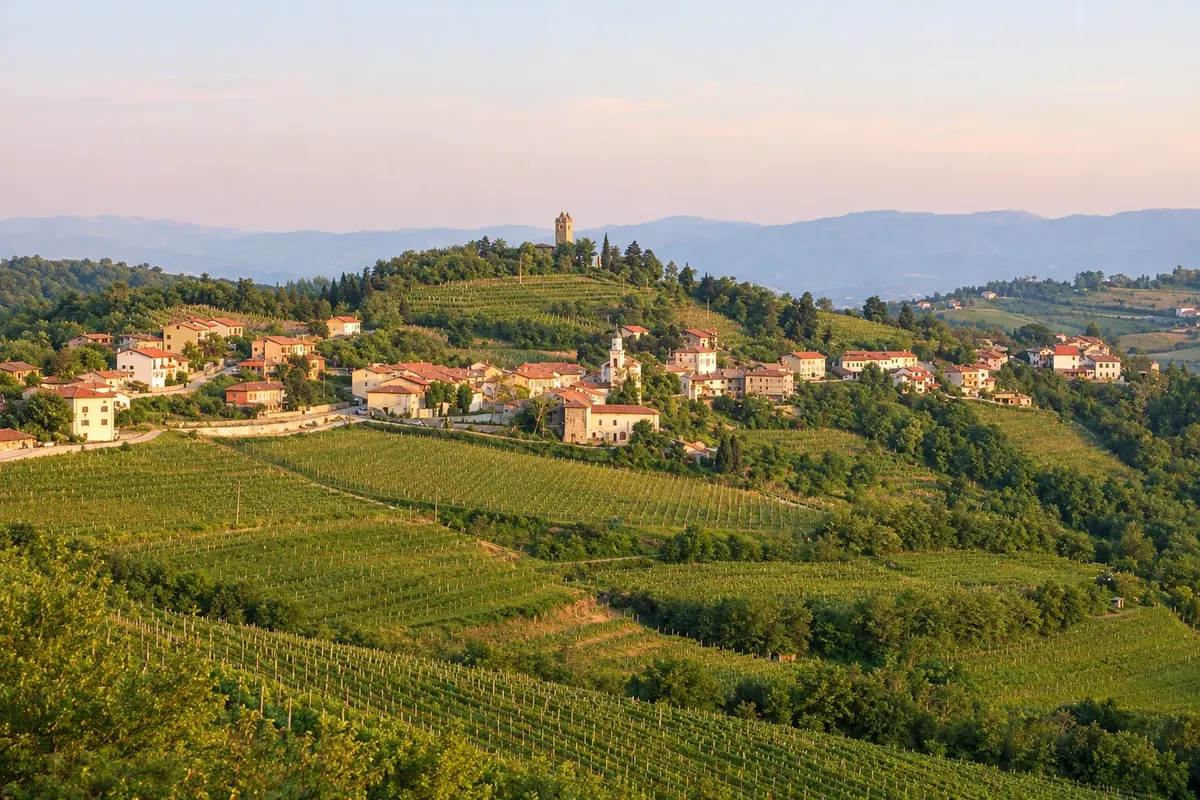
Goriška Brda is a region of vineyards and stone villages atop the hills, such as Šmartno and Medana, with a castle in Dobrovo and the rebula grape. In the Vipava Valley, subject to the bora wind, wineries produce wines from local grapes such as zelen and pinela. In Nova Gorica, the Franciscan monastery of Kostanjevica holds the tombs of the French royal family of the Bourbons, and in Solkan a stone railway bridge crosses the Soča with an 85-meter arch.
Destinations
Cities
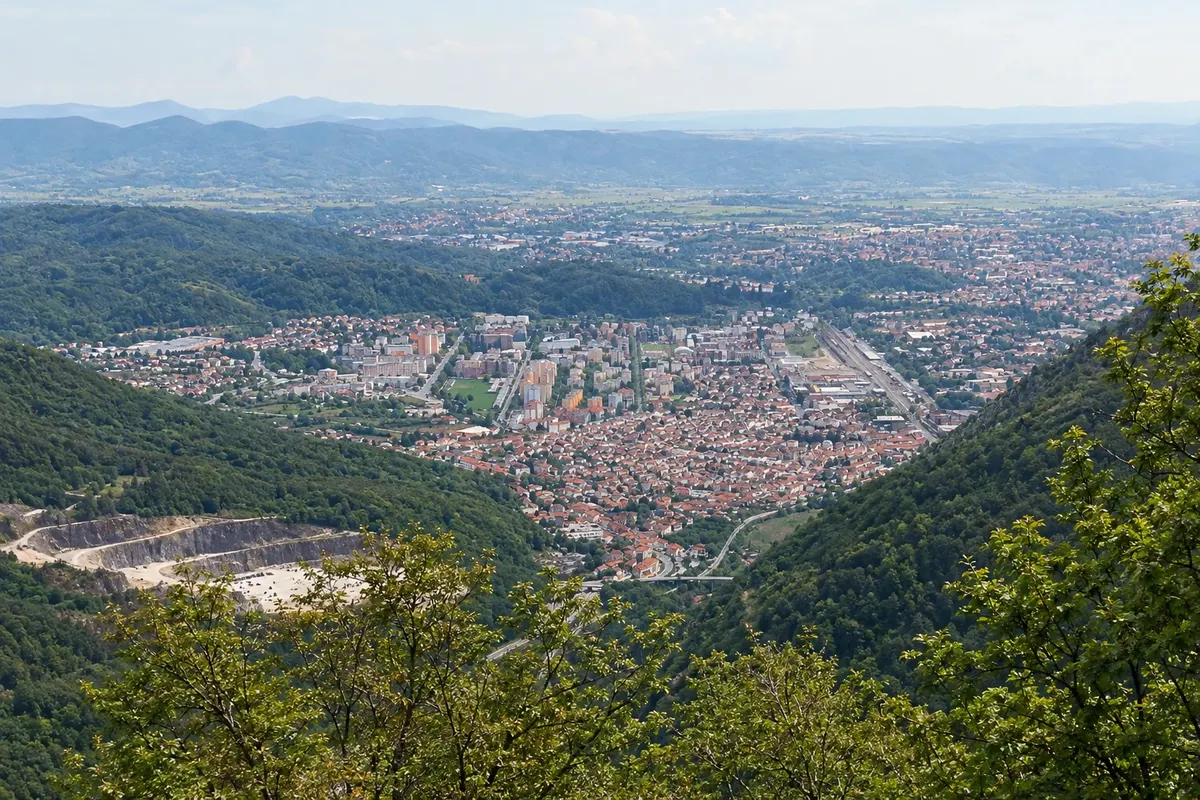
City of about 13,000 people on the Italian border, built from 1948 after the peace treaty left Gorizia in Italy. It and Gorizia form a single urban area, joined by Trg Evrope square. Around it are the Kostanjevica Monastery, with the Bourbon tombs, the basilica of Sveta Gora and, in the Solkan suburb, the stone railway bridge over the Soča.
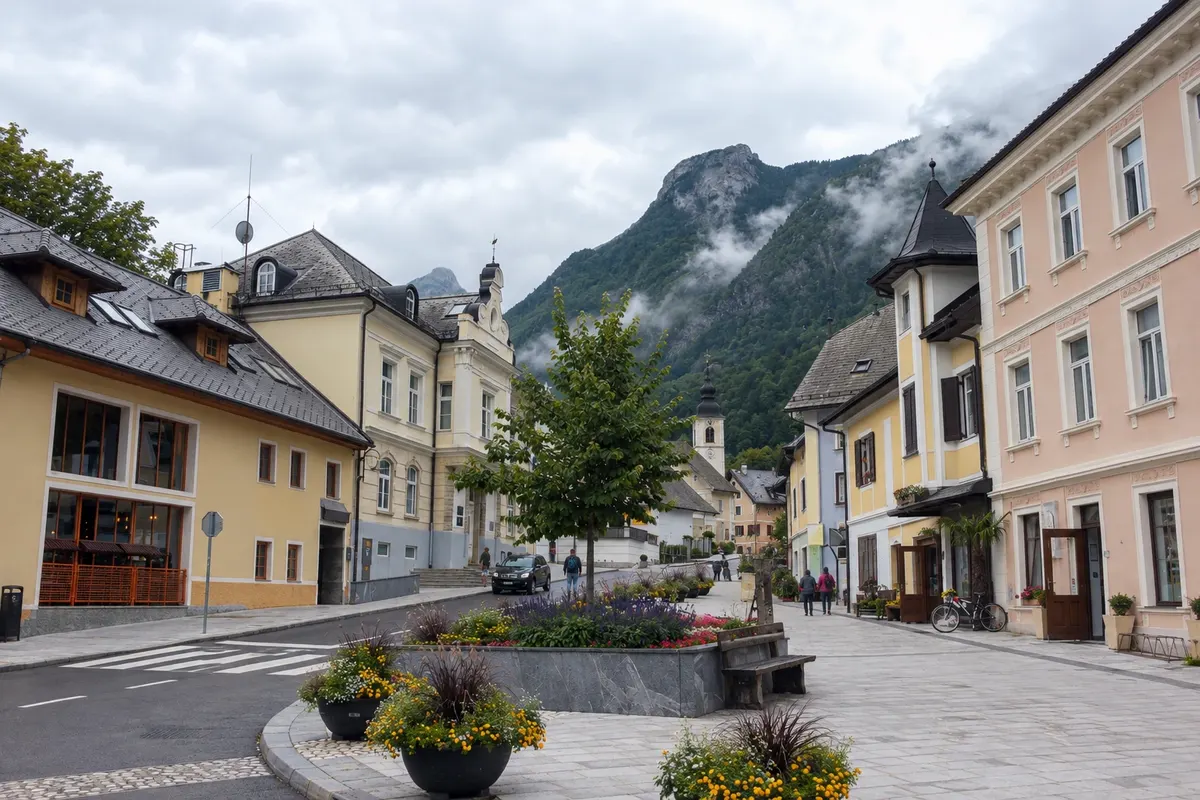
Small town in an open basin of the upper Soča Valley, between the Kanin massif and Triglav National Park. It concentrates river-sport operators and lies near the Velika korita gorge, the Boka waterfall, Kluže Fortress and the Mangart Road.
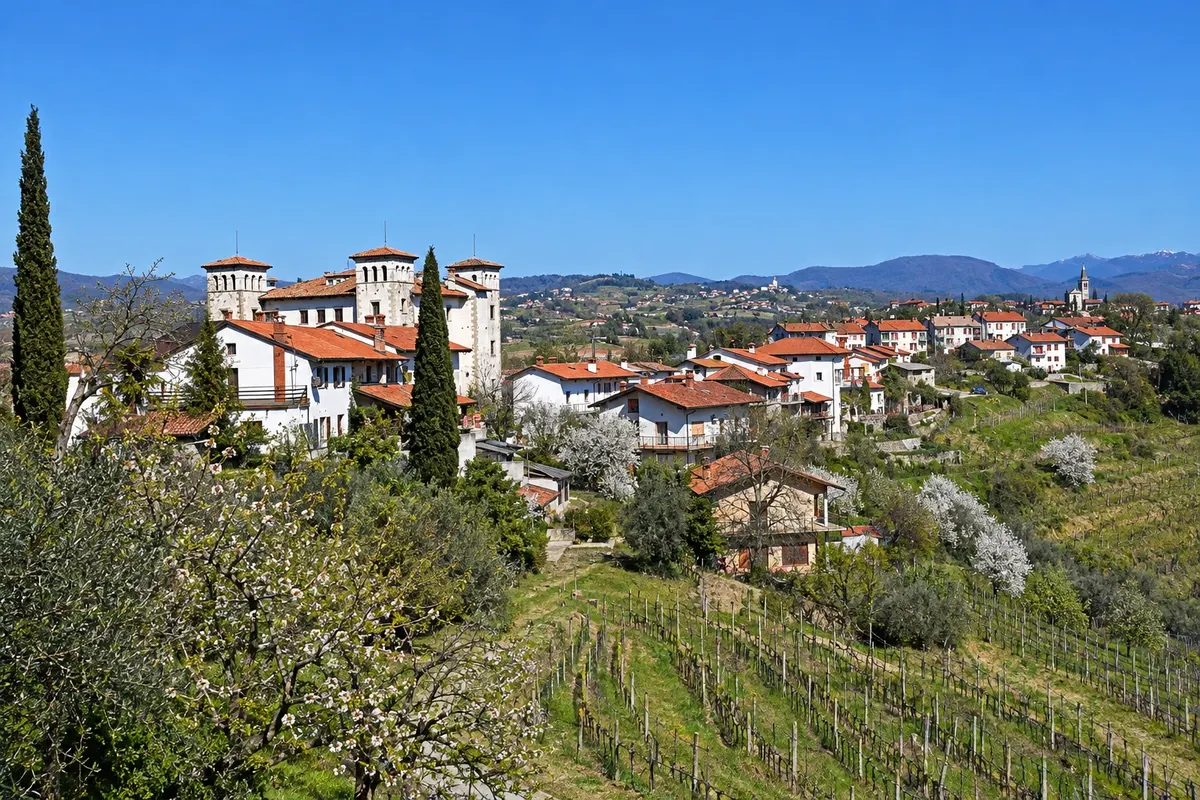
Municipal-seat village of Brda, in the wine-hill region of Goriška Brda near the Italian border. It has a early 17th-century Renaissance castle with the gallery of painter Zoran Mušič. It’s the base to visit Šmartno, the walled village in central Brda, the Gonjače viewing tower and the region’s wineries, known for rebula and cherries.
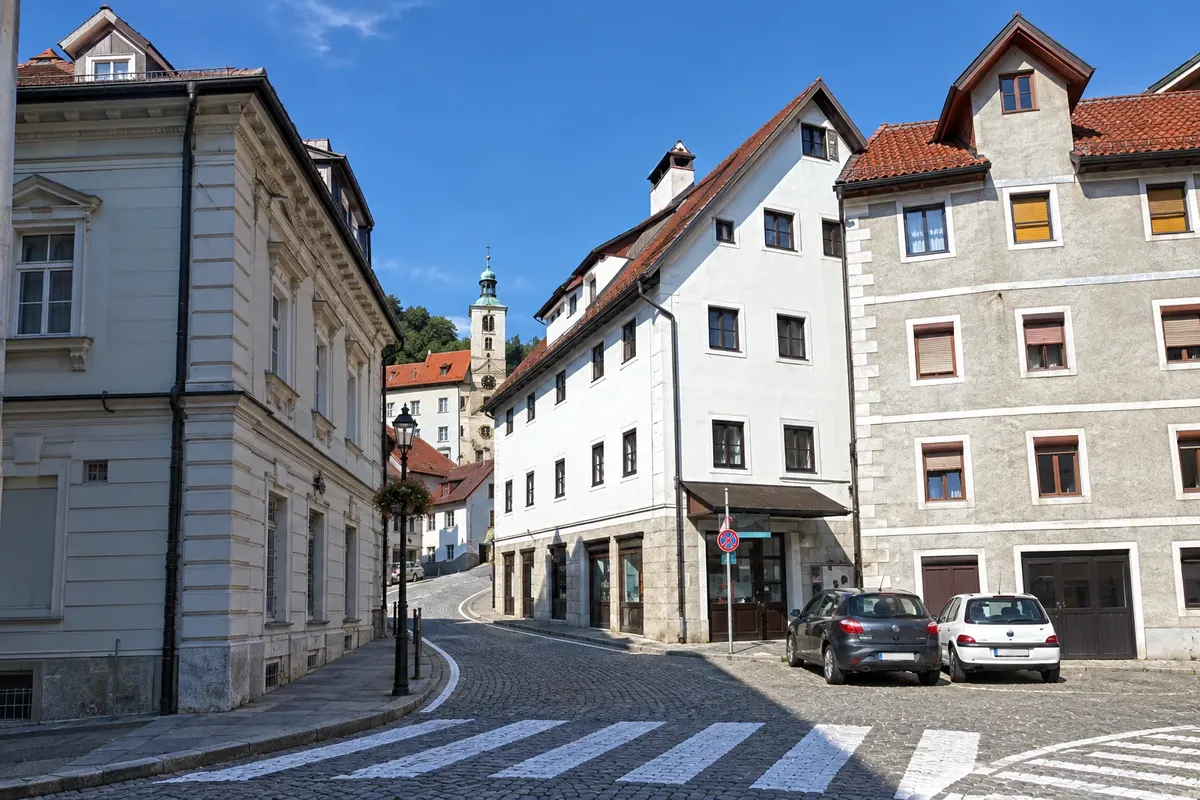
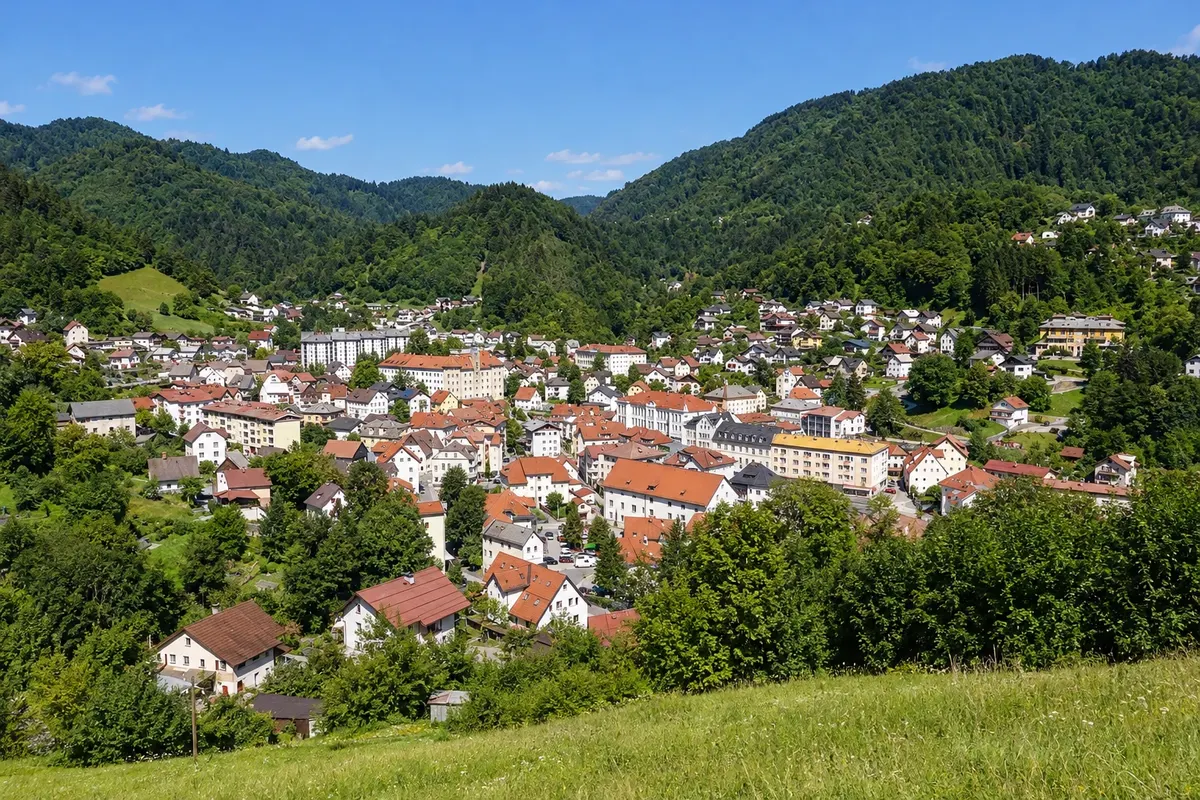
A town of about 6,000 inhabitants in a valley in western Slovenia, formed around an old mercury mine that was exploited for five centuries and inscribed on the UNESCO World Heritage List in 2012, together with Almadén. It has Antonijev rov, a mine entrance from 1500, Gewerkenegg Castle with the town museum, and the kamšt, a wooden water wheel. It is known for bobbin lace and for žlikrofi.
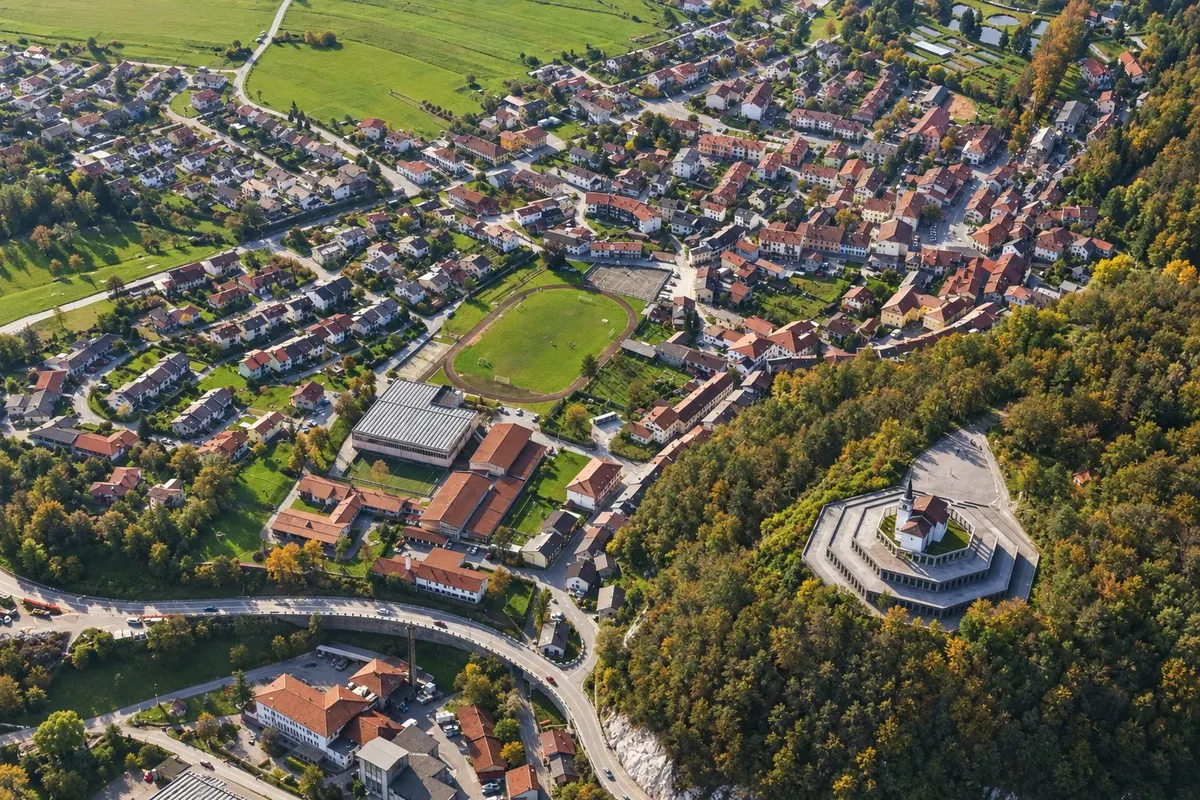
Small town in the middle of the Soča Valley, near the border with Italy, known for the Battle of Caporetto (1917). The museum about the Isonzo front, the Italian ossuary on Gradič Hill and the Historical Trail, which leads to Napoleon’s Bridge and the Kozjak waterfall, can all be reached on foot from the square.
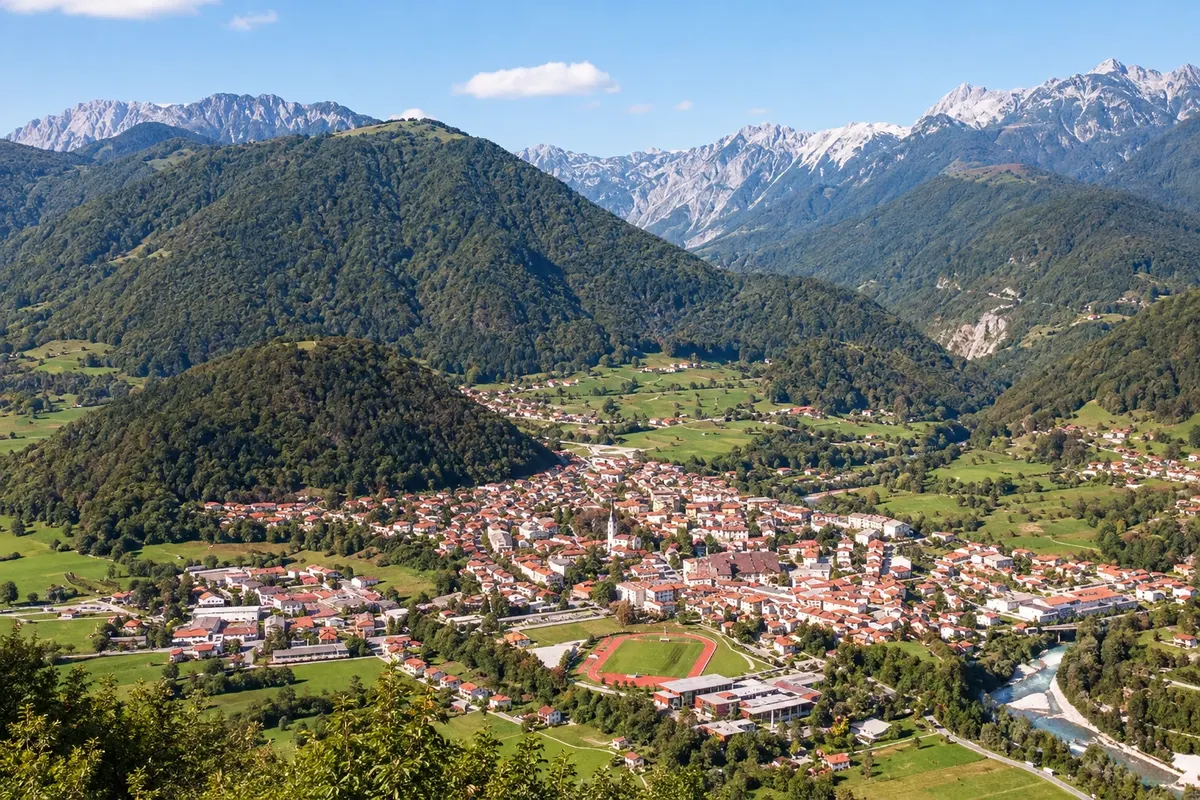
Town on a terrace above the confluence of the Soča and the Tolminka, at the southern entrance to Triglav National Park. Near the center are the Tolmin Gorges, with the Devil’s Bridge, and, up the Tolminka valley, the Javorca memorial church. The regional museum tells the valley’s history, from the Iron Age to the Isonzo front.
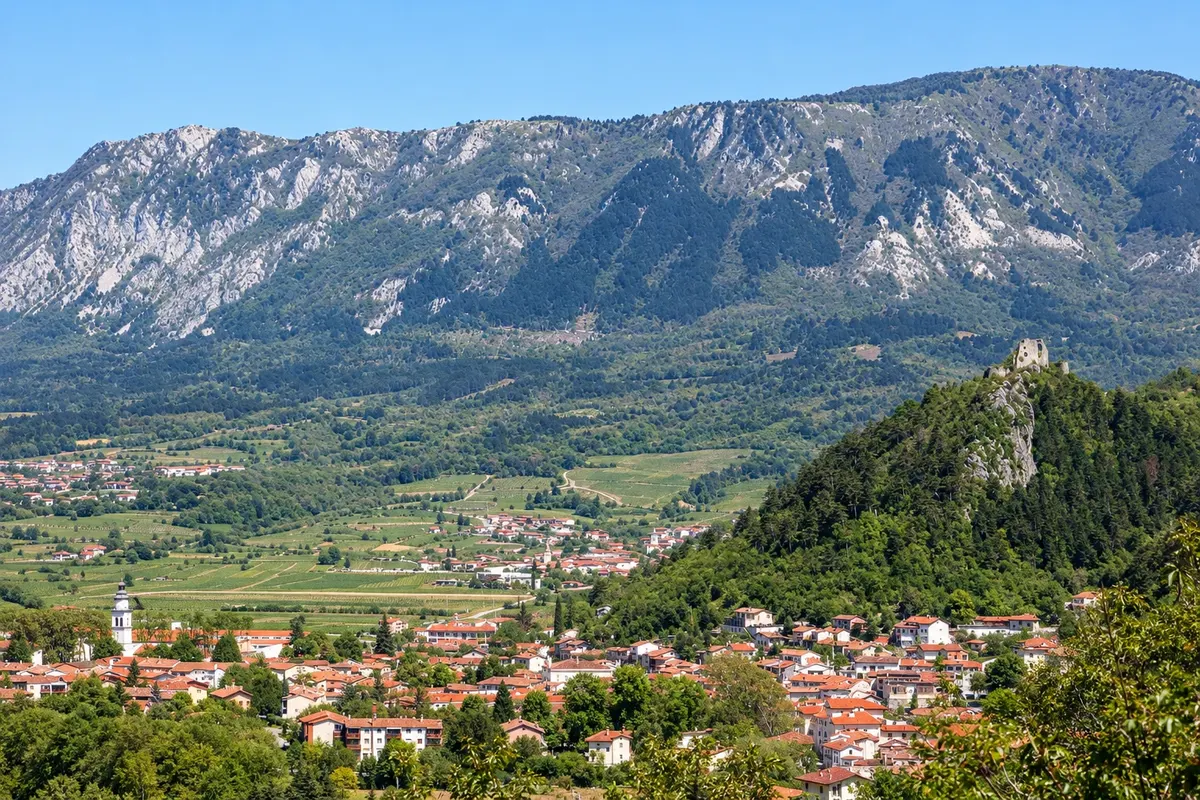
Small town of about 2,000 inhabitants in the upper Vipava Valley, at the foot of the Nanos plateau, first mentioned in 1367. It springs around the sources of the Vipava River, which emerge at several points near the main square and are crossed by bridges. It is the base for visiting Vipavski Križ, the stone village of Goče and the valley’s wineries, where local grapes such as zelen and pinela are grown.
Rafting, kayaking and hiking in the Soča valley have their main season from May to September; the river water is often cold even in summer. The Mangart road and the high trails usually open only in summer. The grape harvest in Goriška Brda and the Vipava Valley takes place in early autumn. Winters are mild in the southern hills and snowy in the northern mountains.
The nearest airports are Trieste (TRS) in Italy, about 40 km from Nova Gorica, Venice, and Ljubljana (LJU). The Bohinj rail line connects Jesenice and Bled to Nova Gorica, passing Most na Soči, near Tolmin. By the A1 and H4 motorways, Nova Gorica is about a 90-minute drive from the capital. The upper Soča is also reached via the Vršič Pass from Kranjska Gora, when the road is open, or via the Predel Pass from Italy.
Your questions
Bovec is the base for river sports and for the Mangart road; Kobarid is close to the Kozjak waterfall and the Isonzo Front museum; Tolmin, farther south, is next to the Tolminska korita gorges. The three towns are less than 40 km apart from each other along the river.
Yes, in calm, well-known spots, but the water is usually very cold even in summer, and the current changes with rainfall. To go down the river, people commonly hire rafting or kayaking operators, who provide wetsuits and equipment.
The old mercury mine, with guided visits to the galleries, Gewerkenegg Castle, which houses the town museum, the miners’ houses and the bobbin lace shops and school. The mine and town, together with Almadén, are a UNESCO World Heritage site. Idrija is about a one-hour drive from Ljubljana.
At the wineries of Goriška Brda, such as those in Medana and Dobrovo, and in the Vipava Valley, which lies between Nova Gorica and Vipava. Both areas welcome visitors, but visiting days vary from one winery to another: check each winery before you go.