2 cities

 Search
 Brazil
 Argentina
 Bolivia
 Chile
 Colombia
 Ecuador
 Guyana
 French Guiana
 Falkland Islands (Malvinas)
 Paraguay
 Peru
 Suriname
 Uruguay
 Venezuela
 Germany
 Austria
 Belgium
 Croatia
 Denmark
 SlovakiaSlovenia
 Spain
 Finland
 France
 Greece
 the Netherlands
 Hungary
 Ireland
 Iceland
 Italy
 Luxembourg
 Norway
 Poland
 Portugal
 the United Kingdom
 the Czech Republic
 Sweden
 Switzerland
 Turkey
 Canada
 the United States
 Mexico
 the Dominican RepublicTurkey
 South Africa
 Australia
 Fiji
 New Zealand
 Papua New Guinea
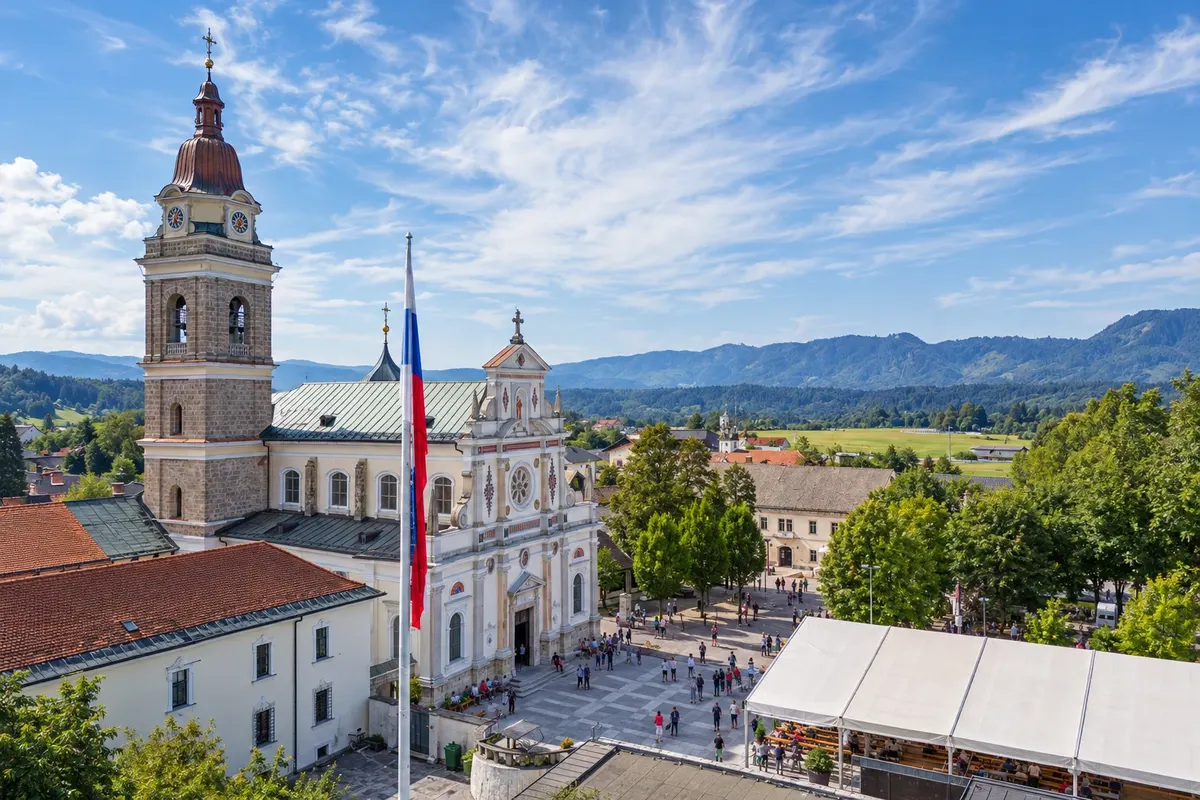
Region · Alpine Slovenia
The Julian Alps and Triglav, the lakes of Bled and Bohinj, Kranjska Gora and Planica, and the medieval towns of Radovljica, Kranj and Škofja Loka.
In the photo: Brezje Basilica, in Gorenjska.
Illustrative images. The pictures in this guide are illustrations based on the real place, not photographs, and may differ from it.

The region
Gorenjska occupies the northwest of Slovenia, between the Julian Alps, the Karavanke mountains on the border with Austria and, to the east, the Kamnik–Savinja Alps. Triglav, at 2,864 meters, is the country’s highest mountain and appears on the national coat of arms. It gives its name to Triglav National Park, Slovenia’s only national park, which covers most of the Slovenian Julian Alps.
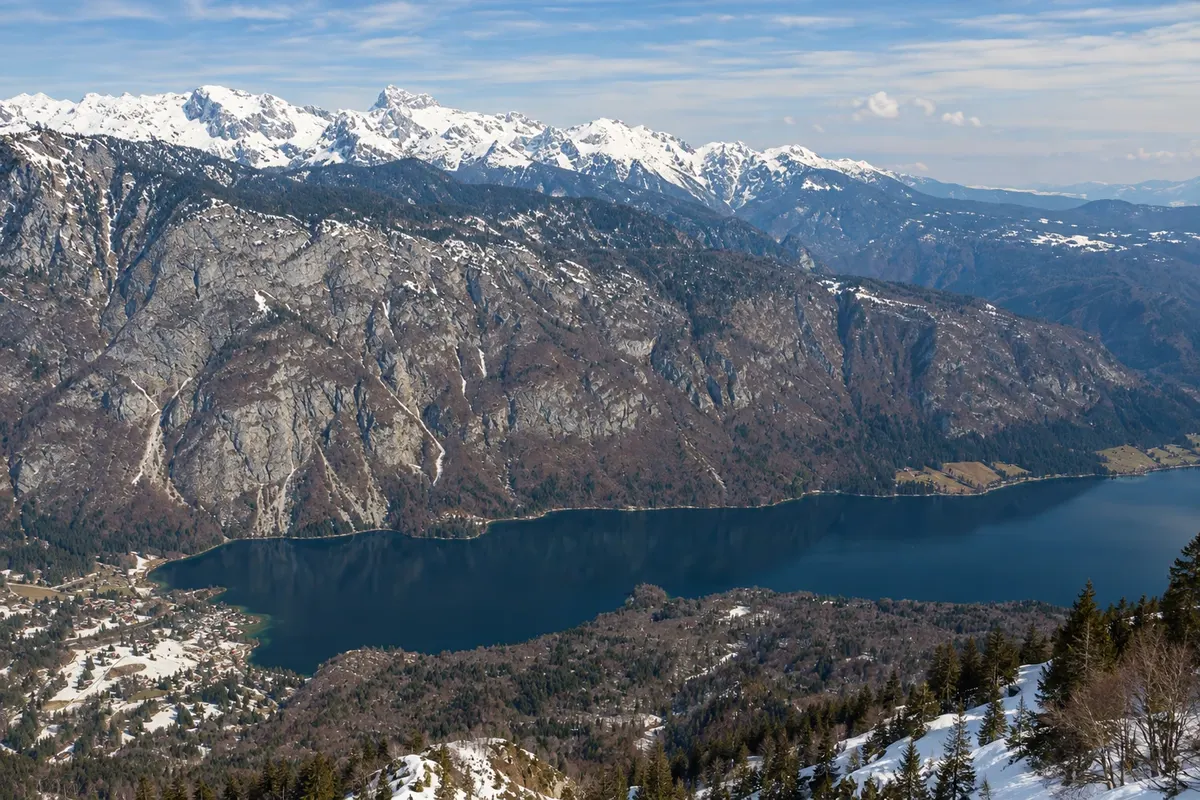
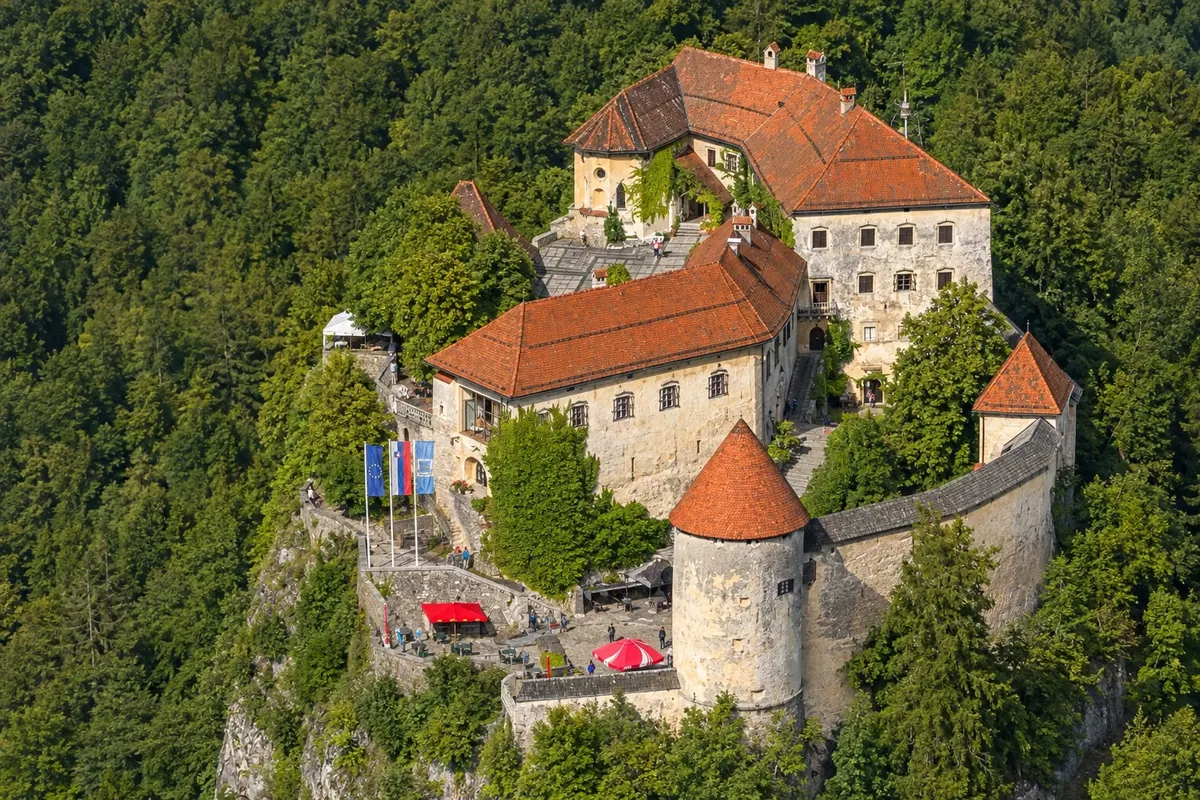
Bled Lake has an island in the middle with the Church of the Assumption, reached by wooden rowboats called pletne. Perched on a cliff by the lake is Bled Castle, mentioned in a document from 1011. Nearby, the Vintgar Gorge has walkways over the Radovna River. Further west, inside the park, Bohinj Lake is the country’s largest permanent natural lake, with the Savica waterfall and the Vogel cable car.
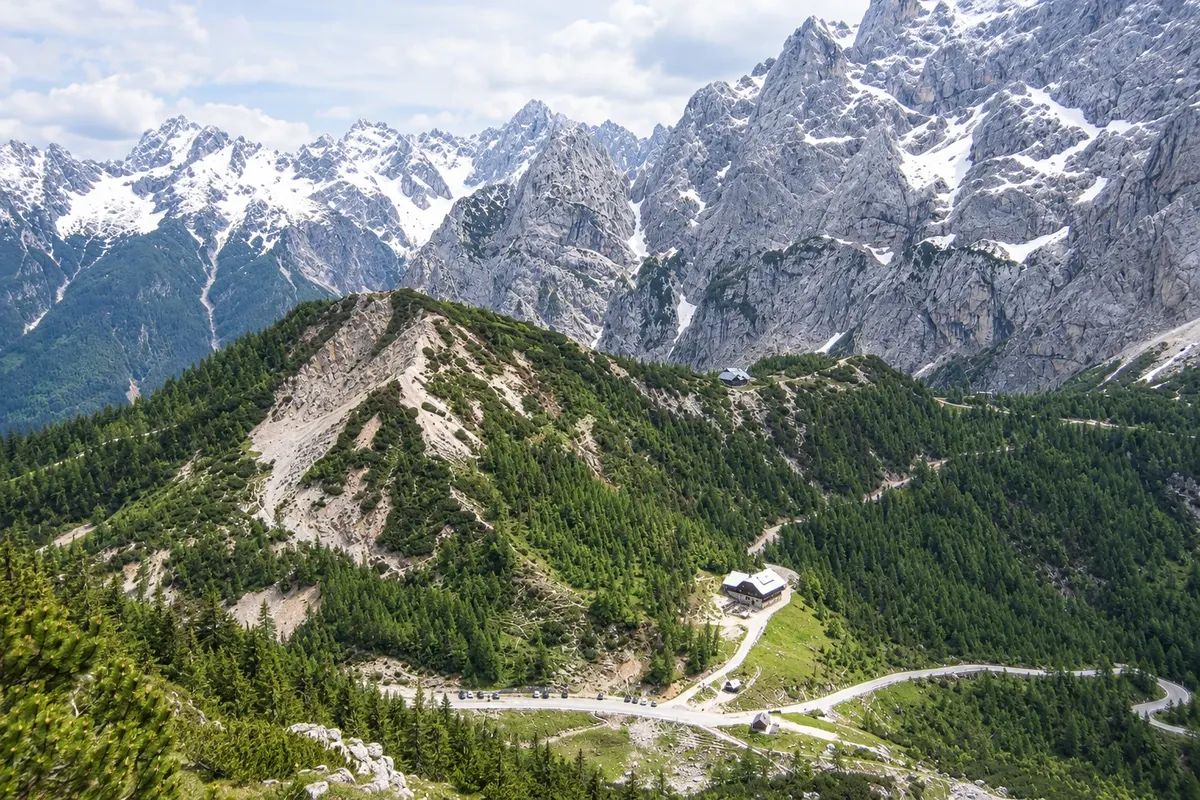
At the far northwest, Kranjska Gora is a mountain village with ski slopes, near Jasna Lake and the ski jumping ramps of Planica. From there, the Vršič Pass road crosses the Julian Alps toward the Soča Valley, passing the Russian Chapel, built by Russian prisoners of war during World War I.
The towns in the valley preserve a medieval center. Radovljica has the Beekeeping Museum and painted houses around the main square. Kranj, above the Kokra River canyon, holds the tomb of the poet France Prešeren, author of the national anthem’s lyrics, who lived there in his final years. Škofja Loka has a castle, a stone bridge and the Passion of Škofja Loka, a staged procession performed by the town and listed by UNESCO as intangible cultural heritage.
Destinations
Cities
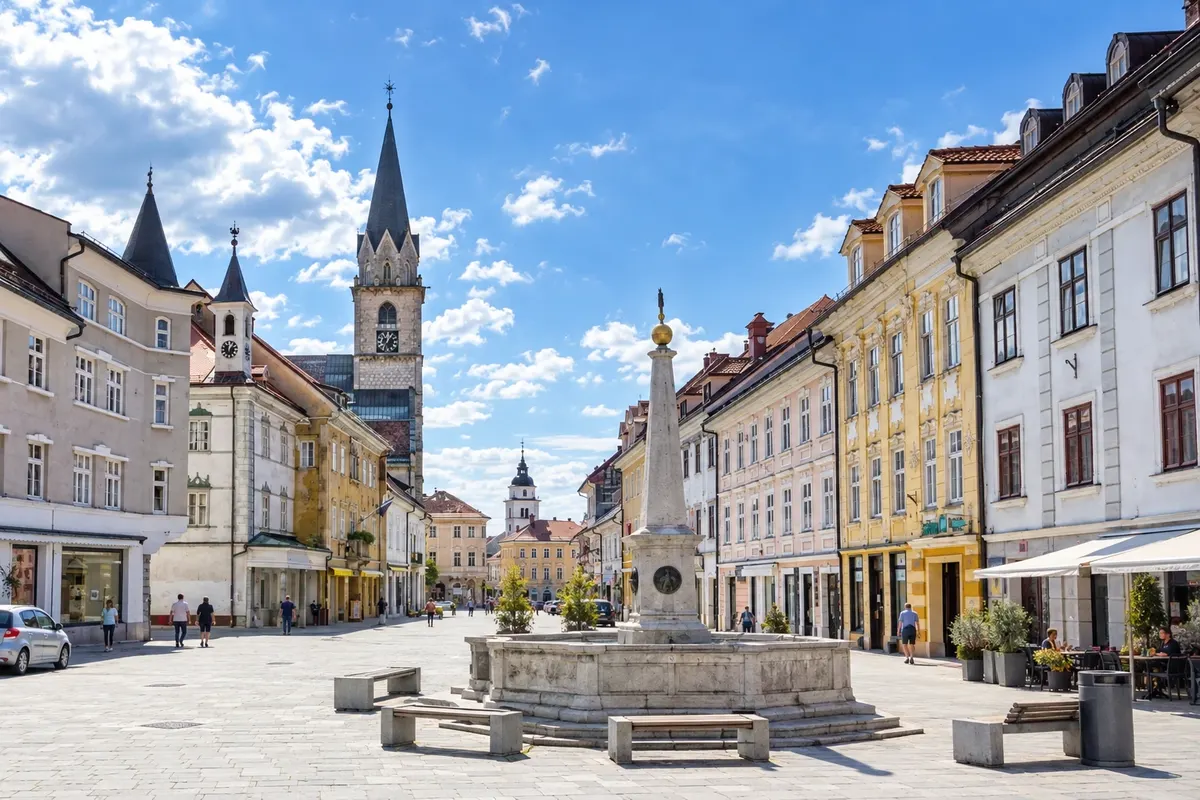
The country’s fourth-largest city and the largest in Gorenjska, with the old center on a promontory between the Kokra and the Sava. The poet France Prešeren lived and died there; his house is a museum. Beneath the center run 1,300 m of World War II tunnels, and beside it the Kokra flows through a gorge. The Church of St. Cantianus has a tower with a lookout.
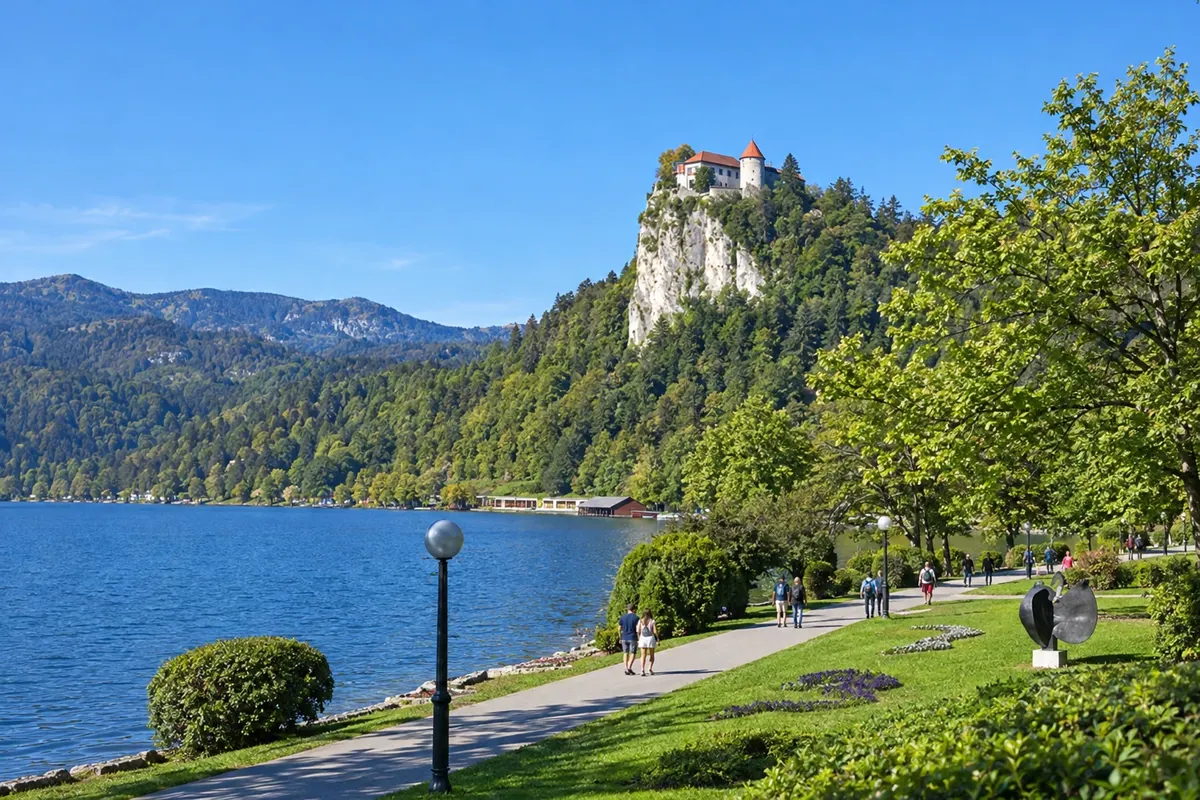
A resort town on the east shore of the lake, at the foot of the Julian Alps. From the center you can walk to the lakeside path, the pletna docks and the castle on the cliff, and the Vintgar Gorge is a short distance to the north. There are bakeries famous for kremšnita and a park by the water.
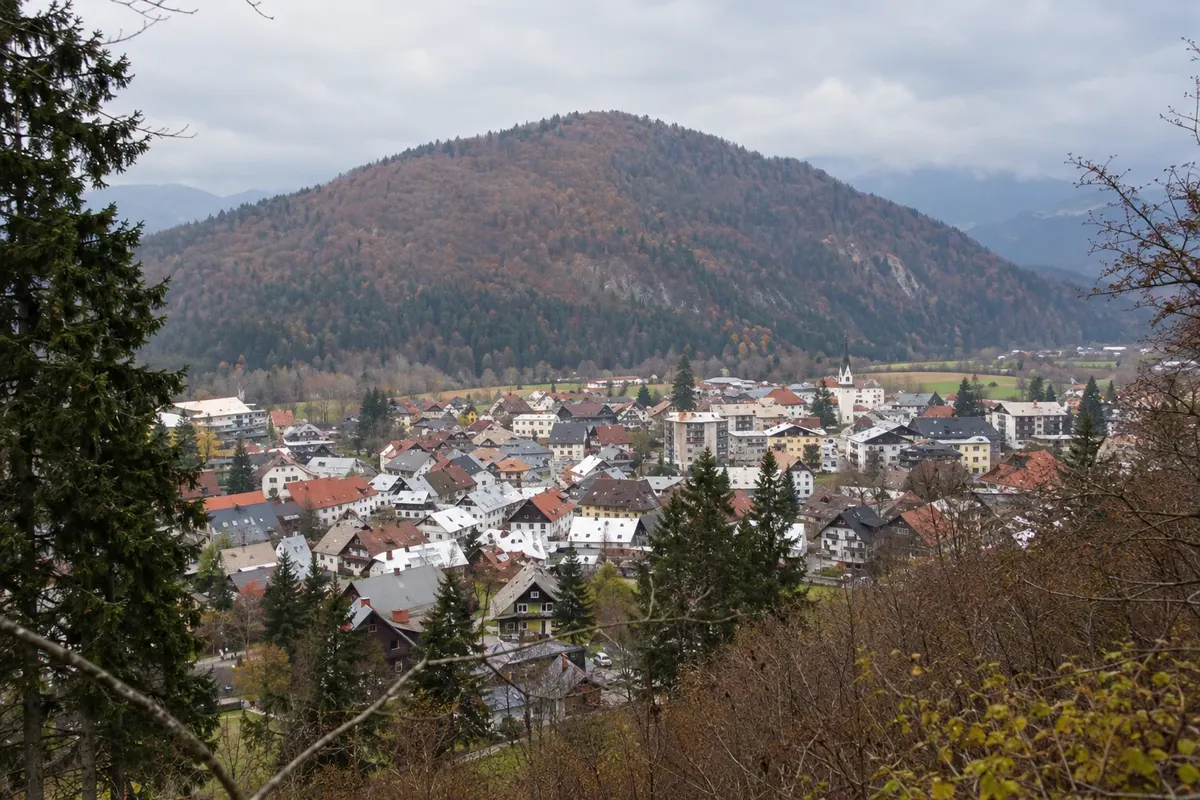
The administrative center of the Bohinj municipality, about 6 km from the lake, on the banks of the Sava Bohinjka. It has the Bohinj railway station near the tunnel mouth that crosses the mountains, shops and services, the Tomaž Godec Museum in an old tannery, and the Ajdovski gradec archaeological site. It’s a practical base for those arriving by train.
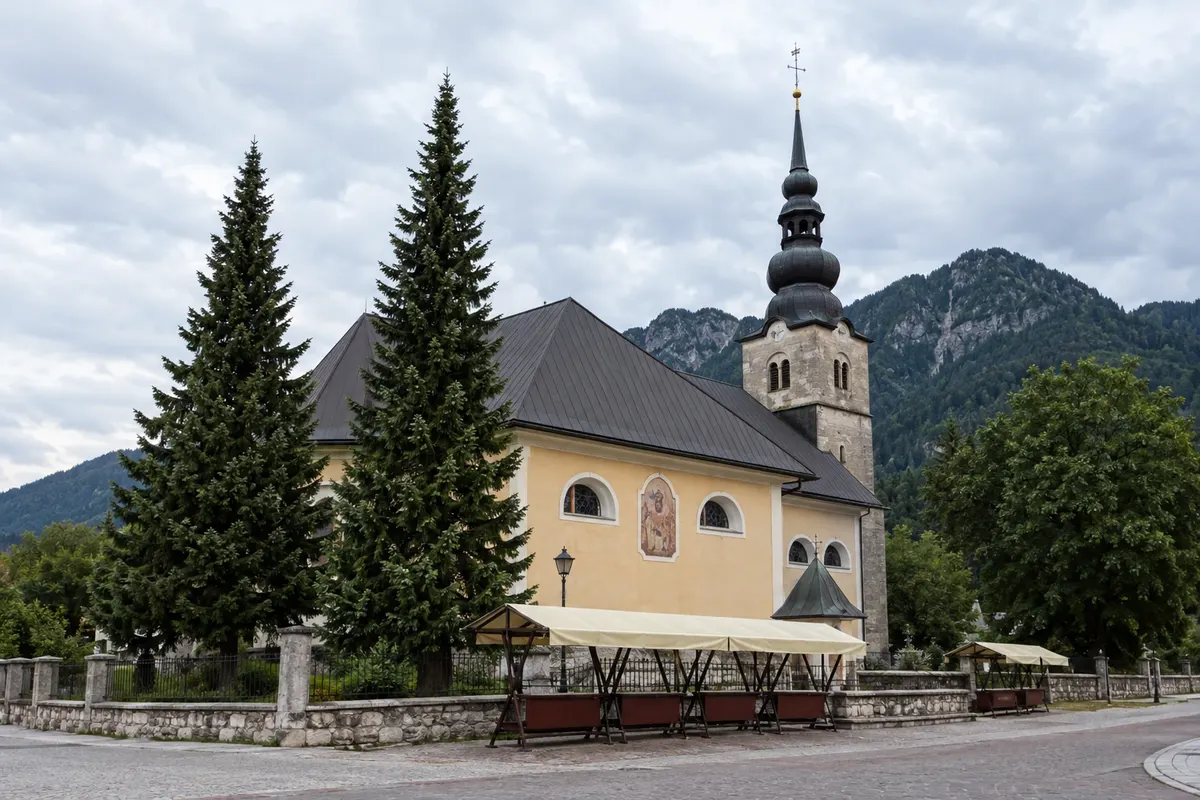
A village of about 1,500 inhabitants in the upper Sava valley, Slovenia’s main mountain resort. First mentioned in 1326, it preserves in its center the Gothic Church of the Assumption and the Liznjekova domačija house-museum. Around it are Lake Jasna, the Zelenci reserve, the Planica ski jumps and the start of the Vršič pass road, which crosses the mountain toward the Soča.
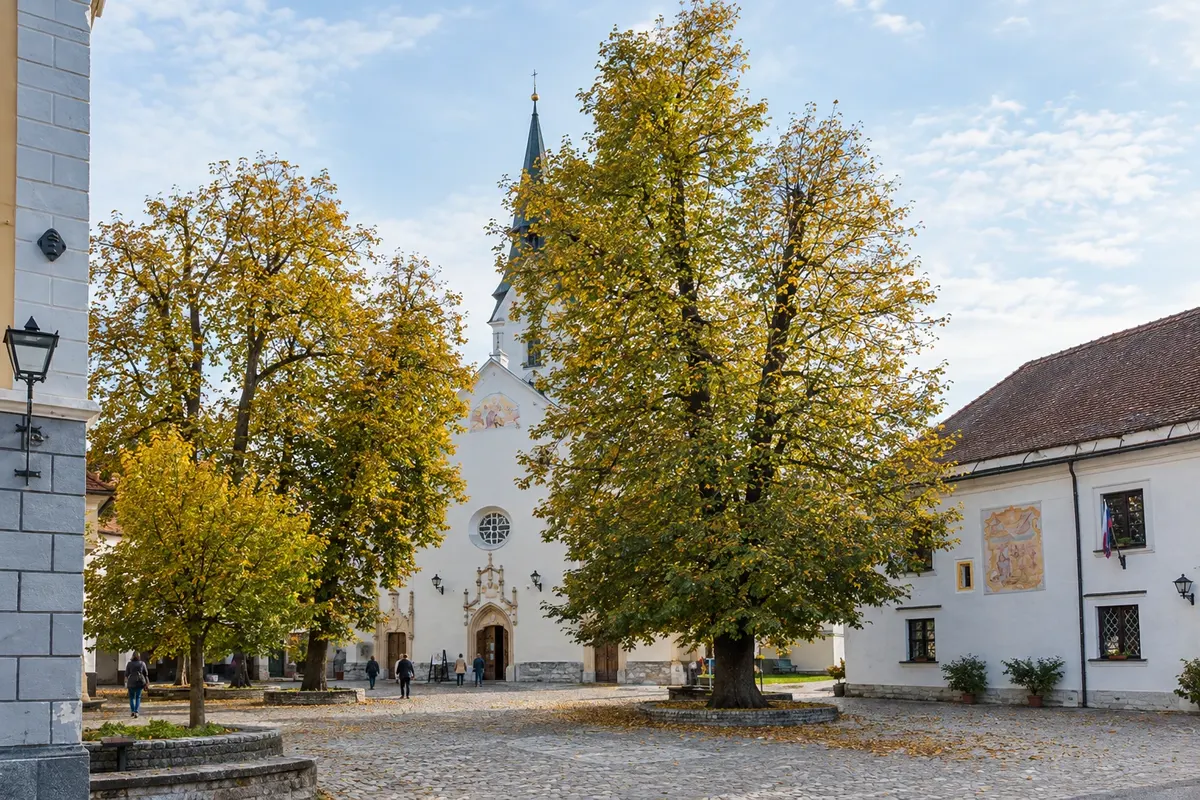
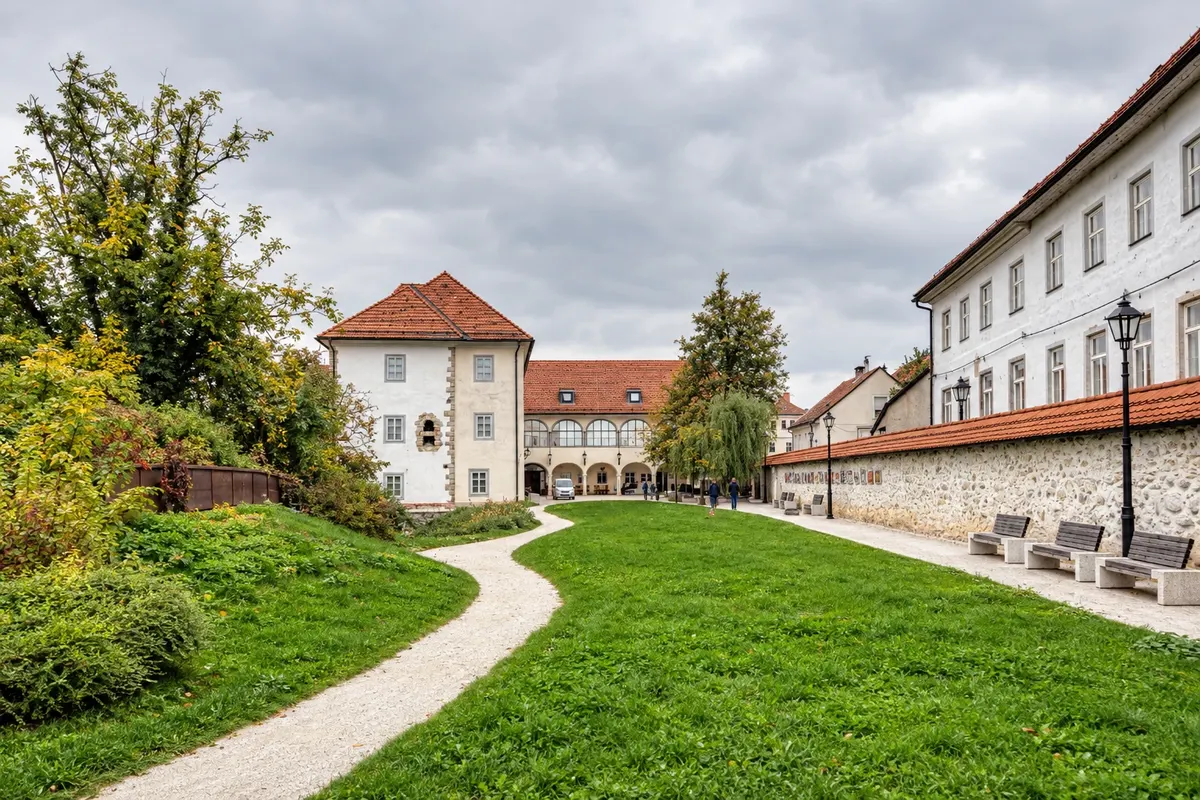
Small town perched on a cliff above the Sava River, neighboring Bled, with one of the best-preserved medieval centers in the country. The main street-square has merchant houses, a Gothic church and the manor that houses the municipal museum. In the surroundings is Brezje, the basilica that receives pilgrims from across the country.
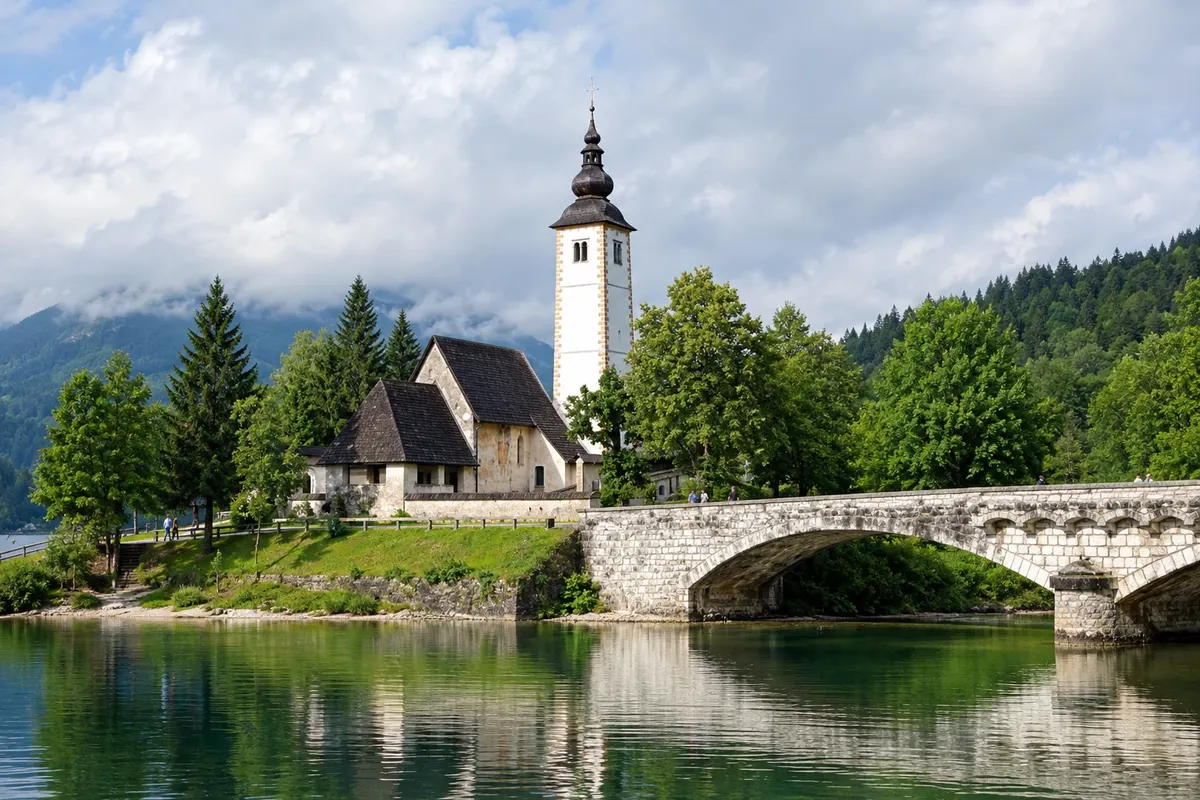
Village at the eastern tip of Lake Bohinj, in the municipality of Bohinj, where the stone bridge, the Church of St. John the Baptist, the statue of Zlatorog and the information center are located. It is the starting point for swimming and paddling on the lake and for going to Savica, Vogel, the Mostnica Gorge and the Triglav trails.
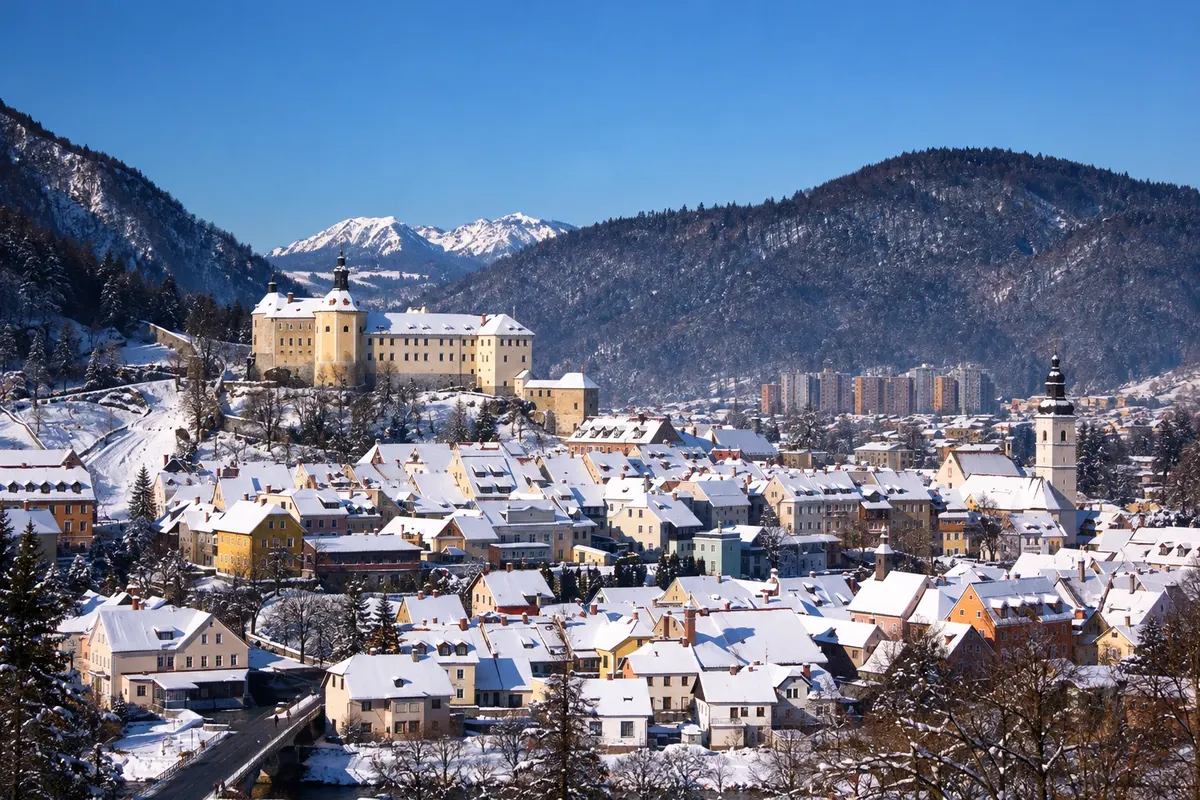
Medieval town at the confluence of the Selška Sora and Poljanska Sora rivers, ruled for almost eight centuries by the bishops of Freising. It has two squares of painted houses, the Kapucinski most, a 14th-century bridge, and a museum housed in the castle. The Passion procession, staged in some years, is on UNESCO’s list. Four km away is the church of Crngrob, with the fresco of Saint Dominic.
The main season for the lakes and trails of the Julian Alps is June to September; on the high trails and on Triglav the snow usually melts only in July. Vršič Pass is often closed in winter. In September and October there are fewer visitors and the beech trees turn yellow. With snow, generally from December to March, Kranjska Gora, Vogel and Krvavec open their ski slopes.
Ljubljana Jože Pučnik Airport (LJU) is in Brnik, within the region, about 30 km from Bled, with buses and transfers. Trains from Ljubljana to Jesenice stop at Kranj, Škofja Loka, Radovljica and Lesce-Bled, and the Bohinj line, from Jesenice to Nova Gorica, has stations at Bled Jezero and Bohinjska Bistrica. The A2 motorway links Ljubljana to Austria through the Karavanke Tunnel. Frequent buses connect Ljubljana with Bled, Bohinj and Kranjska Gora.
Your questions
One day in Bled lets you walk around the lake, go to the island by boat and climb up to the castle. With two or three days you can include Vintgar Gorge, Bohinj Lake, the Savica waterfall and the Vogel cable car. The two lakes are about 30 km apart.
Yes, but it is a high-mountain ascent, usually done in two days with an overnight in a mountain hut and sections equipped with steel cables and pegs. The climbing season is typically between July and September. Those without experience should go with a mountain guide. Plan the trip in advance and check the weather forecast.
The road usually opens in late spring and closes when snow returns in late autumn, and it can be closed by bad weather at any time. It links Kranjska Gora with Trenta and Bovec in the Soča Valley and includes many tight hairpin bends. Confirm conditions before you go.
Not for the main sights: trains and buses link Ljubljana with Bled, Bohinj, Kranjska Gora, Kranj and Škofja Loka. A car helps in the valleys and on trails off the main lines and for crossing Vršič Pass, where in summer there are also regular buses.
Kranjska Gora, Vogel above Bohinj Lake, and Krvavec, near Ljubljana Airport, are the best-known resorts. Slopes generally operate from December to March, depending on snow conditions.