Sweet · Pomurska
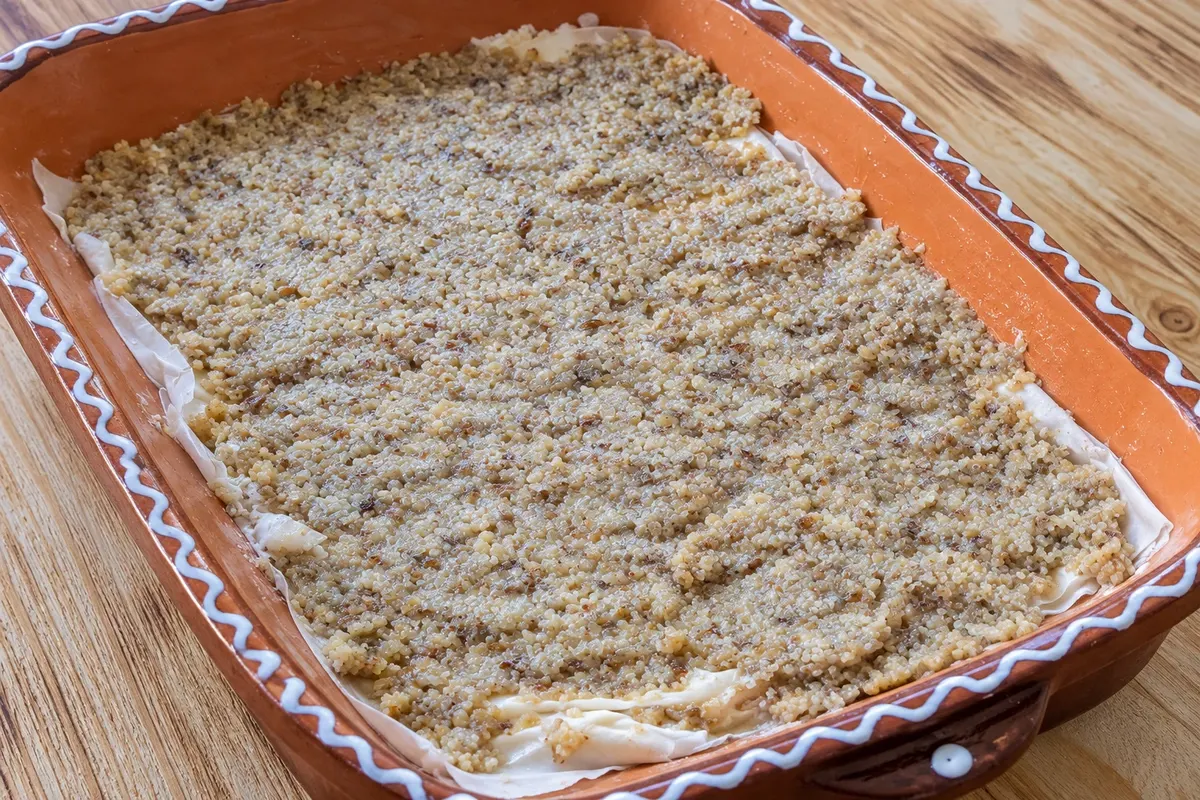
Prekmurska gibanica
Layered Prekmurje cake from northeastern Slovenia: on a shortcrust base, sheets of stretched dough alternate four fillings — poppy seeds, fresh curd cheese, walnuts and apple — topped with cream.

 Search
 Brazil
 Argentina
 Bolivia
 Chile
 Colombia
 Ecuador
 Guyana
 French Guiana
 Falkland Islands (Malvinas)
 Paraguay
 Peru
 Suriname
 Uruguay
 Venezuela
 Germany
 Austria
 Belgium
 Croatia
 Denmark
 SlovakiaSlovenia
 Spain
 Finland
 France
 Greece
 the Netherlands
 Hungary
 Ireland
 Iceland
 Italy
 Luxembourg
 Norway
 Poland
 Portugal
 the United Kingdom
 the Czech Republic
 Sweden
 Switzerland
 Turkey
 Canada
 the United States
 Mexico
 the Dominican RepublicTurkey
 South Africa
 Australia
 Fiji
 New Zealand
 Papua New Guinea
Region · Thermal Pannonian Slovenia
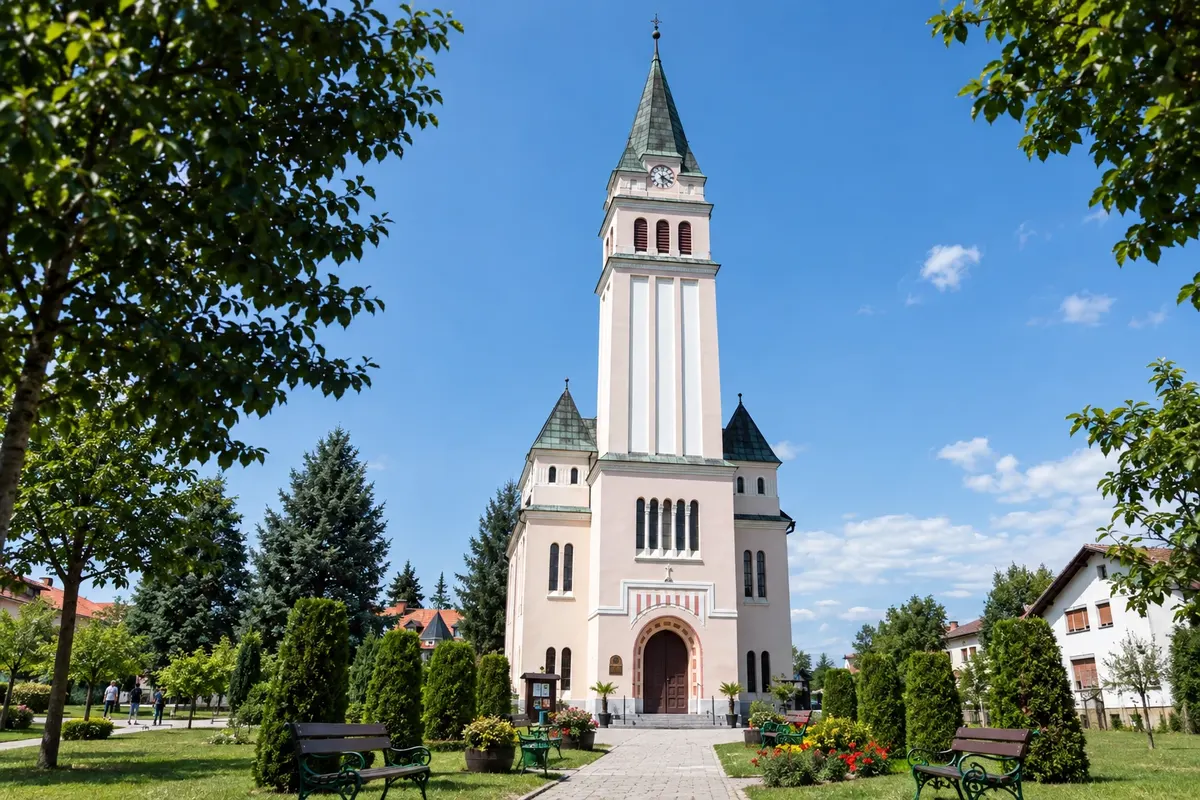
The Mura plain, the spas of Moravske Toplice and Radenci, the floating mill of the Island of Love, Goričko and Plečnik’s church in Bogojina.
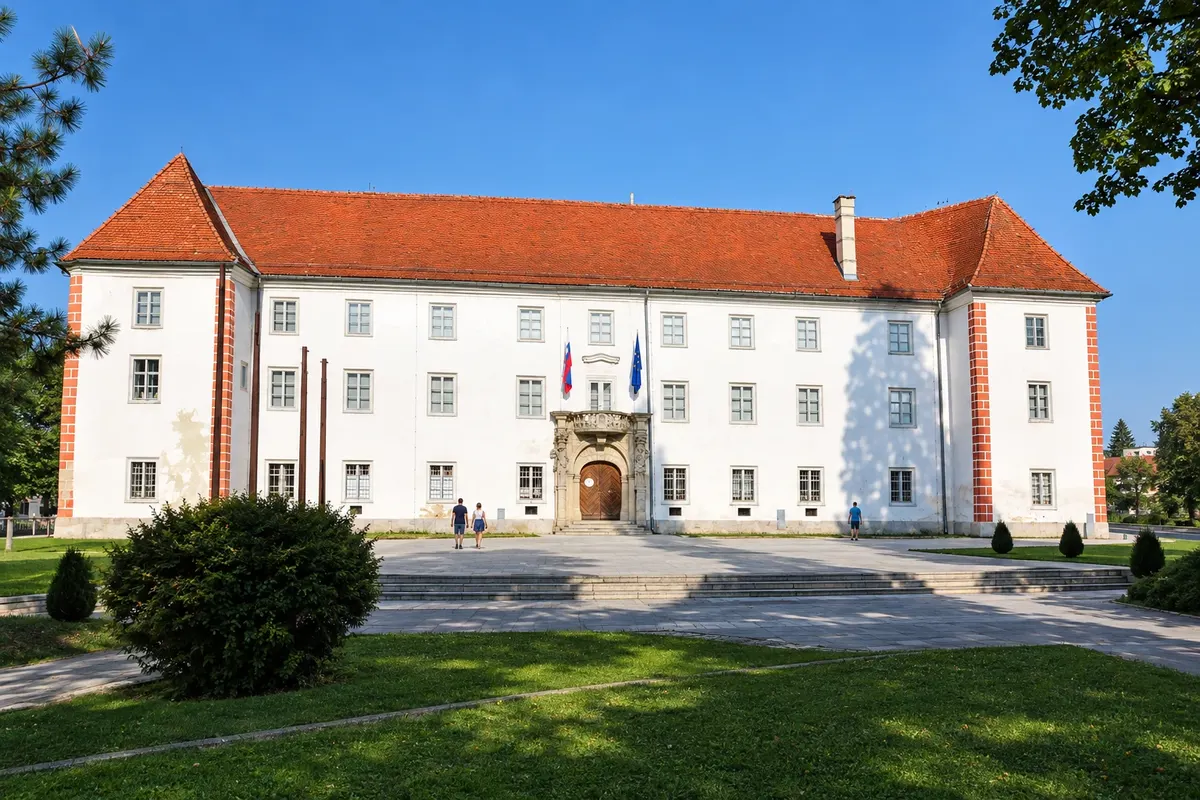
In the photo: Murska Sobota Castle, in Pomurska.
Illustrative images. The pictures in this guide are illustrations based on the real place, not photographs, and may differ from it.

The region
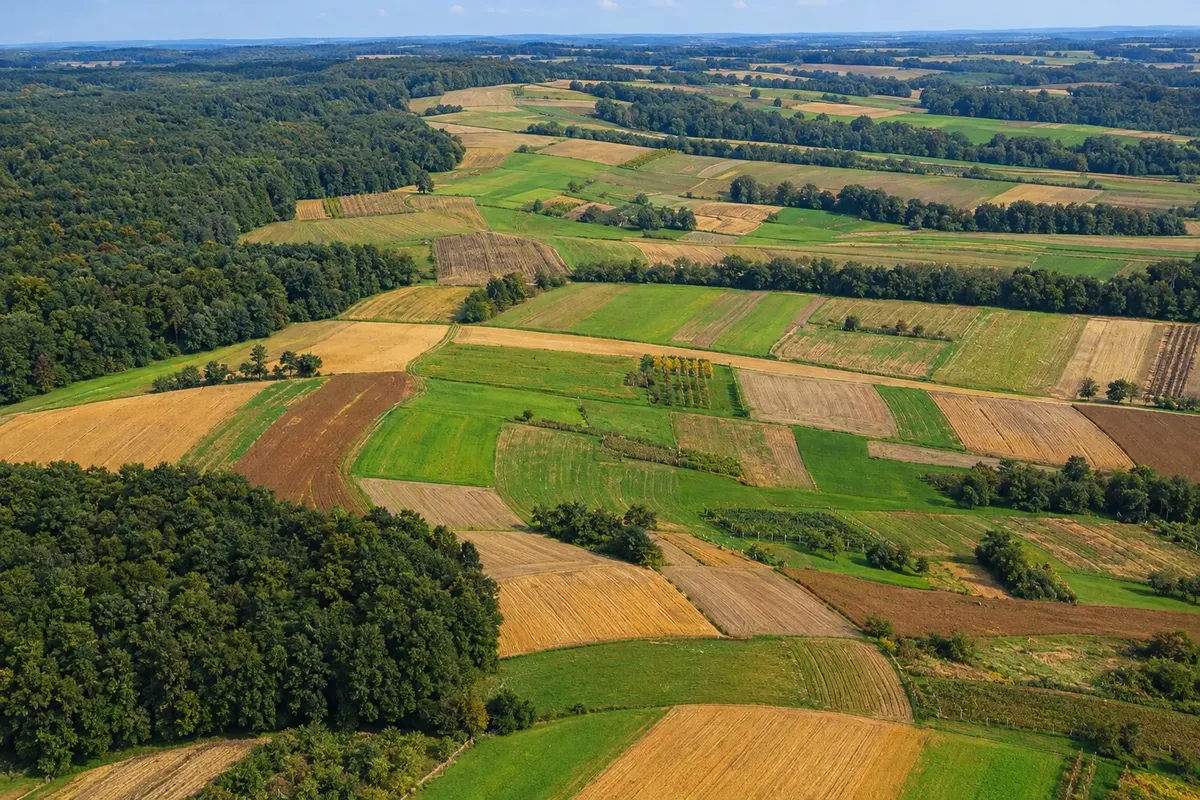
Pomurska is in the far northeast of Slovenia, on the Pannonian plain, near the borders with Austria, Hungary and Croatia. The Mura River crosses the region and separates Prekmurje to the north from Prlekija to the south. The landscape consists of cultivated fields, low hills and long-house villages, and Murska Sobota is the largest town.
The region has thermal and mineral springs. Moravske Toplice and Radenci are spa towns with warm-water pools, and Radenci’s mineral water has been bottled for more than a century. In Lendava and nearby border villages, Hungarian has official status alongside Slovene; near Lendava, the Vinarium tower offers views over the plain and the vineyards.
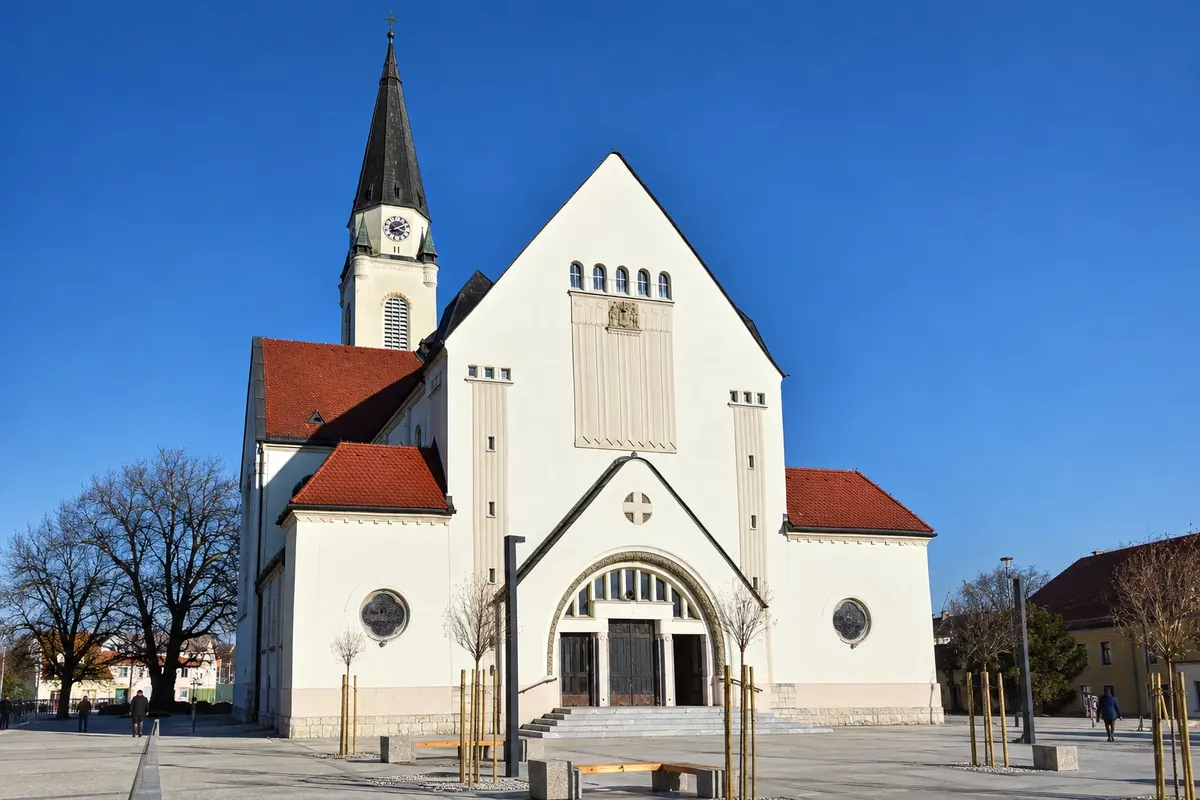
On the Mura, near Ižakovci, the Island of Love (Otok ljubezni) has a wooden floating mill and a ferry that crosses the river. To the north, Goričko Natural Park brings together hills, forests, villages and vineyards, and Grad Castle is one of the country’s largest. In Bogojina, the Church of the Ascension was redesigned by Jože Plečnik, with a ceiling decorated with ceramic plates and jugs.
To the south, the Jeruzalem hills, between Ljutomer and Ormož, are covered in vineyards. The region’s cuisine includes prekmurska gibanica, a layered cake with poppy seeds, walnuts, apple and cheese, registered in the European Union as a traditional specialty.
Flavors of Slovenia
Destinations
Cities
Main town of Prekmurje, on the Mura plain. The Renaissance castle, set in a park of century-old oaks, houses the Pomurje Museum, with the history of life along the river. Near the town are the church of Bogojina, renovated by Jože Plečnik, and, to the north, Grad Castle, the largest in the country, in the Goričko Nature Park.
A spa village a few kilometers from Murska Sobota, on the first hills of Goričko, with warm thermal waters and pool parks. It’s a good base for the region’s medieval churches: Martjanci, with 14th-century frescoes, and the Romanesque rotunda of Selo. On the Mura, the Island of Love has a floating mill and a cable ferry.
From April to October, the plain and the banks of the Mura are good for cycling, as they are flat and have many bike paths. The grape harvest in the Jeruzalem hills takes place in September and October. The spas welcome visitors year-round, and in winter many people go to the warm-water pools. Summers are hot and dry, and winters are cold.
The A5 motorway connects Maribor with Murska Sobota and Lendava, and continues to Hungary. From Ljubljana, Murska Sobota is about a 2-hour drive. Trains link Murska Sobota with Ormož and Pragersko, with connections to Maribor and Ljubljana, and there are regional buses. The nearest airports are Graz in Austria and Ljubljana (LJU).
Your questions
The floating mill on the Island of Love on the Mura, Grad Castle in Goričko Natural Park, Plečnik’s church in Bogojina and the Vinarium tower near Lendava. The Moravske Toplice spas complete the trip.
Prekmurska gibanica, a layered puff-pastry cake filled with poppy seed, walnut, apple and fresh cheese. It is registered in the European Union as a traditional specialty and is served in the region’s restaurants and patisseries.
It’s very helpful, because the villages, spas and castles are spread across the plain. The region is also good for cycling, since it is flat and has bike paths along the Mura. Trains and buses connect the main towns, with less frequent service to the villages.
The best-known ones are in Moravske Toplice, near Murska Sobota, and in Radenci, south of the Mura. There are also spas in Lendava. They are open year-round, with indoor and outdoor pools.