1 city

 Search
 Brazil
 Argentina
 Bolivia
 Chile
 Colombia
 Ecuador
 Guyana
 French Guiana
 Falkland Islands (Malvinas)
 Paraguay
 Peru
 Suriname
 Uruguay
 Venezuela
 Germany
 Austria
 Belgium
 Croatia
 Denmark
 SlovakiaSlovenia
 Spain
 Finland
 France
 Greece
 the Netherlands
 Hungary
 Ireland
 Iceland
 Italy
 Luxembourg
 Norway
 Poland
 Portugal
 the United Kingdom
 the Czech Republic
 Sweden
 Switzerland
 Turkey
 Canada
 the United States
 Mexico
 the Dominican RepublicTurkey
 South Africa
 Australia
 Fiji
 New Zealand
 Papua New Guinea
Region · Ljubljana and Central Slovenia
Ljubljana and the Ljubljanica River, the works of Jože Plečnik, the stilt-house remains of the Ljubljansko barje, Kamnik and the Velika Planina plateau.
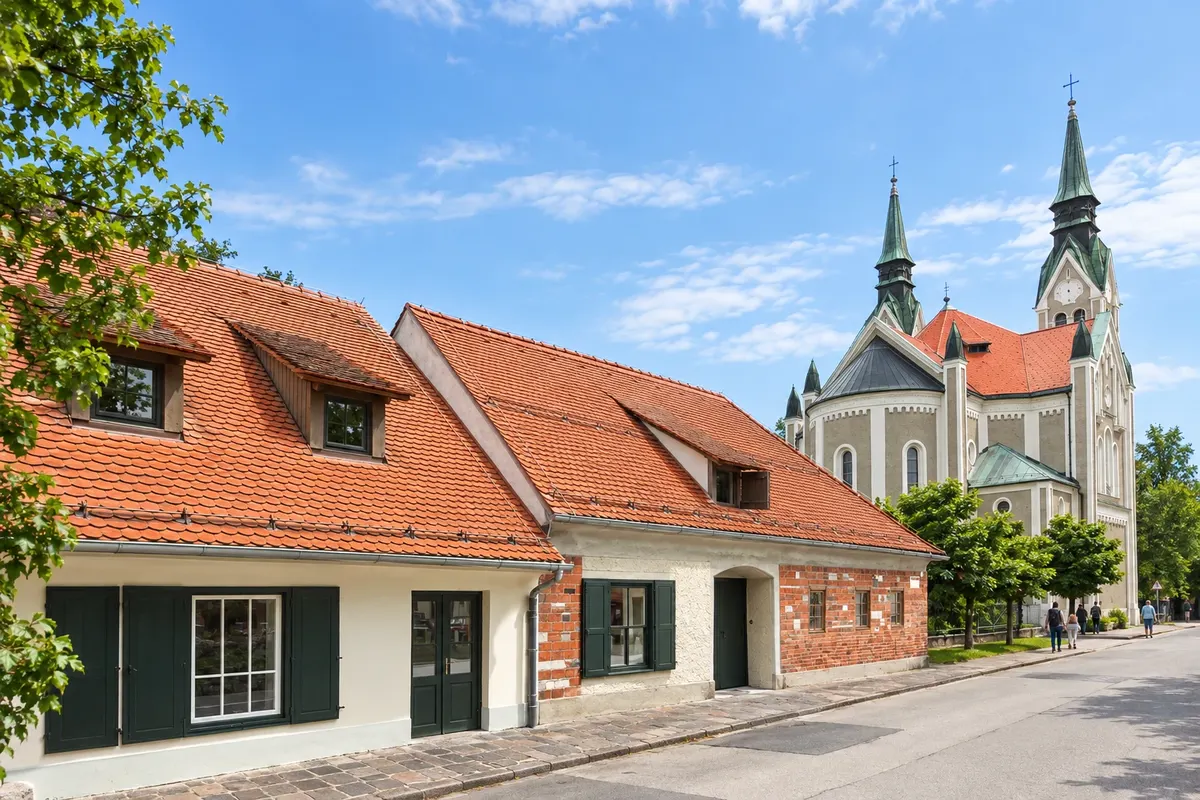
In the photo: Street next to Plečnikova hiša in Ljubljana.
Illustrative images. The pictures in this guide are illustrations based on the real place, not photographs, and may differ from it.

The region
Osrednjeslovenska is Slovenia’s central region and the most populous of the country’s twelve statistical regions. It includes Ljubljana, the capital, the marshy plain of the Ljubljansko barje to the south, the town of Kamnik to the north at the foothills of the Kamnik–Savinja Alps, and forested hills to the east and west. The country’s two main highways cross at the capital.
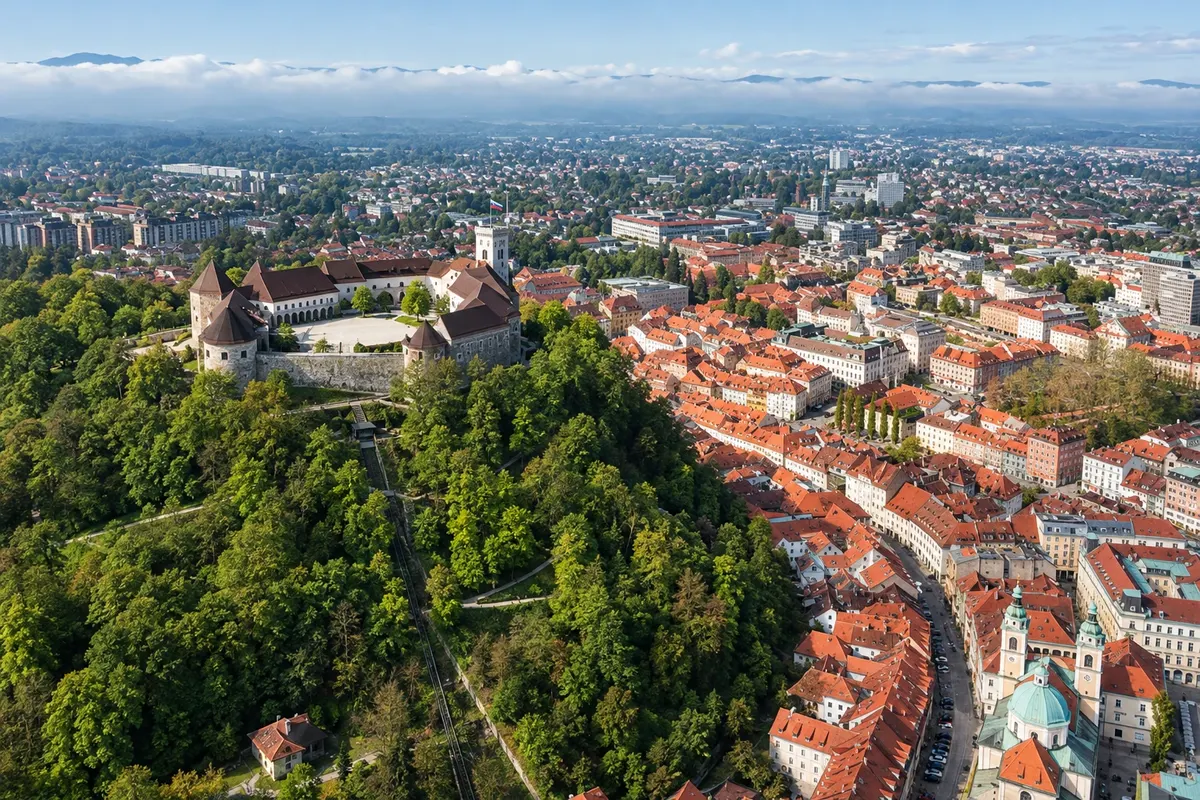
The Ljubljanica River runs through central Ljubljana, which is best explored on foot. Between the two world wars, architect Jože Plečnik designed much of the city: the Triple Bridge, the Central Market along the river, the National and University Library, and the Žale cemetery. This ensemble was inscribed by UNESCO in 2021. On the hill above the center stands the castle, reached by a funicular that departs from Krek Square, and along the river are Prešeren Square, the Dragon Bridge and St. Nicholas Cathedral.
To the south of the capital, in the Ljubljansko barje, remains of prehistoric stilt-house villages were found. They are part of the UNESCO site of the Prehistoric Pile Dwellings around the Alps, inscribed in 2011, and the area is a nature reserve of wet meadows with trails and birdwatching. In Vrhnika, to the southwest, the springs of the Ljubljanica emerge.
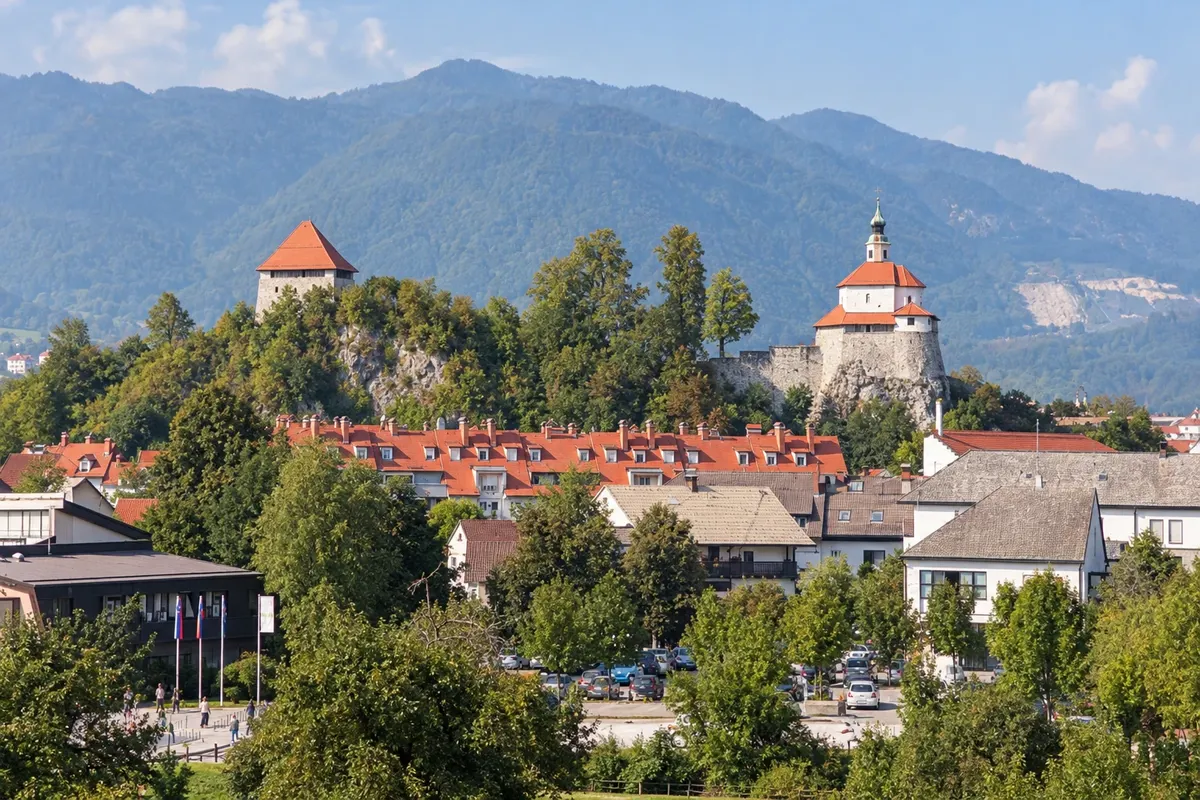
Kamnik has a medieval center with two castles, Mali grad and Stari grad, and is the starting point for Velika Planina, a pasture plateau where shepherds still spend the summer in low-roofed wooden huts. You reach it by cable car from the Kamniška Bistrica valley. Near Kamnik is the Volčji Potok Arboretum, a park of gardens and trees.
Destinations
Cities
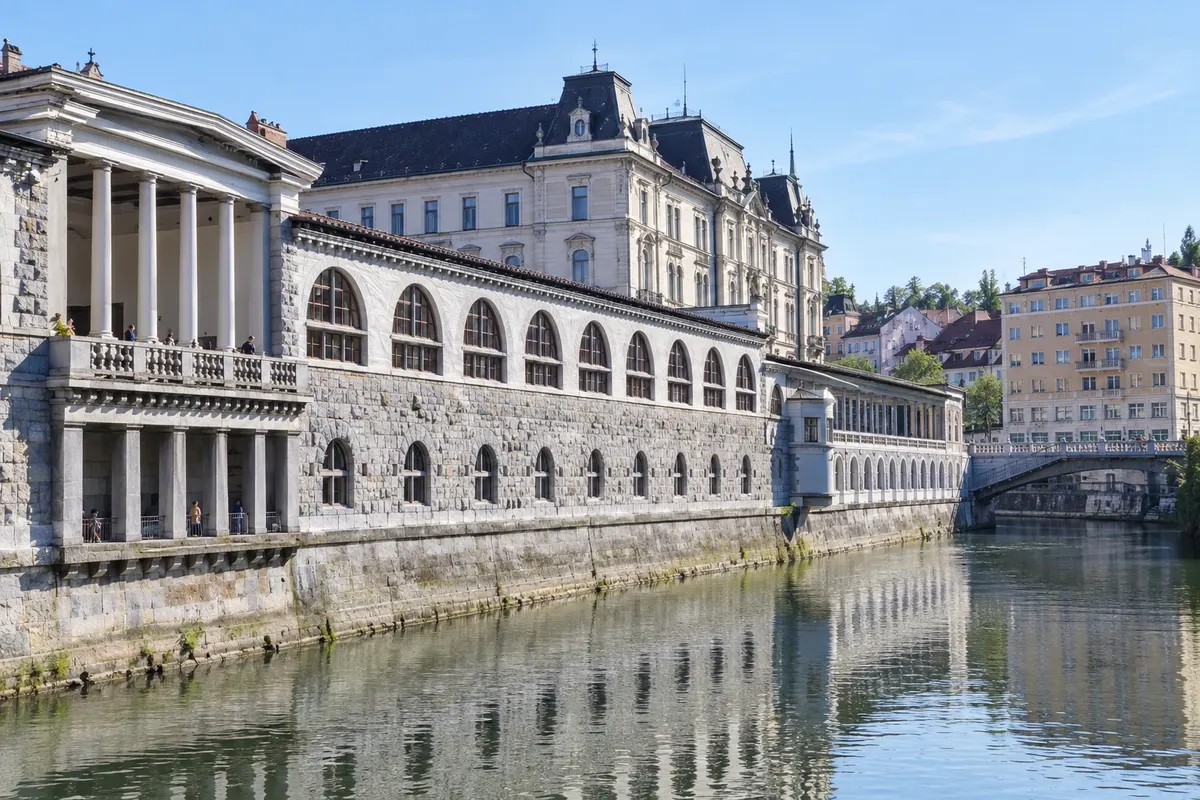
Largest city and seat of the Slovenian government, cut by the Ljubljanica. The old town, closed to cars, brings together the hilltop castle, the Triple Bridge, the Dragon Bridge, the Cathedral of St. Nicholas and the Central Market, almost all designed or redesigned by Jože Plečnik. To the west is Tivoli Park; to the south, in the Trnovo neighborhood, Plečnik’s house; and on the plain of the Ljubljansko barje, the prehistoric stilt houses of Ig.
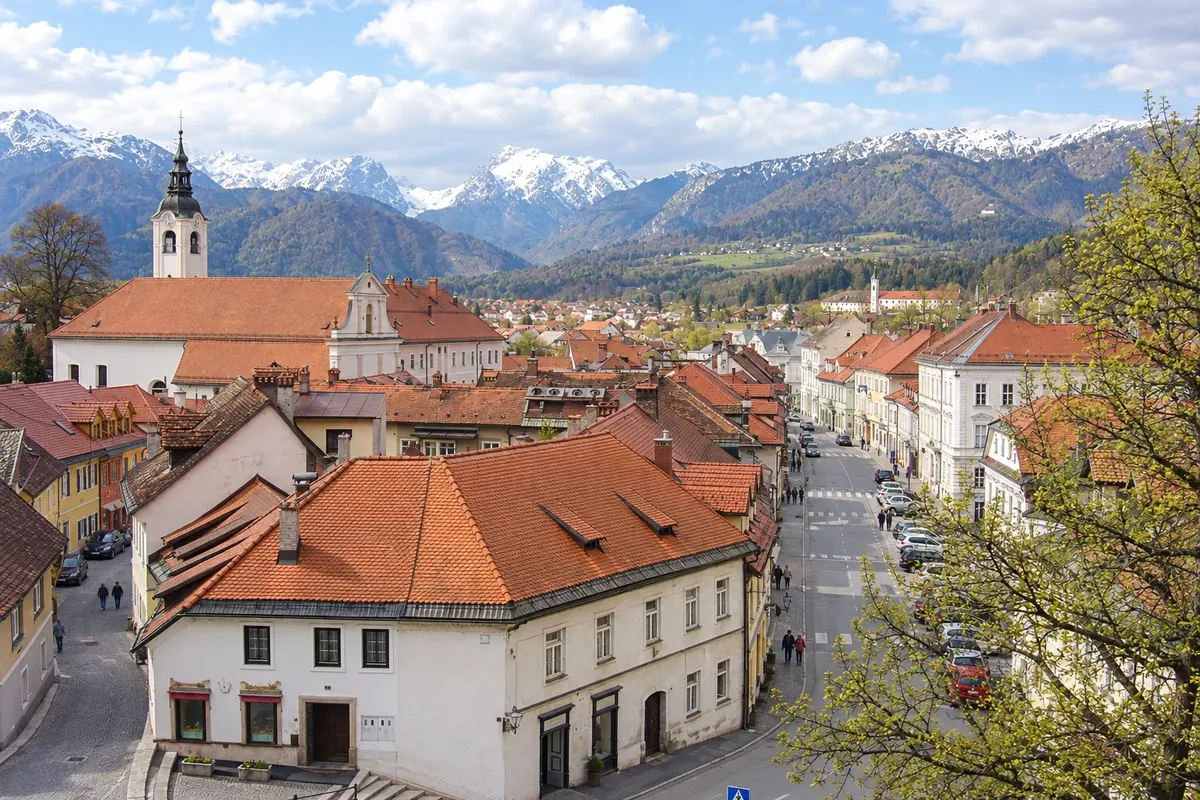
Medieval town in the northern part of central Slovenia, between Ljubljana and the Kamnik–Savinja Alps. The old centre, with Šutna Street and Glavni trg square, surrounds the Mali grad hill and its Romanesque chapel. Zaprice Castle houses the city museum. From the valley to the north a cable car rises to the Velika Planina plateau with the shepherd huts.
From May to September the days are long, riverside terraces fill up, and the Velika Planina plateau receives shepherds and livestock, generally from June to September. Summers are often warm, with afternoon thunderstorms. In September and October the capital is less busy. In December Ljubljana decorates the center and the riverbanks for the year-end festivities. Winters are cold, with fog in the plain.
Ljubljana Jože Pučnik Airport (LJU), in Brnik, is about 25 km from the center, with buses and transfers to the city, and has flights to European cities. The airports of Venice, Trieste, Zagreb and Vienna are also used by those arriving in Slovenia. The train station and the long-distance bus station are side by side north of the center, with trains to Maribor, Koper, Jesenice and Zagreb. Highways A1 and A2 intersect in Ljubljana.
Your questions
Two days are enough to see the historic center, the castle, Plečnik’s works along the river and Tivoli Park. If you have a third day, it’s worth going to Velika Planina or the Ljubljansko barje, or taking a day trip to Bled or Postojna Cave, both close to the capital.
They are the bridges, squares, markets, churches and parks that architect Jože Plečnik designed for Ljubljana in the first half of the 20th century, such as the Triple Bridge, the Central Market and the National and University Library. The ensemble has been a UNESCO World Heritage site since 2021 and can be seen on foot in the city center and along the Ljubljanica.
By car or bus to the Kamniška Bistrica valley, about 10 km from Kamnik, and from there by cable car and chairlift up to the plateau. There are also trails for hiking up on foot. Cable car schedules change with the season: check before you go.
In the capital, no: the center is closed to cars and is explored on foot or by bicycle, and city buses connect the neighborhoods. For Kamnik and Vrhnika there are regional trains and buses. A car helps to reach the Kamniška Bistrica valley and the trails of the Ljubljansko barje.