Bovec
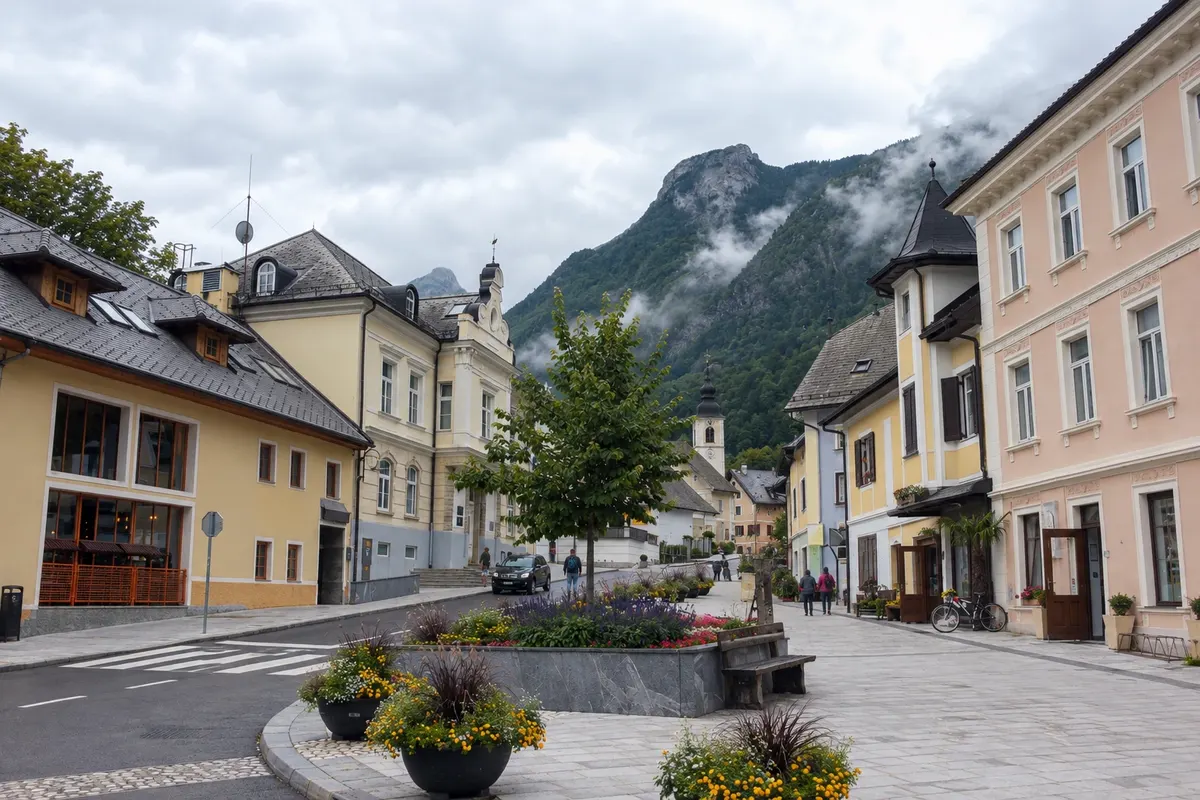
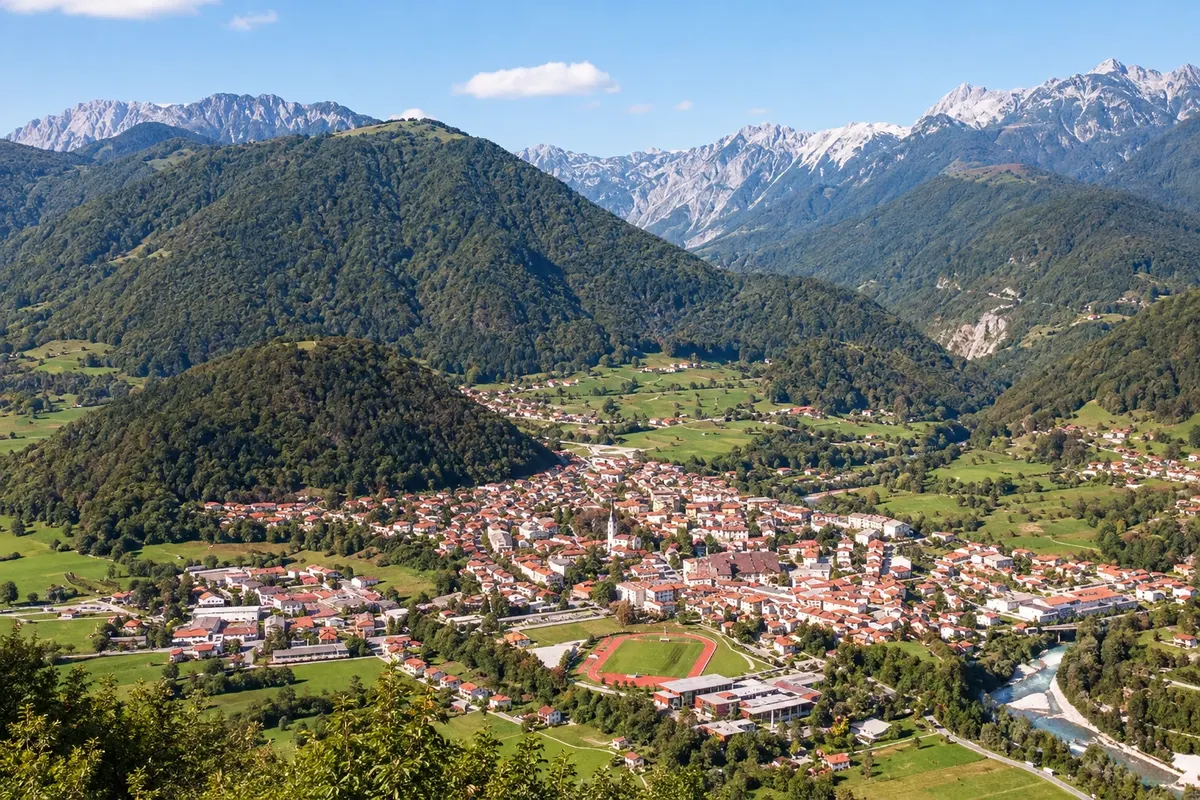
Small town in an open basin of the upper Soča Valley, between the Kanin massif and Triglav National Park. It concentrates river-sport operators and lies near the Velika korita gorge, the Boka waterfall, Kluže Fortress and the Mangart Road.
Goriška · Slovenia
The emerald-green river that flows down from the Julian Alps through gorges and waterfalls, with rafting in Bovec and museums and trails of the Isonzo front in Kobarid and Tolmin.
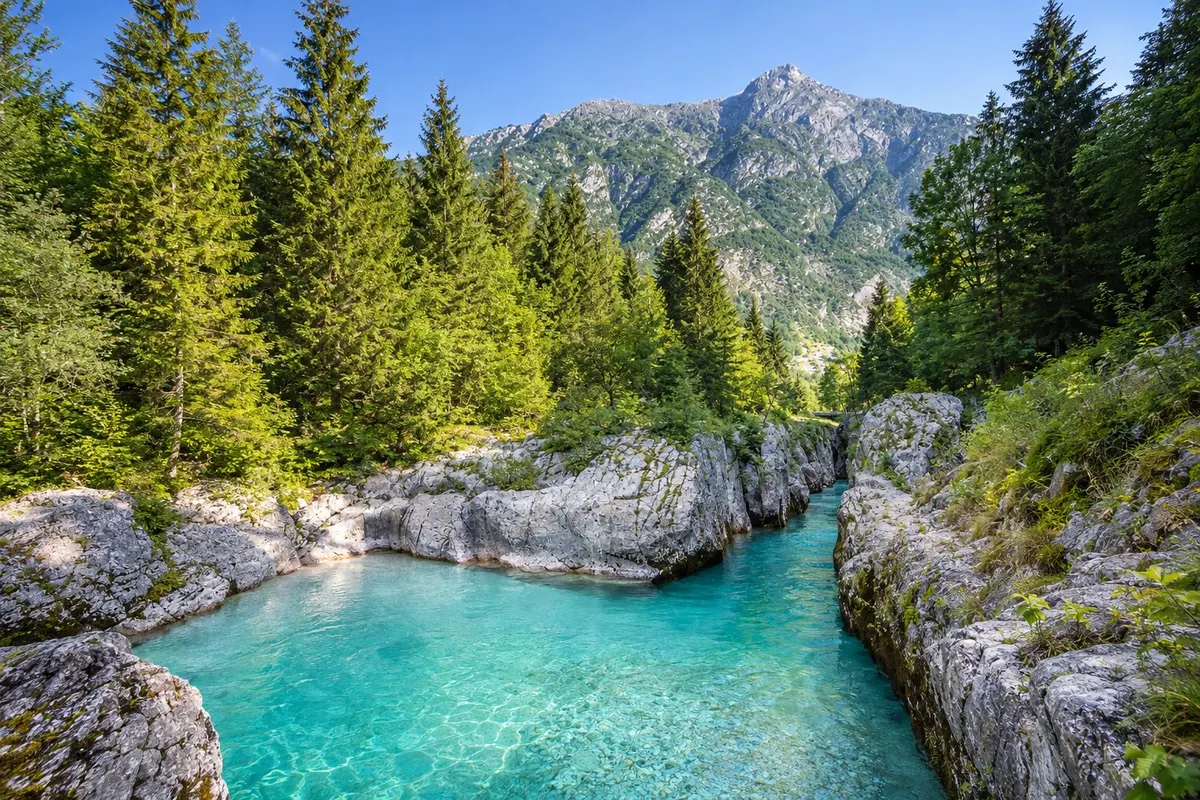
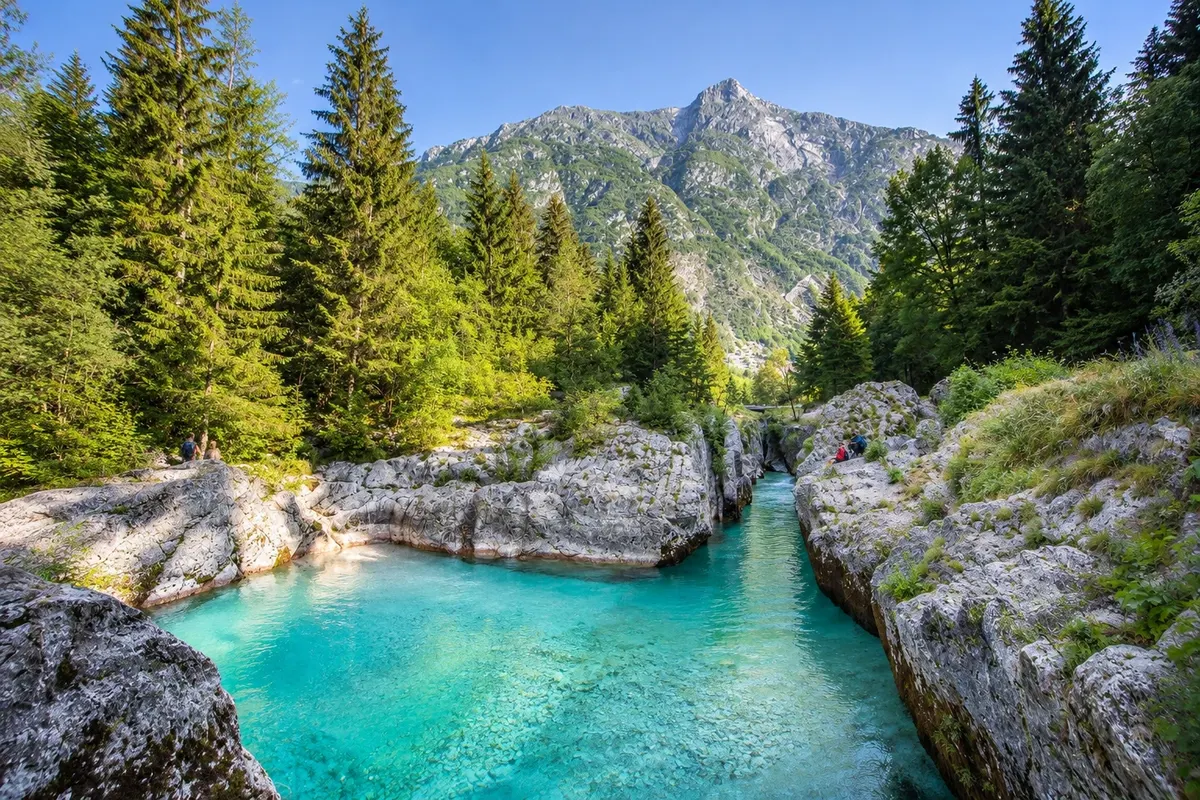
In the photo: Soča River at Velika korita Soče.
Illustrative images. The pictures in this guide are illustrations based on the real place, not photographs, and may differ from it.
Get to know the place
The Soča rises beneath the Vršič Pass in the Julian Alps and runs about 140 km to the Adriatic, mostly through Slovenian territory. In Italy, where it flows into the sea, it is called the Isonzo. The clear, green-blue water passes through narrow gorges, plunge pools and stretches of rapids that have made the valley one of Europe’s top whitewater destinations.
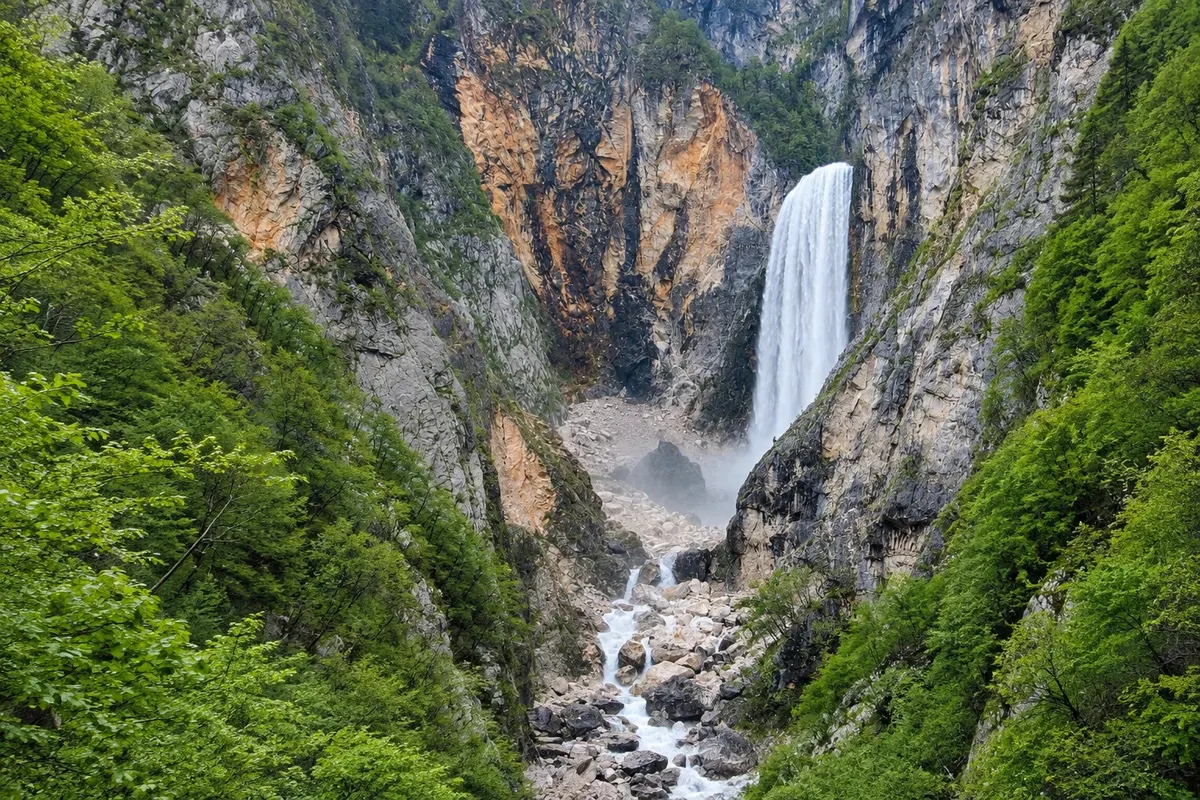
High in the valley, in Bovec, operators take groups down the rapids by raft or kayak, usually from April to October. Nearby are Velika korita, a 750-meter gorge carved by the river, the Boka waterfall with more than 100 meters of drop, Kluže Fortress and the Mangart Road, the highest road in the country.
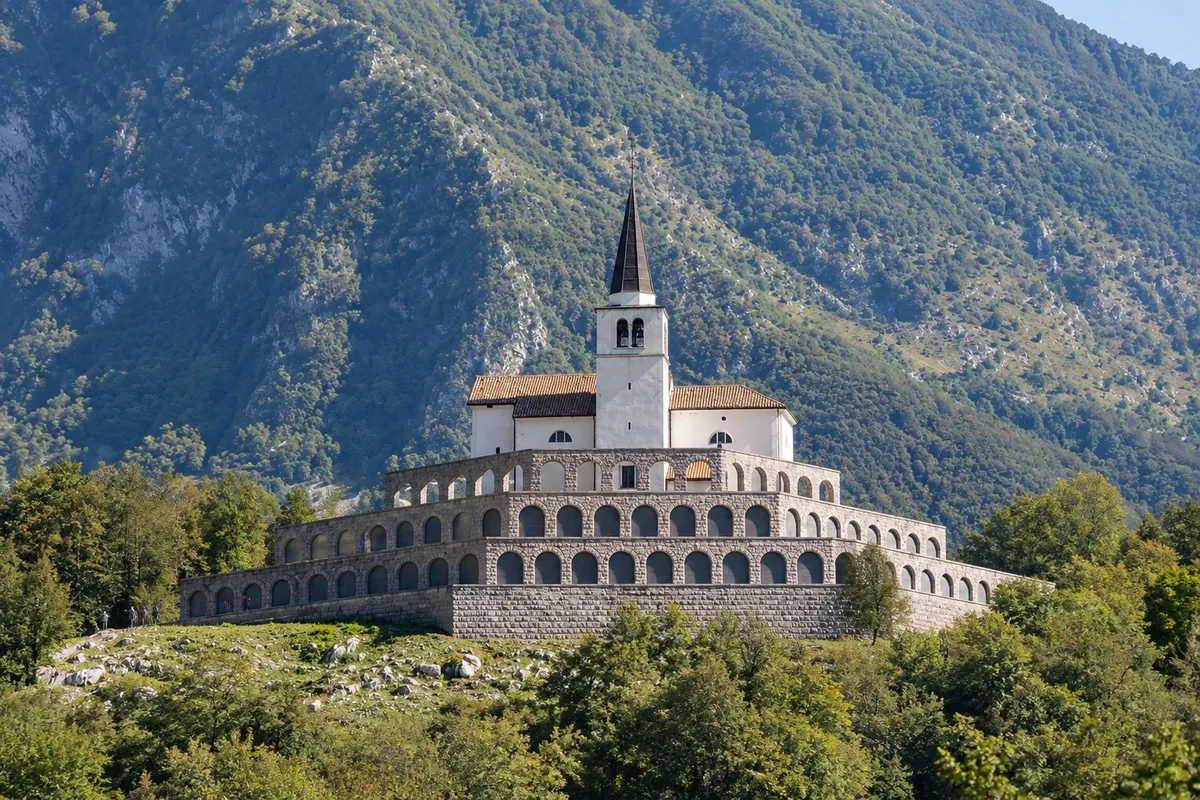
Downriver, Kobarid and Tolmin preserve the memory of the Isonzo Front, the scene of twelve battles between the Italian and Austro-Hungarian armies from 1915 to 1917. The Kobarid museum tells that story, and trails, trenches, cemeteries and the memorial church of Javorca are signposted along the Walk of Peace (Pot miru).
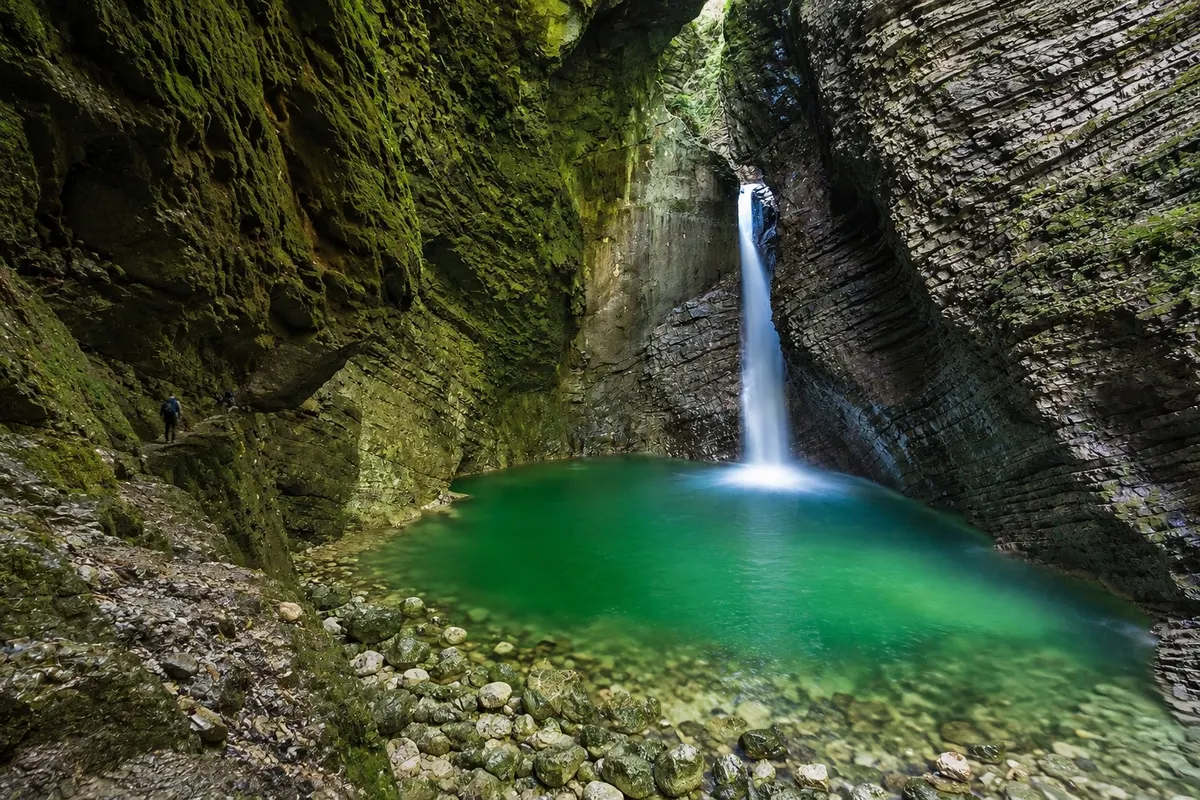
Near Kobarid is the Kozjak waterfall, in a rock chamber, and by Tolmin are the Tolminka gorges, where the national park reaches its lowest point. The valley is also known for Bovec sheep cheese and marble trout, a species found only in this river basin.
This destination brings together 3 cities: Bovec, Kobarid, Tolmin.

One destination, many paths
Start with one city or combine several in your itinerary.
Boundaries: Geodetska uprava Republike Slovenije (GURS), Register prostorskih enot, 28/02/2024, licença CC BY 4.0. Adapted by Cidade Turismo.
✈ Aeroporto di Trieste (TRS), in Ronchi dei Legionari (Itália) · 110 km to Bovec
From Ljubljana, about 130–150 km via Tolmin, roughly two and a half hours. In summer there is also the mountain route over Vršič coming from the north. The nearest airports are Trieste and Ljubljana. Buses connect the valley with Ljubljana and Nova Gorica, and the Bohinj railway stops at Most na Soči, near Tolmin.
Suggested arrival point: Bovec
Small town in an open basin of the upper Soča Valley, between the Kanin massif and Triglav National Park. It concentrates river-sport operators and lies near the Velika korita gorge, the Boka waterfall, Kluže Fortress and the Mangart Road.
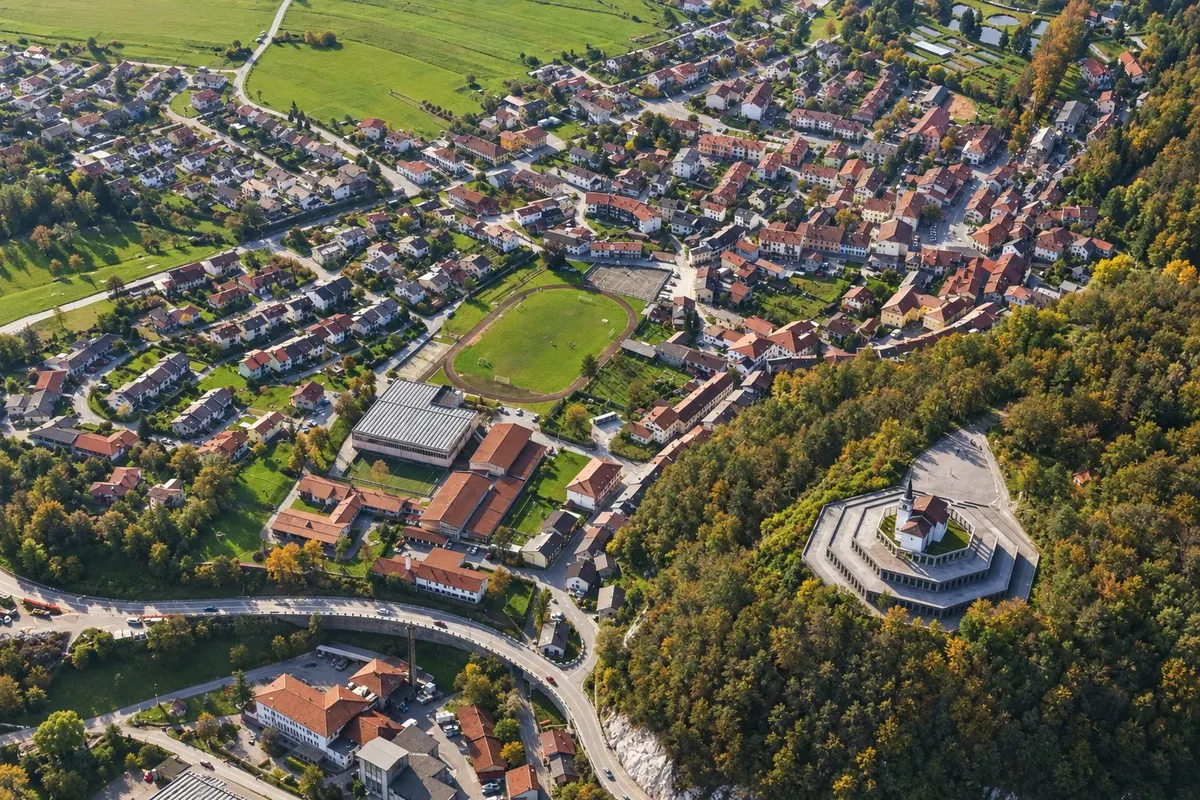
Small town in the middle of the Soča Valley, near the border with Italy, known for the Battle of Caporetto (1917). The museum about the Isonzo front, the Italian ossuary on Gradič Hill and the Historical Trail, which leads to Napoleon’s Bridge and the Kozjak waterfall, can all be reached on foot from the square.
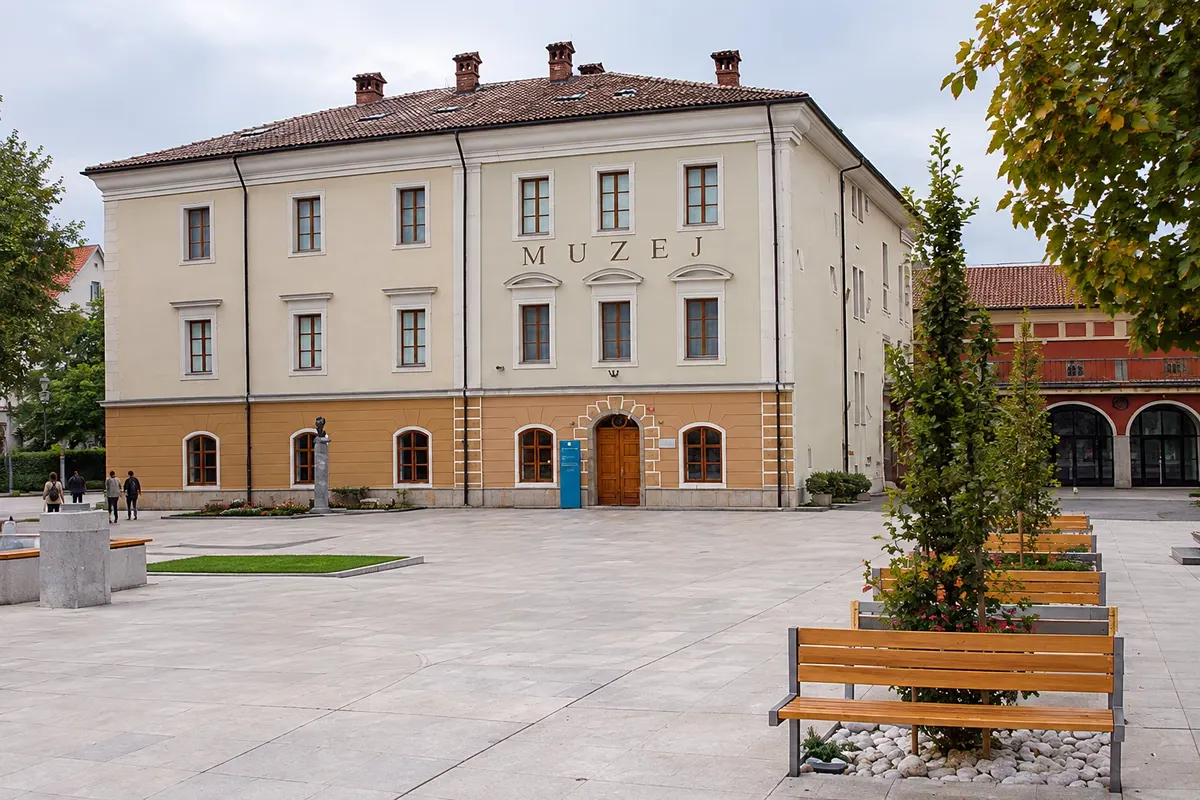
Town on a terrace above the confluence of the Soča and the Tolminka, at the southern entrance to Triglav National Park. Near the center are the Tolmin Gorges, with the Devil’s Bridge, and, up the Tolminka valley, the Javorca memorial church. The regional museum tells the valley’s history, from the Iron Age to the Isonzo front.
The local experience
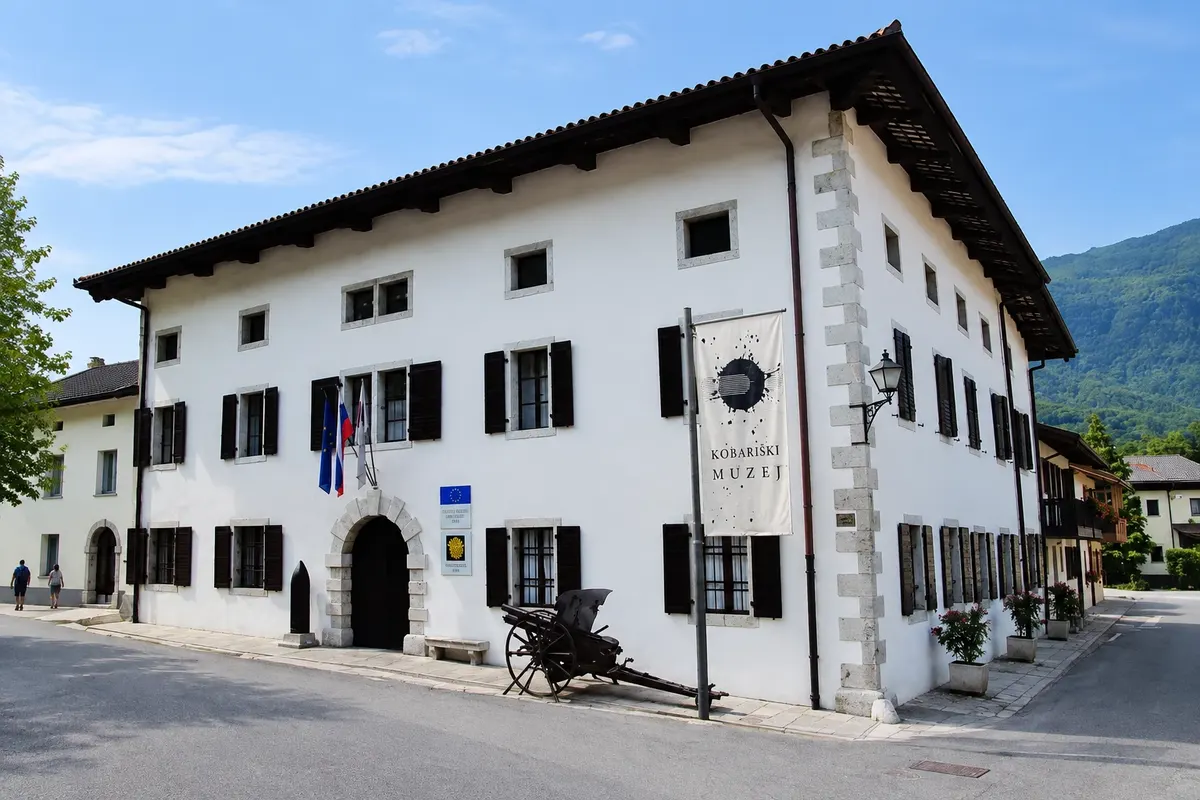
The Kobarid museum about the war in the Soča Valley and the Battle of Caporetto (1917), with photos, objects, maps and a model of the valley. It received the Council of Europe Museum Prize in 1993.
The Tolminka and Zadlaščica gorges, the lowest point of Triglav National Park, with the confluence of the two rivers, a thermal spring, the Bear’s Head rock and the Devil’s Bridge, 60 meters above the water.
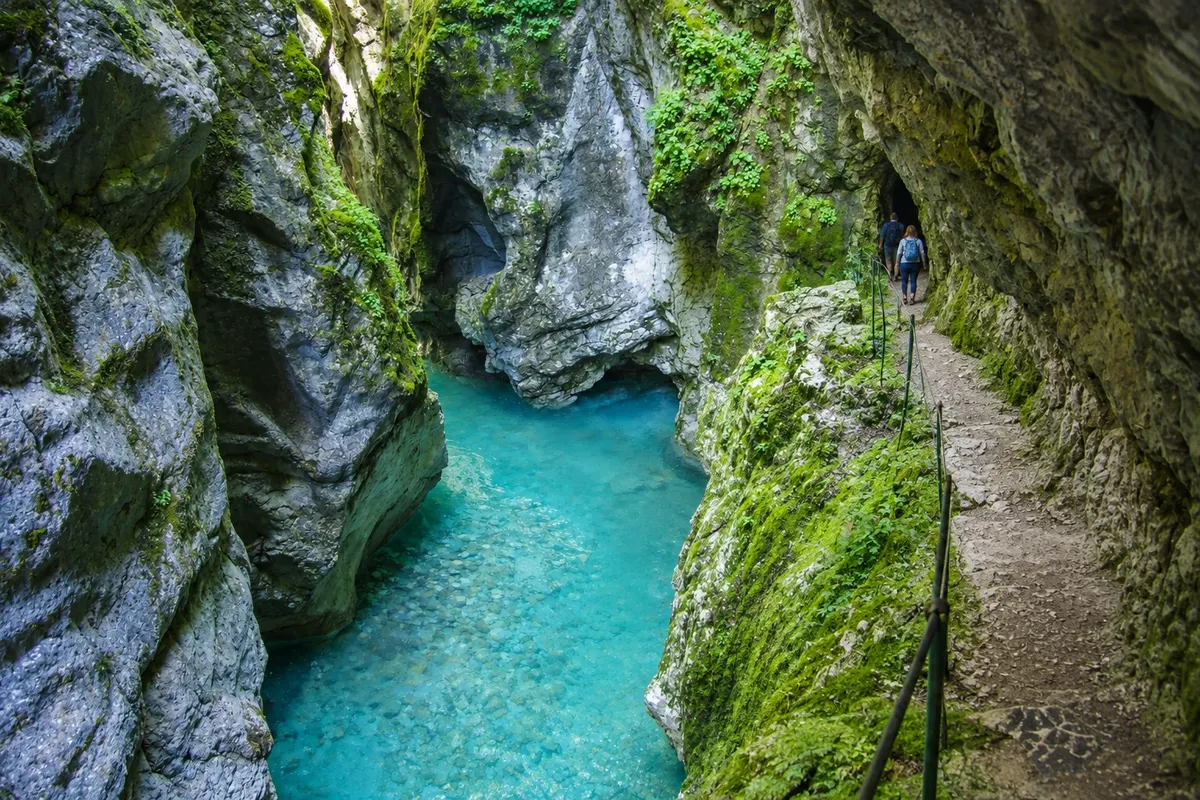
The 750-meter gorge where the Soča runs between rock walls just a few meters apart, with green pools up to 15 meters deep. You can see it from a suspension bridge and from a trail along the bank.
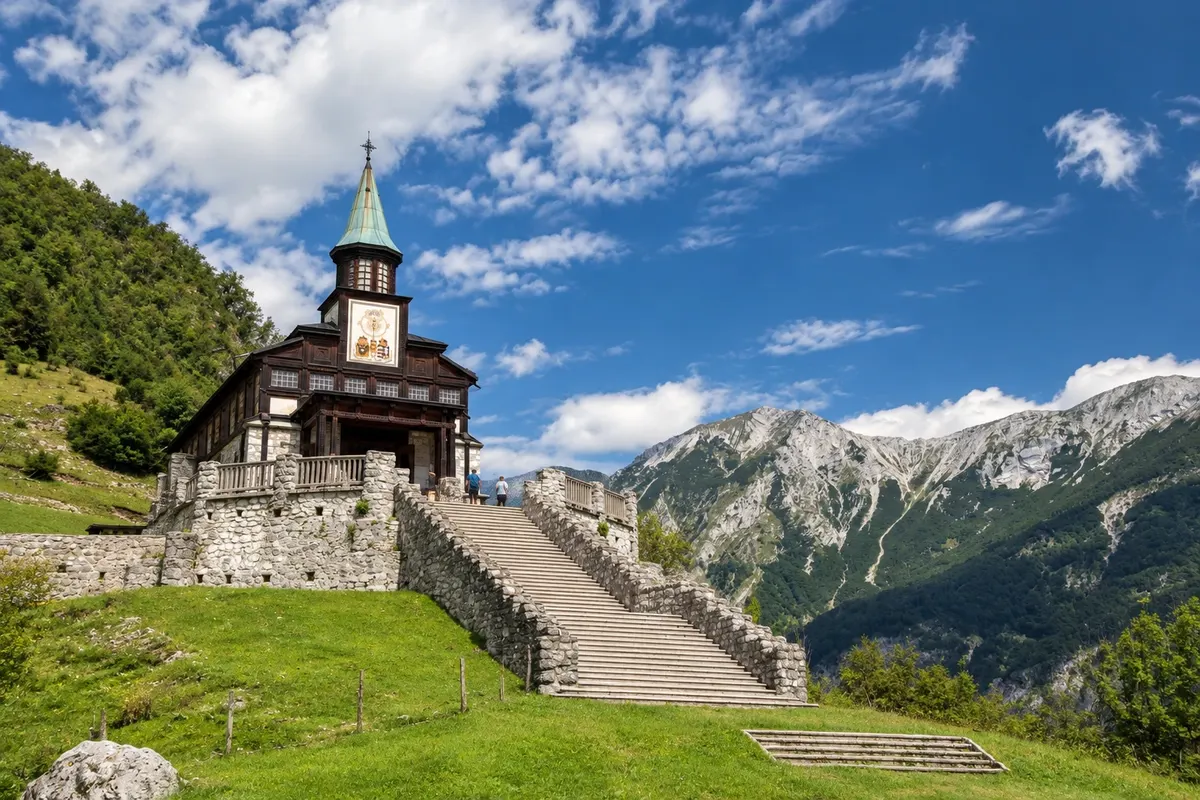
The wooden memorial church built in 1916 by Austro-Hungarian soldiers above the Tolminka valley, with the names of the dead burned into oak panels. It holds the European Heritage Label.
The Italian ossuary on Gradič Hill, above Kobarid, built around the Church of Saint Anthony, containing the remains of 7,014 Italian soldiers who died on the Isonzo front.
The waterfall that issues from a spring on the slope of the Kanin massif and drops more than 100 meters, about 18 meters wide, near the road between Bovec and Žaga. A viewpoint is a 15–20 minute walk away.
The 15‑metre waterfall that plunges into a rock chamber above a green pool, near Kobarid. You reach it by a trail that crosses the Soča via Napoleon’s Bridge and ends at a wooden walkway.
The Tolmin Regional Museum, in a manor house in the town center, presenting the history of the Soča valley from the prehistoric Iron Age through World War I and life on the mountain pastures.
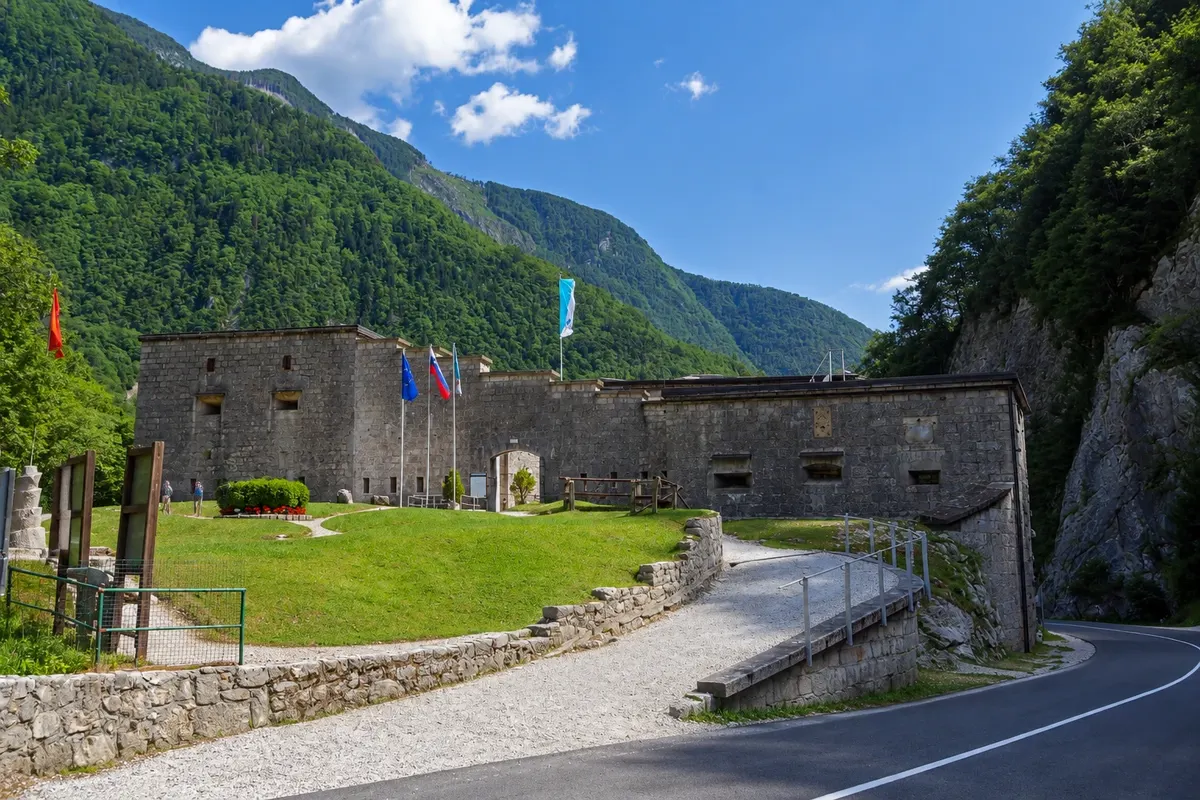
The Austro-Hungarian fortress of 1882 above the Koritnica gorge, 4 km from Bovec, with a museum about the region and the Isonzo front. Above it are the ruins of Forte Hermann.
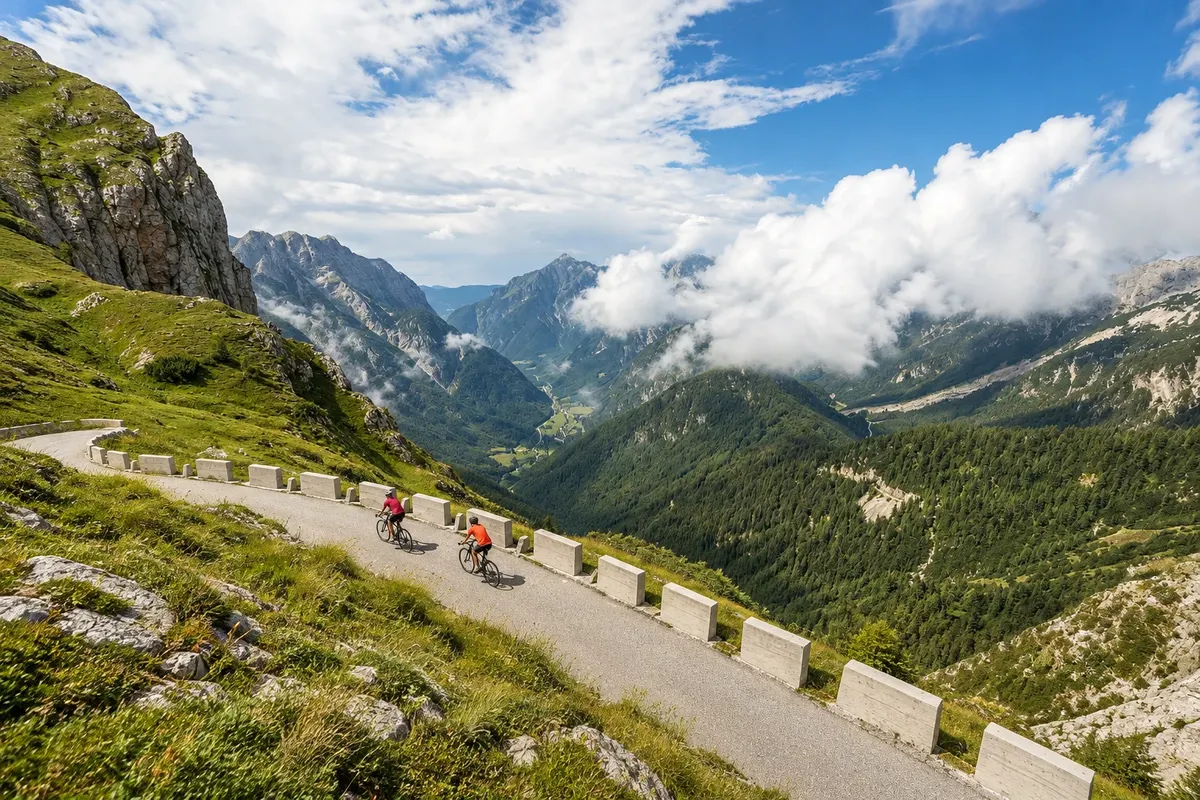
The mountain road that climbs above 2,000 meters to the Mangart saddle, the highest in Slovenia, with tunnels and tight hairpin bends. From the top you can see the Julian Alps and, on the other side, the Fusine lakes in Italy.
Before you go
A little planning leaves more time to enjoy the journey.
From May to September for rafting, kayaking and hiking; heat and visitor numbers peak in July and August. River activities are generally offered from April to October. The Mangart Road is open from late spring through autumn, depending on snow. In winter the valley is quiet and some attractions close.
The seasons shown are the most usual ones; nature doesn't always follow the calendar.
Three days let you divide the valley: one in Bovec for the river, one around Kobarid and Kozjak waterfall, and one in Tolmin for the gorges and Javorca. With four or five days you’ll have time for the Mangart Road and longer hikes.
Bovec concentrates adventure-sport outfitters, guesthouses and riverside campsites. Kobarid sits mid-valley, close to the museum and Kozjak waterfall. Tolmin has more services and is near the Most na Soči station. Campsites along the Soča are common in season.
Take your trash with you, follow the signs and support local businesses. In natural areas, follow the visiting guidelines.
Get your questions answered
Three days allow you to visit Bovec, Kobarid and Tolmin. With four or five days you can include the Mangart Road and longer hikes.
Generally from April to October. In spring, with snowmelt, the river usually has higher flows; in summer the water remains cold, and operators provide neoprene suits.
It helps a lot: attractions are spread out and buses are infrequent outside summer. In season there are tourist buses between some sites and rafting companies offer pickups for customers.
By car, via Idrija or Nova Gorica to Tolmin, in about two and a half hours; in summer also over the Vršič Pass. There are buses from Ljubljana to Tolmin, Kobarid and Bovec.
Yes, in pools and shingle beaches, but the water is very cold even in summer. Avoid rapids and gorges.