Campinho on foot: Praça Dr. Arthur Gerhardt, Lutheran Church and Rua de Lazer
From Entrance gateway, Domingos Martins town center on foot 2 to 3 hours morning or afternoon easy
The center of Domingos Martins, the former Campinho settlement, can be explored on a short walk. The entrance is marked by a half-timbered-style gateway; the exposed-wood technique brought by the settlers has a Gothic-lettered greeting.
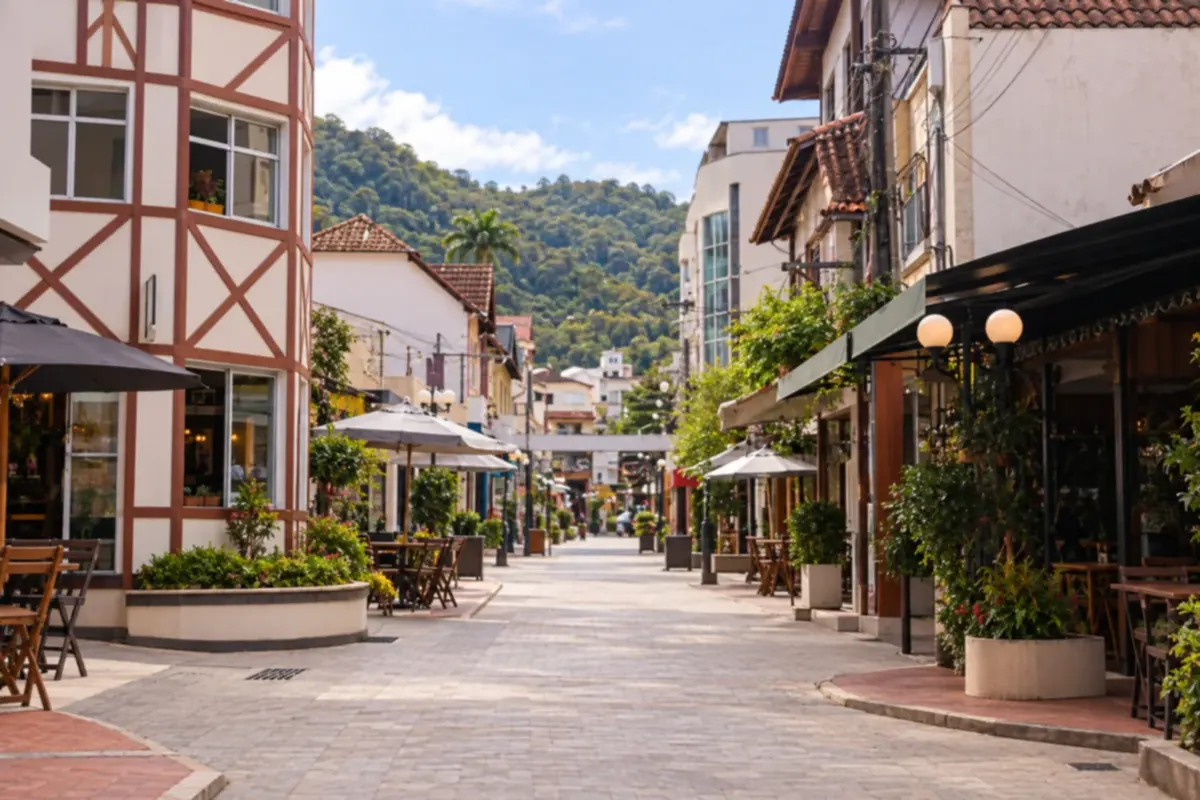
The town’s heart is Praça Dr. Arthur Gerhardt, a planted square surrounded by German-style houses and restaurants serving traditional cuisine. There is the Monument to the Immigrant Settler, from 1954, honoring the first families, and that’s where the stage for the Winter Festival and the Christmas decorations are set up.
Also on the square is the Lutheran Church, built in the 19th century. It is noted as the first Protestant church in Brazil to have a tower, at a time when the Empire’s Constitution only allowed towers on Catholic temples. Avoid entering during worship services.
The Casa da Cultura operates as the municipality’s historical museum: it holds furniture, household items, tools, documents and photographs of the immigrant families who formed the colony. Check the opening days.
Rua de Lazer is the popular name for Rua João Batista Wernersbach, the busiest stretch of the center, with shops selling mountain products, crafts, cafés and restaurants. It’s where you can try the cuisine left by German and Pomeranian settlement. The Praça Domingos José Martins, called Praça da Biquinha, with the bust of the man who gave the town its name, is also in the center.
Those interested in plants can visit the Kautsky Reserve, an area of forest at the municipal seat created by botanist Roberto Kautsky, which brings together about 1,300 species of orchids and bromeliads.
Stops: Domingos Martins Gateway, Praça Dr. Arthur Gerhardt, Monument to the Immigrant Settler, Lutheran Church, Casa da Cultura, Rua de Lazer, Praça Domingos José Martins.
Includes: Self-guided walk. Shopping and meals are extra; check whether the Casa da Cultura charges an entrance fee.
Tip: Go from Friday to Sunday when more shops and restaurants are open. Before visiting the Kautsky Reserve, confirm it is accepting visitors. In July and December the Center fills up: arrive early to find parking.
Best time: Year-round; in July for the Winter Festival and in December for the Christmas decorations.
Cascata do Galo
From Domingos Martins town center by car, via the Estrada do Galo 1 to 2 hours morning or afternoon easy
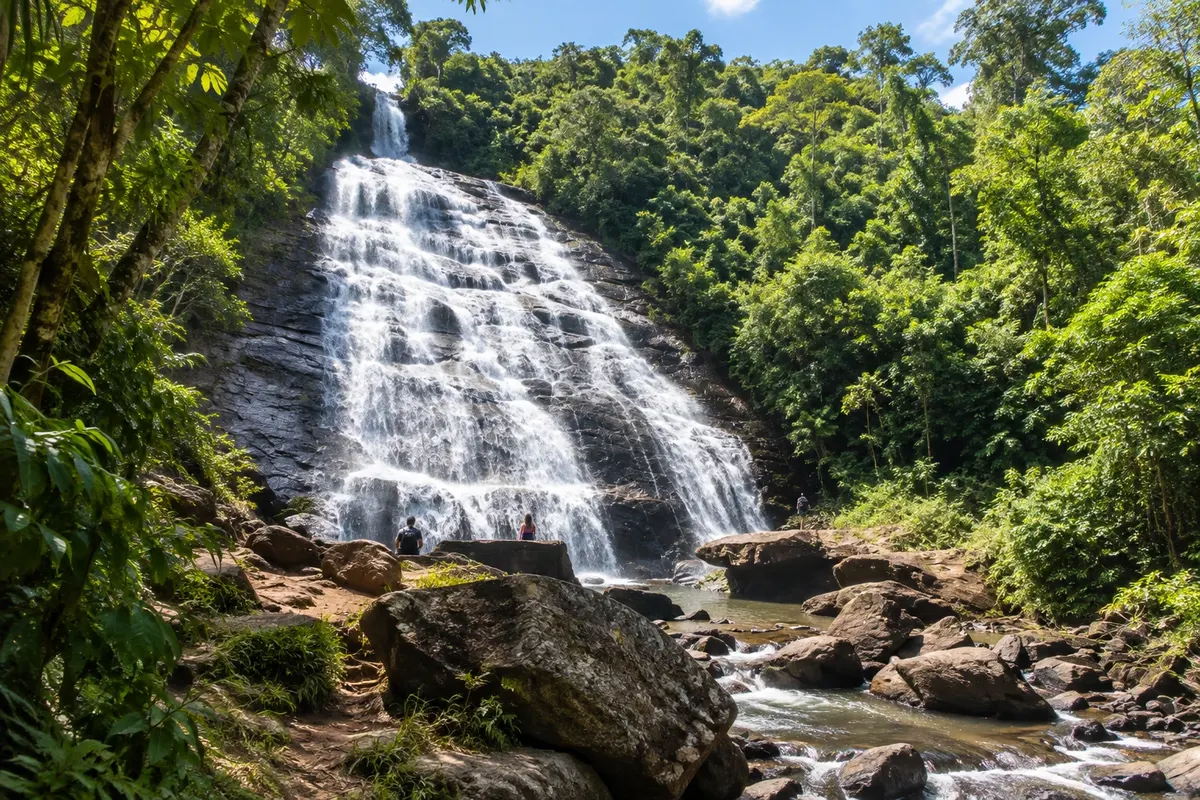
Cascata do Galo is the nearest nature outing to the town center: it is about 10 km from the seat, on the Estrada do Galo, in rural Atlantic Forest.
The water drops down a rock face about 70 meters high. There is no large pool at the base of the fall, so it is not a place for swimming: people go to see the waterfall, hear the water, wet their feet and rest amid the greenery. The flow varies greatly throughout the year and is usually higher from November to March.
It pairs well with a morning in the center for those staying in Campinho who don’t want to go up to Pedra Azul on the same day.
Stops: Cascata do Galo, Estrada do Galo.
Includes: Self-guided visit.
Tip: Ask in town about road conditions after heavy rain. Bring footwear that can get wet: the stones near the waterfall are slippery.
Best time: From November to March, when the waterfall usually has more water; in the morning.
Parque Estadual da Pedra Azul: viewpoints and natural pools
From Park gate, on Rota do Lagarto, Aracê district on foot, via a self-guided trail 40 to 60 minutes for the short circuit; 2 to 3 hours for the full circuit morning easy for the short circuit; moderate for the full circuit
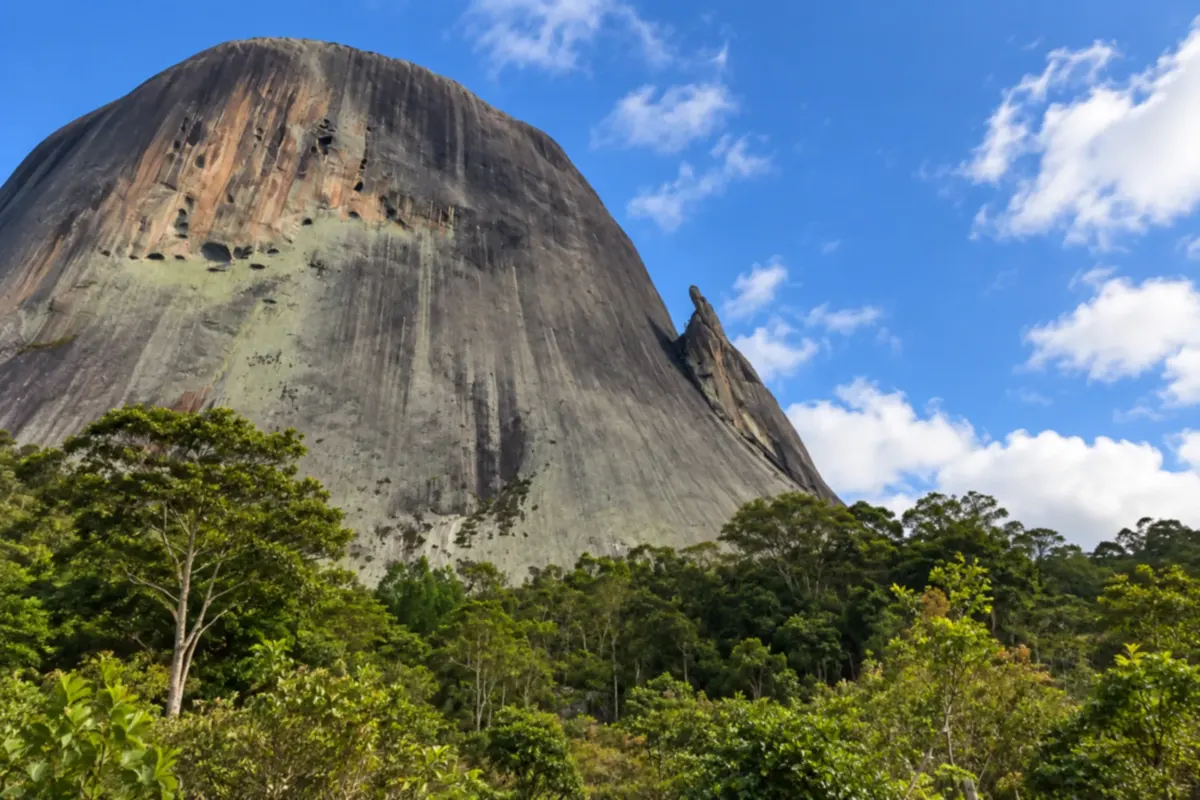
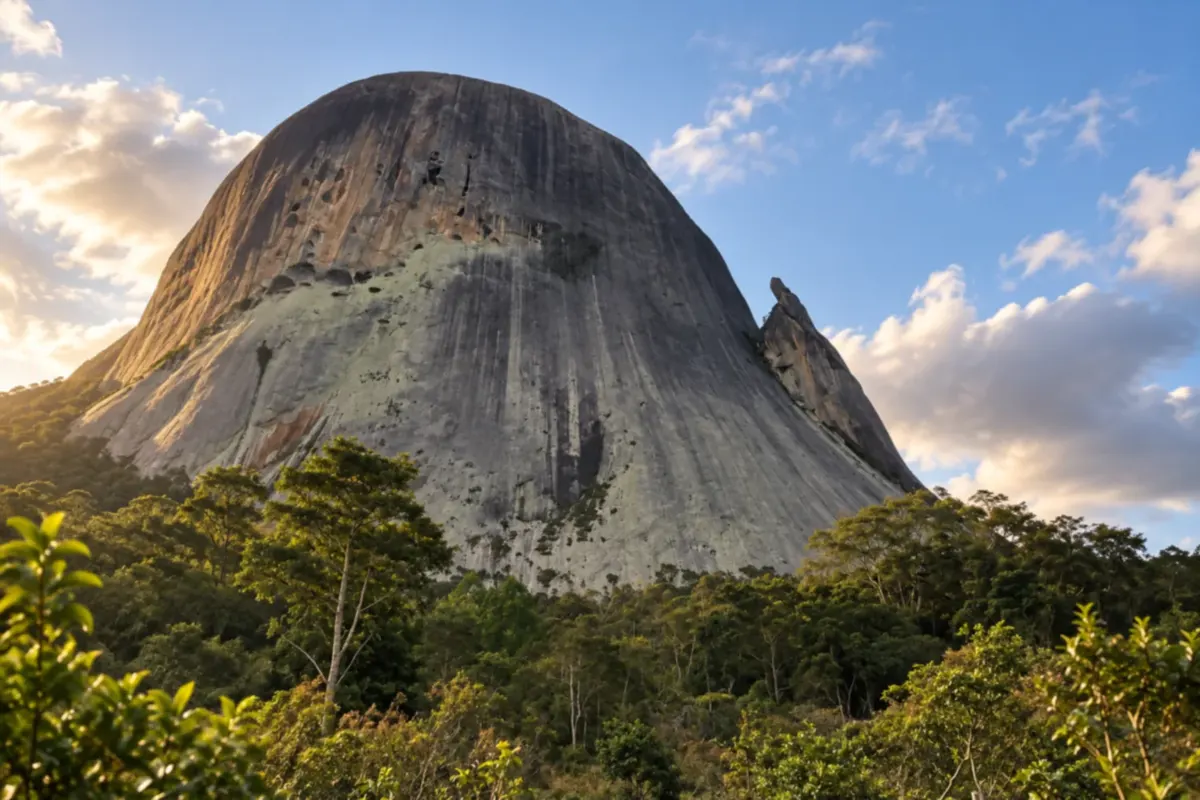
Pedra Azul is a granite outcrop at 1,822 meters of elevation, in the Aracê district. Next to it are Pedra das Flores, at 1,909 meters, and Pedra do Lagarto, a protrusion that looks like a lizard climbing the cliff. The name comes from the lichens that cover the rock and give it a bluish tone when seen from afar; depending on the season and the light, the color shifts through orange and pink. The area almost became a quarry during construction of BR-262, was protected as a reserve in 1960 and has been a state park since 1991.
The trails are self-guided, signposted and circular, and visitors choose between two circuits. The partial circuit is about 1 km and takes 40 to 60 minutes: it goes to the base of the rock and passes the Lagarto and Forno Grande viewpoints. It’s recommended for visitors with little time or those with children. The full circuit is about 3.5 km and takes two to three hours, including all viewpoints and the natural pools, cavities opened in the rock by water. To reach them you climb a steep rocky slope of about 90 meters, aided by a rope handrail; the return is via another trail with wooden steps fixed to the rock.
Visits must be scheduled only through the state government booking portal. The park is open Tuesday through Sunday, trail access ends in the early afternoon, and there is a limit of 150 people per day. Before entering, each visitor must submit a completed liability and risk-awareness form. In rain or bad weather, trails may be closed at any time.
The forest is home to howler monkeys, marmosets, armadillos and arapongas, and orchids and bromeliads grow there.
Stops: Pedra Azul State Park, Pedra Azul, Pedra do Lagarto, Lagarto Viewpoint, Forno Grande Viewpoint, Natural pools, Pedra das Flores.
Includes: Trail access requires booking; no entrance fee is charged. If you hire a local agency guide, pay them separately.
Tip: Book several days in advance for weekends, holidays and July. Wear sneakers or boots with grippy soles and bring water, a snack and, in hot weather, a swimsuit. Arrive before the scheduled time.
Best time: From May to September, when the weather is drier and skies are clearer; on hot summer days for the pools, always in the morning.
Top of Pedra Azul: guided climb
From Entrance gate of Pedra Azul State Park trail and rock climbing, with equipment full day morning strenuous, with climbing
There is no hiking trail to the summit of Pedra Azul. The top, at 1,822 meters, is only reached by rock climbing, and the park treats the ascent as a sporting activity with its own rules.
The approach follows the viewpoints trail to the base of the route. From there upward are sections of friction climbing on the rock face that require experience and safety equipment. Those without either must hire a qualified guide specialized in leading visitors on climbing walls. The park does not maintain a registry or accreditation of guides: it is the visitor’s responsibility to check the experience, qualifications and equipment of anyone they hire.
The limit is 21 people per day, in three groups of seven. Booking is individual, through the state government’s scheduling portal, and the liability and risk-awareness waiver is signed before starting. The activity runs Tuesday to Sunday and depends on the weather: with rain or bad conditions it can be suspended at any time.
Stops: Pedra Azul, Pedra Azul State Park.
Includes: Access to the route requires booking. Guide and equipment are hired separately.
Tip: Book each person in the group separately and in advance. Ask the guide for a list of what they provide and what you need to bring. Have a plan in case the weather turns bad.
Best time: From May to September, in the dry season.
Rota do Lagarto by car
From BR-262, near km 90, in the village of Pedra Azul car 2 to 4 hours, including stops morning or afternoon easy
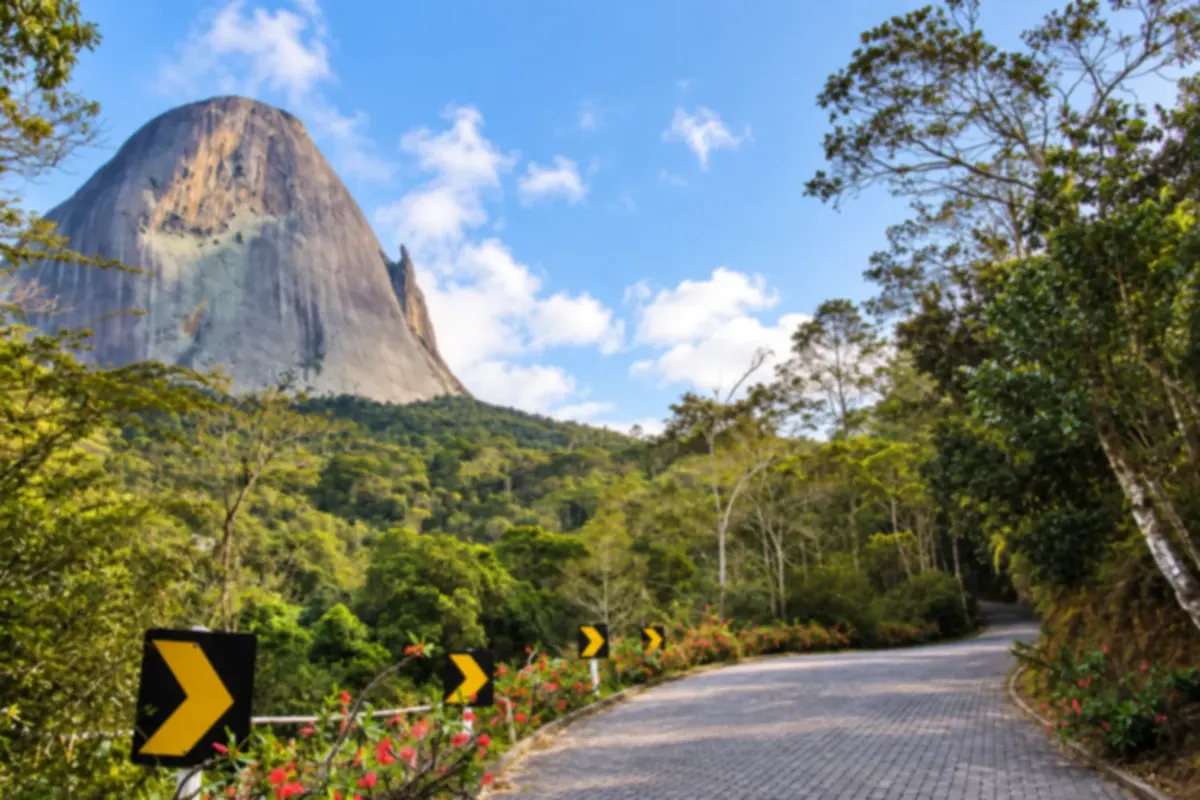
Rota do Lagarto is a paved road of 7 to 8 km that starts from BR-262 near km 90, skirts Pedra Azul and ends at ES-164. The name comes from Pedra do Lagarto, the cliff’s protrusion that, seen from a certain angle, looks like the animal climbing the mountain.
Right at the start is the Pedra Azul Tourist House, an information point with a thermometer and a signboard with the place name. The road then enters a closed stretch of forest that forms a tunnel of trees, and after a curve the full Pedra Azul appears ahead. About 2 km from the start is the state park gate, with parking and a café; from there you can photograph the rock without doing the trail.
The rest of the route alternates inns, cafés, restaurants, a brewery and old houses of Italian immigrant families, with hydrangeas along the asphalt. A stud farm raises Norwegian Fjord horses and offers guided horseback rides with views of the rock, paid separately.
In the same region, in the Aracê district, is the Quadrado de São Paulino, a cluster of restaurants, snack bars and a brewery. Nearby, in São Paulinho do Aracê, there is a lavender field open to visitors on weekends and holidays.
It’s a flexible outing that fits before or after the park trail. There is no public transportation connecting the stops.
Stops: Rota do Lagarto, Pedra Azul Tourist House, Pedra Azul State Park gate, Pedra do Lagarto, Quadrado de São Paulino, ES-164.
Includes: Self-guided tour. Meals, tastings and horseback rides are paid separately.
Tip: Many places close at the start of the week: plan your itinerary around opening days. If you’ll drink at the breweries, arrange who will drive. In fog the rock disappears; wait, because it often clears.
Best time: May to August, because of the cold and the clear skies.
Mountain flavors: specialty coffees, breweries and pick-your-own farms
From Pedra Azul or Domingos Martins town center car; almost everything by booking half a day to a full day morning and afternoon easy
More than eighty percent of Domingos Martins residents live in rural areas, on small family properties descended from Germans, Pomeranians and Italians. Much of what visitors do off the trails is visit these homes, taste what they produce and, in some, get hands-on.
Coffee is the best-known product. The mountain region of Espírito Santo produces high-altitude specialty coffees, and there are guided tastings where you learn to smell, taste and compare beans, accompanied by breads, cookies and jams. The most curious is jacu coffee, made from beans the bird eats and passes intact; it is rare and expensive, and can be sampled at some places.
Artisan breweries in the Pedra Azul area host tastings paired with snacks. A family yogurt shop has a restaurant and a workshop where visitors watch pasteurization, mix the fruits and help pack; children can feed calves. A cookie factory founded by descendants of Germans sells dozens of varieties, sweet and savory. There is also an apiary with visits to the gardens and hives and pick-your-own farms where you harvest strawberries, peaches or tangerines, depending on the season.
Almost all experiences are scheduled and for small groups. The homes are spread out between BR-262, the Rota do Lagarto and the local roads of Aracê, up to an hour from each other.
Stops: Aracê, Pedra Azul, BR-262, Rota do Lagarto.
Includes: Each experience is paid separately, directly to the provider. Check the current price list.
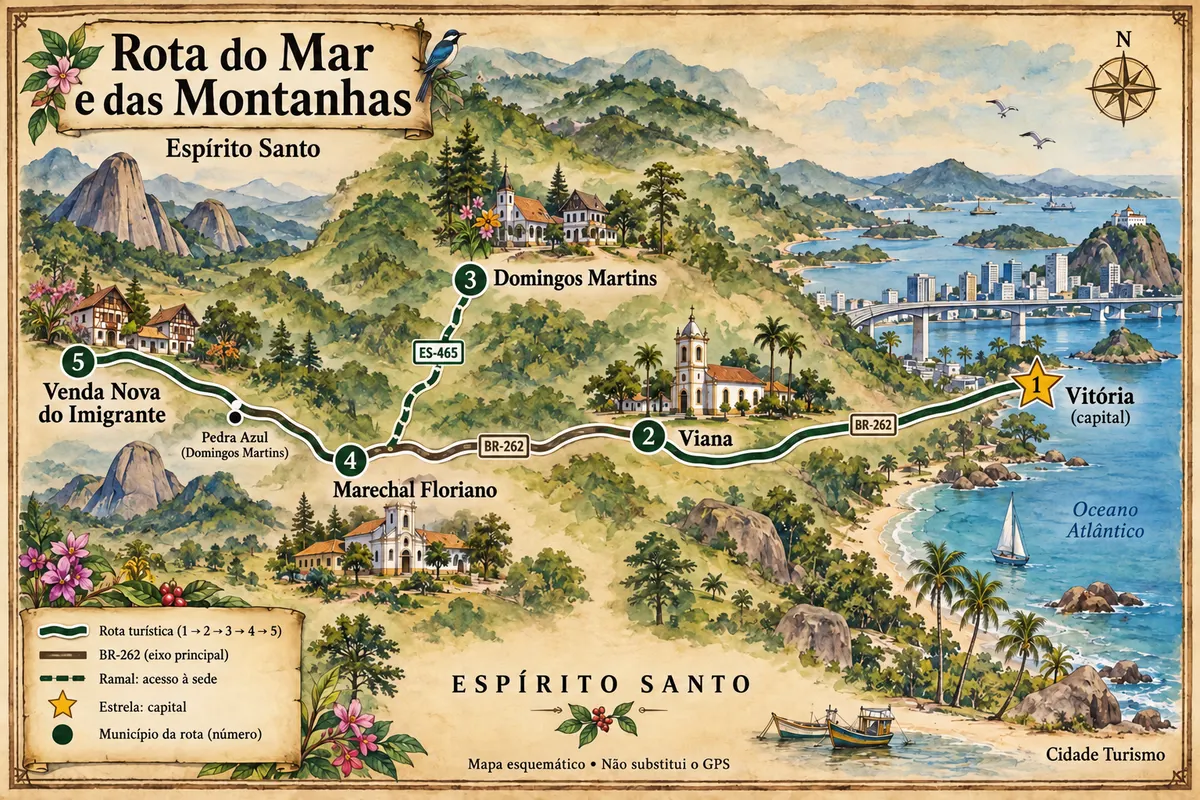
Tip: Book everything before you travel and group on the same day the stops that are on the same road. Venda Nova do Imigrante, the neighboring town about 17 km from the park, has another agrotourism circuit with Italian tradition.
Best time: All year round; from May to August during the winter season. The pick-your-own fruits depend on the harvest.


 Antarctica
 Argentina
 Bolivia
 Chile
 Colombia
 Ecuador
 Guyana
 French Guiana
 Falkland Islands (Malvinas)
 Paraguay
 Peru
 Suriname
 Uruguay
 Venezuela
 Germany
 Austria
 Belgium
 Croatia
 Denmark
 Slovakia
 Slovenia
 Spain
 Finland
 France
 Greece
 the Netherlands
 Hungary
 Ireland
 Iceland
 Italy
 Luxembourg
 Norway
 Poland
 Portugal
 the United Kingdom
 the Czech Republic
 Sweden
 Switzerland
 Turkey
 Bermuda
 Canada
 the United States
 Greenland
 Mexico
 Saint Pierre and Miquelon
 the Dominican Republic
 Japan
 South Africa
 Egypt
 Australia
 Fiji
 New Zealand
 Papua New Guinea