

 Antarctica
 Argentina
 Bolivia
 Chile
 Colombia
 Ecuador
 Guyana
 French Guiana
 Falkland Islands (Malvinas)
 Paraguay
 Peru
 Suriname
 Uruguay
 Venezuela
 Germany
 Austria
 Belgium
 Croatia
 Denmark
 Slovakia
 Slovenia
 Spain
 Finland
 France
 Greece
 the Netherlands
 Hungary
 Ireland
 Iceland
 Italy
 Luxembourg
 Norway
 Poland
 Portugal
 the United Kingdom
 the Czech Republic
 Sweden
 Switzerland
 Turkey
 Bermuda
 Canada
 the United States
 Greenland
 Mexico
 Saint Pierre and Miquelon
 the Dominican Republic
 Japan
 South Africa
 Egypt
 Australia
 Fiji
 New Zealand
 Papua New Guinea
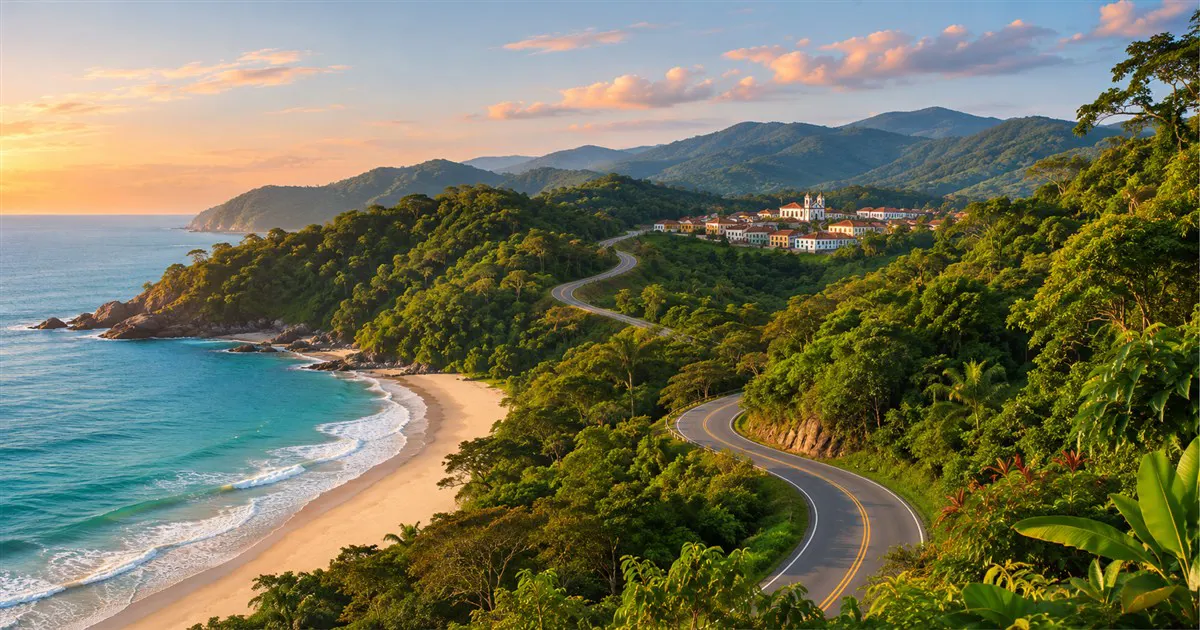
Illustrative images. The pictures in this guide are illustrations based on the real place, not photographs, and may differ from it.


Nature
Sun and beach
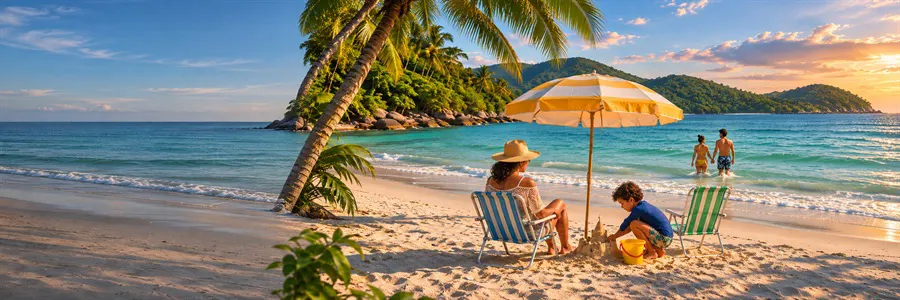
Sea bathing, a beach umbrella’s shade, natural tide pools and watching the sunset on the sand: a trip where the beach itself is the main attraction, from the warm waters of the Northeast to Amazon river beaches.
Sun-and-beach tourism is travel where the beach is the program. The day revolves around sand, swimming, shade and simple seaside food, and the rest comes from having little to decide. It’s the most popular leisure trip in Brazil, a country with more than 7,000 kilometers of coastline.
What to do

Sea bathing
Sea bathing is the focus of the trip; the water and the waves change from one coastal stretch to another.
Learn more
Beach shack
A table on the sand, straw shade, fried fish and coconut water: the beach shack is the base of the day.
Learn more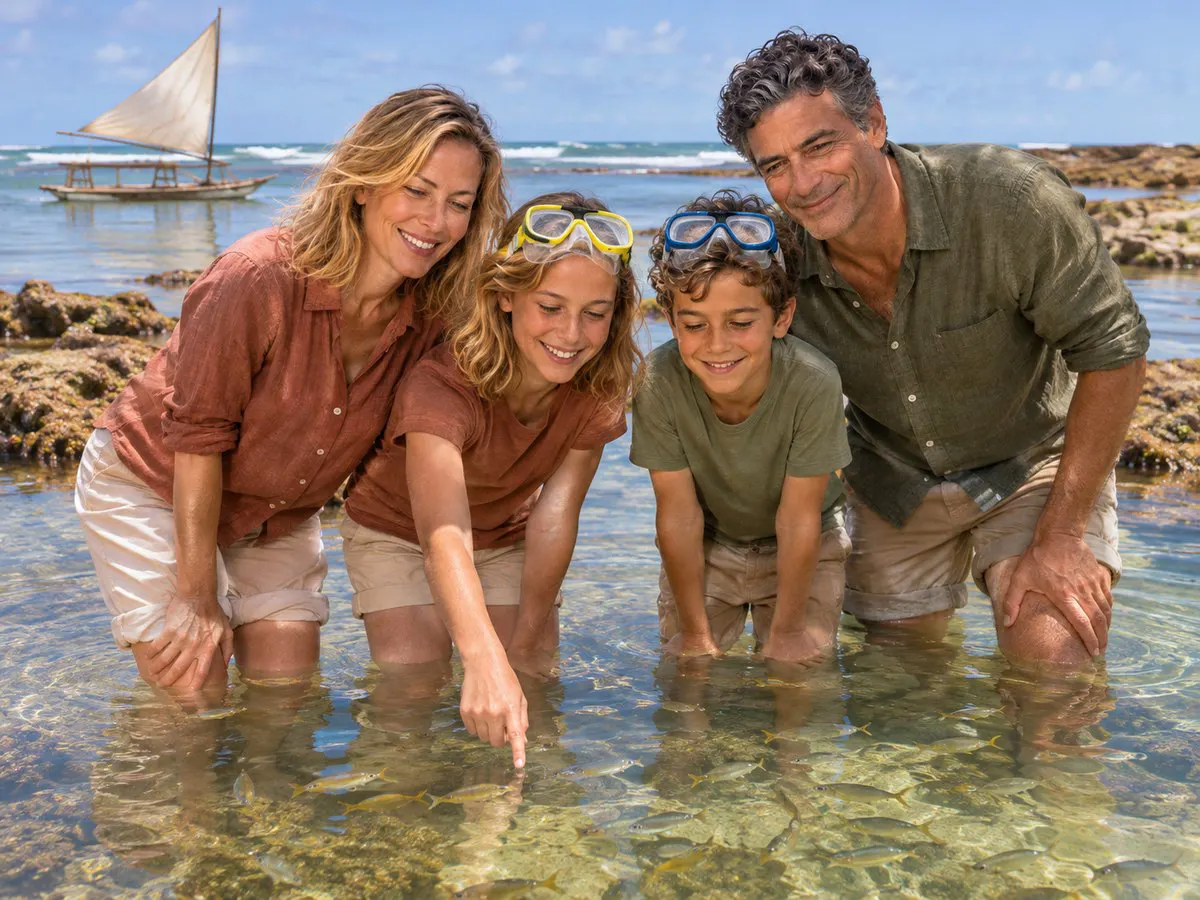
Natural pools
Between reefs at low tide, the water becomes shallow, warm and transparent.
Learn more
River and lake beaches
When river levels fall, white sand bars appear and freshwater without waves.
Learn more
Buggy ride along the beach
From one beach to the next along the sand, with stops for swims in lagoons and at cliffs.
Learn more
Sunset on the beach
In the late afternoon, locals and travelers gather on the sand to watch the sun go down.
Learn moreWhere to go in Brazil
Pick a region or a state on the map, or type what you are looking for, to see the cities and who offers each activity.
- Macapá AP
- Iranduba AM
- Manaus AM
- Novo Airão AM
- Belém PA
- Belterra PA
- Ponta de Pedras PA
- Salvaterra PA
- Santarém PA
- Soure PA
- Normandia RR
- Mateiros TO
- Novo Acordo TO
- Palmas TO
- Delmiro Gouveia AL
- Japaratinga AL
-
Maceió AL
Sea bathing · Natural pools · Beach shack · Buggy ride along the beach
- Maragogi AL
- Olho d'Água do Casado AL
- Passo de Camaragibe AL
- Piranhas AL
- Porto de Pedras AL
- São Miguel dos Milagres AL
- Cairu BA
- Conde BA
- Entre Rios BA
- Esplanada BA
- Ilhéus BA
- Itacaré BA
- Ituberá BA
- Jandaíra BA
- Maraú BA
- Mata de São João BA
-
Porto Seguro BA
Sea bathing · Natural pools · Beach shack · Sunset on the beach
- Salvador BA
- Santa Cruz Cabrália BA
- Acaraú CE
- Aquiraz CE
- Aracati CE
- Beberibe CE
- Camocim CE
- Cascavel CE
- Caucaia CE
- Cruz CE
- Fortaleza CE
- Icapuí CE
- Itarema CE
-
Jijoca de Jericoacoara CE
Buggy ride along the beach · Sunset on the beach · River and lake beaches
- Paracuru CE
- Trairi CE
- Barreirinhas MA
- Paulino Neves MA
- Primeira Cruz MA
- Santo Amaro do Maranhão MA
- São Luís MA
- Tutóia MA
- Cabedelo PB
- Conde PB
- João Pessoa PB
- Pitimbu PB
- Barreiros PE
- Cabo de Santo Agostinho PE
- Fernando de Noronha PE
-
Ipojuca PE
Sea bathing · Natural pools · Buggy ride along the beach · Beach shack · River and lake beaches
- Recife PE
- São José da Coroa Grande PE
- Sirinhaém PE
- Tamandaré PE
- Cajueiro da Praia PI
- Ilha Grande PI
- Luís Correia PI
- Parnaíba PI
- Canguaretama RN
-
Natal RN
Buggy ride along the beach · Natural pools · Sunset on the beach · Beach shack · Sea bathing
- Nísia Floresta RN
- Parnamirim RN
- São Miguel do Gostoso RN
- Senador Georgino Avelino RN
-
Tibau do Sul RN
Buggy ride along the beach · Sea bathing · Sunset on the beach
- Aracaju SE
- Canindé de São Francisco SE
- Colinas do Sul GO
- Bonito MS
- Guarapari ES
- Vila Velha ES
- Vitória ES
- Capitólio MG
- Lapinha da Serra MG
- Angra dos Reis RJ
- Armação dos Búzios RJ
-
Arraial do Cabo RJ
Sea bathing · Buggy ride along the beach · Sunset on the beach
- Cabo Frio RJ
- Guapimirim RJ
- Itaguaí RJ
- Itatiaia RJ
- Mangaratiba RJ
- Niterói RJ
- Paraty RJ
- Rio de Janeiro RJ
- Bertioga SP
- Caraguatatuba SP
- Guarujá SP
- Ilhabela SP
- São Sebastião SP
- Ubatuba SP
- Foz do Iguaçu PR
- Itaipulândia PR
- Jaguariaíva PR
- Matinhos PR
- Pontal do Paraná PR
- Santa Terezinha de Itaipu PR
- São Miguel do Iguaçu PR
- Porto Alegre RS
- Santa Vitória do Palmar RS
- Torres RS
- Balneário Barra do Sul SC
- Balneário Camboriú SC
- Balneário Piçarras SC
-
Bombinhas SC
Sea bathing · Buggy ride along the beach · Sunset on the beach
-
Florianópolis SC
Sea bathing · Natural pools · River and lake beaches · Sunset on the beach
- Garopaba SC
- Governador Celso Ramos SC
- Imbituba SC
- Itajaí SC
- Itapema SC
- Laguna SC
- Navegantes SC
- Palhoça SC
- Penha SC
- Porto Belo SC
- São Francisco do Sul SC
This coastline is not uniform. There are cliffs and dunes in the Northeast, bays enclosed by the Atlantic Forest in the Southeast, cold-water coves in the South and, far from the ocean, river beaches that appear when Amazon waters fall. The choice depends on what each traveler expects to find: calm sea or surf, a small village or a big city, quiet or activity.
What sun-and-beach tourism is
It’s leisure travel motivated by bathing, sun and rest by the water. The Ministry of Tourism defines the segment by the combined presence of water, sun and heat, and includes sea beaches, river and lake beaches, and artificial beaches at reservoirs and inland bathing resorts.
The attraction is the beach itself, so the type of beach defines the trip. Open sea with waves appeals to those who like walking on compacted sand. Coves and reef-protected stretches create shallow, calm waters. Urban beaches have promenades, kiosks and transport; isolated beaches require a trail, a boat or a vehicle with traction.
Some nearby activities form other kinds of trips. Boat tours and liveaboard diving fall under nautical tourism. Surfing and kitesurfing practiced as sports and dune crossings in a buggy or 4x4 belong to adventure tourism. All can fit into the same itinerary.
Who it suits and at what stage of life
It suits those who want to relax without an itinerary. The beach accepts all ages and all paces: children play in the shallow water, grandparents stay in the shade and those with energy walk to the next point. That’s why it’s a frequent choice for large families and friend groups.
For families with small children, calm, shallow sea beaches with nearby amenities work best. Honeymooners or couples celebrating often prefer smaller villages and islands, where activity is reduced. Solo travelers or young groups find more nightlife in lively villages and in state capitals.
It’s also the trip for someone who has closed a busy period and wants a few days without decisions. A long weekend suffices on a nearby coast; one or two weeks allow you to travel a stretch of coastline, changing beaches every few days.
Where to go: Brazil’s beaches by region
The Northeast concentrates warm-water beaches, with heat year-round. In Alagoas, Maragogi is the best-known base for the natural tide pools that form between reefs at low tide. In Pernambuco, Ipojuca hosts Porto de Galinhas, where reefs lie a few meters from the sand, and the Fernando de Noronha archipelago gathers transparent-sea beaches within a preservation area with visitor control.
In Ceará, Jericoacoara combines dunes, lagoons and constant wind, and the late afternoon usually brings travelers to the beach and to the dunes in front of the village. In Bahia, the Discovery Coast alternates colored cliffs, wide beaches and villages atop the bluffs.
In the Southeast, the Atlantic Forest-covered mountains descend to the sea on São Paulo’s North Coast, forming coves and islands. In the South, Florianópolis offers dozens of beaches with different profiles on the same island, from calm bays to open-sea shores.
Away from the coast, Alter do Chão, in Pará, showcases the white-sand river beaches of the Tapajós, which usually appear in the second half of the year when the river level drops.
When to go: sun and rain on each stretch of coastline
The beach season varies by region. On the coast of Ceará and Rio Grande do Norte, rains usually concentrate from February to May, and the second half of the year is dry and windy. Further south, from Pernambuco and Alagoas to northern Bahia, rain is heavier between April and July; from September to March sunny days are more frequent.
In the Southeast and the South, summer runs from December to March, with heat and late-afternoon showers. It’s high season, with crowded beaches and busy roads. Autumn, from March to May, usually has stable days and still pleasant sea. In the South’s winter, from June to August, the water is cold and many beach villages operate at a reduced pace.
Natural tide pools depend on low tide, and the travel date can be chosen according to the tide table. Months outside school holidays, such as May, June, September and November, usually have less traffic along much of the coast.
How to plan a beach trip
The first decision is the foundation. Staying in one city and taking day trips simplifies the trip, especially with children. Traveling along a stretch of coast offers more variety but requires a car or transfers arranged in advance. For a first trip to the Northeast, a week based in one or two locations is usually enough.
Getting around requires attention. Many well-known beaches are two or three hours from the nearest airport, and some villages only allow authorized or four-wheel‑drive vehicles. Islands depend on boat or plane, with departures affected by weather and tide. In protected areas there may be visitor limits and separate fees: it’s wise to check the rules before booking.
Pack sunscreen, a hat, lightweight long-sleeve clothing for the strongest sun hours, and shoes that can get wet, useful on reefs and rocks.
Sun and beach around the world
In the Caribbean, Punta Cana in the Dominican Republic and Cancún and the Riviera Maya in Mexico are beach destinations with a large supply of seaside accommodation. The dry season generally runs from December to April, and the Atlantic hurricane season from June to November.
In Europe, the beach season concentrates from June to September. The Algarve, in southern Portugal, has golden cliffs and cooler water; in Greek islands like Santorini the beaches share the spotlight with white villages overlooking the sea. In the South Pacific, the Fiji archipelago has coral lagoons, with the dry season between May and October.
Frequently asked questions
When is the best time to visit the beaches of the Northeast?
It depends on the stretch. In Ceará and Rio Grande do Norte the second half of the year is usually dry, with rain more common from February to May. From Pernambuco to northern Bahia, it rains more from April to July, and September through March have more sunny days.
Where are calm, child-friendly sea beaches in Brazil?
Beaches protected by reefs or inside bays tend to have shallow, calm water. This is the case in stretches of the coasts of Alagoas and Pernambuco, the coves of the North Coast of São Paulo and the bays of Florianópolis. It’s advisable to check local sea conditions on the day.
Which Brazilian beaches have warm water?
Northeastern beaches have warm water year-round. In the Southeast the sea temperature varies more, and parts of the coast of Rio de Janeiro state and the South usually have cooler water, even in summer.
How do natural pools work?
Natural pools form between reefs at low tide. tours depart according to the tide table, and in some places there’s a daily visitor limit. It’s wise to consult the tide before setting the trip date.
Are there river beaches in Brazil?
Yes. In the Amazon, white-sand beaches appear when the rivers fall, usually in the second half of the year. Alter do Chão, on the Tapajós River in Pará, is the best-known example.
How many days are needed for a beach trip?
A long weekend is enough for a nearby coast. For destinations that require a flight and transfer, plan at least five to seven days, which allows time to rest and do two or three excursions without rush.
Beach season in southern Brazil only in summer?
Swimming in the sea in the South is more pleasant from December to March. Autumn often has stable weather and empty beaches, a good time for walking and exploring the villages. In winter the water is cold, and many villages operate on a reduced schedule.
Do you need to rent a car to travel the coast?
In large cities and compact villages, no: everything can be handled on foot, by ride‑hailing or with agency tours. A car helps if you want to visit several beaches along the same coast. Some villages only accept authorized vehicles, and transfers are arranged separately.

Beyond the guide


