

 Antarctica
 Argentina
 Bolivia
 Chile
 Colombia
 Ecuador
 Guyana
 French Guiana
 Falkland Islands (Malvinas)
 Paraguay
 Peru
 Suriname
 Uruguay
 Venezuela
 Germany
 Austria
 Belgium
 Croatia
 Denmark
 Slovakia
 Slovenia
 Spain
 Finland
 France
 Greece
 the Netherlands
 Hungary
 Ireland
 Iceland
 Italy
 Luxembourg
 Norway
 Poland
 Portugal
 the United Kingdom
 the Czech Republic
 Sweden
 Switzerland
 Turkey
 Bermuda
 Canada
 the United States
 Greenland
 Mexico
 Saint Pierre and Miquelon
 the Dominican Republic
 Japan
 South Africa
 Egypt
 Australia
 Fiji
 New Zealand
 Papua New Guinea
Illustrative images. The pictures in this guide are illustrations based on the real place, not photographs, and may differ from it.


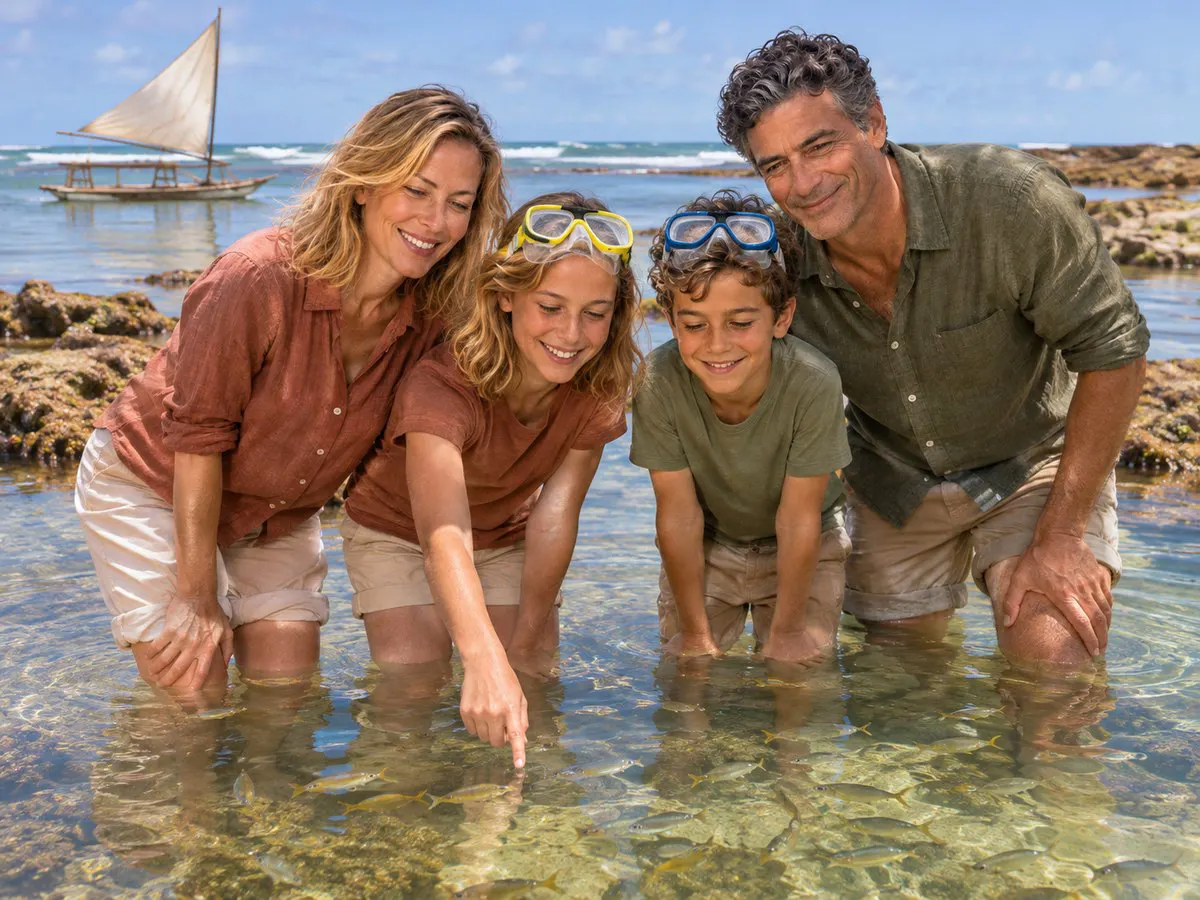
Sun and beach
Natural tide pools
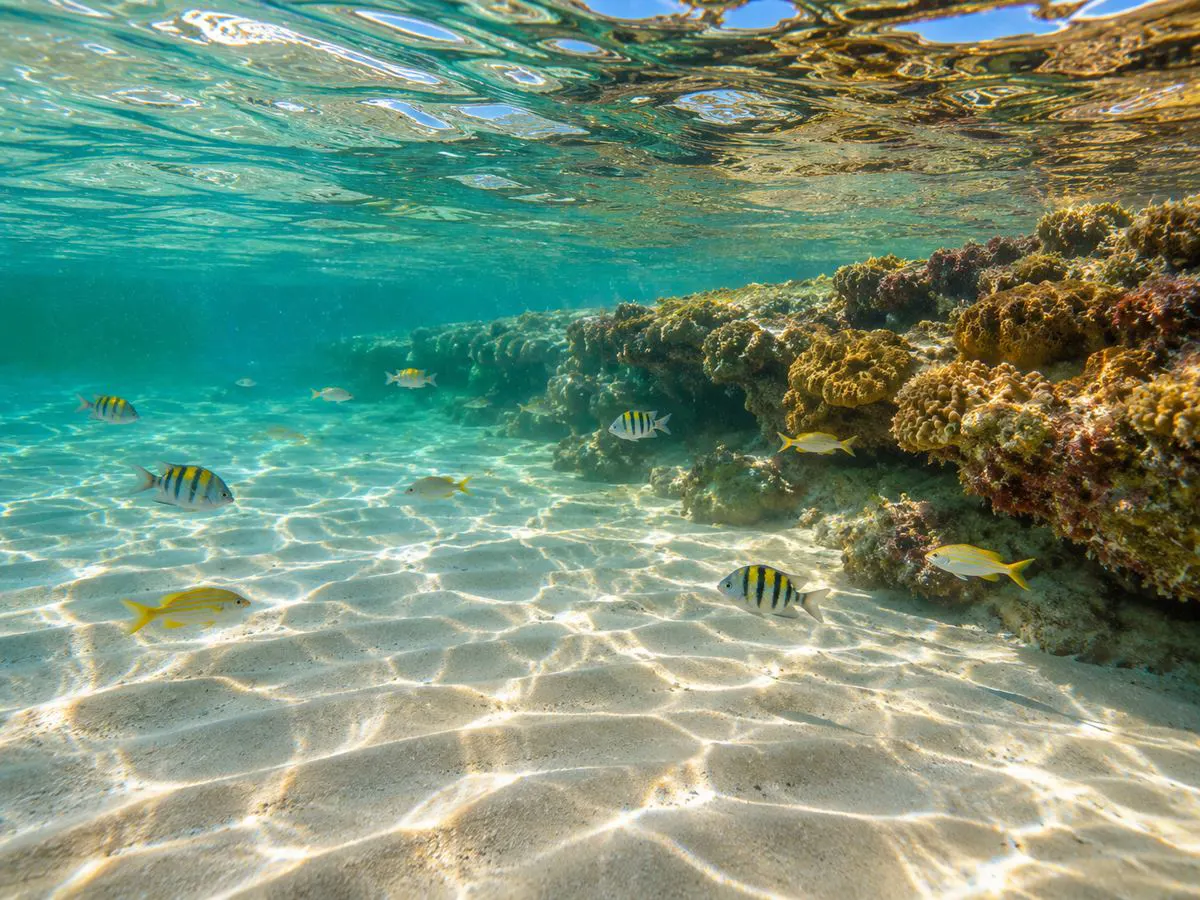
Between reefs at low tide, the water becomes shallow, warm and transparent.
Natural tide pools appear when the tide goes out and the reefs trap seawater in shallow basins. The result is an area of warm, still, transparent water where small fish swim among the rocks. In Brazil they are concentrated in the Northeast, from Alagoas to Rio Grande do Norte and along the coast of Bahia.
This is an outing that depends on the sea’s clock. If the tide timing is right, you’ll find formed tide pools; if it’s wrong, you’ll find only open water. For that reason, check the tide table before buying your ticket.
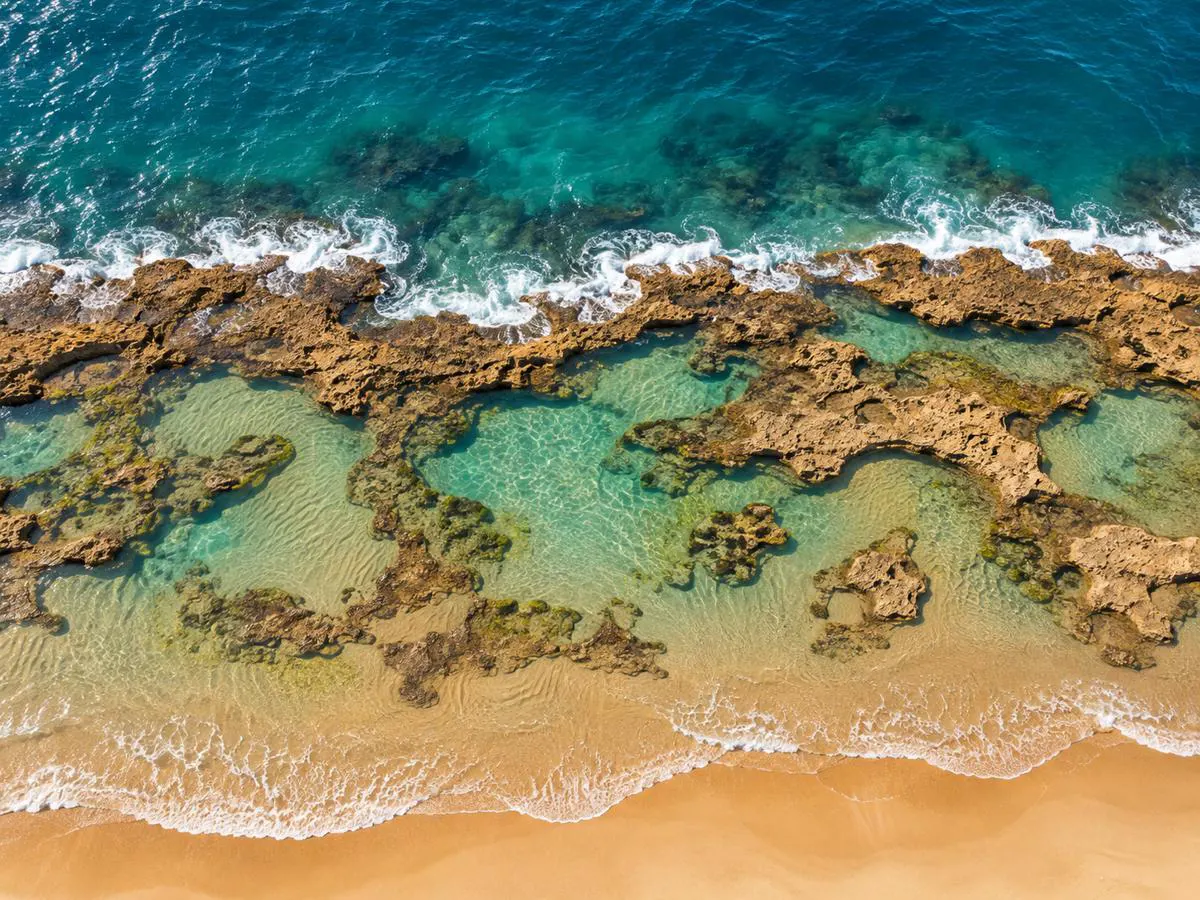
How natural tide pools form
Sandstone and coral reefs run parallel to the coast along much of the Northeast. At high tide they are submerged. When the sea retreats, the tops of the rocks appear and water is trapped in the hollows, forming sand-bottom basins.
There are two kinds of visits. At some beaches the pools are next to the sand and you can reach them on foot, with water up to your shins. At others, the reefs are a few kilometers offshore, and you go by raft, launch or catamaran. The Parrachos de Maracajaú, in Rio Grande do Norte, are about 7 km from the beach.
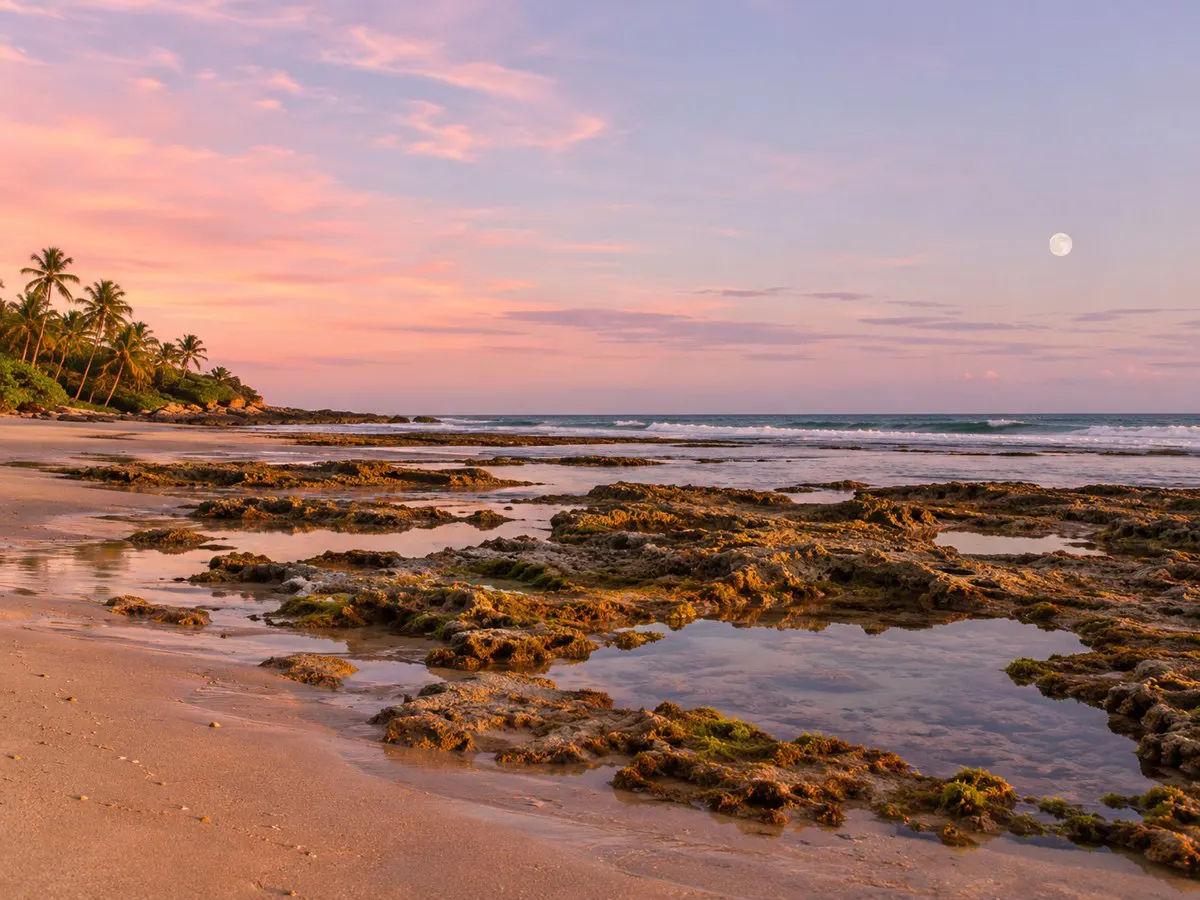
The right moon and the tide table
Low tide occurs twice a day, but it does not always fall by the same amount. Around the full and new moons, the difference between high and low tide is larger and the reefs are more exposed. During the first and last quarters, the variation is smaller and the pools can be deep or may not form at all.
The tide table, published by the Brazilian Navy, shows the time and height of each tide for the nearest reference port. Local guides usually recommend low tides of up to half a meter for visits; the closer to zero, the better.
Timing also matters. Low tide shifts by about an hour each day, and a low tide at dawn or late afternoon yields less than one in midmorning, when the high sun lights up the bottom. Beach accommodations that serve tide-pool areas often post the tide table at reception.
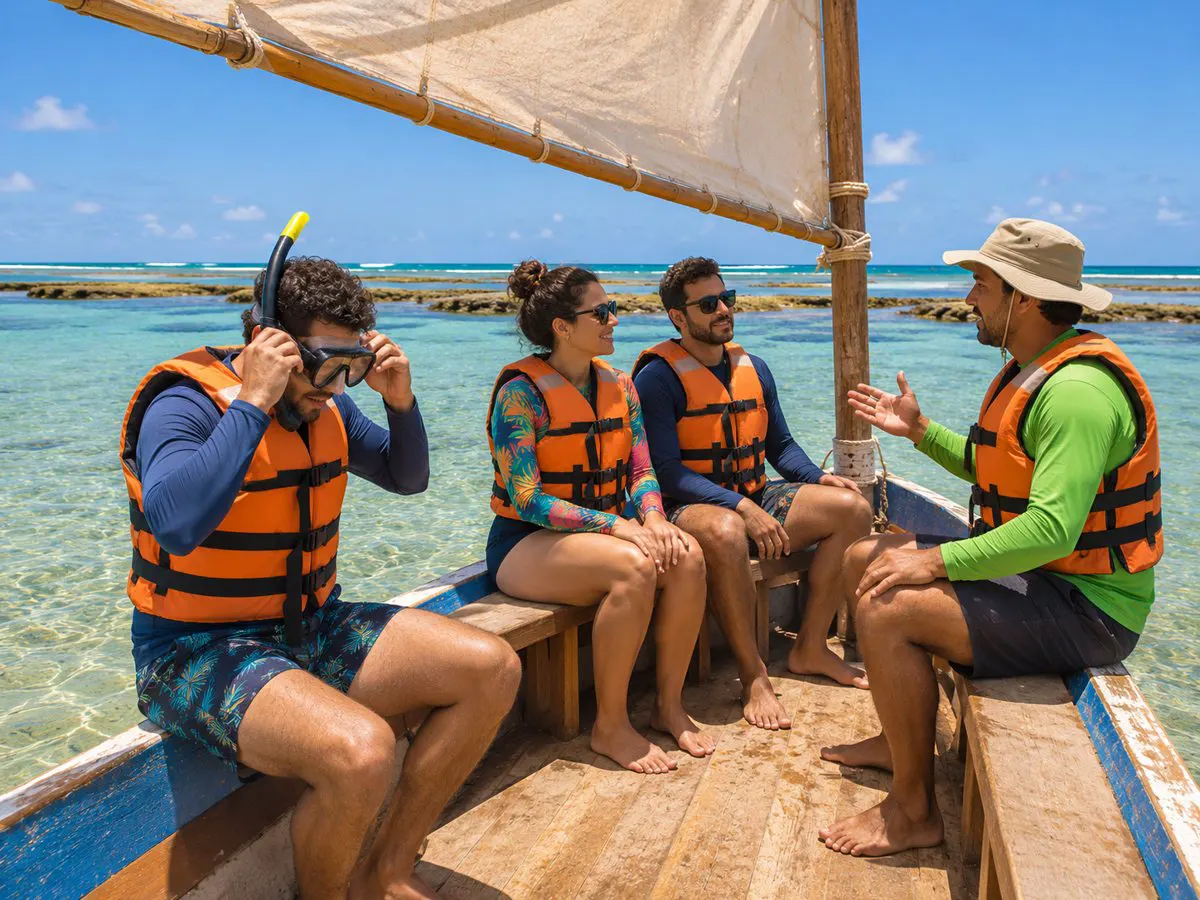
What the visit is like
Boats depart according to the tide, not the clock. The boatman takes the group to the reefs, anchors in an authorized area and marks the time ashore, usually about an hour while the water is low. With a mask and snorkel, visitors watch fish floating belly-down.
In many destinations there is a daily limit on visitors and boats set by environmental agencies, and areas closed for coral recovery. In high season it’s wise to book in advance.
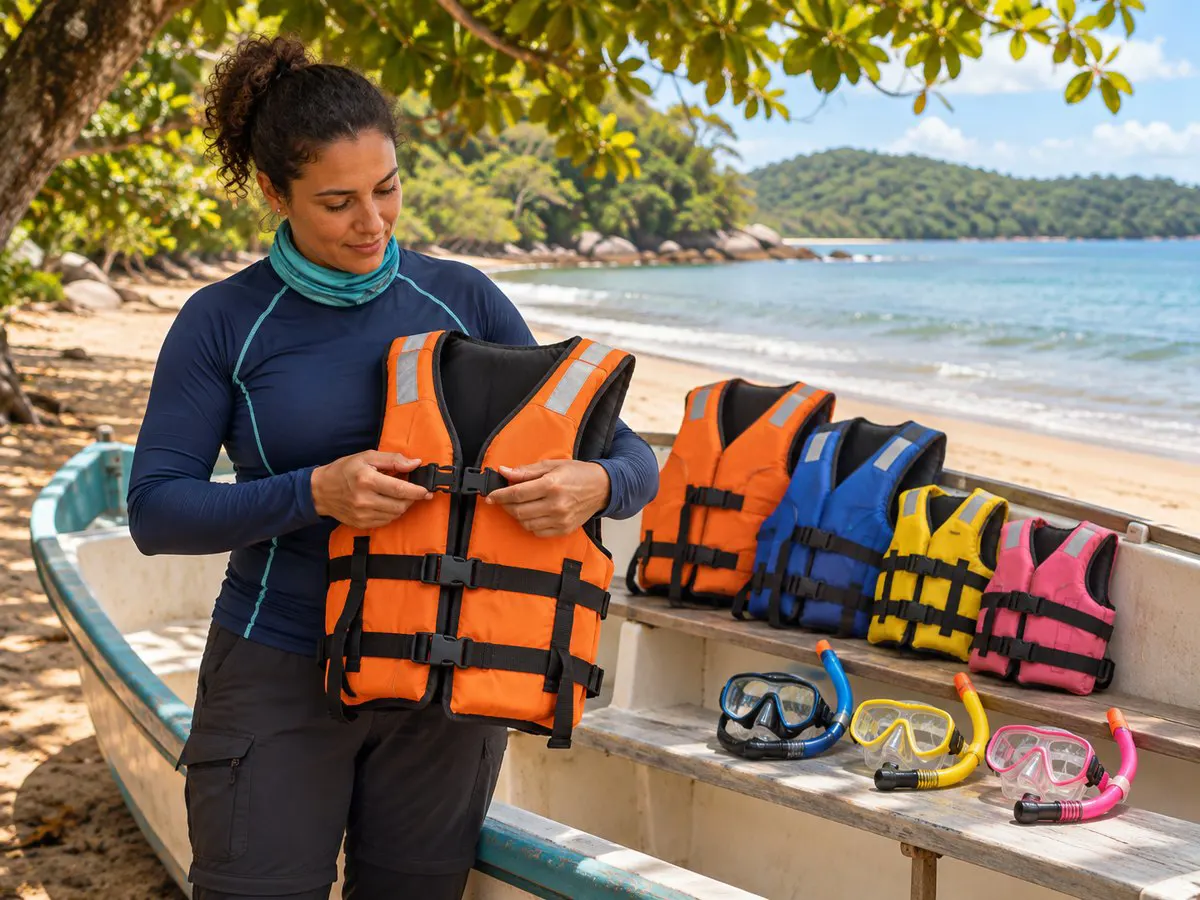
The trip suits children and people who don’t swim, because the water is shallow. Life jackets are usually available on boats. Overcast skies and recent rain can reduce water clarity.
What to bring and how to care for the reefs
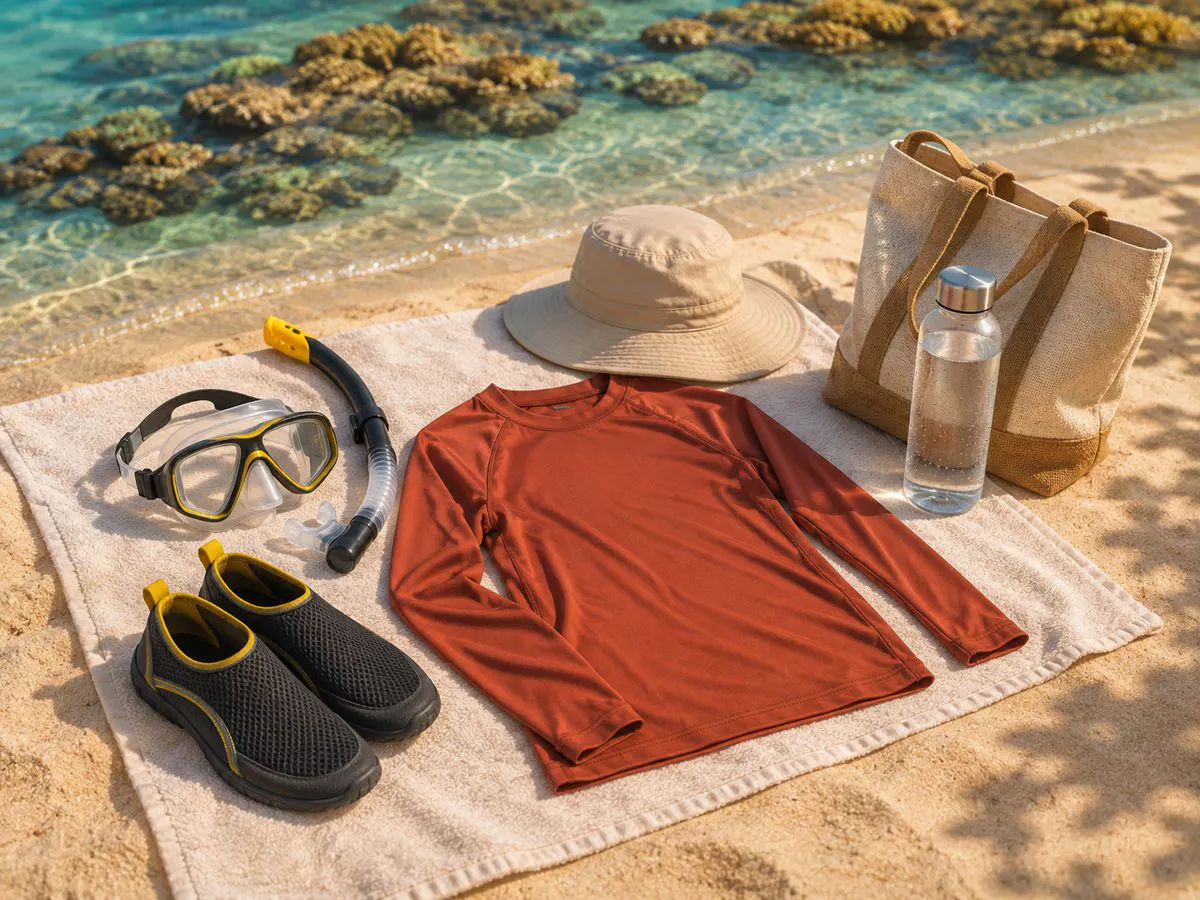
Bring swimwear, a hat, a sun-protection shirt, a diving mask if you have one, and footwear that can get wet. The rocks cut, and sea urchins hide in the crevices.
The reef is alive. Do not stand on corals, take shells or stones, or feed the fish — feeding is prohibited in many protected areas. Wearing a long-sleeve shirt reduces the amount of sunscreen entering the water.
If you walk out on foot, you must return before the tide rises. The water climbs fast and can cover the return path.
Where Brazil’s natural tide pools are
In Alagoas, Maragogi is the base for the Galés, reached by catamaran or launch, and Maceió has the Pajuçara pools, reached by raft. In Pernambuco, Porto de Galinhas, in Ipojuca, has pools a few meters from the sand, and Tamandaré shows pools and sandbanks at Praia dos Carneiros. In Fernando de Noronha, they form at Baía dos Porcos.
In Paraíba, João Pessoa has Picãozinho, in front of Tambaú, and the pools at Seixas. In Ceará, Trairi shelters the pools of Flecheiras. In Rio Grande do Norte, the Parrachos de Maracajaú are in Maxaranguape.
In Bahia, Porto Seguro offers Recife de Fora and Praia do Espelho; Cairu has the pools of Moreré and Garapuá; Maraú has those of Taipu de Fora; and Mata de São João has Praia do Forte. All depend on low tide.
How to choose who takes you
Prefer boats and rafts authorized by the city or the environmental agency, with visible identification. Agencies and tour guides should be registered with Cadastur, the Ministry of Tourism registry.
Ask what the tide height will be that day, how long the group will stay on the reefs, whether there are life jackets for everyone and if mask and snorkel are included. Prices vary by type of boat, distance, group size and season. Environmental fees, when applicable, are paid separately.
Frequently asked questions
Which moon phase is best for visiting natural tide pools?
Full moon and new moon. Around those days low tides fall farther and the reefs are exposed. During the first and last quarters the pools may not form.
How do I use the tide table?
Find the nearest port to your destination in the Brazilian Navy’s tide table and check the low-tide times and water heights. Low tides of up to half a meter during daylight are the recommended ones.
Can someone who doesn’t know how to swim go to natural tide pools?
Yes. The water is shallow at low tide and boats typically provide life jackets. Tell the operator and stay where you can reach the bottom.
Are natural tide pools good for children?
Generally, yes: the water is shallow, warm and wave-free. Bring footwear for the rocks and keep the child within an adult’s reach at all times.
When is the best time to visit Northeast tide pools?
From September to March there are more sunny days between Pernambuco and northern Bahia, and the water tends to be clearer. From April to July rain is more frequent. In any month, the deciding factor is the tide.
Can you feed the fish in the tide pools?
You shouldn’t, and in several protected areas it’s forbidden. Food changes fish behavior and harms the reef.
How much does a tide-pool trip cost?
It depends on the boat, the distance to the reefs, group size and season. Walk-in pools don’t require a boat. Check the current rates with operators at the destination.
Where to go: Natural pools
Pick a region or a state on the map, or type what you are looking for, to see the cities and who offers it in each.
-
Japaratinga AL
Piscinas naturais.
-
Maceió AL
Piscinas naturais da Pajuçara, alcançadas de jangada.
-
Maragogi AL
Galés de Maragogi, piscinas entre os recifes, na maré baixa.
-
Porto de Pedras AL
Piscinas naturais: Piscinas do Patacho e de Tatuamunha.
-
São Miguel dos Milagres AL
Piscinas naturais: Porto da Rua, Toque e Riacho.
-
Cairu BA
Piscinas naturais de Moreré e de Garapuá, na maré baixa.
-
Maraú BA
Piscinas naturais de Taipu de Fora, na maré baixa.
-
Mata de São João BA
Piscinas naturais da Praia do Forte, na maré baixa.
-
Porto Seguro BA
Piscinas naturais do Recife de Fora e da Praia do Espelho.
-
Trairi CE
Piscinas naturais de Flecheiras, na maré baixa.
-
João Pessoa PB
Piscinas naturais de Picãozinho e do Seixas, na maré baixa.
-
Pitimbu PB
Piscinas Naturais de Pitimbu.
-
Fernando de Noronha PE
Piscinas naturais da Baía dos Porcos.
-
Ipojuca PE
Piscinas entre os recifes de Porto de Galinhas, a poucos metros da areia.
-
Recife PE
Piscinas naturais: Praia de Boa Viagem.
-
São José da Coroa Grande PE
Piscinas naturais.
-
Tamandaré PE
Piscinas e bancos de areia da Praia dos Carneiros, na maré baixa.
- Natal RN
-
Nísia Floresta RN
Piscinas naturais: Praia de Camurupim.
-
Parnamirim RN
Piscinas naturais: Parrachos de Pirangi.
-
Angra dos Reis RJ
Lagoa Azul - Ilha Grande.
-
Paraty RJ
Vila de Trindade.
-
Ubatuba SP
Praia do Félix.
-
Florianópolis SC
Barra da Lagoa.
More activities in Sun and beach




Beyond the guide


