

 Antarctica
 Argentina
 Bolivia
 Chile
 Colombia
 Ecuador
 Guyana
 French Guiana
 Falkland Islands (Malvinas)
 Paraguay
 Peru
 Suriname
 Uruguay
 Venezuela
 Germany
 Austria
 Belgium
 Croatia
 Denmark
 Slovakia
 Slovenia
 Spain
 Finland
 France
 Greece
 the Netherlands
 Hungary
 Ireland
 Iceland
 Italy
 Luxembourg
 Norway
 Poland
 Portugal
 the United Kingdom
 the Czech Republic
 Sweden
 Switzerland
 Turkey
 Bermuda
 Canada
 the United States
 Greenland
 Mexico
 Saint Pierre and Miquelon
 the Dominican Republic
 Japan
 South Africa
 Egypt
 Australia
 Fiji
 New Zealand
 Papua New Guinea
Illustrative images. The pictures in this guide are illustrations based on the real place, not photographs, and may differ from it.



Ecotourism
Birdwatching
With binoculars and silence, in the early morning hours, you look for the birds of each biome.
Birdwatching is searching for, seeing and identifying species in the wild. The practice has a name in English, birdwatching, and a nickname in Portuguese: passarinhar. It requires little: binoculars, an identification guide and silence, and can be done in a city square or on a multi-day expedition.
Brazil is among the countries with the highest number of bird species in the world, and some of them exist only here. That draws observers from many countries and makes birdwatching a good reason to visit a biome.
How to start watching birds
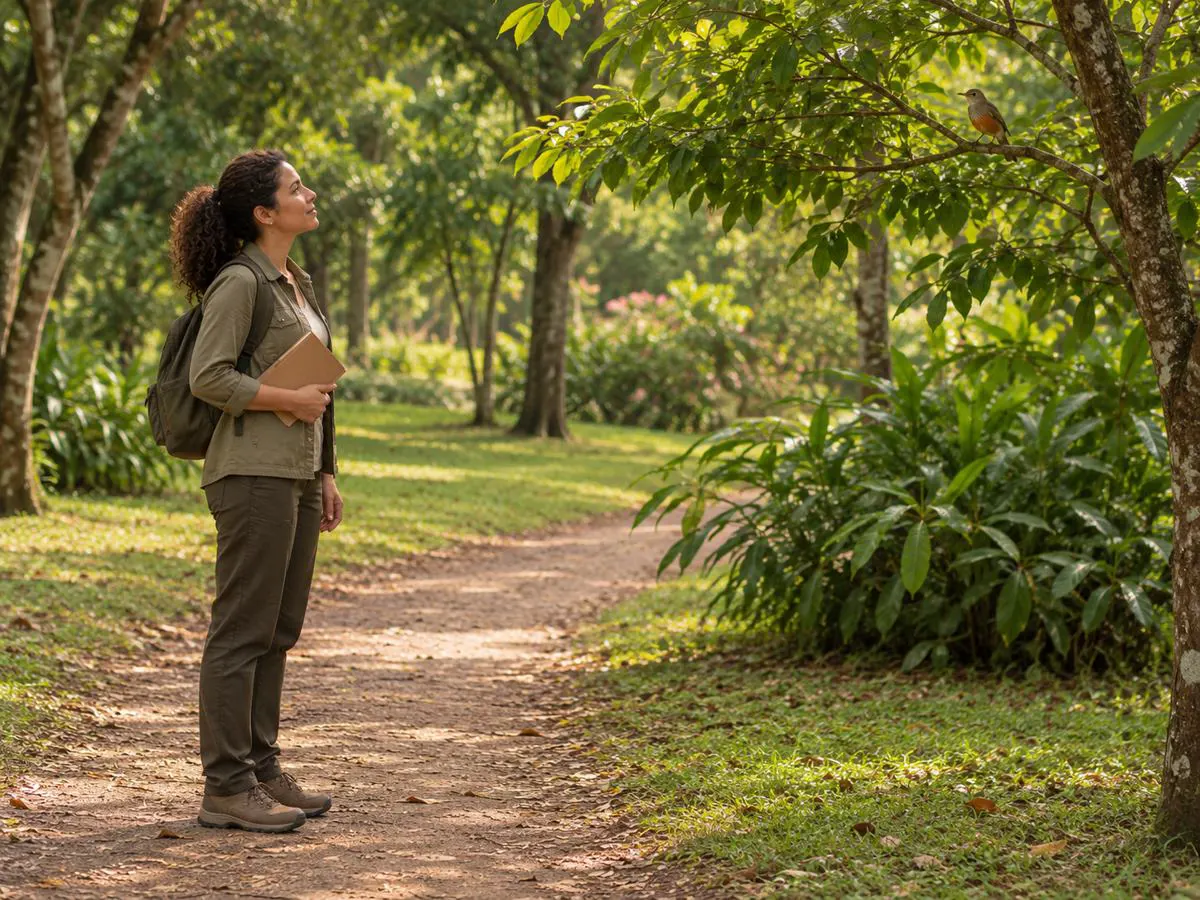
The beginning is close to home. A tree-lined street, a park or the backyard are enough to learn the most common species, and that first repertoire helps you notice what’s different when you travel.
Seeing is one part; listening is the other. Many birds are located by song before they are seen, and field guides recognize dozens of voices. apps and citizen-science sites maintained by observer communities show photos, sounds and the species already recorded in each municipality.
Many people keep a list of species they’ve seen, and each new one becomes a small achievement. Others prefer just to photograph or to watch quietly. There’s no single right way.
Basic equipment
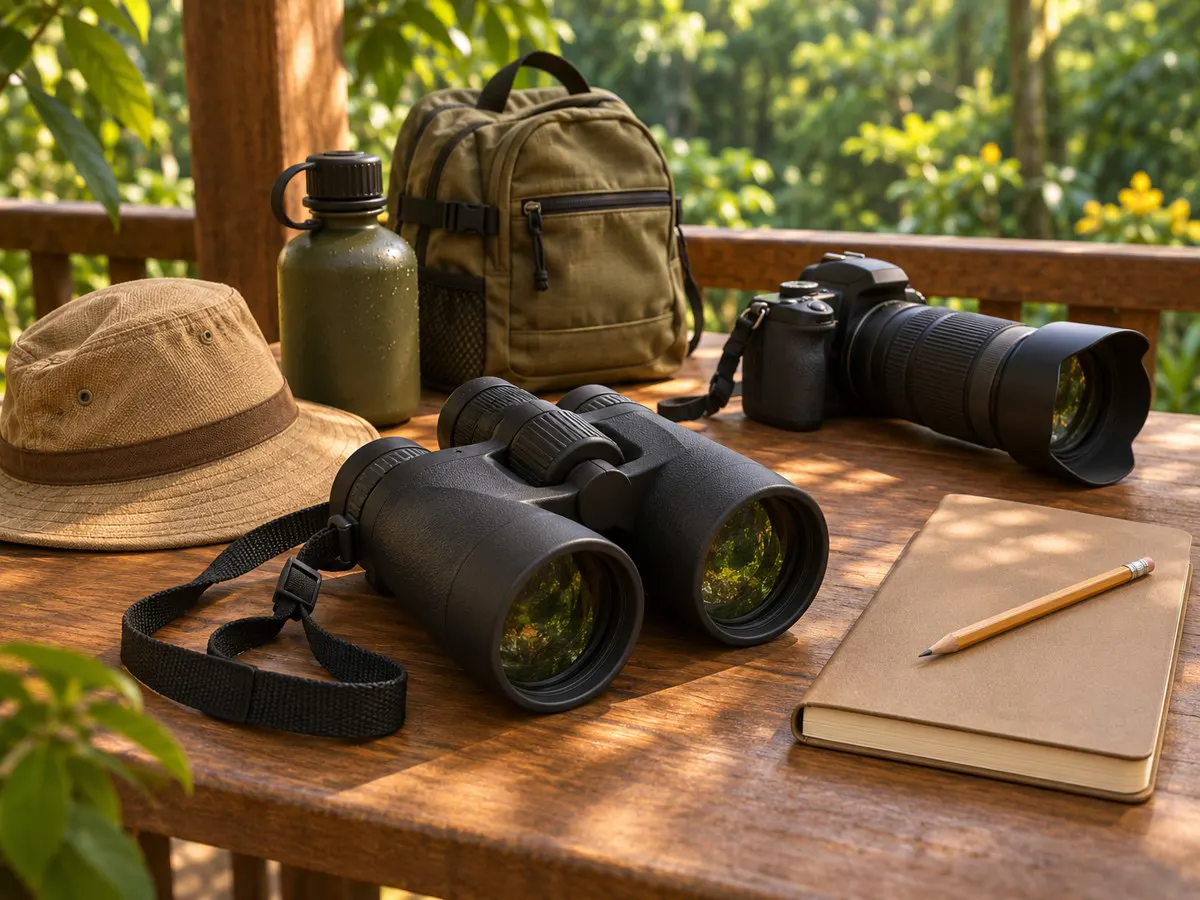
Binoculars are the main instrument. Models with eight- or ten-times magnification are the most used, because they balance closeness and field of view. On guided walks, some leaders lend binoculars and bring a spotting scope for birds perched far away.
A field guide, in paper or on your phone, completes the kit. A camera with a telephoto lens is optional. Wear discreet colors, long pants, closed shoes and a hat. Insect repellent and water go in your backpack, and a notebook is useful to jot down what you saw.
When and what time
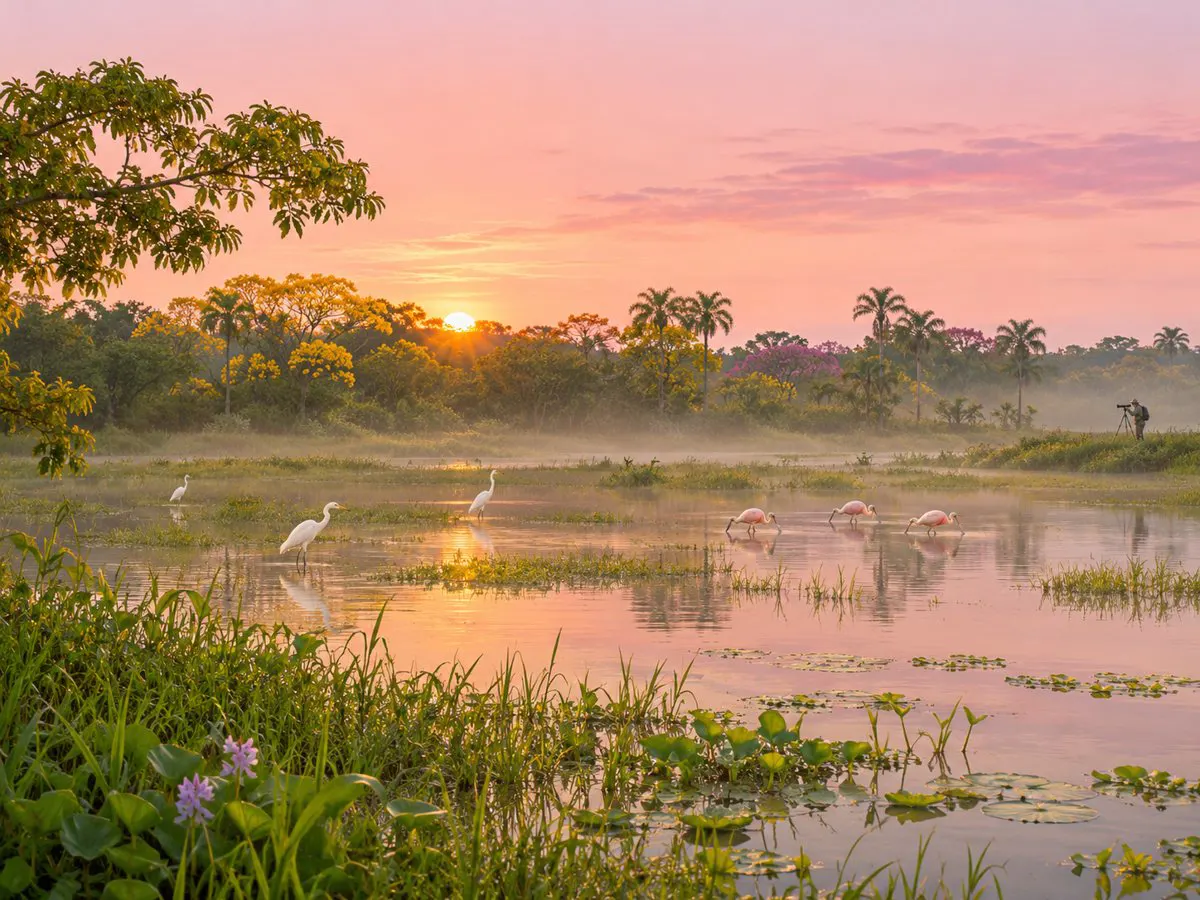
Birds are most active just after sunrise. outings start at first light and usually remain productive until midmorning; late afternoon is the second-best window. Some species, such as owls and nightjars, are sought at night.
Spring, from September to November, is the breeding season for many species in the central-southern part of the country, with more song and more activity. In the Pantanal, the dry season, from July to October, concentrates waterbirds in the remaining lagoons. In the Amazon, river levels change the accessible habitats throughout the year.
Windy or rainy days are less productive. For that reason itineraries usually plan more than one morning in each place.
Rules of conduct
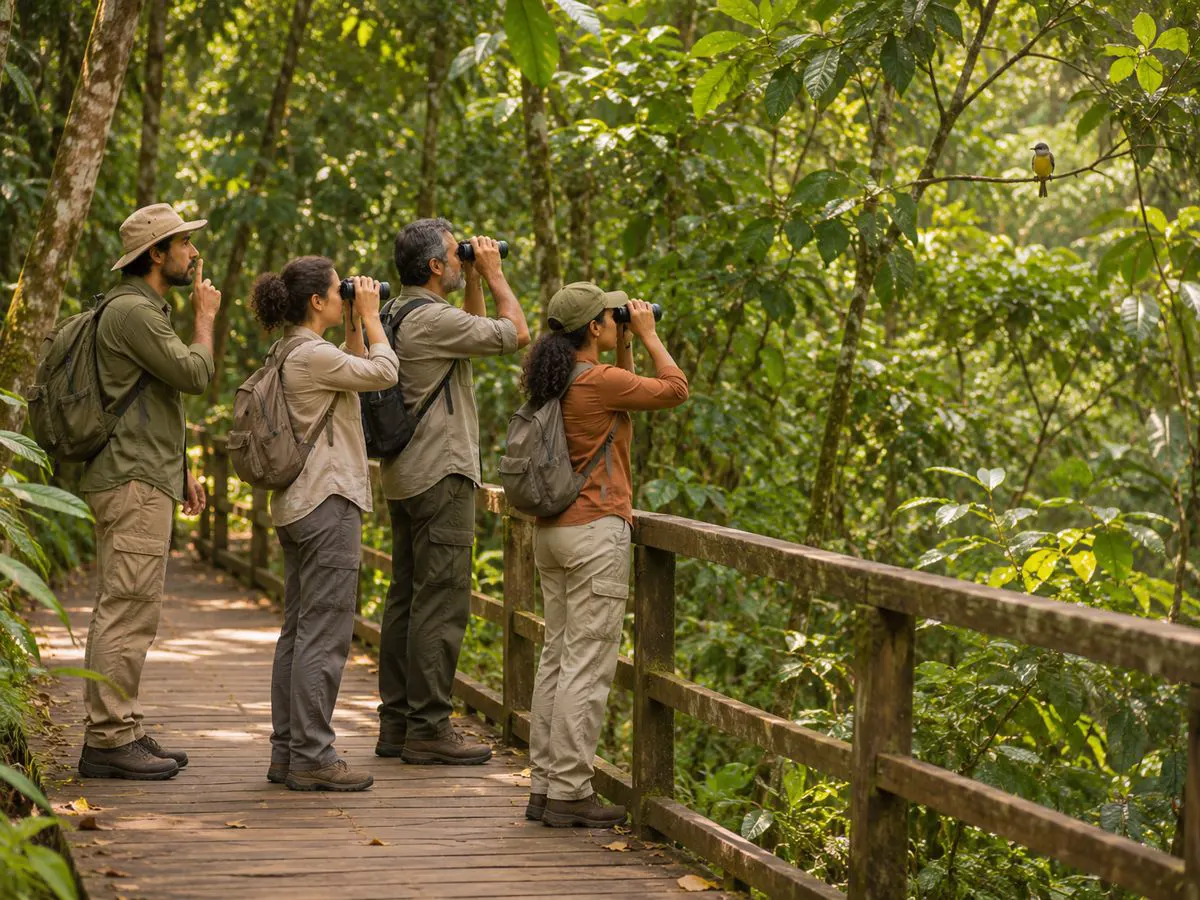
The bird comes first. Do not approach nests, do not break branches to improve a photo and do not persist when the animal shows discomfort. Using recorded calls to attract birds, playback, should be rare and brief, and is forbidden in several protected areas.
Small groups see more. Speak softly, walk slowly and stay on the trail. On private property, visits should be arranged beforehand.
Feeders and water stations set up by lodges and reserves are an accepted way to see birds up close, provided they are properly maintained. Feeding animals on your own in parks is not allowed.
Where to watch birds in Brazil
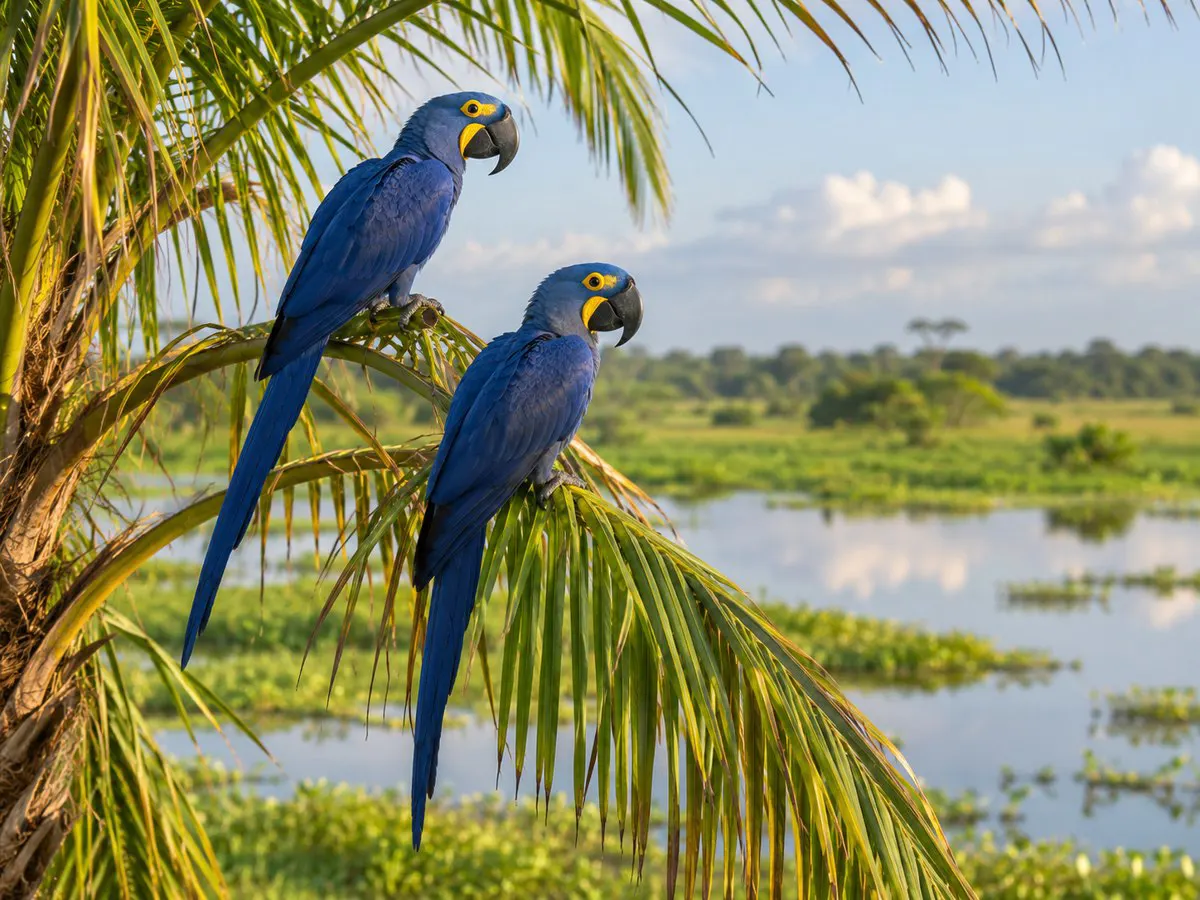
In the Pantanal, the flooded plain gathers jabirus, herons, roseate spoonbills and hyacinth macaws. The Porto Jofre area, in the municipality of Poconé, Mato Grosso, has already been listed in international surveys among the world’s top places for the activity.
In Mato Grosso do Sul, Jardim has the Buraco das Araras, a large sinkhole with reddish walls where scarlet macaws nest and fly in pairs. In the Cerrado, the grasslands of Emas National Park, in Chapadão do Céu, Goiás, shelter birds of open habitats.
In the Atlantic Forest, Ubatuba on the São Paulo coast has hundreds of recorded species and specialized guides. In the Amazon, the Anavilhanas archipelago on the Negro River holds birds associated with islands and flooded forests. In Chapada Diamantina, Bahia, the Lençóis region also hosts birdwatchers.
How to choose the guide and accommodation
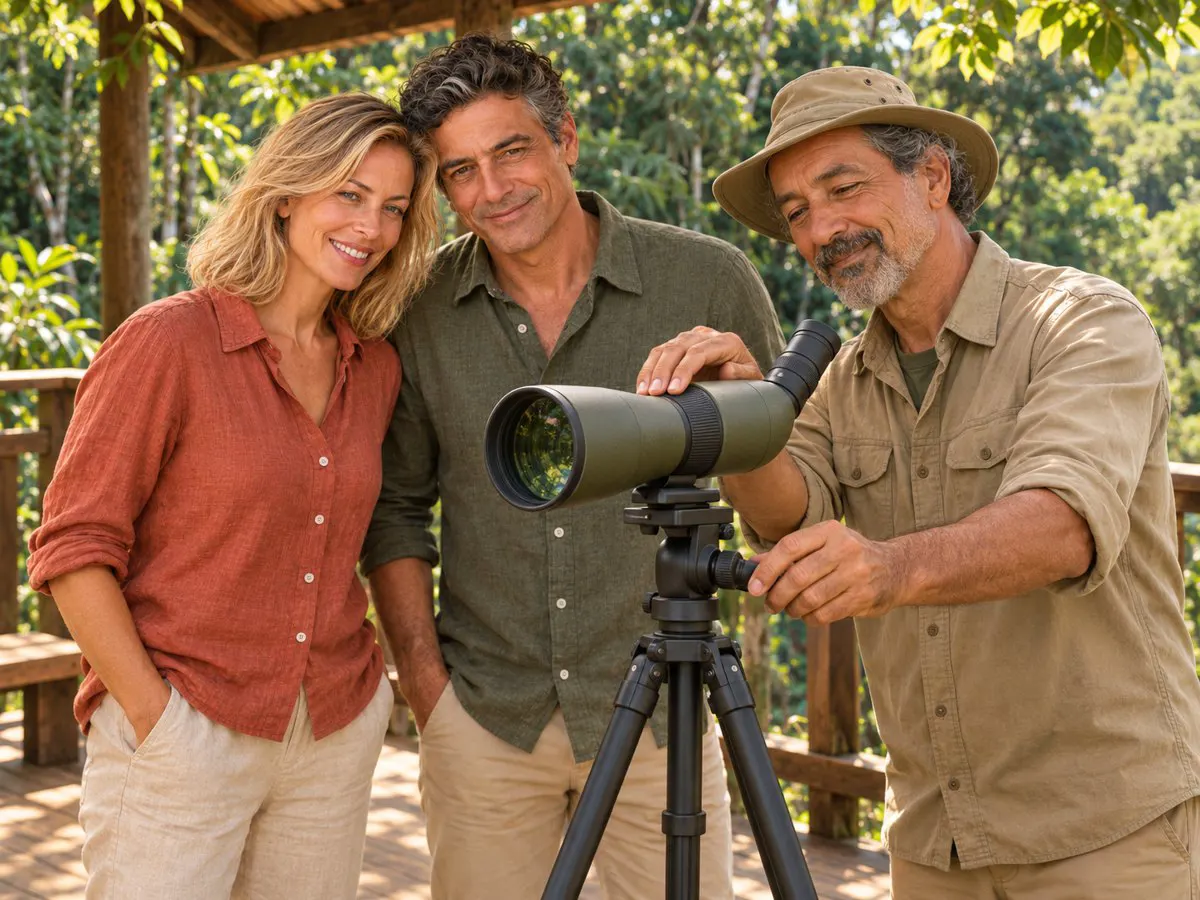
A specialist guide makes a difference. They know the songs, know where each species usually is and at what time, and bring the right equipment. Ask how long they have guided in the region, how many people will be in the group and whether the itinerary can be adjusted to the species you most want to see. tour guides and agencies should be registered in Cadastur, the Ministry of Tourism’s registry.
Some lodges and private reserves cater to birders, offering breakfast before dawn, feeders, dedicated trails and a list of the site’s birds. For beginners, a half‑morning outing with a local guide is enough to get a feel for the pace.
Prices vary with duration, group size, travel distance, the professional’s experience and the season. Entrance fees to parks and private properties are paid separately.
Frequently asked questions
What is birdwatching?
It is the observation of birds in the wild for leisure. In Brazil the practice is also called passarinhar. It involves searching for, seeing, listening to and identifying the species in each place.
How to start watching birds?
Start near home, in a square or park, with binoculars and a field guide. Learn the common species first. When traveling, hire a local guide for your first outing.
What time is best to watch birds?
The early morning hours, just after sunrise. Late afternoon can also be productive. In the middle of the day, when it’s hot, birds are less active.
Which binoculars should I use for birdwatching?
Models with eight- or ten-times magnification are the most used. On guided walks, ask whether the leader lends equipment.
Where to watch birds in Brazil?
Each biome has its highlights. The Pantanal, Ubatuba’s Atlantic Forest, the Cerrado of Emas National Park, the Buraco das Araras in Jardim and Anavilhanas in the Amazon are among the sought-after destinations.
When is it best to watch birds?
Spring, from September to November, has more song and activity in the central-south. In the Pantanal, the dry season, from July to October, concentrates waterbirds.
Can I use sounds to attract birds?
Playback should be avoided or used sparingly by experienced guides because it disturbs the bird. It is forbidden in several protected areas.
Can children take part in birdwatching?
Yes. Short outings in places with large, easy-to-see birds, such as macaws and toucans, work well. Silence and patience are part of the learning.
Where to go: Birdwatching
Pick a region or a state on the map, or type what you are looking for, to see the cities and who offers it in each.
-
Manaus AM
Museu da Amazônia (MUSA).
- Novo Airão AM
-
Belém PA
Mangal das Garças.
-
Santarém PA
Canal do Jari.
-
Soure PA
Mata do Bacurizal e Lago dos Guarás.
-
Primeira Cruz MA
Pouso dos Guarás.
- Cuiabá MT
-
Nobres MT
Lagoa das Araras.
- Poconé MT
-
Jardim MS
Observação de araras e de outras aves no Buraco das Araras.
- Miranda MS
-
Cachoeiras de Macacu RJ
Reserva Ecológica de Guapiaçu (Regua).
- Foz do Iguaçu PR
-
Pontal do Paraná PR
Parque Nacional Marinho das Ilhas dos Currais.
-
São Francisco de Paula RS
Floresta Nacional de São Francisco de Paula.
-
Lages SC
Parque Natural Municipal João José Theodoro da Costa Neto.
More activities in Ecotourism





Beyond the guide


