

 Antarctica
 Argentina
 Bolivia
 Chile
 Colombia
 Ecuador
 Guyana
 French Guiana
 Falkland Islands (Malvinas)
 Paraguay
 Peru
 Suriname
 Uruguay
 Venezuela
 Germany
 Austria
 Belgium
 Croatia
 Denmark
 Slovakia
 Slovenia
 Spain
 Finland
 France
 Greece
 the Netherlands
 Hungary
 Ireland
 Iceland
 Italy
 Luxembourg
 Norway
 Poland
 Portugal
 the United Kingdom
 the Czech Republic
 Sweden
 Switzerland
 Turkey
 Bermuda
 Canada
 the United States
 Greenland
 Mexico
 Saint Pierre and Miquelon
 the Dominican Republic
 Japan
 South Africa
 Egypt
 Australia
 Fiji
 New Zealand
 Papua New Guinea
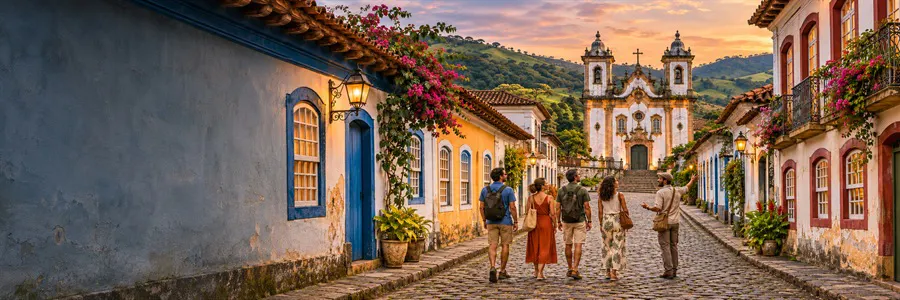
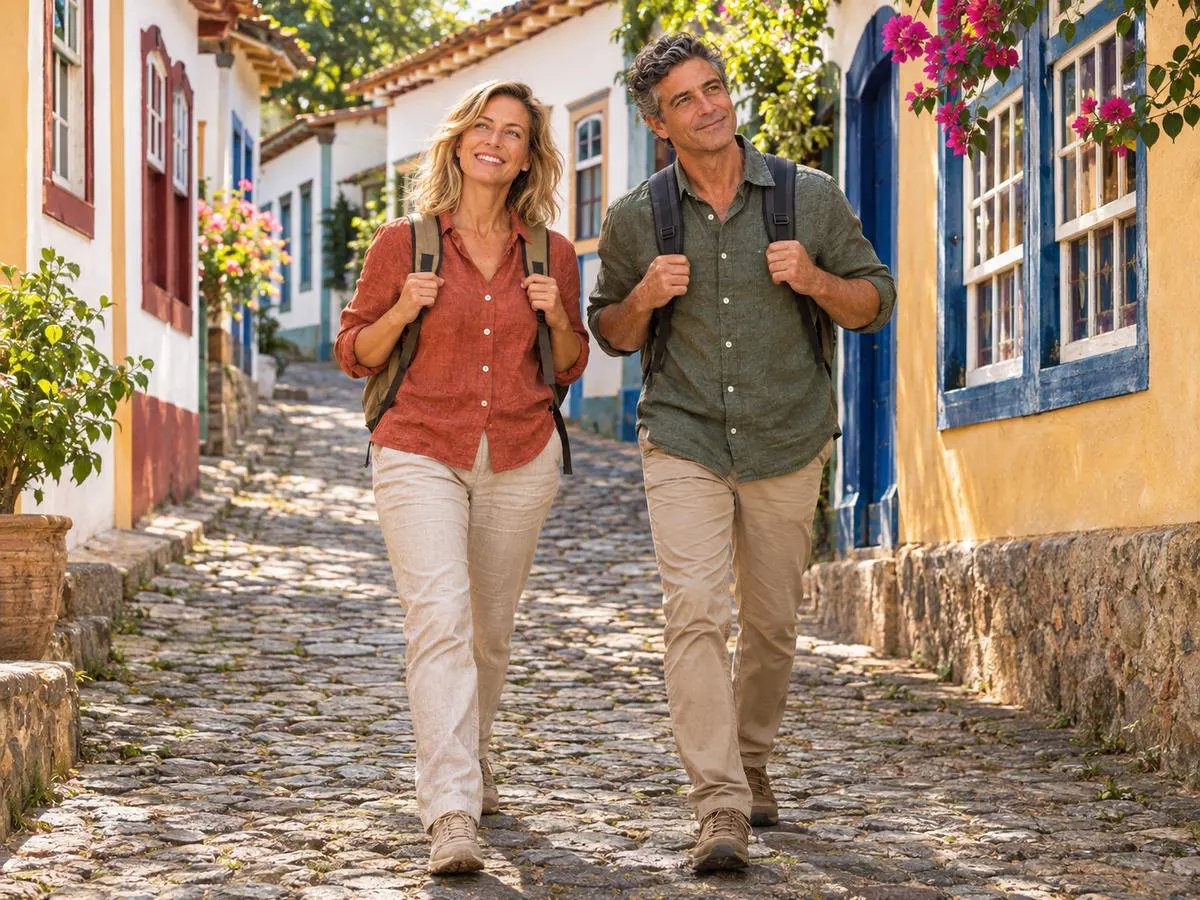
Illustrative images. The pictures in this guide are illustrations based on the real place, not photographs, and may differ from it.


Culture and history
Cultural and historical tourism
Old town centers, museums, manor houses, forts and studios tell how Brazil was formed. A trip for walking slowly, looking up and listening to stories.
Cultural and historical tourism is travel whose main purpose is to learn about a place’s past and culture: the old center, the museums, the manor houses, the forts, the monuments and the artisans’ work. In Brazil, this type of trip takes you through cities built with Minas Gerais gold, the sugar ports of the Northeast, the ruins of Jesuit missions in the South and capitals that preserve centuries of history within a few blocks.
What to do
Historic centers
Cobblestone streets, squares, churches and townhouses form a set that is best explored on foot.
Learn more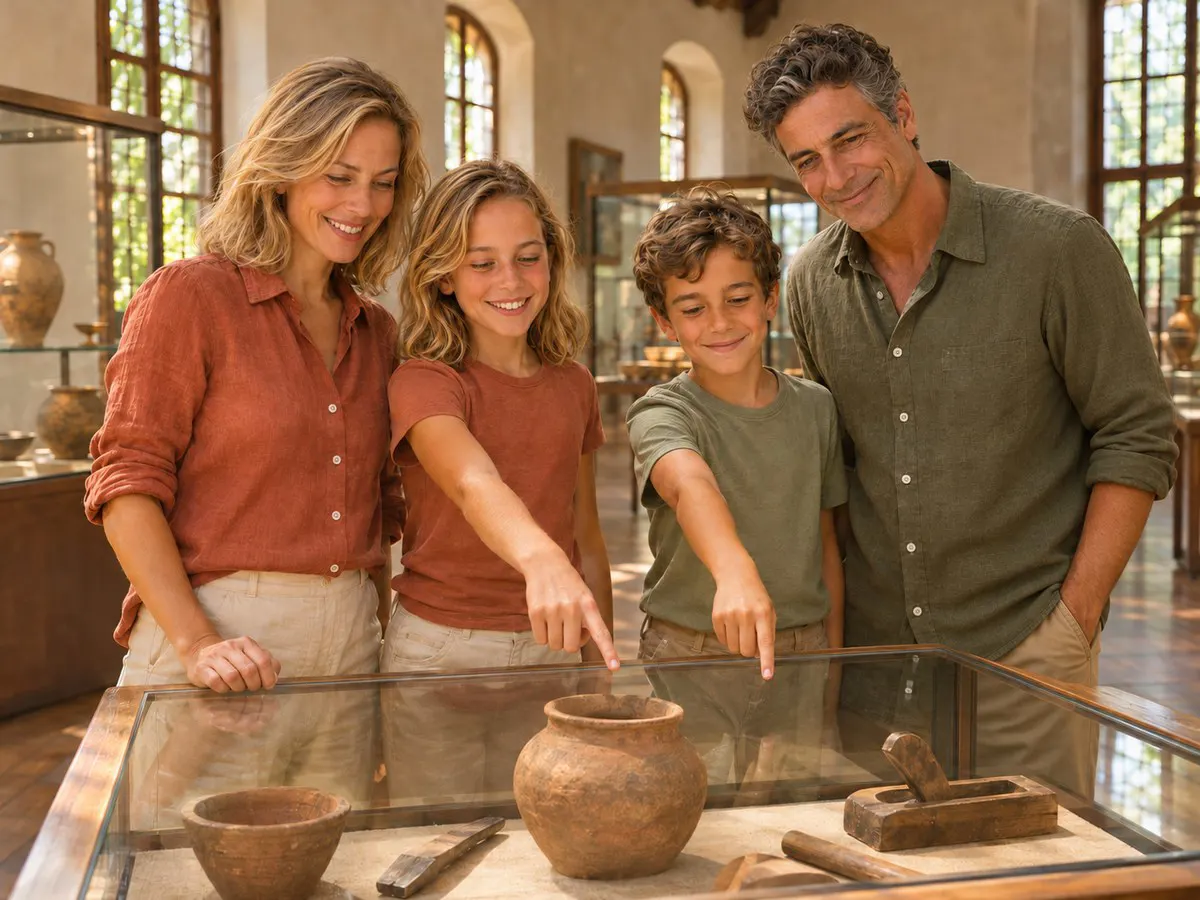
Museums
History, sacred art, archaeology or science: many close one day a week.
Learn more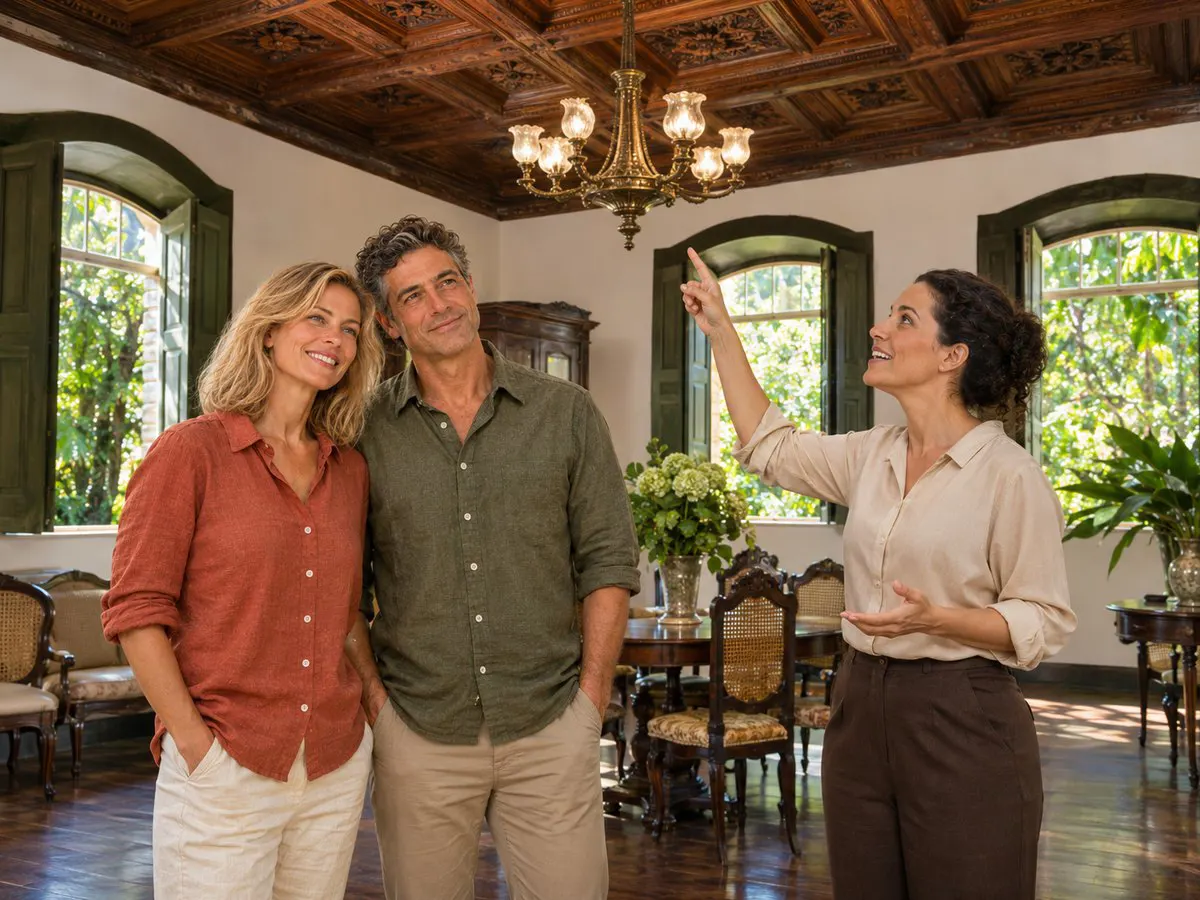
Manor houses and palaces
Townhouses, manor houses and old farms show how people lived and entertained in each period.
Learn more
Forts
Walls and cannons on headlands tell of the struggle for ports, bays and borders.
Learn more
Monuments and historic sites
Ruins, archaeological sites and civic squares require time and explanation.
Learn more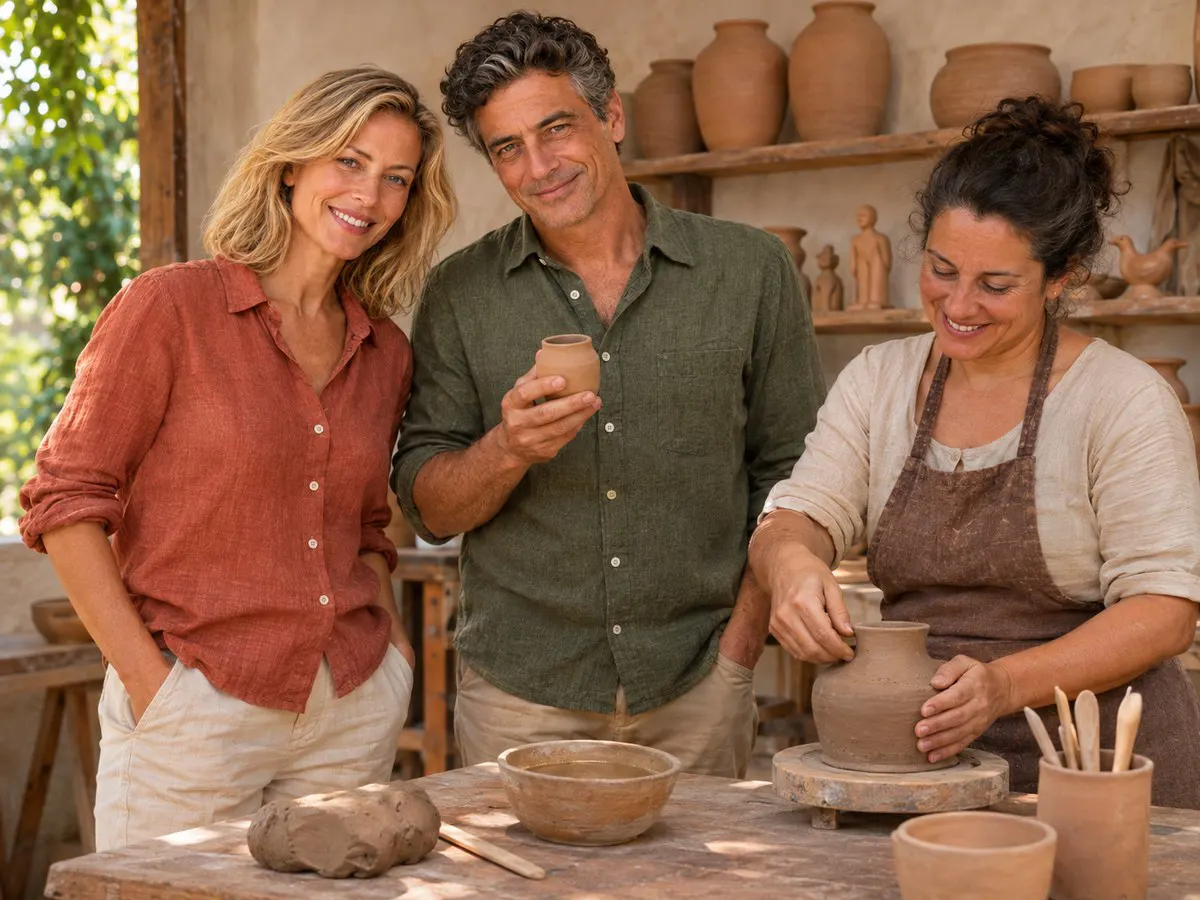
Crafts
In studios and markets, travelers watch artisans at work and buy directly from the makers.
Learn moreWhere to go in Brazil
Pick a region or a state on the map, or type what you are looking for, to see the cities and who offers each activity.
-
Rio Branco AC
Monuments and historic sites · Museums · Manor houses and palaces
- Macapá AP
- Iranduba AM
-
Manaus AM
Crafts · Manor houses and palaces · Museums · Monuments and historic sites
- Novo Airão AM
- Ananindeua PA
- Aveiro PA
-
Belém PA
Museums · Forts · Monuments and historic sites · Historic centers
- Belterra PA
- Cachoeira do Arari PA
- Marituba PA
- Salvaterra PA
- Santarém PA
-
Porto Velho RO
Monuments and historic sites · Museums · Manor houses and palaces
- Boa Vista RR
- Pacaraima RR
- Mateiros TO
- Palmas TO
- Maceió AL
- Piranhas AL
- Andaraí BA
- Belmonte BA
- Ilhéus BA
- Lençóis BA
- Mata de São João BA
-
Mucugê BA
Historic centers · Manor houses and palaces · Monuments and historic sites · Museums
- Porto Seguro BA
-
Salvador BA
Historic centers · Forts · Monuments and historic sites · Museums · Crafts
- Santa Cruz Cabrália BA
- Aquiraz CE
- Aracati CE
- Fortaleza CE
- Itarema CE
- Sobral CE
- Viçosa do Ceará CE
- Araioses MA
- Barreirinhas MA
- Primeira Cruz MA
- Santo Amaro do Maranhão MA
-
São Luís MA
Historic centers · Monuments and historic sites · Museums · Manor houses and palaces
- Cabaceiras PB
- Cabedelo PB
- Campina Grande PB
-
João Pessoa PB
Museums · Monuments and historic sites · Crafts · Historic centers
- Sumé PB
- Taperoá PB
- Cabo de Santo Agostinho PE
- Caruaru PE
- Fernando de Noronha PE
- Olinda PE
-
Recife PE
Forts · Monuments and historic sites · Crafts · Museums · Manor houses and palaces · Historic centers
- Tamandaré PE
- Parnaíba PI
- Teresina PI
-
Natal RN
Forts · Crafts · Manor houses and palaces · Monuments and historic sites · Museums · Historic centers
- Parnamirim RN
- Aracaju SE
- Canindé de São Francisco SE
-
Brasília DF
Monuments and historic sites · Museums · Manor houses and palaces · Historic centers
- Alto Paraíso de Goiás GO
- Cavalcante GO
-
Cidade de Goiás GO
Historic centers · Monuments and historic sites · Museums · Manor houses and palaces
- Corumbá de Goiás GO
- Goiânia GO
- Jaraguá GO
- Pirenópolis GO
- Cáceres MT
- Cuiabá MT
- Poconé MT
- Rosário Oeste MT
- Aquidauana MS
- Campo Grande MS
- Corumbá MS
- Jardim MS
- Miranda MS
- Alfredo Chaves ES
- Castelo ES
- Domingos Martins ES
- Viana ES
- Vila Velha ES
-
Vitória ES
Monuments and historic sites · Crafts · Manor houses and palaces
- Araçuaí MG
- Barão de Cocais MG
- Barbacena MG
-
Belo Horizonte MG
Monuments and historic sites · Museums · Manor houses and palaces
- Bichinho MG
- Brumadinho MG
- Campanha MG
- Catas Altas MG
- Congonhas MG
- Conselheiro Lafaiete MG
- Cordisburgo MG
-
Diamantina MG
Historic centers · Manor houses and palaces · Museums · Crafts · Monuments and historic sites
- Itabira MG
- Itabirito MG
- Itacarambi MG
- Januária MG
- Juiz de Fora MG
- Lambari MG
- Mariana MG
- Milho Verde MG
- Ouro Branco MG
- Ouro Fino MG
-
Ouro Preto MG
Historic centers · Museums · Manor houses and palaces · Monuments and historic sites
- Poços de Caldas MG
- Sabará MG
- Santa Bárbara MG
- Santana do Riacho MG
- Santos Dumont MG
- São João del-Rei MG
- Serro MG
- Tiradentes MG
- Três Corações MG
- Angra dos Reis RJ
- Barra do Piraí RJ
- Barra Mansa RJ
- Cabo Frio RJ
- Guapimirim RJ
- Itaguaí RJ
- Mangaratiba RJ
- Miguel Pereira RJ
- Niterói RJ
- Paraty RJ
- Paty do Alferes RJ
-
Petrópolis RJ
Historic centers · Museums · Manor houses and palaces · Monuments and historic sites
- Resende RJ
- Rio Claro RJ
- Rio das Flores RJ
-
Rio de Janeiro RJ
Museums · Manor houses and palaces · Forts · Monuments and historic sites · Historic centers
- Sumidouro RJ
- Teresópolis RJ
- Valença RJ
- Vassouras RJ
- Volta Redonda RJ
- Bertioga SP
- Campos do Jordão SP
- Cunha SP
- Ilhabela SP
- Monteiro Lobato SP
- Olímpia SP
- Santos SP
- São Bento do Sapucaí SP
- São Paulo SP
- São Sebastião SP
- Socorro SP
- Ubatuba SP
- Antonina PR
- Arapoti PR
- Carambeí PR
- Castro PR
- Curitiba PR
- Foz do Iguaçu PR
- Guaratuba PR
- Itaipulândia PR
- Lapa PR
- Morretes PR
- Palmeira PR
- Paranaguá PR
- Quatro Barras PR
- São Miguel do Iguaçu PR
- Canela RS
- Caxias do Sul RS
- Dois Irmãos RS
- Entre-Ijuís RS
- Garibaldi RS
- Gramado RS
- Monte Belo do Sul RS
- Nova Petrópolis RS
- Novo Hamburgo RS
-
Porto Alegre RS
Manor houses and palaces · Monuments and historic sites · Museums · Historic centers
- Santo Ângelo RS
- São Borja RS
- São Leopoldo RS
- São Luiz Gonzaga RS
- São Miguel das Missões RS
-
São Nicolau RS
Museums · Manor houses and palaces · Monuments and historic sites
- Balneário Camboriú SC
- Balneário Piçarras SC
- Biguaçu SC
- Blumenau SC
- Campo Alegre SC
- Florianópolis SC
-
Governador Celso Ramos SC
Operation suspended or changed: check before you go.
- Indaial SC
- Jacinto Machado SC
- Jaraguá do Sul SC
- Joinville SC
- Laguna SC
- Lauro Müller SC
- Painel SC
- Palhoça SC
- Penha SC
- Pomerode SC
- Porto Belo SC
- Rio dos Cedros SC
- Rio Negrinho SC
- Rodeio SC
- São Bento do Sul SC
-
São Francisco do Sul SC
Historic centers · Forts · Monuments and historic sites · Museums
- São José SC
- Timbó SC
It’s a trip that requires little equipment and a lot of curiosity. It suits people who like to walk, visit with a guide and understand what they’re seeing, and it fits both a weekend and a two-week itinerary through several cities.
What is cultural and historical tourism
In cultural tourism, the traveler chooses a destination for what it preserves of history and culture. The Ministry of Tourism defines the segment by experiencing historical and cultural heritage, the tangible, such as manor houses, churches, forts, theaters and ruins, and the intangible, such as trades and know-how passed down through generations. Visiting monuments and sites of historical events is called civic tourism.
In Brazil, assets protected at the national level are listed by Iphan, the institute for historical heritage. Some ensembles also have the title of World Heritage, given by UNESCO to places of value for all humanity. The title does not change the visit, but it usually indicates a well-preserved historic center, with continuous historic houses, signage and guides who know the place.
Three related subjects form other types of trips when they are the main reason: popular festivals, typical cuisine and places of faith. Here, churches enter by architecture and history.
Who it suits and at what stage of life
It suits those who have time and a desire to learn. It's a common choice in retirement, during a gap year or in that phase when someone wants to know their own country better. It also works for couples, solo travelers and groups of friends who enjoy long conversations after the tour.
For families with school‑age children, a historic town is a live lesson: what was in the book appears in the street, in the museum and in an old gold mine open to visitors. With small children, it's best to choose few sites per day and alternate with squares and ice cream shops.
The physical effort is moderate but real. Many historic towns have hills and uneven stone paving. Those with difficulty walking enjoy more if they stay in the center, keep routes short and, when available, use transport between upper and lower parts.
Historic towns of Brazil: where to go
In Minas Gerais, Ouro Preto was the first place in Brazil to receive the World Heritage title, in 1980. The city was born from the gold rush in the 18th century and brings together Baroque churches with works by Aleijadinho, the Museum of the Inconfidência and old mines that receive visitors. In the state of Rio de Janeiro, Petrópolis preserves the memory of the Empire: the former summer palace of Dom Pedro II is the Imperial Museum. On the southern coast of Rio de Janeiro state, Paraty has a colonial center by the sea, with cobbled streets that the high tide often floods in part.
In the Northeast, Salvador was Brazil's first capital, from 1549 to 1763; the Pelourinho concentrates churches and two‑story houses, and forts built from the 16th century guard the bay entrance. Olinda, in Pernambuco, spreads convents and artists' and artisans' studios along hills with views of the sea. In São Luís, Maranhão, the downtown two‑story houses have facades covered in Portuguese tiles.
In the Center‑West, Brasília, inaugurated in 1960, is a World Heritage Site for its urban plan and the modern architecture of its palaces and monuments. In Rio Grande do Sul, São Miguel das Missões preserves the ruins of the church of an 18th‑century Jesuit‑Guarani reduction.
When to visit historic towns
Cultural travel can be done year‑round, and climate matters less than in other types of tourism. In the historic towns of Minas Gerais, the months from April to September are usually drier, with sunny days and cool nights; from October to March it rains more, generally in afternoon showers. On the Northeast coast, rains are more common between April and July; in São Luís, the rainy season usually runs from January to June.
The calendar changes the experience. At Holy Week, Carnival and the July school vacation, historic centers get crowded and accommodation must be booked in advance. Those who prefer empty streets and museums without lines choose weekdays outside school holidays.
How to plan the trip
Two to three full days are usually enough for a medium‑sized historic town; capitals like Salvador need more. A good itinerary links nearby towns: in Minas, for example, several are a few hours' drive from each other, and a car gives the freedom to stop in districts and viewpoints.
In your luggage, the main item is a closed shoe with a sole that won’t slip on stone. In churches with services, discreet clothing and silence are requested; in many interiors, photography is not allowed.
A licensed tour guide makes a difference on this kind of trip, because much of the history isn’t written on the walls. A half-day walking tour right after arrival helps you understand the city and choose what to see more calmly in the following days.
Historical tourism in the world
Outside Brazil, the same type of trip leads to cities where several eras overlap. In Rome, imperial ruins, churches and Baroque squares share the same block, and the Vatican is inside the city. In Cusco, Peru, colonial buildings were erected on top of Inca walls that remain visible.
In Kyoto, the former imperial capital of Japan, temples, shrines and gardens occupy entire neighborhoods. In Évora, Portugal, a Roman temple and a medieval cathedral stand a few steps from each other inside the walls. The same rule that applies to Brazilian cities also fits all of them: fewer sites per day and more time at each one.
Frequently asked questions
What is cultural and historical tourism?
It’s travel undertaken to learn about a place’s history and culture. It includes historic centers, museums, manor houses, forts, monuments, archaeological sites and local crafts.
Which historic cities should you visit in Brazil?
Ouro Preto, Salvador, Olinda, São Luís, Paraty, Petrópolis, Brasília and São Miguel das Missões are among the most sought after. Each tells a different era: gold, sugar, the Empire, the Jesuit missions, the modern capital.
How many days should you stay in a historic city?
Two to three full days for a medium-sized city like Ouro Preto or Paraty. Capitals with large historic centers, such as Salvador and São Luís, require three to five days.
When to visit the historic cities of Minas Gerais?
From April to September the weather is usually drier, with cool nights. From October to March it rains more, generally in the afternoon. Holidays and the July school break are the busiest periods.
Is a historic city a good outing with children?
Yes, especially with school-age children, who recognize on the street what they saw in class. It works well with few sites per day and visits that have activity, such as mines, forts and interactive museums.
Do you need to hire a guide to visit a historic center?
It’s not mandatory, but it helps a lot. A licensed tour guide explains what isn’t on the plaques and organizes the walking route. A half-day tour on the first day is usually enough.
Can someone with difficulty walking visit cities with hills?
They can, with planning. It helps to stay in the center, split visits into short sections and use a car or taxi between the upper and lower parts. Stone pavements are uneven and require sturdy footwear.
What’s the difference between a listed heritage site and a World Heritage Site?
Listing is protection given by a national, state or municipal authority; in Brazil, at the national level, by Iphan. World Heritage is a UNESCO designation for places of outstanding universal value. The same historic center can have both.
More in Culture and history
Beyond the guide


