park
Parque Unipraias
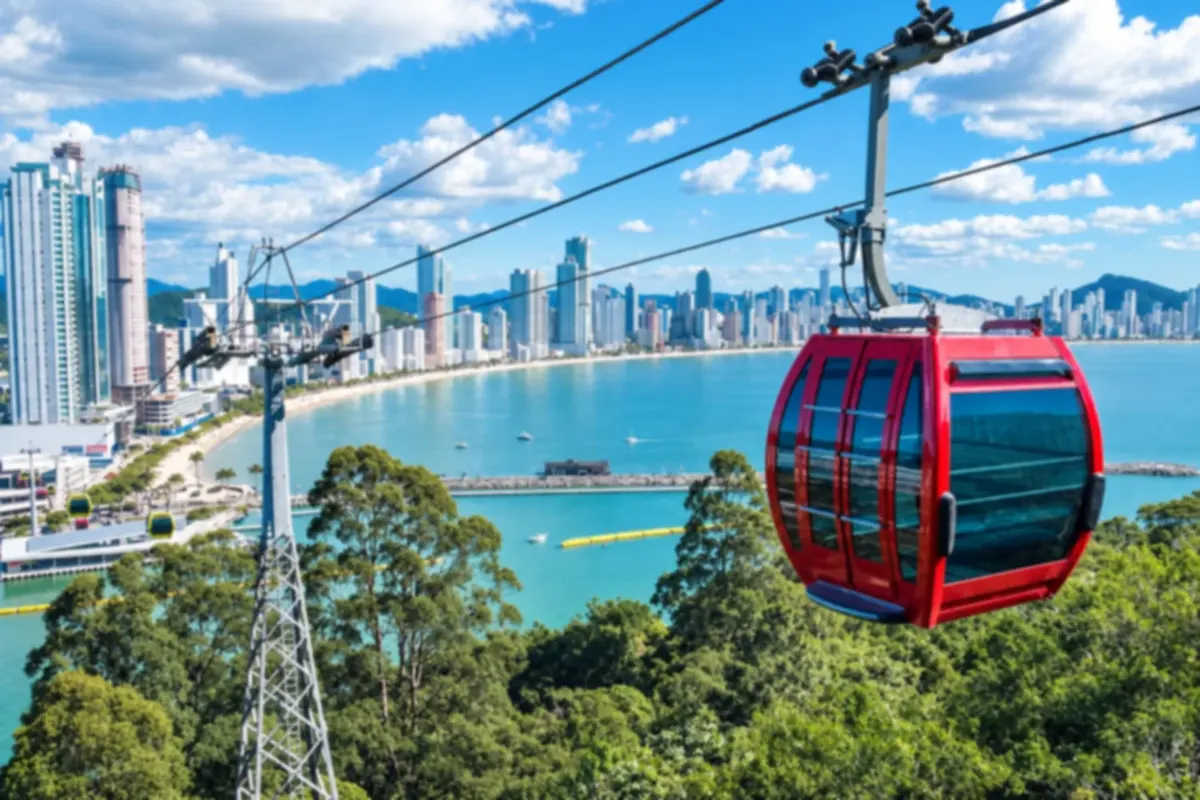
A cable car linking the Praia Central to Praia de Laranjeiras via a station on the hill, with a 900-meter zip line and a mountain coaster. The view from the top is the best lookout in the city.

 Search
Brazil
 Antarctica
 Argentina
 Bolivia
 Chile
 Colombia
 Ecuador
 Guyana
 French Guiana
 Falkland Islands (Malvinas)
 Paraguay
 Peru
 Suriname
 Uruguay
 Venezuela
 Germany
 Austria
 Belgium
 Croatia
 Denmark
 Slovakia
 Slovenia
 Spain
 Finland
 France
 Greece
 the Netherlands
 Hungary
 Ireland
 Iceland
 Italy
 Luxembourg
 Norway
 Poland
 Portugal
 the United Kingdom
 the Czech Republic
 Sweden
 Switzerland
 Turkey
 Bermuda
 Canada
 the United States
 Greenland
 Mexico
 Saint Pierre and Miquelon
 the Dominican Republic
 JapanTurkey
 South Africa
 Egypt
 Australia
 Fiji
 New Zealand
 Papua New Guinea
Saint Catherine · Brazil
In the destination Costa Verde e Mar.
Illustrative images. The pictures in this guide are illustrations based on the real place, not photographs, and may differ from it.
The city
Balneário Camboriú combines a built-up waterfront with hills covered in Atlantic Forest. You can alternate walks along the Praia Central with outings to the beaches south of the city.
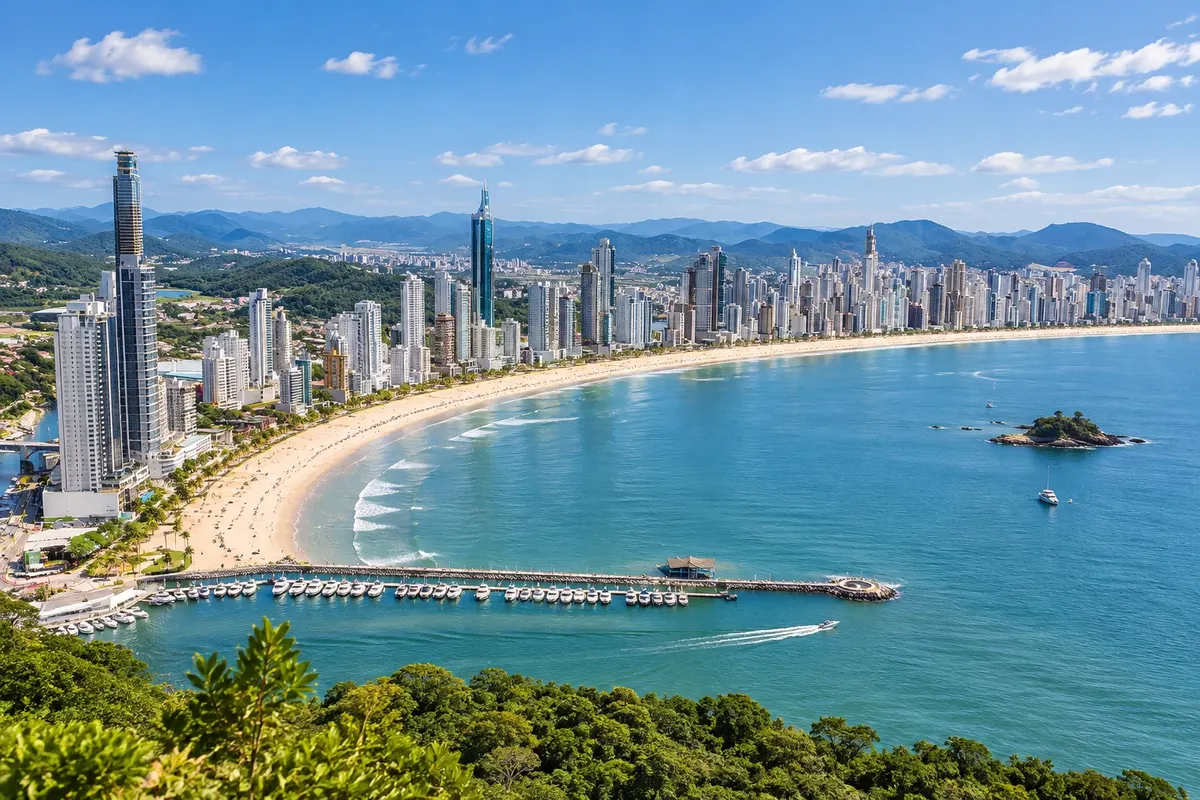
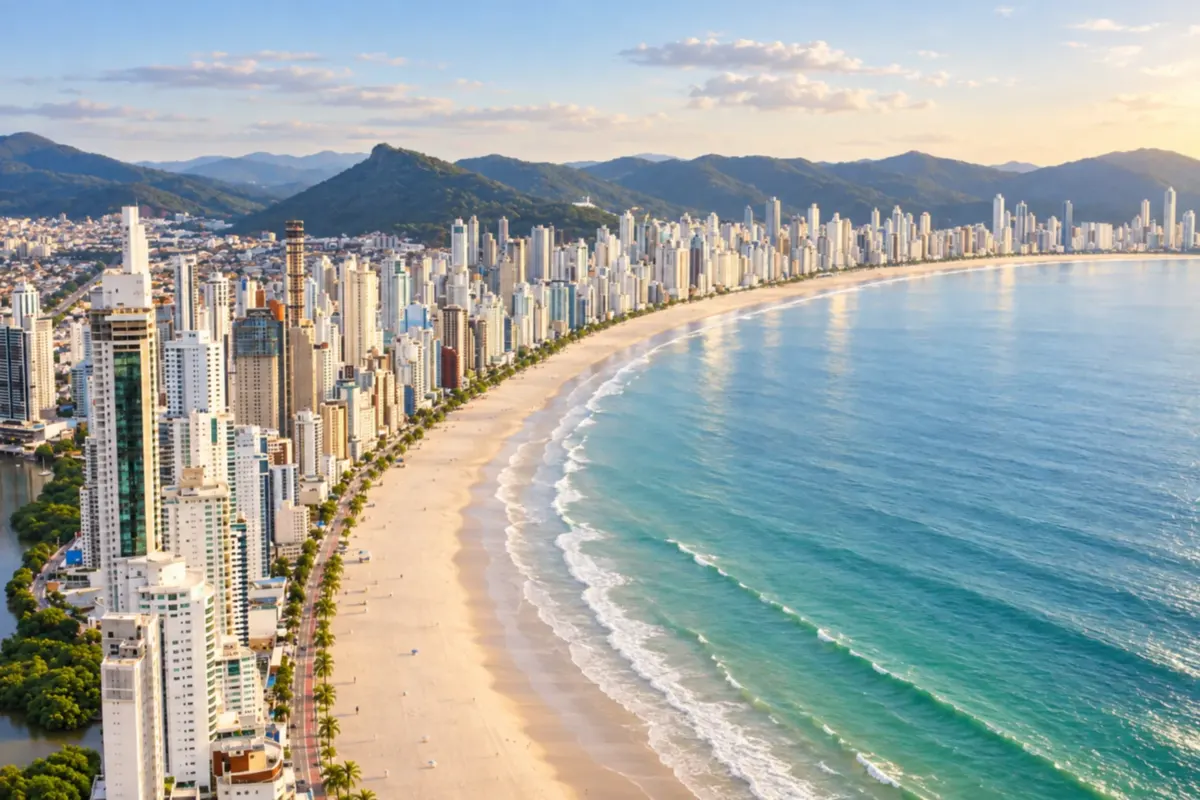
Balneário Camboriú occupies a narrow strip of the northern coast of Santa Catarina, between the sea, the Camboriú River and hills covered in Atlantic Forest. The city is known for the row of very tall buildings along the waterfront, including some of the tallest residential towers in Brazil, and for attracting visitors year-round. Almost everything happens along Praia Central, a cove of nearly 6 km bordered end to end by Avenida Atlântica.
The waterfront has two ends with distinct characters. At Barra Sul, by the mouth of the Camboriú River, are the Unipraias cable car station, the Barco Pirata pier, the aquarium, the breakwater and the Passarela da Barra, which crosses the river to the Bairro da Barra, where the city began and where the 19th-century Capela de Santo Amaro stands. At Pontal Norte, the other end, are the Ferris wheel, the wooden deck that runs around the headland and Estrada da Rainha, which climbs the hill toward Praia dos Amores. Between the two ends is the Center, with Avenida Brasil, parallel to the beach, lined with shops and restaurants. A bit inland, in Bairro das Nações, Cristo Luz sits on one of the hills and is a late-afternoon and nighttime attraction.
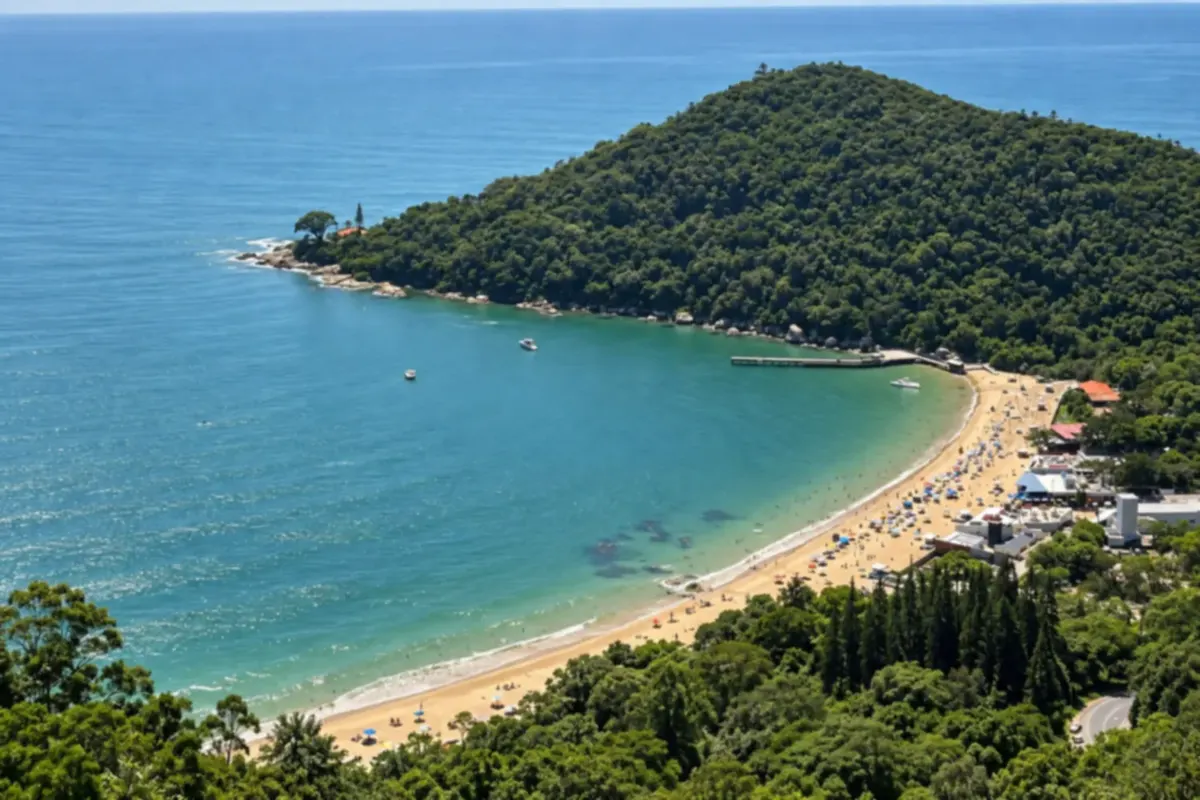
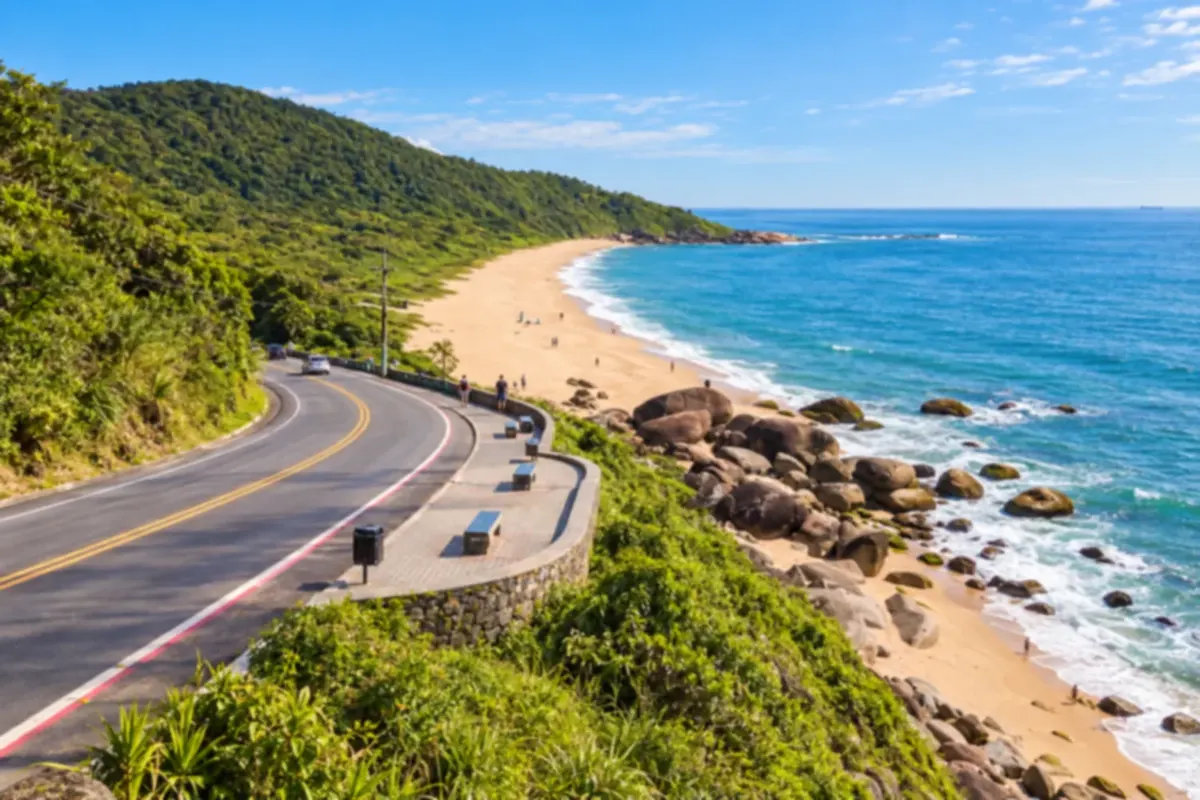
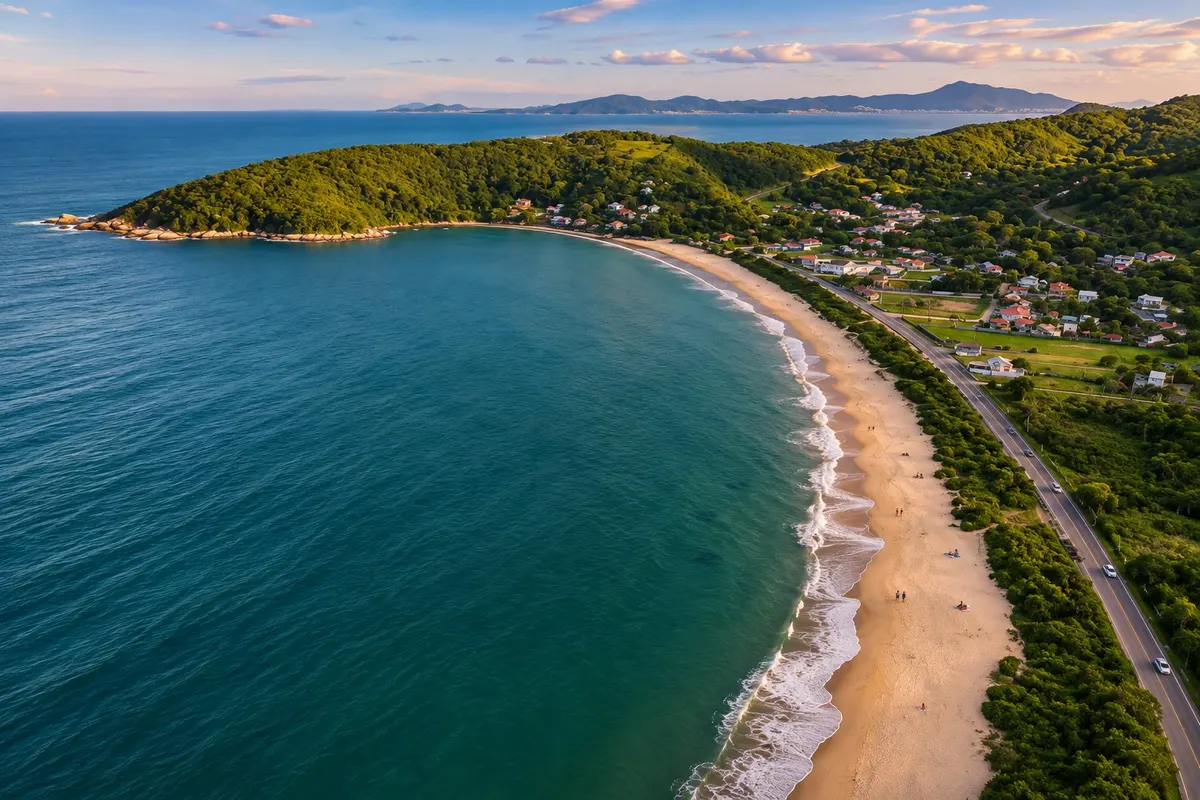
South of the river the landscape changes. The Interpraias Highway runs about 12 km between forest and sea and passes six beaches: Laranjeiras, with calm water and beachfront restaurants, and then Taquarinhas, Taquaras, Pinho, Estaleiro and Estaleirinho, the so-called wild beaches, without buildings and with much more green. Praia do Pinho is reserved for naturism. Laranjeiras can also be reached by the cable car, which climbs Morro da Aguada, and by the boat that departs from Barra Sul.
Summer, from December to March, is hot, with heavy showers and crowded city; New Year’s Eve and Carnival are the peaks. From April to June and September to November there are fewer people, mild days and colder sea. Winter, from June to August, has cool days and cold nights: it’s the season for indoor attractions, viewpoints and the July festivals, the month of the city’s anniversary.
For a first visit, the cable car, Laranjeiras and a walk along the waterfront fit into one day. With two or three days you can add Pontal Norte and the Ferris wheel, Cristo Luz at night, Bairro da Barra and at least one of the wild beaches. Praia Central is walked on foot, and the city buses, which do not charge a fare, connect the Center to the southern beaches.
93 places to stay in Balneário Camboriú.
27 places to eat in Balneário Camboriú.
Balneário Camboriú highlights and titles
The local experience
A cable car linking the Praia Central to Praia de Laranjeiras via a station on the hill, with a 900-meter zip line and a mountain coaster. The view from the top is the best lookout in the city.
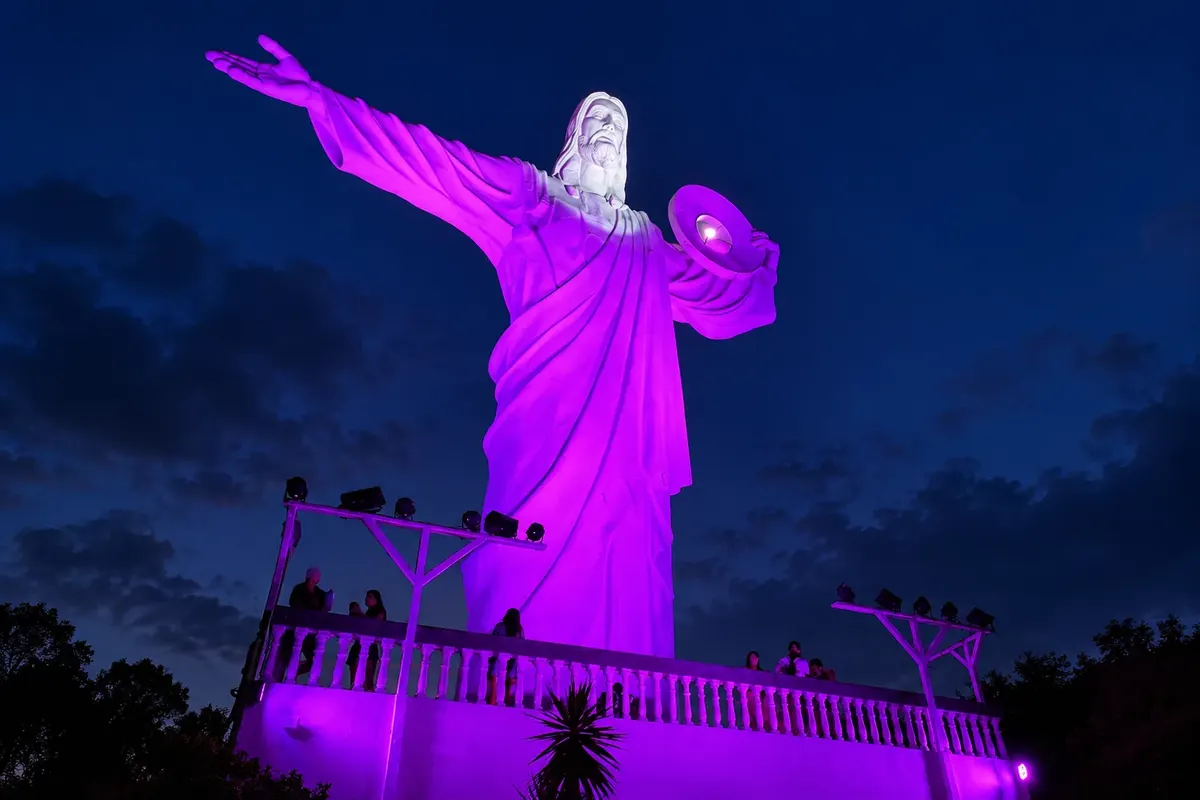
A 33-meter monument inaugurated in 1997, with viewpoints and colored lighting that changes through the night. The complex has a restaurant and live music.
A clear-water cove surrounded by green hills, reached by boat, cable car or road. It has kiosks, restaurants and pirate schooner tours.
At about 5.8 km, it is the strip of sand in front of the waterfront skyscrapers. In 2021 it received 2.2 million cubic meters of sand, and its average width went from 25 to about 70 meters, to bring back sunlight to the beach.
A winding road that links Praia Central to the wild beaches in the south of the municipality, passing viewpoints over the sea. It is the perfect drive to take slowly, stopping at every cove.
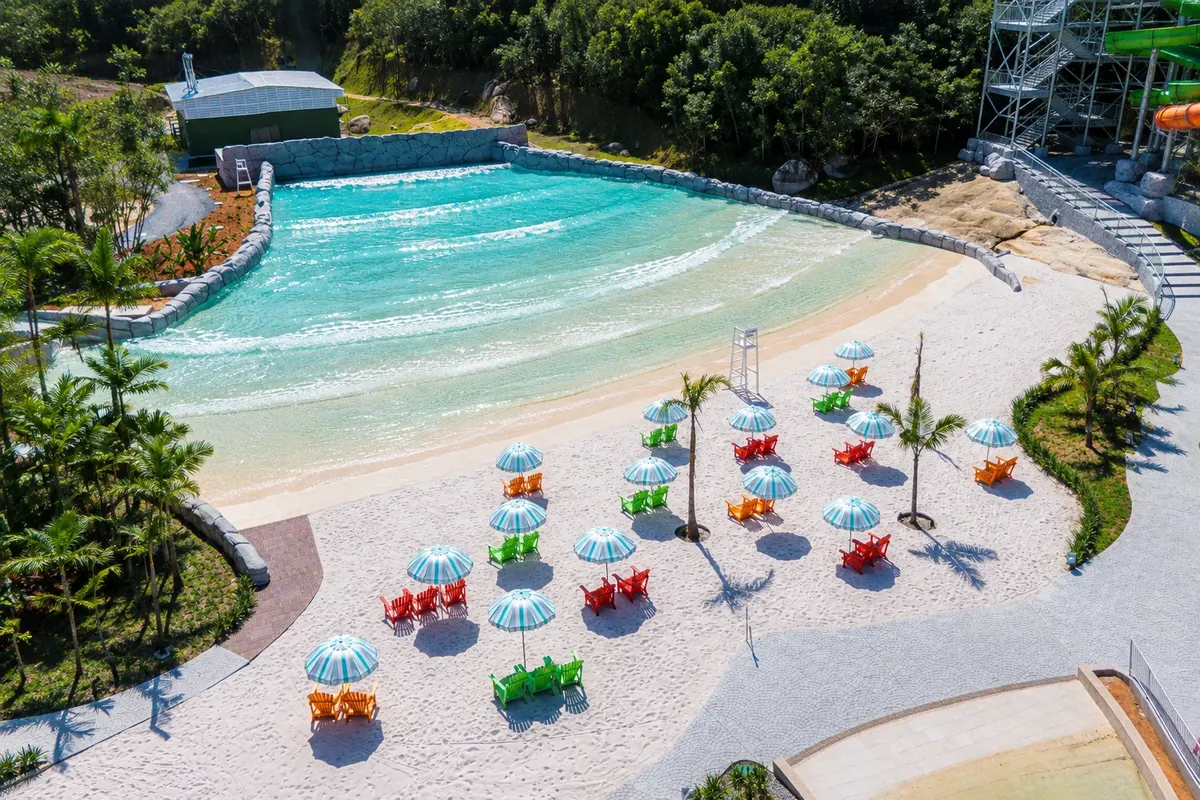
Water park on Praia do Estaleirinho in Balneário Camboriú, with water heated to around 33 °C, an artificial beach with a wave pool, 16 water slides, the Torre Master and areas for children and babies.
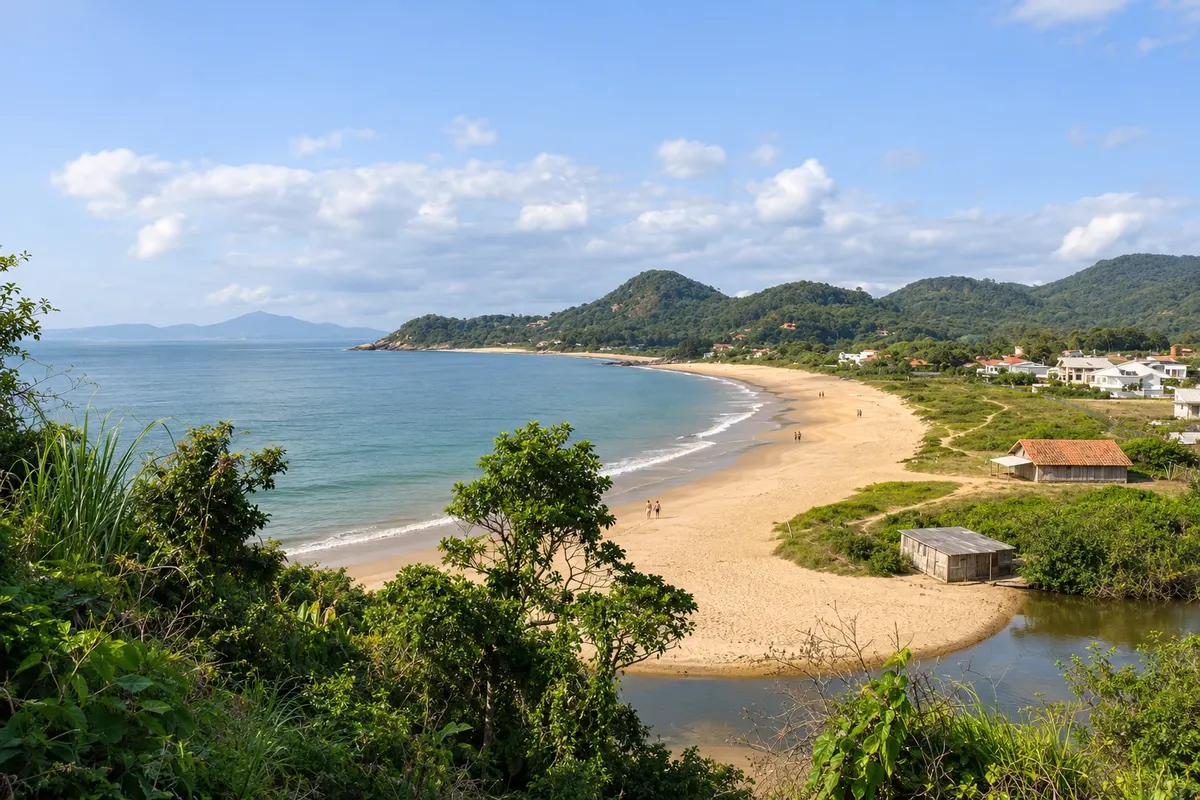
A rugged beach of about 1 km on the southern stretch of the Interpraias Highway, roughly 8 km from downtown Balneário Camboriú. Coarse sand, clear water and hills covered in Atlantic Forest, inside an environmental protection area, away from the high-rises of the Central Beach.
Open-ocean beach in the south of Balneário Camboriú, about 10 km from downtown via the Rodovia Interpraias. Coarse sand, clear water, waves and Atlantic Forest-covered slopes, with vacation houses scattered across the hillside and little development on the shore.
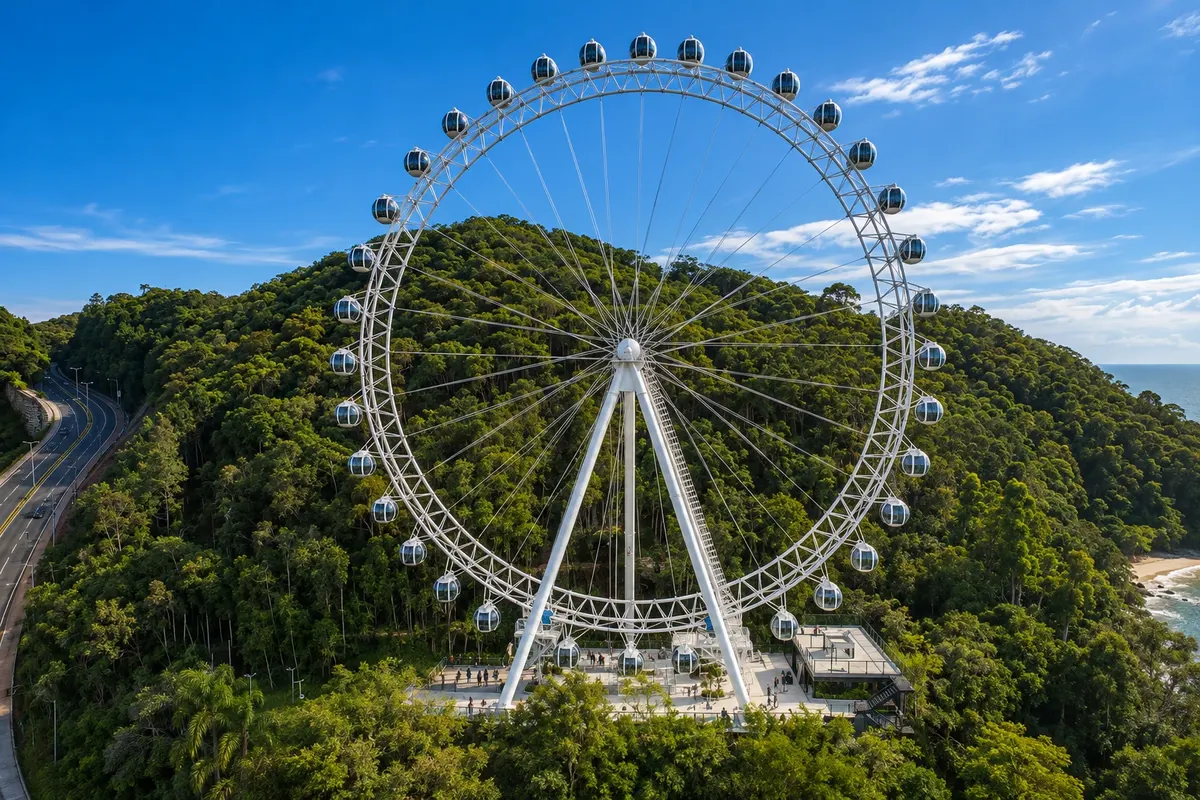
A cable-stayed Ferris wheel on the North Bar, at the start of Balneário Camboriú’s Central Beach. The enclosed, air-conditioned cabins rise to about 82 meters above the sea and show, from above, the skyline of high-rises, the Camboriú River and the neighboring coast.
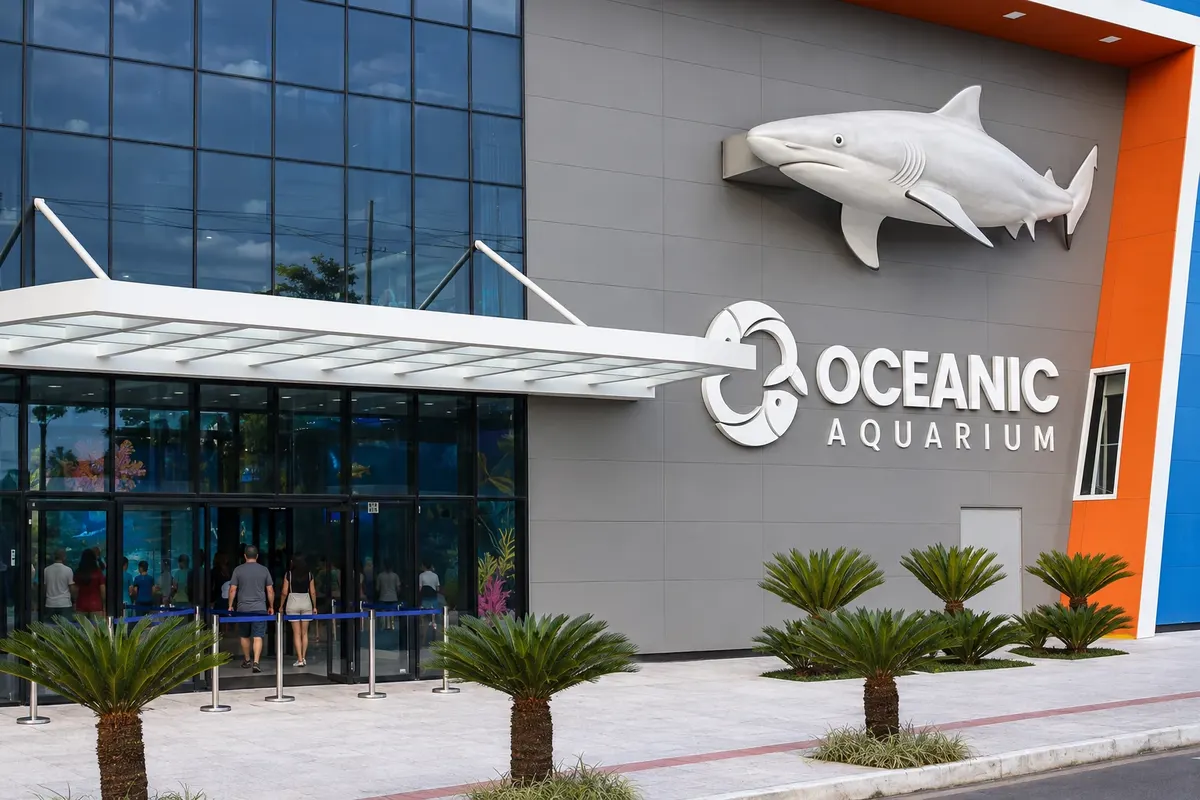
Aquarium on Barra Sul in Balneário Camboriú, with two floors for visitors: one dedicated to freshwater species and the other to saltwater species, in exhibits that reproduce river, reef and open-sea environments. The visit takes about one hour.
To choose before you go
Where each tour starts, how long it takes, how it is done, what is included and the price range.
Praia Central is the city’s axis: a cove nearly 6 km long, with Avenida Atlântica and the promenade on one side and the sand on the other. After widening, the sand strip averages about 70 meters in width, and there is space for walking, running and playing even on busy days. A good starting point is Molhe da Barra Sul, the paved breakwater that protects the mouth of the Camboriú River. From there you can see the whole cove, with the tallest buildings just behind. Heading north, the promenade passes kiosks and sections of bike lane. Along the way is Praça Almirante Tamandaré, a meeting point on the waterfront and a venue for shows and city events. Off the beach, about 600 meters from the sand, is Ilha das Cabras, a preserved area visible from any point on the waterfront that is also lit at night. The walk ends at Molhe da Barra Norte, where the view is reversed: the entire city at once. In the afternoon the buildings cast shade over part of the sand; if you want sun you’ll find more hours in the morning. At night, Avenida Atlântica becomes a promenade, with restaurants, ice-cream shops and people walking late into the evening.
Stops: South Pier Breakwater, Praia Central, Avenida Atlântica, Praça Almirante Tamandaré, Ilha das Cabras (view from the sand), North Pier Breakwater.
Includes: Self-guided walk. Chairs, umbrellas, kiosks and bike rental are paid separately.
Tip: To walk the entire waterfront without backtracking on foot, go one way and return by city bus or ride-hailing car. Avenida Atlântica is one-way, running from Barra Sul toward Barra Norte.
Best time: All year. In summer, walk early or late afternoon; in winter, midday is more pleasant.
The aerial cable car connects three stations: Barra Sul, at the tip of Praia Central; Mata Atlântica Station, atop Morro da Aguada, at about 240 meters altitude; and Praia de Laranjeiras, on the far side of the hill. The ticket is valid for one round trip on the same day, in a shared cabin, and visitors can get off at each station and stay as long as they like. Most attractions are at the top of the hill. There are short trails and walkways through the forest, with viewpoints facing the town on one side and Laranjeiras on the other. The Super Gyro Tower is an observation tower with a climate-controlled rotating cabin for up to 50 people that rises slowly and shows the bay, the hills and the sea in 360 degrees. The Youhooo! is a mountain coaster on rails, with a 710-meter course through the woods; each sled carries one or two people who control the speed. The ZipRider is a zip line that starts at the top of the hill and descends to Laranjeiras. For young children there is the Fantástica Floresta, with a character trail and a suspended train among the trees. These four attractions have separate fees and their own height, weight and age rules; ZipRider and Fantástica Floresta tickets are sold only up there. The descent to Laranjeiras completes the visit: the station is next to the beach, and you can have lunch and swim before returning. The cable car does not board passengers wearing swimwear or without a shirt, nor those carrying drinks, animals or bulky objects such as chairs and boards. Strong wind and rain may interrupt service.
Stops: Barra Sul Station, Mata Atlântica Station (Morro da Aguada), Super Gyro Tower, Youhooo!, ZipRider, Fantástica Floresta, Laranjeiras Station.
Includes: The tramway ticket entitles you to one round trip the same day, with stops at the three stations. Super Gyro Tower, Youhooo!, ZipRider and Fantástica Floresta are paid separately. Small children do not pay for the tramway, and children and seniors have reduced fares with ID: check the current table.
Tip: Go early to face shorter lines for the tramway and the hill attractions. If you plan to enter the sea at Laranjeiras, bring clothes to change into, because you cannot board in swimwear. On windy days, check operation before leaving.
Best time: All year. Clear days give better views from the overlooks; in summer the lines are longer.
R$ 80 · per person, adult, tramway round trip · official priceThe wooden schooners decorated like caravels depart from the Barra Sul pier, next to the cable car station. The traditional route follows the Central Beach waterfront, with the town seen from the sea, passes by Ilha das Cabras and continues to Laranjeiras Beach. On board, actors dressed as pirates liven up the trip, and there is a bar. The ticket allows you to disembark at Laranjeiras, stay on the beach and return on a later boat the same day. It’s a way to turn the tour into a beach day: Laranjeiras is a cove of about 750 meters, with calm, greenish water, restaurants on the sand, a pier and a small promenade of craft shops. Departures are daily and more frequent in summer; during the rest of the year there are few schedules, and operation depends on the sea, the wind and a minimum number of passengers. The same company sells a longer trip to Porto Belo Island, in the neighboring municipality. The boat and the cable car arrive at the same place by different routes, and many people combine the two: go by boat and return by cable car, or vice versa. In that case you need two tickets, one for each attraction.
Stops: Barra Sul Pier, Central Beach waterfront (view from the sea), Ilha das Cabras, Laranjeiras Beach.
Includes: Boat tour with live entertainment and the option to disembark at Laranjeiras and return the same day. Food and drinks on board are paid separately. Small children ride free, and children and seniors have reduced fares: check the current rate table.
Tip: Arrive at the pier early and confirm at boarding until what time there are return boats from Laranjeiras. With rough sea or strong wind departures may be canceled.
Best time: All year; from late December until Carnival there are more departures per day.
R$ 85 · per person, adult, traditional route · official priceThe Interpraias Highway is about 12 km long and connects, within the municipality, six beaches south of the Camboriú River. It begins and ends at the BR-101: one end is just south of the Camboriú River, before Laranjeiras, and the other after Estaleirinho, toward Itapema. The route is winding, through Atlantic Forest hills, with pullouts on the sea side for stopping and taking photos. Leaving the town center, the first is Laranjeiras, about 6 km away: a cove with calm water, restaurants on the sand, and the busiest of the six. Taquarinhas, about 8 km, has 600 meters of coarse sand, rough sea and no facilities; it’s sought for shore fishing and to enjoy the scenery. Taquaras, just ahead, is a fishing village with a little over 1 km of beach, clear deep water, some bars and restaurants and a parking area. Praia do Pinho, about 9 km away, is a small cove between headlands, reserved for naturism: it was the country’s first official nudist beach. The entrance passes through private land, with paid parking, and there is an acclimation area for first-time visitors. The last two are the largest. Estaleiro, about 11 km away, has 1.7 km of sand, strong waves and, at the northern corner, a natural pool among the rocks. Estaleirinho, next door, has waves popular with surfers, restaurants and beach bars; the Multiparque water park is nearby. Estaleiro, Estaleirinho and Taquaras are among the beaches with Blue Flag certification.
Stops: Laranjeiras Beach, Taquarinhas Beach, Taquaras Beach, Praia do Pinho, Estaleiro Beach, Estaleirinho Beach.
Includes: Self-guided outing. Private parking, chairs and meals are paid separately.
Tip: Go on a weekday or early: on summer weekends the road and parking lots fill up. The open-ocean beaches have strong waves; enter the water near the lifeguard stations. Bring water and a snack for Taquarinhas, which has no shops.
Best time: From November to April for swimming. The rest of the year the road and viewpoints are still worth it, with the beaches almost empty.
This is the walk to understand where the town came from. At Barra Sul, the pier juts out into the sea at the mouth of the Camboriú River and serves as a viewpoint over the waterfront. Marinas and the tallest buildings line the river, and a few steps away is the Barra Promenade. The promenade is a cable-stayed walkway about 190 meters long, for pedestrians and cyclists only, with elevators. It is named after Manoel Firmino Rocha, the ferryman who for decades rowed residents across the river at that spot. From the central span you can see, on one side, the wall of skyscrapers and, on the other, the mangrove and the Barra neighborhood. On the other side of the river the pace is different. The Barra neighborhood is the core from which the town grew, and the fishing community remains there. Just after the promenade, on a small rise, stands the Chapel of Santo Amaro, the former mother church of Nossa Senhora do Bom Sucesso: a 19th-century church of rough stone and mortar made with whale oil, the only colonial building left in the municipality. Next to it is Praça do Pescador, where the neighborhood’s festivals take place, with grilled mullet and music, usually in July. On Sundays the square often hosts a craft and food fair; check before you go.
Stops: Barra Sul pier, Barra Promenade, Camboriú River, Chapel of Santo Amaro, Praça do Pescador.
Includes: Self-guided visit, in a public area.
Tip: Late afternoon is the most beautiful time on the promenade, with the low light over the river and buildings. The chapel is not always open: check in advance if you want to see the interior.
Best time: All year. In July, the Barra neighborhood festivals fill Praça do Pescador.
At the far north end of Praia Central, the hill meets the sea and the waterfront changes character. The FG Big Wheel, the city's Ferris wheel, is there, next to Estrada da Rainha. It has a 65-meter diameter, the highest point is 82 meters, and 36 enclosed, air-conditioned cabins that hold up to six people. A full rotation takes 15 to 22 minutes and shows the whole cove, the buildings and the hill forest. At night the wheel is lit and there is a light show. At the base of the wheel begins the Deck do Pontal Norte, a wooden boardwalk that skirts the headland between the sea, the rocks and the trees, with shade and benches along much of the route. From the deck you get the classic view of the town: the curve of the beach with all the buildings in a row. If you’re lucky, sea turtles appear near the rocks. The deck passes by Prainha, a sand cove under 100 meters long, more for viewing than swimming, and reaches Praia do Buraco, about 900 meters long, with preserved forest and rough sea, more popular with surfers. Estrada da Rainha climbs the hill beside the Ferris wheel, with a bike lane and sea views, and descends to Praia dos Amores, the Balneário Camboriú neighborhood adjoining Praia Brava, which already belongs to Itajaí. The sand strip is continuous and the boundary is hardly noticeable.
Stops: North Pier Breakwater, FG Big Wheel, Deck do Pontal Norte, Prainha, Praia do Buraco, Estrada da Rainha, Praia dos Amores.
Includes: Self-guided hike. Ferris wheel admission is paid separately, with reduced fare for children and seniors: check the current table.
Tip: Do the deck in daylight, as the route has no shops or facilities, and save the Ferris wheel for sunset or early evening. Check the wheel’s calendar before you go: operating days vary throughout the year.
Best time: All year round. Clear days for the view; in summer, late afternoon is the busiest time for the Ferris wheel.
Cristo Luz is the 33-meter statue visible from almost the whole town, atop a hill in Bairro das Nações. One arm is open; the other holds a light cannon, and the monument’s illumination changes color through the night. The visit covers the complex around the statue. The lookout overlooks the entire town, from Barra Sul to Pontal Norte, with the sea in the background; the busiest moment is the turn from day to night when buildings light up. On the grounds there is also a grotto dedicated to Nossa Senhora Aparecida, shops, a bar, and a restaurant. In high season (December–February) there is usually live music every day. The complex opens Monday through Saturday from late afternoon, and on Sundays and holidays from the morning, always until night. The schedule can change during the year, so confirm before you go up. To get there without a car, the complex runs a shuttle that does not charge a fare, with daily departures from late afternoon and several pick-up points along Avenida Brasil. By car or rideshare, access is via Rua Indonésia.
Stops: Cristo Luz Tourist Complex, Lookout, Grotto of Nossa Senhora Aparecida.
Includes: Entrance to the complex, with lookout and grotto. Food and drinks are paid separately. Small children enter free when accompanied by a paying adult: check the current rate table for your visit date.
Tip: Arrive before sunset to see the town in daylight and wait for the lights to come on. On winter evenings, bring a jacket.
Best time: All year; clear-sky nights. From December to February the program runs daily and it’s busier.
When it rains, is windy or cools down, the city program shifts from the sand to indoor attractions, and most of them belong to the same group, which sells individual tickets and combined passports. The most visited is the Oceanic Aquarium in Barra Sul, near the cable car and the Pirate Ship pier. The visit is self‑guided, at your own pace, through freshwater and saltwater exhibits with sharks, penguins, otters, caimans, snakes, birds and many fish. A glass walkway passes over the shark tank. The aquarium is open every day; the ticket office closes one hour before closing time. Nearby is Aventura Pirata, aimed at children, with a treasure hunt, animatronics, shooting games and a small museum with items recovered from shipwrecks. In front of the Barra footbridge is the Classic Car Show, an automobile museum with more than 30 vintage vehicles displayed in chronological order, including Ferrari, Rolls‑Royce and Cadillac, plus a giant slot-car track and racing simulators. Outside Barra Sul there are two more attractions from the group. Aventura Jurássica is a dinosaur park with over 100 replicas, many life‑size, that move and make sounds; much of the route is outdoors. Space Adventure brings together original pieces from the United States’ Mercury, Gemini and Apollo programs and includes a planetarium.
Stops: Oceanic Aquarium, Aventura Pirata, Classic Car Show, Aventura Jurássica, Space Adventure.
Includes: The single-entry ticket grants access to the aquarium. The 3D cinema and other attractions are paid separately or included in combined passports. Half-price tickets are available according to the aquarium’s rules: check the current table.
Tip: Tickets bought in advance through the official channel are usually cheaper than same‑day tickets. If you plan to visit three or more attractions, compare the passport bundle with the sum of individual admissions. On rainy days, save Aventura Jurássica for another date.
Best time: All year. Rainy days, July school break and holidays are the busiest.
R$ 79.90 to R$ 99.90 · per person, full price, aquarium only (advance or same day) · official priceClose to downtown, this park shows what was here before the buildings. It is a municipal conservation unit of about 17 hectares of Atlantic Forest and mangrove along the Camboriú River, maintained by the Department of Environment, which has its headquarters inside the area. Six ecological trails cross the forest. The highlight is the 70-meter wooden deck that extends over the river’s mangrove and serves as an observation point for this ecosystem. The area houses native vegetation and wildlife. The park also has an herb garden of medicinal plants and a nursery for native seedlings. The place is widely used by city families for walks and picnics. It is open every day from early morning until late afternoon, and there is no entrance fee. Groups need to schedule their visit. This is real forest, with mosquitoes and ticks. The city recommends appropriate clothing, closed shoes, insect repellent and sunscreen. There is a water fountain, but each visitor should bring their own cup or bottle.
Stops: Ecological trails, Deck over the Camboriú River mangrove, Herb garden of medicinal plants.
Includes: Self-guided visit; no entrance fee.
Tip: Go in the morning, when the forest is cooler. Do not feed the animals and stay on the trails. Before you go, confirm the current visiting rules.
Best time: All year; in hot months, prefer early morning.
Multiparque is the city's water park. It is located in the Estaleirinho Beach area, at the southernmost edge of the municipality, near the end of the Interpraias Highway closest to Itapema. It’s a full-day activity. The layout follows a resort model, with resting areas interspersed among the attractions. There is a wave pool with a sandy beach, a lagoon-style pool with a swim-up bar, a lazy river for floating on tubes, a tower of extreme water slides and dedicated areas for small children, such as the Espaço Baby and Ilha Candy. The pools have heated water, which keeps the park operating outside of summer as well. In high season the park is open every day from morning until late afternoon. During the rest of the year, check the calendar before buying. Daily capacity is limited. The ticket includes access to the pools and water slides. Locker storage, reserved gazebos and bungalows, and food and drinks are charged separately. There are different prices for children and seniors. To combine with the beach, Estaleirinho and Estaleiro are next door; but because of the park’s size, it’s more common to dedicate the whole day to it.
Stops: Multiparque, Wave pool, Lazy river, Water slides, Children’s areas.
Includes: Park entrance, with pools and water slides. Locker storage, gazebos, bungalows, food and drinks are charged separately: check the current price list.
Tip: Buy a dated ticket through the official channel and arrive at opening to secure a shaded spot. Check the minimum height for the water slides if you are with children.
Best time: From December to March, open daily. In other months, check the opening days.
Day by day
Suggestions to plan the trip. Change the order of the days according to the weather and tour availability.
Start early at the Parque Unipraias Barra Sul station. Ride the cable car up to Morro da Aguada, visit the viewpoints and, if you wish, choose one of the paid attractions: the Super Gyro Tower for the view, the Youhoo! or the ZipRider if you want thrills. Descend to Laranjeiras Beach for a swim and lunch at one of the beachfront restaurants. Return by the cable car or, with a separate ticket, on the Pirate Boat, which returns to Barra Sul along the city’s front. In the afternoon, cross the Passarela da Barra to see the river and the Chapel of Santo Amaro, then continue along Central Beach. At the end of the day, go to Pontal Norte: walk part of the boardwalk and ride the Ferris wheel near sunset. For dinner, Avenida Atlântica and Avenida Brasil concentrate the restaurants. If the weather turns bad, swap the cable car and the beach for the Oceanic Aquarium and leave the Ferris wheel, which has enclosed gondolas, for late afternoon.
Morning at Parque Unipraias: cable car, Morro da Aguada viewpoints and descent to Laranjeiras, with time for beach and lunch. Back at Barra Sul, walk to the breakwater and cross the Passarela da Barra to explore the Barra neighborhood and the Chapel of Santo Amaro. Travelers with children can swap this walk for the Oceanic Aquarium next door. At dusk, drive, use a rideshare app or take the complex’s bus up to Cristo Luz. Arrive before dark to watch the city light up. Check in advance whether the complex is open on the date.
Leave early for Rodovia Interpraias. By car, pass through Taquarinhas and Taquaras and choose where to stay: Taquaras has calmer waters and a fishing-village atmosphere; Estaleiro and Estaleirinho have waves, more space and restaurants. Without a car, the city’s Linha Azul bus runs the route but with few departures — check the schedule for the day. Return to the Centro in the mid-afternoon and finish at Pontal Norte. Walk the rocky deck to Prainha and Praia do Buraco in daylight and save the Ferris wheel for sunset. At night the waterfront fills with people walking: Avenida Atlântica is the natural promenade after dinner.
Devote the first day to the Barra Sul area. Take the cable car up to Morro da Aguada in the morning, taking your time at the viewpoints and enjoying one or two attractions at the top, then come down to Laranjeiras for the beach and lunch. Return on the Pirate Boat, with a separate ticket, to see the town from the sea and pass by Ilha das Cabras. Check the Laranjeiras pier for the boat schedule. In the late afternoon, walk along the Barra Sul jetty and cross the Passarela da Barra to the Chapel of Santo Amaro and Praça do Pescador.
Choose according to the group and the conditions. If it’s sunny and you want beaches, drive Rodovia Interpraias: stop at Taquarinhas for the view, stay in Taquaras for calmer seas and finish at Estaleiro or Estaleirinho for a beachfront lunch. With children, or on rough-sea days, spend the day at Multiparque, near Estaleirinho, which has a wave pool, lazy river and heated-water slides. Check in advance whether the park is open on your date. At night, go up to Cristo Luz to see the city lit up.
Start at Raimundo Malta Municipal Natural Park in the morning, when the forest is cooler: short trails and the boardwalk over the Camboriú River mangrove. Afterwards, head to Barra Sul and visit the Oceanic Aquarium. If you like vintage cars you can visit the Classic Car Show in front of the Barra Walkway; with children, Aventura Pirata is nearby. Reserve the late afternoon for Pontal Norte: the rocky point boardwalk, Prainha, Praia do Buraco and the Ferris wheel. If you still have energy, drive up Estrada da Rainha to Praia dos Amores. Those with more days often use the town as a base to visit neighboring destinations on the Costa Verde e Mar: Penha, home to Beto Carrero World, about 38 km away, and Bombinhas, about 35 km away.
Best time to go
The seasons shown are the most usual ones; nature doesn't always follow the calendar.
Days after New Year’s Eve · High season · Summer holidays
The busiest and rainiest month: averages around 22 °C to 27 °C and short, heavy showers, almost always in the afternoon, with several hours of sun. The Central Beach, the cable car and the Pirate Boat have lines, and the Interpraias Highway fills up on weekends. Book accommodation and tickets in advance and go to the beach in the morning. the wilder beaches are quieter during weekdays.
Spring · Long weekends
Averages from 17 °C to 22 °C, with variable weather: sunny, warm days alternate with cold fronts. Activity is moderate and increases on holidays. It’s a good month to combine the waterfront, lookouts and the Interpraias Highway without the pressure of summer.
Get your questions answered
One day covers the essentials: the cable car, Laranjeiras Beach, a walk along the Central Beach, and the Ferris wheel in the late afternoon. With two days you can add Cristo Luz at night, the Barra neighborhood and one of the rugged beaches on the Interpraias Highway. Three days let you include Multiparque or the aquarium and do everything without rushing. If you also want to visit Penha and Bombinhas in the neighboring towns, add one day for each.
It depends on what you’re looking for. From December to March it’s hot, the sea is warmer and all attractions run extended hours, but the city gets crowded, especially at New Year’s and Carnival. March, April, November and the first half of December usually combine warm days with fewer people. From June to August it’s cold and the sea isn’t inviting for swimming; on the plus side, attractions have no lines and July has the city anniversary festivities.
Yes. The waterfront and the Centro can be walked, and city buses are free: there are lines to Barra Sul, to Laranjeiras Beach and to the beaches on the Interpraias Highway, though some have few departures. Cristo Luz has its own bus from Avenida Brasil, and Laranjeiras can be reached by cable car or by boat. Taxis and ride-hailing apps cover the rest. A car only matters if you want to stop at several rugged beaches in one day.
There are four ways. By the Parque Unipraias cable car, which departs from Barra Sul, goes up Morro da Aguada and descends to the beach. By the Pirate Boat, which leaves from the Barra Sul pier and lands at Laranjeiras. By car or ride-hailing via the Interpraias Highway, about 6 km from the Centro; in summer, go early. And by city bus on the Anil Line, which departs from the bus station and has few departures.
Estaleiro, Estaleirinho and Taquaras, the three on the Interpraias Highway, are among the beaches certified with the Blue Flag, an international seal that assesses water quality, environmental management, services and information for bathers. The certification is renewed each season, so check the current year’s list. At these beaches, public restrooms remain open even outside the high season.
Praia do Pinho is reserved for naturism and was Brazil’s first official nudist beach. It’s on the Interpraias Highway, about 9 km from the Centro, in a small cove surrounded by rocky headlands. Access crosses private property with paid parking, and the place has its own rules of conduct. There is an adaptation section where first-time visitors may stay clothed. Those who do not intend to practice naturism can find neighboring beaches with the same scenery, such as Taquaras and Estaleiro.
Covered options include the Oceanic Aquarium, the Classic Car Show vintage car museum, Aventura Pirata for children, and Space Adventure, with artifacts from the United States space program. The Ferris wheel has enclosed, air-conditioned cabins. The cable car, Pirate Boat and Aventura Jurássica depend on the weather: with strong wind or rain they may stop or become less enjoyable. Avenida Brasil and the shopping centers sort out an afternoon.
Nightlife begins on the waterfront: Avenida Atlântica fills with people walking, with restaurants, bars and ice-cream shops open late. Cristo Luz opens at night, offering a view of the illuminated city from the lookout and live music in high season. The Ferris wheel lights up and has a light show. Barra Sul concentrates the livelier restaurants and bars, and Avenida Brasil also has many restaurants.
In Barra Sul, if you want to be close to the cable car, the Pirate Boat, the aquarium and the most popular restaurants. In the Centro, if you prefer to do everything on foot, with shops and many accommodation and price options. In Barra Norte and the Pioneiros neighborhood, if you’re looking for a quieter stretch of beach near the Ferris wheel and the deck. The Bairro das Nações, a few blocks inland, usually has lower rates. On the rugged beaches there are pousadas for those who want peace and have a car.
No. They are two neighboring municipalities. Balneário Camboriú is the beach city, with Avenida Atlântica and the tall buildings; it became independent in 1964 and celebrates its anniversary on July 20. Camboriú is the neighboring municipality inland. Many people call the coastal city “Camboriú,” which causes confusion when booking accommodation: always check the address.
The park is in Penha, about 38 km away, roughly a 40–45 minute drive on the BR-101 outside peak hours. Balneário Camboriú is the most common base for visitors to the park: there are tours and transfers leaving from hotels, as well as rental cars and ride‑hail apps. In high season, leave early because traffic on the highway increases a lot.
It is an observation tower on top of Morro da Aguada, inside Parque Unipraias. The cabin is enclosed, air‑conditioned and rotating, seats up to 50 people and rises slowly, showing in 360 degrees the Central Beach, the buildings, Laranjeiras Beach and the surrounding hills. You must ride the cable car to reach it; the tower ticket is sold separately. Operation may stop due to bad weather or maintenance.
It’s the busiest night of the year. The fireworks display takes place on Central Beach and draws a crowd along the sand and Avenida Atlântica. The concert schedule changes each year. Traffic becomes very slow, so it’s best to go on foot and arrive early. Hotels and restaurants require reservations well in advance, and there are ticketed parties in houses and clubs around the city.
Yes, if you know it’s not a beach‑bathing trip. From June to August average temperatures range between 13 °C and 20 °C, and the sea is cold. In return, the cable car, Ferris wheel, Cristo Luz and aquarium operate without lines, hotel rates are usually lower, and July has the city anniversary program with concerts, a food festival and the Festa da Tainha.
Beyond the guide