Rafting on the Rio Paraibuna
From Operators' base, in Comendador Levy Gasparian or Três Rios inflatable raft (rafting) with guide 2 to 3 hours on the river; 4 to 6 hours in total morning and early afternoon moderate (rapids of class II to IV)
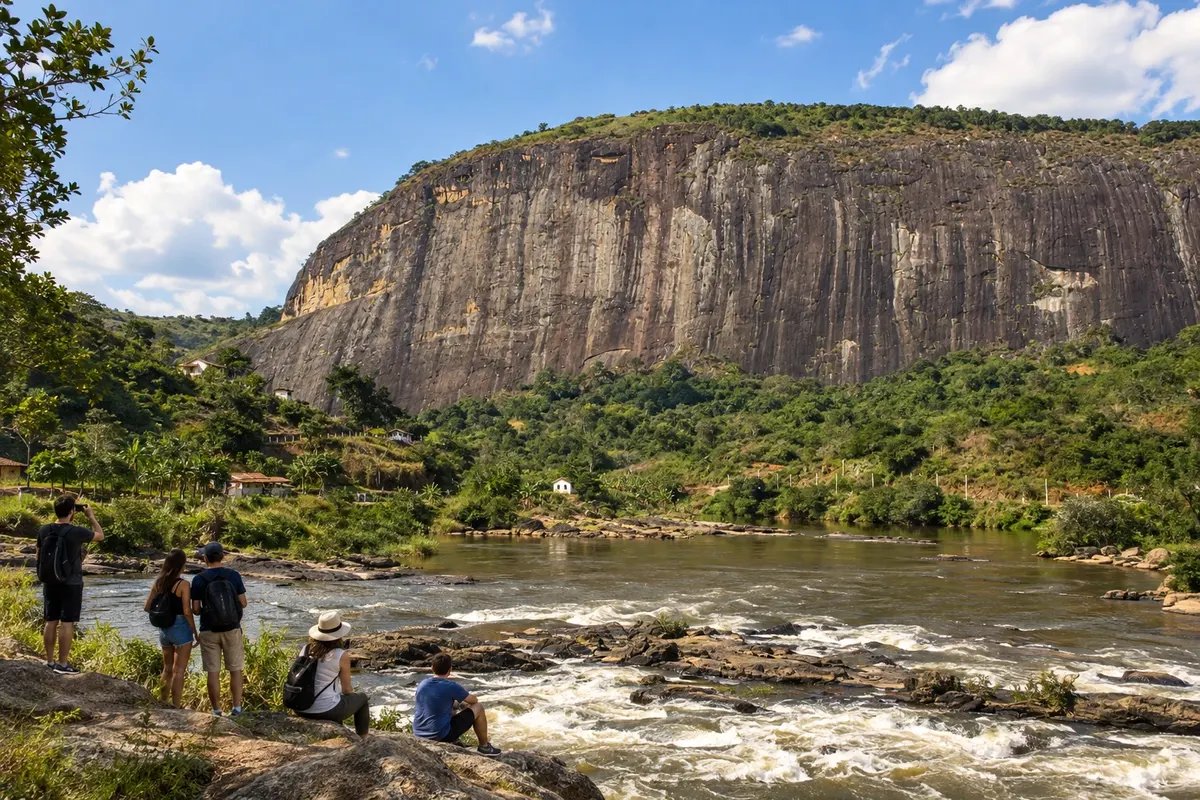
The descent of the Rio Paraibuna is the best-known adventure activity in the region. The river marks the border between Rio de Janeiro and Minas Gerais. Operators receive groups at support bases in Comendador Levy Gasparian or in Três Rios, depending on the company. Before entering the river there is paddling instruction and safety commands. The descent is in inflatable rafts, with a guide, and takes 2 to 3 hours. The route varies by operator, about 12 to 18 km. It alternates class II to IV rapids, depending on water level, with calm stretches. In the calm sections there are stops for river bathing. The descent ends near the confluence of the Paraibuna, Paraíba do Sul and Piabanha rivers, in Três Rios. Afterwards there is lunch and use of the base facilities. It is a different activity from the visit to the historic heritage of Mont Serrat and depends on river operations.
Stops: Rio Paraibuna, Comendador Levy Gasparian, Três Rios, Confluence of the Paraibuna, Paraíba do Sul and Piabanha rivers.
Includes: Generally: raft, paddles, life jacket, helmet, guides, support kayak and photos. Some operators include lunch and use of the base; others charge lunch separately. Transport to and from your city and drinks are usually paid separately. Check each operator's current price list.
Tip: Book in advance. Some operators require a minimum number of participants per descent and the minimum age varies by company. The staff assesses rain and river flow and may reschedule. Bring swimwear, dry clothes, a towel, sunscreen and closed footwear that stays on the foot. If you don't have a car, arrange transport before arriving.
Best time: All year. One operator reports lower levels from May to September and stronger flows from October to April; in high water the rapids increase in class.
Agencies that run it: Tuareg Rafting & Expedições, Gente que Trilha Ecoturismo e Aventura, Rio Adventures, RioXtreme.
Historic walking circuit in Mont Serrat
From Central square of Mont Serrat, district of Comendador Levy Gasparian on foot short visit; reserve part of the morning or the afternoon morning or afternoon easy
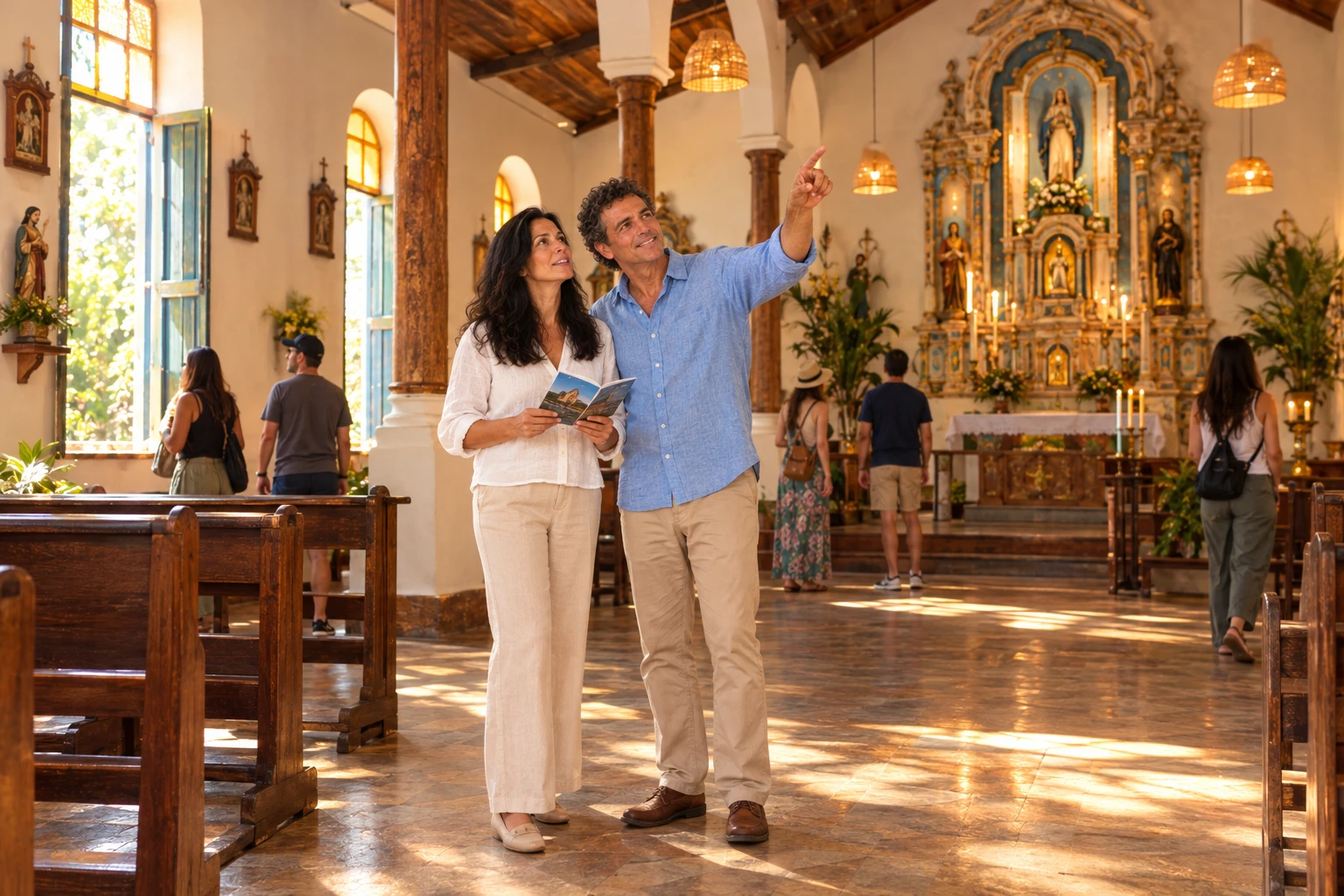
Mont Serrat is about 6 km from the BR-040 exit and concentrates the historic heritage of Comendador Levy Gasparian. The visit is on foot and starts at the central square. There is the building of the former eighth relay station of the Estrada União e Indústria, which houses the Museu Rodoviário de Paraibuna. It is a building from 1860 in French chalet style, listed by Iphan and the only remaining one of the twelve stations. The museum preserves vintage vehicles, including the carriage Mazeppa, and internal visiting hours should be confirmed with City Hall before the trip. The Igreja Nossa Senhora de Mont Serrat dates from the 19th century, is neo-Gothic in style, and is usually open on mass days or by request to the caretaker. The bridge over the Rio Paraibuna was inaugurated in 1824 and connects Mont Serrat to Paraibuna, in Minas Gerais. The cliff of the Pedra de Paraibuna appears in the background.
Stops: Mont Serrat, Igreja Nossa Senhora de Mont Serrat, Bridge over the Rio Paraibuna, Building of the Museu Rodoviário de Paraibuna, Pedra de Paraibuna.
Includes: Self-guided circuit, no fixed guide. Entry to the church depends on mass or on requesting access from the caretaker. If the museum charges an entrance fee, it is paid separately; check the current schedule with the Prefeitura.
Tip: Before going, check with the Prefeitura de Comendador Levy Gasparian whether the museum is accepting visitors. Arrange the visit to the church with the caretaker. The locality has limited tourist infrastructure: bring water and a snack.
Best time: Days with good weather. Choose the day based on the availability of the museum and the church.
Historic center of Paraíba do Sul on foot
From Jardim Velho (Praça Marquês de São João Marcos), Centro on foot 2 to 3 hours morning or afternoon easy
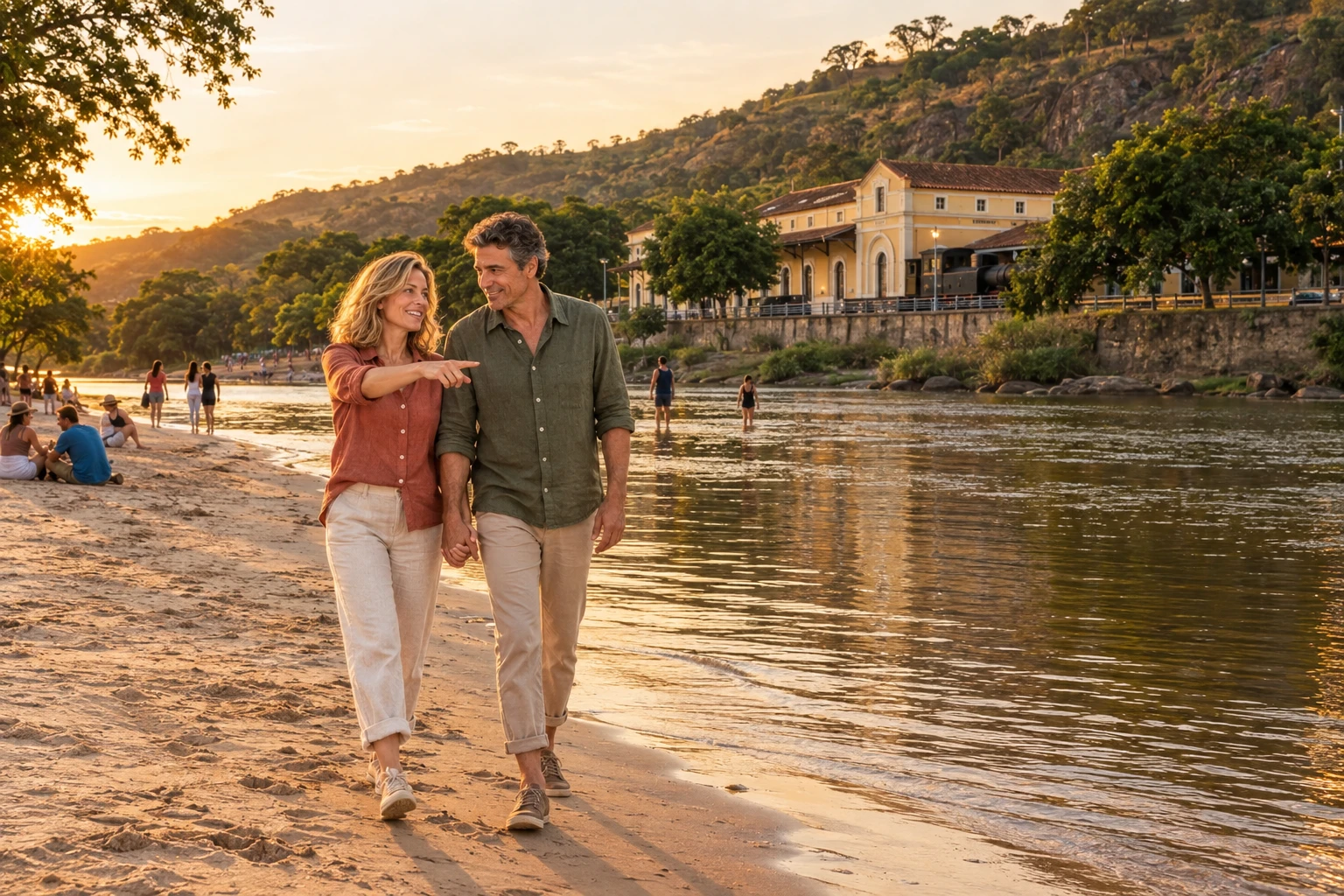
The route brings together the buildings of the town center, near the Rio Paraíba do Sul, and can be done on foot. It starts at Jardim Velho, a square with imperial palm trees planted in 1868 in the shape of a cross and a bandstand in the center. The square marks the first settlement nucleus of the town. Nearby is the Palacete Barão Ribeiro de Sá, from 1866, the baron's former residence and today the seat of the Prefeitura. The old railway station houses the Centro Cultural Maria de Lourdes Tavares, where you can learn about local artisans' work and the Paraíba do Sul embroidery. In Praça Garcia stands the Palácio Tiradentes, in neoclassical style, and there is also the Teatro Mariano Aranha, linked to the first public performance of Aquarela do Brasil by Ary Barroso. The walk continues to the bridges over the river: the Ponte da Parahyba, from 1857, with stone piers, and the railway Ponte Leopoldo Teixeira Leite, from 1898.
Stops: Jardim Velho (Praça Marquês de São João Marcos), Palacete Barão Ribeiro de Sá, Old railway station and Centro Cultural Maria de Lourdes Tavares, Palácio Tiradentes, Teatro Mariano Aranha, Ponte da Parahyba, Ponte Leopoldo Teixeira Leite.
Includes: Self-guided walk through the streets and squares. Entry to public buildings and cultural spaces depends on each site's opening hours. If any space charges a fee, it is paid separately; check the current fee schedule.
Tip: Buildings such as the Palacete function as public offices, so the interior may have restricted access. Confirm the opening of the Cultural Center and the theater beforehand. Bring a hat and water for the stretch between the bridges.
Best time: Days with good weather. Choose the day based on the opening of the Cultural Center and the cultural spaces.
Parque das Águas Minerais Salutaris
From Avenida Coronel João Werneck, Paraíba do Sul on foot 1 to 2 hours morning or afternoon easy
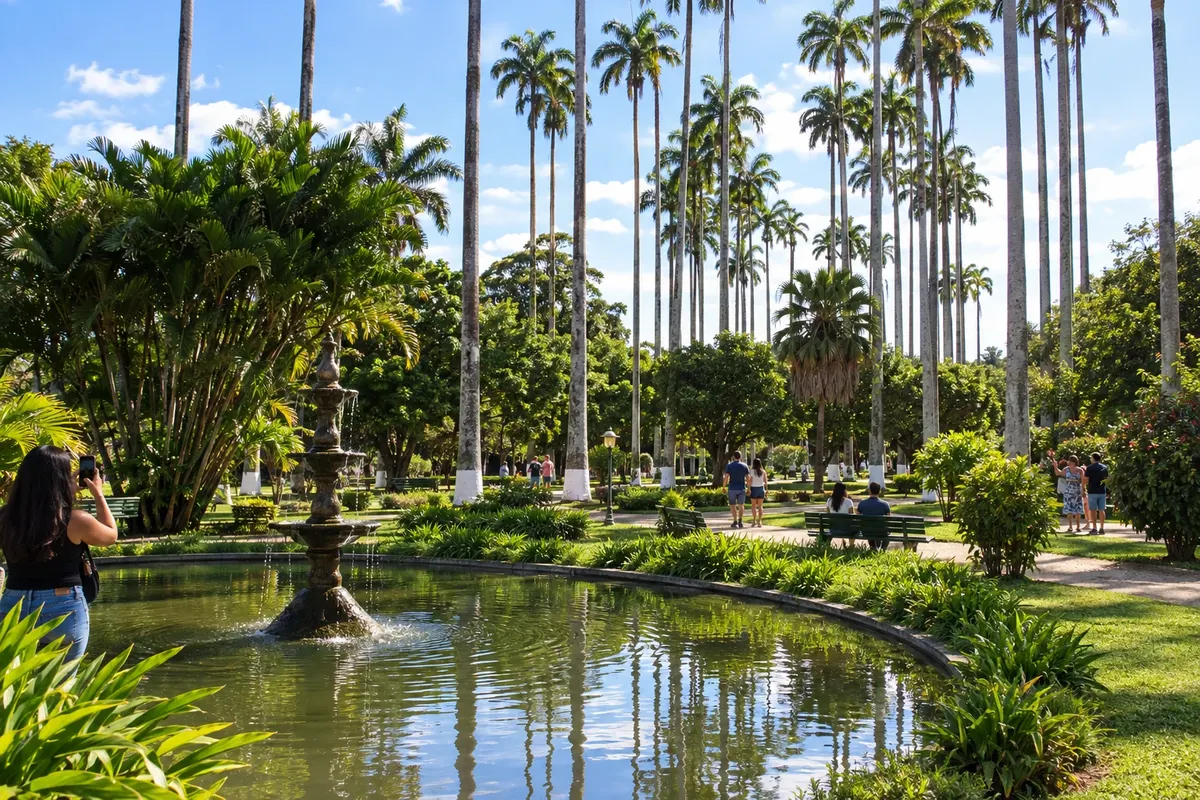
The park preserves the memory of the mineral waters that gave the city the nickname Rainha das Águas Minerais. The waters are alkaline, magnesian and ferruginous. The visit is on foot. At the entrance is the fontanário, with three fountains: Alexandre Abrahão, Nilo Peçanha and Maria Rita. Above them there is an acoustic shell that changes the sound of the water depending on whether the visitor approaches or moves away. The park has green areas with shade, a lake, easy trails, courts and skate, kart and running tracks. There is also the building of the old Salutaris water factory. It is a quiet outing, used for walking and picnicking.
Stops: Parque das Águas Minerais Salutaris, Fontanário (fountains Alexandre Abrahão, Nilo Peçanha and Maria Rita), Acoustic shell.
Includes: Self-guided walk. Visitor reports indicate there is no entrance fee; confirm with City Hall. Food and purchases are paid separately.
Tip: Check on site which fountains are available for drinking. Bring snacks and water and avoid days of heavy rain. Cell signal can be weak inside the park.
Best time: Days of good weather, which favor the park and the walk.
Trail to Pedra de Paraibuna
From Dirt road before Mont Serrat, Comendador Levy Gasparian hike on foot round trip of 5 to 6 km; reserve the morning morning moderate
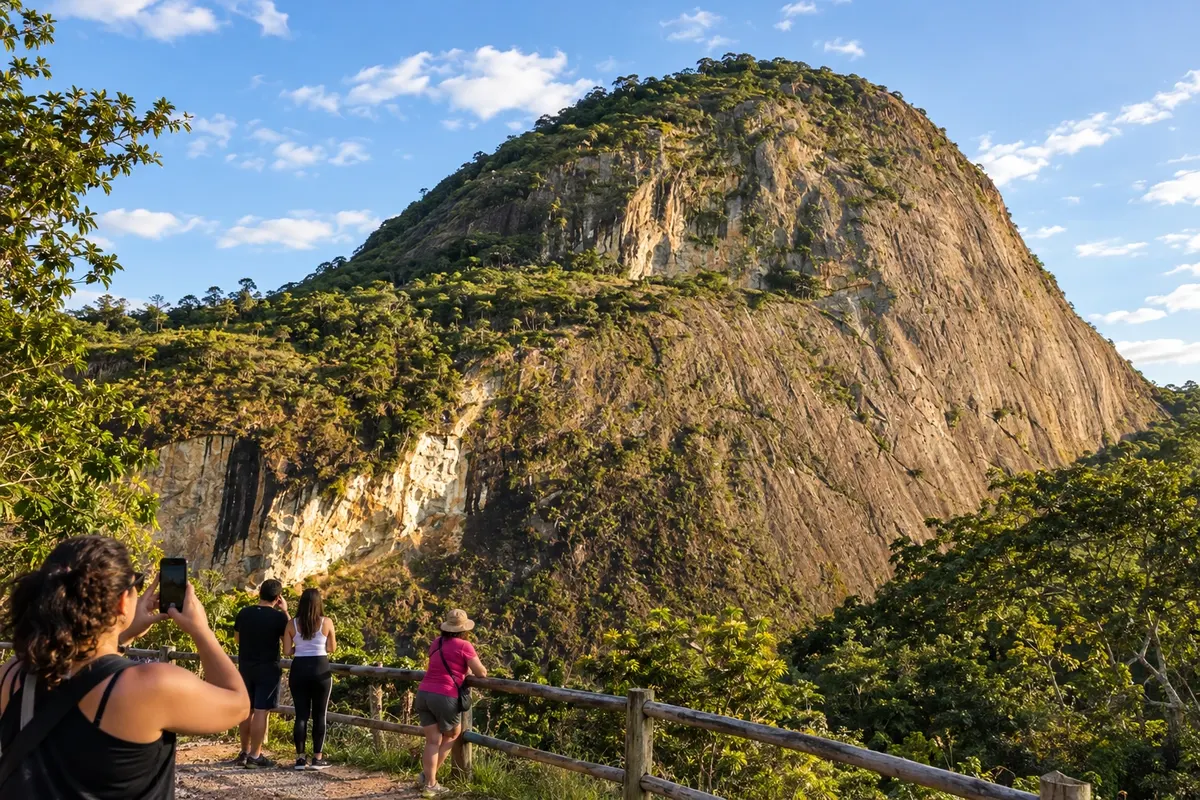
Pedra de Paraibuna is a granite cliff on the border between Rio de Janeiro and Minas Gerais, visible from BR-040. The trail to the summit starts from a dirt track just before Mont Serrat, where you leave the car about 400 m from the entrance. Hiker reports indicate a route of 5 to 6.5 km round trip with an elevation gain of around 470 to 510 m. There are steep climbs, sections with thorny vegetation and parts of the path well marked. From the top you get views of the region, the Paraibuna valley and Mont Serrat. The cliff is also used for climbing, with routes and a training area, but this is a technical activity for those who have equipment and experience.
Stops: Pedra de Paraibuna, Mont Serrat.
Includes: Unmanaged trail with no support infrastructure. Food, water and equipment are the visitor's responsibility. If you hire a guide or climbing services, the fee is paid separately.
Tip: Start early and bring water, snacks, sunscreen and closed shoes with good grip. For sections with thorny vegetation, wear long pants. Avoid the trail on rainy days. If you plan to climb, contact the local climbing group beforehand.
Best time: Days with stable, dry weather in the morning.
Guided visit to the Museu Sacro-Histórico de Tiradentes
From Distrito de Inconfidência (Sebollas), Paraíba do Sul guided walking tour; access by car about 1 hour morning and afternoon easy
The museum is located in Inconfidência, formerly Sebollas, a district of Paraíba do Sul on the Estrada Real. It was inaugurated in 1972 and is dedicated to Tiradentes, who passed through the region. The collection occupies five rooms. There are replicas of uniforms, the dentist's case he used, an English metal washbasin, sacred images attributed to Aleijadinho, a bell from 1861 and an organ from 1850. The remains attributed to the ensign, found in excavations in the old chapel, are displayed under a glass dome. The visit is guided by the museum staff, who explain each room. The village is small, with a parish church and an emporium next to it, and you can combine the stop with Vinícola Inconfidência, which is in the same area.
Stops: Museu Sacro-Histórico de Tiradentes, Distrito de Inconfidência (Sebollas).
Includes: Guided tour by the museum staff. Check with the Fundação Cultural de Paraíba do Sul whether there is an admission fee; if so, it is paid separately.
Tip: Check operating days and hours with the Fundação Cultural before you go, as information varies and there have been reports of the museum being closed on the day of the visit. The road to get there may have dirt sections: drive carefully and avoid heavy rain days.
Best time: Fair-weather days; go on a confirmed open day, preferably Tuesday through Sunday.


 Antarctica
 Argentina
 Bolivia
 Chile
 Colombia
 Ecuador
 Guyana
 French Guiana
 Falkland Islands (Malvinas)
 Paraguay
 Peru
 Suriname
 Uruguay
 Venezuela
 Germany
 Austria
 Belgium
 Croatia
 Denmark
 Slovakia
 Slovenia
 Spain
 Finland
 France
 Greece
 the Netherlands
 Hungary
 Ireland
 Iceland
 Italy
 Luxembourg
 Norway
 Poland
 Portugal
 the United Kingdom
 the Czech Republic
 Sweden
 Switzerland
 Turkey
 Bermuda
 Canada
 the United States
 Greenland
 Mexico
 Saint Pierre and Miquelon
 the Dominican Republic
 Japan
 South Africa
 Egypt
 Australia
 Fiji
 New Zealand
 Papua New Guinea