

 Brazil
 Antarctica
 Argentina
 Bolivia
 Chile
 Colombia
 Ecuador
 Guyana
 French Guiana
 Falkland Islands (Malvinas)
 Paraguay
 Peru
 Suriname
 Uruguay
 Venezuela
 Germany
 Austria
 Croatia
 Denmark
 Slovakia
 Slovenia
 Spain
 Finland
 France
 Greece
 the Netherlands
 Hungary
 Ireland
 Iceland
 Italy
 Luxembourg
 Norway
 Poland
 Portugal
 the United Kingdom
 the Czech Republic
 Sweden
 Switzerland
 Turkey
 Bermuda
 Canada
 the United States
 Greenland
 Mexico
 Saint Pierre and Miquelon
 the Dominican Republic
 Japan
 South Africa
 Egypt
 Australia
 Fiji
 New Zealand
 Papua New Guinea
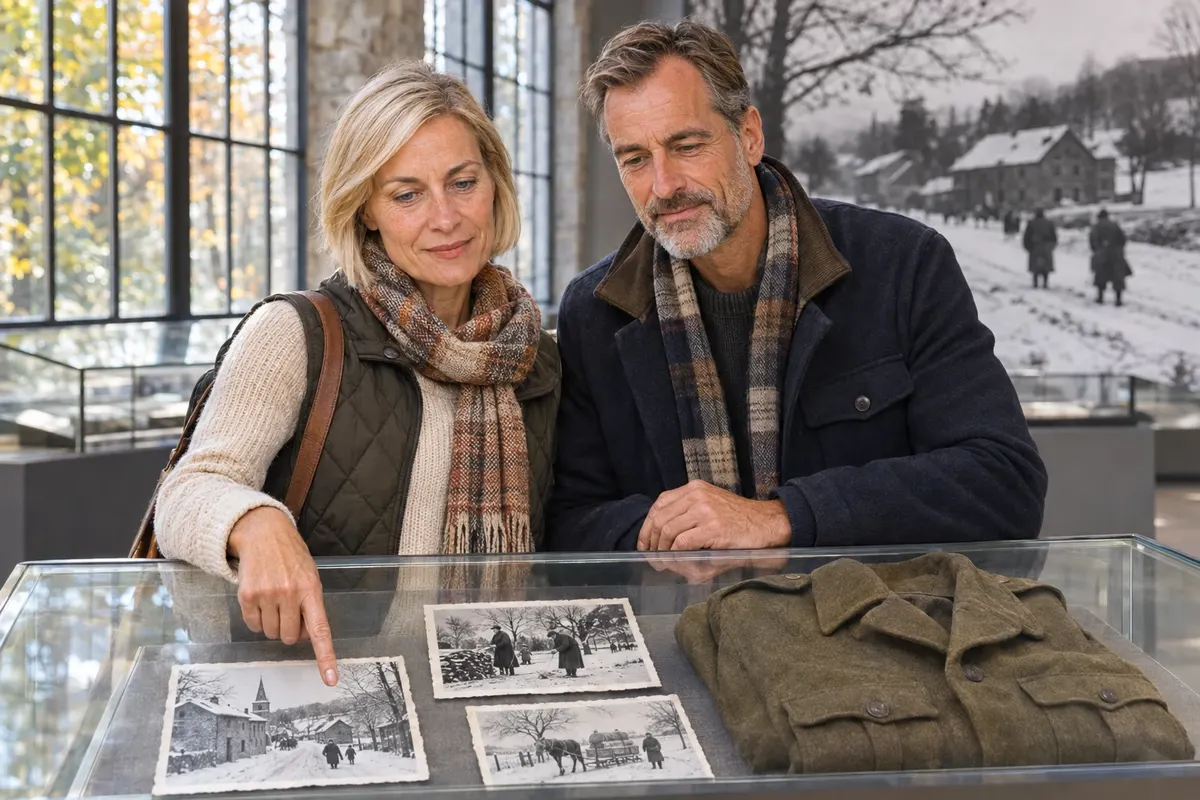
Illustrative images. The pictures in this guide are illustrations based on the real place, not photographs, and may differ from it.

Historical memory
World War II Memorial
Experience the winter of 1944–45 in La Roche-en-Ardenne through personal objects and images of the town’s liberation.
One of the most revealing documents at the Battle of the Ardennes Museum is a film shot in La Roche-en-Ardenne on the occasion of the liberation, in January 1945. It’s worth watching while thinking about the route you took to the museum. It is the same town on the banks of the Ourthe, recorded when residents still had destroyed houses and family losses to face.
The collection began from the interest of Michel Bouillon and his son Gilles in local history. It brings together items found in the region, keepsakes donated by veterans, vehicles and photographs.
The winter of the Battle of the Ardennes
The Ardennes offensive began in December 1944. In La Roche-en-Ardenne, the presence of bridges over the Ourthe helps explain why the town suffered so many attacks. When looking at images of the bombings, try to spot the river’s bend. It remains a reference point when facades have disappeared and debris makes it hard to recognize a street.
The town’s liberation, in January 1945, is one of the museum’s central topics. Pay attention to the date on each scene. Even after the troops passed through, families still had to find shelter and rebuild their homes.
Who wore the museum uniforms
Some garments entered the collection through the veterans themselves. Among them is the jacket of George Scott, an officer who took part in the liberation. Knowing who owned an object allows you to go beyond identifying its type. When reading a caption, see whether it indicates where the owner was or under what circumstances the piece returned to the town.
Personal items found on the ground tell another part of the story. Sometimes it’s known in which area an item was recovered but little about the person who used it. Compare the caption of such an item with that of a donated, identified piece. As far as records allow, how far can you follow each of these people’s lives?
The town as seen in images from January 1945
In front of the liberation film, notice residents passing beside the vehicles. Look for the same people in period photographs. In a still image it’s easier to observe who appears at the edge of the scene.
Outside, a short walk through the center and along the Ourthe’s bank lets you continue the visit at the pace of today’s town. Look for the relationship between river, bridges and streets before trying to identify an isolated building. When reconstruction changed a façade, the layout of a block may be a better clue to recognize the viewpoint of a photograph.
A family visit to La Roche-en-Ardenne
Vehicles usually attract the attention of visitors who arrive with children. One way to start the conversation is to ask who was traveling in them, what they were wearing and what they carried. Then, together look for a personal item in the display cases. The topic naturally shifts from the machine to the people, without requiring the child to follow all the dates.
If you have relatives connected to the war, bring a copy of the photograph or document that prompted your trip and note names and dates you recognize. If you wish to research a specific record, contact the museum before your visit.
Frequently asked questions
Which museum in La Roche-en-Ardenne explains World War II?
The Battle of the Ardennes Museum covers the fighting that hit the town in the winter of 1944–1945. The liberation film, donated uniforms and locally found items give the visit a perspective tied to the town.
Do I need to know military units to follow the exhibition?
Dates and place names already help follow the story. A photograph of the town center can be a good starting point for anyone wanting to understand how the battle affected residents.
What to combine with the museum in the same town?
Allow time for a walk along the Ourthe. After the film and the photographs, it’s easier to see the role of the river and the bridges in La Roche-en-Ardenne’s history.
Where to go: Second World War memory
Pick a region or type what you are looking for to see the cities and who offers it in each.
-
La Roche-en-Ardenne LX
The local museum documents the Battle of the Bulge and the fighting that affected La Roche.


Beyond the guide


