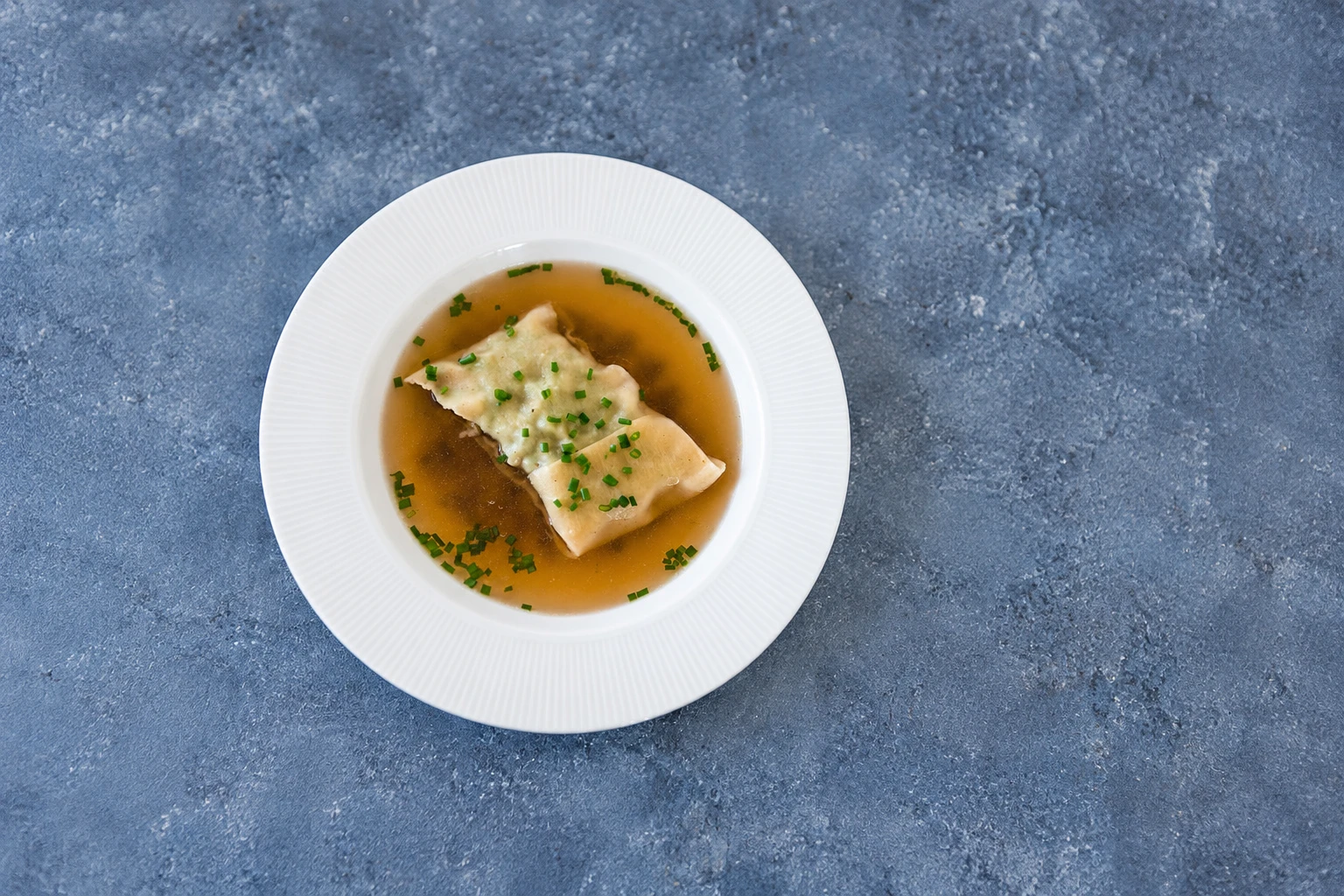
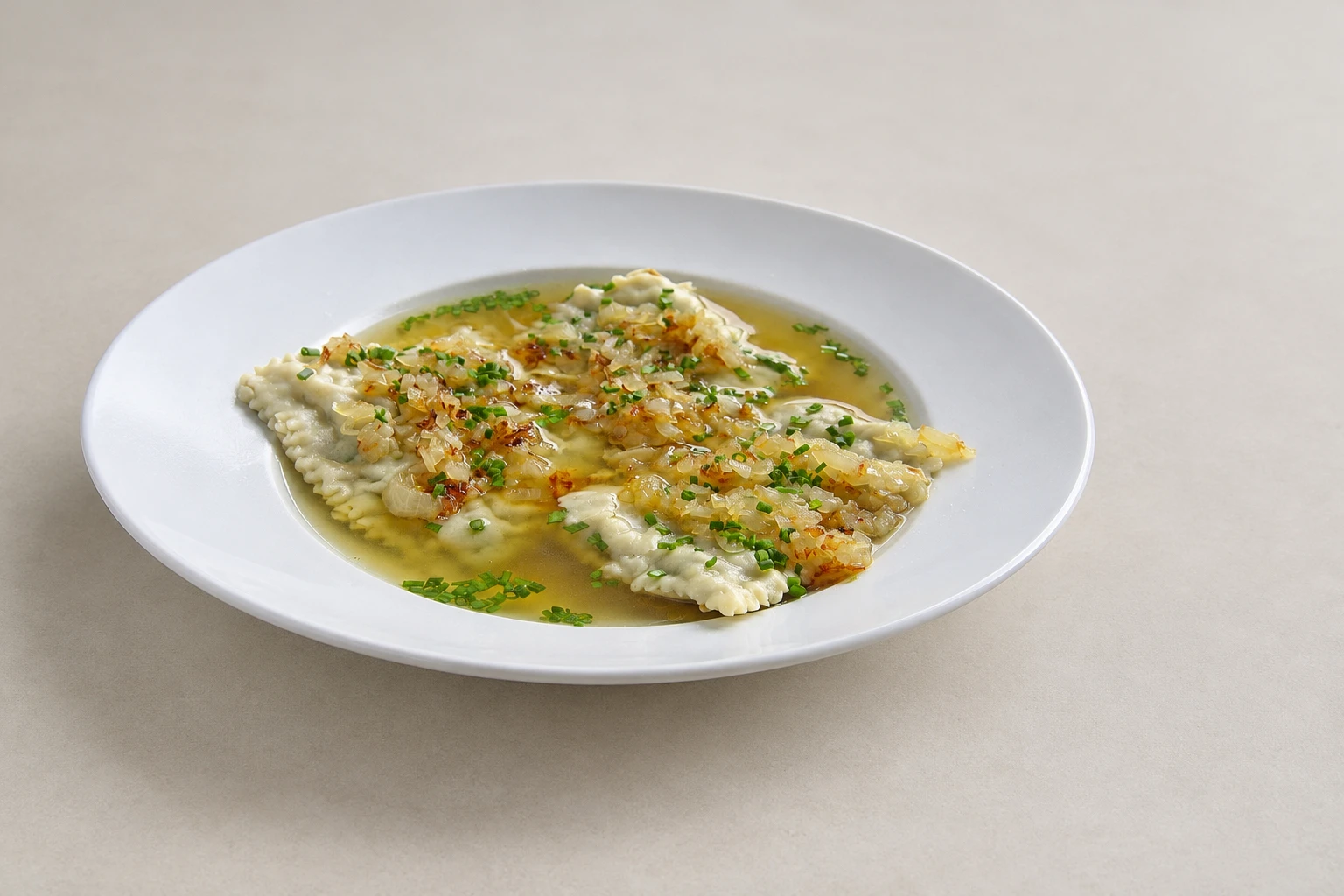
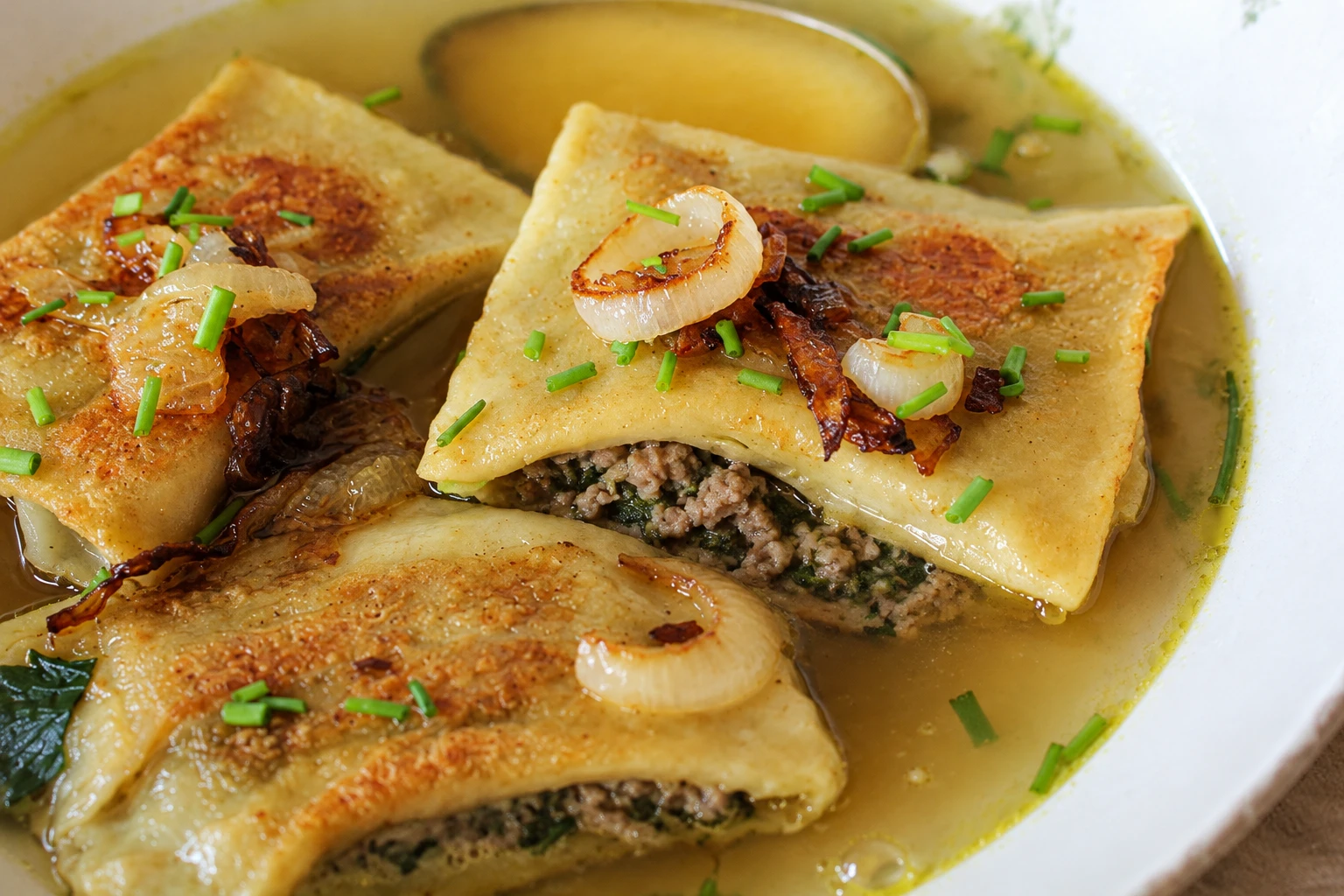
Schwäbische Maultaschen are large fresh-dough pockets from Swabia, the historic region that covers much of Baden-Württemberg and part of Bavaria. The filling mixes ground meat or sausage meat, spinach, soaked bread, onion, parsley and seasonings. The dough is rolled out, topped with the filling, folded or rolled and cut into rectangles that are cooked in water or broth.
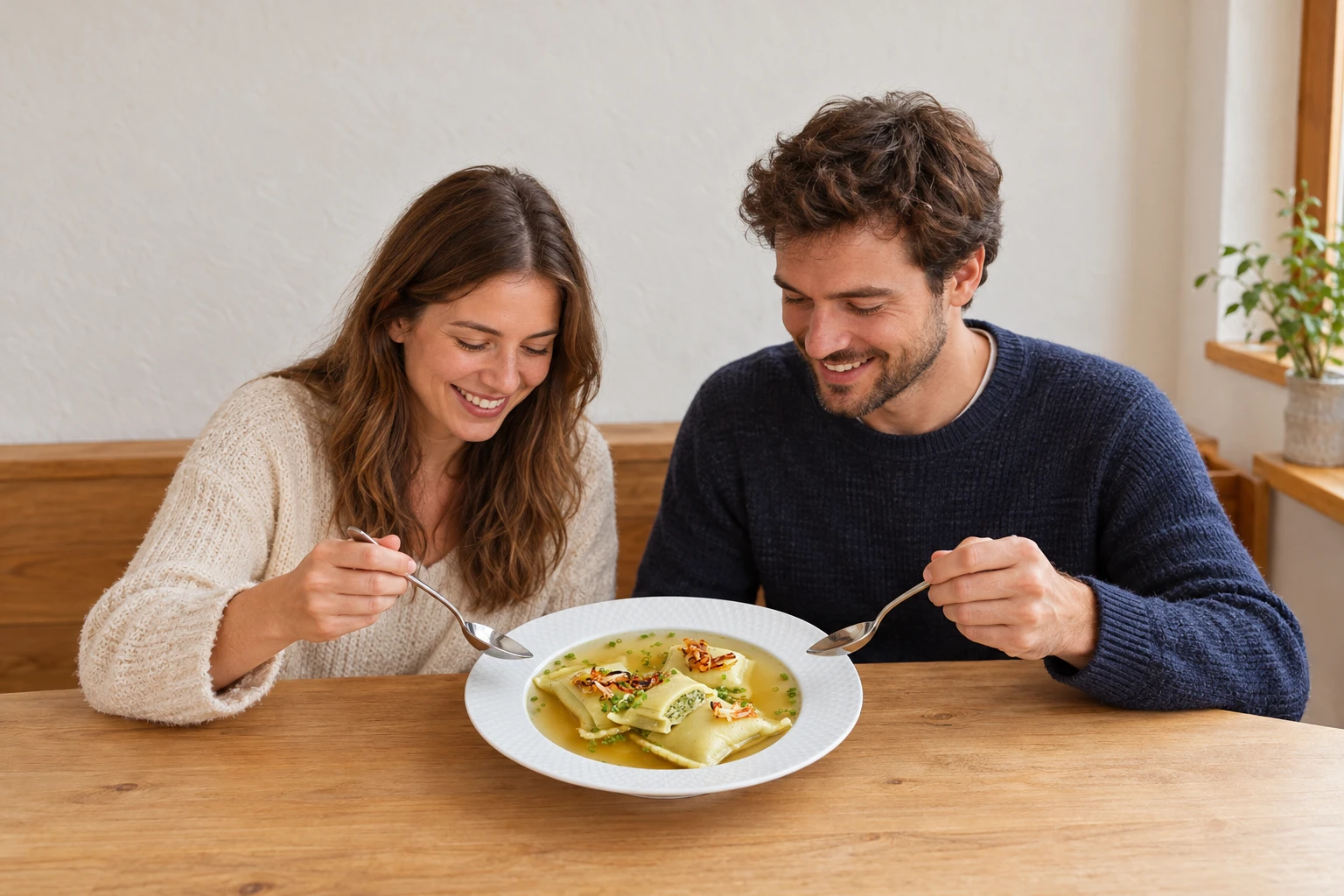
There are three classic ways to serve them. In soup, the Maultaschen are served whole in a beef broth with chives. Geschmälzt: they are served with onions browned in butter and potato salad. And geröstet: sliced and fried in a pan with beaten eggs. Many Swabian families serve all three during Holy Week, one on each day.
The nickname Herrgottsbscheißerle, roughly “those who trick the Lord,” comes from a legend. It says that a lay brother of the Cistercian monastery of Maulbronn, during Lent, hid minced meat inside the greens and wrapped everything in dough so God would not see that the monks were eating meat during the fast. The administration of Maulbronn monastery, now a UNESCO World Heritage site, repeats the story, but there is no document that proves it.
Since 2009, Schwäbische Maultaschen have a protected geographical indication from the European Union, tied to the Swabia region. Maultaschen are the dish of Maundy Thursday and Good Friday in many homes in the region, and appear the rest of the year on tavern, canteen and home menus as everyday food.


 Brazil
 Argentina
 Bolivia
 Chile
 Colombia
 Ecuador
 Guyana
 French Guiana
 Falkland Islands (Malvinas)
 Paraguay
 Peru
 Suriname
 Uruguay
 Venezuela
 Austria
 Belgium
 Croatia
 Denmark
 Spain
 Finland
 France
 Greece
 the Netherlands
 Hungary
 Ireland
 Iceland
 Italy
 Luxembourg
 Norway
 Poland
 Portugal
 the United Kingdom
 the Czech Republic
 Sweden
 Switzerland
 Turkey
 the United States
 Mexico
 the Dominican Republic
 South Africa
 Australia
 Fiji