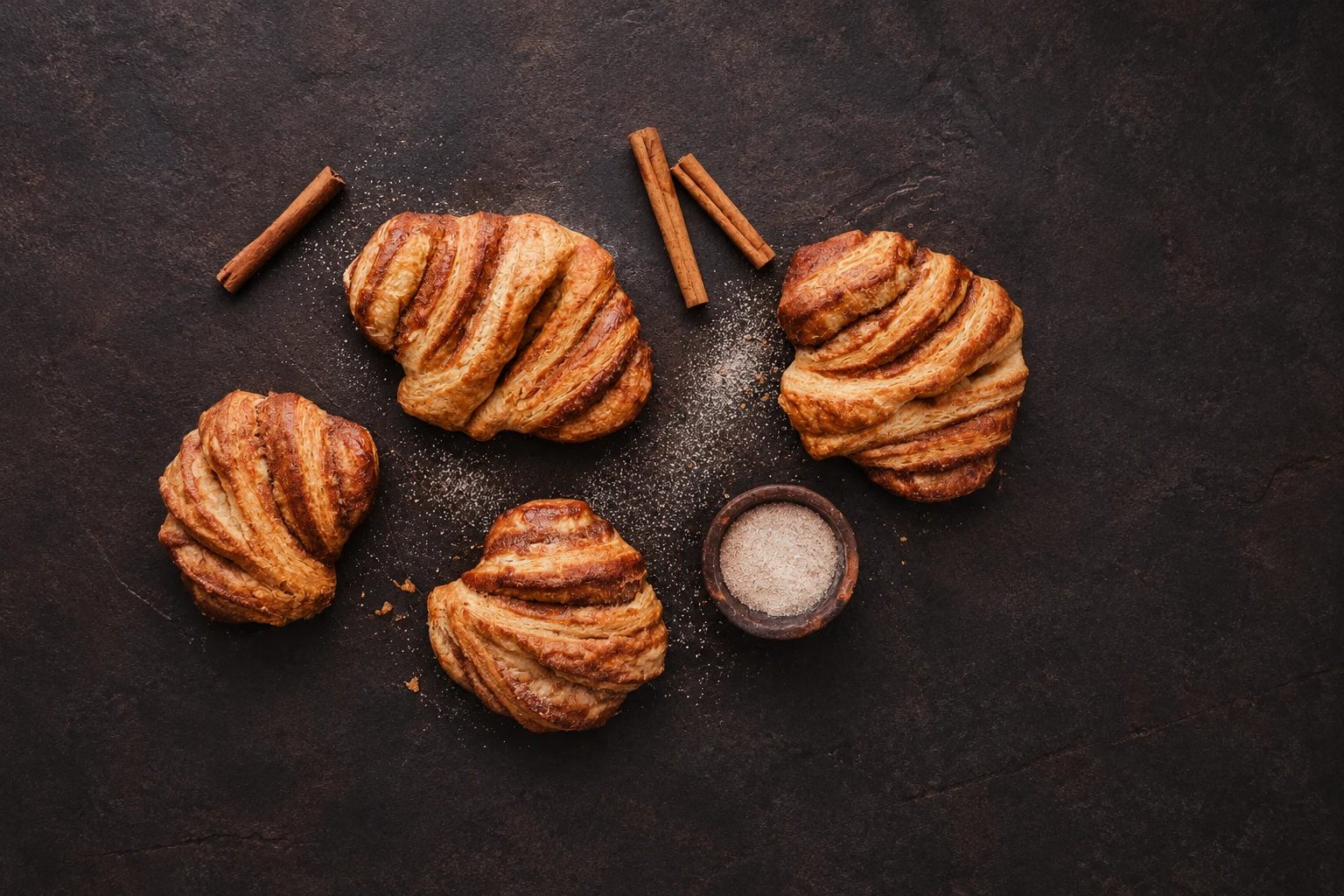
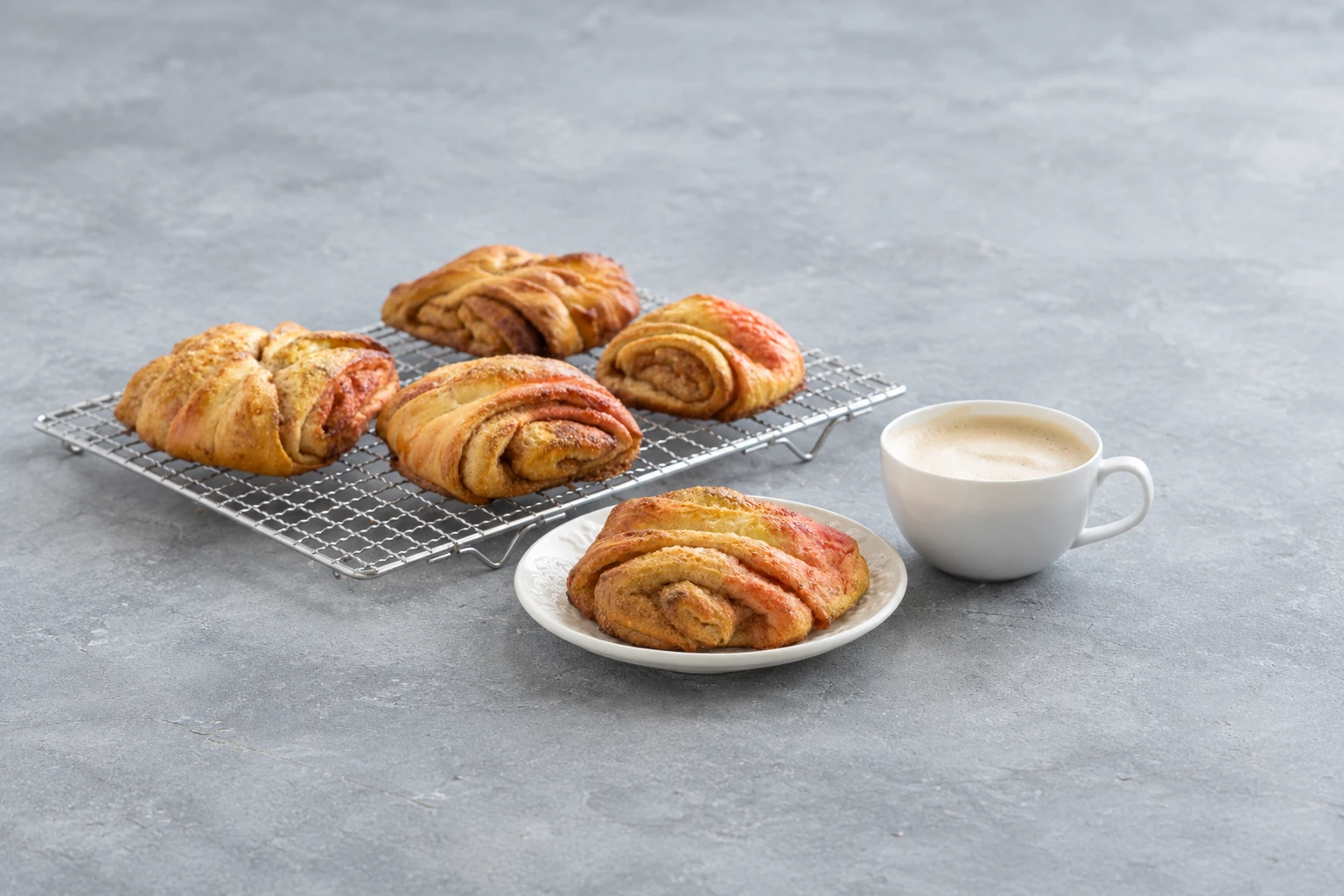
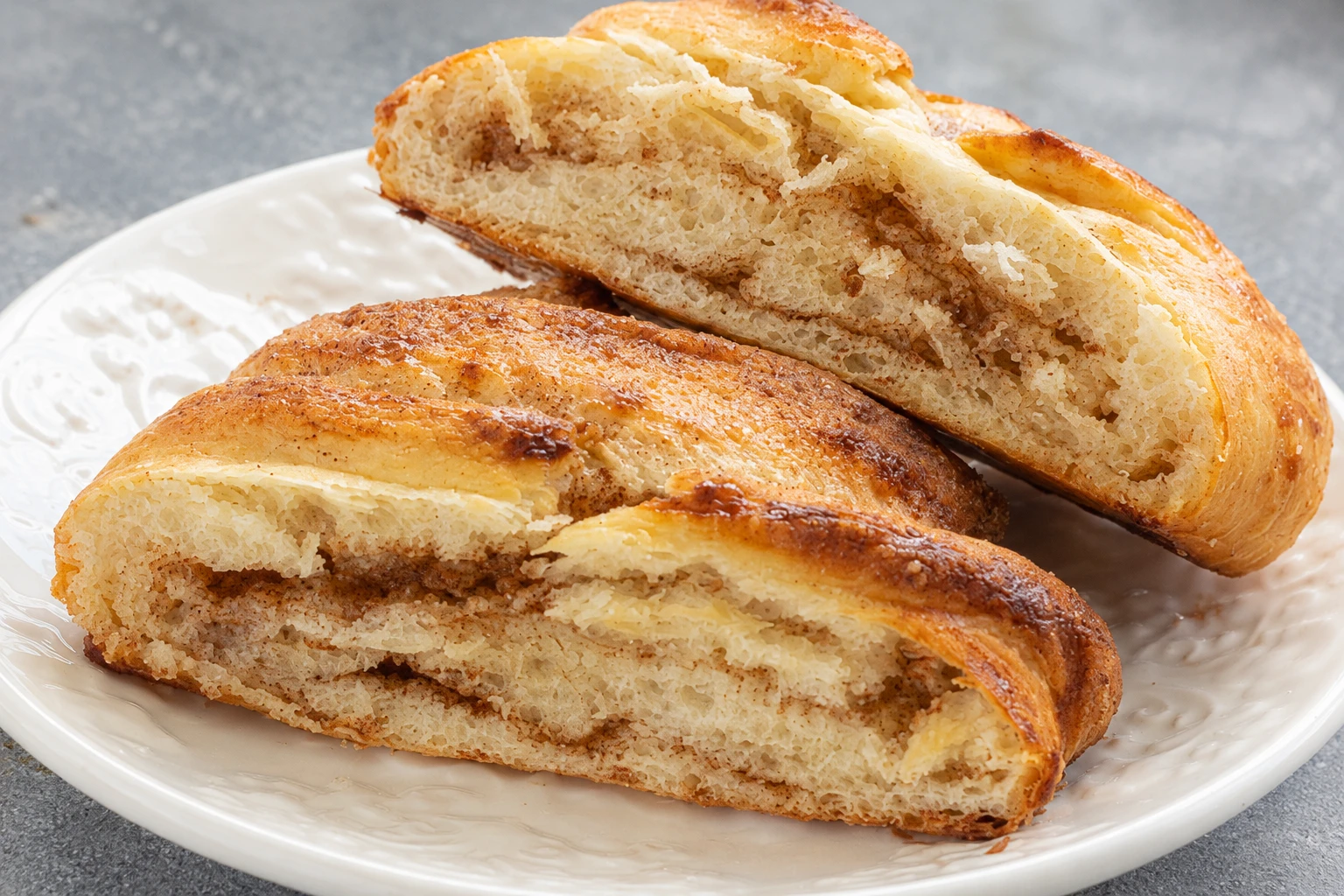
The Franzbrötchen is a bakery sweet from Hamburg. The dough, fermented and laminated with plenty of butter, is rolled out very thin, topped with sugar and cinnamon and rolled up like a jelly roll. The roll is cut into pieces, and each piece is pressed in the middle with the handle of a wooden spoon or the side of the hand. The press pushes the filling to the sides, where the sugar and cinnamon caramelize in the oven.
Hamburg’s official portal presents it as a specialty of the city, found in almost every bakery. There are versions with raisins, sweet streusel, chocolate chips, marzipan or seeds, but the classic contains only sugar and cinnamon. Outside Hamburg, the Franzbrötchen only began to spread to other German cities in recent decades.
The origin is uncertain. The Foundation of Hamburg Historical Museums notes there are several stories, all equally possible or impossible. The most cited links the name to the period of French occupation, from 1806 to 1814, and to a long French-style bread, the Franzbrot, which a baker allegedly fried in fat. Others mention a bakery in Altona, a contest between brothers or an apprentice who sat on the dough. None of these stories is documented.
In Hamburg, the Franzbrötchen is eaten at breakfast or in the afternoon with coffee, preferably still warm. Bakeries in the city have held contests to choose the best, and each defends its own recipe.


 Brazil
 Argentina
 Bolivia
 Chile
 Colombia
 Ecuador
 Guyana
 French Guiana
 Falkland Islands (Malvinas)
 Paraguay
 Peru
 Suriname
 Uruguay
 Venezuela
 Austria
 Belgium
 Croatia
 Denmark
 Spain
 Finland
 France
 Greece
 the Netherlands
 Hungary
 Ireland
 Iceland
 Italy
 Luxembourg
 Norway
 Poland
 Portugal
 the United Kingdom
 the Czech Republic
 Sweden
 Switzerland
 Turkey
 the United States
 Mexico
 the Dominican Republic
 South Africa
 Australia
 Fiji