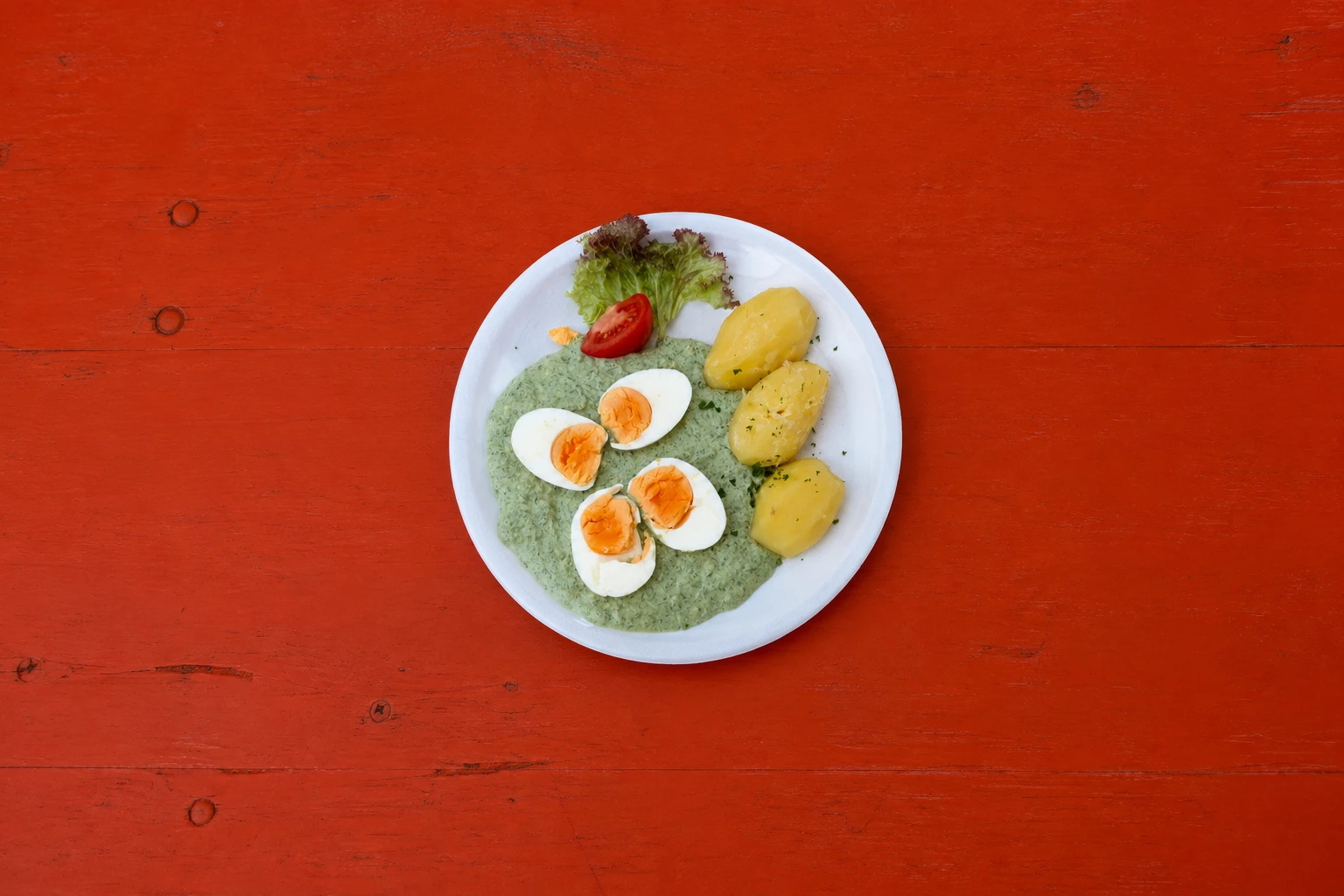
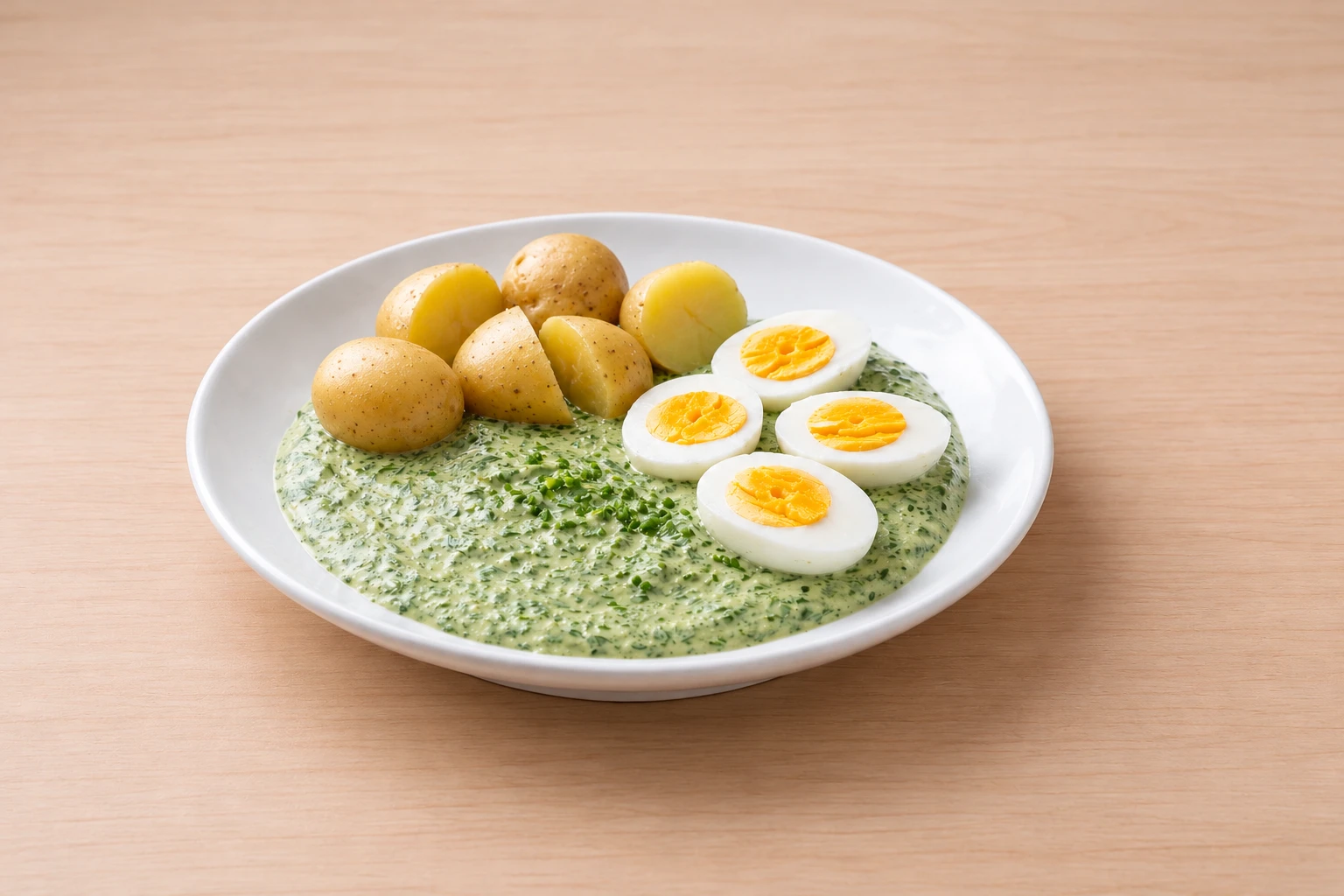
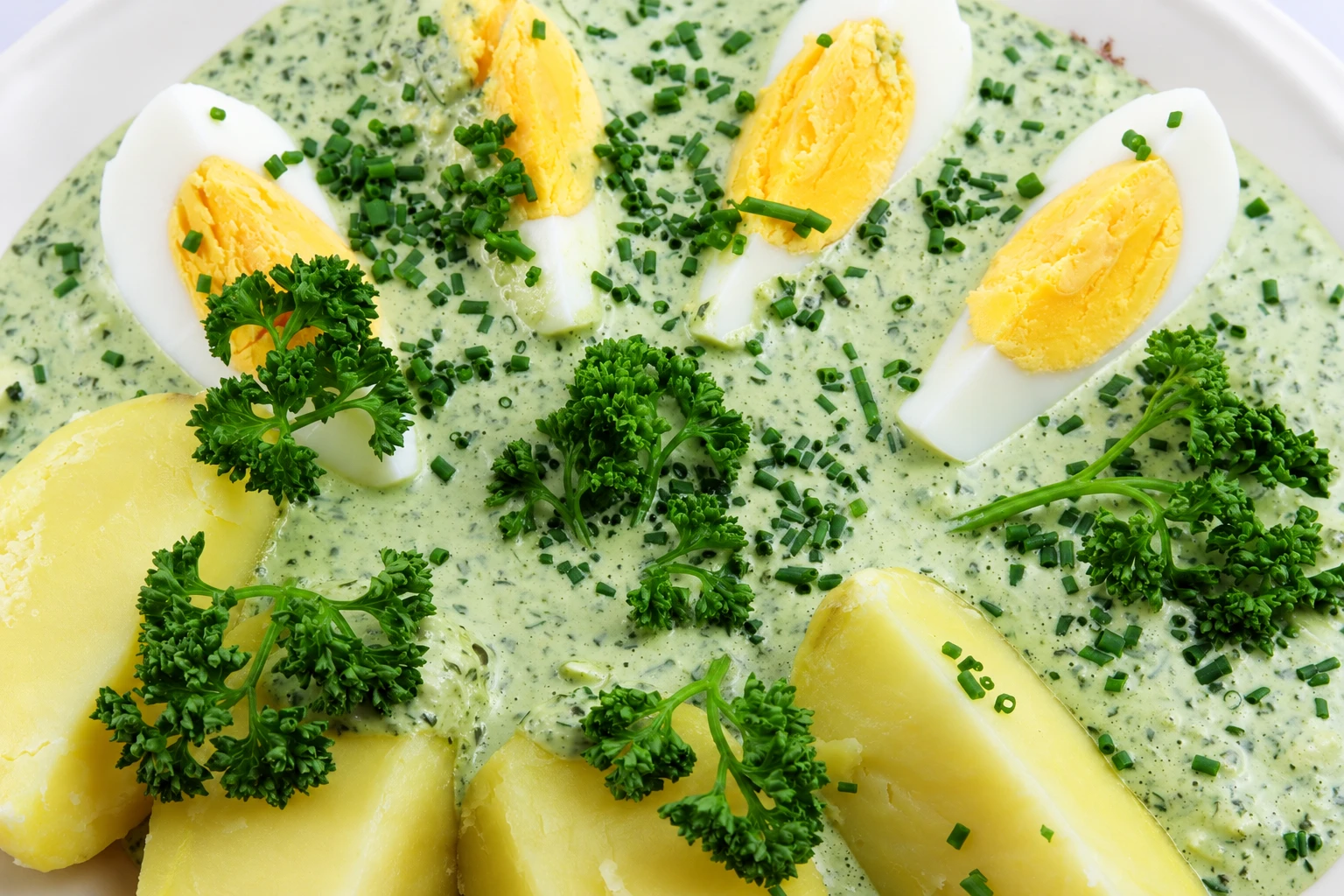
The Frankfurter Grüne Soße, called Grie Soß in the local dialect, is a cold green sauce made with seven fresh herbs: borage, chervil, garden watercress, parsley, salad burnet, sorrel and chives. The herbs are chopped very finely and mixed with sour cream or curd, a little oil, vinegar and seasonings. Many recipes also include chopped hard‑boiled eggs. In Frankfurt they say there are as many recipes as there are kitchens.
By tradition the seven herbs come from the kitchen gardens of the Oberrad neighborhood, south of the Main River, which the city names as the origin of Grie Soß. Producers sell the ready herb mix rolled into a white paper cone at markets and the Kleinmarkthalle. The European Union protected geographical indication applies to that herb mixture, grown in Frankfurt and neighboring towns, not to the finished sauce. Each herb must be included within a minimum and maximum proportion so that none dominates.
The sauce’s origin is unclear. Green herb sauces have existed since Antiquity, and the city of Frankfurt suggests the local version may come from the French sauce verte, perhaps brought by Huguenots who settled in the region in the late 17th century. The story that Goethe, born in Frankfurt, had Grüne Soße as his favorite dish is unproven and treated as anecdote.
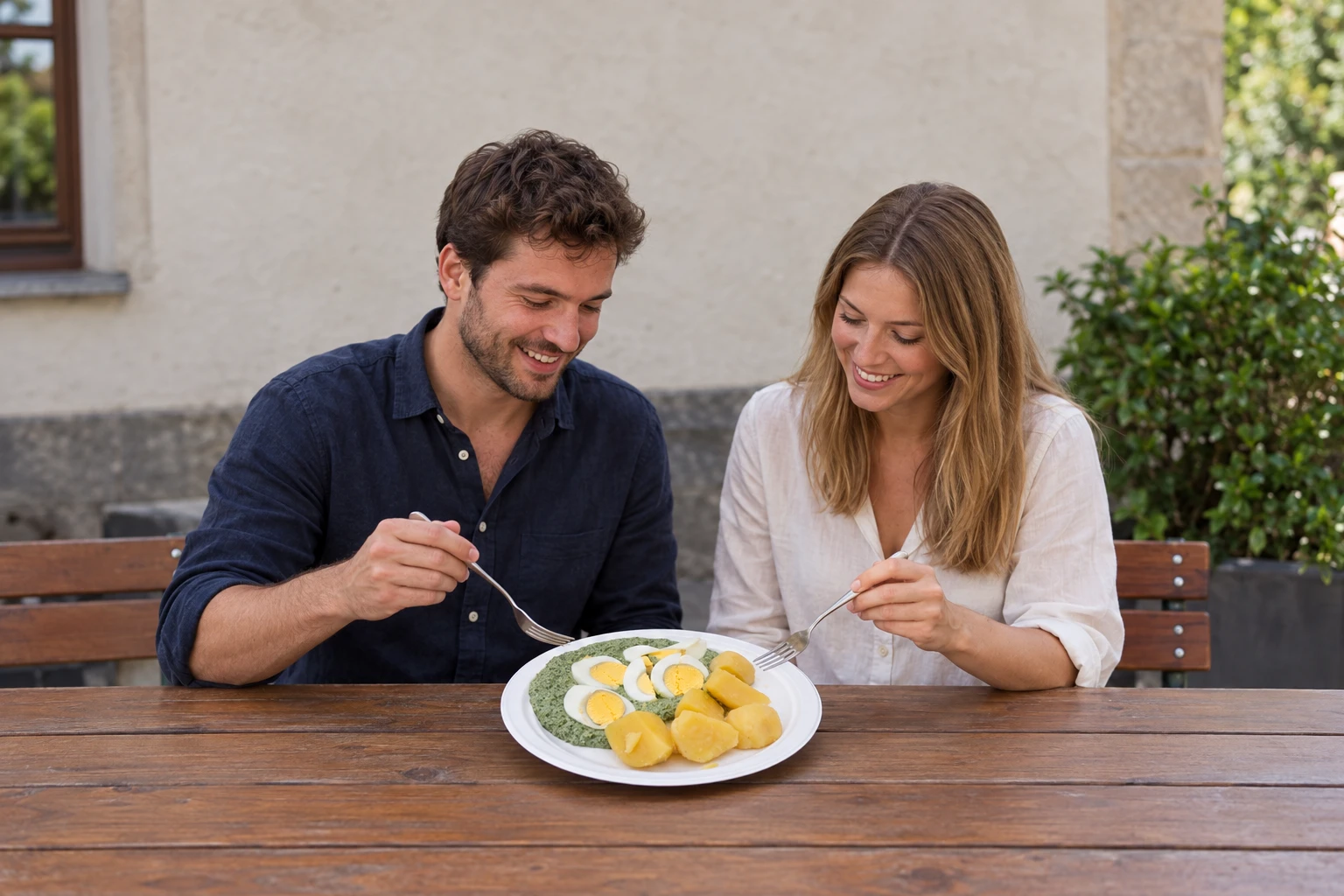
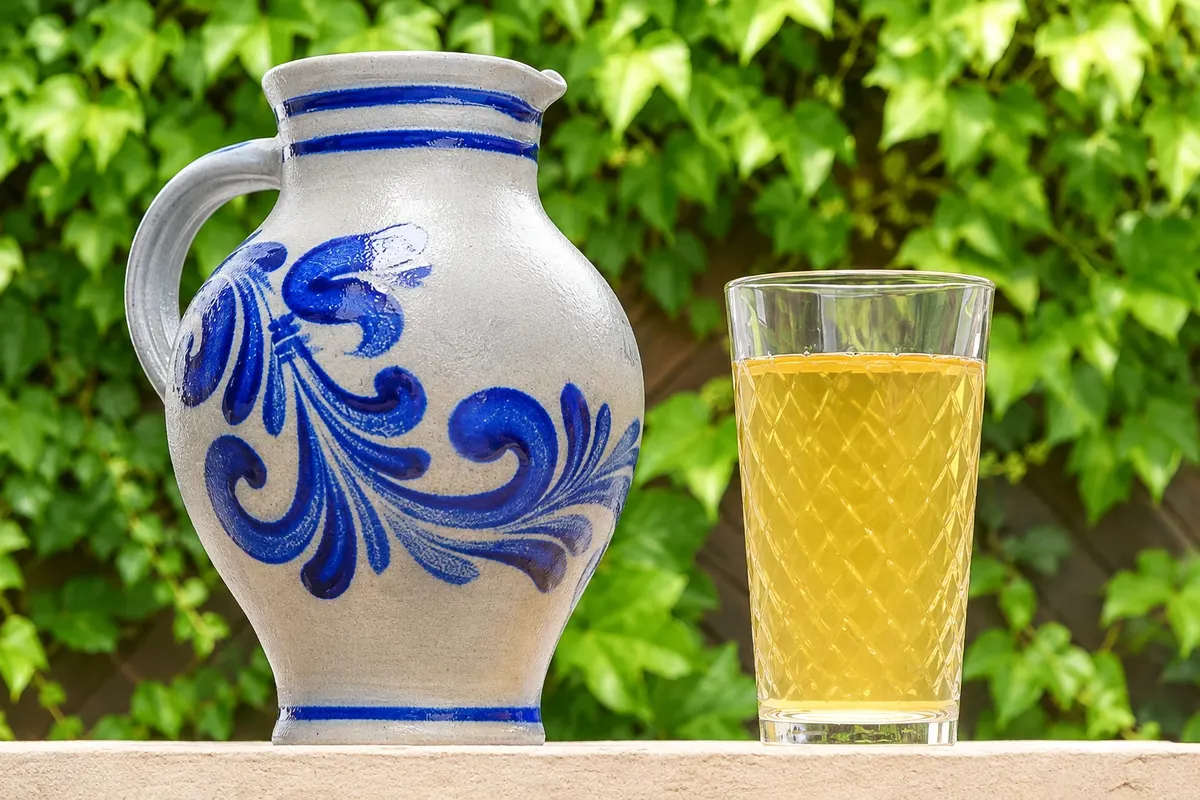
Grüne Soße is served cold, typically with boiled potatoes and hard‑boiled eggs halved; it also accompanies boiled meat, fish or schnitzel. The season traditionally begins on Maundy Thursday (Gründonnerstag in German) and runs until the first autumn frosts. In the apple‑wine taverns of Sachsenhausen it appears alongside Ebbelwoi.


 Brazil
 Argentina
 Bolivia
 Chile
 Colombia
 Ecuador
 Guyana
 French Guiana
 Falkland Islands (Malvinas)
 Paraguay
 Peru
 Suriname
 Uruguay
 Venezuela
 Austria
 Belgium
 Croatia
 Denmark
 Spain
 Finland
 France
 Greece
 the Netherlands
 Hungary
 Ireland
 Iceland
 Italy
 Luxembourg
 Norway
 Poland
 Portugal
 the United Kingdom
 the Czech Republic
 Sweden
 Switzerland
 Turkey
 the United States
 Mexico
 the Dominican Republic
 South Africa
 Australia
 Fiji