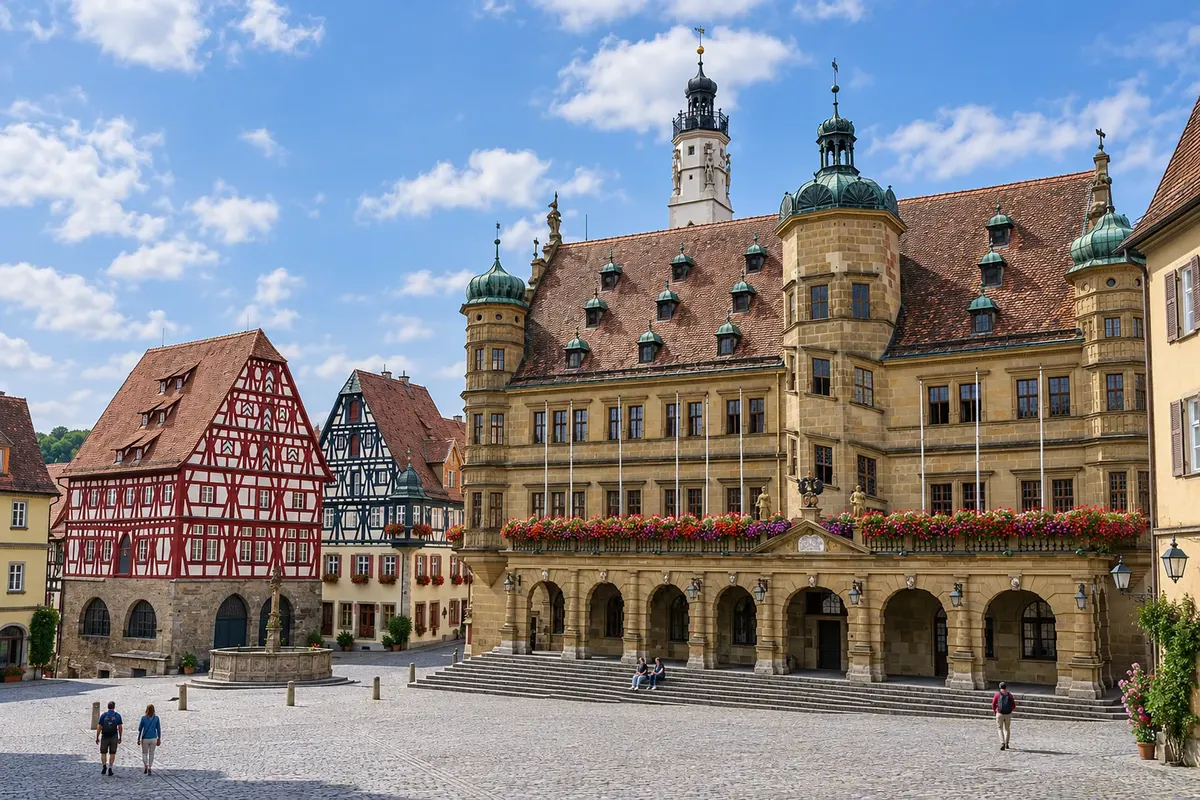
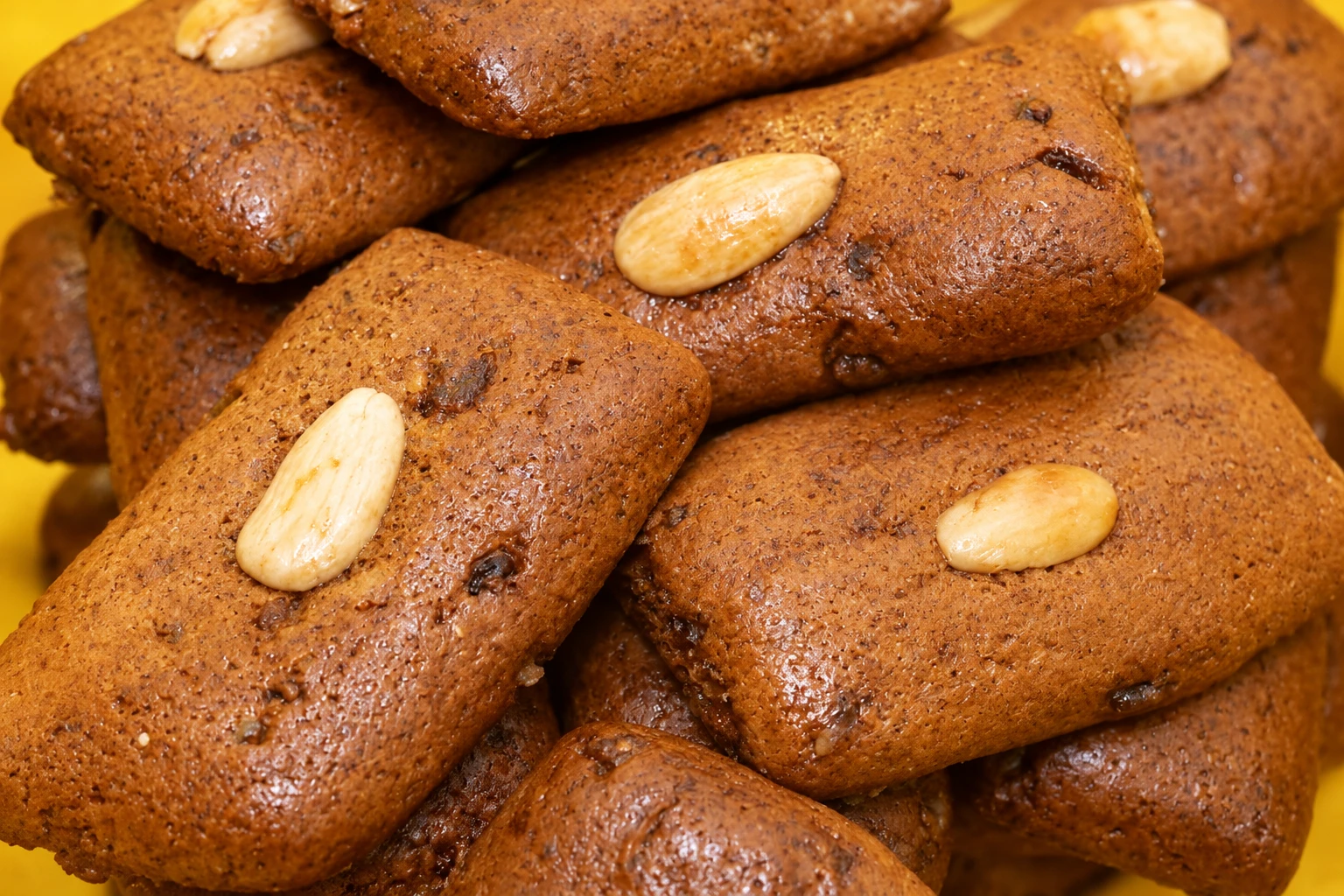
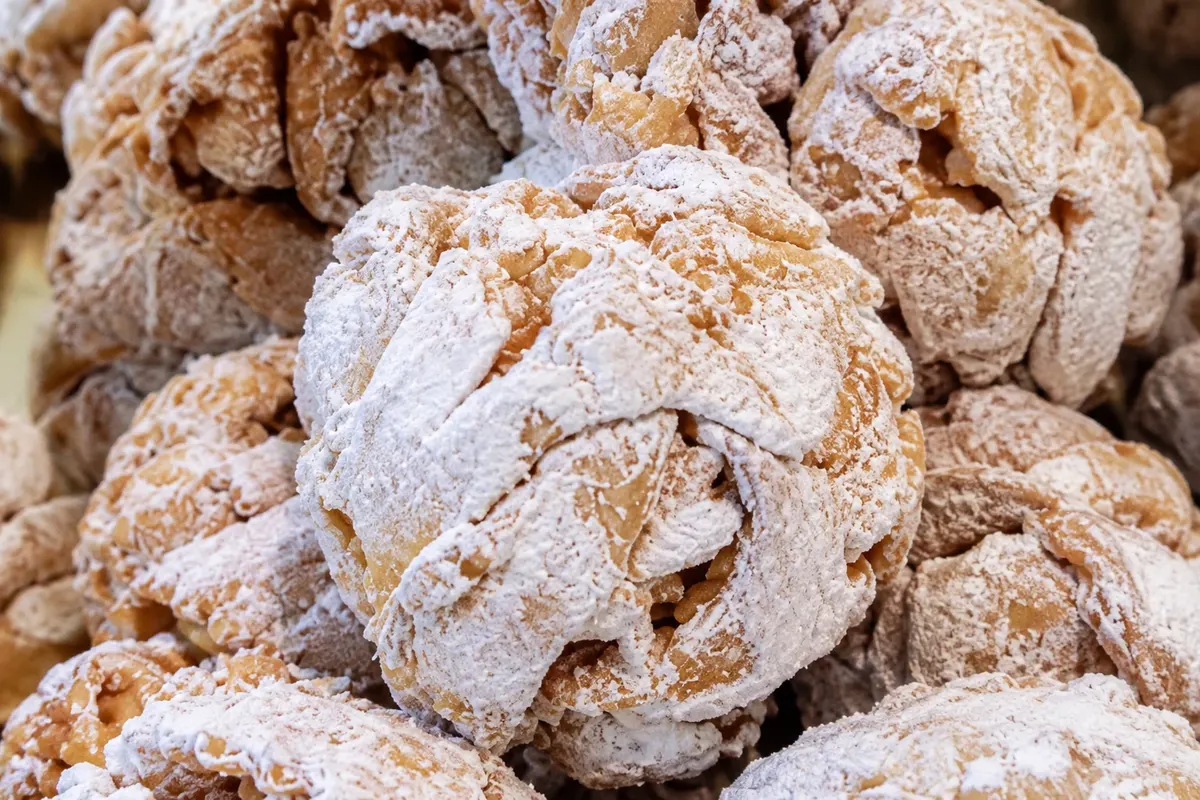
Aachener Printen are spice cookies from the city of Aachen, at Germany’s far west. The dough contains flour, brown sugar, syrup and a spice blend such as cinnamon, anise, clove, cardamom, coriander and allspice. The trademark feature is the small pieces of brown candi sugar that do not dissolve in the oven and crackle when you bite them. The exact spice mix is a bakery secret.
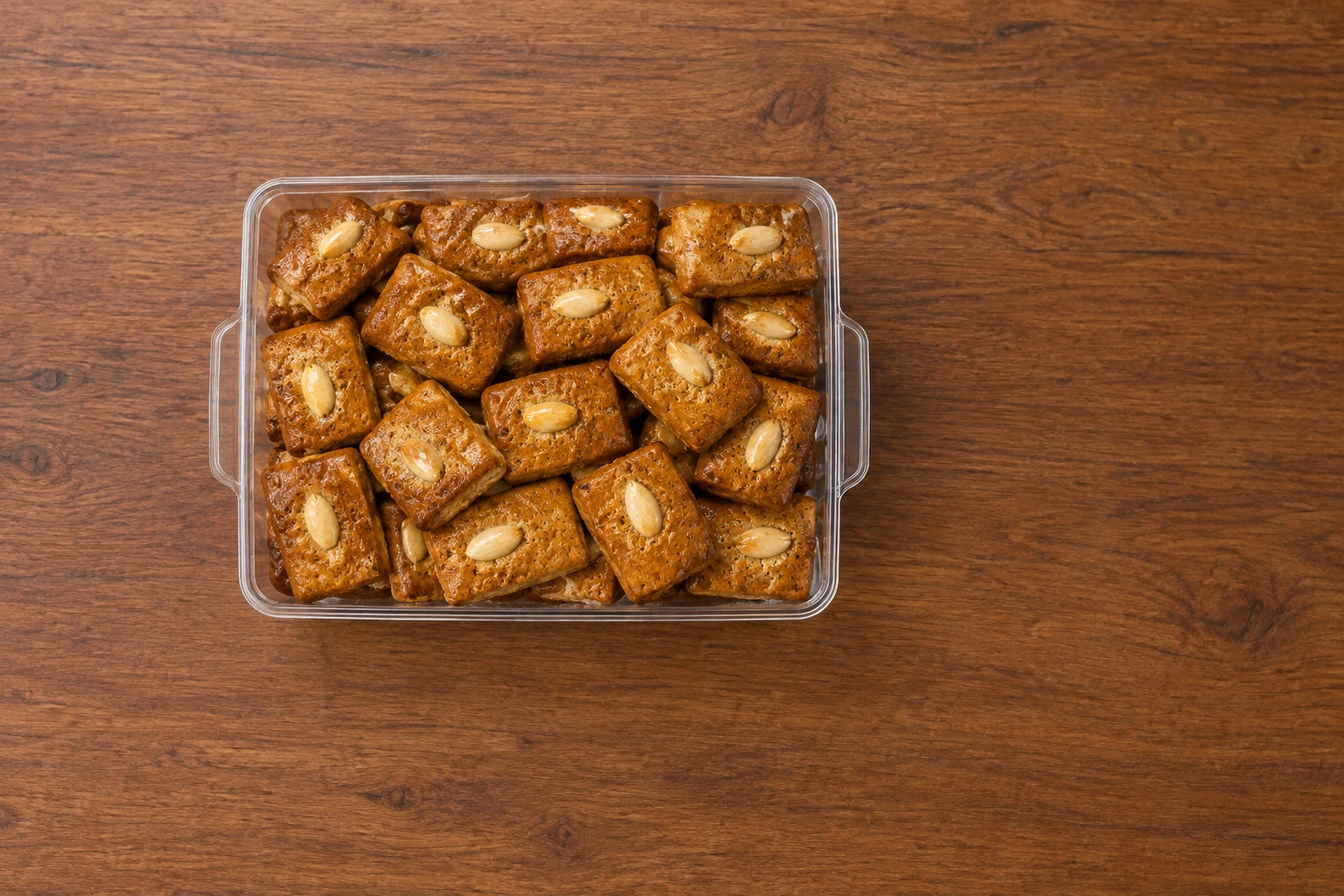
Printen vary widely. There are hard ones that require a firm bite and soft ones called Saftprinten. They can be rectangular and flat or shaped into figures. There are plain versions, ones with almonds, glazed ones and chocolate-covered varieties. The name Aachener Printen is a protected geographical indication of the European Union: it may only be used by bakeries and confectioneries in Aachen and certain neighbouring towns specified in the registration, such as Alsdorf, Baesweiler, Eschweiler, Stolberg, Würselen and Roetgen.
There are several origin stories. The consumer protection authority of North Rhine-Westphalia notes that Aachen received many pilgrims in the Middle Ages and that bakeries made a nutritious, long-lasting bread for them, seen as an ancestor of the Printen. Aachen tourism says bronze casters from Dinant, in present-day Belgium, brought a molded bread made in wooden forms more than 350 years ago, which started the tradition. Another commonly told story in the city says that during Napoleon’s trade blockade in the early 19th century, honey and cane sugar became scarce and bakers began using beet syrup, which changed the texture and flavour.
In Aachen, Printen are not only a Christmas sweet. They are sold year-round in shops devoted to them and appear in local cuisine: the Rhenish sauerbraten, marinated and roasted meat, is often served with a sauce thickened with Printen, and there is Printen ice cream in the city’s gelaterias.


 Brazil
 Argentina
 Bolivia
 Chile
 Colombia
 Ecuador
 Guyana
 French Guiana
 Falkland Islands (Malvinas)
 Paraguay
 Peru
 Suriname
 Uruguay
 Venezuela
 Austria
 Belgium
 Croatia
 Denmark
 Spain
 Finland
 France
 Greece
 the Netherlands
 Hungary
 Ireland
 Iceland
 Italy
 Luxembourg
 Norway
 Poland
 Portugal
 the United Kingdom
 the Czech Republic
 Sweden
 Switzerland
 Turkey
 the United States
 Mexico
 the Dominican Republic
 South Africa
 Australia
 Fiji