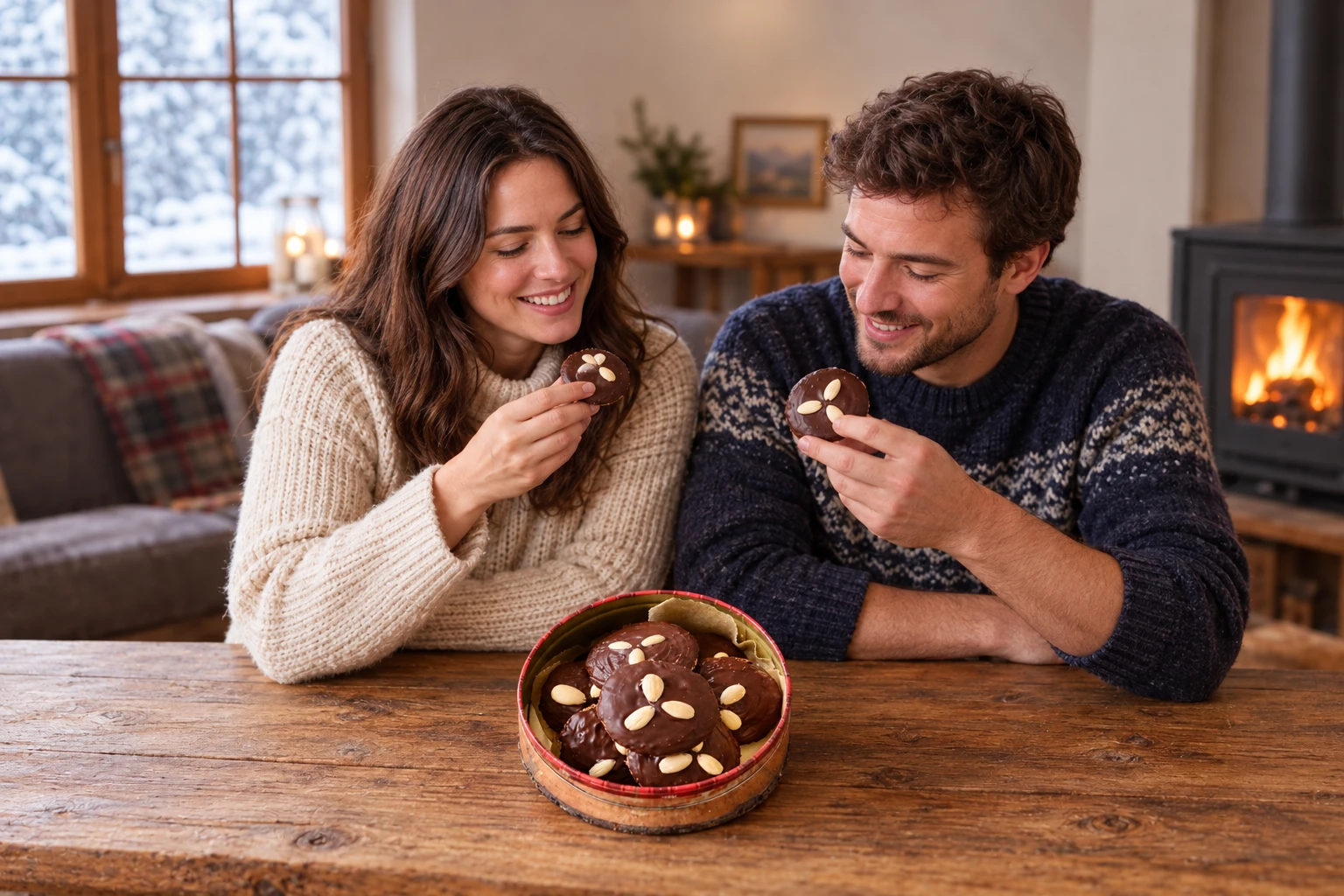
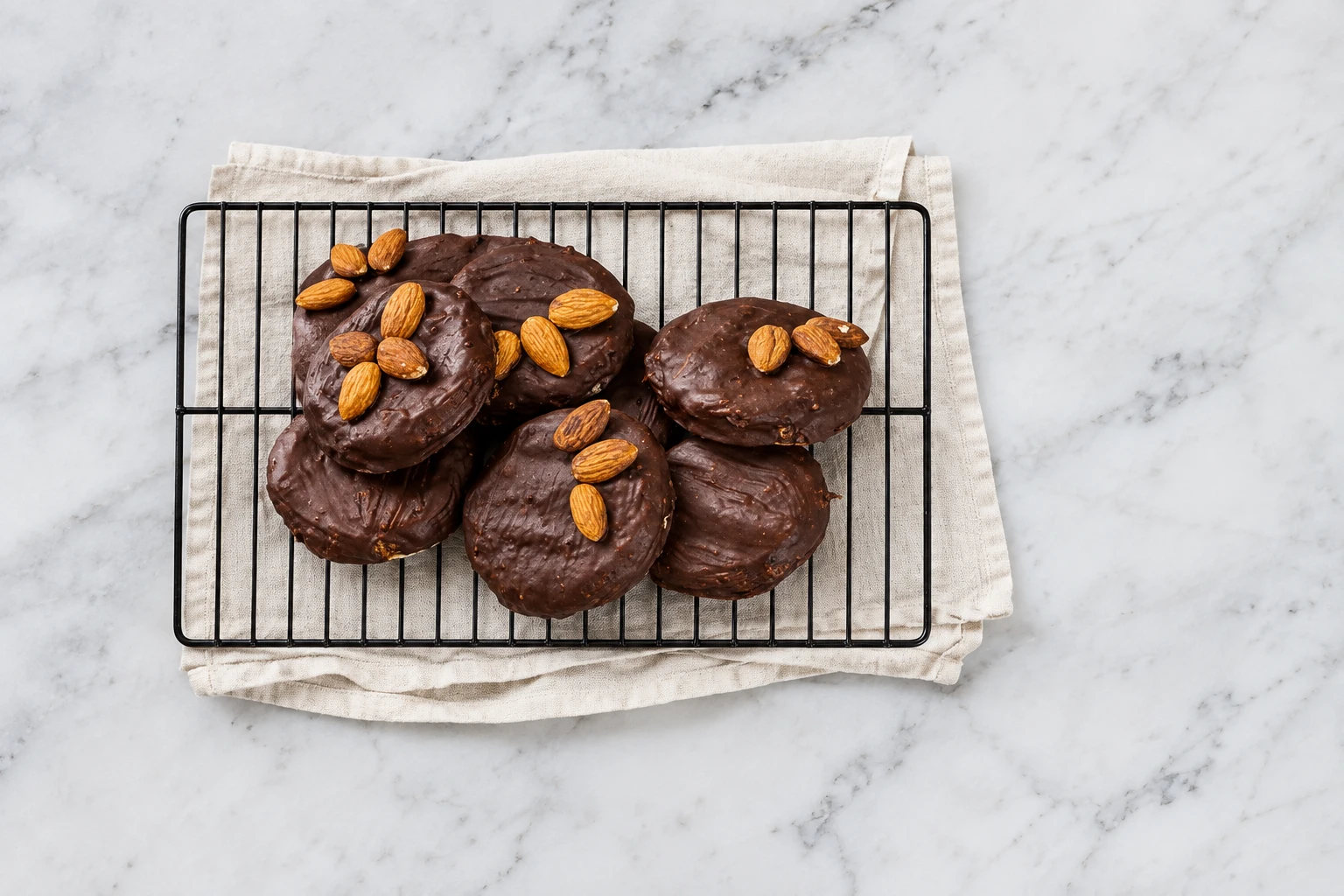
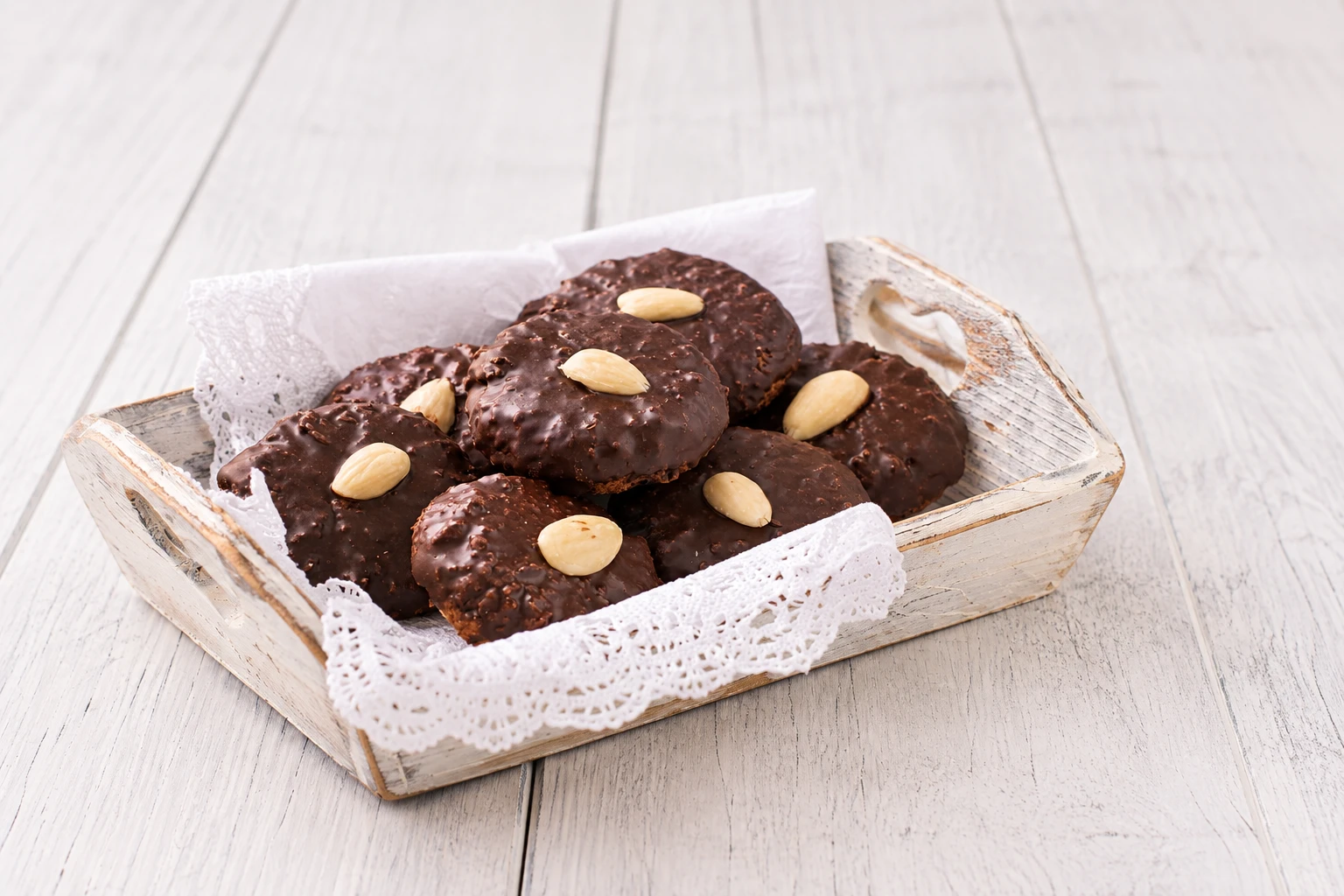
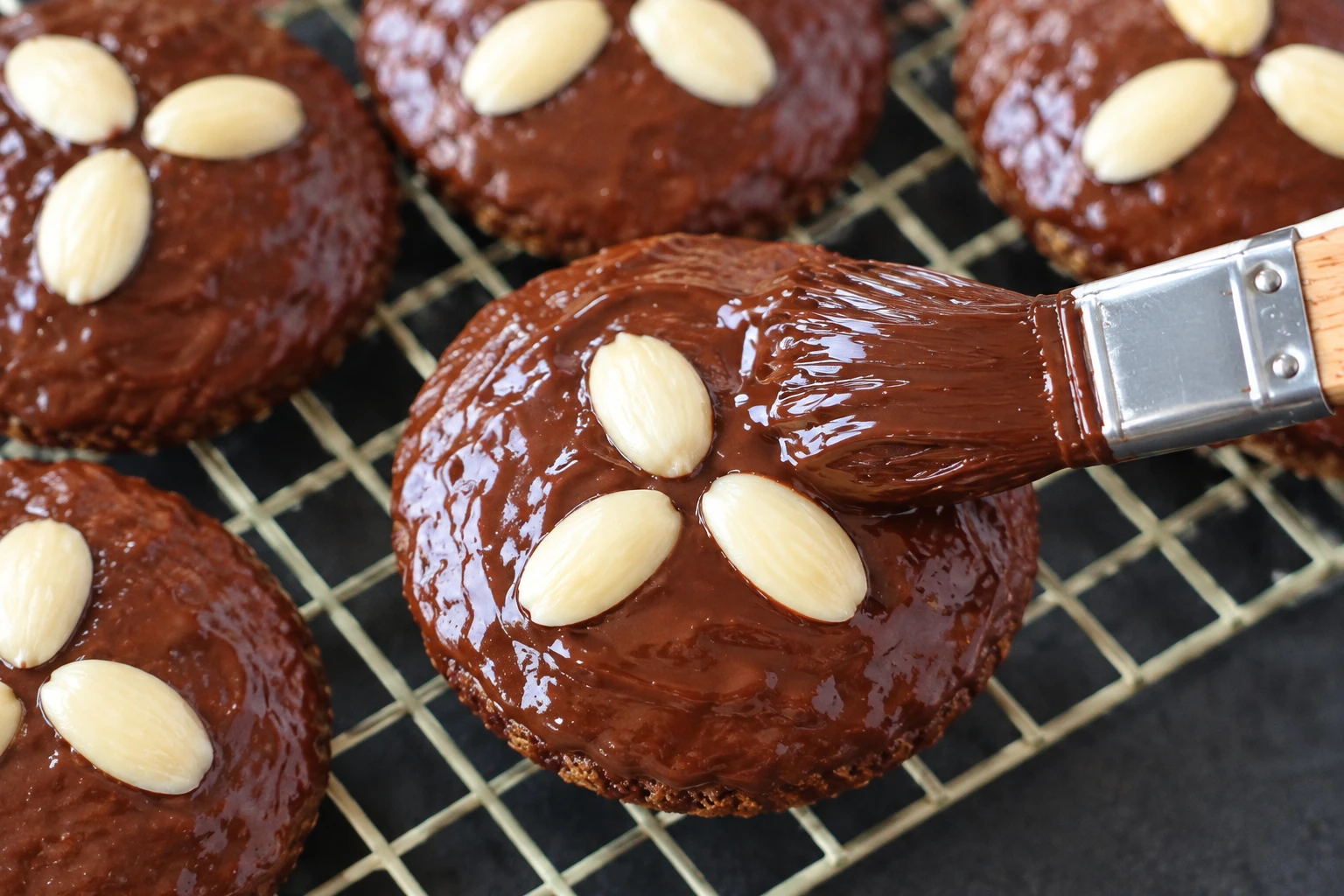
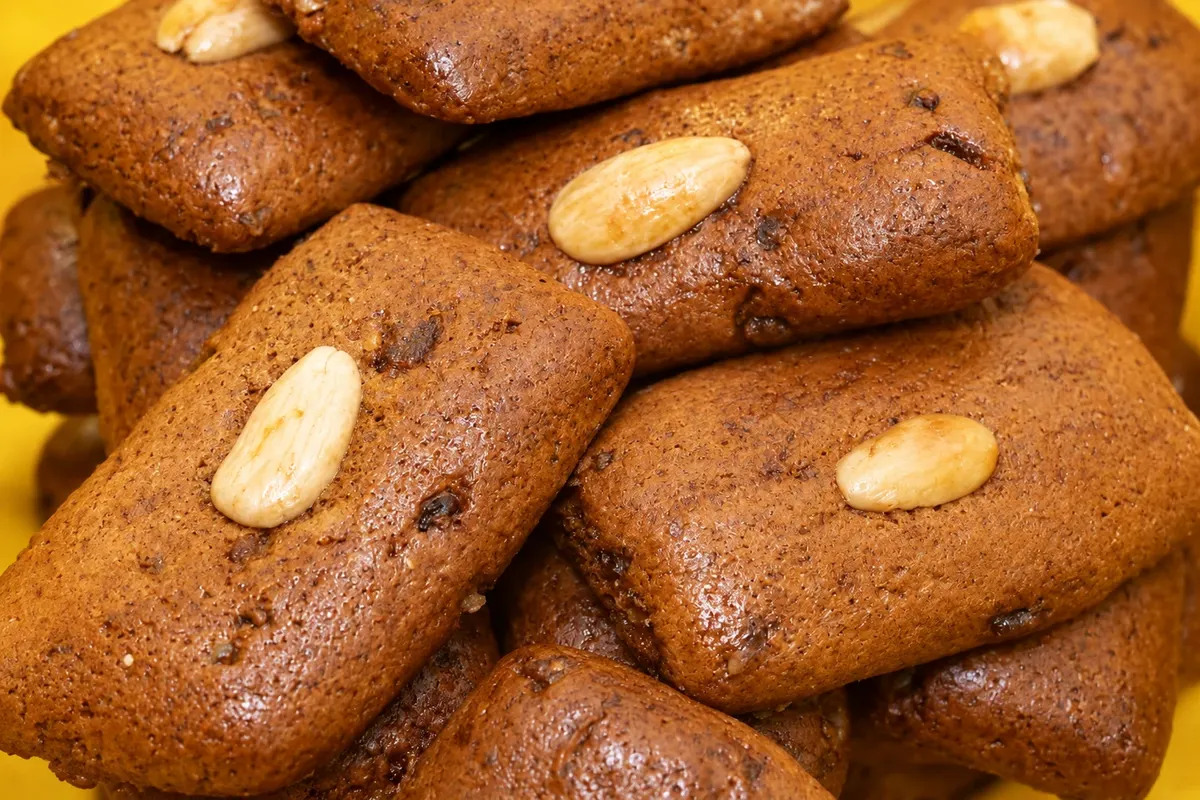
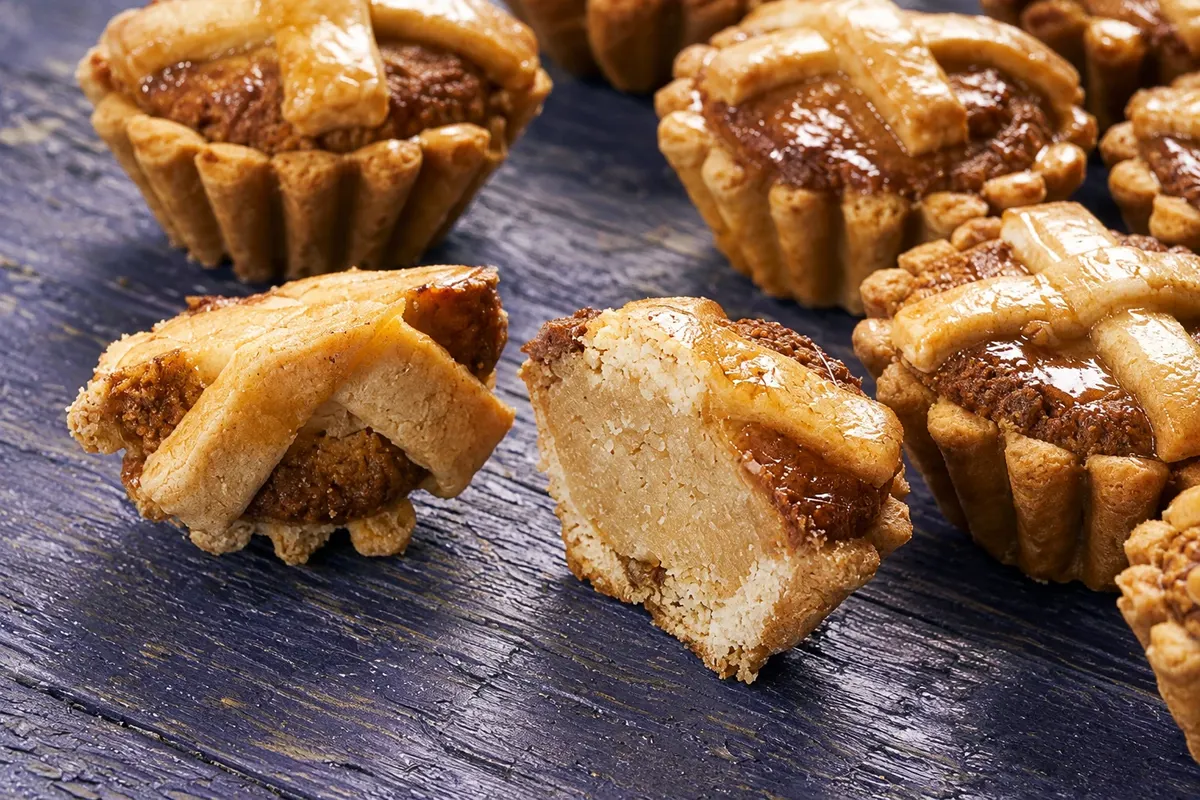
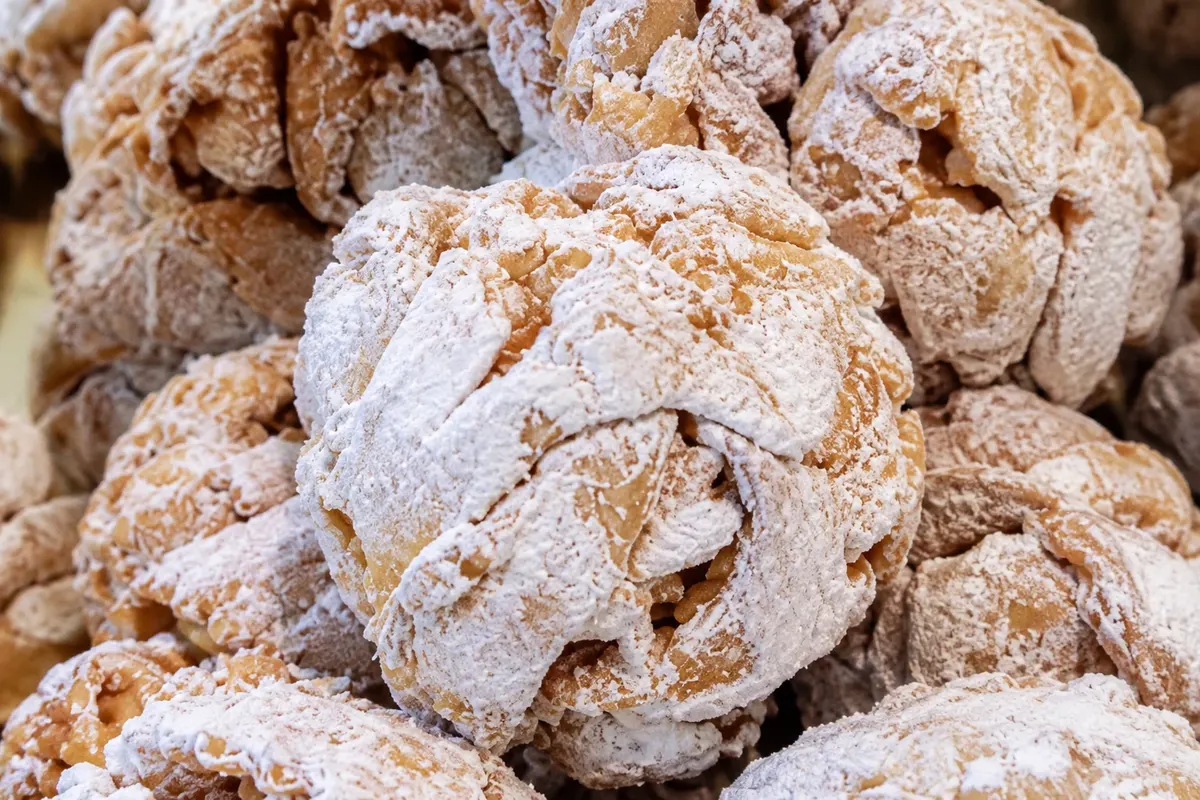
The Nürnberger Lebkuchen is a soft honey-and-spice biscuit made with walnuts, almonds or hazelnuts, cinnamon, clove, cardamom, allspice and nutmeg. The dough is usually baked on an Oblate, a thin flour wafer that prevents it from sticking to the tin. After baking, it may be plain, covered with chocolate or sugar icing, or decorated with almonds.
Nuremberg had special conditions to become the city of Lebkuchen. It was a meeting point for trade routes through which spices from far away arrived, and the surrounding forests had beekeepers who supplied the honey. There are records of Lebkuchen bakers in the city from 1395, and in 1643 the city council authorized a guild specifically for the trade.
The name is protected. Since 1996, Nürnberger Lebkuchen is a protected geographical indication of the European Union, and only Lebkuchen made within the city limits may use the name. The name covers several types, distinguished by the proportion of nuts and flour. The finest is the Elisenlebkuchen, with at least 25% nuts or almonds and very little flour. According to a local legend, the name honors a baker’s daughter.
Lebkuchen is Nuremberg’s Christmas sweet. During Advent it fills the stalls of the Christkindlesmarkt, the main square’s Christmas market, and the shop windows of the old town’s confectioners. Many households keep their own spice recipes. It is also sold out of season, in decorated tins and boxes that have become souvenirs of the city.


 Brazil
 Argentina
 Bolivia
 Chile
 Colombia
 Ecuador
 Guyana
 French Guiana
 Falkland Islands (Malvinas)
 Paraguay
 Peru
 Suriname
 Uruguay
 Venezuela
 Austria
 Belgium
 Croatia
 Denmark
 Spain
 Finland
 France
 Greece
 the Netherlands
 Hungary
 Ireland
 Iceland
 Italy
 Luxembourg
 Norway
 Poland
 Portugal
 the United Kingdom
 the Czech Republic
 Sweden
 Switzerland
 Turkey
 the United States
 Mexico
 the Dominican Republic
 South Africa
 Australia
 Fiji