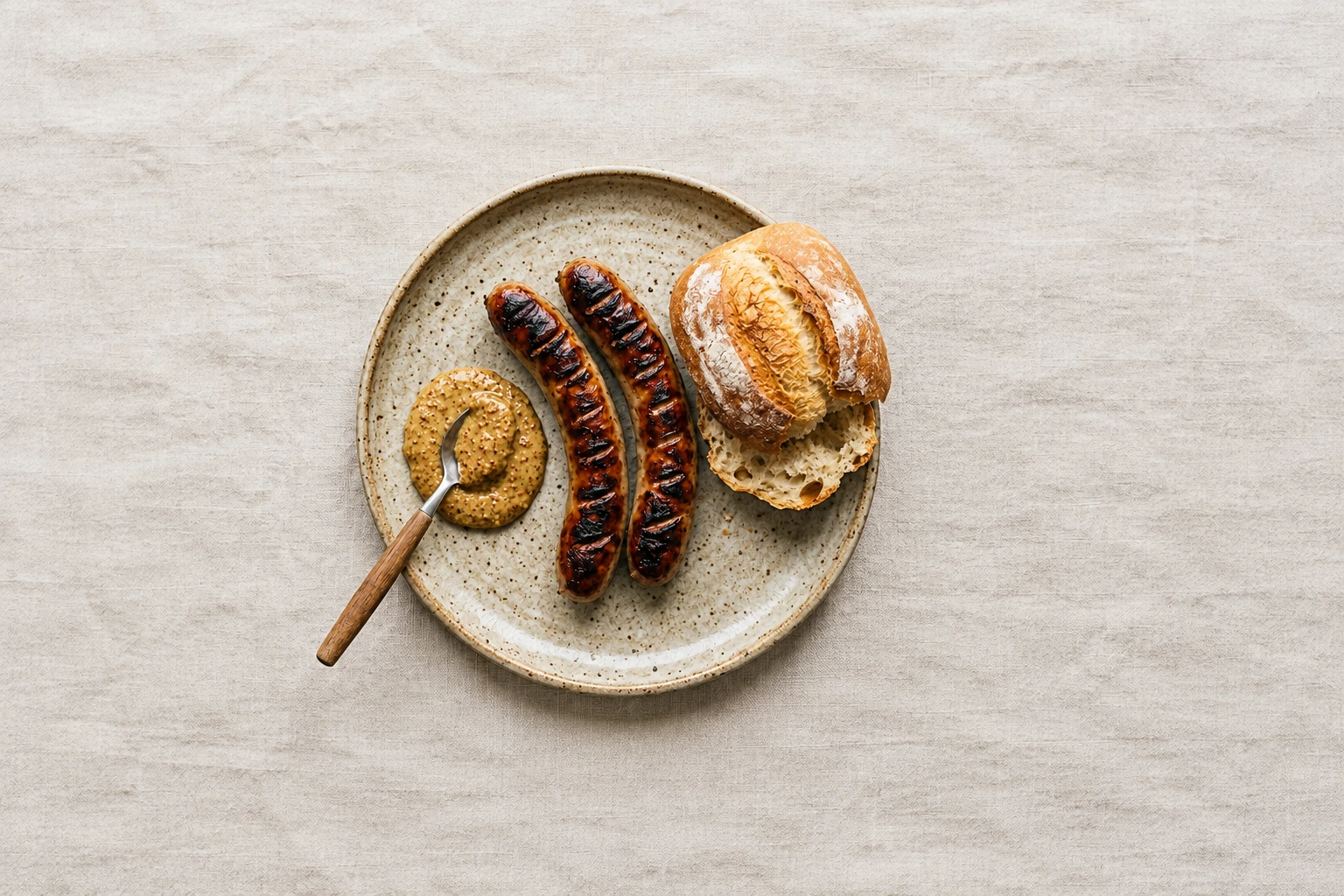
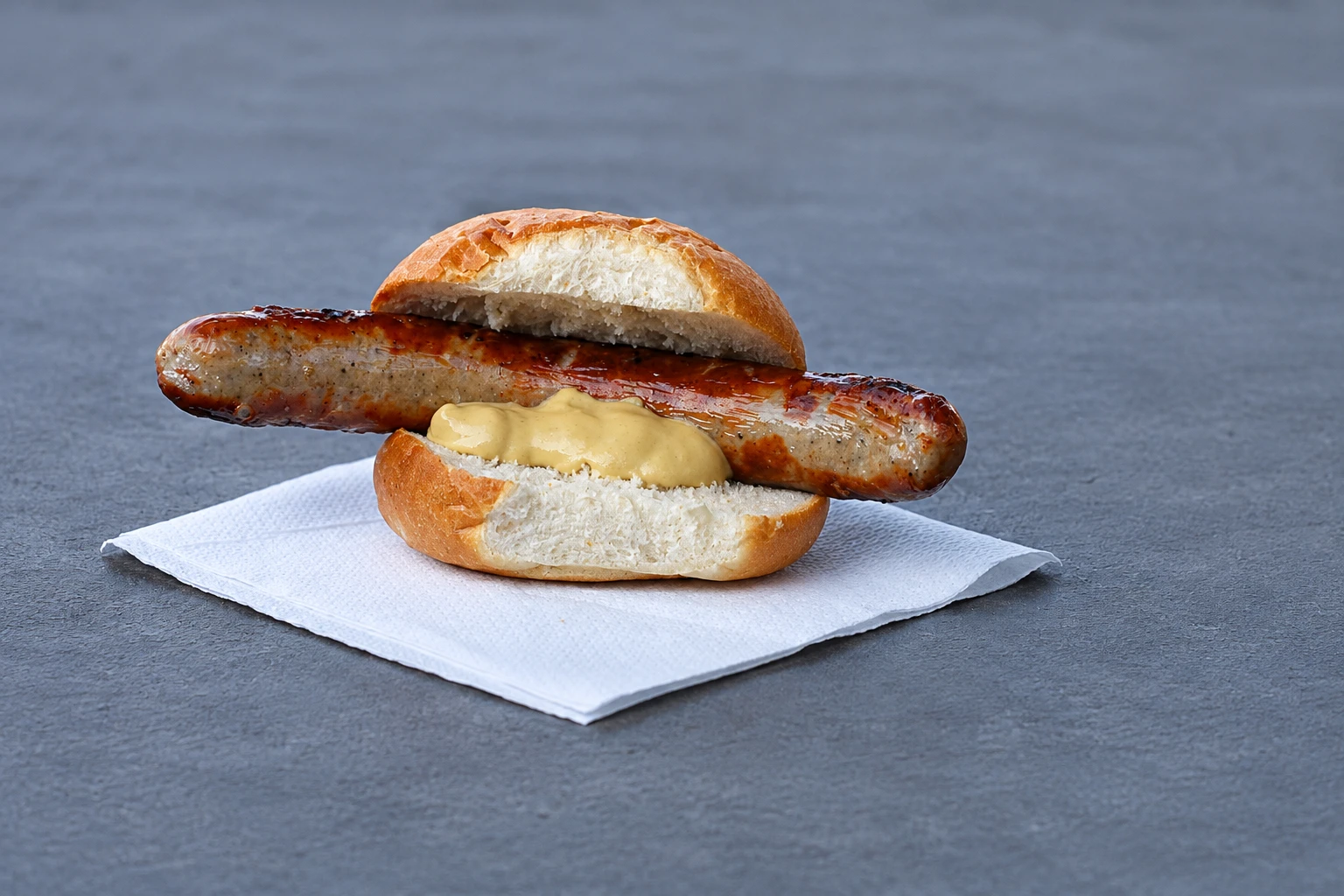
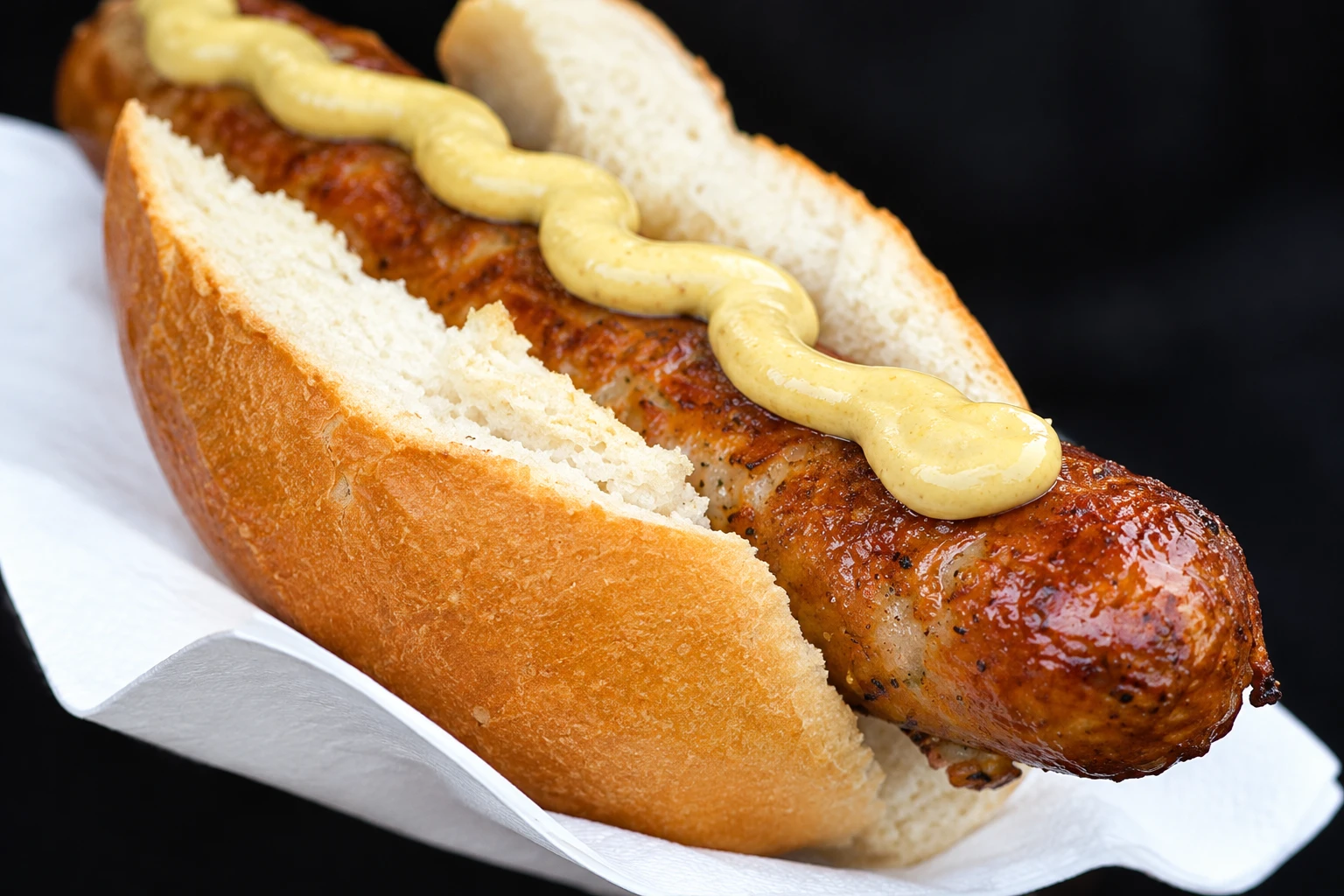
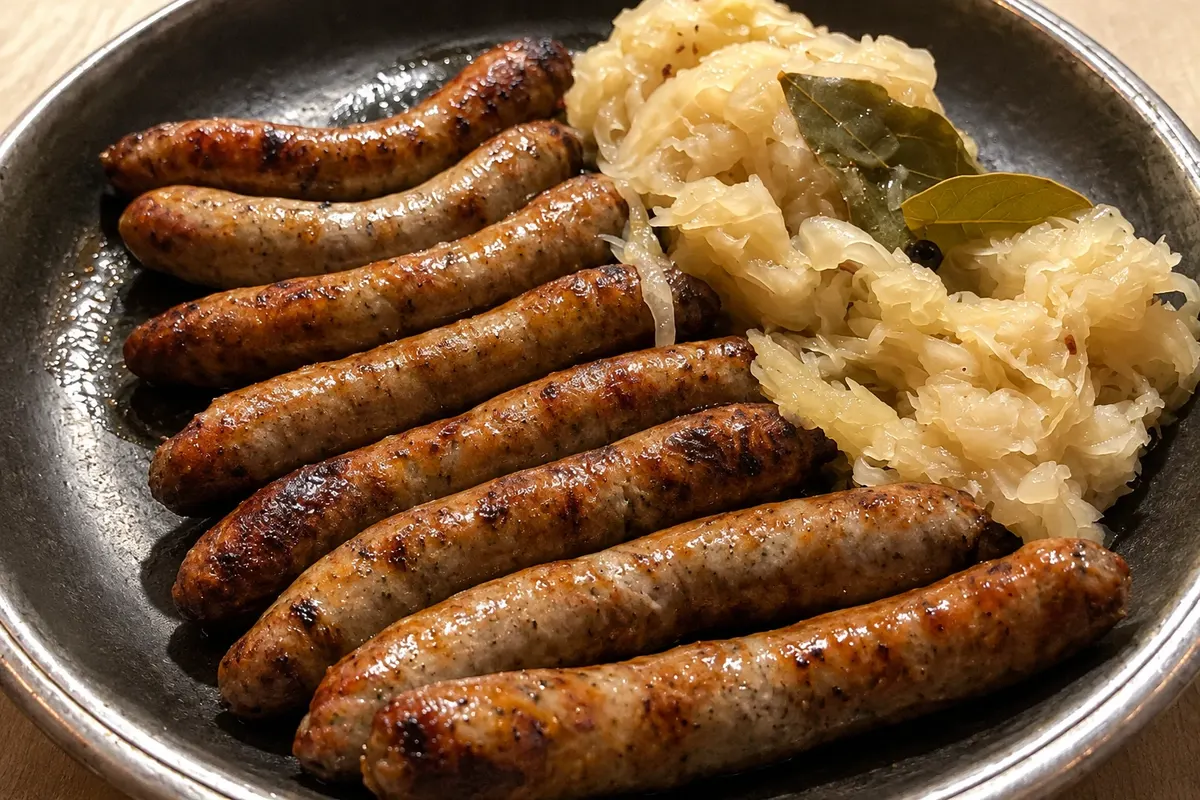
Thüringer Rostbratwurst is the grilled sausage of Thuringia, a state in east-central Germany. It is long and thin—15 to 20 centimeters and 100 to 150 grams—made from pork, sometimes with a portion of veal or beef. Seasoning includes salt, pepper, marjoram, cumin and, depending on the region, garlic. Whether to include cumin is a serious debate among locals.
The history is documented. The earliest known mention of a Bratwurst in Thuringia is an accounting entry dated January 20, 1404, from a convent in the town of Arnstadt, recording an expense for sausage casings. The document was found in 2000 and is now part of the German Bratwurst Museum in Mühlhausen. An old recipe appears in a 1613 regulation of the butchers’ guilds of Weimar, Jena and Buttstädt.
Since 2004, Thüringer Rostbratwurst has been a protected geographical indication of the European Union: under that name, only sausages made in Thuringia according to the specification may be sold. In 2022, the Bratwurst culture of Thuringia was entered in the state inventory of intangible cultural heritage.
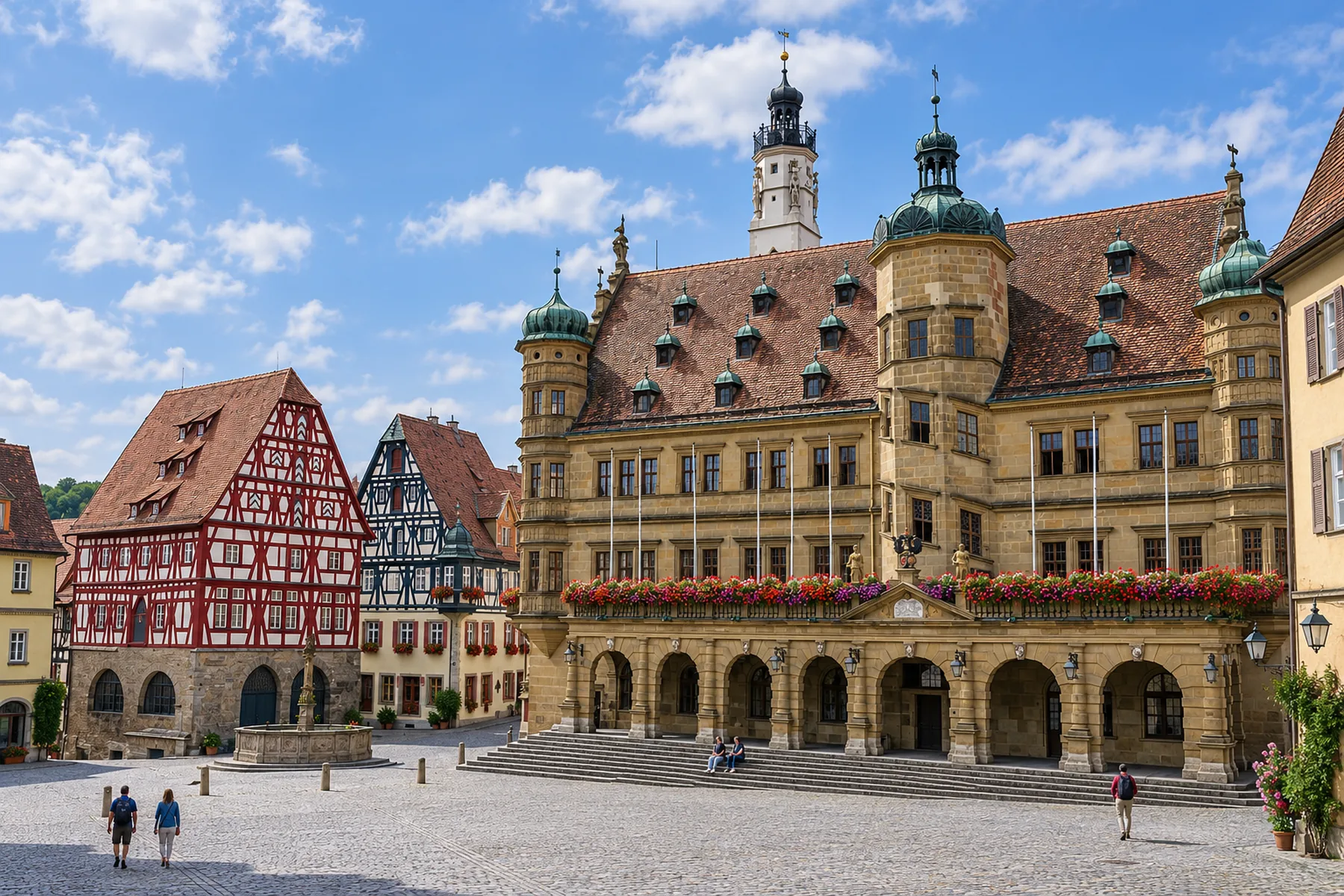
The way to eat it is simple. The sausage is grilled over charcoal until the casing cracks, and served inside a small roll that is short for it, with Thuringian mustard. Rostbratwurst stands are found in city squares, in Erfurt and Weimar, at fairs, festivals and football matches.


 Brazil
 Argentina
 Bolivia
 Chile
 Colombia
 Ecuador
 Guyana
 French Guiana
 Falkland Islands (Malvinas)
 Paraguay
 Peru
 Suriname
 Uruguay
 Venezuela
 Austria
 Belgium
 Croatia
 Denmark
 Spain
 Finland
 France
 Greece
 the Netherlands
 Hungary
 Ireland
 Iceland
 Italy
 Luxembourg
 Norway
 Poland
 Portugal
 the United Kingdom
 the Czech Republic
 Sweden
 Switzerland
 Turkey
 the United States
 Mexico
 the Dominican Republic
 South Africa
 Australia
 Fiji