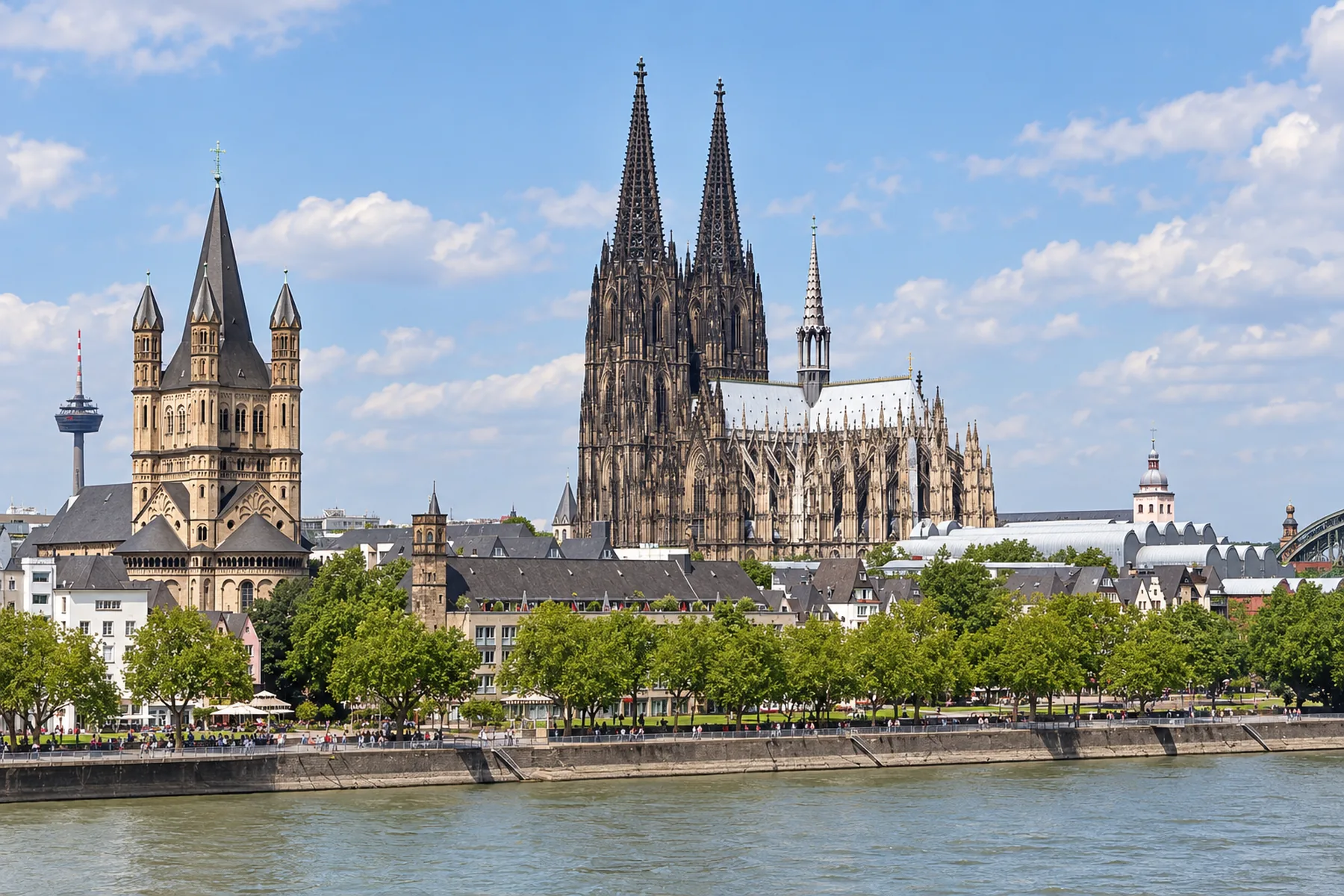
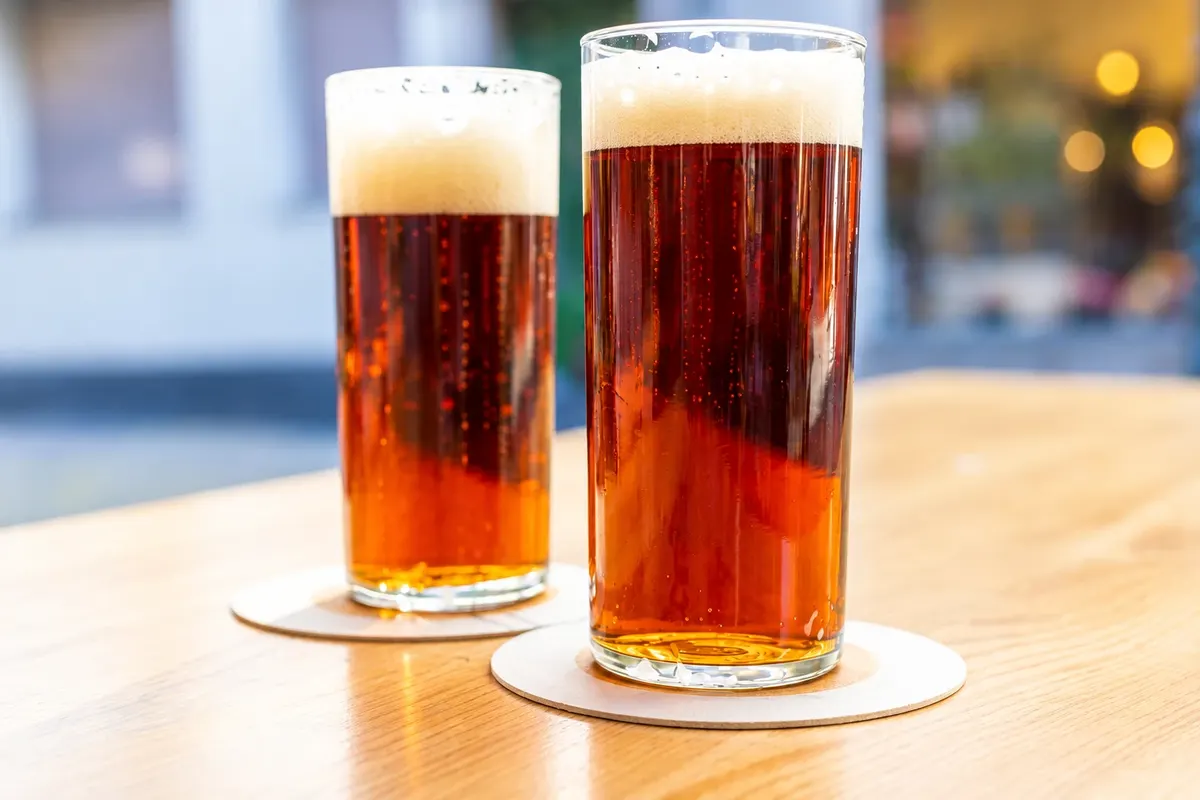
Kölsch is Cologne’s beer. It is pale, filtered, top‑fermented, well attenuated and hop‑forward. In German, the same word also names the city’s dialect, and brewers like to say it is the only beer that is at once a drink, an origin and a language.
The style is regulated. The Kölsch‑Konvention, published in 1985, defines what Kölsch is and where it may be produced. Since 1997 Kölsch has been a protected geographical indication of the European Union. It may be brewed in Cologne and, as an exception, in some breweries outside the city that were already producing Kölsch before the convention.
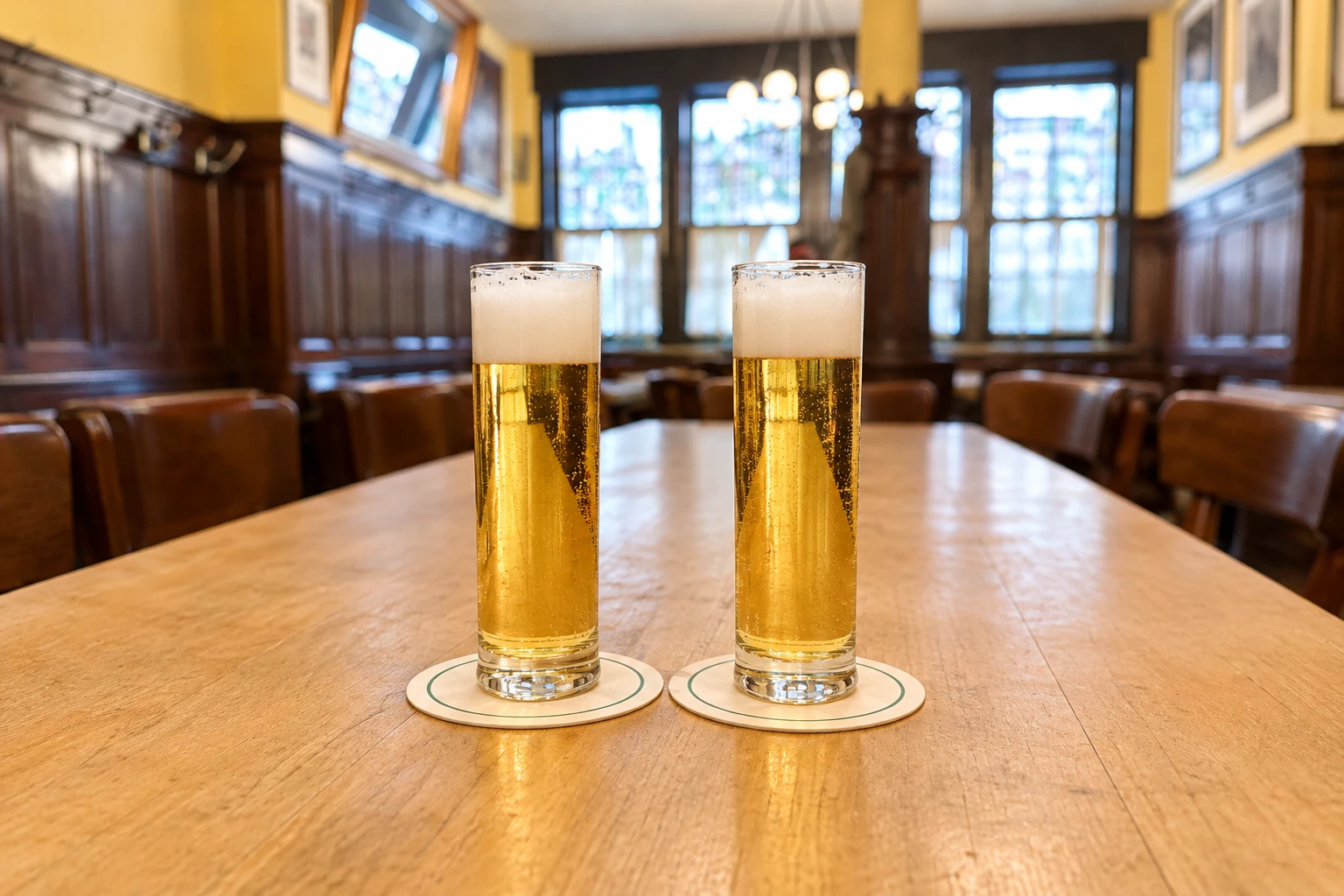
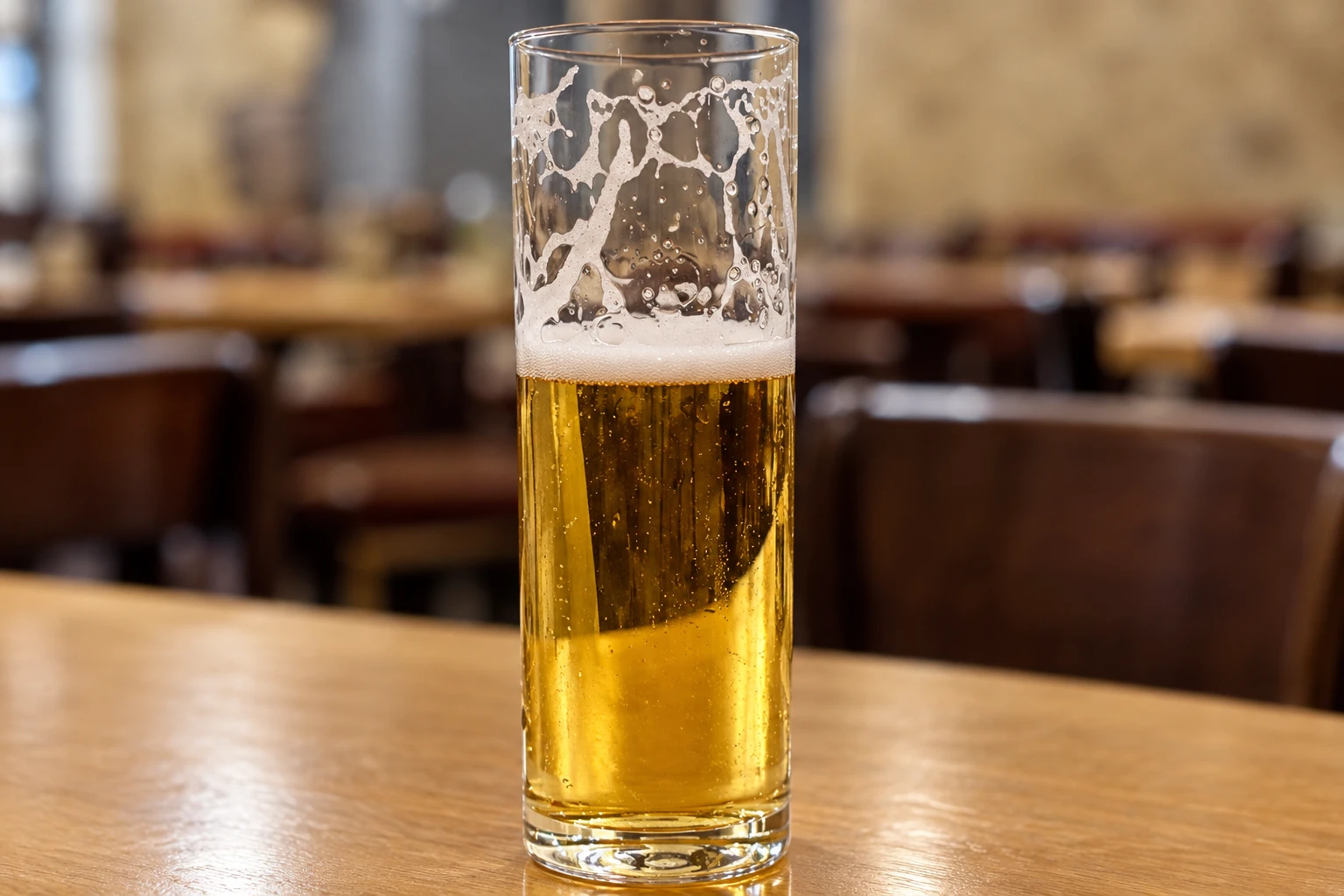
The way it’s served is part of the experience. Kölsch comes in a thin, narrow 0.2‑liter glass called a Stange. In traditional breweries the waiter, called a Köbes, circulates with a round tray full of glasses, the Kranz. When a glass runs empty he replaces it with a full one without asking and makes a mark on the coaster. To stop, the rule is to place the coaster on top of the glass.
The tavern‑breweries in the old town, near the cathedral and along the Rhine, serve Kölsch straight from the cask with dishes from the Rhenish kitchen. The small glass ensures the beer always arrives fresh. At Cologne’s Carnival the Kölsch is everywhere.


 Brazil
 Argentina
 Bolivia
 Chile
 Colombia
 Ecuador
 Guyana
 French Guiana
 Falkland Islands (Malvinas)
 Paraguay
 Peru
 Suriname
 Uruguay
 Venezuela
 Austria
 Belgium
 Croatia
 Denmark
 Spain
 Finland
 France
 Greece
 the Netherlands
 Hungary
 Ireland
 Iceland
 Italy
 Luxembourg
 Norway
 Poland
 Portugal
 the United Kingdom
 the Czech Republic
 Sweden
 Switzerland
 Turkey
 the United States
 Mexico
 the Dominican Republic
 South Africa
 Australia
 Fiji