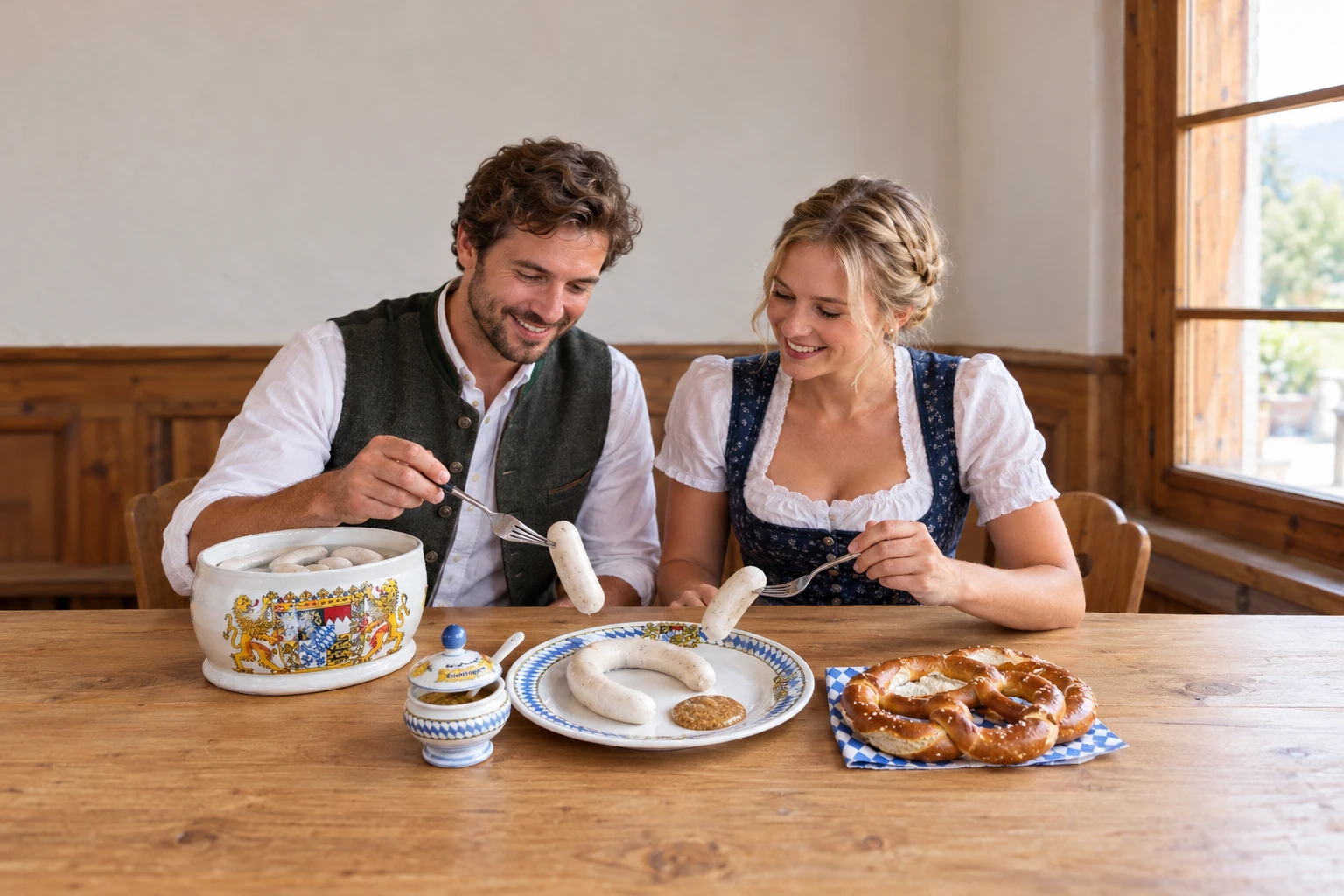
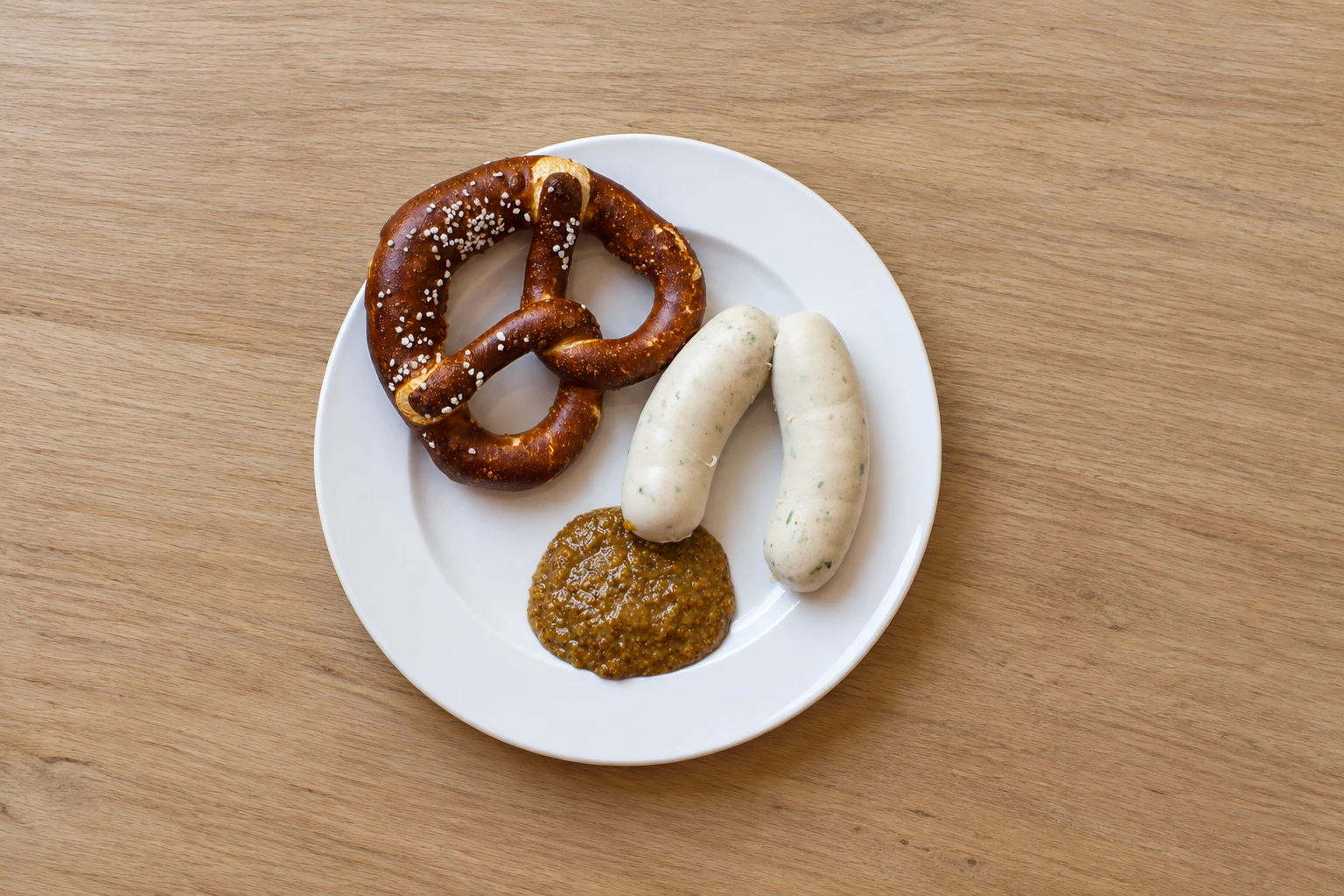
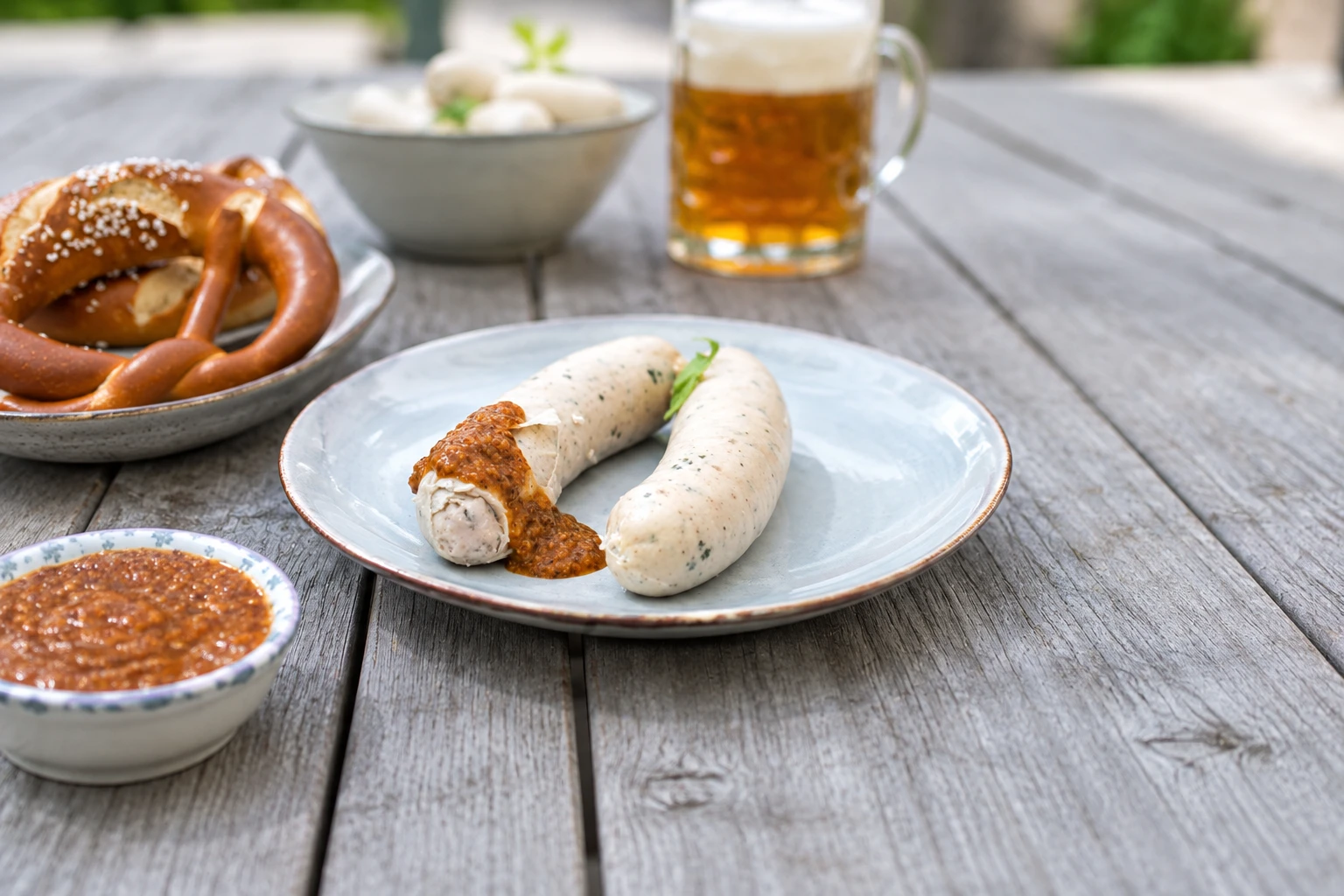
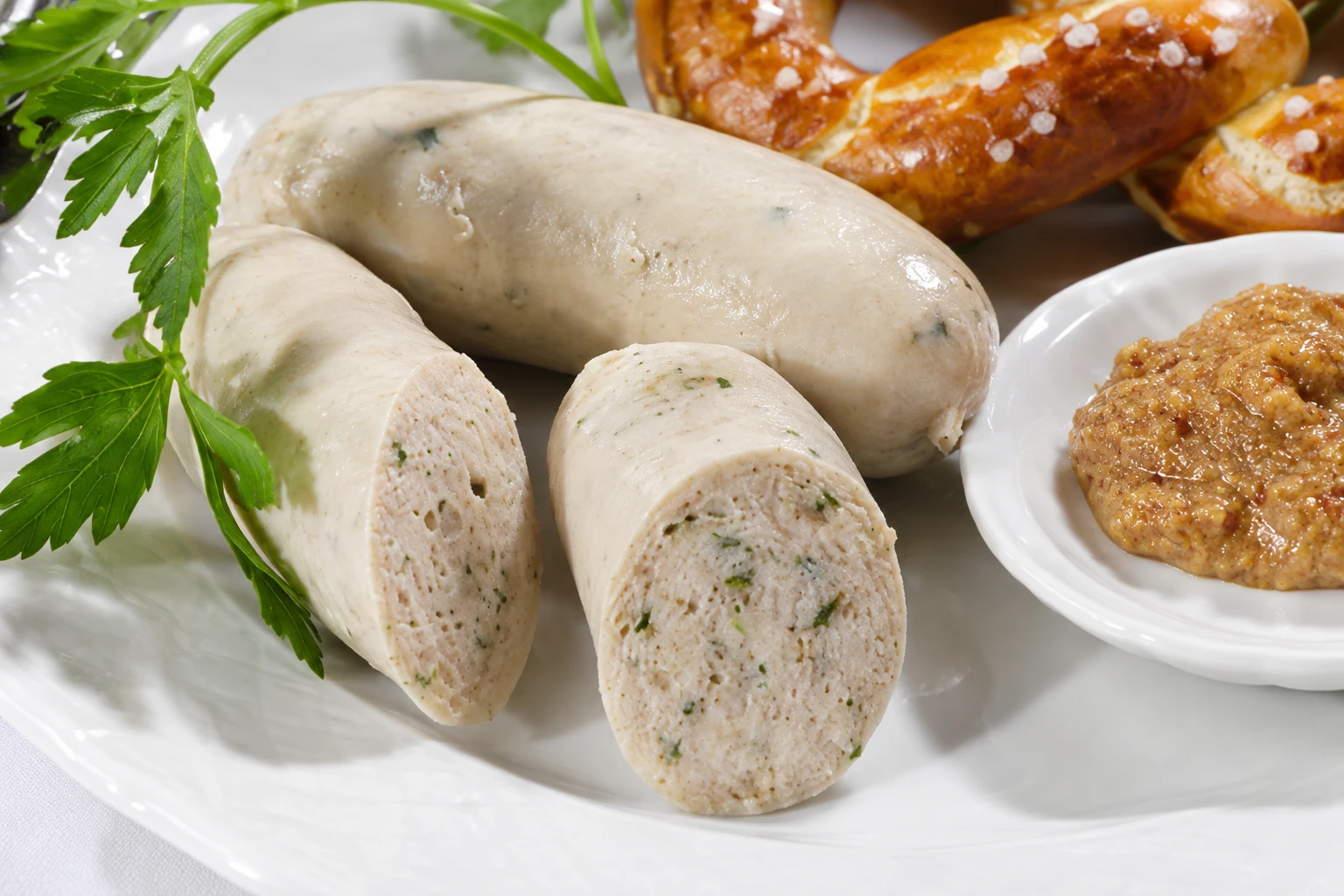
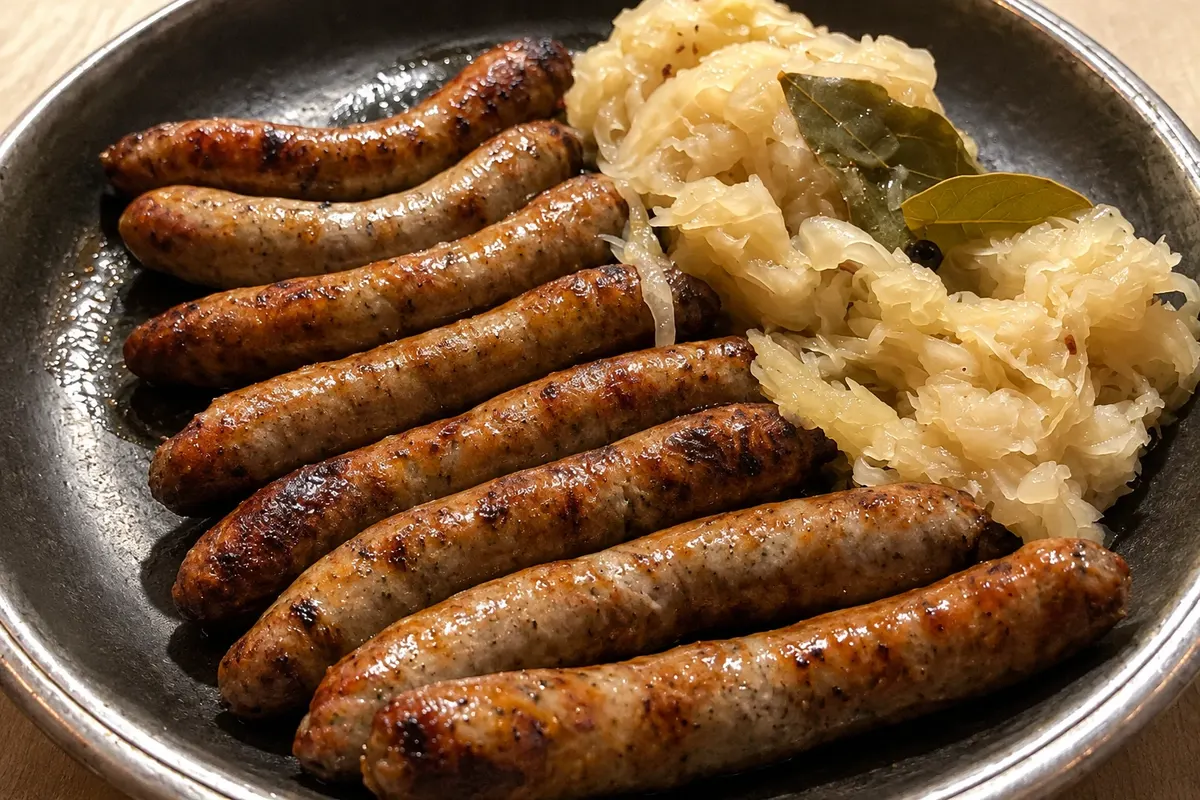
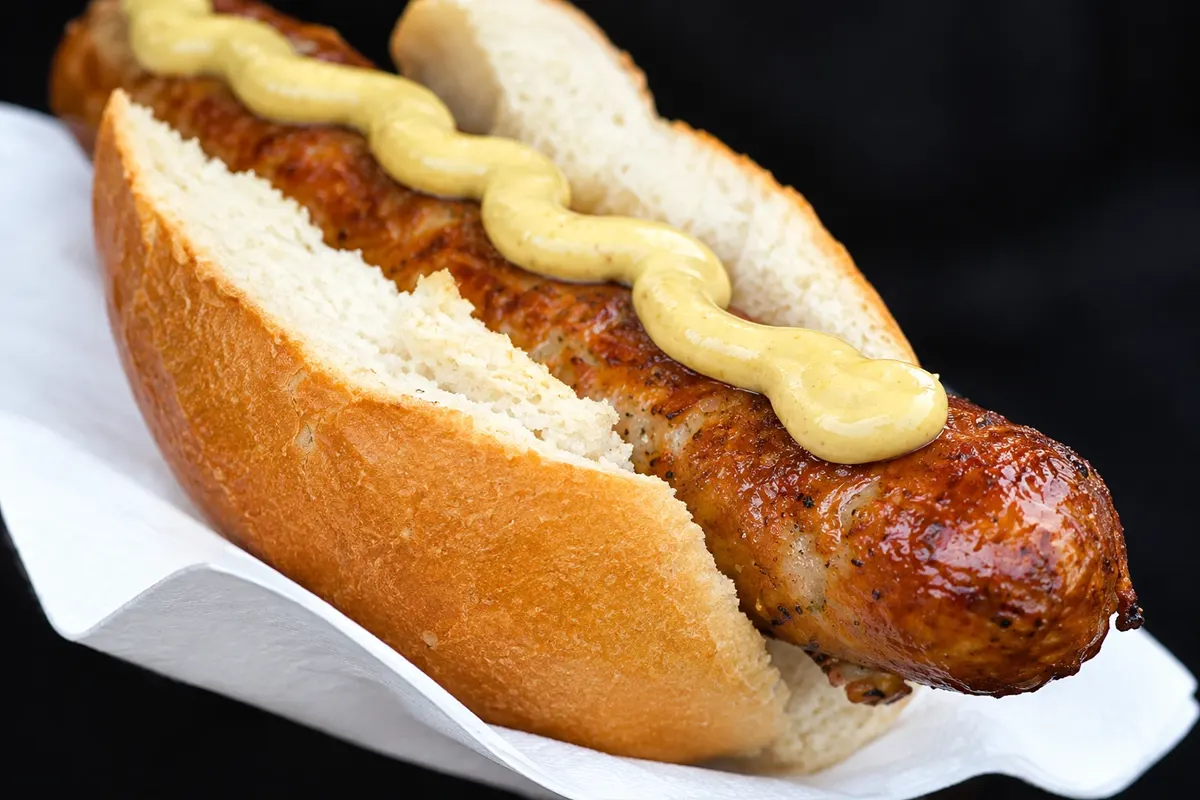
Münchner Weißwurst is a pale, tender sausage made from finely ground veal and pork, bacon, onion and fresh parsley. The mixture is stuffed into pork casing and the sausage measures about 8 to 12 centimeters. It is not grilled or pan-fried: it is warmed in hot water, below boiling, and brought to the table still in the water, in a bowl.
The most told story in Munich says Weißwurst was born by accident on February 22, 1857, a Carnival Sunday, in a tavern at Marienplatz. According to that tradition, butcher and innkeeper Joseph Moser ran out of the fine lamb casings he used for grilling sausages and stuffed the mixture into thicker pork casings; fearing they might burst on the griddle, he chose to warm them in water. The city’s former archivist, Richard Bauer, treated the tale as legend and noted that similar white sausages existed earlier. The 1857 date belongs to local tradition.
The custom of eating Weißwurst in the morning is its best-known aspect. A Bavarian saying goes that it must not hear the noon bells. The rule comes from the time before refrigeration: the sausage, fresh and delicate, was made early and eaten the same day. Today it is sold all day, but many people in Munich keep the morning habit.
The classic set is called Weißwurstfrühstück, the Weißwurst breakfast: two or more sausages in hot water, Bavarian sweet mustard, a pretzel (Brezn) and, for those who drink, wheat beer. The casing is not eaten. There are two ways to remove it: the traditional method, called zuzeln, is to hold the sausage with your hand and suck the meat out of the casing; the other is to cut the casing with knife and fork and release the meat.
Weißwurst is found in markets and taverns across the city, from the Viktualienmarkt to neighbourhoods, and is part of broader Bavarian culture. The name Münchner Weißwurst has no protected geographical indication: a protection request was rejected by the German courts in 2009 because much of the Weißwurst sold as from Munich was already made in other regions of Bavaria.


 Brazil
 Argentina
 Bolivia
 Chile
 Colombia
 Ecuador
 Guyana
 French Guiana
 Falkland Islands (Malvinas)
 Paraguay
 Peru
 Suriname
 Uruguay
 Venezuela
 Austria
 Belgium
 Croatia
 Denmark
 Spain
 Finland
 France
 Greece
 the Netherlands
 Hungary
 Ireland
 Iceland
 Italy
 Luxembourg
 Norway
 Poland
 Portugal
 the United Kingdom
 the Czech Republic
 Sweden
 Switzerland
 Turkey
 the United States
 Mexico
 the Dominican Republic
 South Africa
 Australia
 Fiji