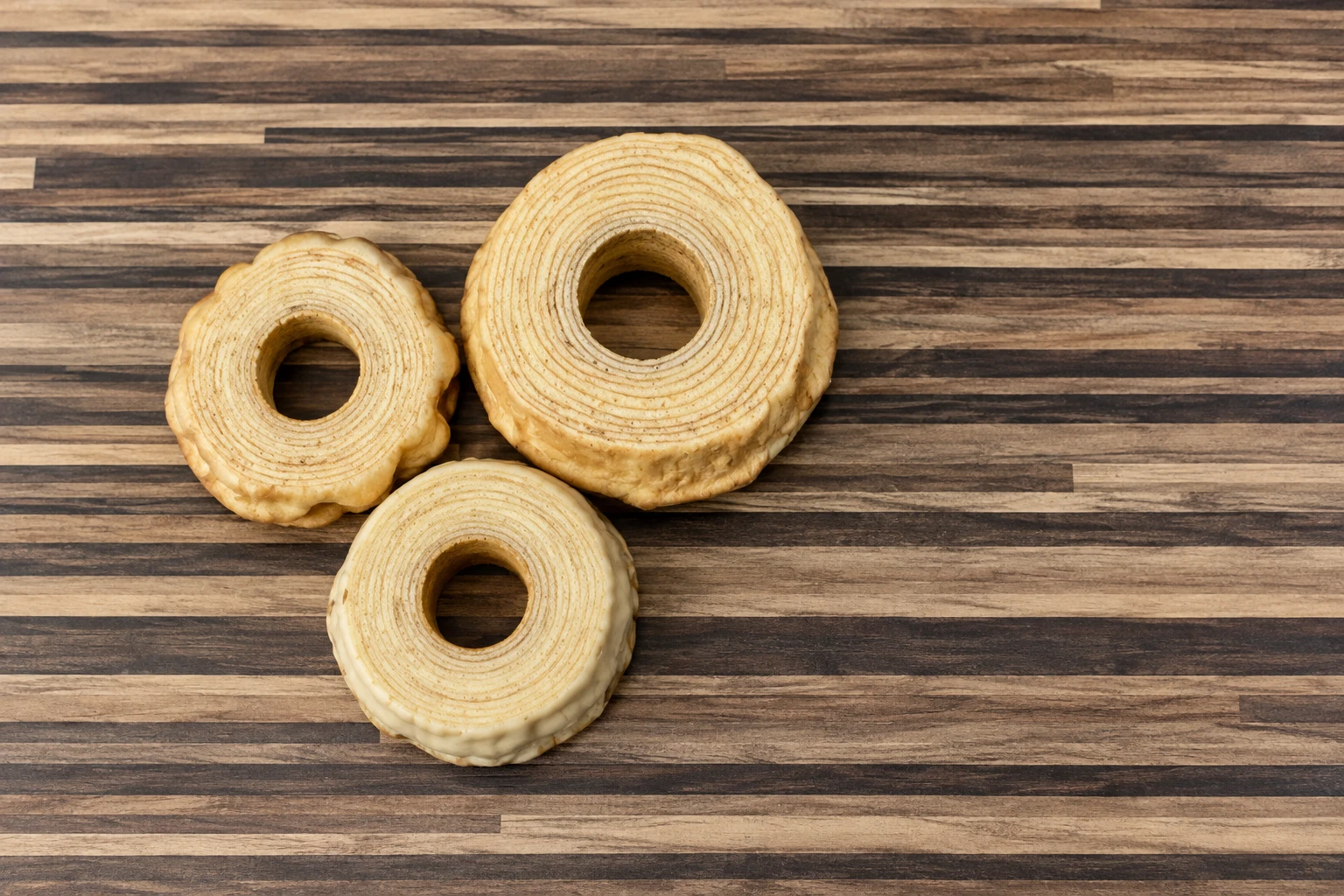
Baumkuchen, literally ‘tree cake’ in German, is baked in a unique way. A wooden or metal roll turns in front of the fire, and the baker pours, with a ladle, a thin layer of batter made of eggs, butter, sugar, and flour onto it. When the layer browns, another is added on top, and so on. At the end, the cake comes off the spit hollow inside, with an irregular surface full of points. When sliced, it shows rings like those of a trunk.
Baumkuchen exists elsewhere in Germany and around the world, and Berlin was the first major center for this cake in the 19th century. Salzwedel, in the Altmark, became one of the towns most associated with it. According to the European specification, confectioner Johann Andreas Schernikow baked the first Baumkuchen in the town in 1807, and the cake impressed Emperor William I on a visit to Salzwedel in 1865. The town began supplying Baumkuchen to the court, and Salzwedel’s bakeries maintain the tradition today.
Since 2010, Salzwedeler Baumkuchen is a protected geographical indication of the European Union. To use the name, the cake must be baked in Salzwedel, with the batter applied by hand with a ladle onto a rotating spit, and without combs to smooth the surface. That is why each Salzwedel Baumkuchen has its own shape, with the irregular points that are the cake’s hallmark.
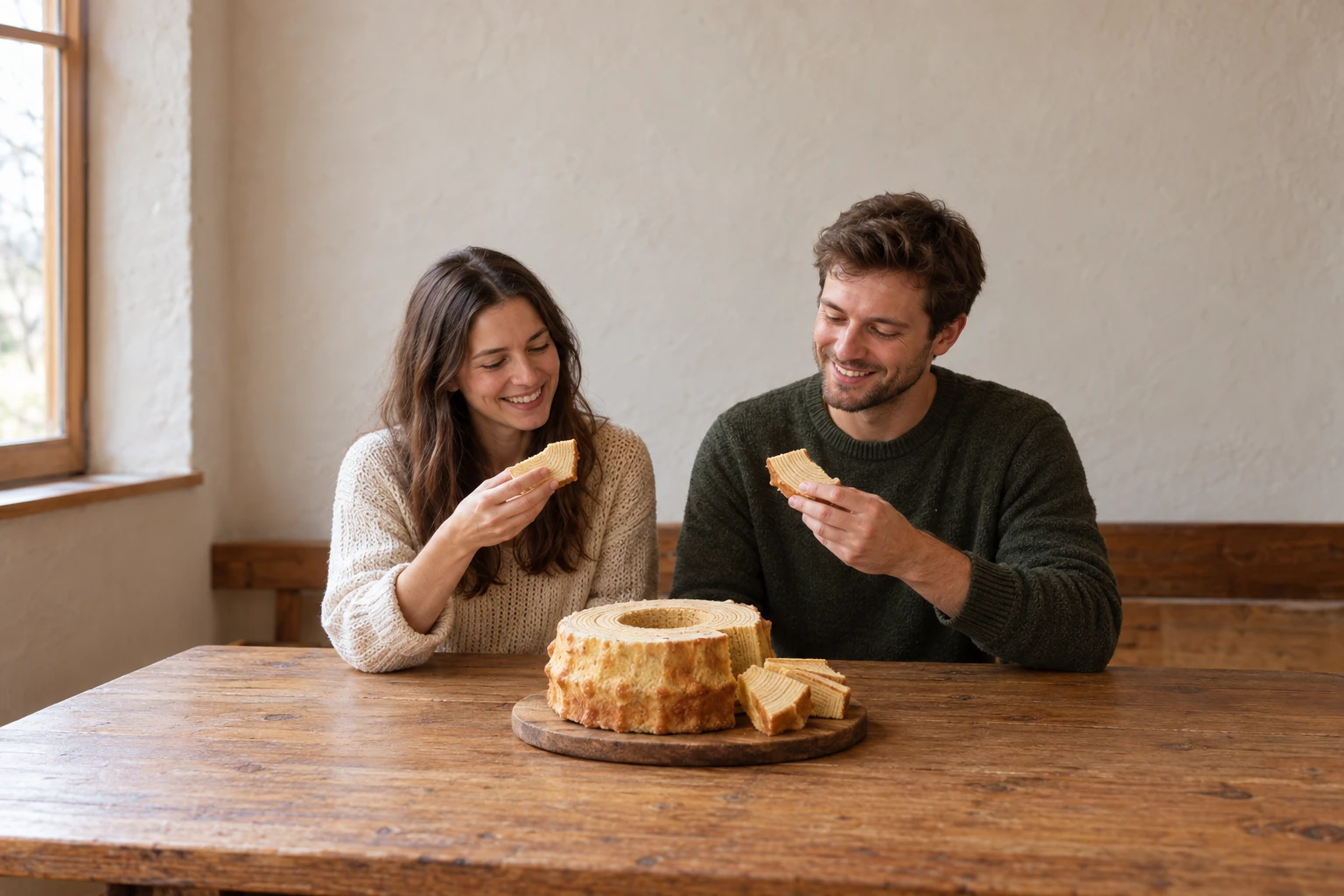
The Baumkuchen is rarely served whole: a cake can reach up to 90 centimeters in height. It is sold in rings cut to various sizes, in small wedges and in bars, plain or covered with chocolate or icing. Some local bakeries give demonstrations of the preparation by the fire, and the Tourist Information announces when they take place.


 Brazil
 Argentina
 Bolivia
 Chile
 Colombia
 Ecuador
 Guyana
 French Guiana
 Falkland Islands (Malvinas)
 Paraguay
 Peru
 Suriname
 Uruguay
 Venezuela
 Austria
 Belgium
 Croatia
 Denmark
 Spain
 Finland
 France
 Greece
 the Netherlands
 Hungary
 Ireland
 Iceland
 Italy
 Luxembourg
 Norway
 Poland
 Portugal
 the United Kingdom
 the Czech Republic
 Sweden
 Switzerland
 Turkey
 the United States
 Mexico
 the Dominican Republic
 South Africa
 Australia
 Fiji