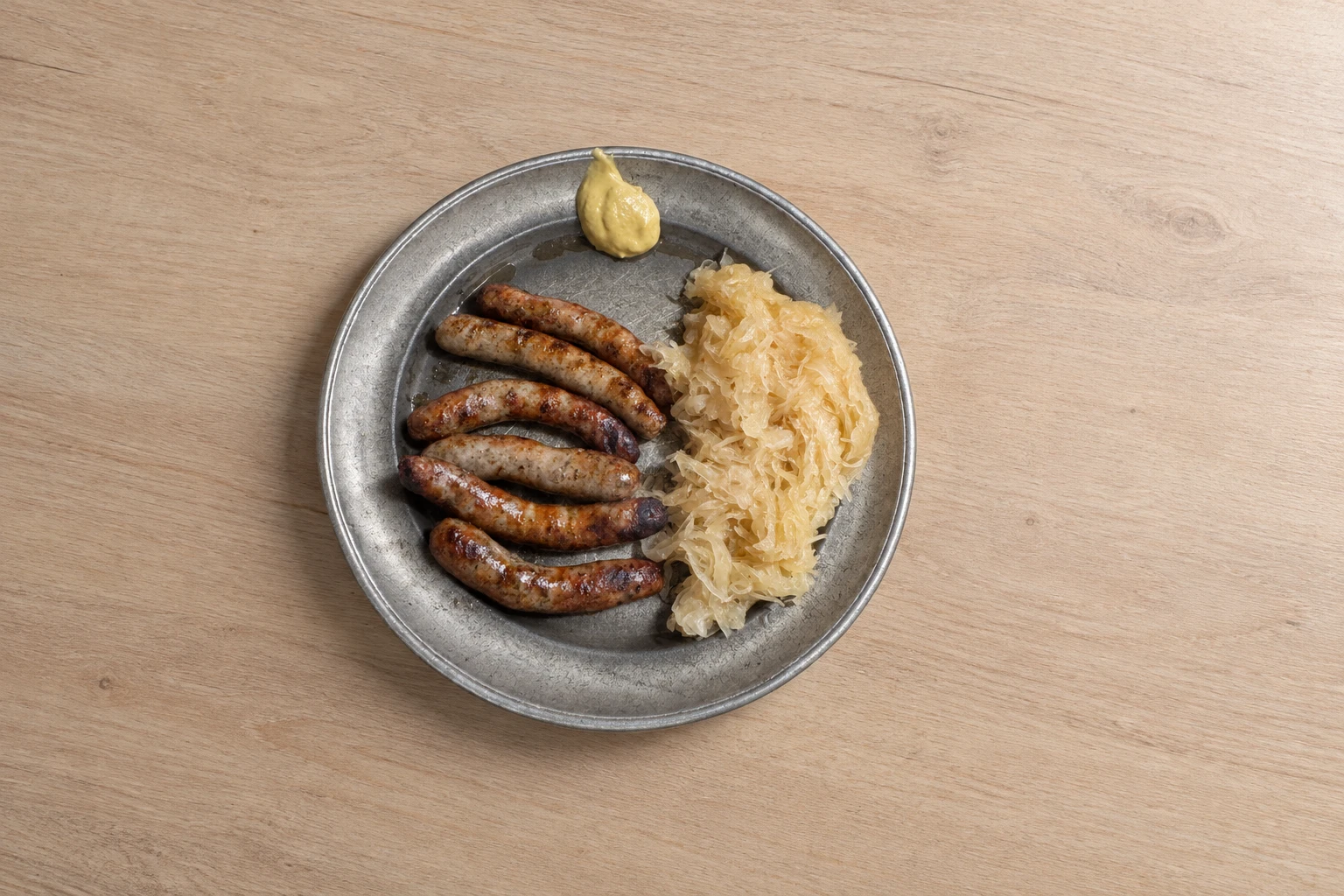
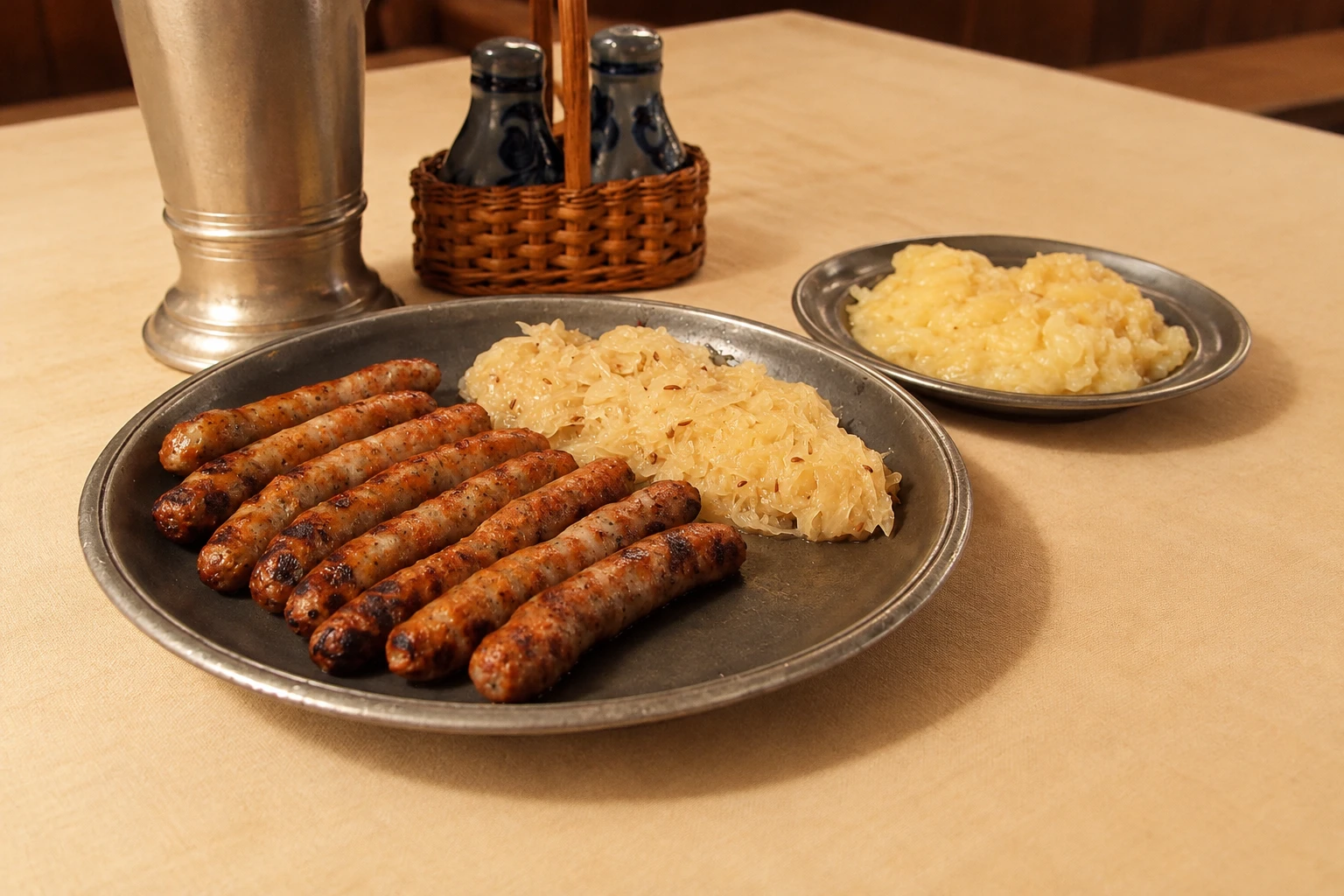
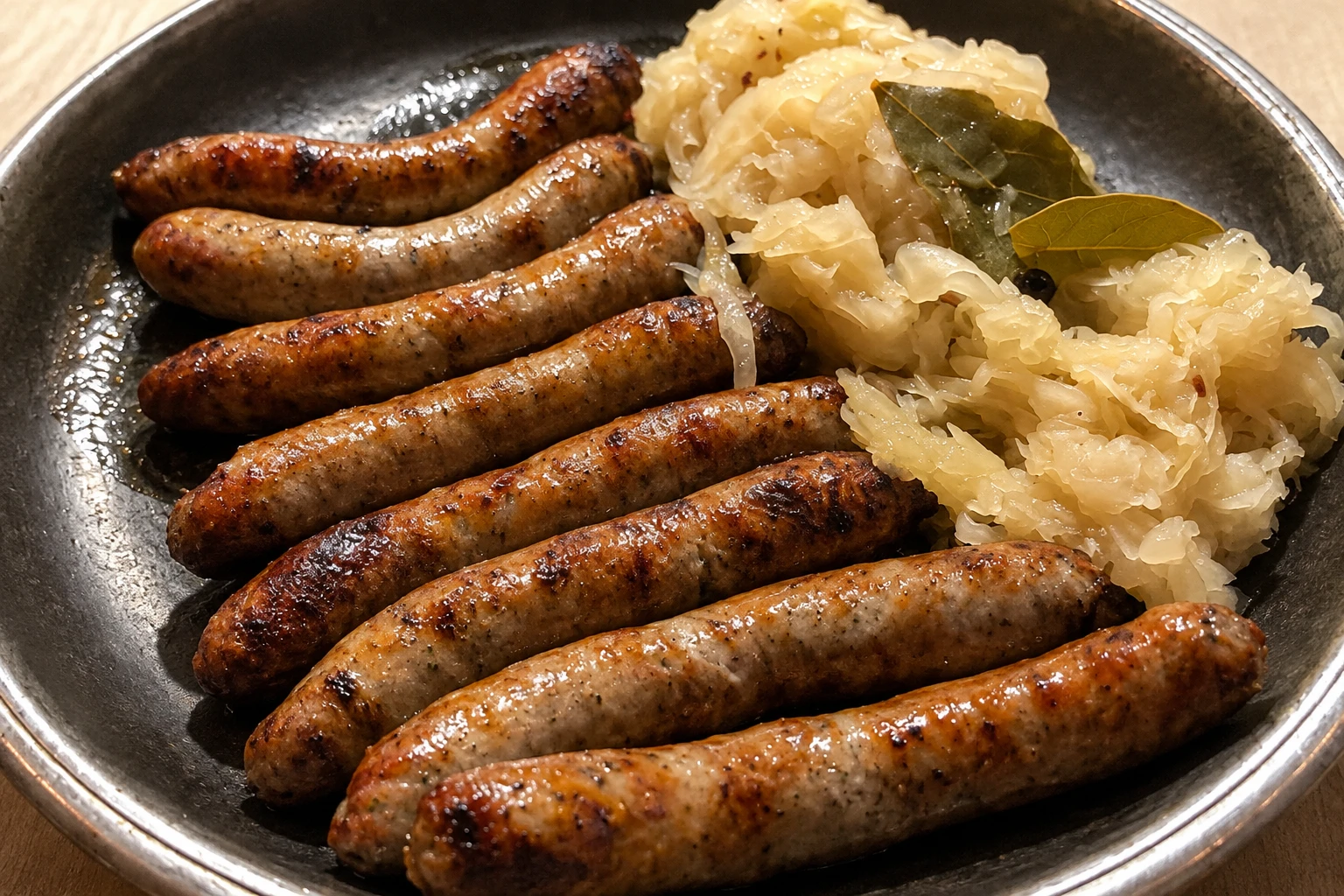
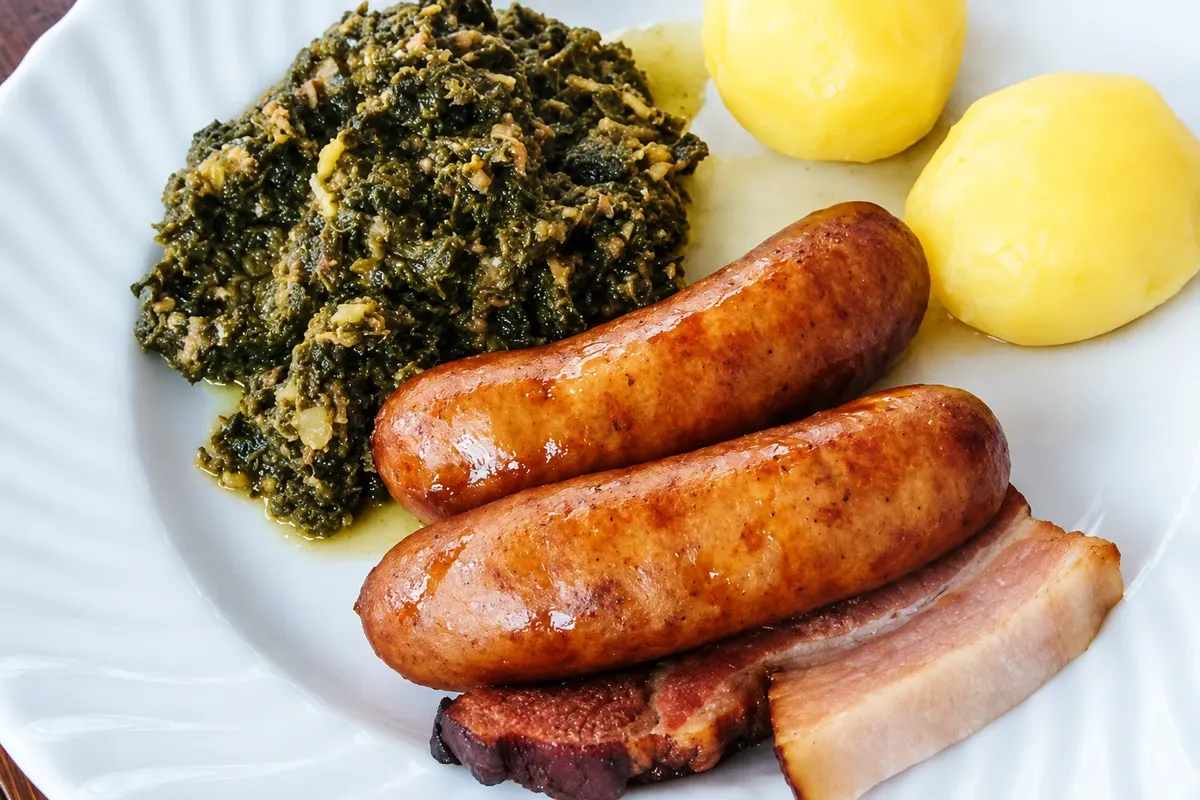
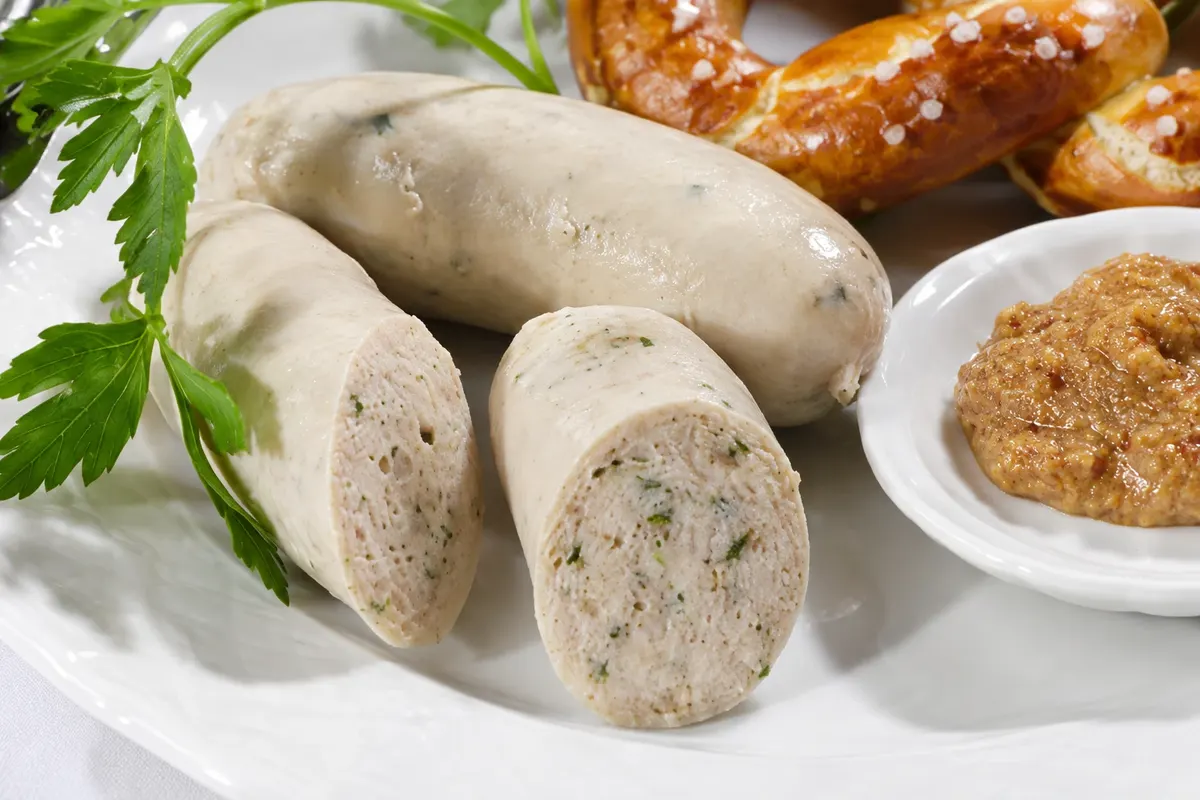
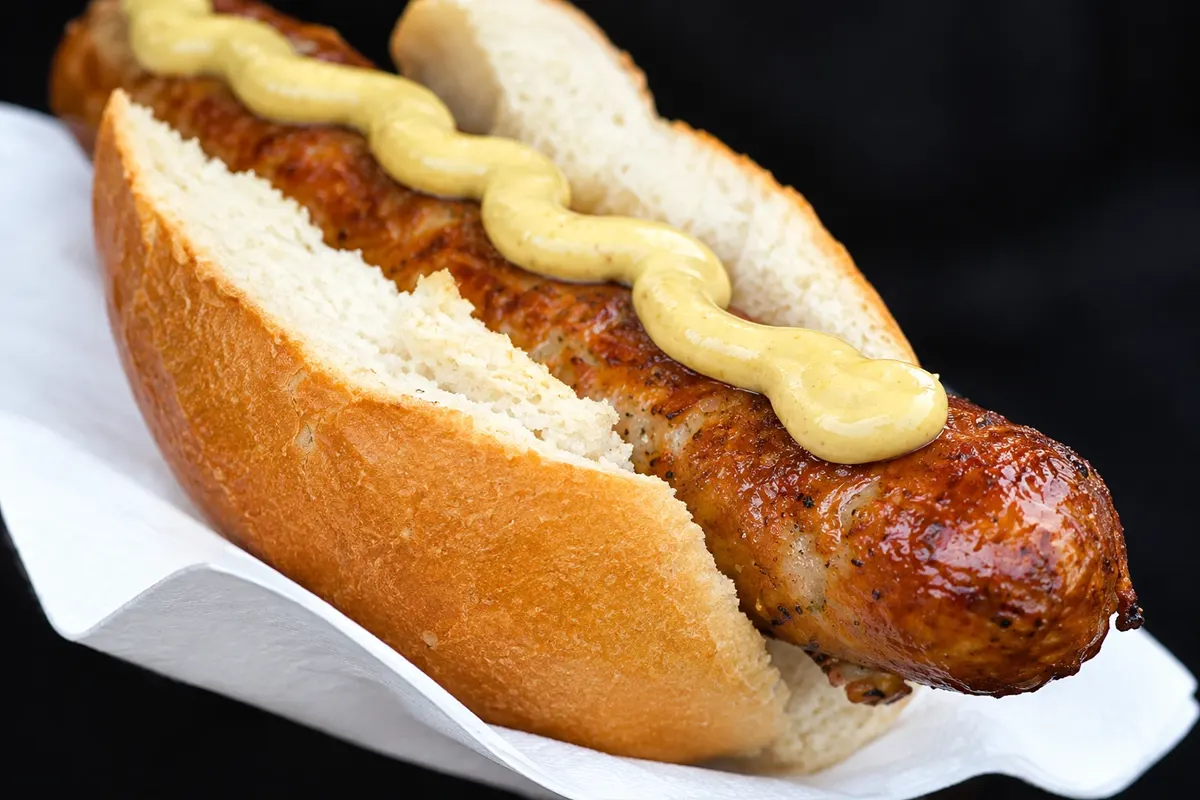
Nürnberger Rostbratwürste are Nuremberg’s grilled sausages. They are thin and short: measuring 7 to 9 centimeters and weighing 20 to 25 grams raw. The mixture is pork, coarsely ground, seasoned mainly with marjoram and stuffed into thin lamb casing. The word Rost in the name evokes the grill over the fire where they are roasted.
Since 2003, Nürnberger Bratwürste and Nürnberger Rostbratwürste have been a protected geographical indication of the European Union. All stages of production, from grinding the meat to filling the casings, must take place inside the city of Nuremberg; the meat may come from elsewhere. A protection association, created by the city, the butchers’ guild and the producers, oversees the name.
The small size is the sausage’s hallmark, and the city enjoys stories to explain it. One says the sausages were made so thin they could pass through a keyhole and be sold after curfew. These are legends told in Nuremberg; the more reliable historical record is the recipe and size regulated by the city.
There are three classic ways to order. To eat while walking the old town: Drei im Weggla — three sausages inside a small roll with mustard. At the table: six, eight or twelve grilled sausages served on a pewter plate with sauerkraut, potato salad or horseradish. And there are Blaue Zipfel, slowly cooked in a vinegar-and-onion broth that gives the sausages a bluish tint.
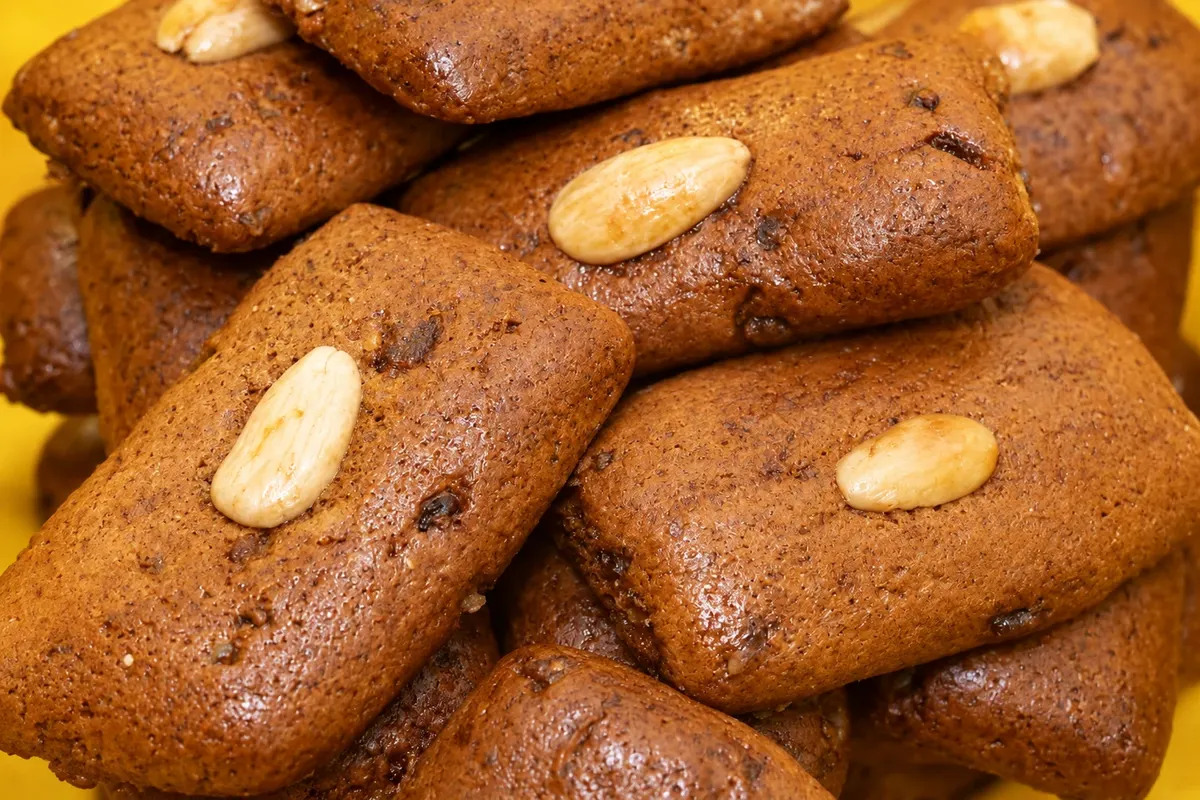
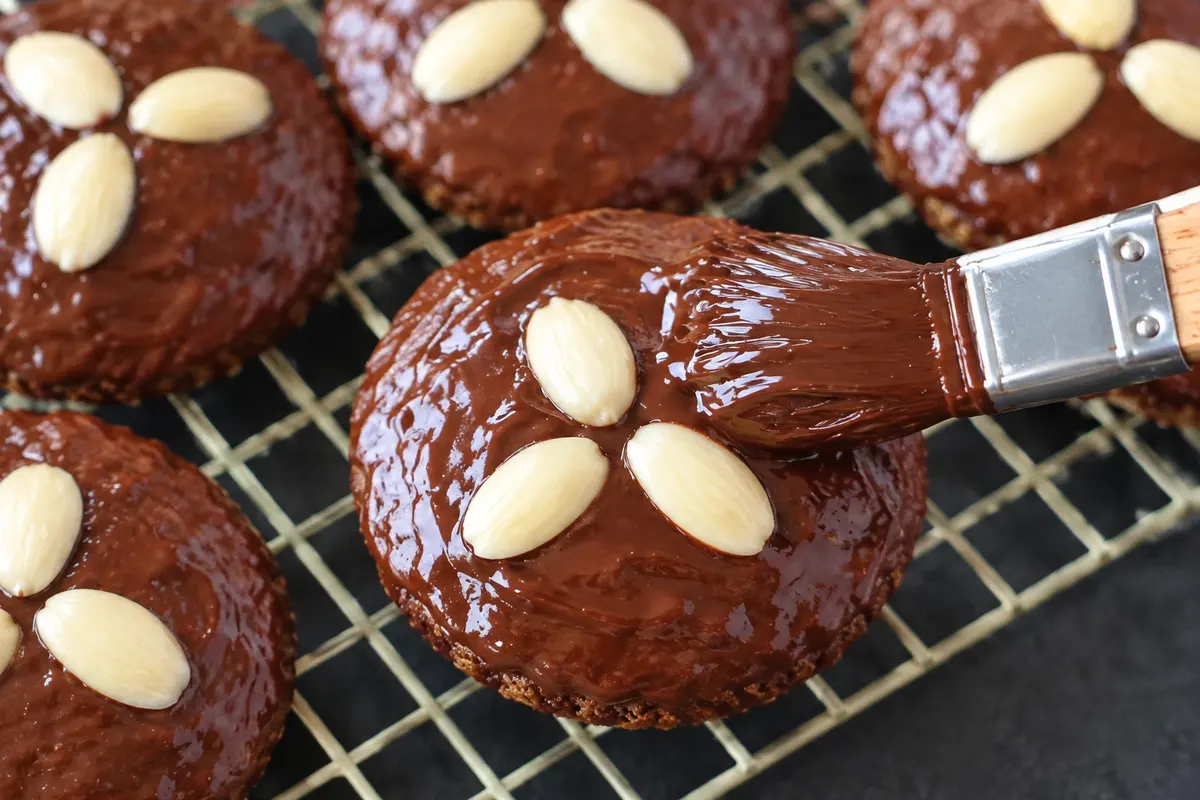
The Rostbratwürste are found throughout the city, from market-square stalls to taverns, and at the Nuremberg Christmas market, the Christkindlesmarkt, they sit beside Lebkuchen as Nuremberg flavors.


 Brazil
 Argentina
 Bolivia
 Chile
 Colombia
 Ecuador
 Guyana
 French Guiana
 Falkland Islands (Malvinas)
 Paraguay
 Peru
 Suriname
 Uruguay
 Venezuela
 Austria
 Belgium
 Croatia
 Denmark
 Spain
 Finland
 France
 Greece
 the Netherlands
 Hungary
 Ireland
 Iceland
 Italy
 Luxembourg
 Norway
 Poland
 Portugal
 the United Kingdom
 the Czech Republic
 Sweden
 Switzerland
 Turkey
 the United States
 Mexico
 the Dominican Republic
 South Africa
 Australia
 Fiji