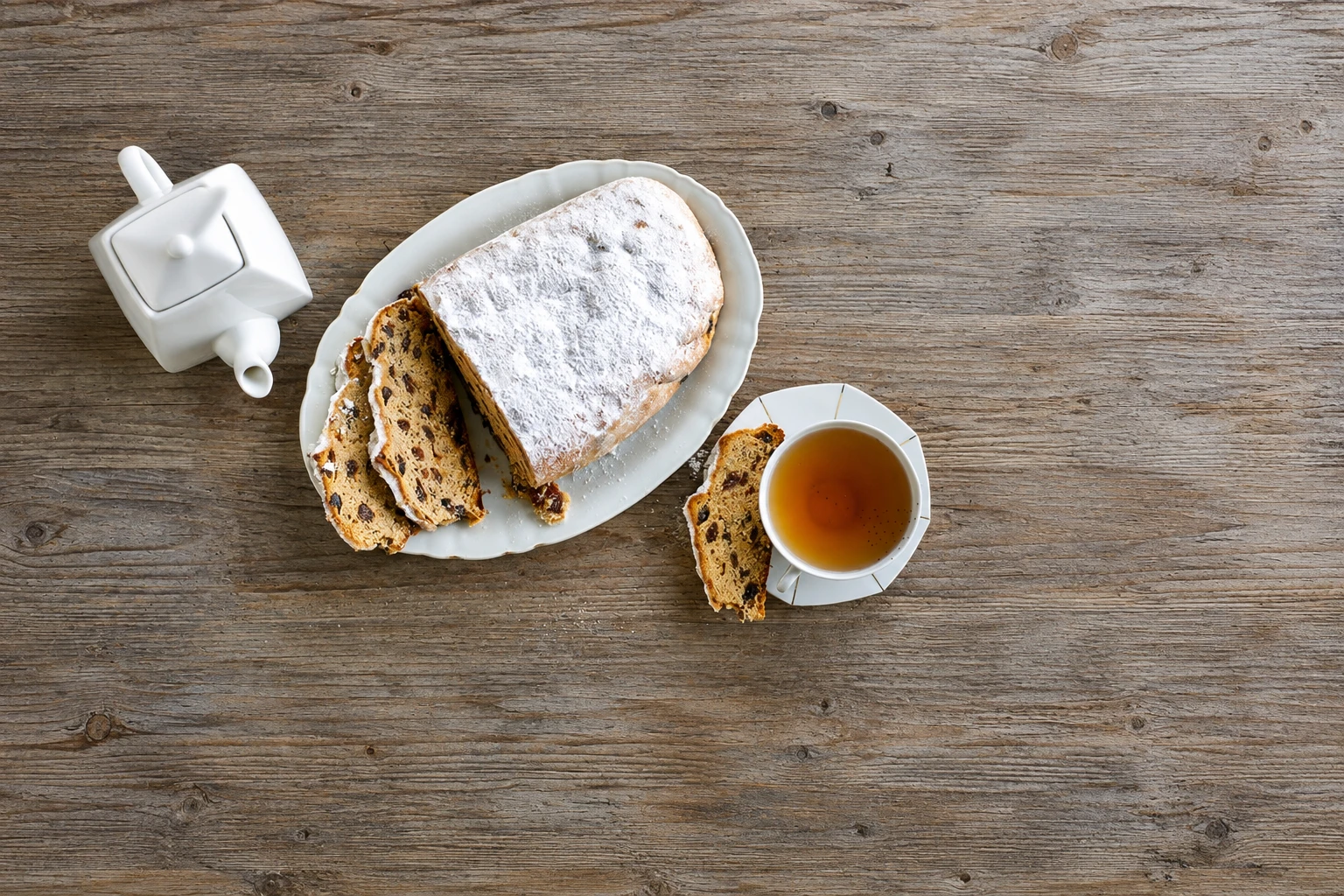
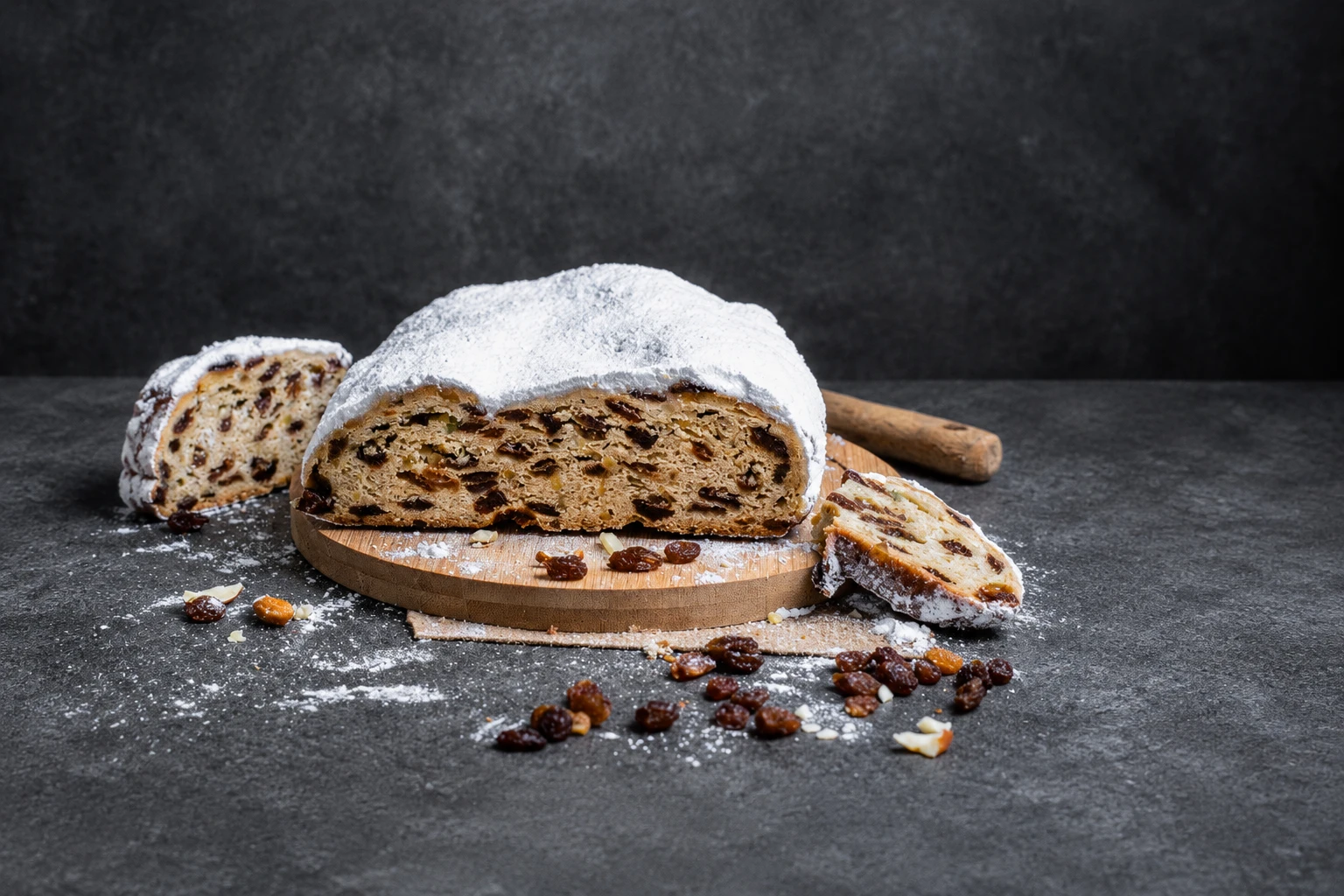
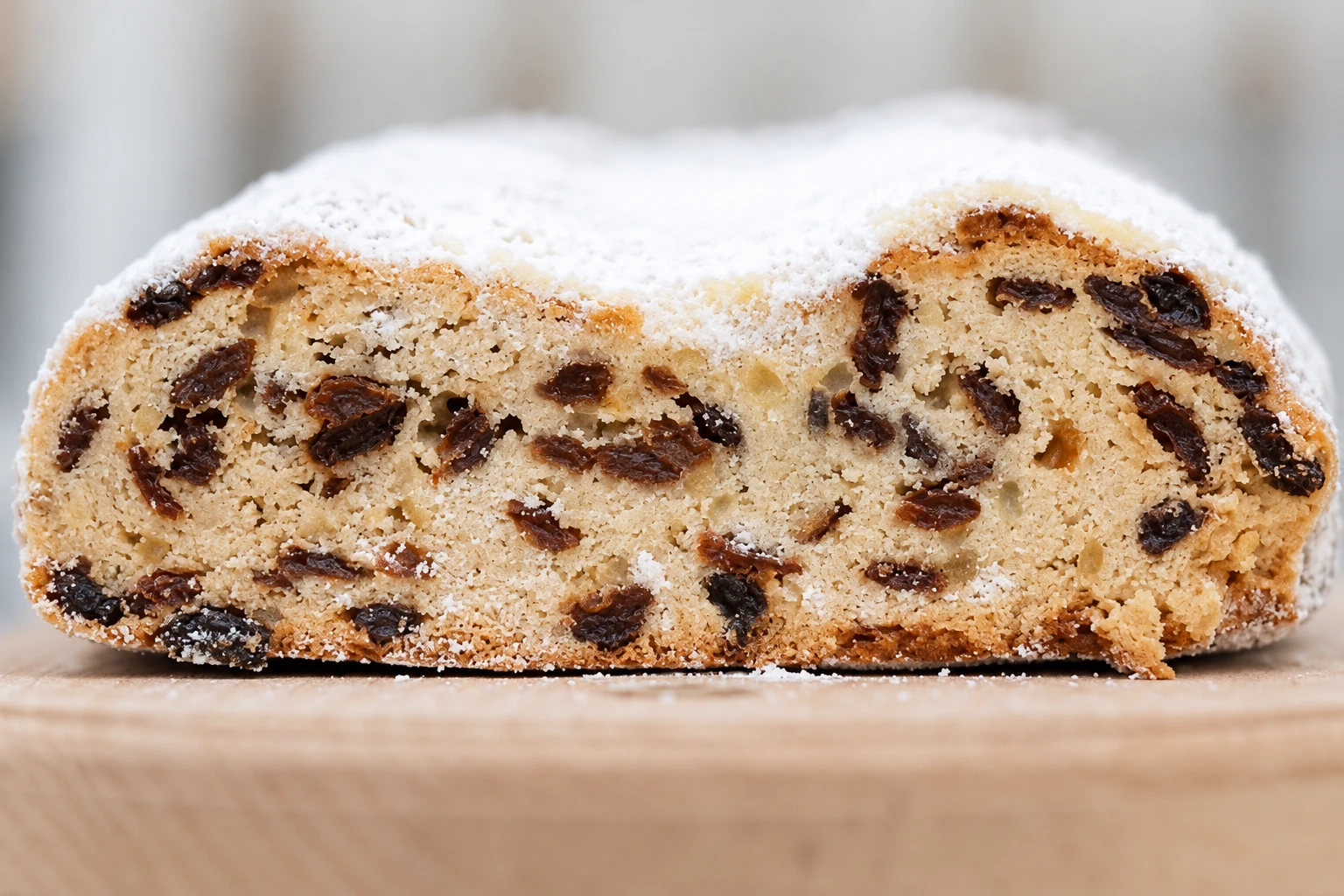
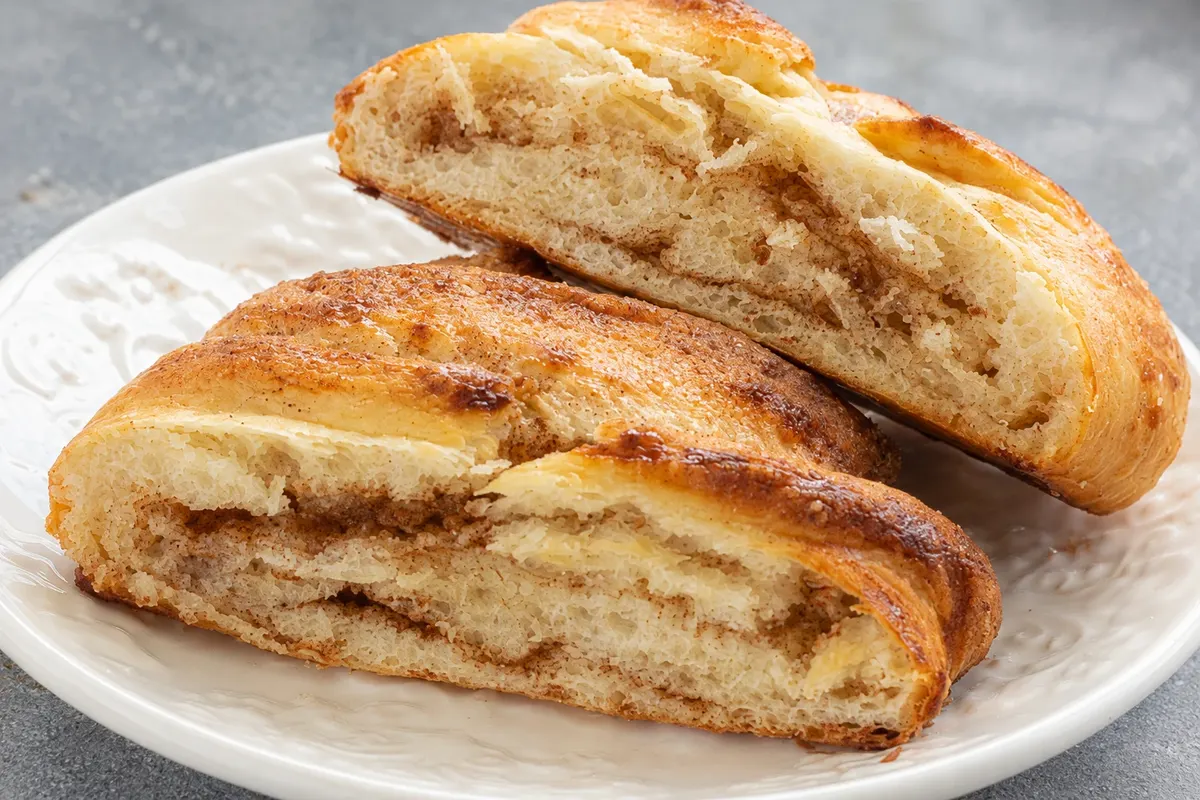
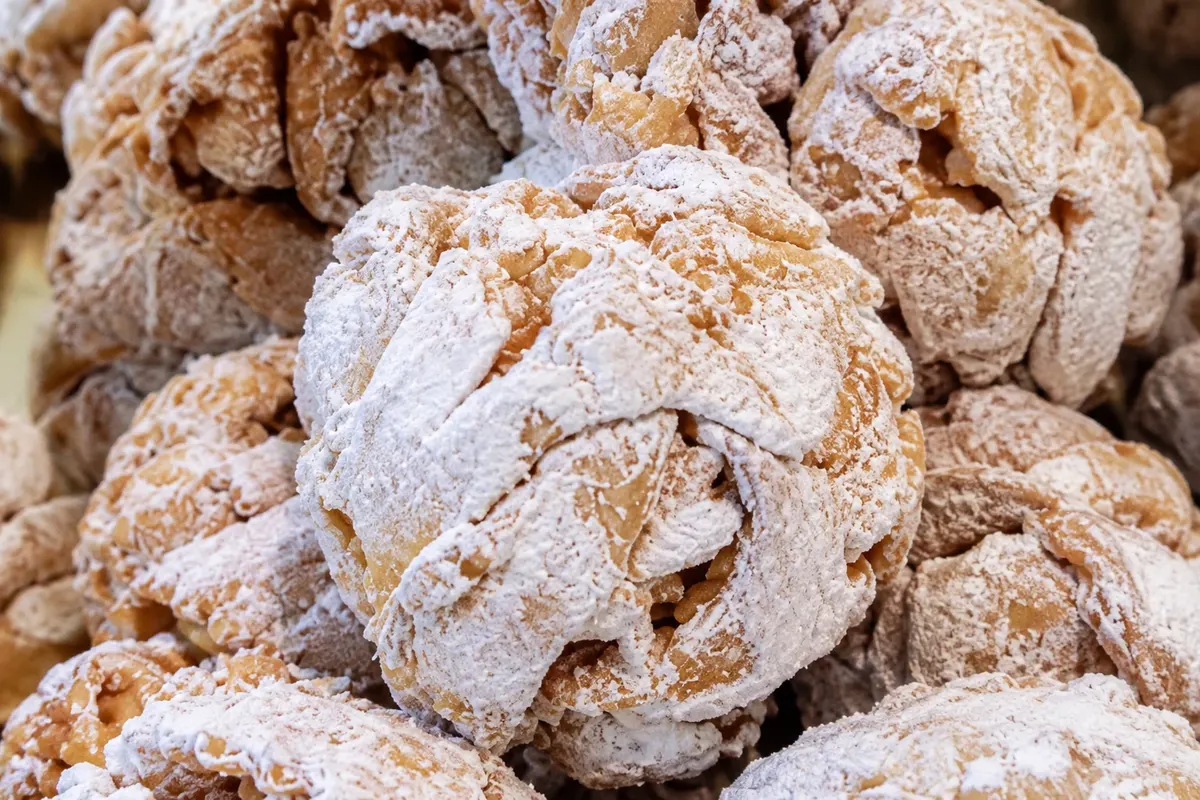
The Dresdner Christstollen is the Stollen, Dresden’s sweet Christmas bread. It is a dense yeast dough made with wheat flour, milk, a lot of butter, sugar, raisins, candied orange and lemon peel, and sweet and bitter almonds. After baking, the Stollen is brushed with melted butter and covered with a thick layer of powdered sugar.
The connection with Dresden is old. The earliest known mention appears in 1474, in an account from the St. Bartholomew hospital in the city. Originally, Stollen was a fasting bread, without butter or milk, which the Church forbade during Advent. According to the story told by the city’s confectioners, the princes of Saxony asked the pope to allow butter, and a papal letter of 1491, known as the butter letter, paved the way for the richer recipe.
In 1730, Elector Prince Augustus the Strong had a giant Stollen of about 1.8 tons baked for a large military celebration, the Zeithain encampment, and distributed it among guests and soldiers. The scene inspires the Dresdner Stollenfest, a festival held each year on the Saturday before the second Sunday of Advent: a huge Stollen parades through Dresden’s streets and is cut in front of the public, near the city’s Christmas market, the Striezelmarkt. The market’s name comes from Striezel, an old name for Stollen.
Since 2010, Dresdner Christstollen has been a protected geographical indication of the European Union. It may only be produced by bakeries and confectioneries in Dresden and in neighboring municipalities defined in the specification. A bakers’ association controls the basic recipe and awards a seal bearing the image of Augustus the Strong on horseback.


 Brazil
 Argentina
 Bolivia
 Chile
 Colombia
 Ecuador
 Guyana
 French Guiana
 Falkland Islands (Malvinas)
 Paraguay
 Peru
 Suriname
 Uruguay
 Venezuela
 Austria
 Belgium
 Croatia
 Denmark
 Spain
 Finland
 France
 Greece
 the Netherlands
 Hungary
 Ireland
 Iceland
 Italy
 Luxembourg
 Norway
 Poland
 Portugal
 the United Kingdom
 the Czech Republic
 Sweden
 Switzerland
 Turkey
 the United States
 Mexico
 the Dominican Republic
 South Africa
 Australia
 Fiji