

 Brazil
 Argentina
 Chile
Chile Colombia
 Peru
Peru Uruguay
 Belgium
 Spain
Spain France
 Greece
 the Netherlands
 Ireland
 Italy
Italy Portugal
 the United Kingdom
 Switzerland
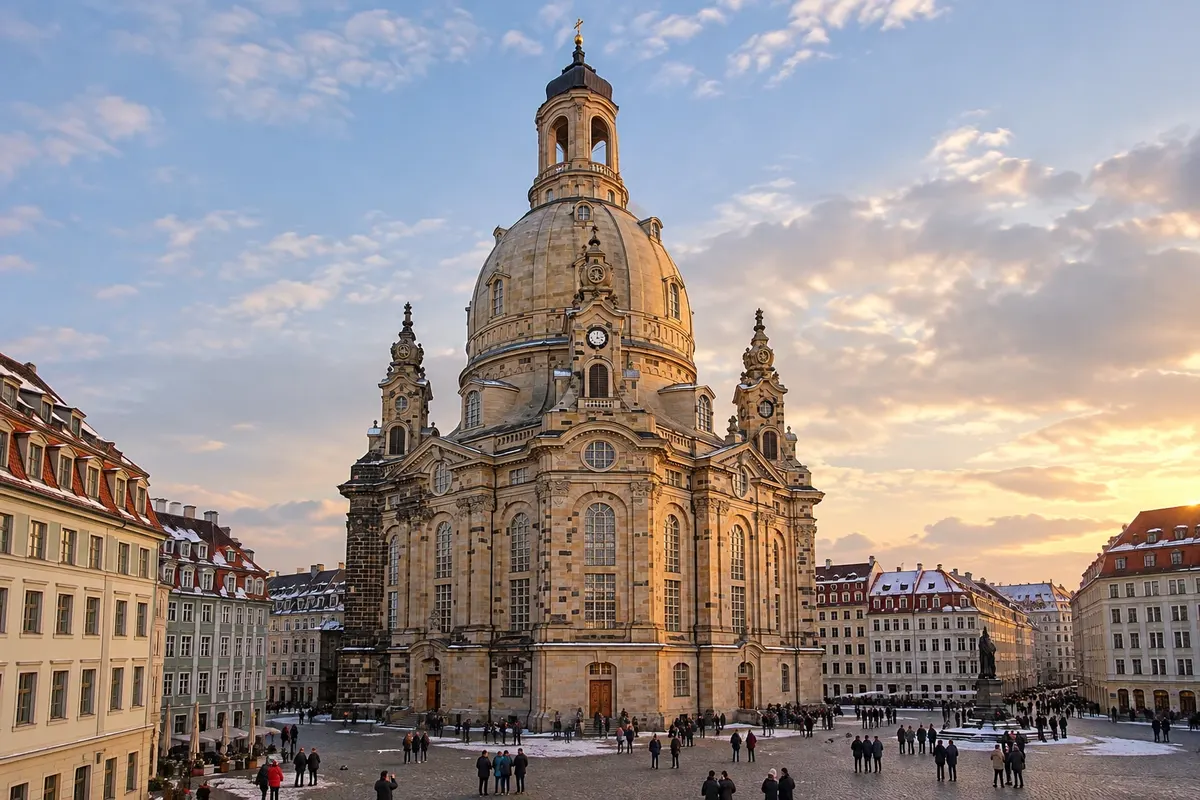
Church
Frauenkirche
Baroque Lutheran church of the Neumarkt, destroyed in the 1945 bombings and rebuilt between 1994 and 2005 using some of the original stones. The dome has a viewing platform.
Saxônia · Germany Capital
In the destination Dresden and the Suíça Saxônica.
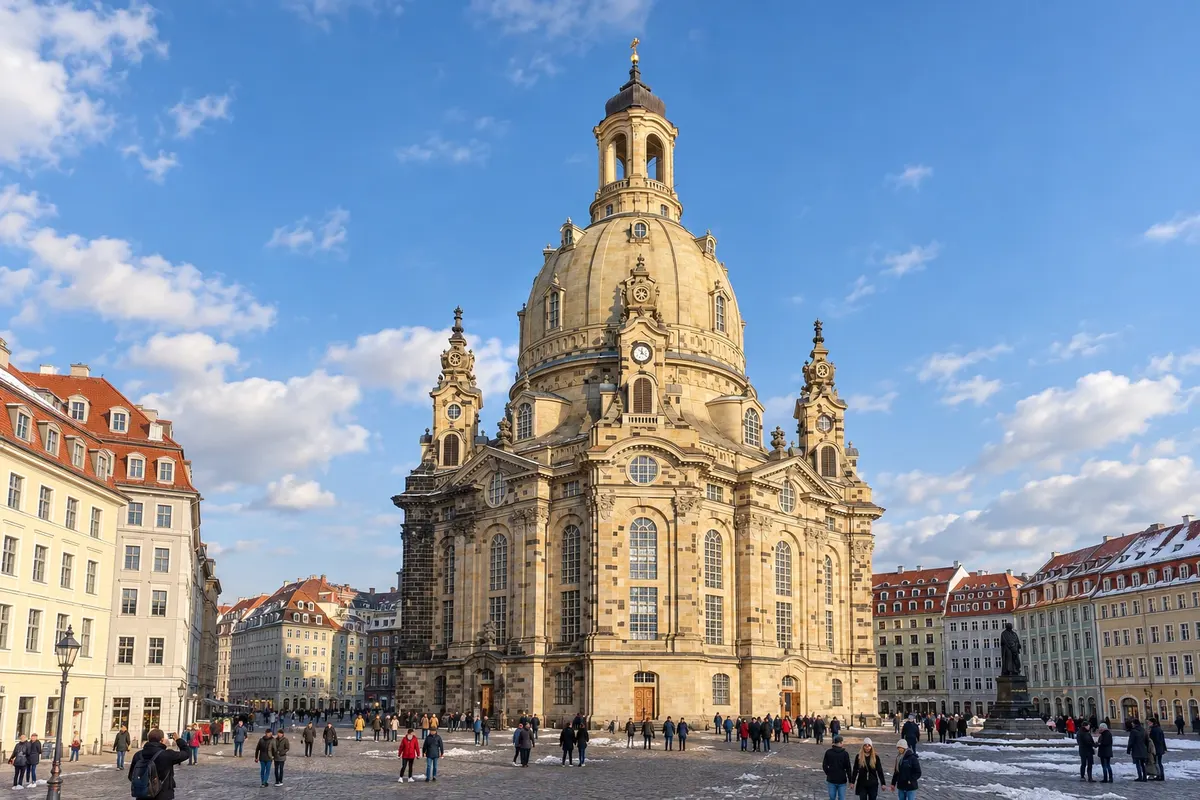
In the photo: Frauenkirche, Dresden
Illustrative images. The pictures in this guide are illustrations based on the real place, not photographs, and may differ from it.
The city
Capital of Saxony, on the banks of the Elbe, Dresden was one of the wealthiest courts in Europe during the Baroque period. Destroyed in the 1945 bombings, it was rebuilt over decades: the Frauenkirche, the Zwinger, the Semperoper and the Residenzschloss were restored, and the state museums display Raphael's Sistine Madonna and the treasure of the Grünes Gewölbe. On the other side of the river, the Neustadt is home to bars and street art.
There's no accommodation in the guide yet in Dresden.
There are no restaurants in the guide yet in Dresden.
Know a good one? Recommend it to ushow to get there · how many days · itinerary · questions
The local experience
Baroque Lutheran church of the Neumarkt, destroyed in the 1945 bombings and rebuilt between 1994 and 2005 using some of the original stones. The dome has a viewing platform.
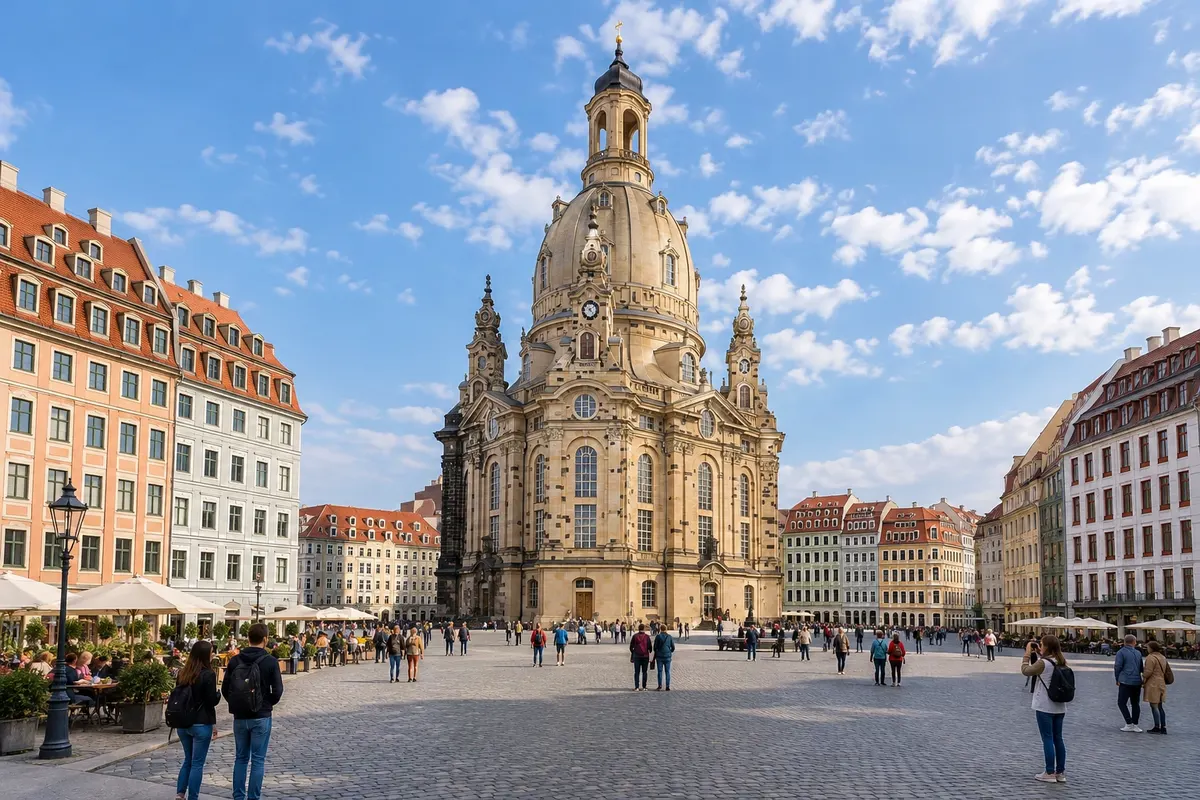
Historic square around the Frauenkirche, with reconstructed Baroque façades, cafés and the statue of Lutero. It’s the natural starting point for walking around the center.
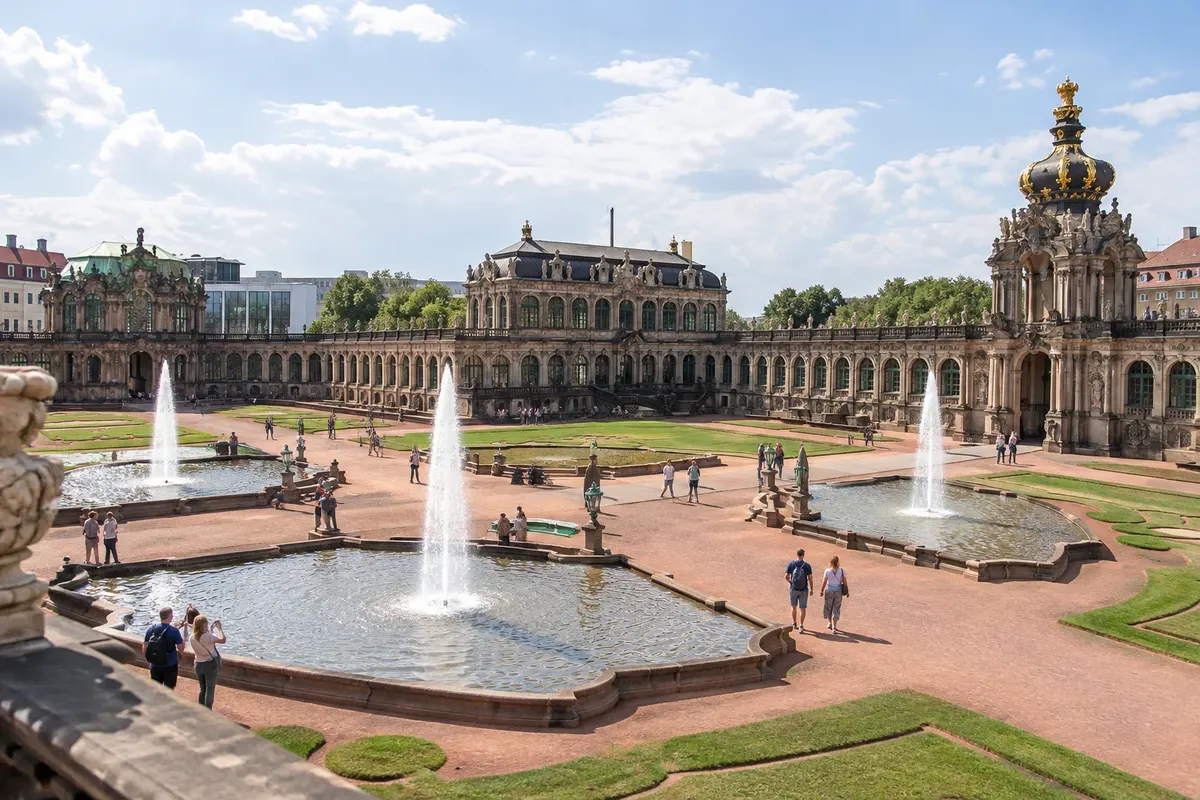
Baroque ensemble of pavilions and gardens from the 18th century, housing the Gemäldegalerie Alte Meister, where the Madona Sistina by Rafael is located, and the porcelain collection.
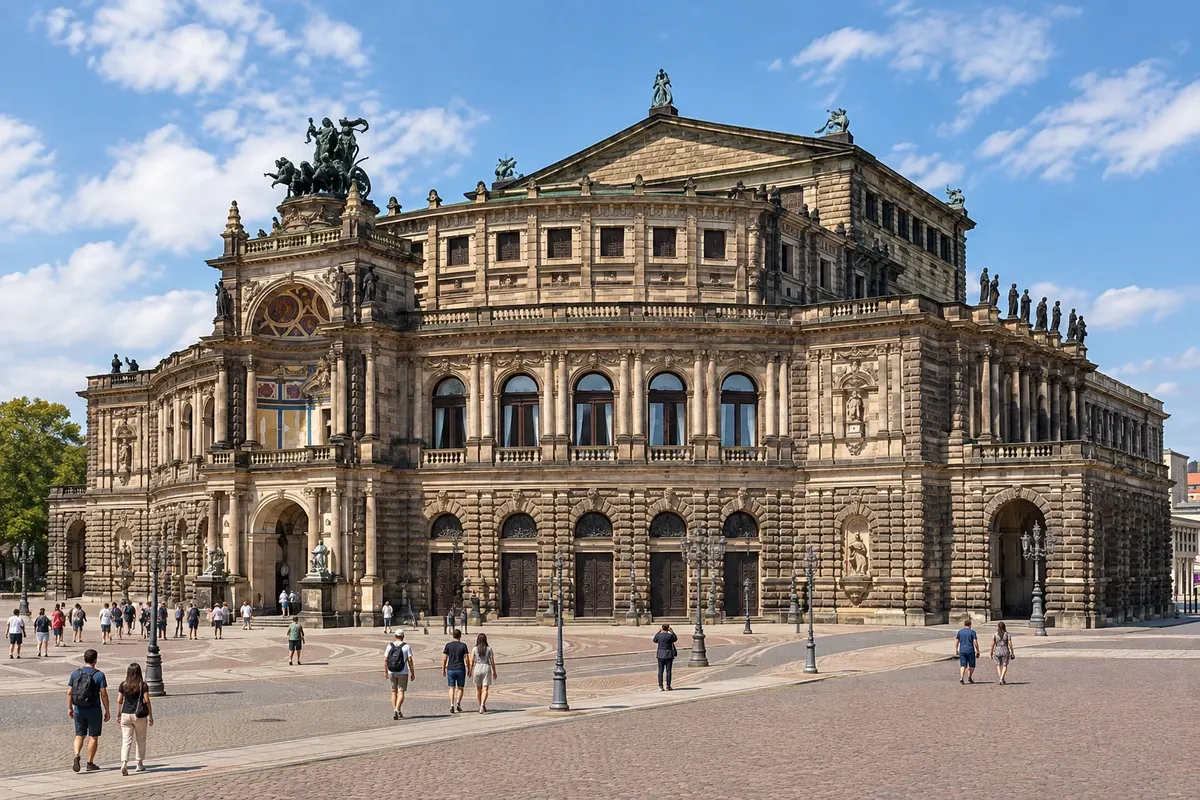
Opera house on the Theaterplatz, home of the Saxon State Opera and the Staatskapelle Dresden. It hosted premieres by Wagner and Richard Strauss and offers guided tours.
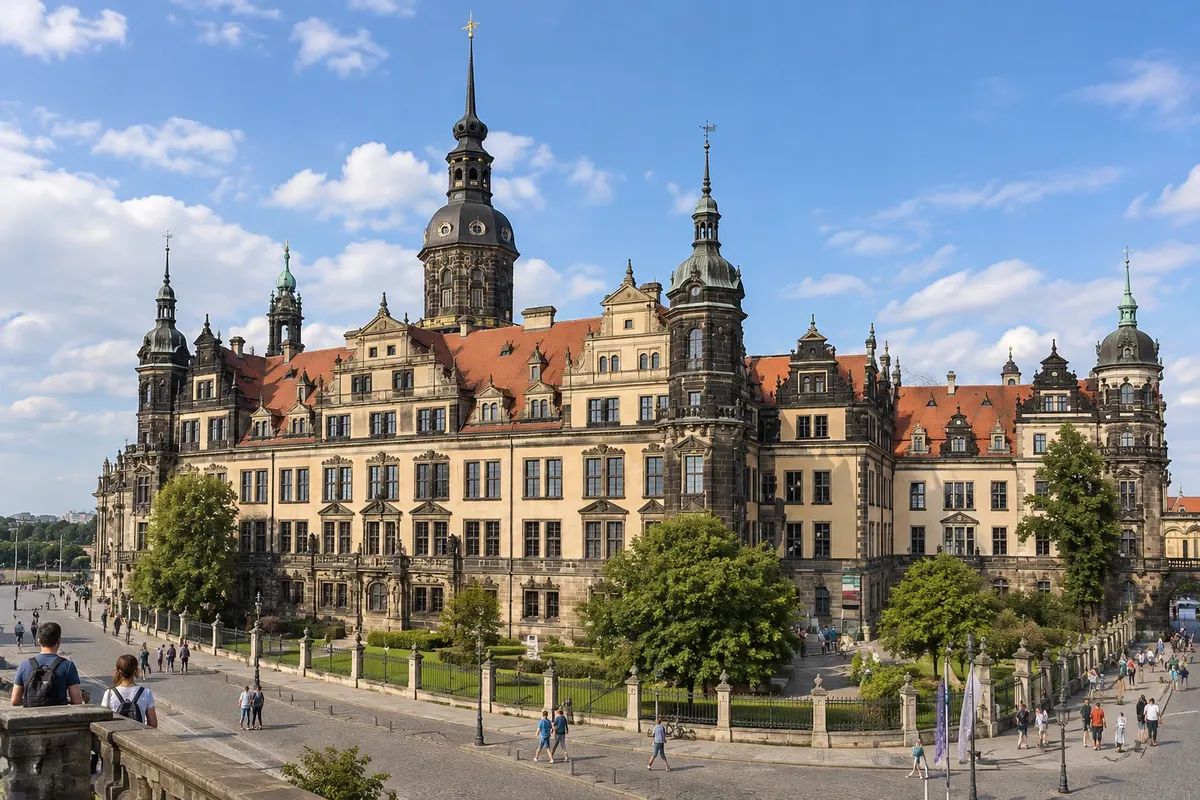
Former palace of the rulers of Saxony, now housing several museums: the Grünes Gewölbe (royal treasury), the Rüstkammer, the Münzkabinett and the Hausmannsturm tower.
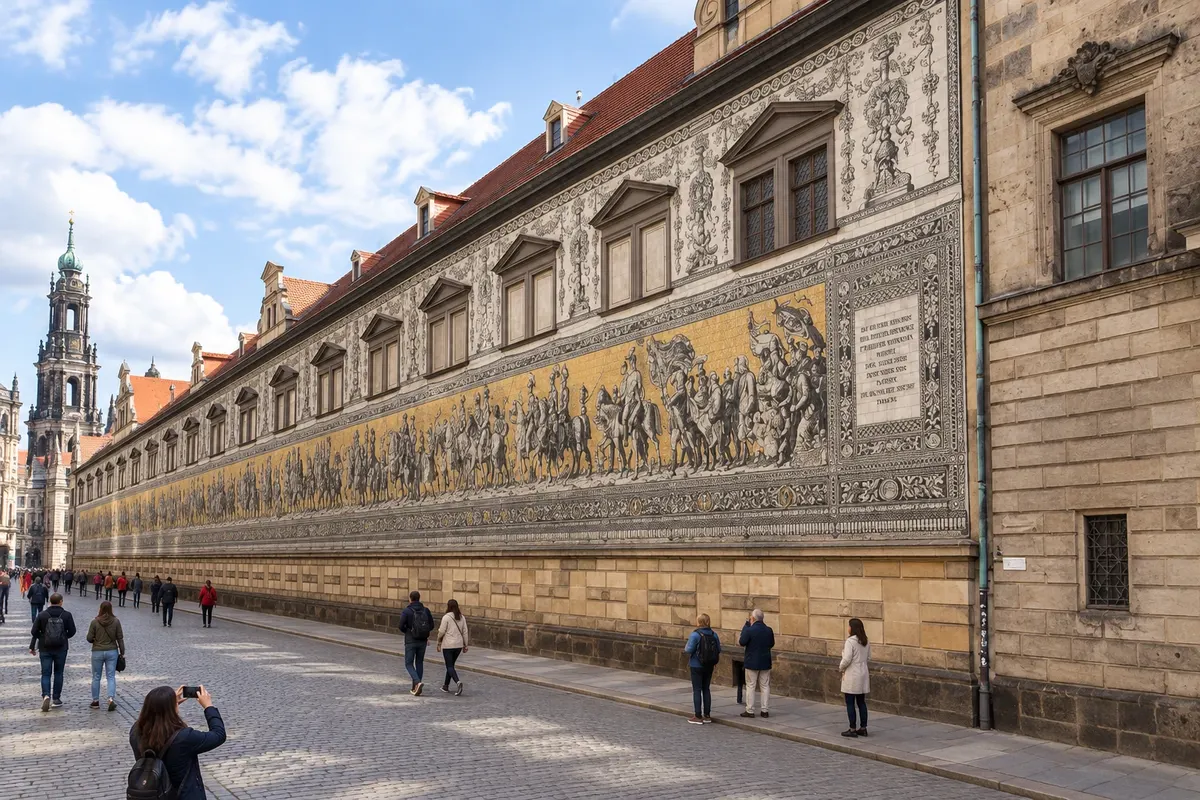
A panel of roughly 102 metres made from about 23,000 Meissen porcelain tiles, depicting the procession of 35 rulers of the Wettin dynasty. It is on an open-air street.
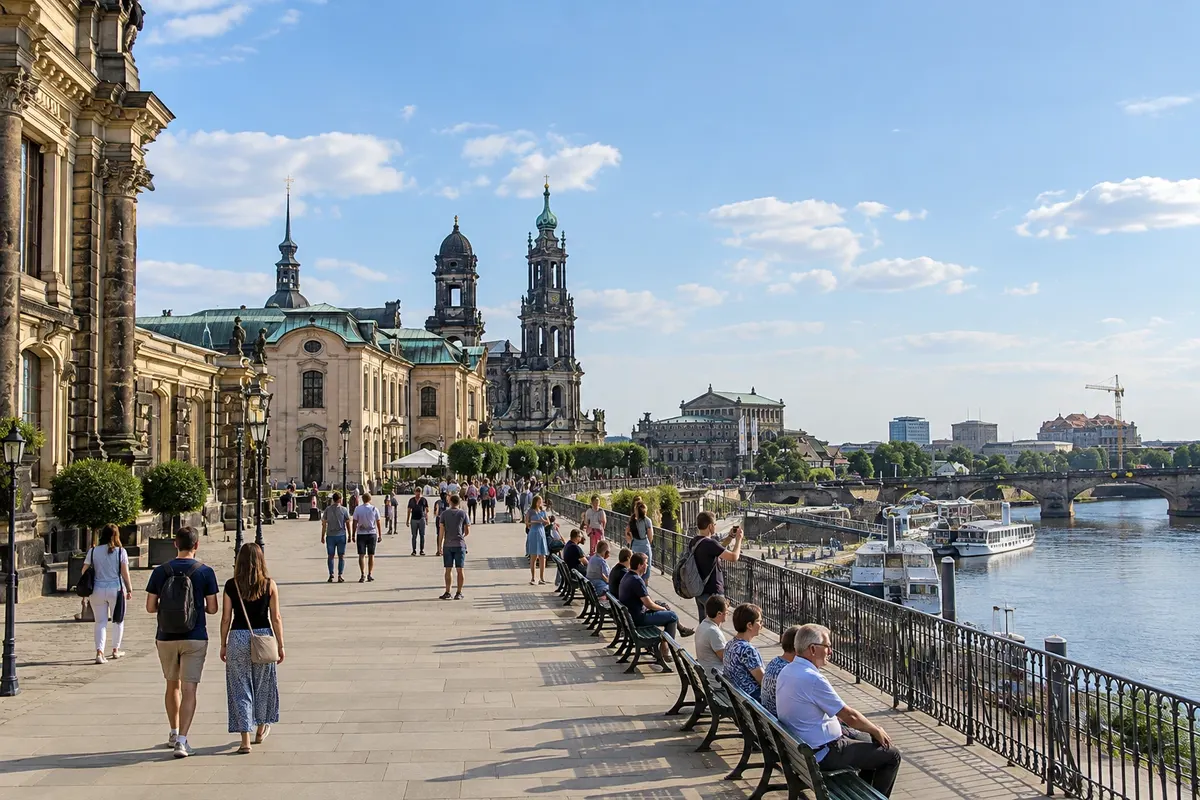
An elevated promenade over the Elbe, nicknamed the Balcony of Europe, with views of the river and the Neustadt. It connects the Schlossplatz to the Albertinum.
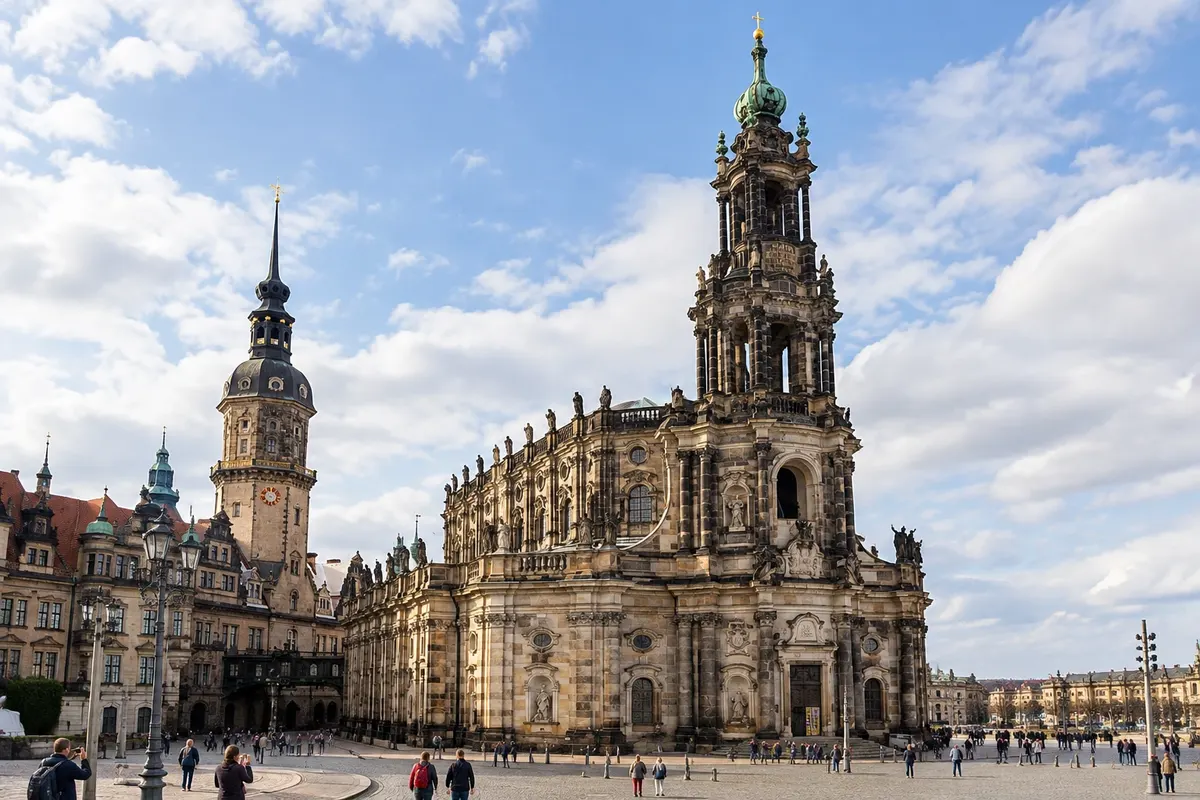
Former court church, now Dresden's Catholic cathedral, with the tower that shapes the city's skyline, 78 statues of saints and the last organ by Gottfried Silbermann.
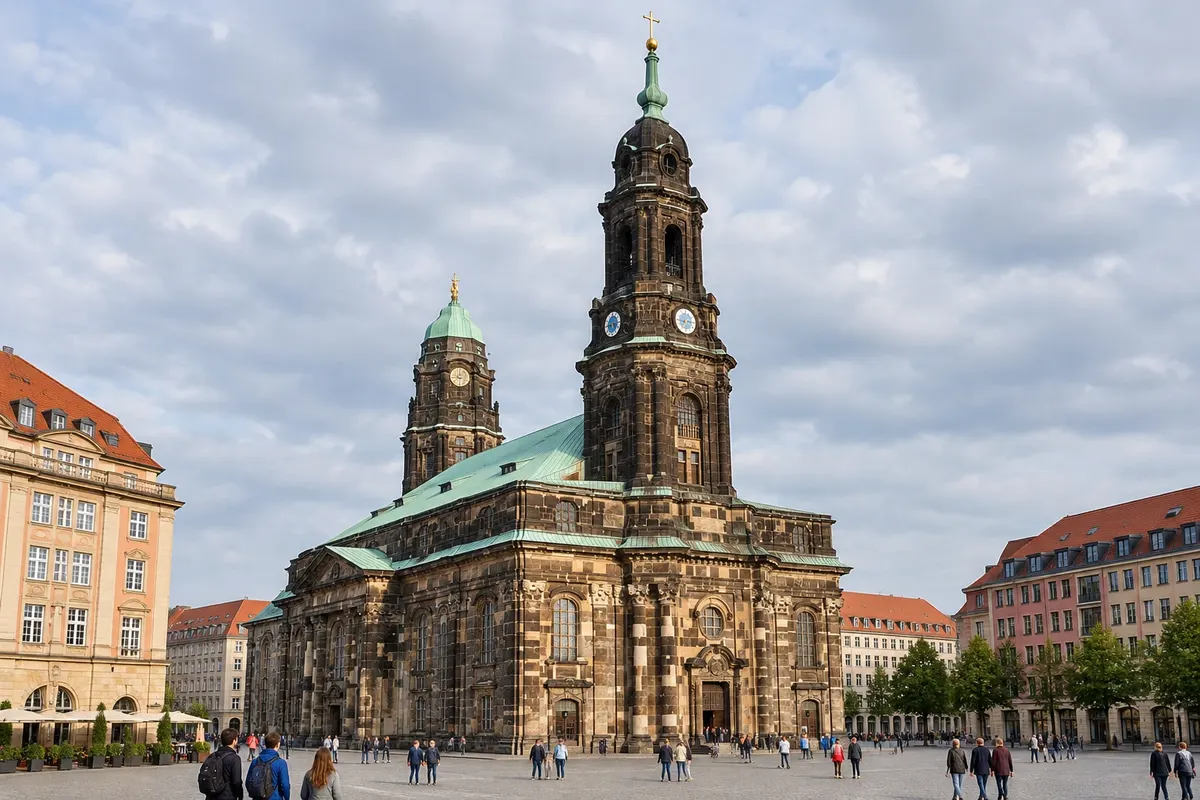
Main Lutheran church on the Altmarkt, home of the Dresdner Kreuzchor, a boys' choir with over seven centuries of history. The tower can be climbed and offers views over the center.
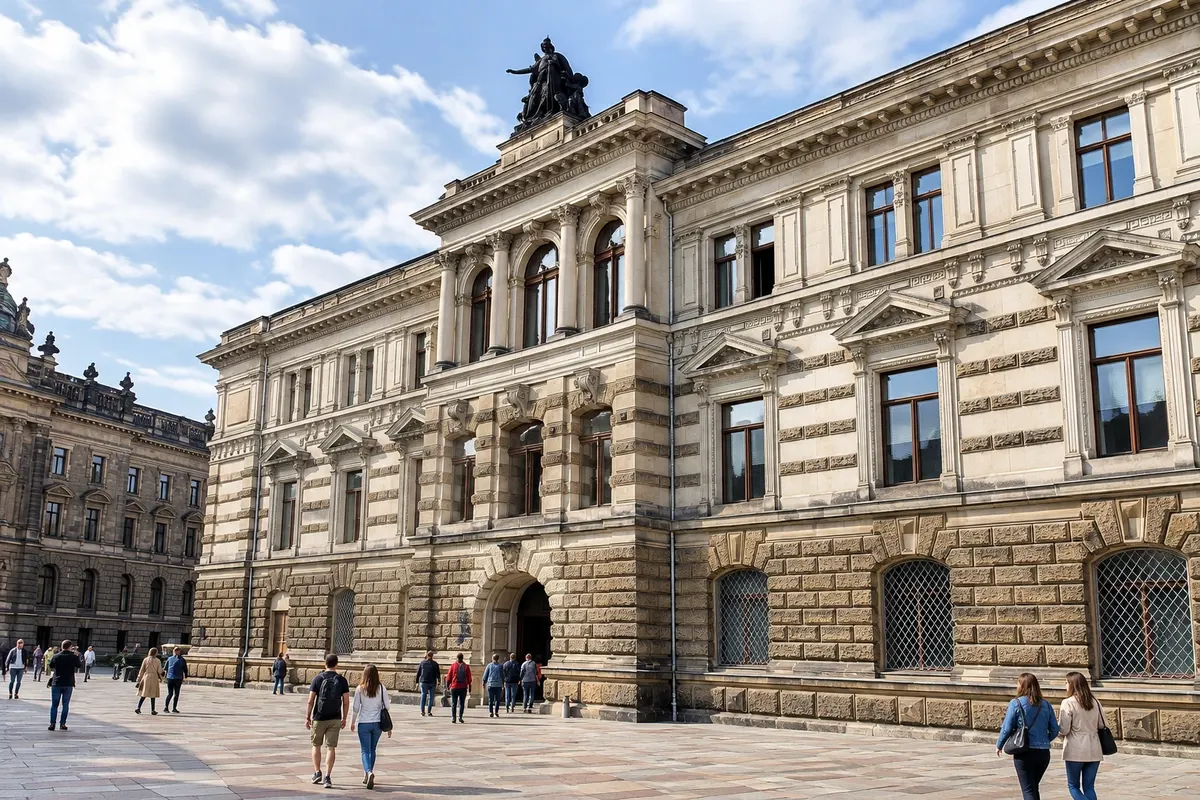
Museum of modern art at the eastern end of the Brühlsche Terrasse, with painting from Romanticism to contemporary art, from Caspar David Friedrich to Gerhard Richter, and sculpture.
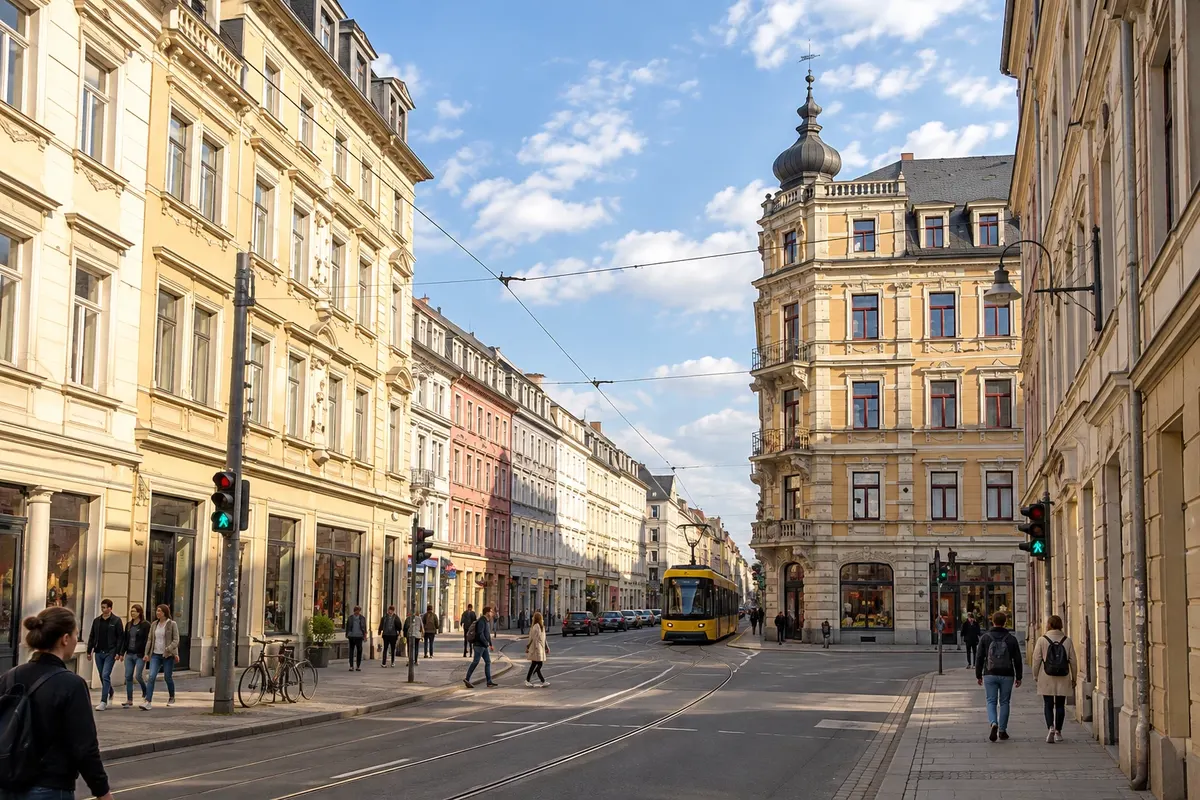
19th-century neighborhood on the other side of the Elbe, with bars, cafés, street art and the colorful courtyards of the Kunsthofpassage. It is the center of Dresden's nightlife.
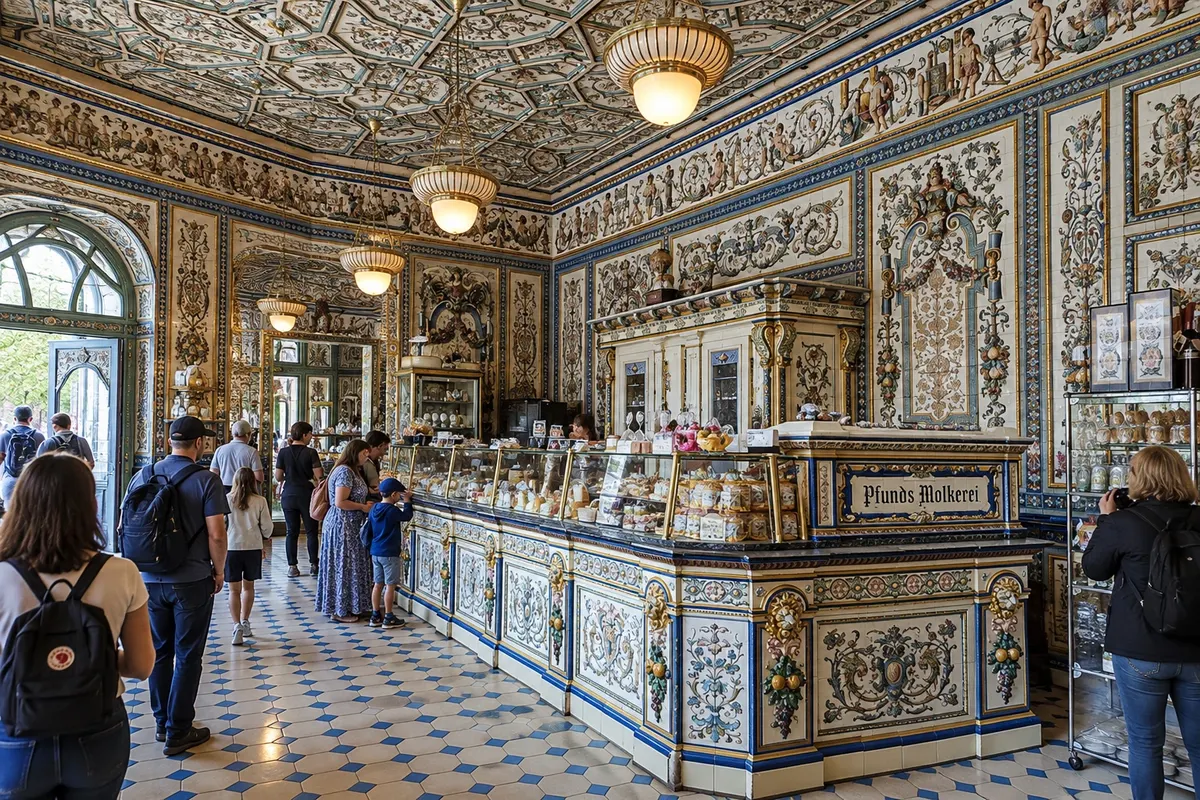
Dairy shop opened in the late 19th century in the Neustadt, with walls and floor covered in hand-painted tiles. It still operates as a shop selling dairy and regional products.
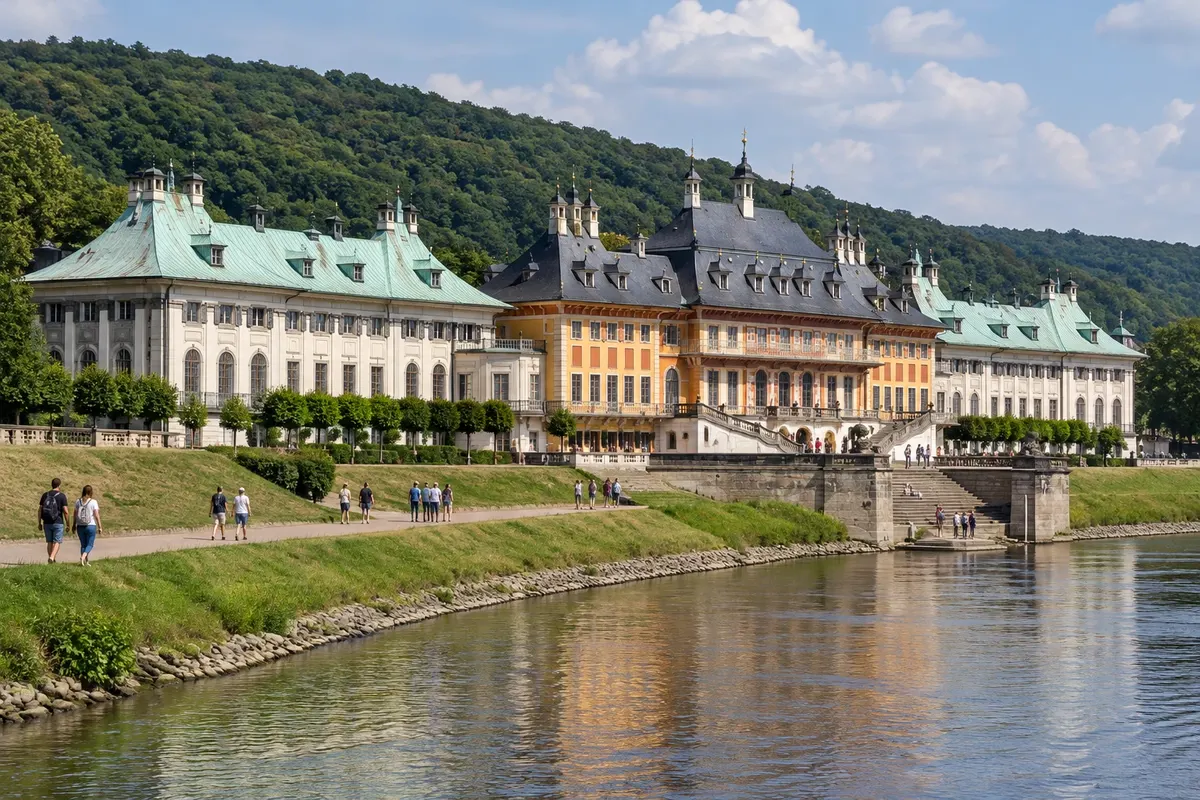
Summer residence of the Saxon monarchs on the banks of the Elbe, featuring palaces with Chinese-style decoration, gardens, a camellia over 200 years old and a museum of decorative arts.
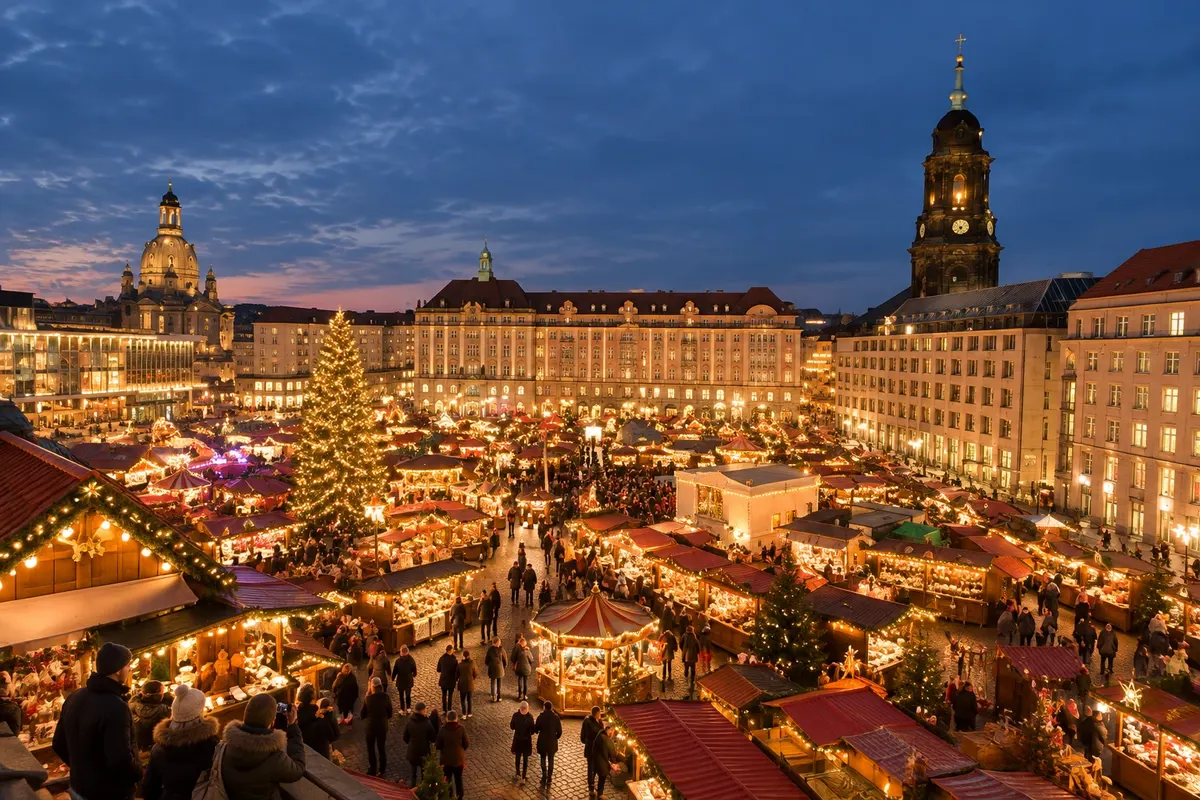
Altmarkt Christmas Market, recorded since 1434 and one of the oldest in Germany. It usually runs from late November until Christmas Eve, featuring Stollen.