Dresden and the Suíça Saxônica

Saxônia · Germany

Dresden and the Suíça Saxônica

The capital of Saxônia, rebuilt on the banks of the Elba, and the sandstone formations of the Parque Nacional Suíça Saxônica, less than an hour by train.

Leste

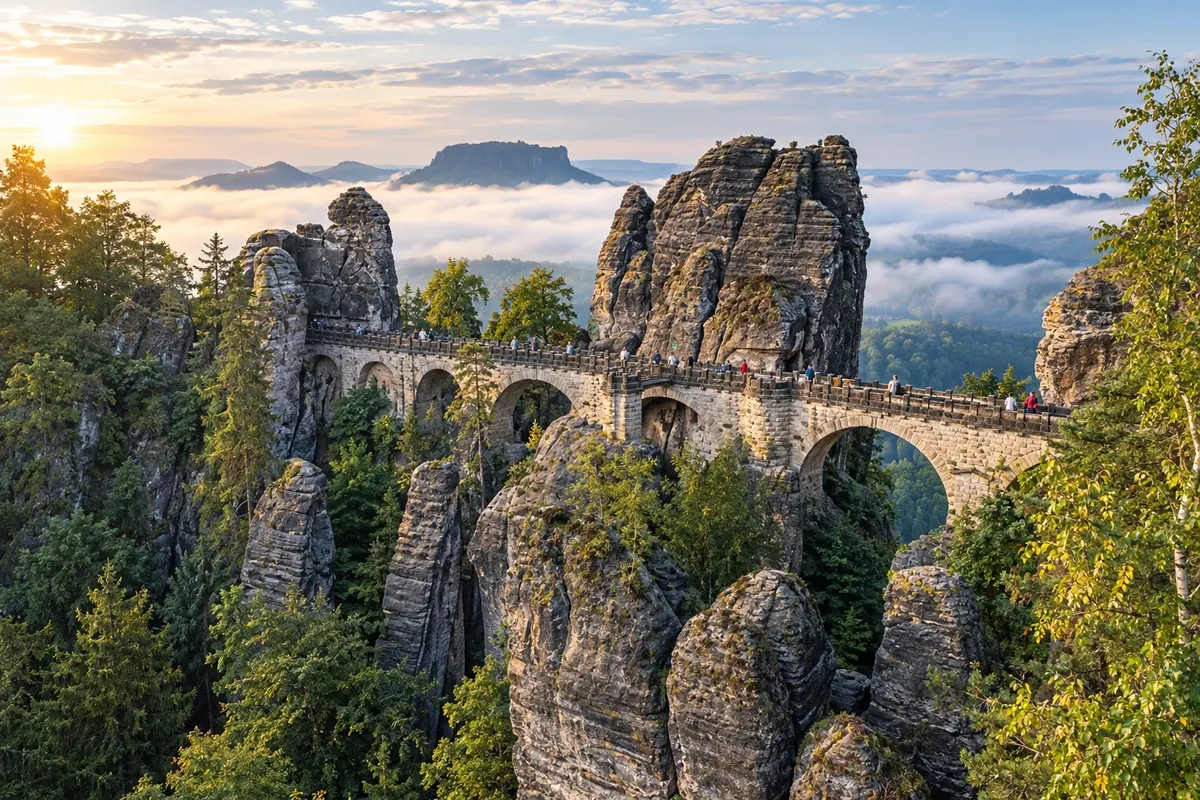
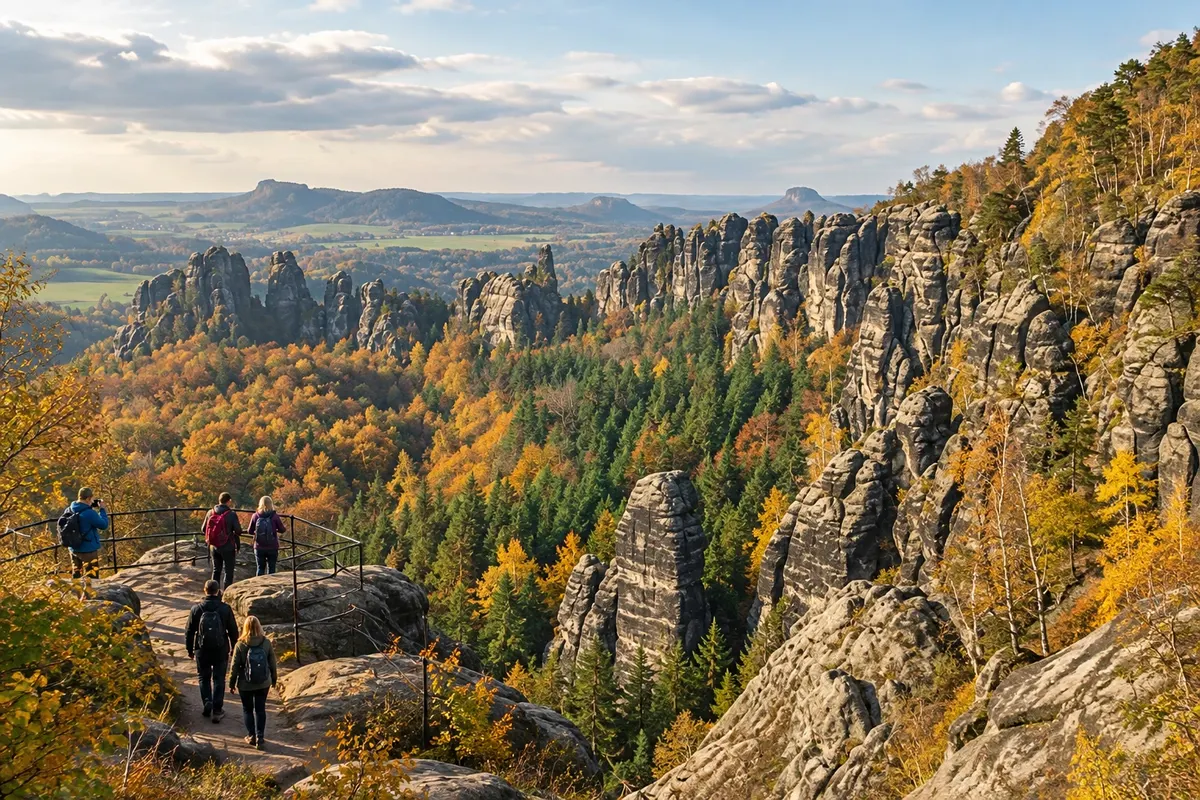
In the photo: Basteibrücke, Suíça Saxônica

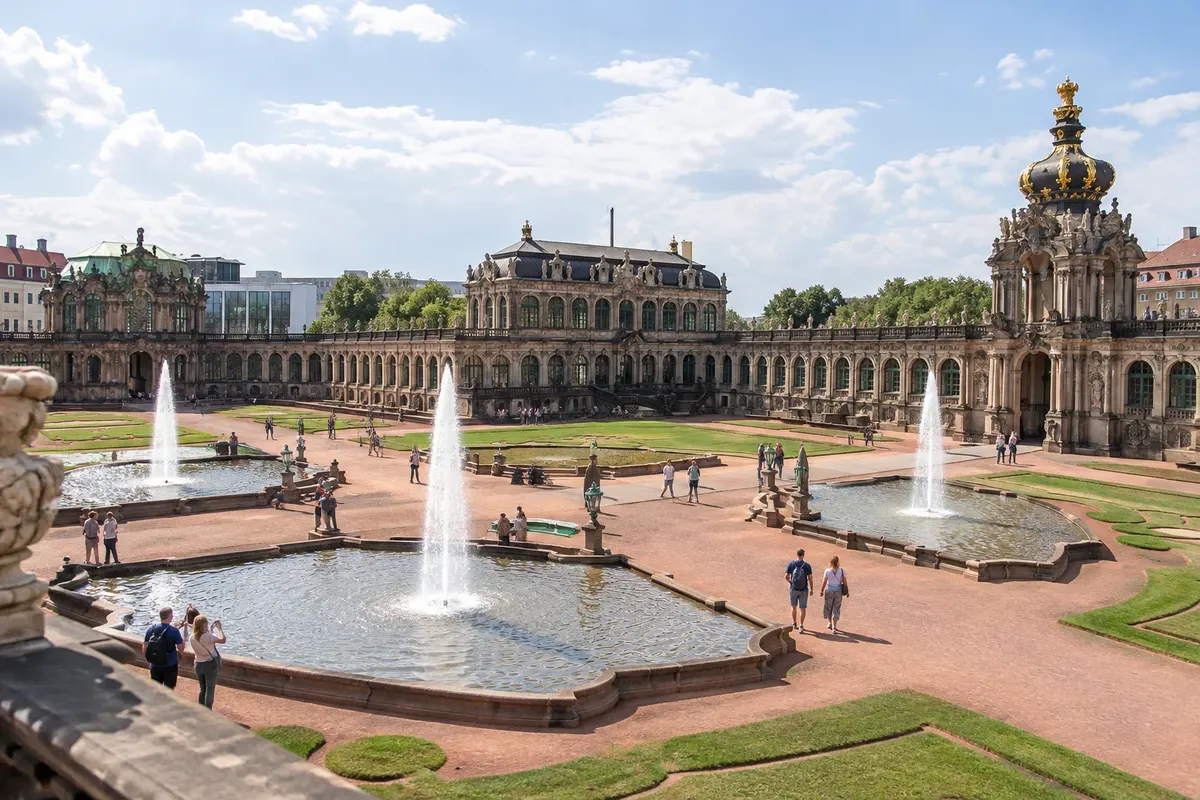
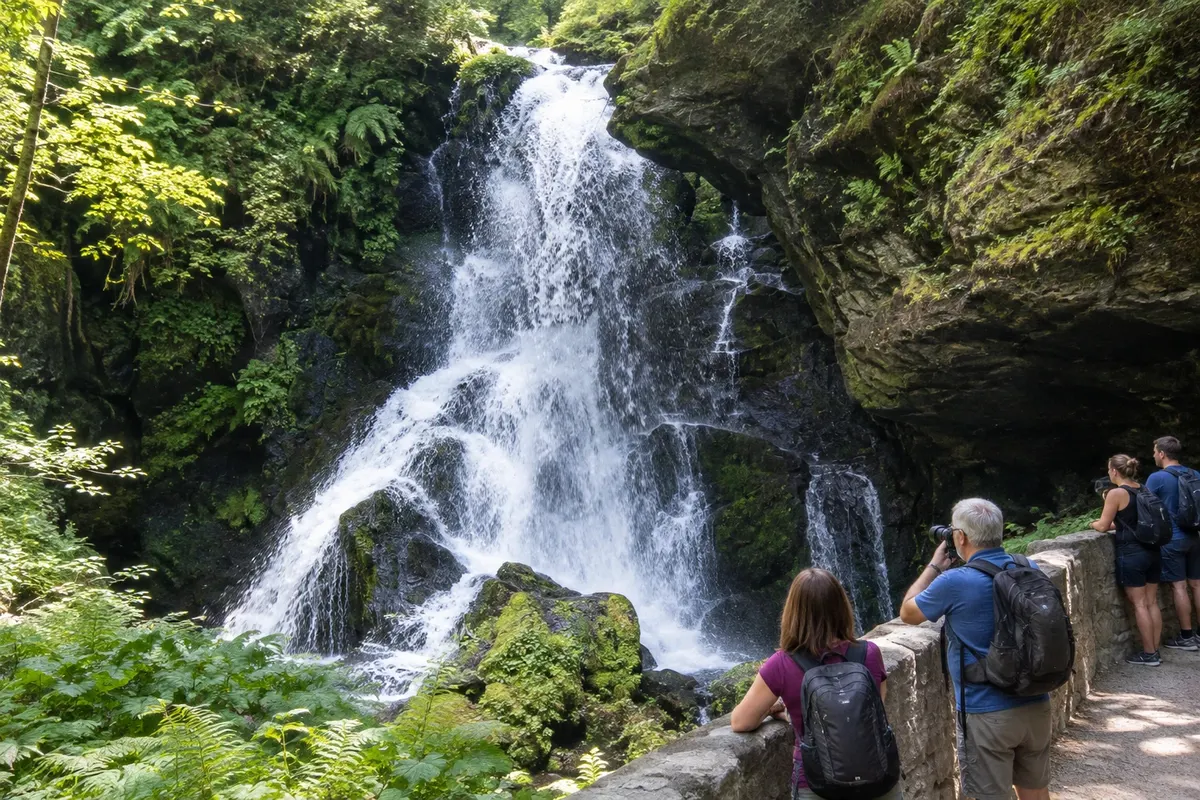
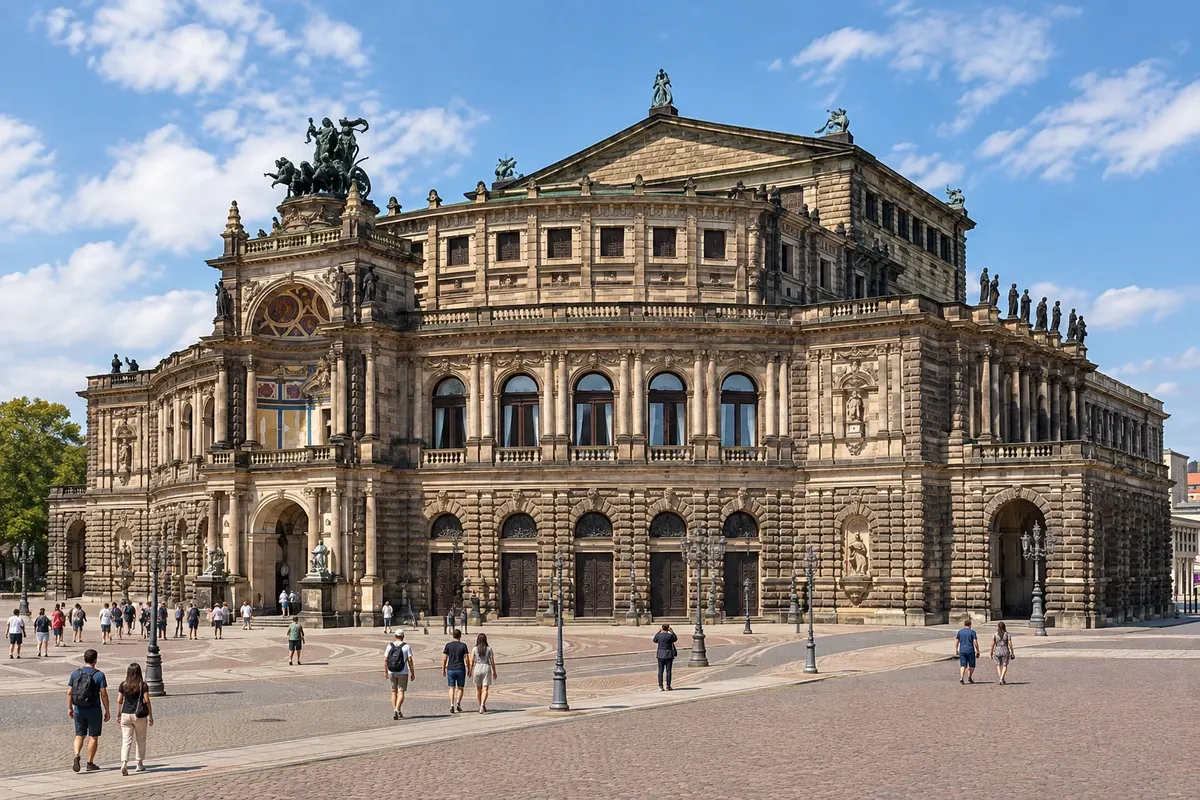
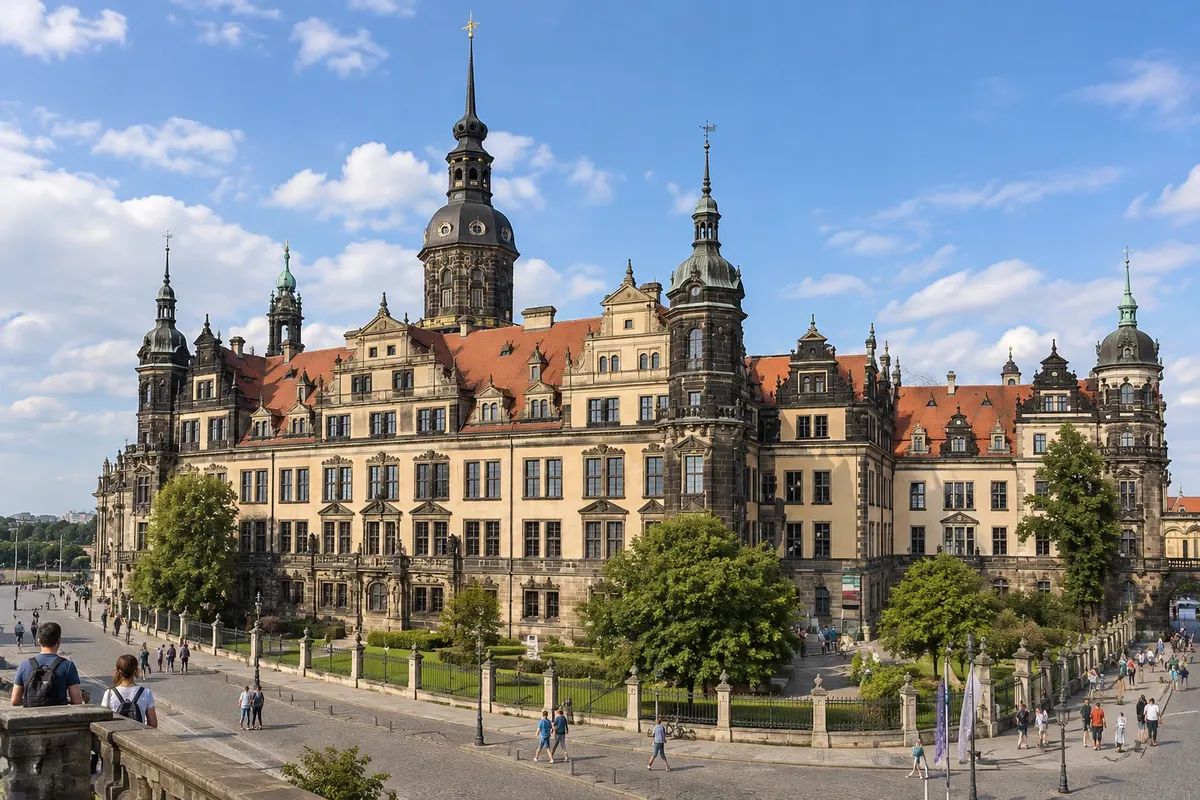
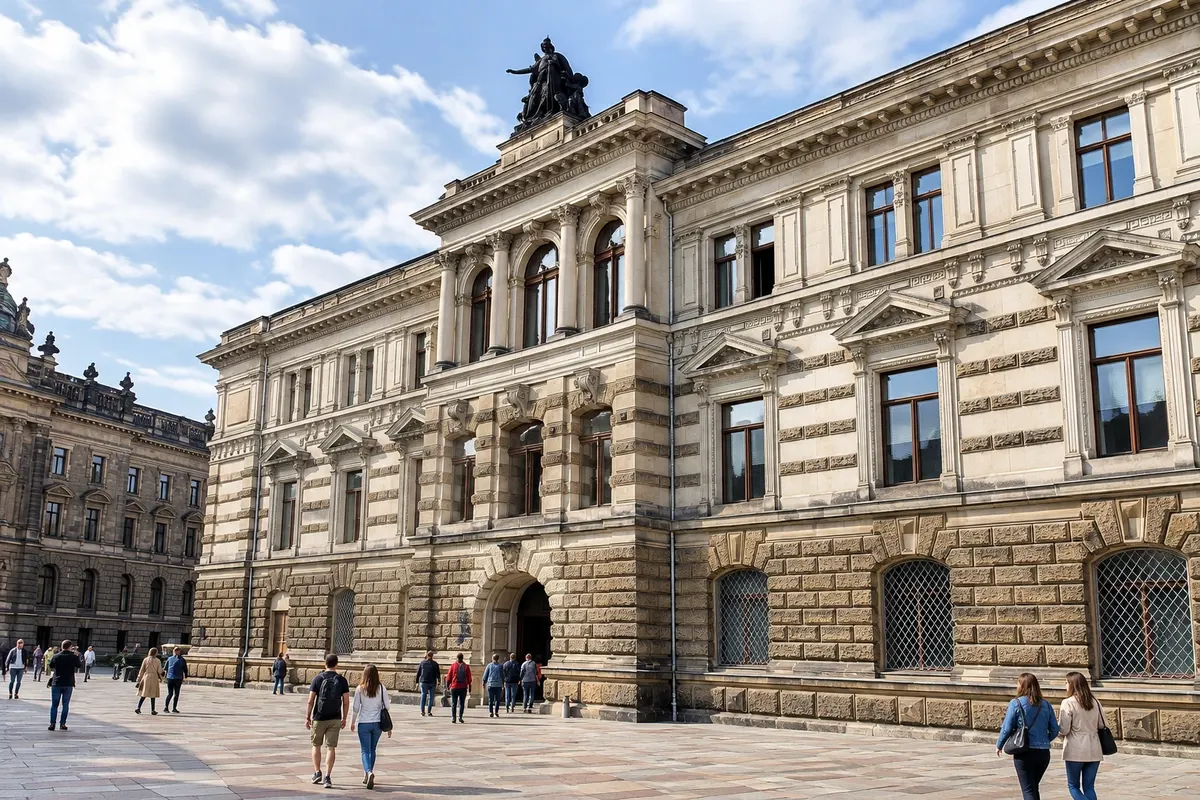
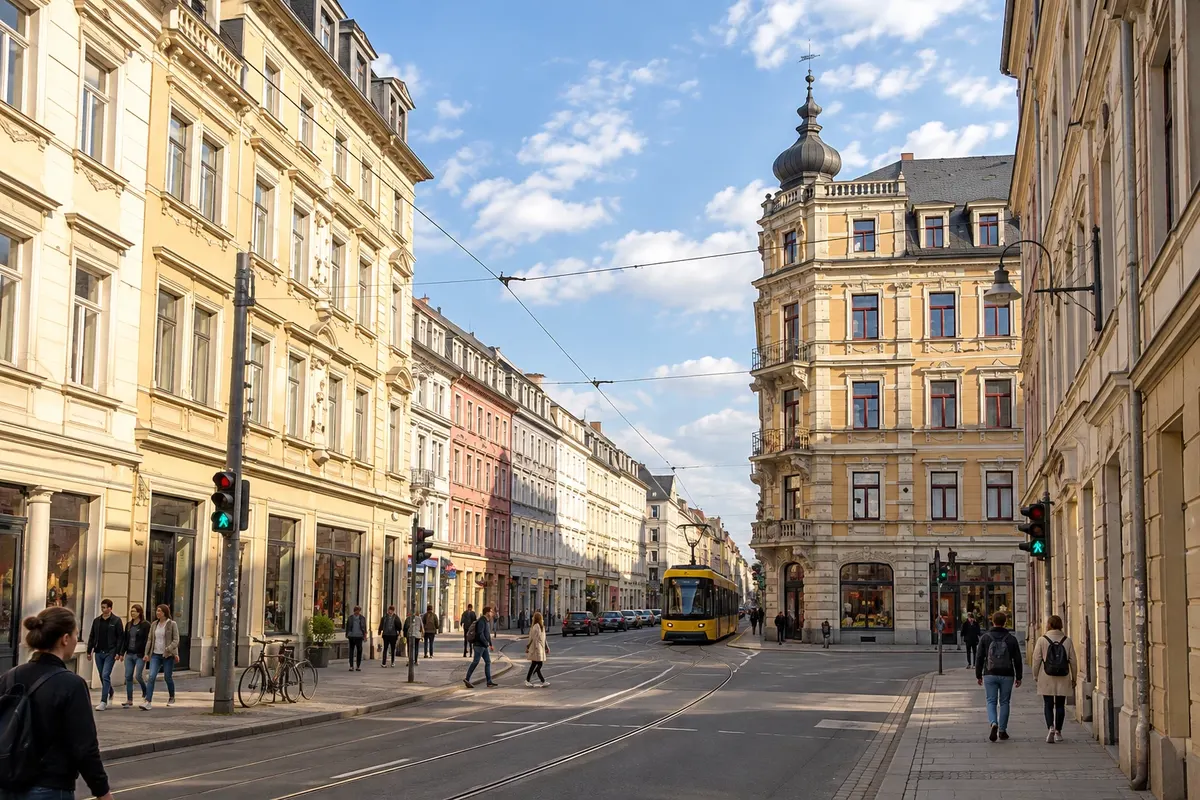
Illustrative images. The pictures in this guide are illustrations based on the real place, not photographs, and may differ from it.

Get it on Google Play Send your photos

Get to know the place

A region to enjoy
at your own pace.

Dresden is the capital of the state of Saxônia, in eastern Germany, near the border with the República Tcheca. The city sits on the banks of the Elba and brings together, in a compact old town, palaces and churches from the Baroque period, when the electors of Saxônia made it one of Europe’s wealthiest courts.

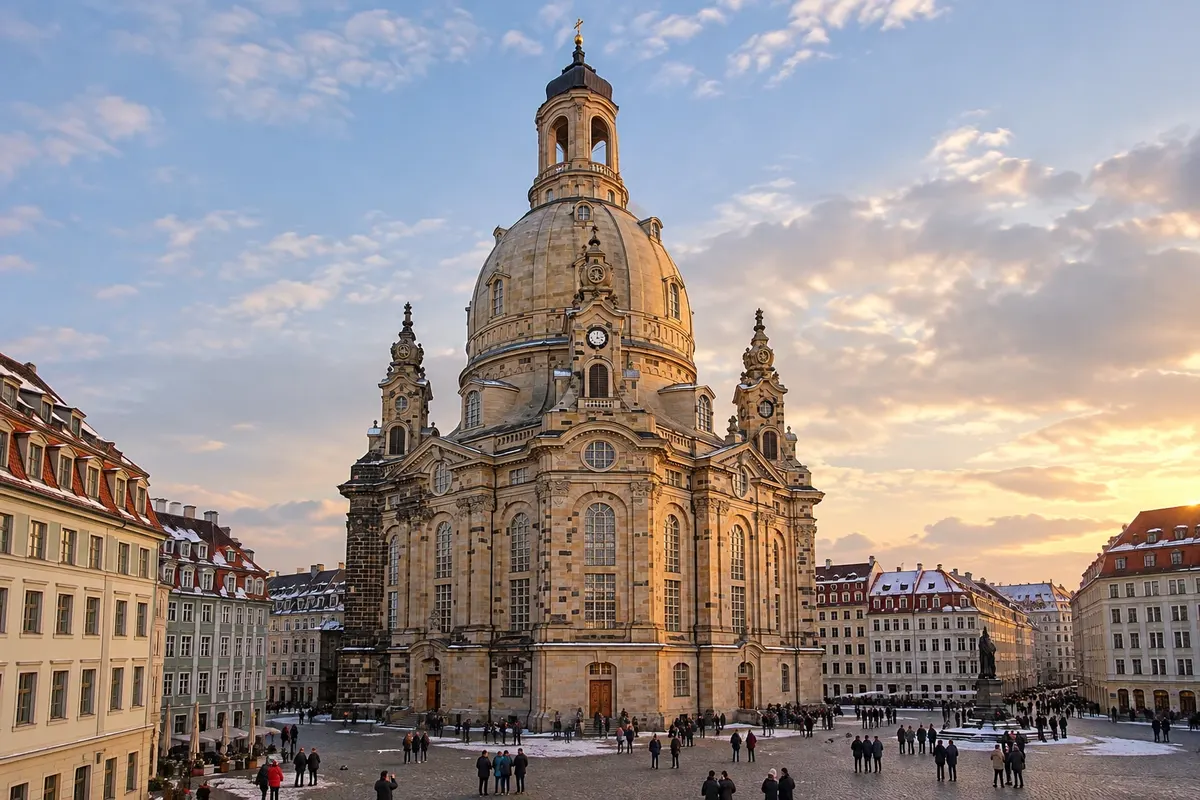
Much of that center was destroyed in the bombings of February 1945. What you see today is the result of decades of reconstruction: the Zwinger and the Semperoper were rebuilt even during the era of East Germany, and the Frauenkirche, which stood in ruins for almost fifty years as a memorial against war, was raised again after reunification, using some of the original stones. The state museums hold top collections of painting, porcelain and jewelry, such as the Gemäldegalerie Alte Meister and the Grünes Gewölbe.

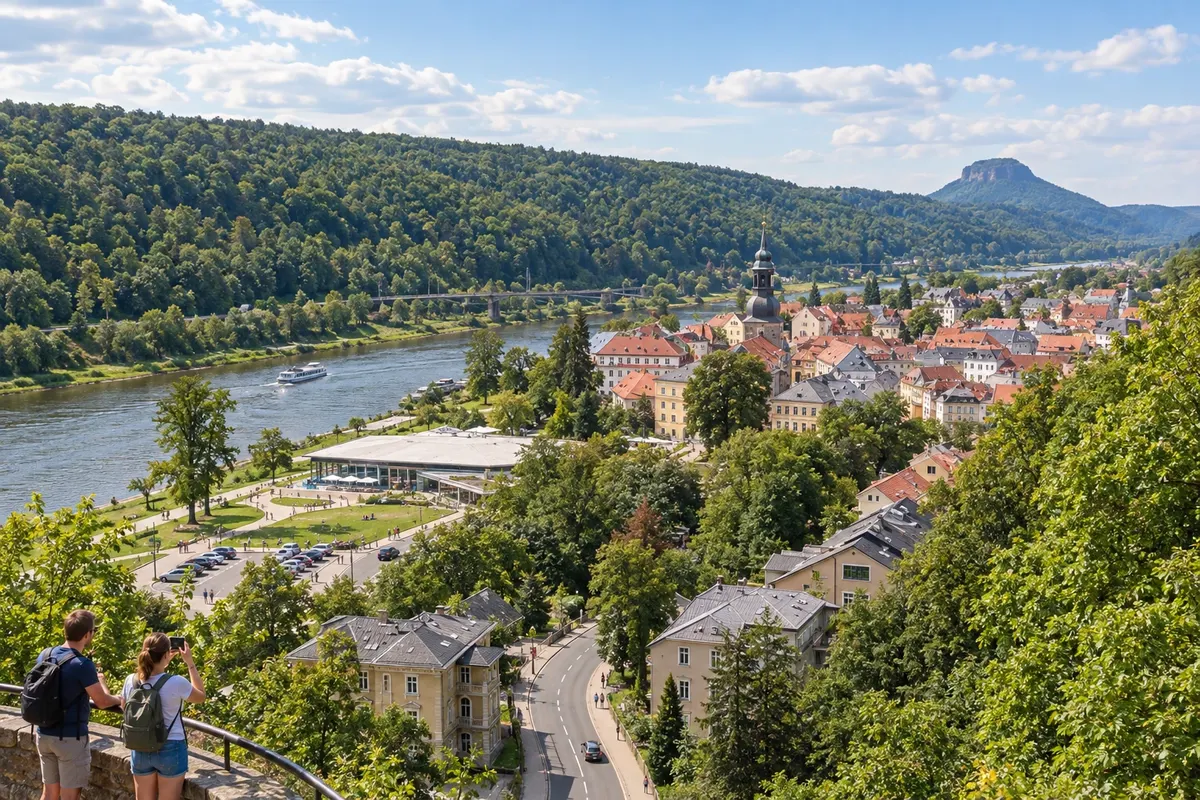
Upstream, about 40 km away, the Suíça Saxônica (Sächsische Schweiz) begins — a region of sandstone towers and cliffs carved by the Elba. Part of it is a national park. Bad Schandau is the park’s base town, connected to Dresden by suburban train (S-Bahn). From there you can reach the Bastei and its stone bridge, the fortress of Königstein, the Schrammsteine trails and the historic tram of the Kirnitzsch valley.

This destination brings together 2 cities: Dresden, Bad Schandau.

Share: WhatsApp
Traveler, share your experiences through photos Up to 5 photos of each place you visited.

One destination, many paths

The cities on this trip

Start with one city or combine several in your itinerary.

Where Dresden and the Suíça Saxônica is
DresdenBad Schandau

Contornos: © BKG (2026), dl-de/by-2-0. Adaptação do Cidade Turismo.

How to get there: Dresden and the Suíça Saxônica

✈ Flughafen Dresden (DRS) · 12 km to Dresden

Check before you buy. Dresden has its own airport (DRS), but many people arrive via Berlin (BER) and continue by train to Dresden Hauptbahnhof in about 2 hours. From Prague the train takes just over 2 hours. From Dresden to Bad Schandau take the S-Bahn (line S1).

Suggested arrival point: Dresden

The local experience

Things to do in Dresden and the Suíça Saxônica

Bastei
Bad Schandau · Saxônia · Observation deck

Bastei

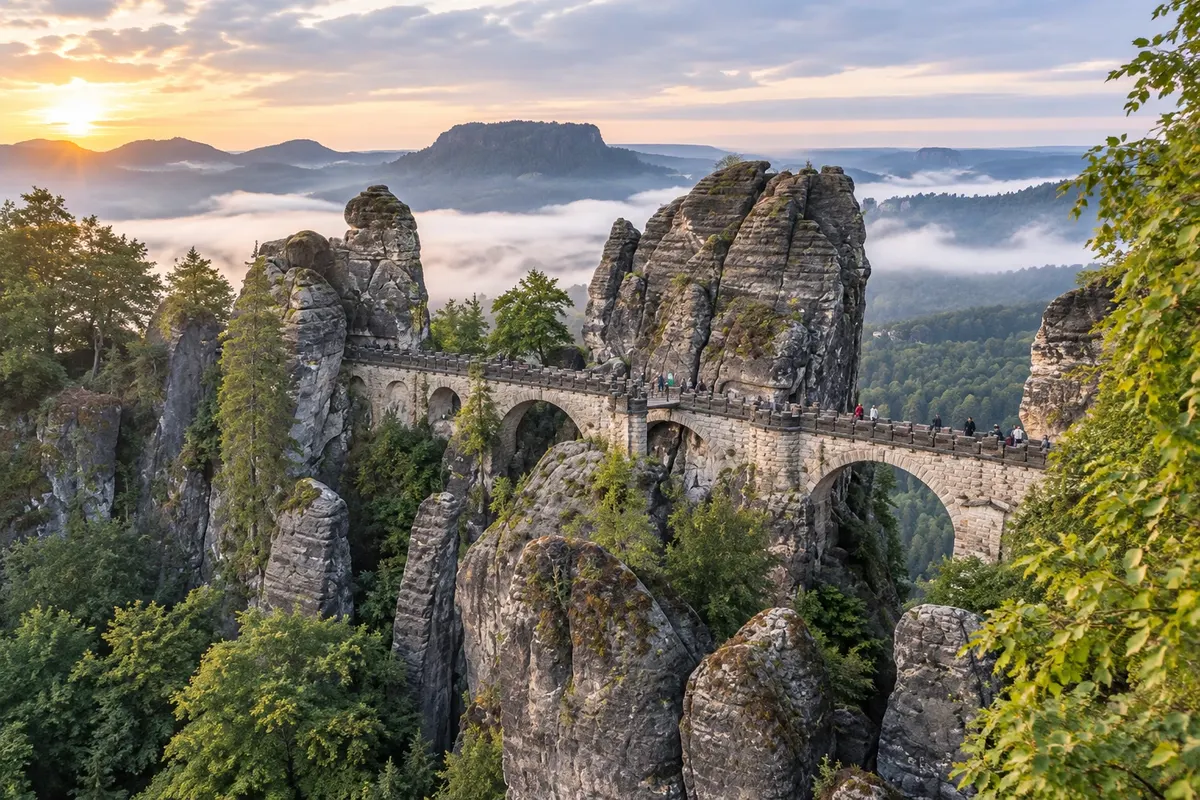
Sandstone formation about 190 metres above the Elba, with the Basteibrücke, a stone bridge from 1851, and viewpoints over the valley. It is the emblematic postcard image of Saxon Switzerland.

Frauenkirche
Dresden · Saxônia · Church

Frauenkirche

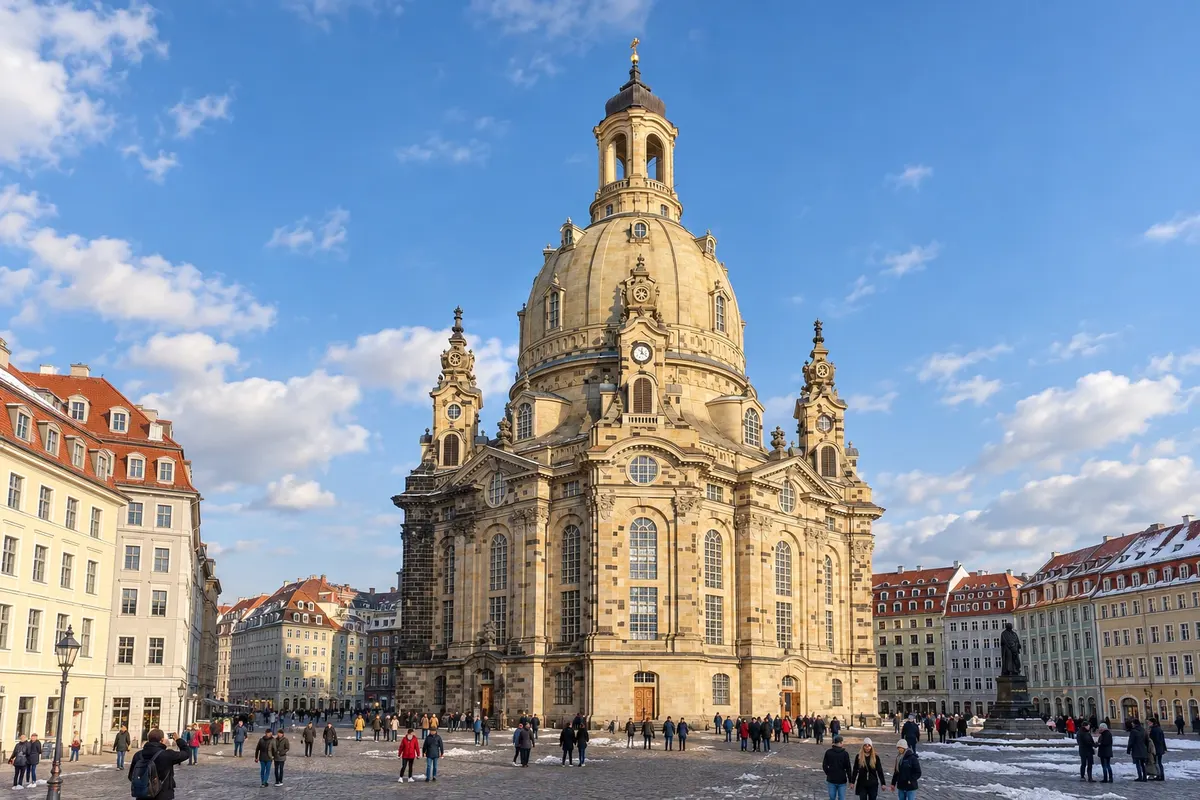
Baroque Lutheran church of the Neumarkt, destroyed in the 1945 bombings and rebuilt between 1994 and 2005 using some of the original stones. The dome has a viewing platform.

Festung Königstein
Bad Schandau · Saxônia · Castle

Festung Königstein

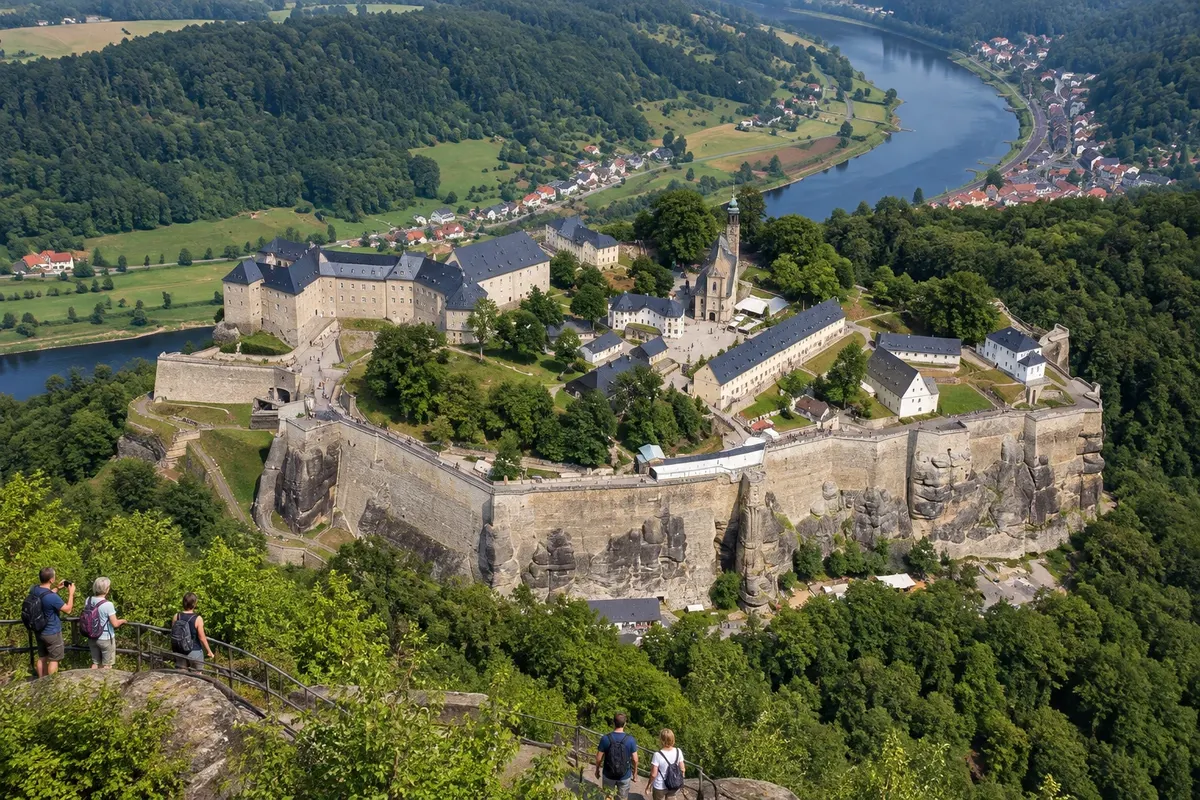
Fortress on a flat-topped hill about 240 meters above the Elba, with more than 50 buildings, walls up to 42 meters high and views of the valley. Open year-round.

Neumarkt
Dresden · Saxônia · Square

Neumarkt

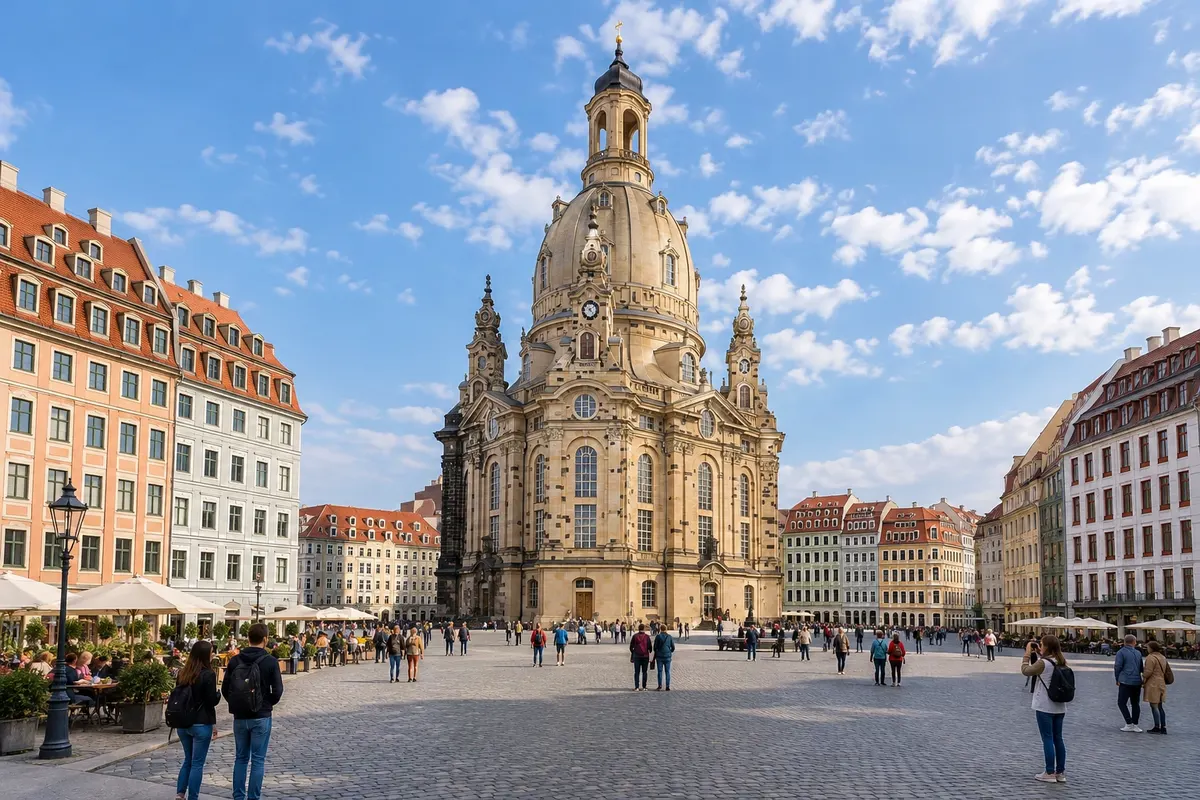
Historic square around the Frauenkirche, with reconstructed Baroque façades, cafés and the statue of Lutero. It’s the natural starting point for walking around the center.

See 16 more places in Dresden and the Suíça Saxônica
Kirnitzschtalbahn
Bad Schandau · Saxônia · Historic site

Kirnitzschtalbahn

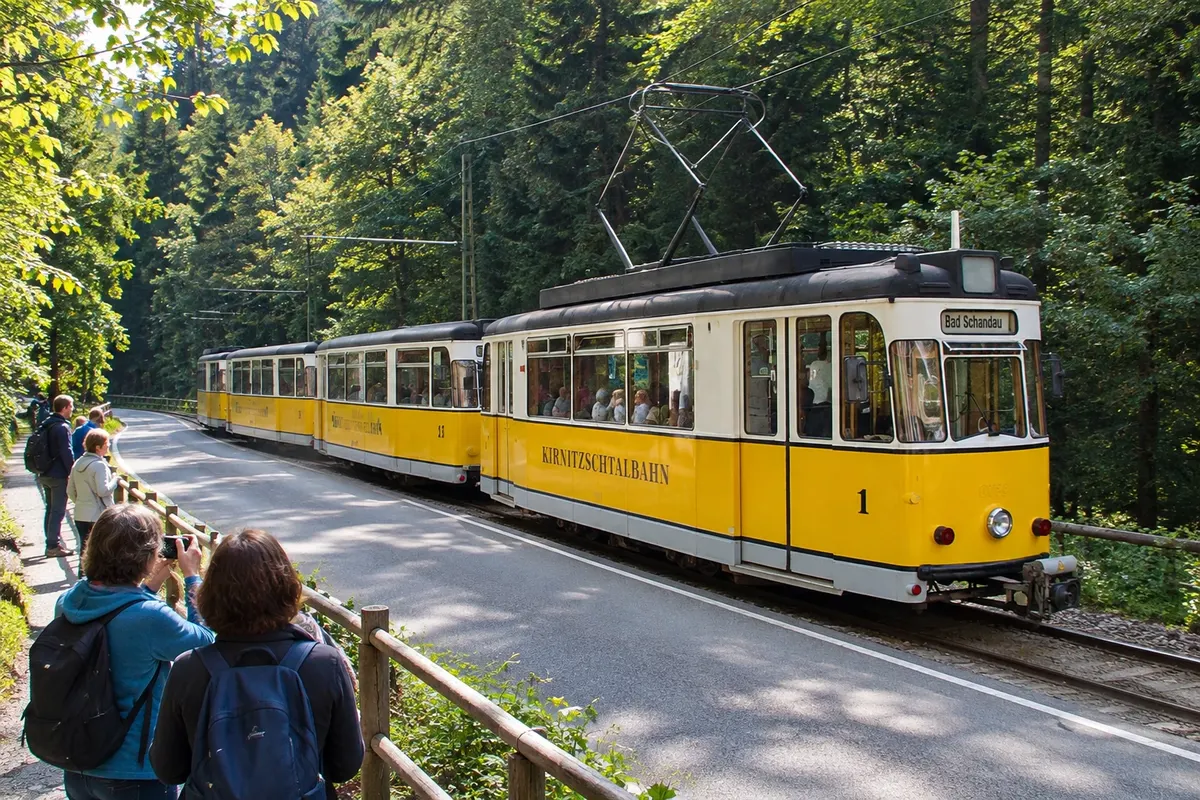
Historic tram from 1898 that climbs the valley of the river Kirnitzsch for about 8 km, from the Kurpark of Bad Schandau to the Lichtenhainer Wasserfall, with stops next to the trails.

Zwinger
Dresden · Saxônia · Palace

Zwinger

Baroque ensemble of pavilions and gardens from the 18th century, housing the Gemäldegalerie Alte Meister, where the Madona Sistina by Rafael is located, and the porcelain collection.

Lichtenhainer Wasserfall
Bad Schandau · Saxônia · Park

Lichtenhainer Wasserfall

Small waterfall at the end of the tram line in the Kirnitzsch valley, dammed since 1830 so the water can be released in bursts. It is the starting point of the trail to the Kuhstall.

Semperoper
Dresden · Saxônia · Architecture

Semperoper

Opera house on the Theaterplatz, home of the Saxon State Opera and the Staatskapelle Dresden. It hosted premieres by Wagner and Richard Strauss and offers guided tours.

Residenzschloss
Dresden · Saxônia · Palace

Residenzschloss

Former palace of the rulers of Saxony, now housing several museums: the Grünes Gewölbe (royal treasury), the Rüstkammer, the Münzkabinett and the Hausmannsturm tower.

Schrammsteine
Bad Schandau · Saxônia · Park

Schrammsteine

Chain of towers and sandstone cliffs east of Bad Schandau, with trails of iron stairs up to the Schrammsteinaussicht viewpoint and the ridgeline path Gratweg.

Fürstenzug
Dresden · Saxônia · Monument

Fürstenzug

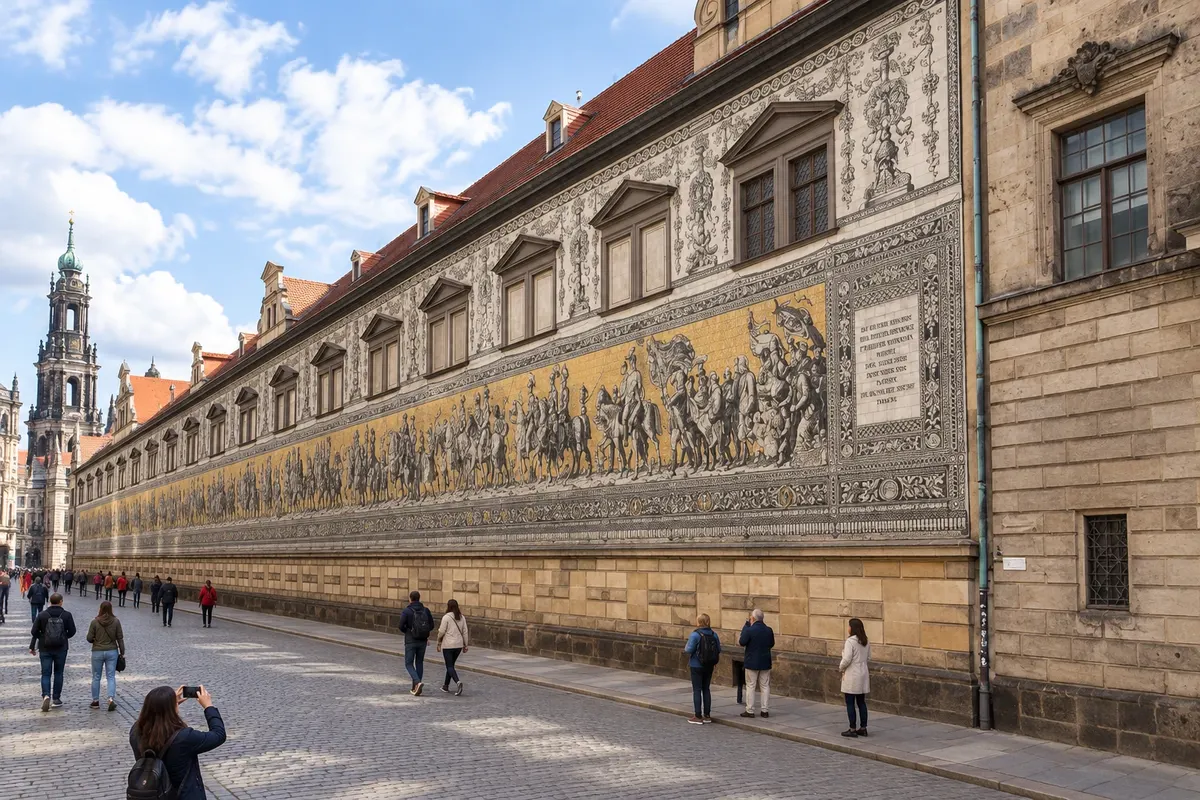
A panel of roughly 102 metres made from about 23,000 Meissen porcelain tiles, depicting the procession of 35 rulers of the Wettin dynasty. It is on an open-air street.

Historischer Personenaufzug Bad Schandau
Bad Schandau · Saxônia · Observation deck

Historischer Personenaufzug Bad Schandau

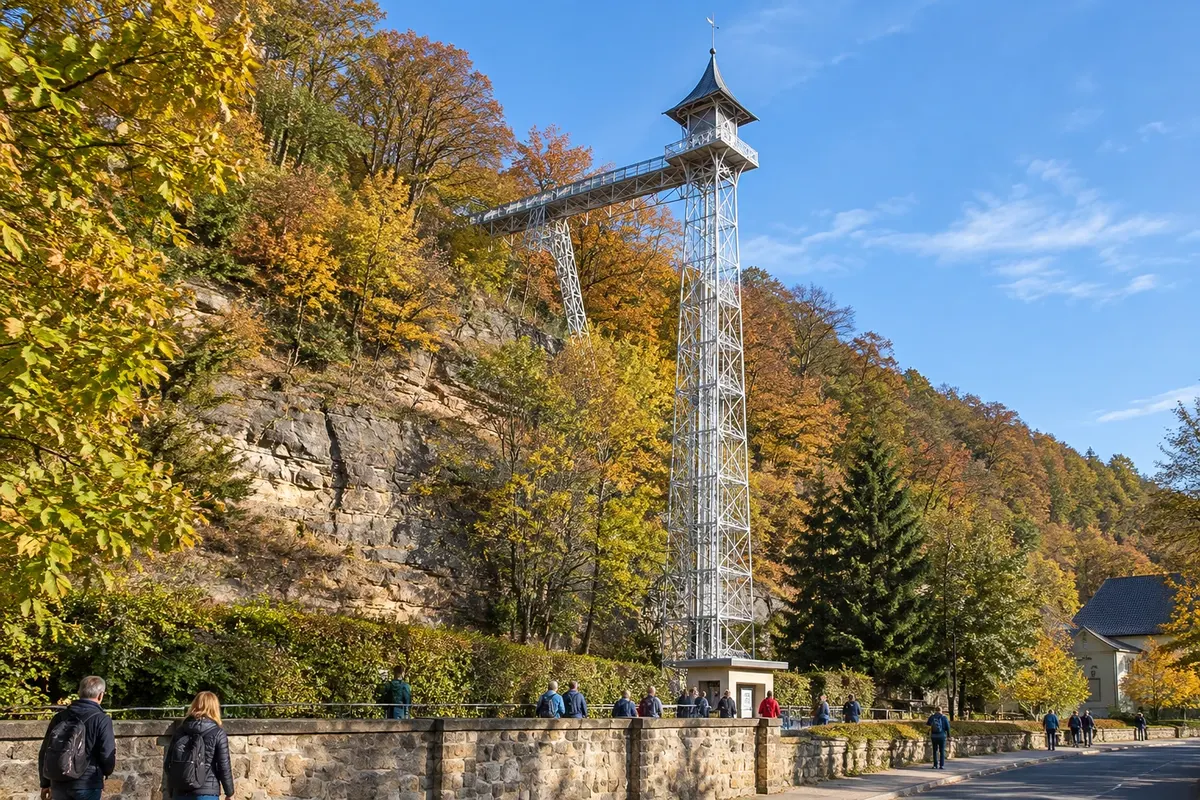
Lift in a 52-meter steel tower, operating since 1904, that links Bad Schandau center to the Ostrau plateau, with views over the Elbe valley.

Brühlsche Terrasse
Dresden · Saxônia · Observation deck

Brühlsche Terrasse

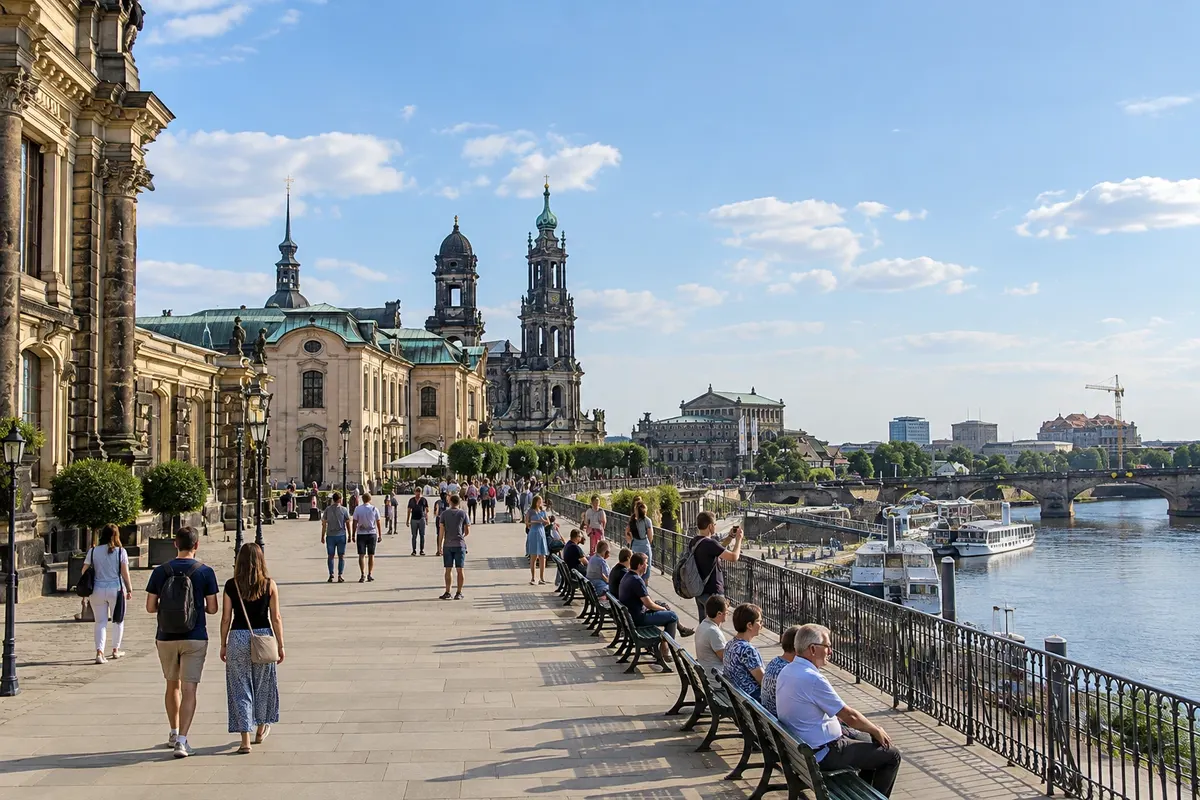
An elevated promenade over the Elbe, nicknamed the Balcony of Europe, with views of the river and the Neustadt. It connects the Schlossplatz to the Albertinum.

Katholische Hofkirche
Dresden · Saxônia · Cathedral

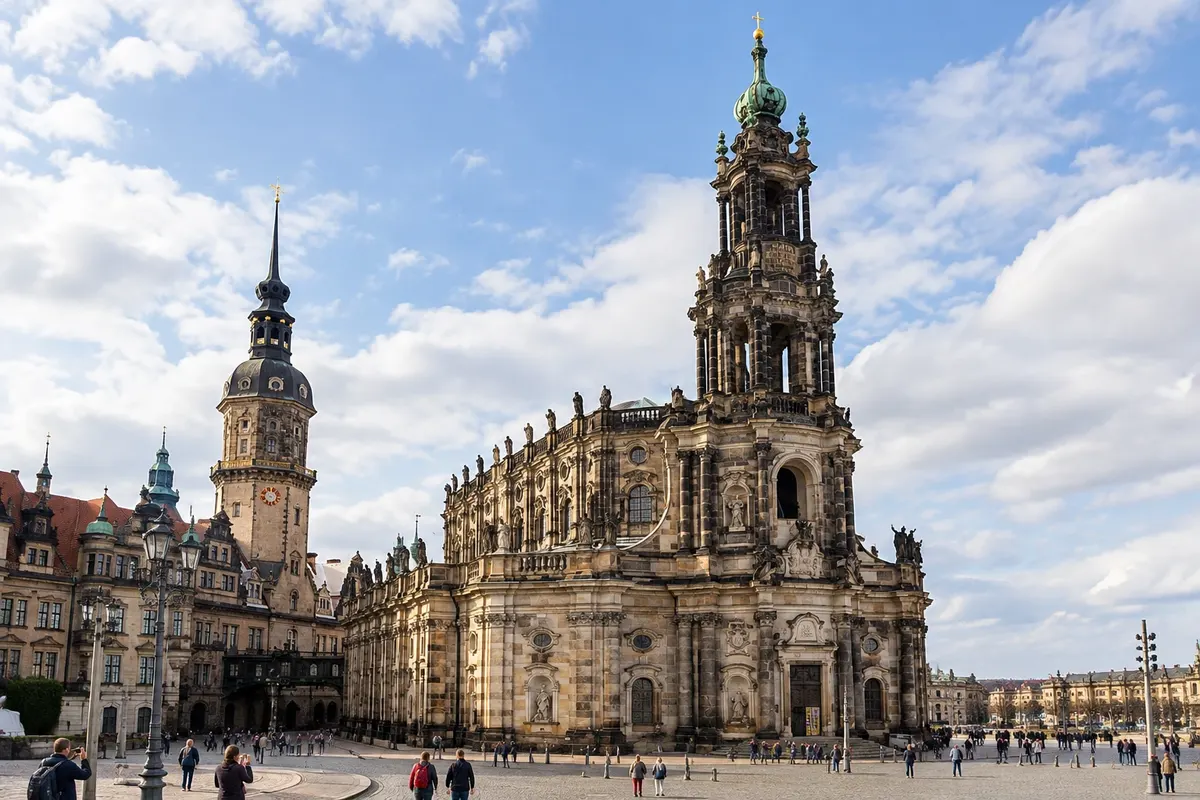
Katholische Hofkirche

Former court church, now Dresden's Catholic cathedral, with the tower that shapes the city's skyline, 78 statues of saints and the last organ by Gottfried Silbermann.

Kreuzkirche
Dresden · Saxônia · Church

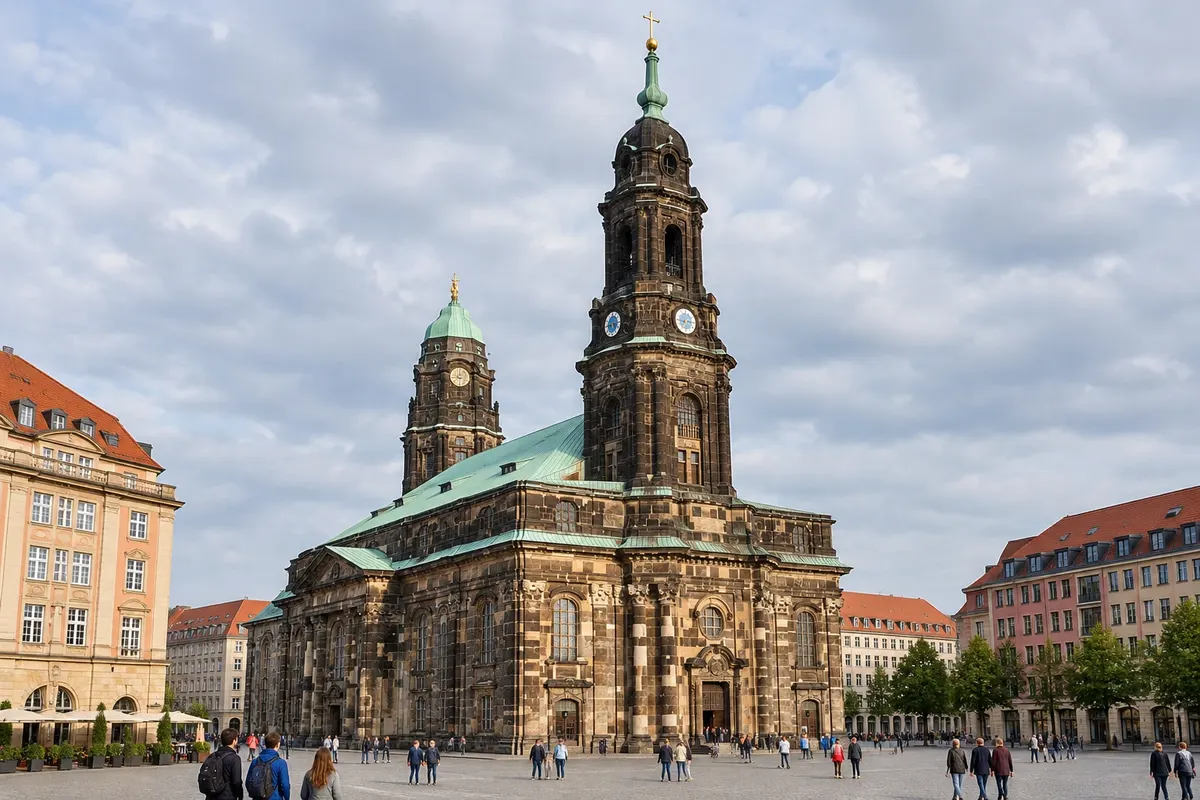
Kreuzkirche

Main Lutheran church on the Altmarkt, home of the Dresdner Kreuzchor, a boys' choir with over seven centuries of history. The tower can be climbed and offers views over the center.

Albertinum
Dresden · Saxônia · Museum

Albertinum

Museum of modern art at the eastern end of the Brühlsche Terrasse, with painting from Romanticism to contemporary art, from Caspar David Friedrich to Gerhard Richter, and sculpture.

Äußere Neustadt
Dresden · Saxônia · Historic neighborhood

Äußere Neustadt

19th-century neighborhood on the other side of the Elbe, with bars, cafés, street art and the colorful courtyards of the Kunsthofpassage. It is the center of Dresden's nightlife.

Pfunds Molkerei
Dresden · Saxônia · Architecture

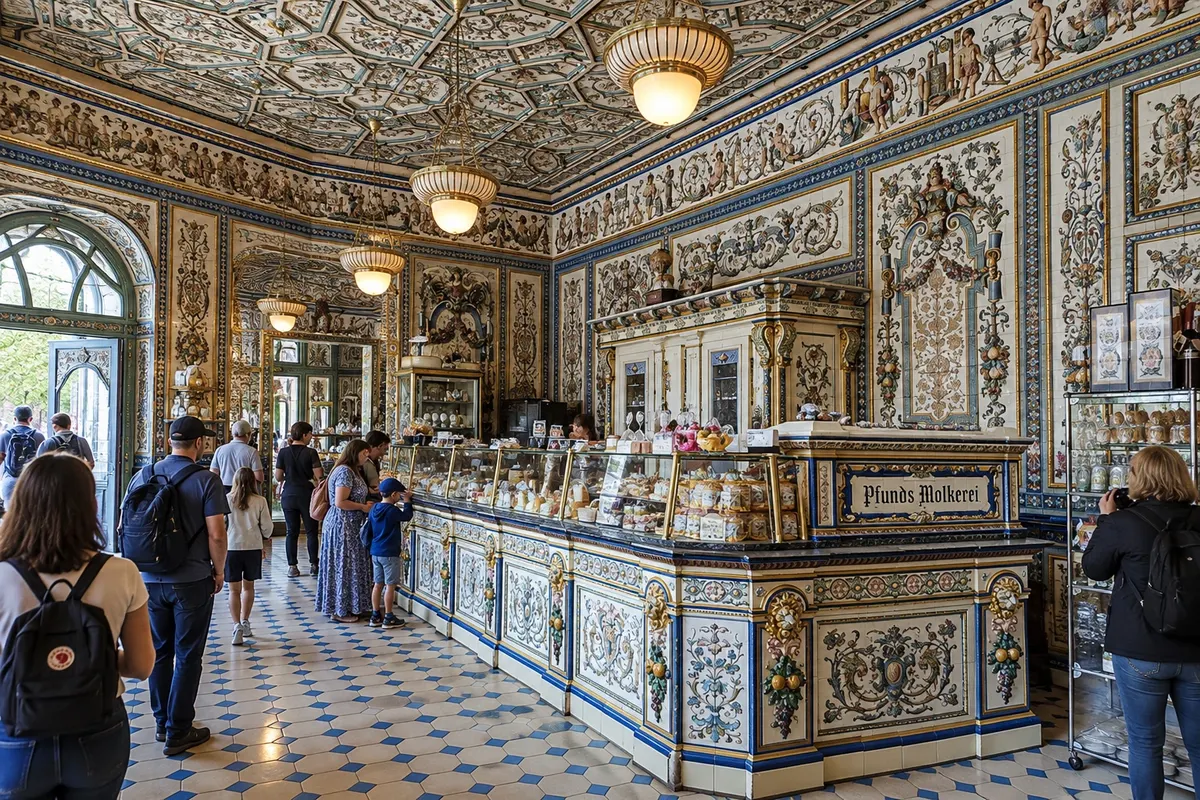
Pfunds Molkerei

Dairy shop opened in the late 19th century in the Neustadt, with walls and floor covered in hand-painted tiles. It still operates as a shop selling dairy and regional products.

Schloss Pillnitz
Dresden · Saxônia · Palace

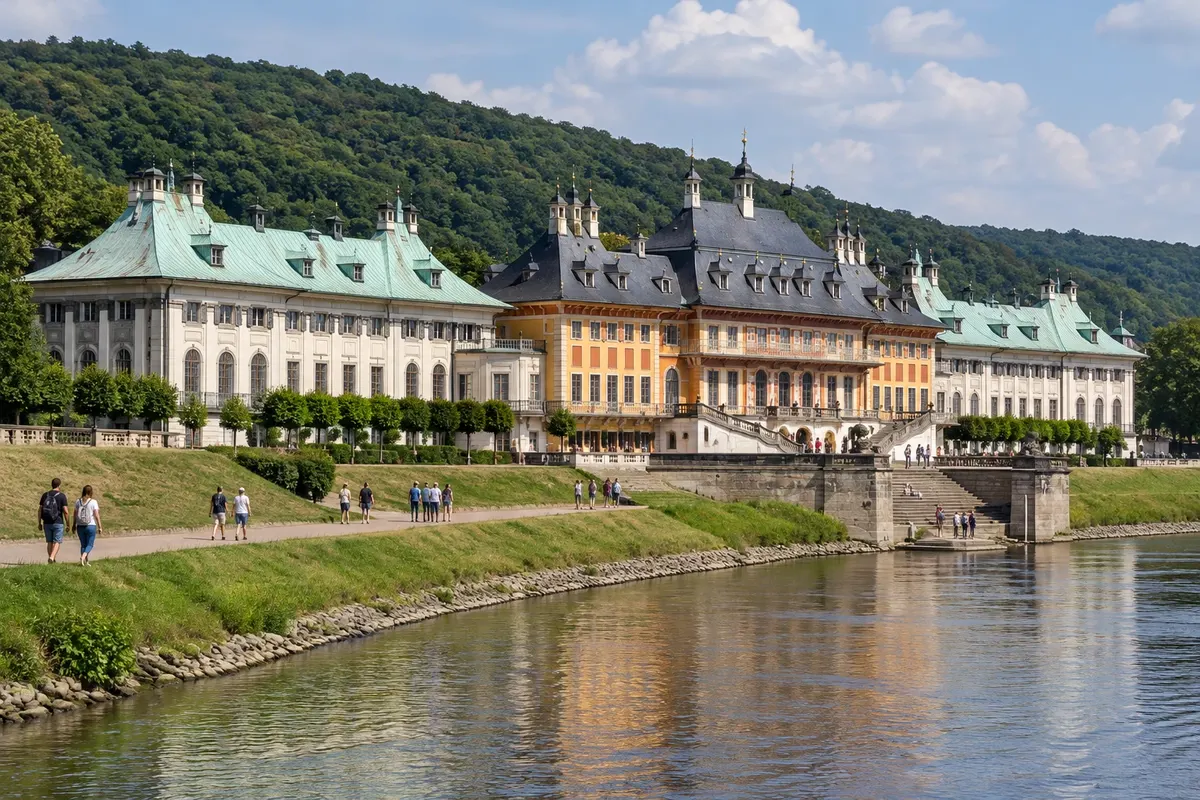
Schloss Pillnitz

Summer residence of the Saxon monarchs on the banks of the Elbe, featuring palaces with Chinese-style decoration, gardens, a camellia over 200 years old and a museum of decorative arts.

Dresdner Striezelmarkt
Dresden · Saxônia · Market

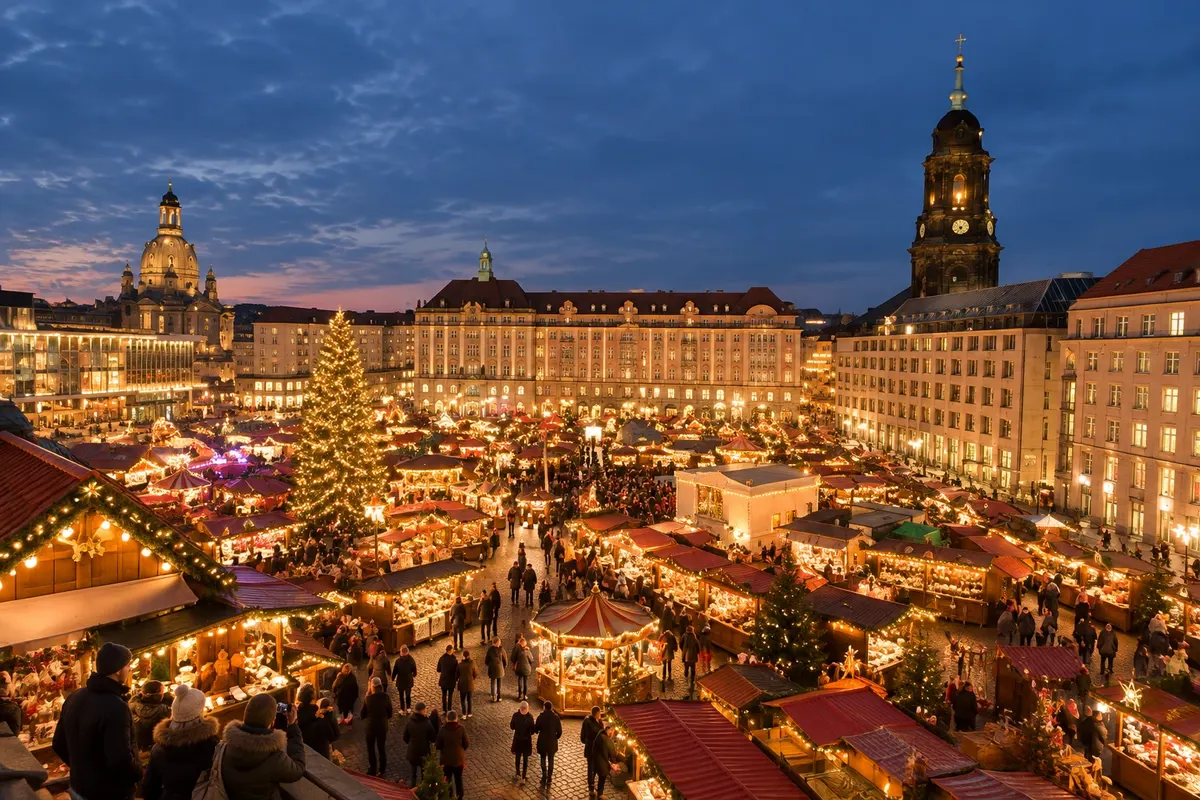
Dresdner Striezelmarkt

Altmarkt Christmas Market, recorded since 1434 and one of the oldest in Germany. It usually runs from late November until Christmas Eve, featuring Stollen.

Before you go

Practical information

A little planning leaves more time to enjoy the journey.

When to go

From May to September the days are long and the trails in the Suíça Saxônica are more pleasant; boats on the Elba generally run from April to October, when the river level allows. September and October are quieter. In winter, from December to February, it’s cold and gets dark early, but Dresden’s Christmas market usually runs from late November until Christmas Eve.

The seasons shown are the most usual ones; nature doesn't always follow the calendar.

How many days to stay

Two days cover the essentials of Dresden: the old town, the Zwinger, Residenzschloss and a stroll through the Neustadt. A third day lets you visit Schloss Pillnitz or a museum at a relaxed pace. For the Suíça Saxônica, allow at least one full day (Bastei and Königstein) and, if you enjoy walking, a second day based in Bad Schandau for the Schrammsteine and the Kirnitzsch valley.

Which city to stay in

In Dresden, anyone wanting to do everything on foot should stay in the Altstadt (old town), between the Altmarkt, the Neumarkt and the Brühlsche Terrasse. The area around the Hauptbahnhof and Prager Straße is convenient for arrivals and departures by train. On the other side of the river, the Innere Neustadt is calmer, and the Äußere Neustadt has bars, cafés and nightlife. To sleep near the trails, Bad Schandau and Kurort Rathen, on the Elba, are the most used bases in the Suíça Saxônica.

Respect the place

Take your trash with you, follow the signs and support local businesses. In natural areas, follow the visiting guidelines.

Get your questions answered

Frequently asked questions about Dresden and the Suíça Saxônica

How many days should I allow for Dresden and the Suíça Saxônica?

The ideal is three to four days: two in Dresden for the old town, the museums and the Neustadt, and one or two for the Suíça Saxônica. With only one day for the park the most common plan is to combine the Bastei and the fortress of Königstein. With two days you can include the Schrammsteine and the Kirnitzsch valley from Bad Schandau.

Can you visit the Suíça Saxônica on a day trip from Dresden?

Yes. The S-Bahn line S1 departs from Dresden Hauptbahnhof and runs along the Elba valley, stopping at Kurort Rathen (access to the Bastei), Königstein and Bad Schandau in under an hour. Leave early, wear sturdy shoes and bring water, and check the schedule for the last train back. In season, it's also possible to do part of the route by boat on the Elba.

Do I need a car for that region?

No. Dresden has an integrated tram and bus network, and the main attractions of the Suíça Saxônica are linked by S-Bahn, buses, ferries on the Elba and the Kirnitzsch valley tram. A car only helps to explore more remote villages; parking near the Bastei often fills up on summer weekends, and Dresden has an environmental zone (Umweltzone) for cars.

What's the best time to visit?

For hiking in the Suíça Saxônica, May to September is best, with long days; September and October tend to be quieter. Boats on the Elba normally operate from April to October but stop if the river is low. Winter, from December to February, is cold with short days, but it's the season of the Striezelmarkt, Dresden’s Christmas market, which usually runs from late November until Christmas Eve.

Explore other destinations Search by state and city
Back