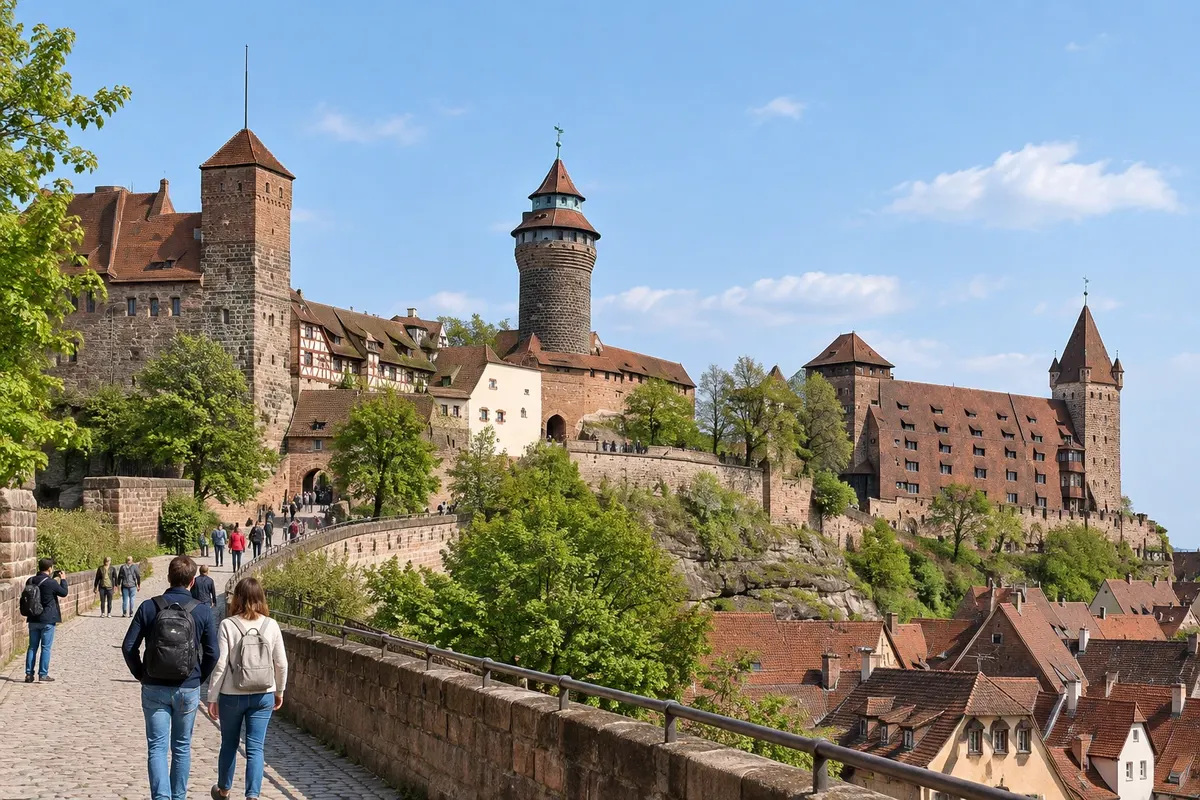
Kaiserburg Nürnberg
Imperial castle on a sandstone rock at the northern edge of the old town. It has the Palas with an exhibition about the Holy Roman Empire, the double Romanesque chapel, the deep well and wide views over the city's roofs.
Baviera · Germany
In the destination Nuremberg and Bamberg.
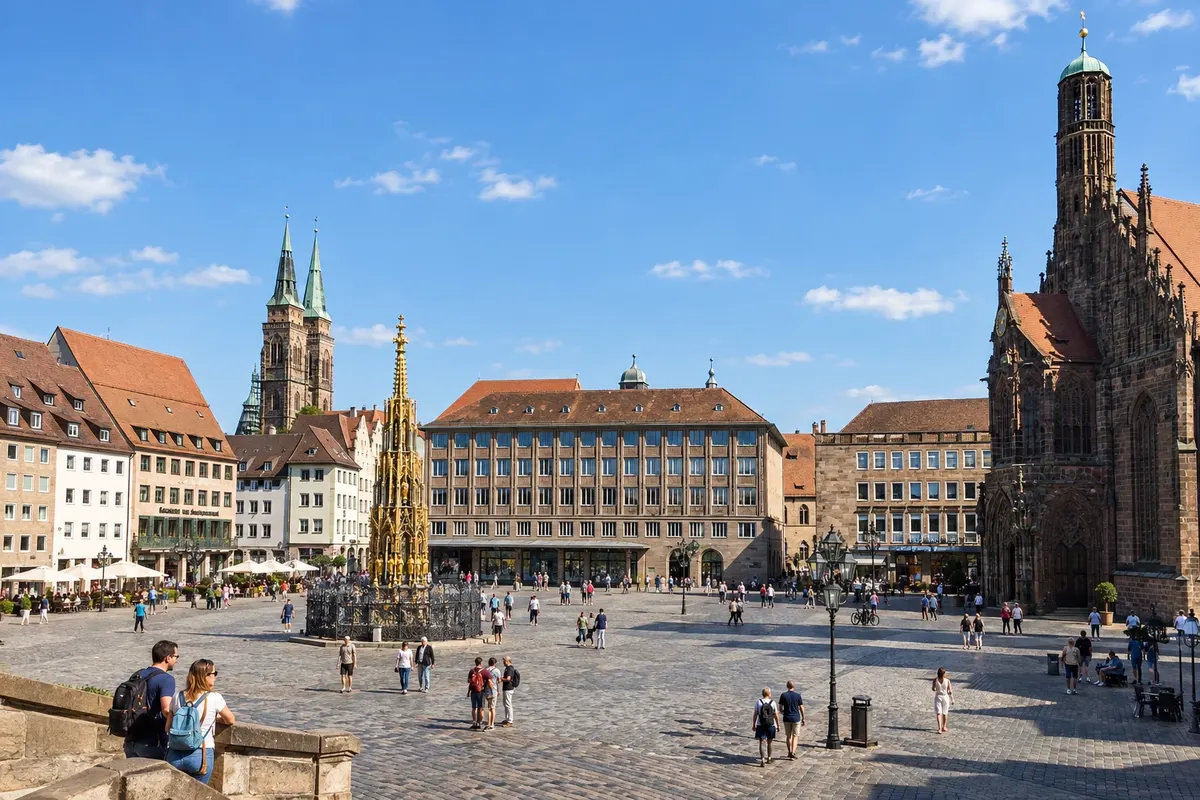
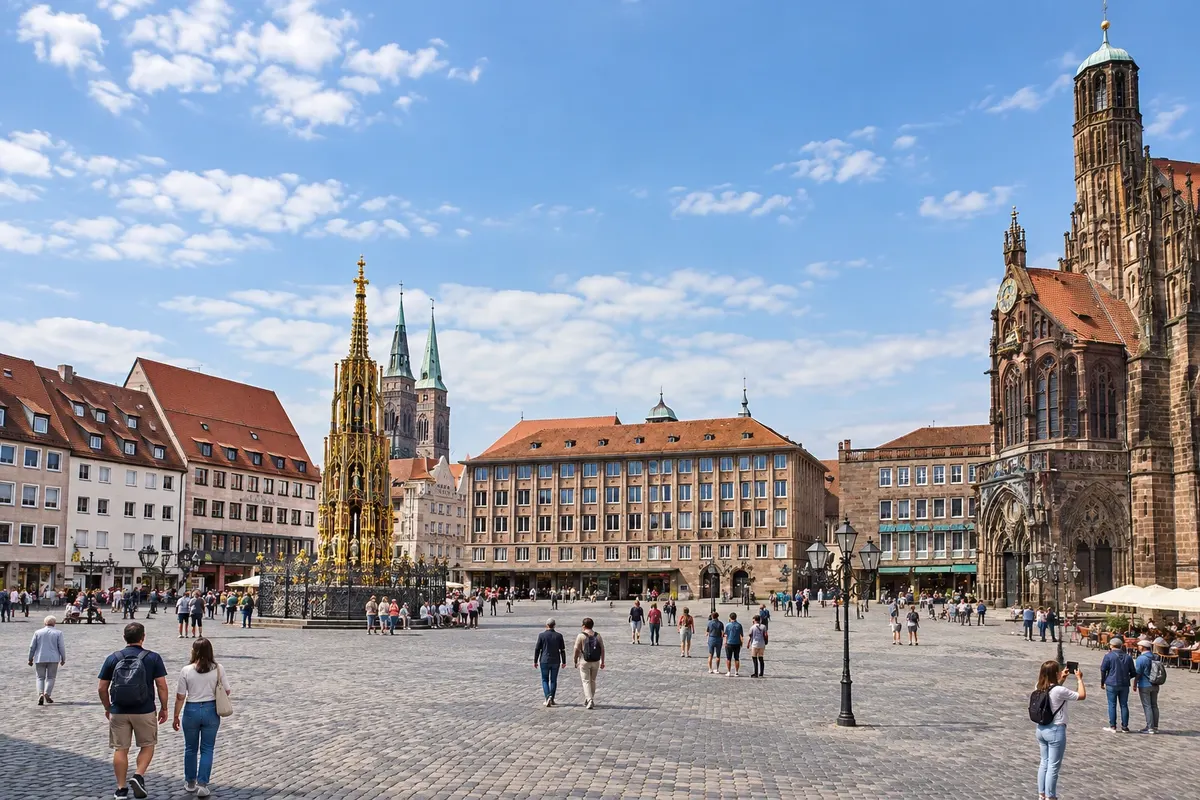
In the photo: Hauptmarkt, Nuremberg
Illustrative images. The pictures in this guide are illustrations based on the real place, not photographs, and may differ from it.
The city
Second-largest city of Baviera, in the Francônia region, Nuremberg has an old town surrounded by walls and crossed by the Pegnitz river. Above stands the Kaiserburg, the imperial castle; below, the Hauptmarkt, the Gothic churches of St. Sebald, St. Lorenz and the Frauenkirche, Albrecht Dürer's house and the Germanisches Nationalmuseum. The city also preserves the memory of Nazism and the 1945 trials, at the Dokumentationszentrum and the Memorium Nürnberger Prozesse.
There's no accommodation in the guide yet in Nuremberg.
There are no restaurants in the guide yet in Nuremberg.
Know a good one? Recommend it to ushow to get there · how many days · itinerary · questions
The local experience
Imperial castle on a sandstone rock at the northern edge of the old town. It has the Palas with an exhibition about the Holy Roman Empire, the double Romanesque chapel, the deep well and wide views over the city's roofs.
Central square of Nuremberg, with a daily market, the golden Schöner Brunnen and the façade of the Frauenkirche. This is where the Christkindlesmarkt, the city's Christmas market, usually takes place.
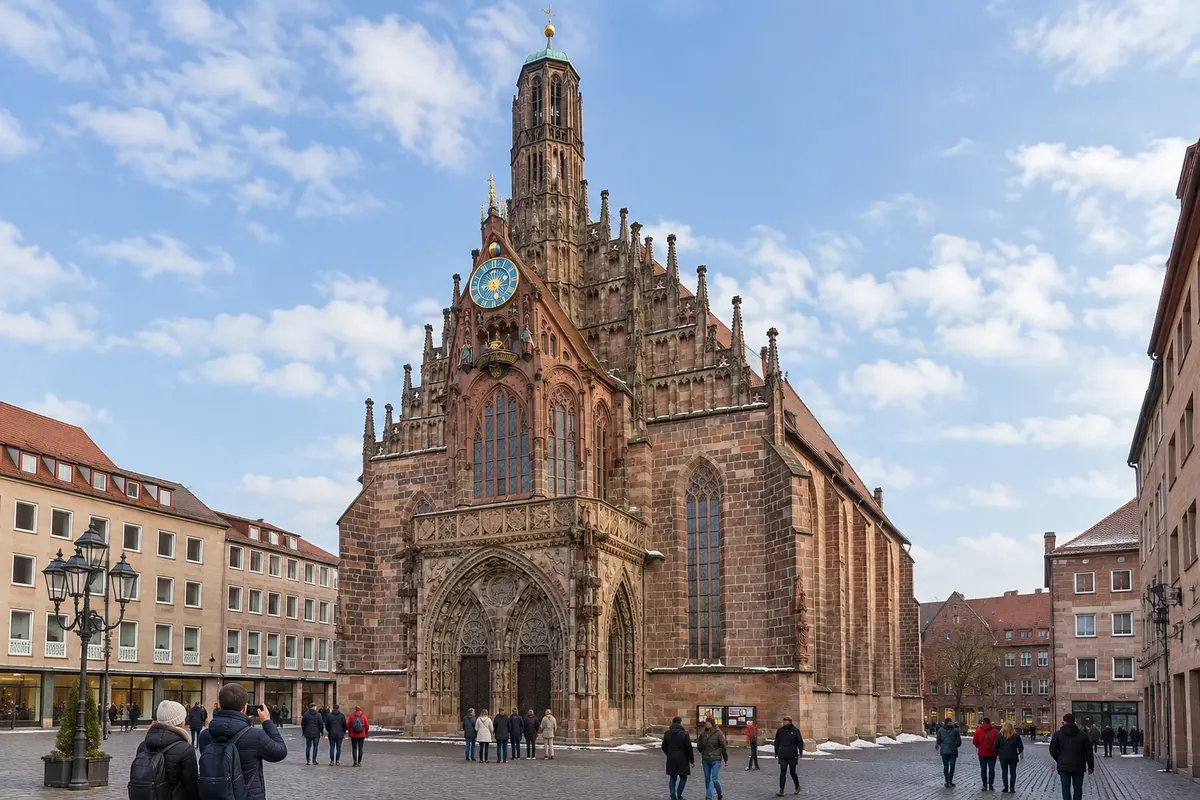
Gothic 14th‑century church on the Hauptmarkt, built at the command of Emperor Charles IV. On the façade is the Männleinlaufen, a clock with figures that move at noon.
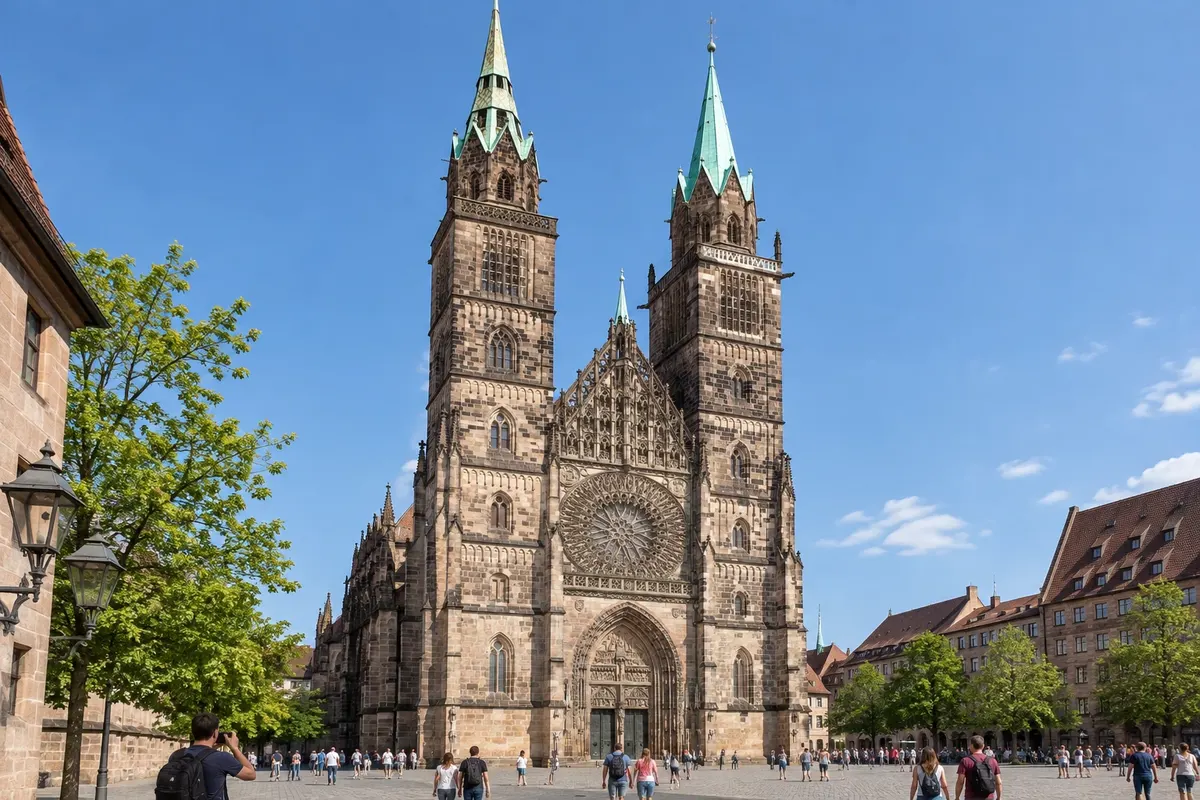
Large Gothic church on the south side of the Pegnitz, with two towers, a rose window of about 9 meters, and works by Veit Stoss and Adam Kraft in the chancel.

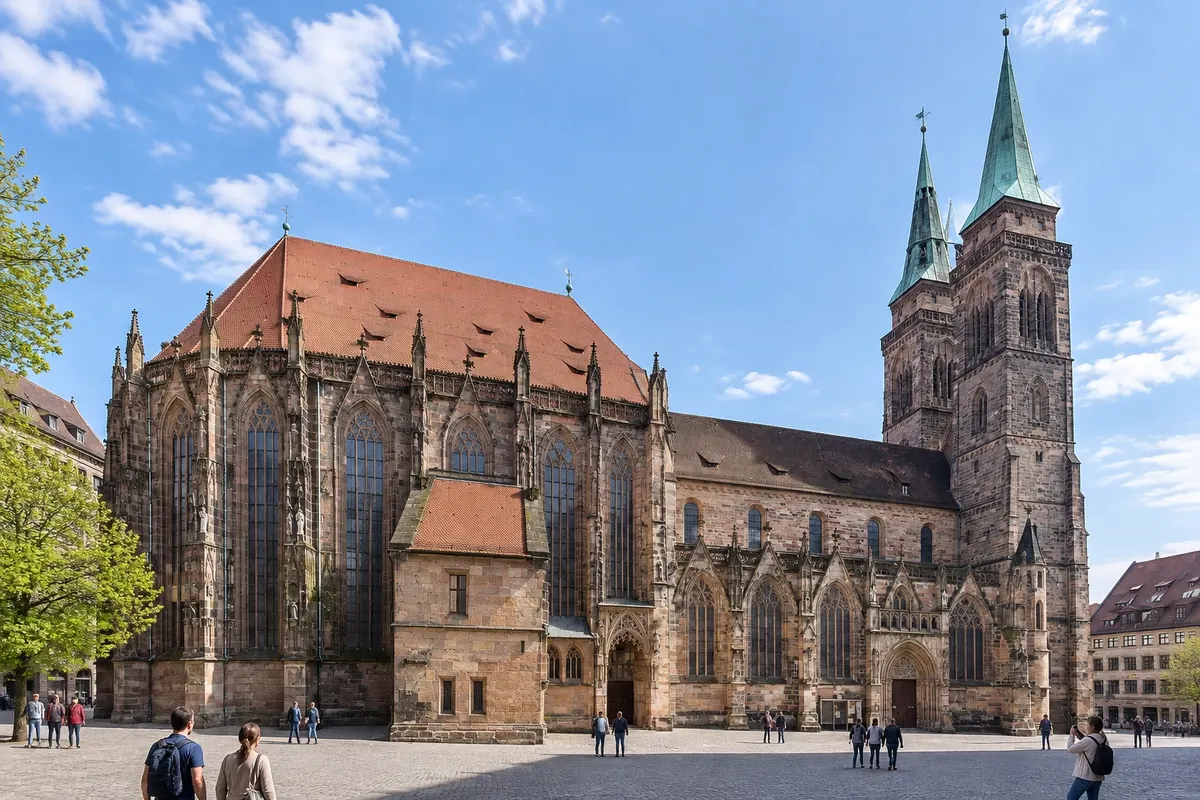
13th-century church on the north side of the old town, with the bronze tomb of Saint Sebald, the city's patron saint, made by Peter Vischer and his sons.
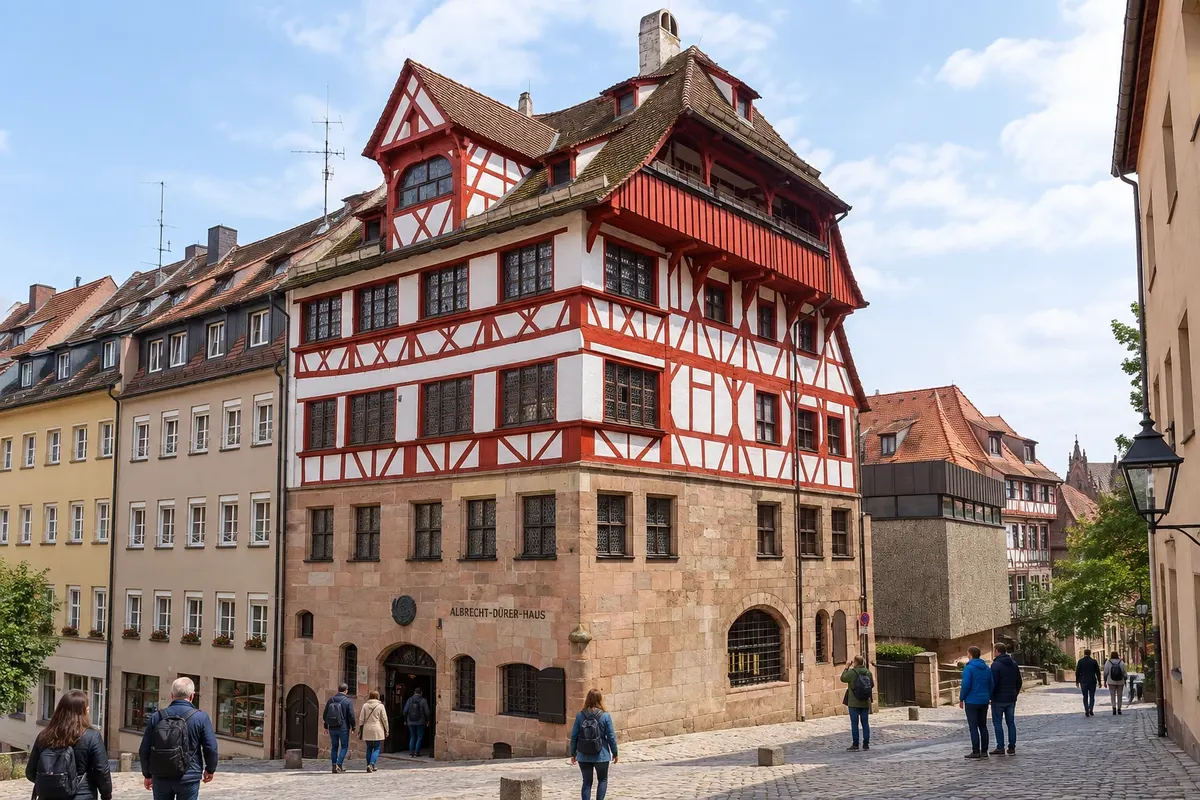
Timber-framed house where the painter and printmaker Albrecht Dürer lived from 1509 until his death in 1528. It has period rooms, a reconstructed print workshop and exhibitions of his printed works.
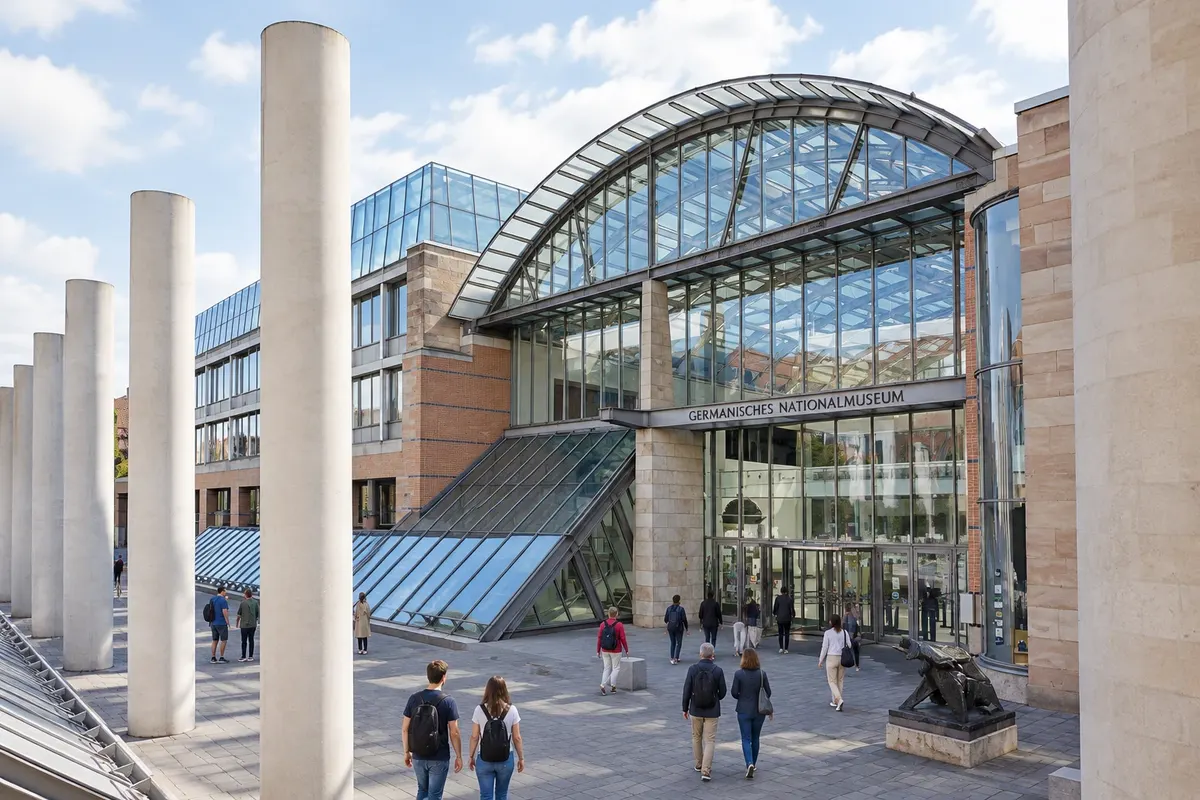
Germany's largest museum of cultural history, founded in 1852 and housed in a former Carthusian monastery. It brings together art and objects from prehistory to the 20th century.
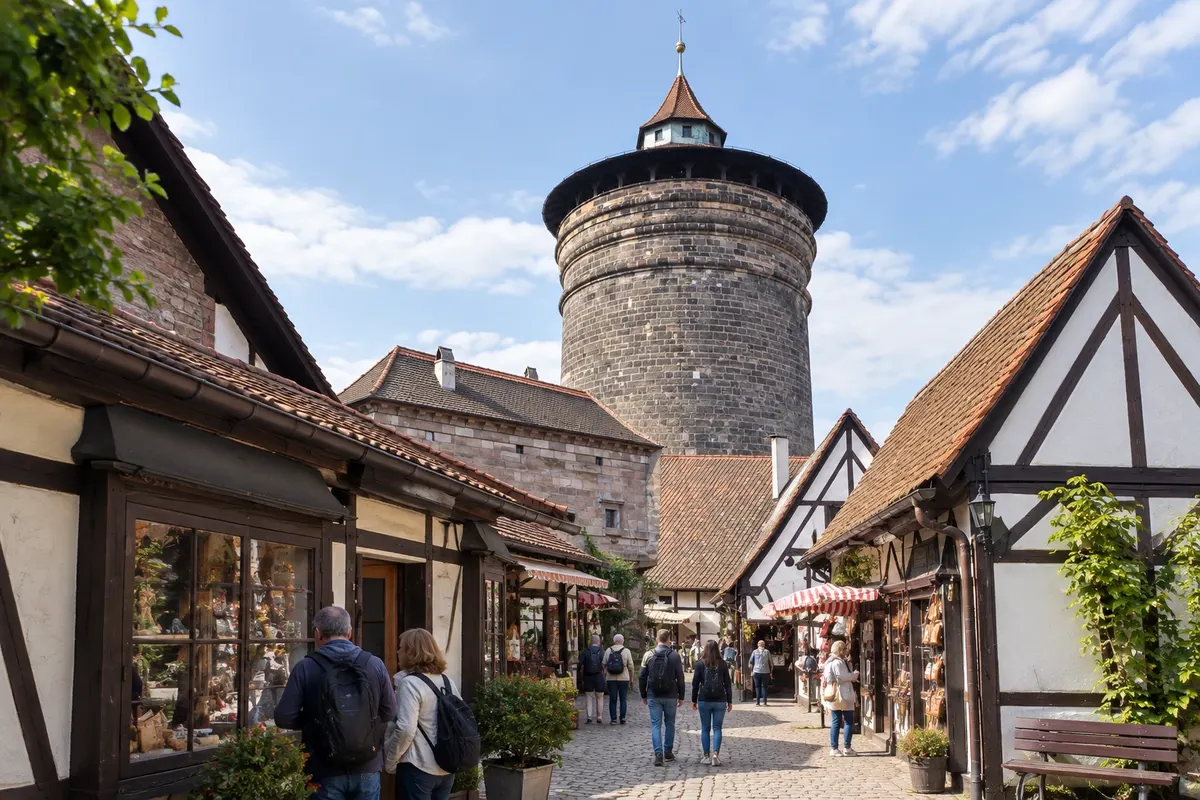
Courtyard of craft workshops inside the wall, next to the Königstor, opposite the central station. It has shops selling wooden toys, Lebkuchen, ceramics and Bratwurst taverns.
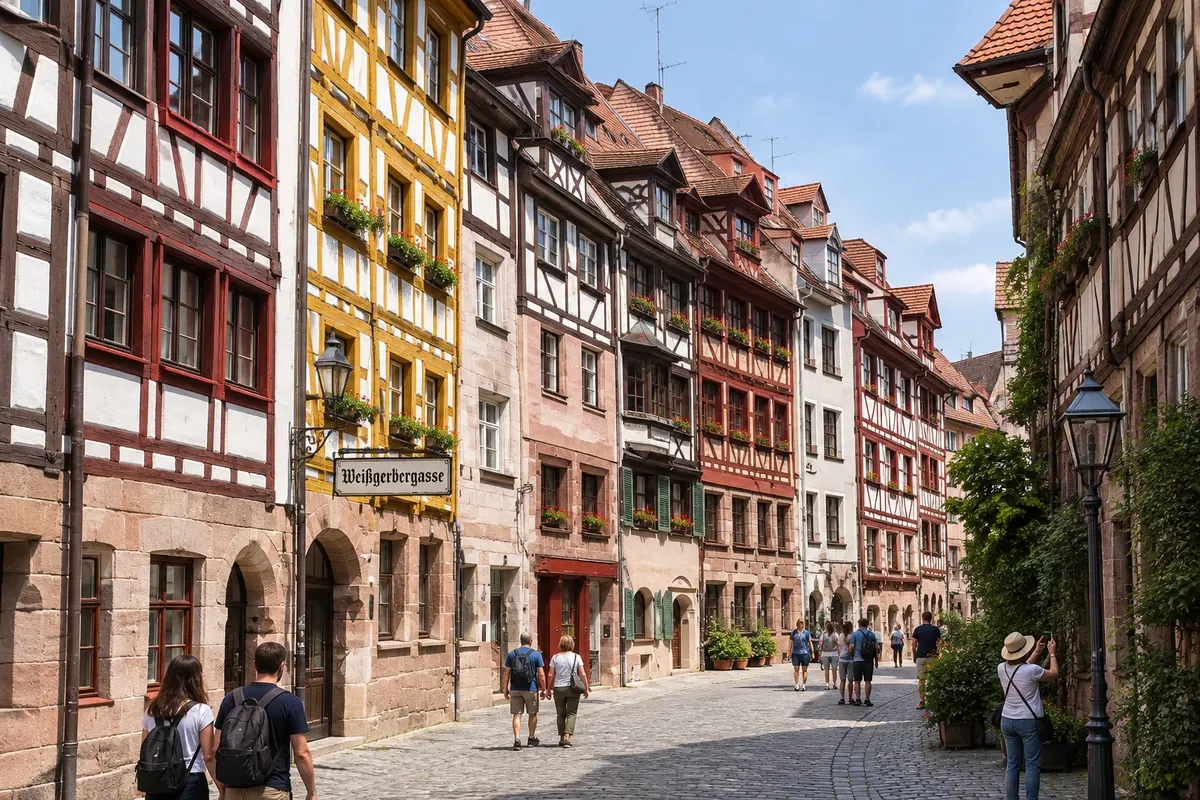
Street of half-timbered houses in the castle district, one of the few that made it through World War II almost intact. It is named after the former white leather tanners.
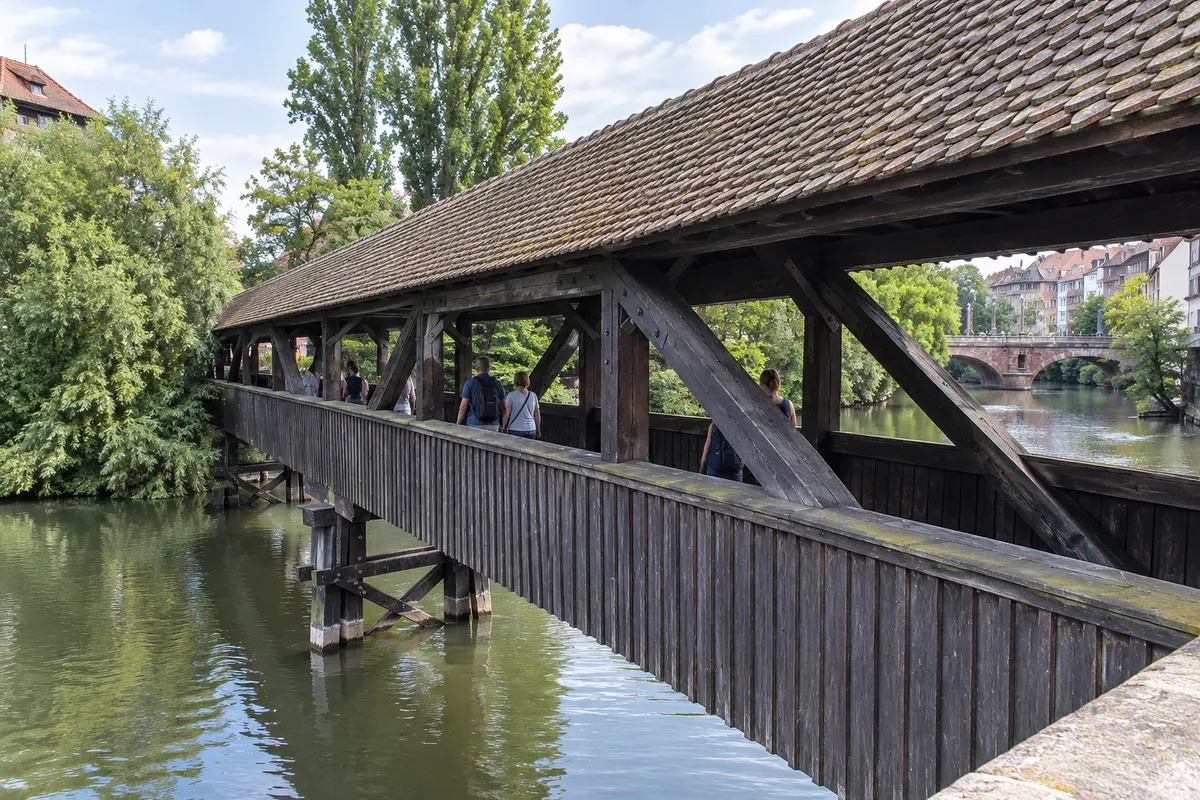
Covered wooden bridge over the Pegnitz, linking the Trödelmarkt islet to Unschlittplatz. It is named after the city's executioner, who lived in the adjacent tower.
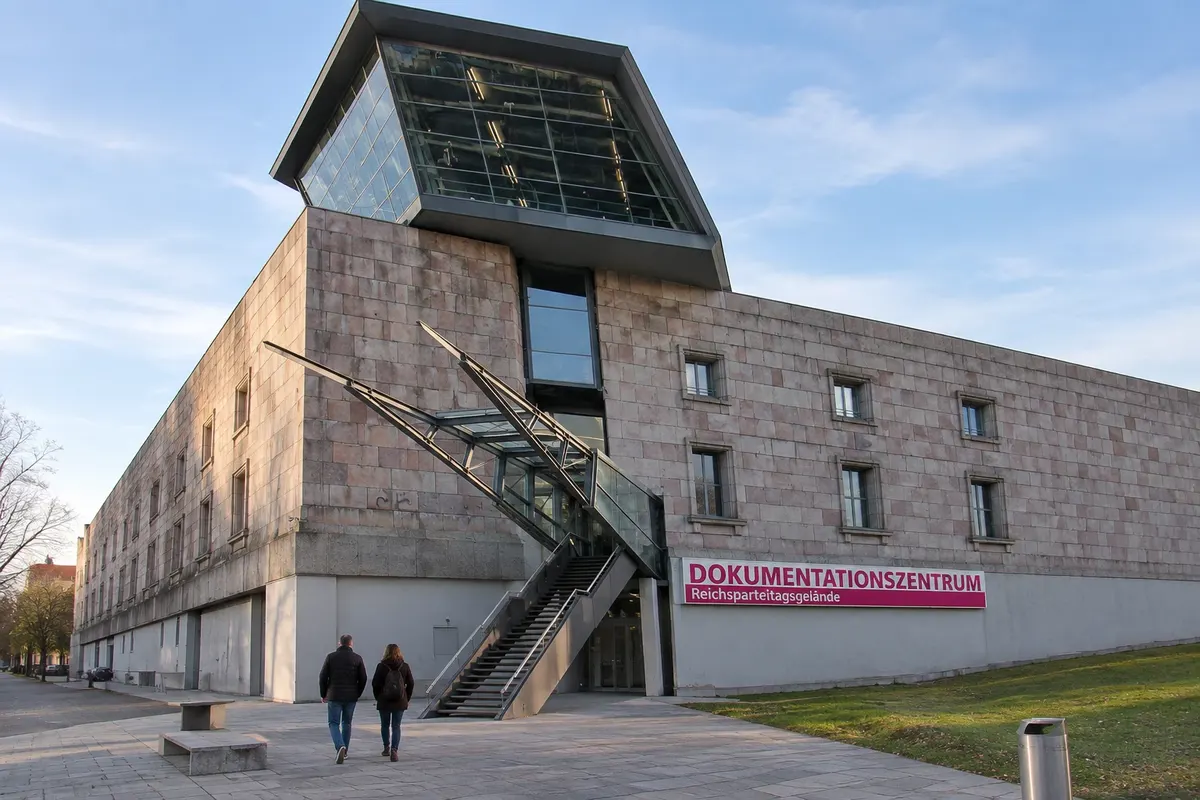
Documentation center in the north wing of the unfinished Kongresshalle, on the former grounds of the Nazi Party rallies. The permanent exhibition explains Nuremberg's role in the party rallies and the consequences of the regime.
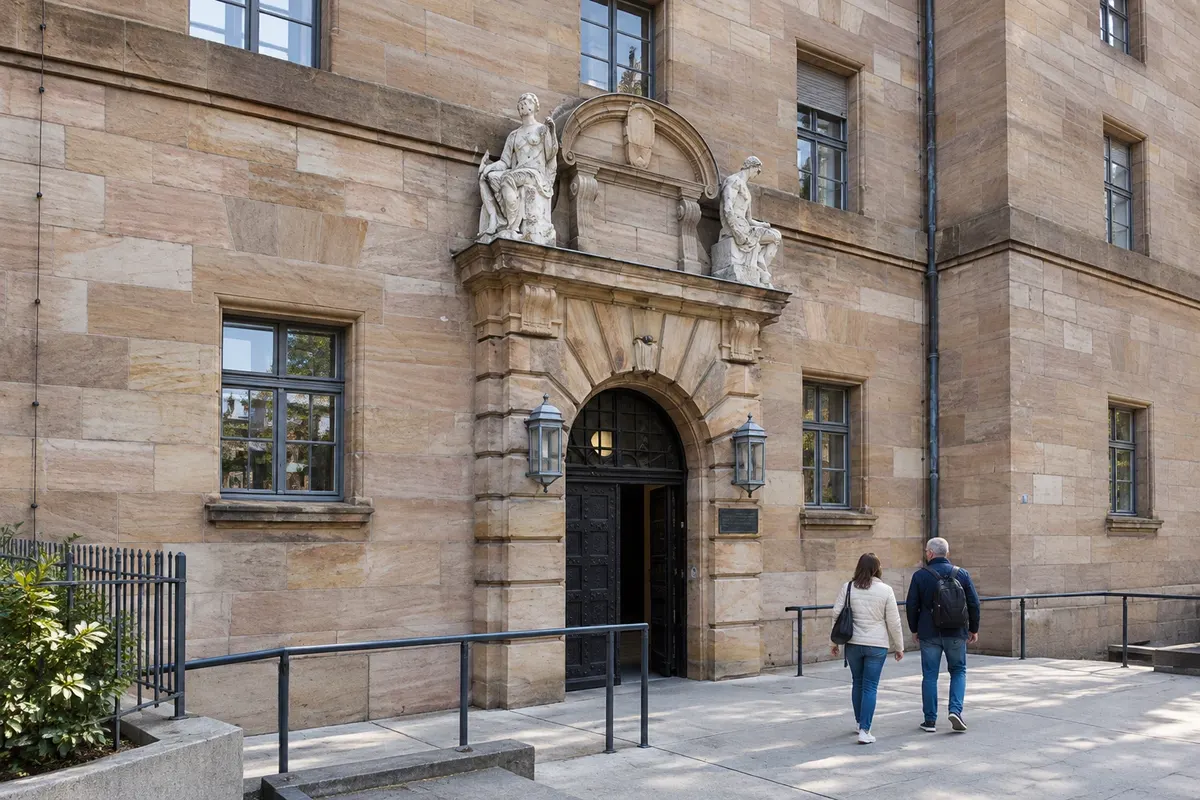
Museum in the Palace of Justice in Nuremberg, featuring Saal 600, the hall where in 1945 the trial of the main Nazi war criminals began, and an exhibition about the trials and their legacy.