

 Antarctica
 Argentina
 Bolivia
 Chile
 Colombia
 Ecuador
 Guyana
 French Guiana
 Falkland Islands (Malvinas)
 Paraguay
 Peru
 Suriname
 Uruguay
 Venezuela
 Germany
 Austria
 Belgium
 Croatia
 Denmark
 Slovakia
 Slovenia
 Spain
 Finland
 France
 Greece
 the Netherlands
 Hungary
 Ireland
 Iceland
 Italy
 Luxembourg
 Norway
 Poland
 Portugal
 the United Kingdom
 the Czech Republic
 Sweden
 Switzerland
 Turkey
 Bermuda
 Canada
 the United States
 Greenland
 Mexico
 Saint Pierre and Miquelon
 the Dominican Republic
 Japan
 South Africa
 Egypt
 Australia
 Fiji
 New Zealand
 Papua New Guinea
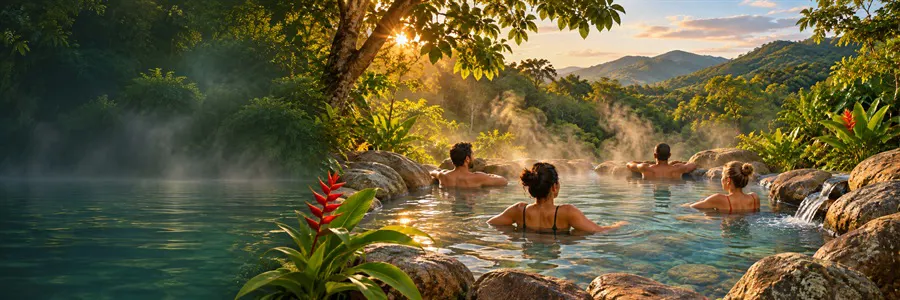
Illustrative images. The pictures in this guide are illustrations based on the real place, not photographs, and may differ from it.


Wellness and spirituality
Thermal waters
Baths in hot water that comes from underground and the resorts of mineral springs: a restful trip with more than a century of tradition.
Thermal water tourism is travel to bathe in water that emerges hot from the ground. In some places in Brazil, rainwater seeps through rock fractures, descends to great depths, warms from the natural heat of the subsurface and returns to the surface in springs and wells. Entire towns grew around these waters.
What to do
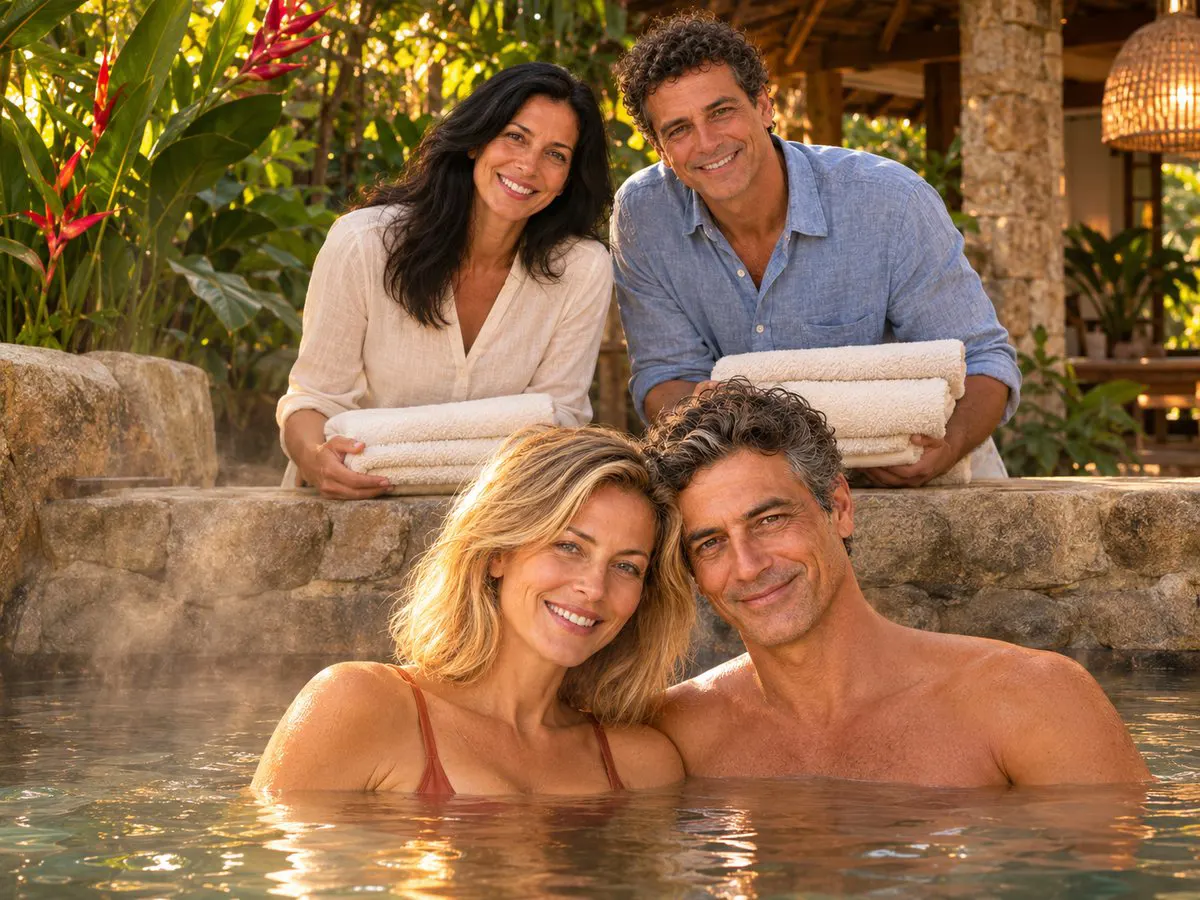
Hot-water pools
Pools supplied by water that comes warm from underground, each with its own temperature.
Learn more
Bathhouses
Buildings constructed for bathing, with stalls, tubs and showers supplied by the spring.
Learn more
Hot-water water parks
Water slides, wave pools and children’s areas supplied by thermal water.
Learn more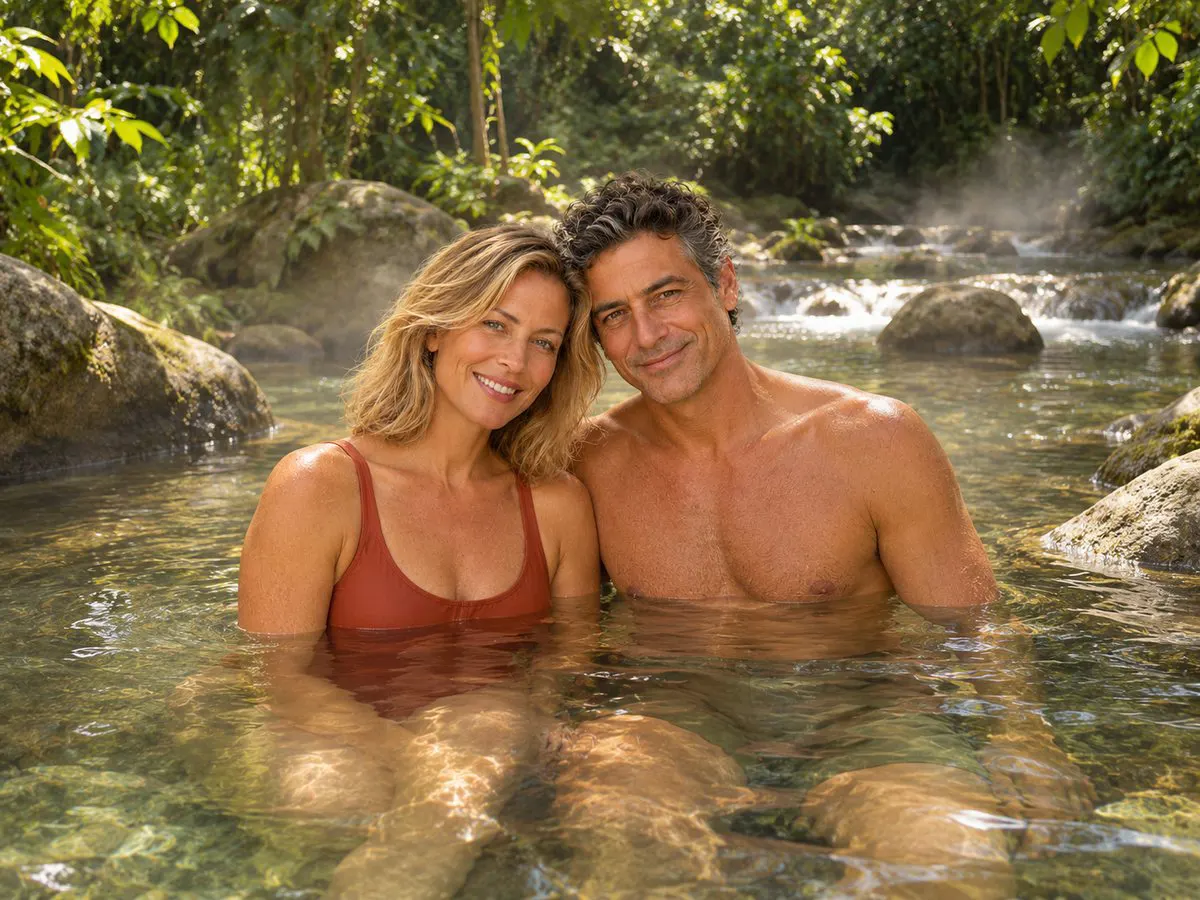
Hot springs and warm streams
Water wells up warm from the ground and runs through the forest, forming natural pools for outdoor bathing.
Learn more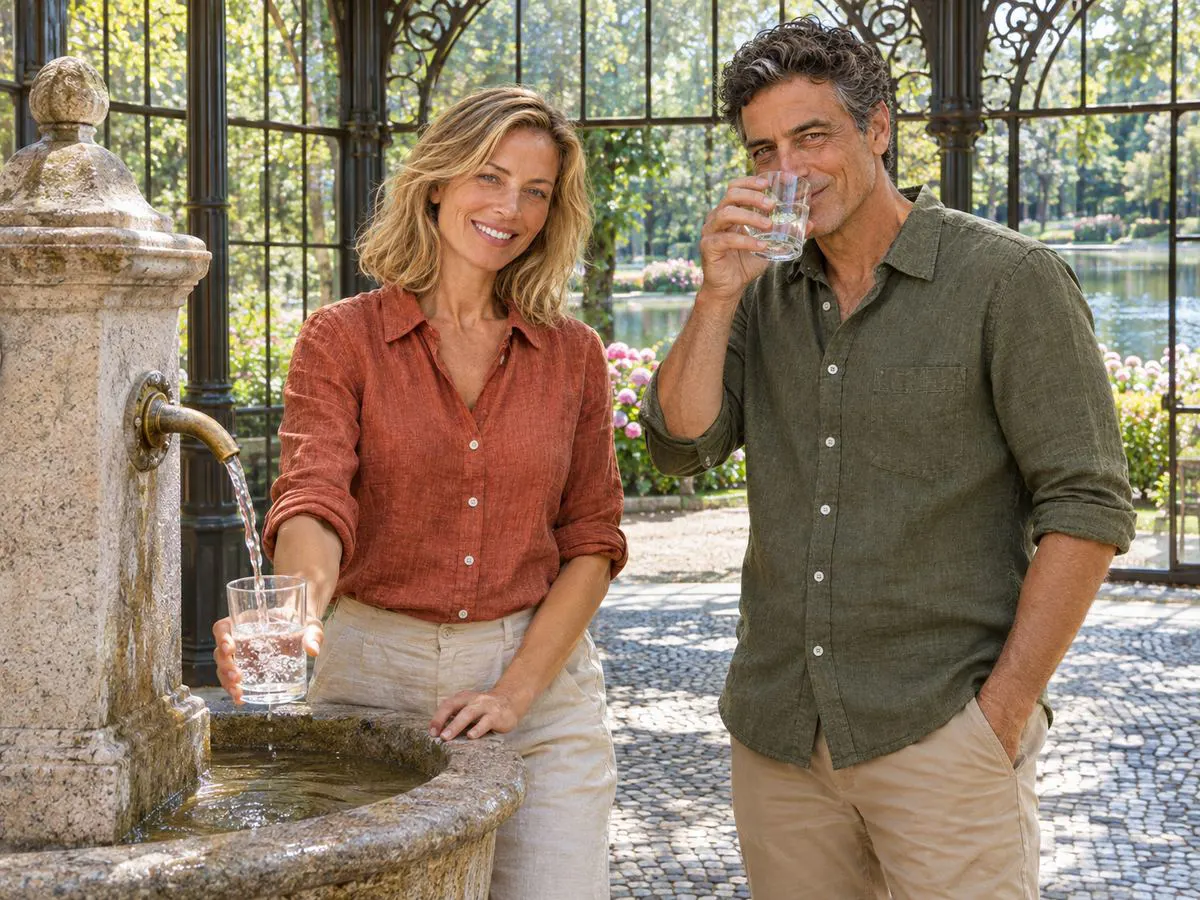
Mineral springs
In the waters parks, the custom is to bring a cup and taste from fountain to fountain.
Learn more
Strolling the resorts
Old hotels, bandstands and tree-lined squares fill the hours between one bath and the next.
Learn moreWhere to go in Brazil
Pick a region or a state on the map, or type what you are looking for, to see the cities and who offers each activity.
- Caldas Novas GO
- Rio Quente GO
-
Araxá MG
Hot-water pools · Bathhouses · Mineral springs · Strolling the resorts
- Cambuquira MG
- Caxambu MG
- Conceição do Rio Verde MG
- Lambari MG
- Passa Quatro MG
- Poços de Caldas MG
- São Lourenço MG
- Tiradentes MG
- Águas da Prata SP
- Olímpia SP
- Socorro SP
- Foz do Iguaçu PR
- Itaipulândia PR
- Gramado RS
Alongside the thermals are hydro-mineral resorts—towns of mineral springs, almost always cold and often carbonated, drunk straight from fountains in tree-filled parks. The two traditions blend and share a common rhythm: unhurried days, long baths, walks in the park and early nights.
What thermal waters and hydro-mineral resorts are
Thermal water is groundwater that reaches the surface at a temperature higher than the surrounding air. In Brazil, the heating is almost always unrelated to active volcanoes: the water warms because it circulates deep underground, and the crust’s temperature increases with depth. Mineral composition varies from place to place, which gives each spring its own smell, taste and color.
The hydro-mineral resorts formed from the 19th century, when bathing seasons and drinking spring waters were a widespread custom. From that era remain the seaside spas, water parks with springs covered by pavilions, old hotels and bandstands. Today the demand is mainly for leisure and relaxation.
The Ministry of Tourism includes thermal and mineral waters under health tourism. Spa, massage and baths without thermal water belong to another type of trip, wellness and health, which fits well with this one.
Who it suits and at what stage of life
It’s a trip across generations. Grandparents, parents and grandchildren find something to do in the same pool, and so thermal towns welcome many family groups and excursions. Parks with shallow pools and water play areas please children.
It also suits those seeking rest without physical effort: older people, couples who want a few days’ pause, people coming off a tiring period. The resorts in Minas Gerais and São Paulo, quieter, suit those who like walking in parks, listening to music at the bandstand and eating homemade sweets.
Thermal water is a leisure experience, not a medical treatment. Anyone with a health condition or who is pregnant should follow their doctor’s advice about hot baths.
Where thermal waters are in Brazil
Goiás has the best-known set. Caldas Novas and neighboring Rio Quente, at the foot of the Caldas hills, gather dozens of wells and springs that feed water parks, clubs and the pools of almost every hotel. In Rio Quente the water wells up in springs and forms a river of warm water. The region operates year-round and is one of the most visited leisure destinations in the Central-West.
In Minas Gerais, Poços de Caldas, on a plateau of ancient volcanic origin, has warm sulfurous waters with a characteristic smell, used in historic bathhouses in the city center. Araxá, in the state’s west, is known for waters used in baths, in a 1940s thermal complex. In southern Minas, São Lourenço, Caxambu and Lambari are part of the traditional water circuit, with parks of carbonated mineral springs for drinking.
In São Paulo, Olímpia, in the state’s northwest, grew around hot-water water parks and receives mainly families. The São Paulo interior also has a circuit of mineral-water resorts, with mild climate and a calm pace.
When to go: cold weather pairs well with hot water
Thermal waters are open any month, but hot baths are more pleasant in the cooler months. From May to August, the Central-West and Southeast have dry days, cool nights and little rain, and this is the most sought-after season, with a peak during the July school break.
In summer, from December to March, it’s hot and rainier, and water parks take on another role: pools and slides are used by day, with the thermal water reserved for the night. January, long holiday weekends and the year-end festivities also fill the towns.
Those seeking quiet have better luck on weekdays and in March to June and August to November, outside holiday periods. In the resorts of southern Minas, winter brings cold early mornings and sometimes frost.
How to plan the trip
The choice of town defines the type of trip. Caldas Novas, Rio Quente and Olímpia are water-park destinations, bustling, with music and programming for children. Poços de Caldas, Araxá and the resorts of southern Minas have a slower pace, with bathhouses, parks, old architecture and outings to the surroundings.
Before booking, it’s worth checking where a hotel’s or park’s pool water comes from: whether it’s natural thermal water or heated. Parks and bathhouses charge separate entrance fees, and some limit the number of daily visitors: check the current schedule and, in high season, buy in advance.
In your bag: two swimsuits, flip-flops, a robe or cover-up for cool nights, sunscreen and a hat. Between baths, the custom is to rest in the shade and drink plenty of water.
Three to four days are enough to enjoy a thermal town. By car, the resorts in Minas Gerais and São Paulo are a few hours from the Southeast capitals; Caldas Novas is accessible by highway from Goiânia and Brasília.
Thermal waters around the world
Thermal bathing culture is ancient and present on almost every continent. In Central Europe, Budapest, Hungary, has large public baths in historic buildings, and Karlovy Vary in the Czech Republic preserves the tradition of colonnades where people drink spring water. In Turkey, Pamukkale features white travertine terraces formed by the hot water.
In Japan, bathing in thermal water—the onsen—is part of everyday life. Hakone and Beppu are towns organized around the springs, with their own bathing etiquette rules. In New Zealand, Rotorua combines hot pools, geysers and bubbling mud. In Uruguay, the Salto region has a series of thermal parks near the Uruguay River.
Frequently asked questions
Where are there thermal waters in Brazil?
The best known are in Caldas Novas and Rio Quente, Goiás; in Poços de Caldas and Araxá, Minas Gerais; and in Olímpia, São Paulo. There are also hot-water resorts in Santa Catarina, Paraná and Rio Grande do Sul.
Why is the water in Caldas Novas hot?
Because it circulates at great depth. Rainwater seeps through rock, heats from the natural heat of the subsurface and returns to the surface still warm. The phenomenon is not related to volcanoes.
When is the best time to go to a thermal town?
From May to August, when the weather is dry and cooler and a hot bath is more pleasant. July is the busiest month. The thermal facilities operate year-round, and in summer the water parks are also used to cool off.
What is the difference between thermal water and mineral water?
Thermal water is water that emerges from the ground hot, above ambient temperature. Mineral water is water that contains dissolved salts in characteristic amounts and can be cold or hot. Many thermal waters are also mineral; in the resorts of southern Minas, the springs are mineral and cold.
Caldas Novas or Rio Quente: which to choose?
The two towns are neighbors. Caldas Novas is larger, with many hotels, clubs and parks and a livelier urban feel. Rio Quente is smaller and concentrates the experience around the springs and a large leisure complex. Many travelers stay in one and visit the other.
Are thermal waters a good destination for children?
Yes. The parks in Caldas Novas, Rio Quente and Olímpia have shallow pools and water play areas. It’s wise to check the temperature posted for each pool and alternate bathing with breaks and drinking water.
What is the water circuit of Minas Gerais?
It’s the group of hydro-mineral resorts in southern Minas, such as São Lourenço, Caxambu and Lambari. Each town has a waters park with carbonated mineral springs of different compositions to sample on site.
Is bathing in thermal water a medical treatment?
No. Thermal bathing is a relaxation and leisure experience and does not replace medical consultation or treatment. Anyone under medical care should continue it and follow their doctor’s guidance about hot baths.
How many days to stay in a thermal town?
Three to four days usually suffice. With a week, it’s possible to visit two nearby resorts or include outings to the surroundings.
More in Wellness and spirituality
Beyond the guide


