

 Antarctica
 Argentina
 Bolivia
 Chile
 Colombia
 Ecuador
 Guyana
 French Guiana
 Falkland Islands (Malvinas)
 Paraguay
 Peru
 Suriname
 Uruguay
 Venezuela
 Germany
 Austria
 Belgium
 Croatia
 Denmark
 Slovakia
 Slovenia
 Spain
 Finland
 France
 Greece
 the Netherlands
 Hungary
 Ireland
 Iceland
 Italy
 Luxembourg
 Norway
 Poland
 Portugal
 the United Kingdom
 the Czech Republic
 Sweden
 Switzerland
 Turkey
 Bermuda
 Canada
 the United States
 Greenland
 Mexico
 Saint Pierre and Miquelon
 the Dominican Republic
 Japan
 South Africa
 Egypt
 Australia
 Fiji
 New Zealand
 Papua New Guinea
Illustrative images. The pictures in this guide are illustrations based on the real place, not photographs, and may differ from it.


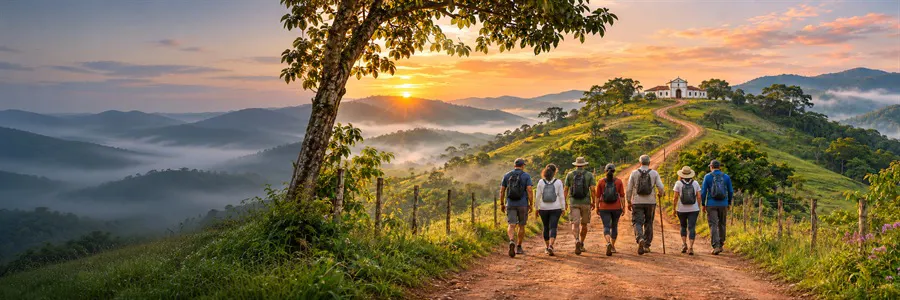
Wellness and spirituality
Spirituality
Sanctuaries, pilgrimages and pilgrimage routes, monasteries that host guests, silent retreats and mystical places: journeys driven by faith or inner searching.
A spirituality trip has as its destination a sacred place, a faith festival or a time of silence. In Brazil, millions of people travel every year to visit a shrine, fulfill a vow, join a procession or walk a pilgrimage route.
What to do
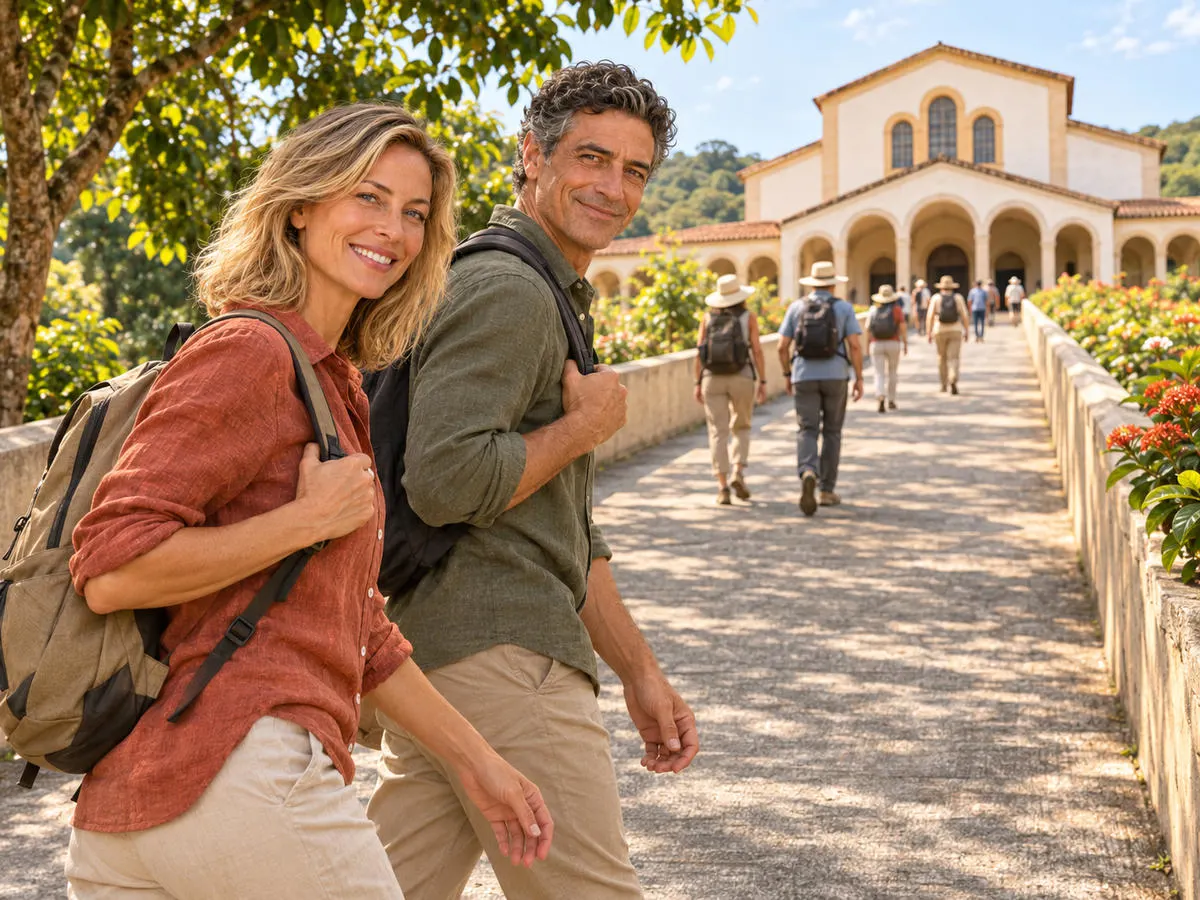
Shrines and pilgrimages
A pilgrimage is a group journey to a shrine, often to fulfill a promise.
Learn more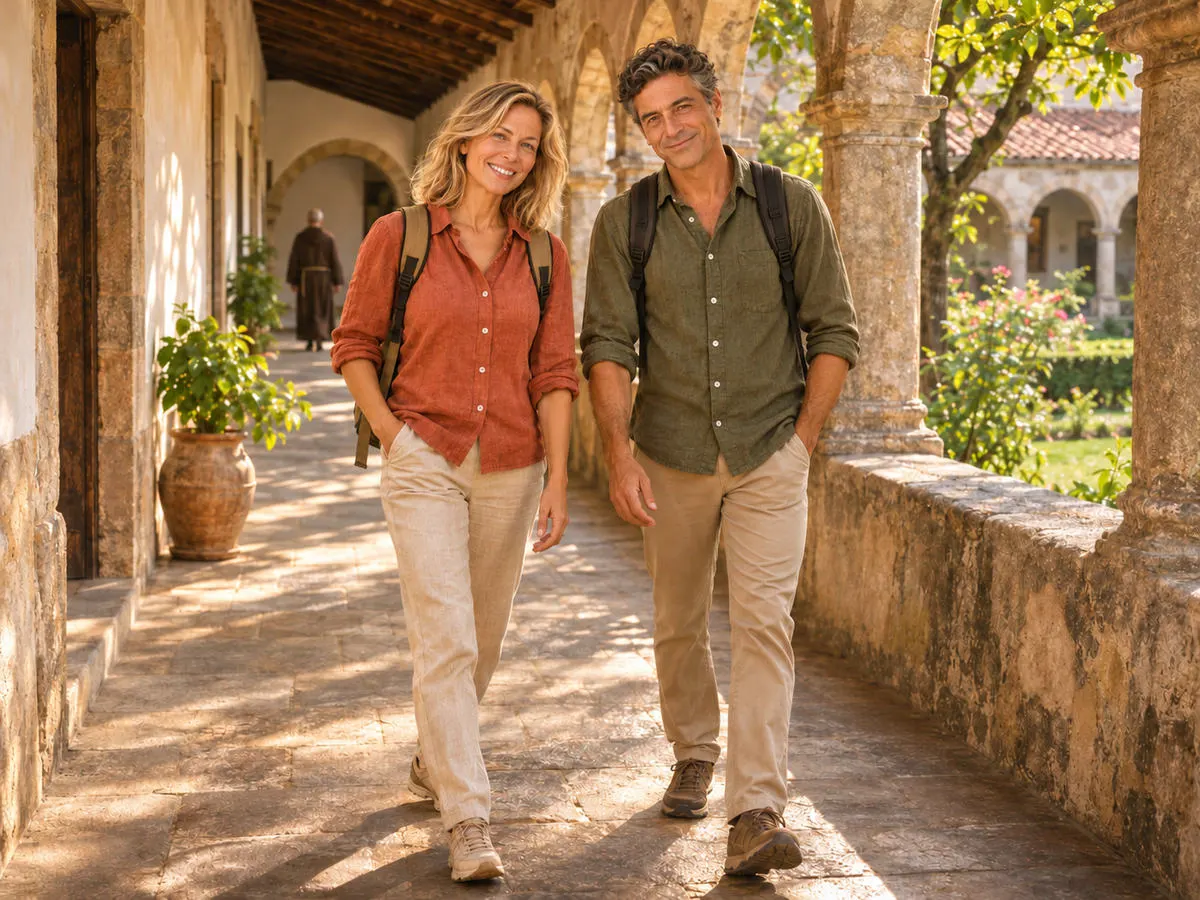
Monasteries that host guests
Simple guesthouses, with meals at fixed times, silence at night and prayers open to arrivals.
Learn more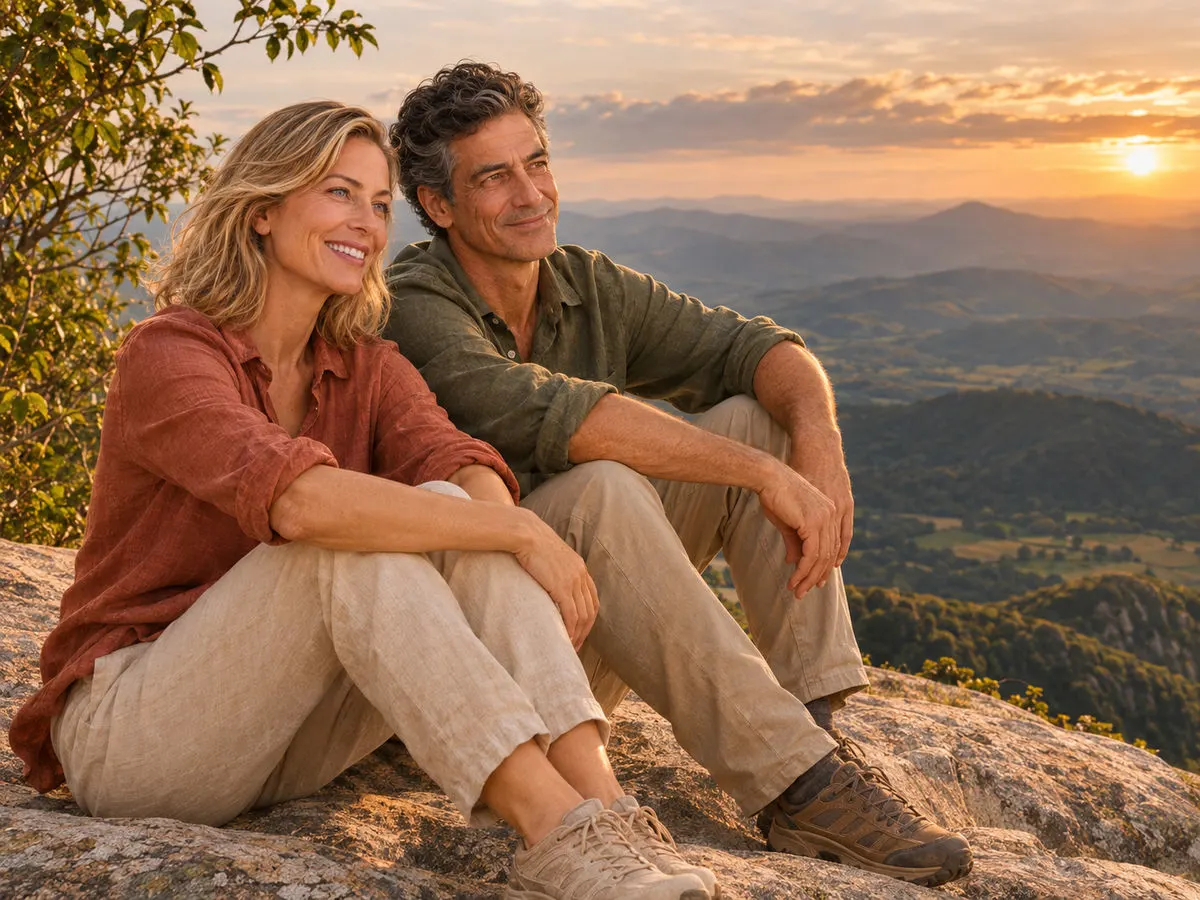
Mystical places
Mountain and plateau villages where the program is to walk and watch the sunset from a high point.
Learn more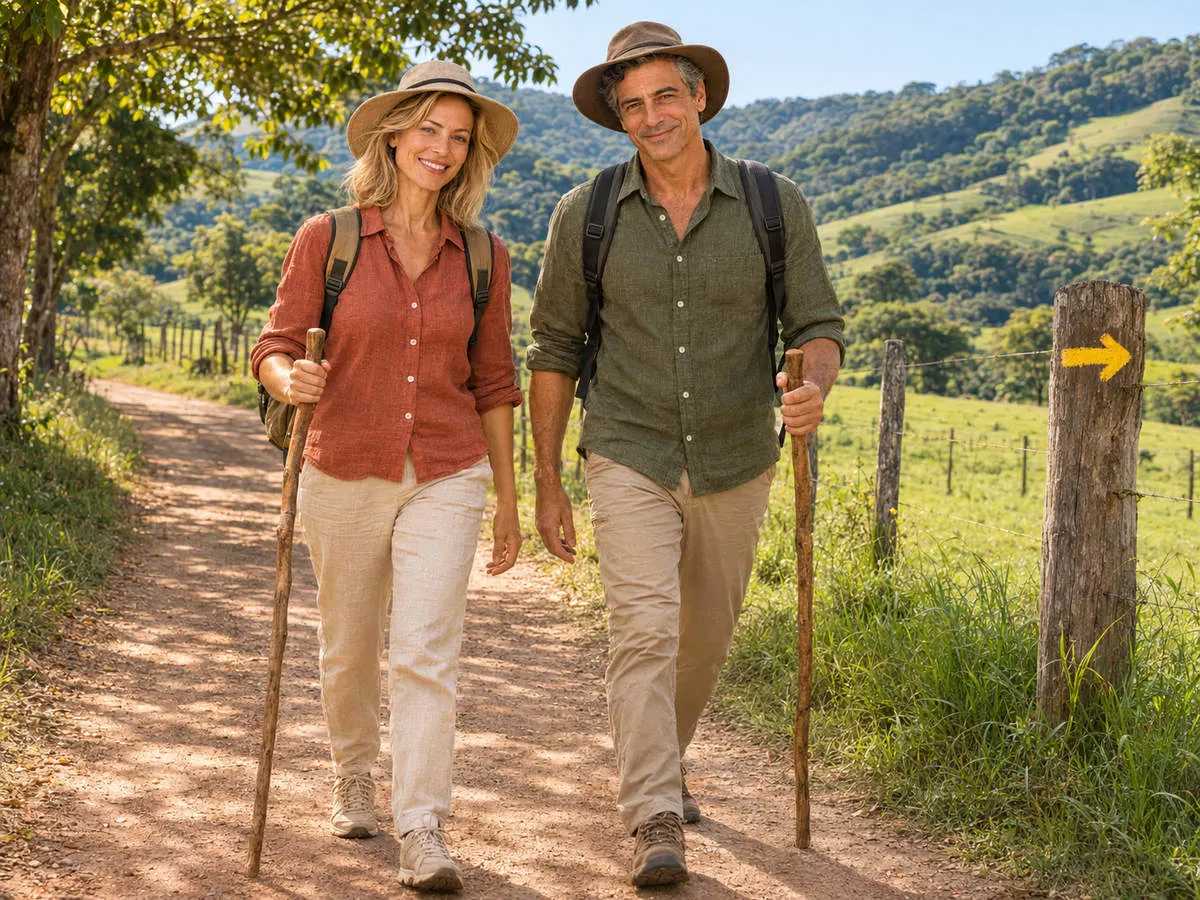
Pilgrimage routes
Marked routes, on foot or by bicycle, where the journey is as important as the arrival.
Learn more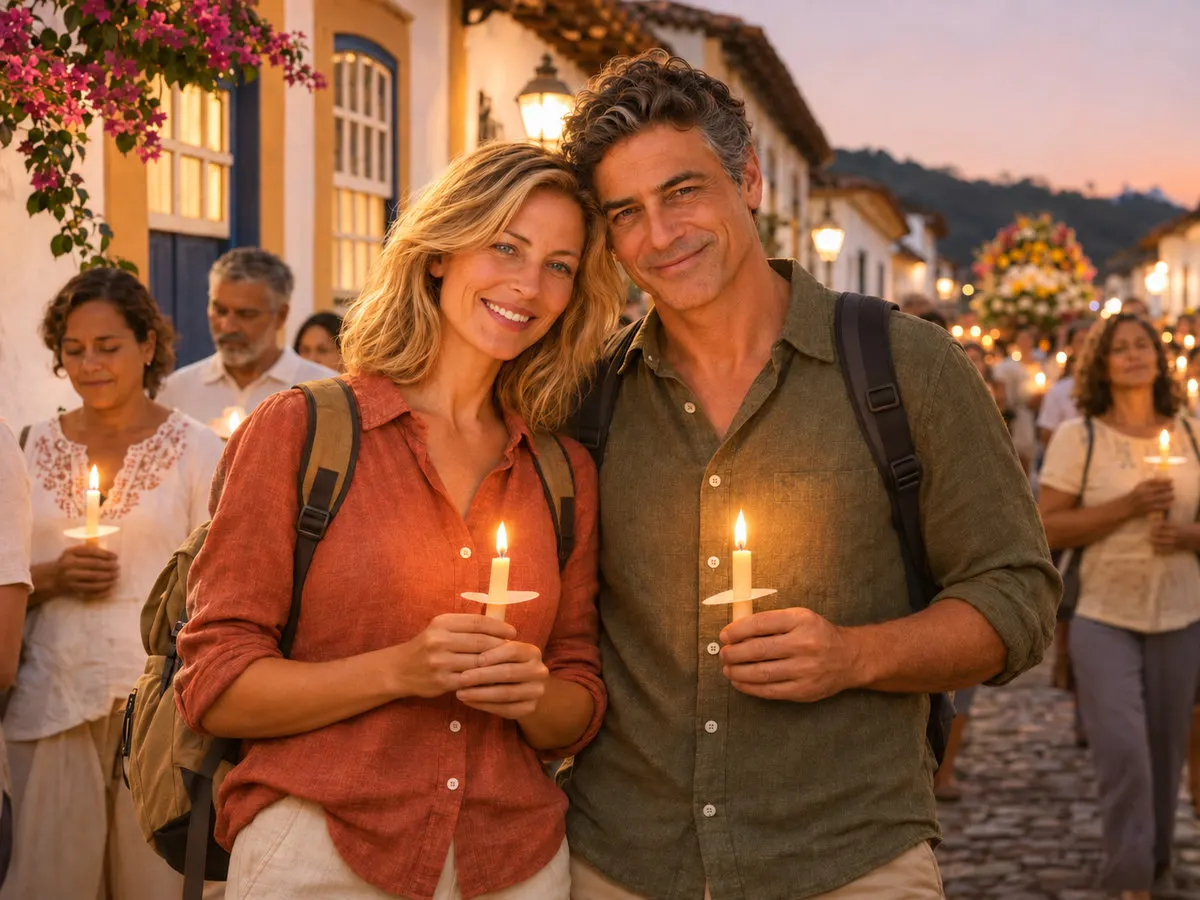
Religious festivals
Processions and patron-saint festivals bring crowds to the streets on set calendar dates.
Learn more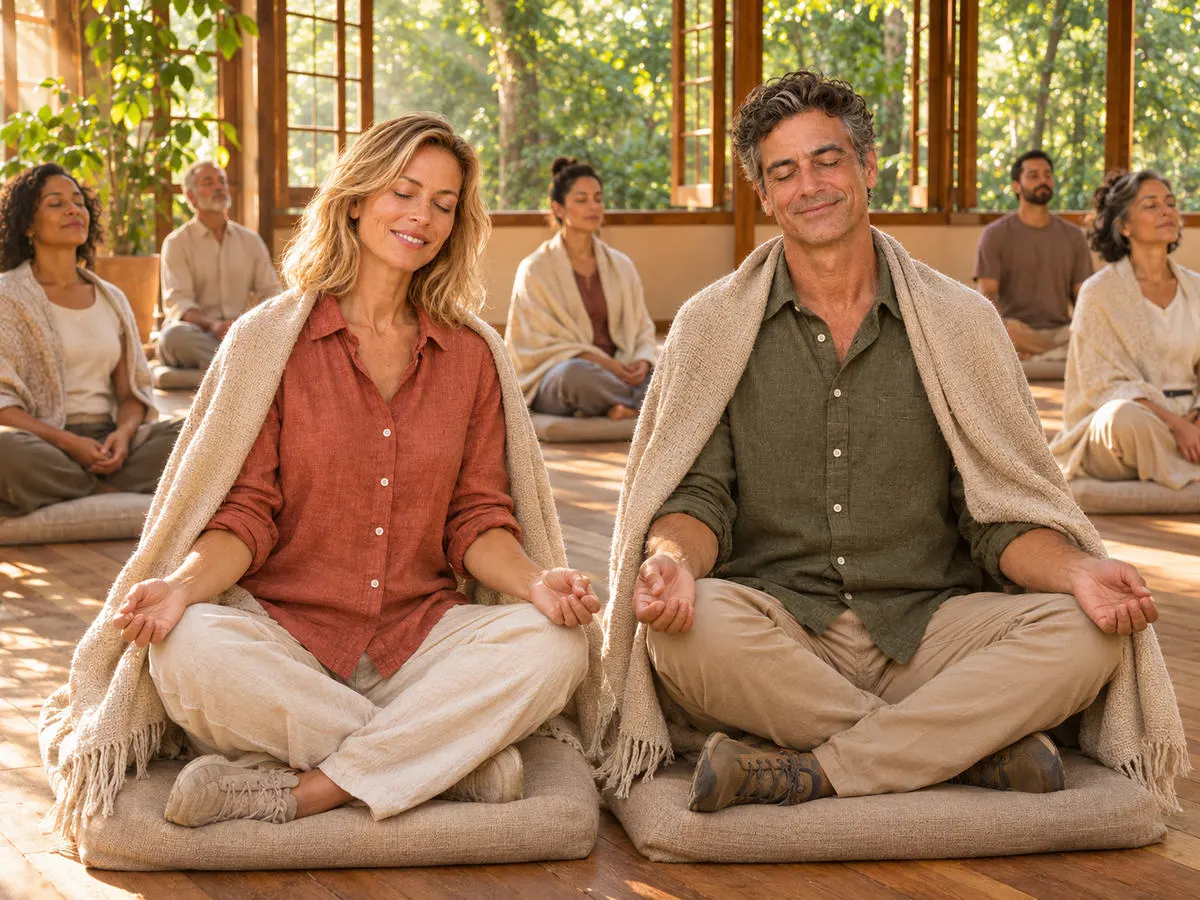
Silence and meditation retreats
Days of pause with meditation, prayer or silence, from a weekend to ten days or more.
Learn moreWhere to go in Brazil
Pick a region or a state on the map, or type what you are looking for, to see the cities and who offers each activity.
- Macapá AP
- Parintins AM
- Belém PA
- Cachoeira do Arari PA
- Marituba PA
- Ituaçu BA
-
Salvador BA
Shrines and pilgrimages · Religious festivals · Mystical places
- São Luís MA
- João Pessoa PB
- Olinda PE
- Canguaretama RN
- Brasília DF
- Alto Paraíso de Goiás GO
- Cidade de Goiás GO
- Pirenópolis GO
- Chapada dos Guimarães MT
- Cuiabá MT
- Marechal Floriano ES
- Vila Velha ES
- Alto Caparaó MG
- Baependi MG
- Barão de Cocais MG
- Caeté MG
- Catas Altas MG
- Conceição do Rio Verde MG
- Congonhas MG
- Mariana MG
- Ouro Fino MG
- Ouro Preto MG
- São Lourenço MG
- São Thomé das Letras MG
- Serro MG
- Petrópolis RJ
- Teresópolis RJ
- Aparecida SP
- Brotas SP
- Cachoeira Paulista SP
- Guaratinguetá SP
- Ilhabela SP
- Santos SP
- São José dos Campos SP
- Antonina PR
-
Campo do Tenente PR
Monasteries that host guests · Silence and meditation retreats
- Foz do Iguaçu PR
- Itaipulândia PR
- Paranaguá PR
- Piraí do Sul PR
- Santo Ângelo RS
- Três Coroas RS
- Luiz Alves SC
- Navegantes SC
Alongside faith practiced in religions, travel by those who seek without belonging to a tradition is growing: meditation and silence retreats, stays in monasteries, mountain and plateau villages known as mystical places. The country brings together Catholic shrines, terreiros of African-derived religions, evangelical temples, spiritist centers, synagogues, mosques and Buddhist temples, and all these paths fit within this type of travel.
What religious and spiritual tourism is
Religious tourism is the set of trips motivated by faith and the practice of a religion: pilgrimages and processions, visits to sanctuaries and temples, retreats, patron saint festivals and gatherings of the faithful. The Ministry of Tourism classifies it as a segment of cultural tourism.
The same ministry recognizes a second segment, mystical and esoteric tourism: travel in search of spiritual growth and self-knowledge through alternative practices such as meditation and spiritually oriented walks, without a necessary link to a religion.
The two often meet in the same traveler. The pilgrim who gives thanks for a grace, the one who makes the route their experience, and the person who spends days in silence travel for similar reasons: to stop, to give thanks, to ask, to understand. Those who visit churches for their art and architecture are on a different kind of trip: cultural and historical tourism.
Who it suits and at what stage of life
These are trips linked to significant moments: a grace received, an illness overcome in the family, a birth, a loss, entering retirement. Many families repeat the same pilgrimage every year, and the trip is passed from parents to children.
They suit groups of all ages. Organized excursions by religious communities bring older people with comfort and companionship. Walking routes attract those who want to combine physical effort, silence and reflection.
Retreats and mystical places are sought by solo travelers and by those going through a period of change: the end of a work cycle, a separation, a decision to make. You don’t need to have a religion, and each traveler gives the experience whatever meaning they choose.
Where to go: sanctuaries, routes and mystical places in Brazil
Aparecida, in the Paraíba Valley of São Paulo, houses the National Sanctuary of Nossa Senhora Aparecida, patron saint of Brazil, the country’s most visited pilgrimage center. It can also be reached on foot via the Caminho da Fé, which crosses the Mantiqueira Range along rural roads; the traditional branch starts in Águas da Prata and usually takes about two weeks.
In Belém, the Círio de Nazaré draws a crowd into the streets on the second Sunday of October. In Salvador, century-old churches coexist with some of the country’s oldest candomblé terreiros, and celebrations like the Lavagem do Bonfim in January and Iemanjá on February 2 show the meeting of Catholicism and Afro-Brazilian religions.
In Minas Gerais, the 18th-century Santuário do Caraça sits inside a nature reserve in the mountains near Catas Altas and hosts guests in an inn within the complex, with daily Masses and trails around it. In the Serra Gaúcha, Três Coroas is home to a Tibetan Buddhist temple, founded in 1995, that is open to visitors and offers retreats.
Among mystical places, Alto Paraíso de Goiás, in the Chapada dos Veadeiros, brings together meditation spaces and alternative communities alongside cerrado waterfalls. In southern Minas, São Thomé das Letras, built on a light-colored rocky ridge, has attracted for decades travelers interested in caves, legends and the sunsets from its viewpoints.
When to go: the calendar of faith and the season for routes
On a faith journey, the date determines the trip. If you want to take part in a festival you must follow the calendar; if you prefer to visit a place calmly you should avoid those dates. On festival days, accommodations fill up months in advance.
The main dates repeat every year. Holy Week falls in March or April. The patron saint’s feast in Aparecida is October 12, and the Círio de Nazaré in Belém is on the second Sunday of that month. In Salvador, the large public festivals run from December to February.
For walking routes, the dry, cool months from April to September are the most sought after. On the plateaus of central Brazil the dry season runs from May to September, with clear skies and cold nights. Retreats have their own calendars and limited availability.
How to plan: group, lodging and respect for the rules
In a group, the simplest option is an organized tour run by a community or agency, which takes care of transport and lodging. If you go on your own, it’s wise to book in advance for festival dates and arrive early at the shrines.
Places of worship require respect for each tradition’s rules: modest clothing, silence during services, and attention to areas where photography is not allowed. At terreiros, mosques, synagogues and temples, visits usually depend on prior arrangement or an invitation, with specific guidance from those in charge.
Anyone considering a retreat should read the program carefully: schedules, meals, silence rules, who leads it and what line or tradition is followed. For a first experience, a short weekend retreat lets you get to know the format. A retreat is a pause and does not replace medical or psychological care.
For walking, bring already-broken-in footwear, a light backpack, a hat, water and stages planned according to each person’s fitness. In processions and large gatherings, it helps to agree on a meeting point with your group.
Pilgrimage and sacred places around the world
In Spain, Santiago de Compostela is the destination of pilgrimage routes that have crossed Europe since the Middle Ages. In Portugal, Fátima receives pilgrims year-round, with the largest gatherings on May 13 and October 13. In Italy, Assisi preserves the memory of Saint Francis.
In Japan, the Kumano Kodo trails connect mountain shrines on the Kii Peninsula, and on Mount Koya (Koyasan) visitors can stay at Buddhist temples and attend the morning ceremony.
Among places sought for mysticism, Sedona in Arizona, among red rock formations, attracts travelers interested in meditation, and the stone circle of Stonehenge in England draws visitors at sunrise on the solstices.
Frequently asked questions
What is religious tourism?
It is travel motivated by faith and the practice of a religion: pilgrimages, visits to shrines and temples, retreats and patron-saint festivals. In the Ministry of Tourism’s classification, it is a subset of cultural tourism.
What is mystical and esoteric tourism?
It is travel in search of spiritual growth and self-knowledge through alternative practices, such as meditation and spiritually oriented walks, in places to which people attach special meaning. It does not require a tie to a religion.
What are the main religious tourism destinations in Brazil?
Aparecida, in São Paulo, is the most visited. Belém, with the Círio de Nazaré, and Salvador, with its churches, terreiros and festivals, also stand out.
What are Brazil’s mystical places?
Alto Paraíso de Goiás, in Chapada dos Veadeiros, and São Thomé das Letras, in southern Minas Gerais, are the best known. Both combine nature, meditation spaces and local traditions of legends.
How does a spiritual retreat work?
It is a stay with a program focused on pause: meditation, prayer, study or silence, depending on the organizer’s line. It usually lasts from a weekend to ten days or more, generally with lodging and meals on site. Rules vary, and it’s advisable to read the program before signing up.
Do you need to have a religion to take part in a retreat or stay at a monastery?
Not necessarily. There are retreats linked to religious traditions and secular retreats centered on silence and meditation, and monastery guesthouses that welcome visitors of any belief. What is required is respect for the household’s schedules and silence.
What is the Caminho da Fé?
It is a pilgrimage route on foot or by bicycle that leads to Aparecida along rural roads in the Serra da Mantiqueira. The traditional branch departs from Águas da Prata, in São Paulo, and is usually done in about two weeks on foot.
When does the Círio de Nazaré take place?
The large procession takes place in Belém on the second Sunday of October. The program includes other pilgrimages in the preceding days and extends for about two weeks.
When is the best time to visit Aparecida?
For a quiet visit, go Monday to Friday, outside of October and holiday periods. The patronal festival is on October 12, when the city receives the highest number of pilgrims of the year.
Can people who are not religious visit shrines and festivals?
Yes. Shrines and public festivals welcome visitors of any faith. What is asked is respect: modest clothing, silence during services and attention to photography rules.
More in Wellness and spirituality
Beyond the guide


