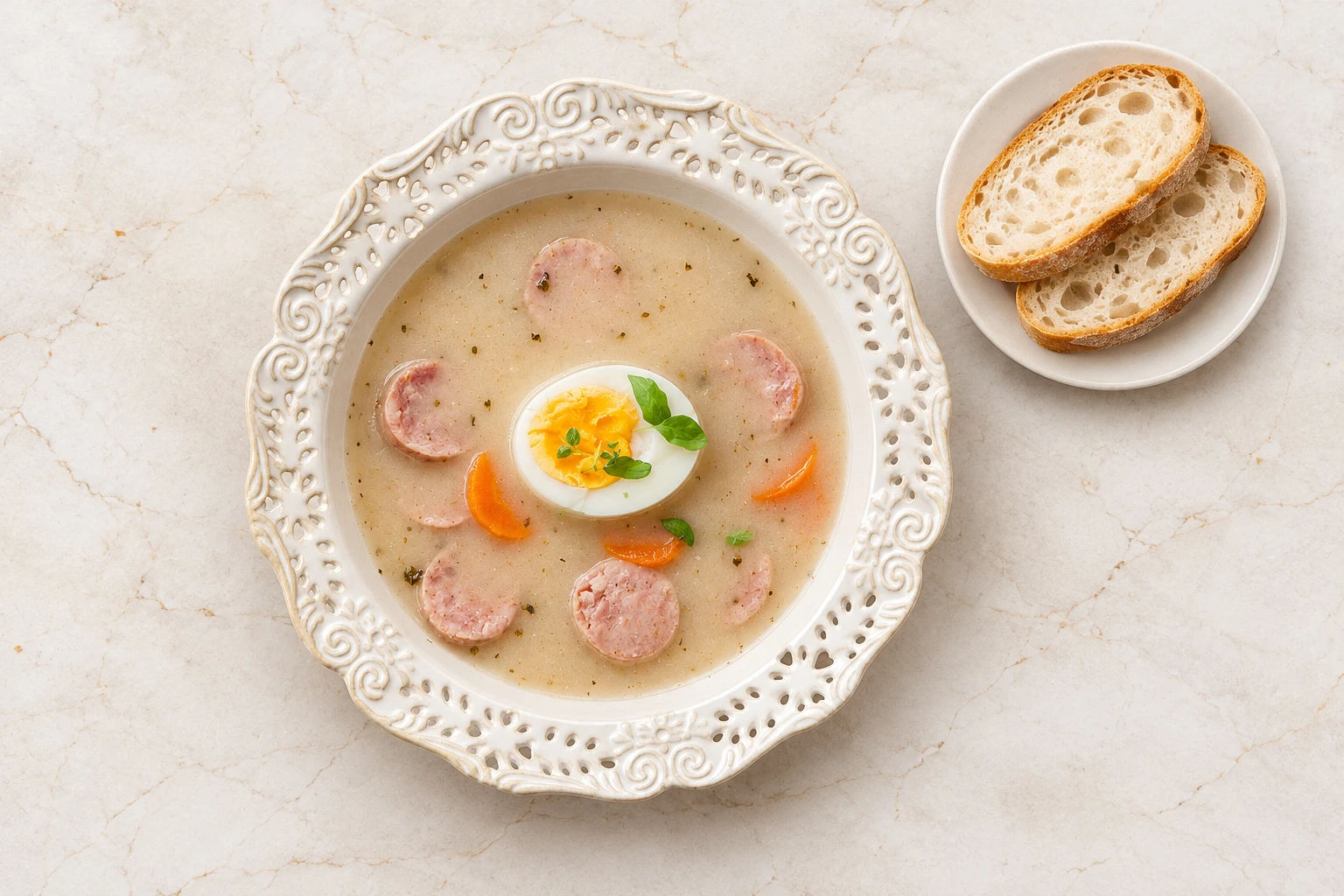
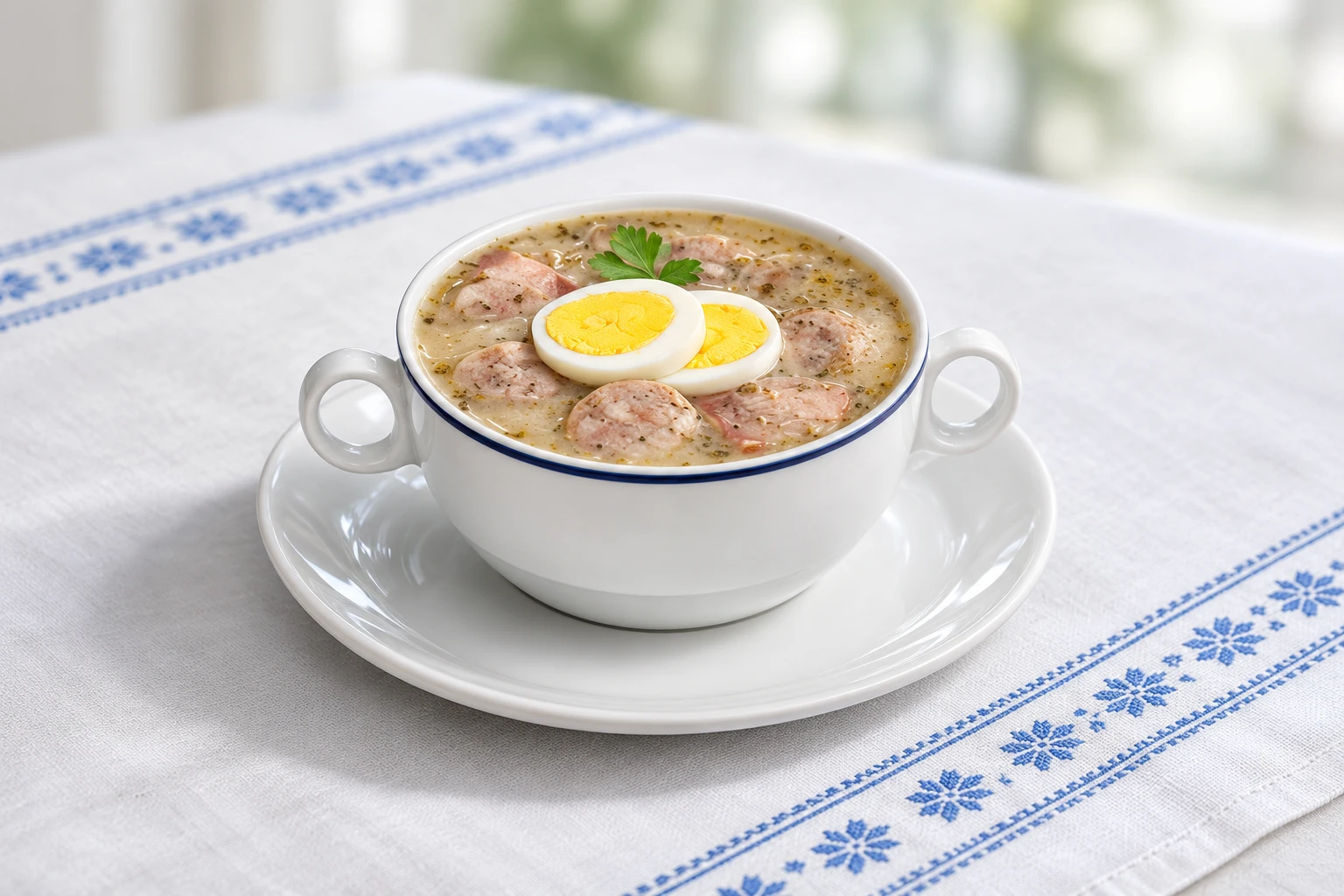
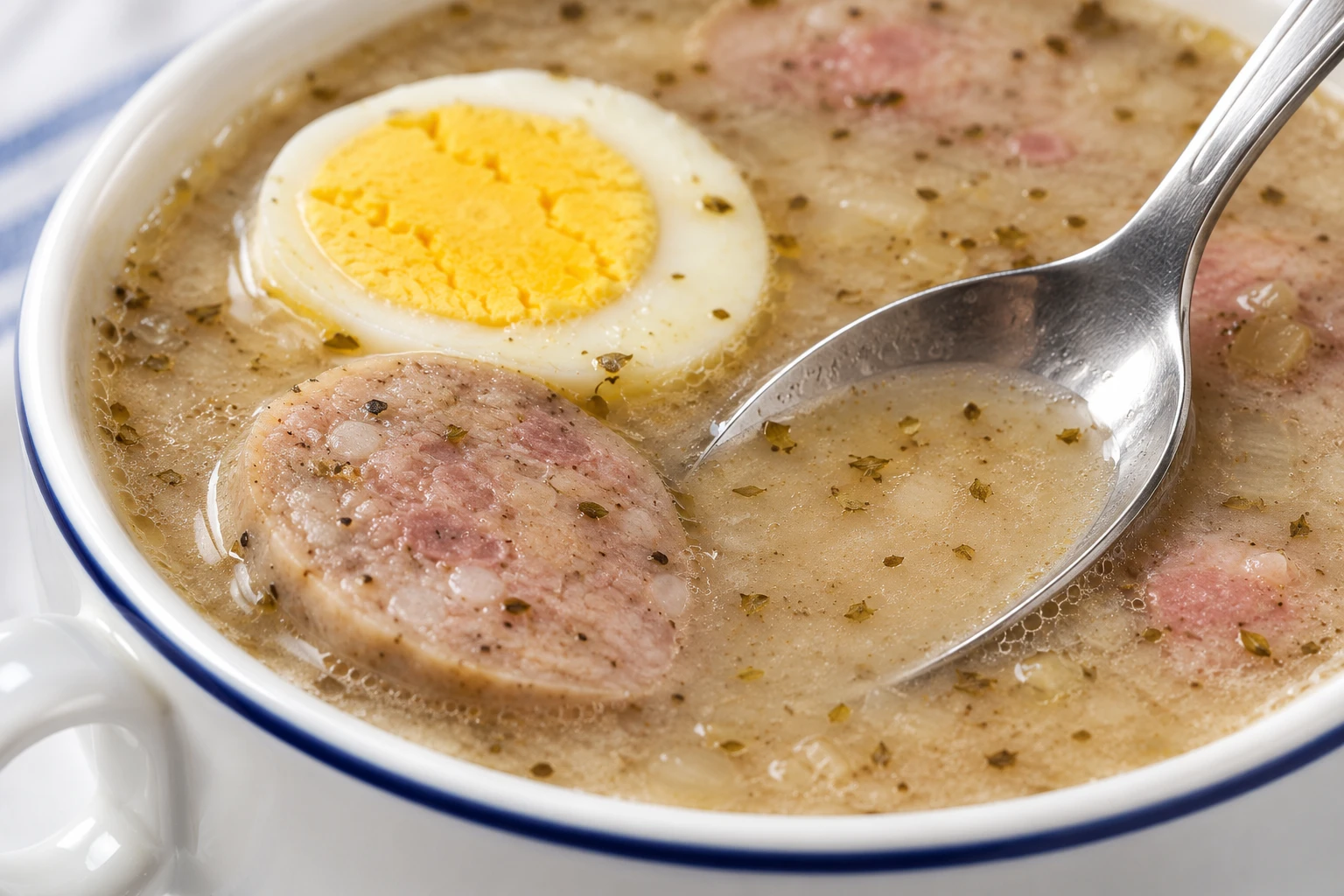
Żurek is a tart, full-bodied soup. Its base is zakwas, a mixture of rye flour and water that ferments for a few days, sometimes with garlic and bay leaf. The zakwas is added to a meat or vegetable broth and thickens the soup. White sausage, bacon, potato, mushrooms, horseradish and marjoram are often included, and the bowl is finished with half a boiled egg and, if desired, sour cream.
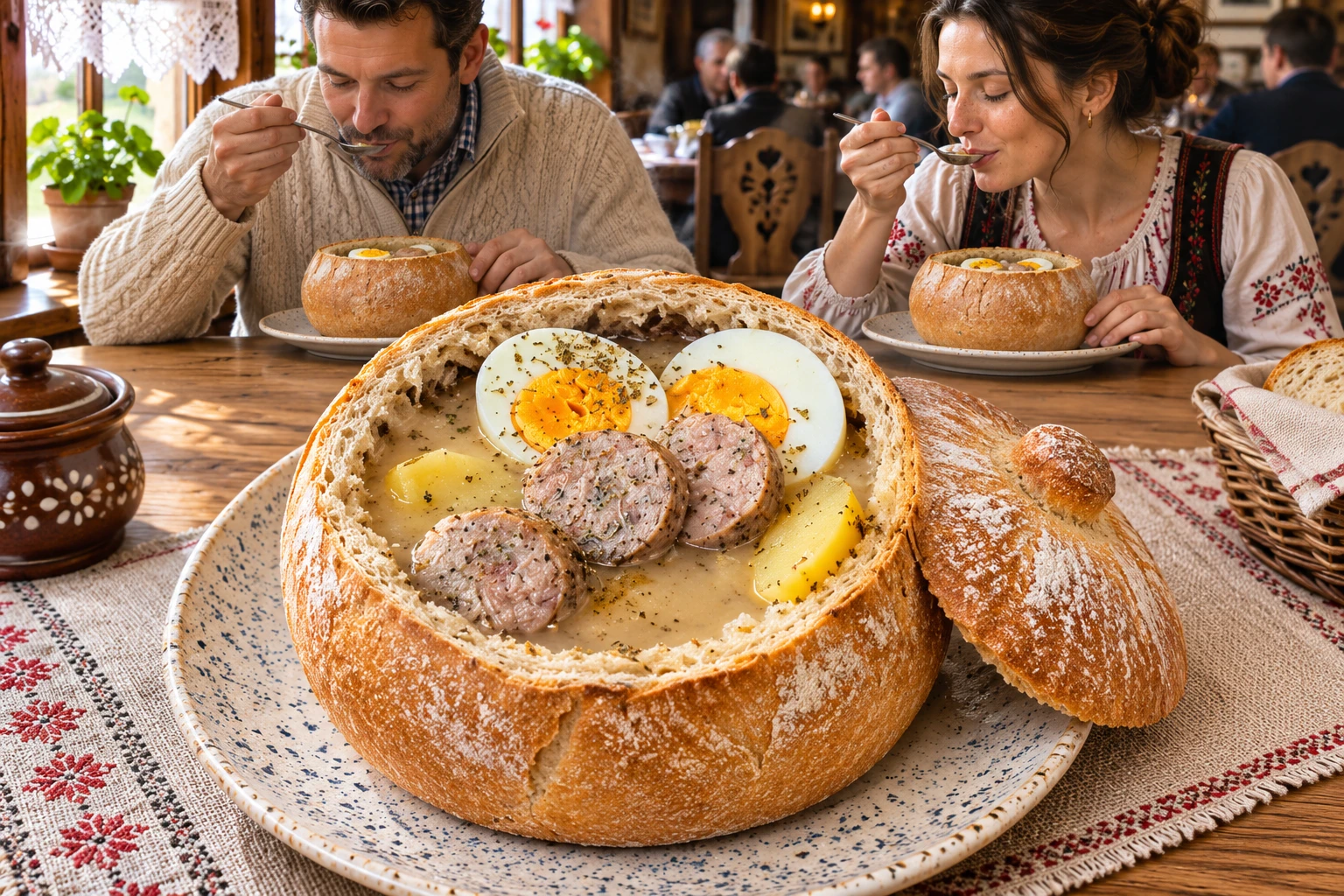
At Easter, żurek is made with white sausage — a fresh pork sausage seasoned with marjoram and garlic — and eggs, and it opens the Sunday meal. Many people serve it inside a round loaf with the interior hollowed out. It is one of the central dishes on the Easter table. For centuries, the meatless version was a fasting food, served alongside herring.
Żurek has regional variations. In parts of the country it is called żur, and there are recipes using other grains, buttermilk or mashed potato; barszcz biały, a sour wheat soup, is a close relative. Outside Easter, żurek appears year-round on the menus of restaurants and milk bars.


 Brazil
 Argentina
 Bolivia
 Chile
 Colombia
 Ecuador
 Guyana
 French Guiana
 Falkland Islands (Malvinas)
 Paraguay
 Peru
 Suriname
 Uruguay
 Venezuela
 Germany
 Austria
 Belgium
 Croatia
 Denmark
 Spain
 Finland
 France
 Greece
 the Netherlands
 Hungary
 Ireland
 Iceland
 Italy
 Luxembourg
 Norway
 Portugal
 the United Kingdom
 the Czech Republic
 Sweden
 Switzerland
 Turkey
 Canada
 the United States
 Mexico
 the Dominican Republic
 South Africa
 Australia
 Fiji
 New Zealand
 Papua New Guinea