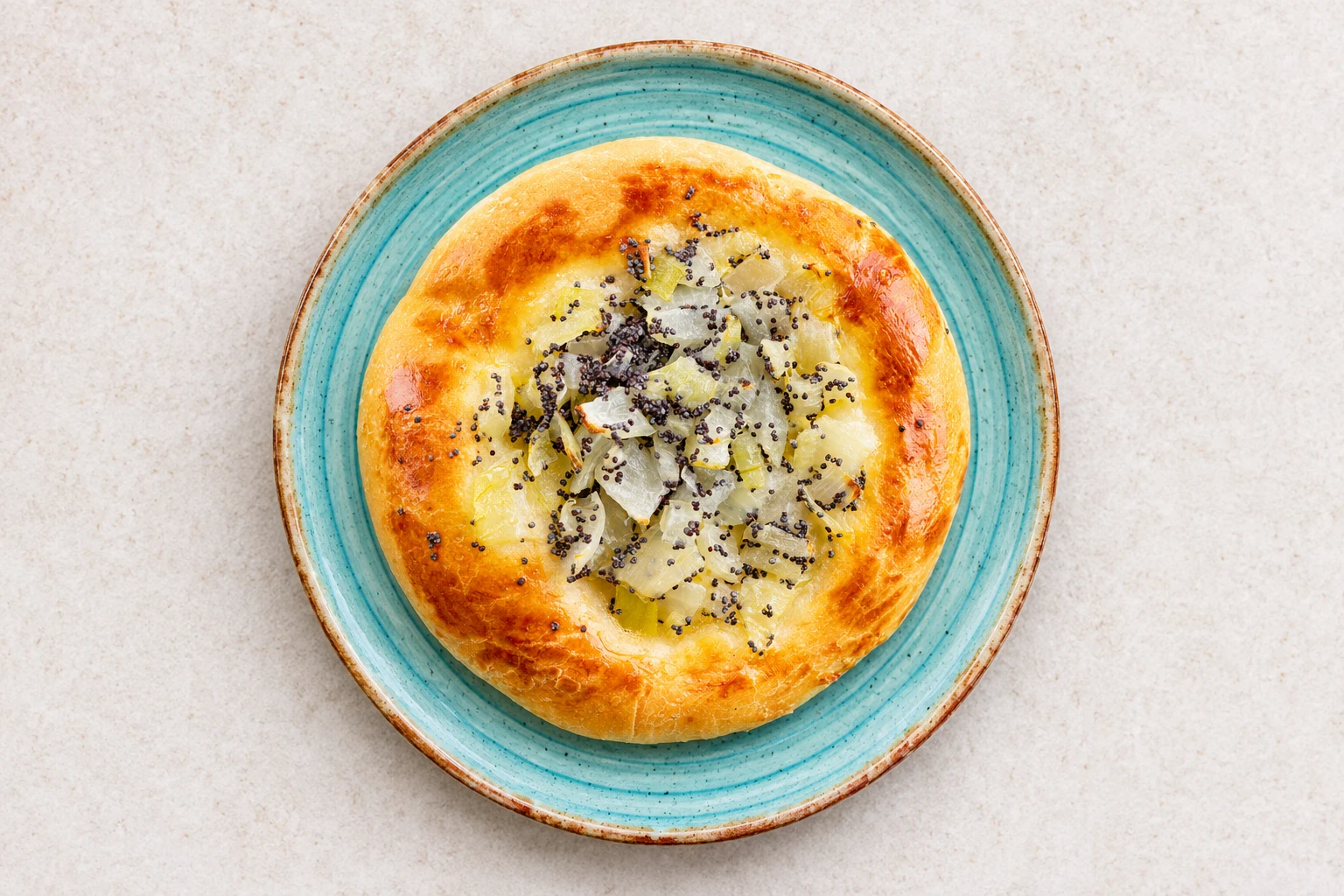
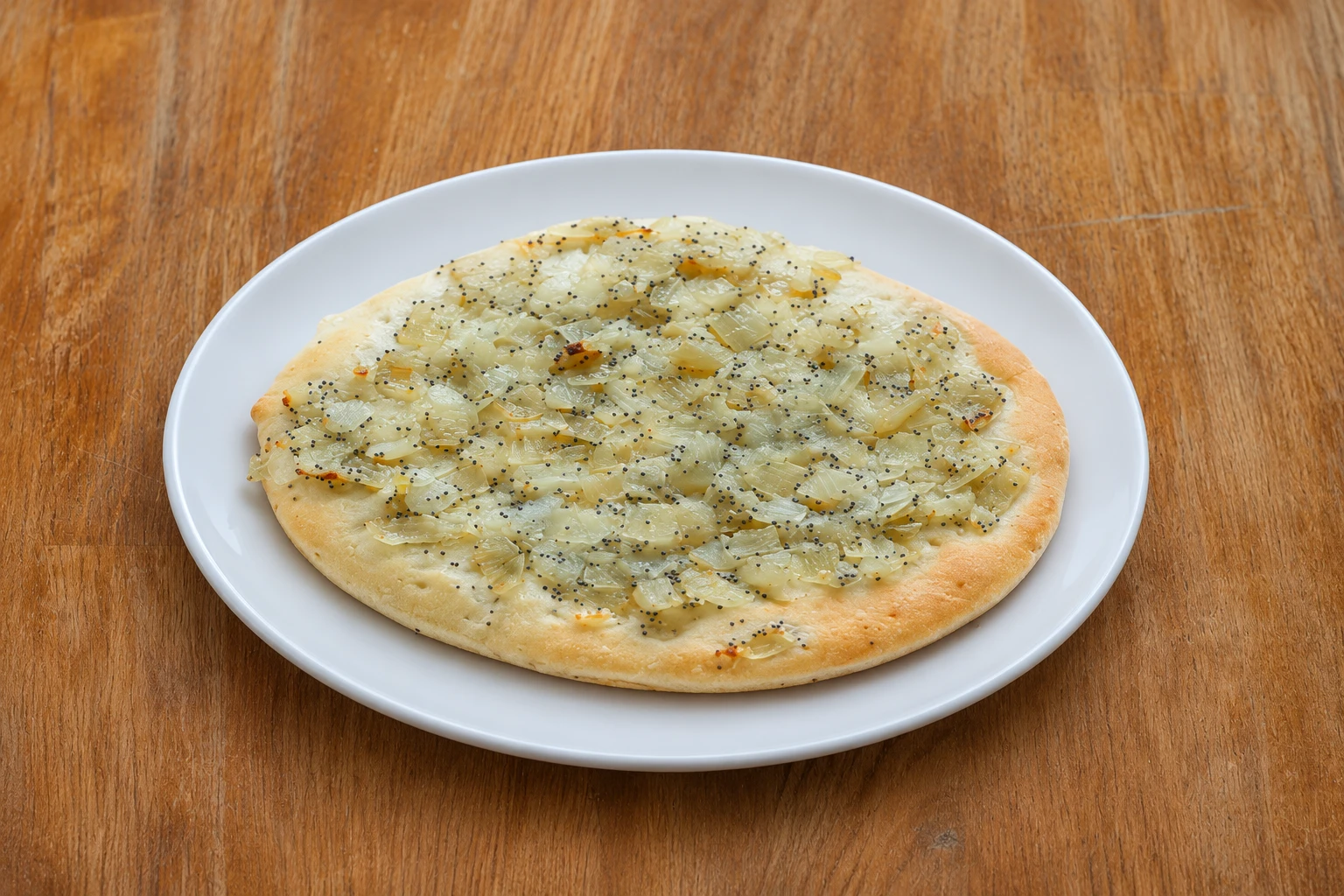
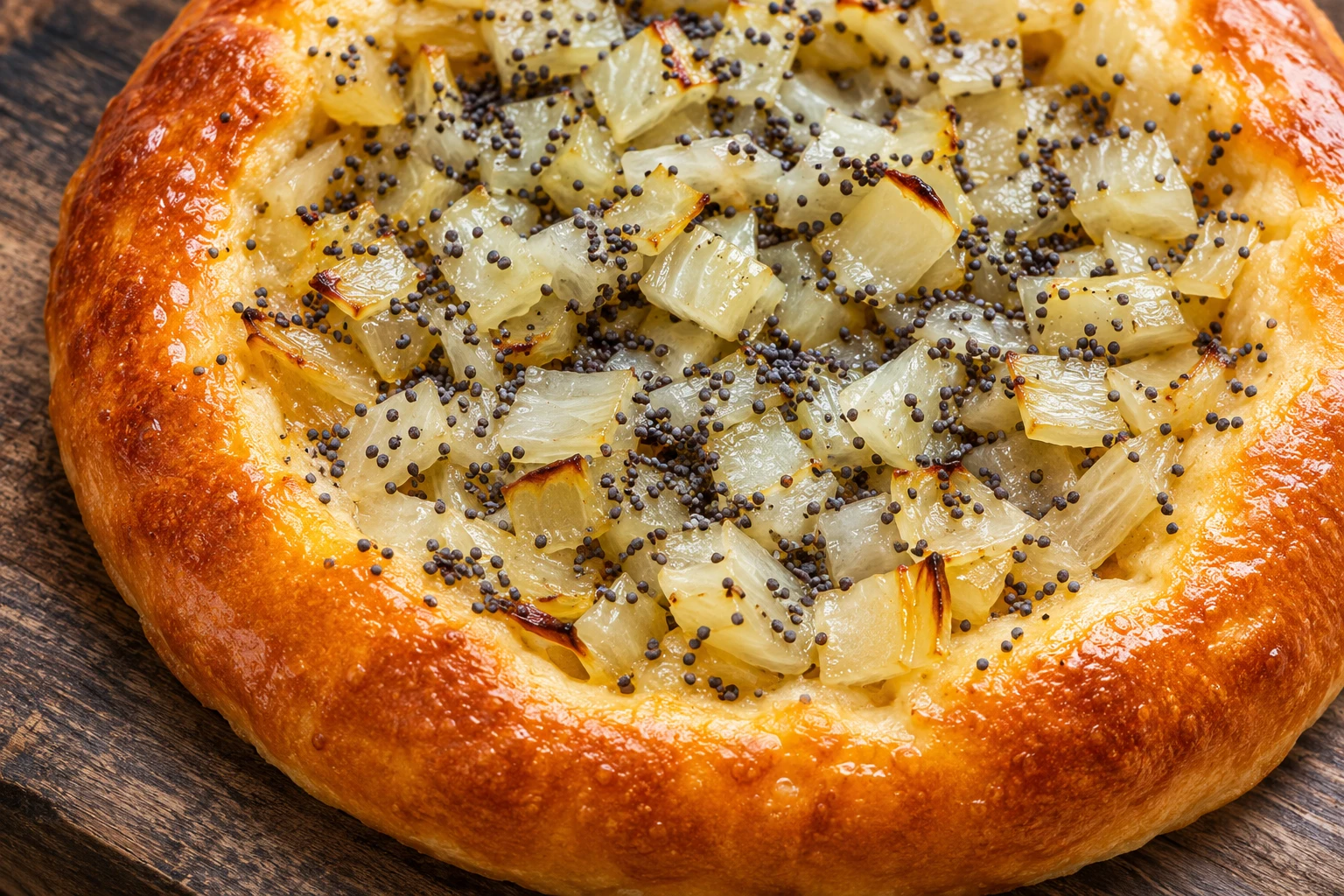
Cebularz lubelski is a wheat dough disk 5 to 25 cm in diameter and about 1.5 cm thick, with a high, crispy rim. The dough contains more sugar and fat than ordinary bread. On top there is a layer of finely chopped raw onion mixed with poppy seed, salt, and oil. In the oven the onion browns and perfumes the kitchen, and the crumb becomes light and soft.
The geographical indication dossier states that the first to bake the cebularz were Jewish bakers from Lublin’s old town, and that written references to the recipe date from the 19th century. Between 1919 and 1939, cebularz was made in many Jewish bakeries in the city and sold by street vendors in baskets. After World War II it was baked again in the first reopened bakery in Lublin and became part of bakeries throughout the region.
In 2007 cebularz entered Poland’s List of Traditional Products, and in 2014 the name cebularz lubelski was registered as a protected geographical indication by the European Union. All stages, from filling to baking, must take place in the Lublin voivodeship, and the disk is shaped by hand. Because the onion is not cooked beforehand, cebularz keeps for about 48 hours.
In Lublin, cebularz is sold in bakeries and at regional fairs and festivals, whole or in pieces. It is eaten as a snack, cold or warm, at any time of day.


 Brazil
 Argentina
 Bolivia
 Chile
 Colombia
 Ecuador
 Guyana
 French Guiana
 Falkland Islands (Malvinas)
 Paraguay
 Peru
 Suriname
 Uruguay
 Venezuela
 Germany
 Austria
 Belgium
 Croatia
 Denmark
 Spain
 Finland
 France
 Greece
 the Netherlands
 Hungary
 Ireland
 Iceland
 Italy
 Luxembourg
 Norway
 Portugal
 the United Kingdom
 the Czech Republic
 Sweden
 Switzerland
 Turkey
 Canada
 the United States
 Mexico
 the Dominican Republic
 South Africa
 Australia
 Fiji
 New Zealand
 Papua New Guinea