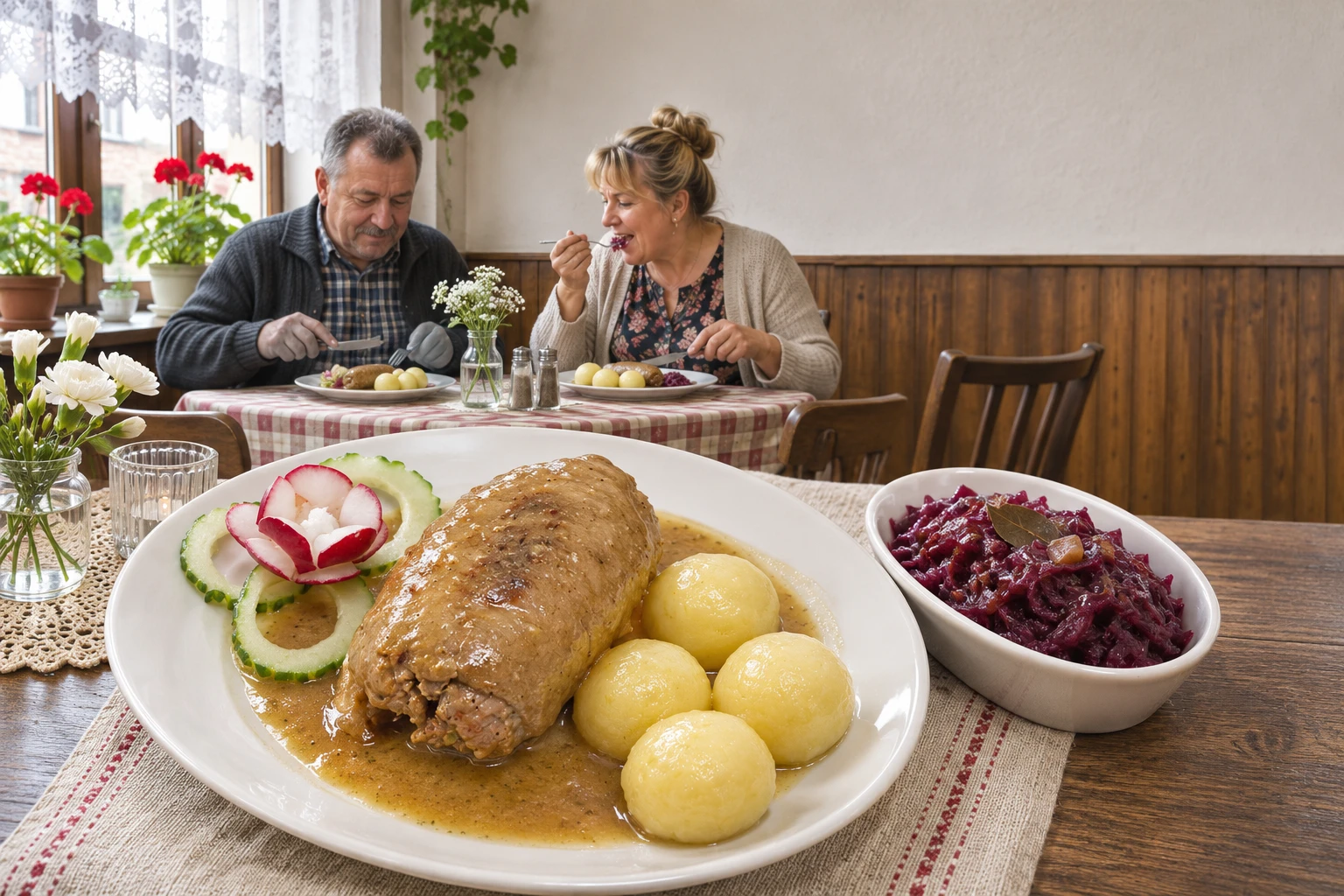
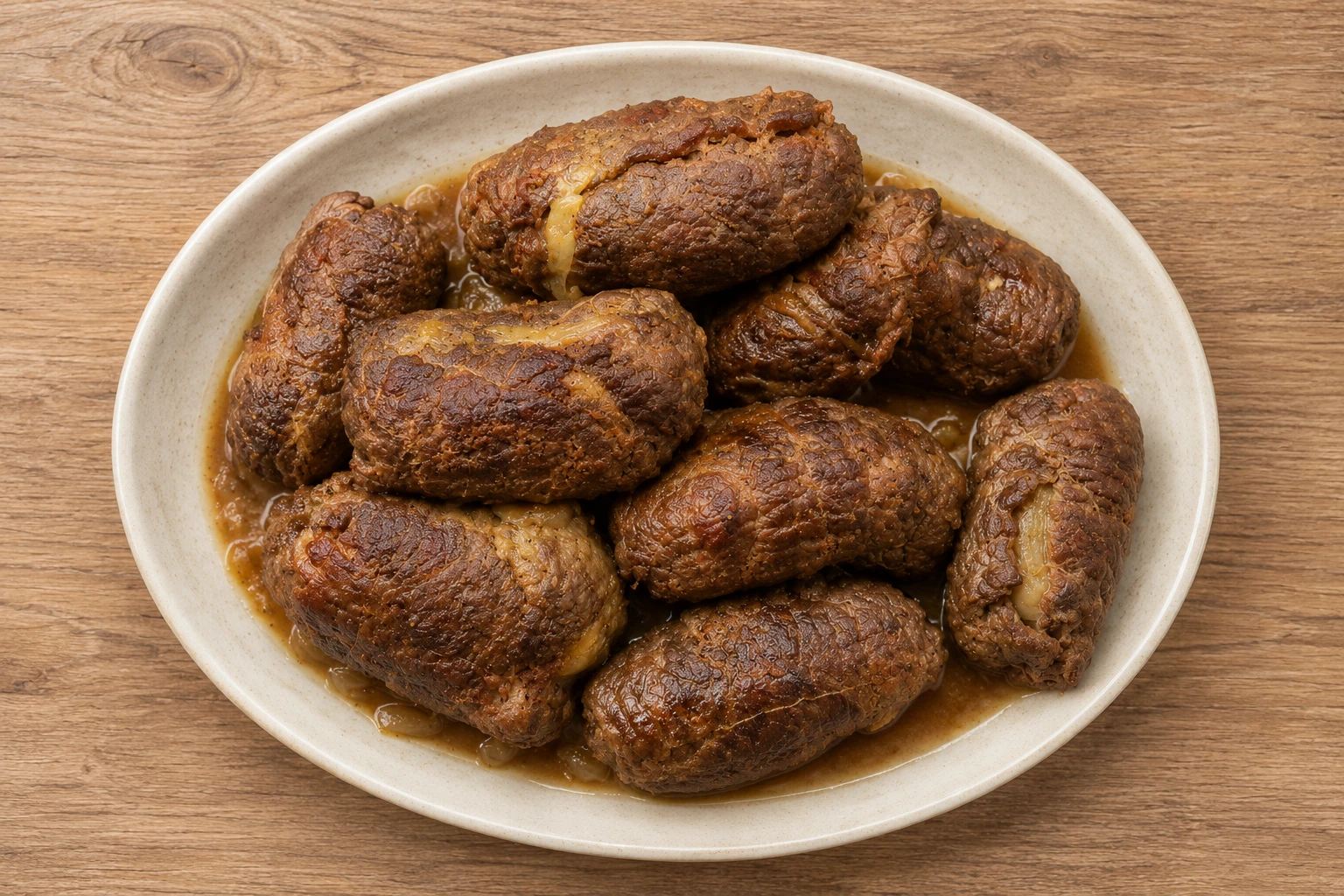
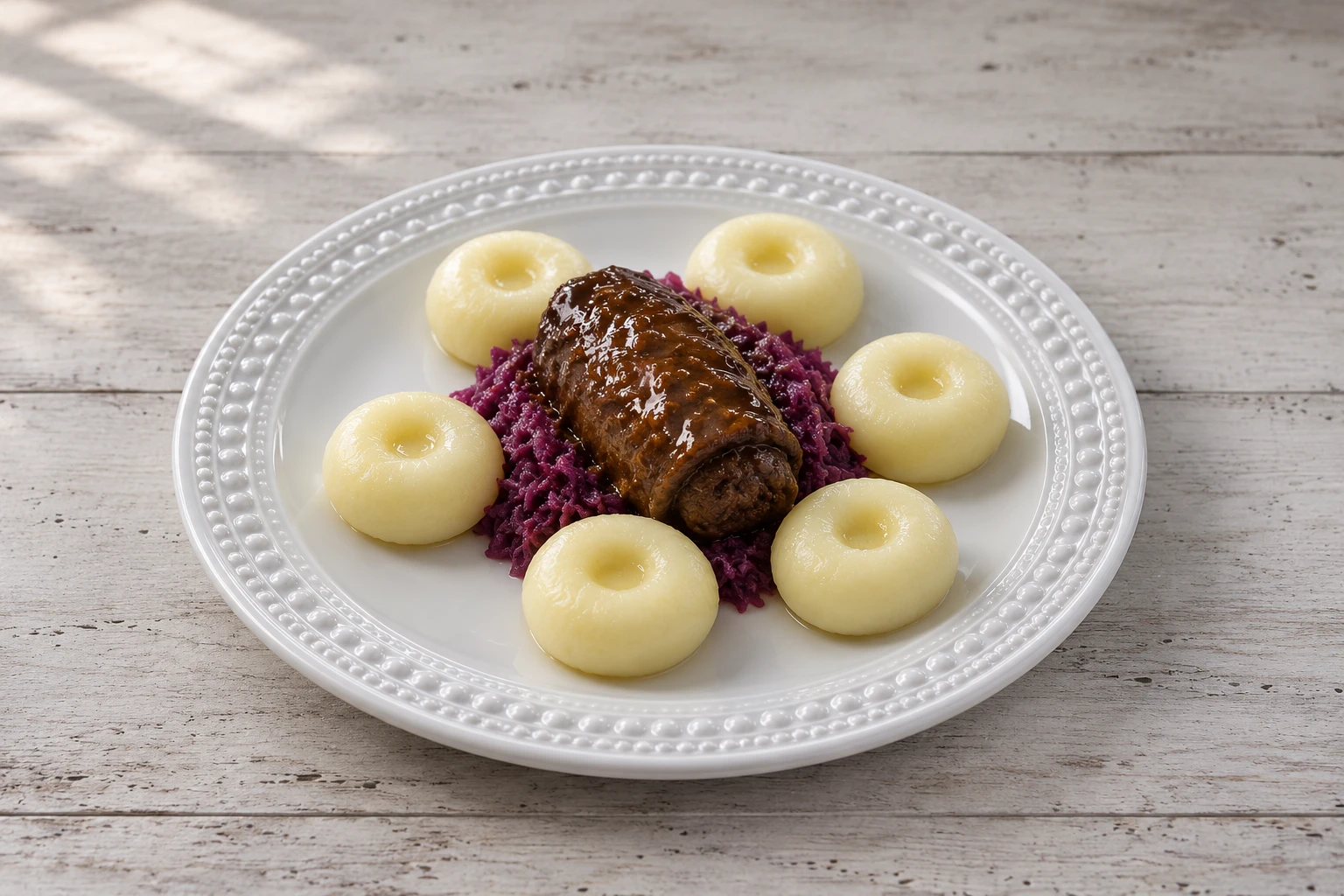
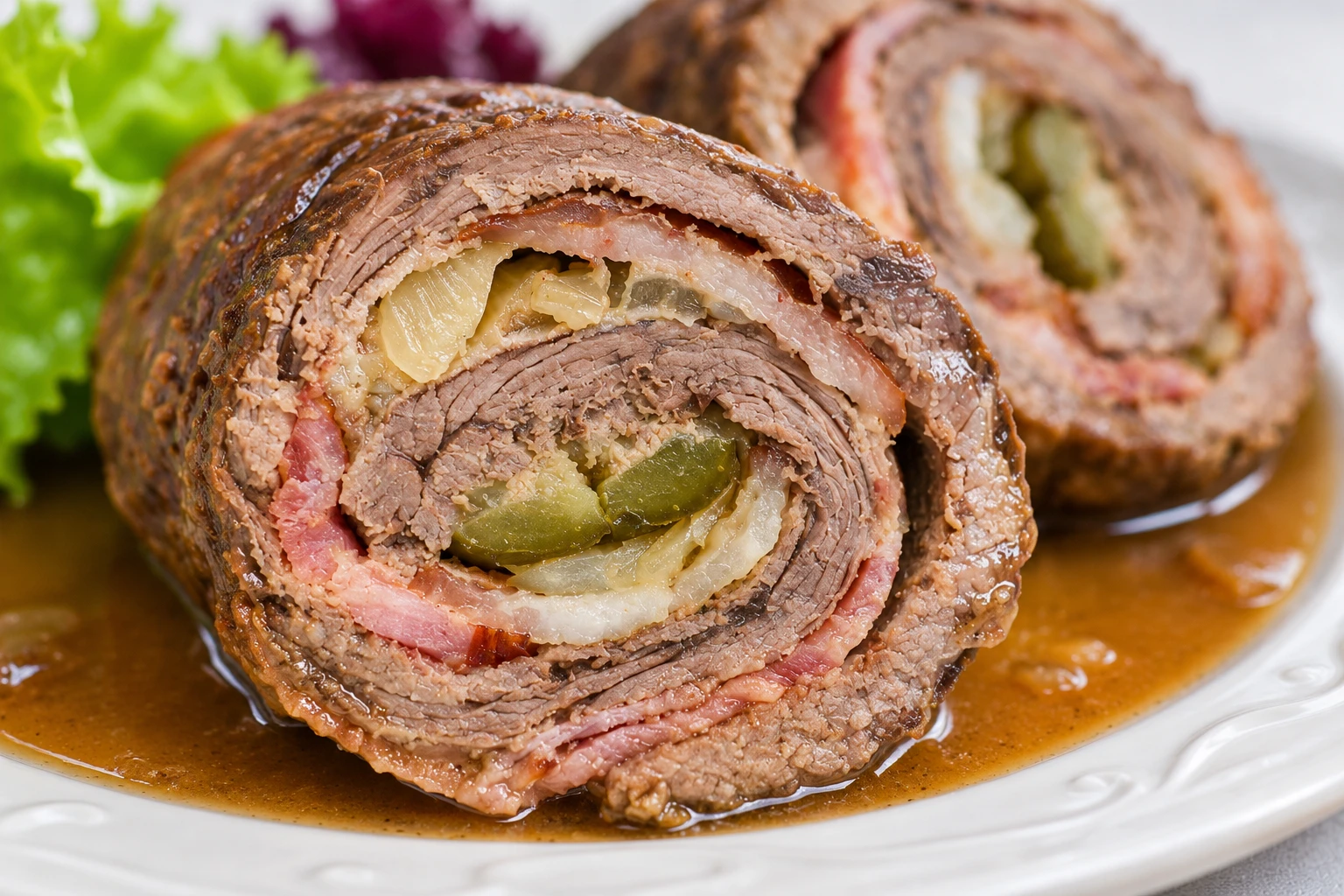
Sunday lunch in Upper Silesia has three parts. The roulade is a thin slice of beef, pounded, spread with mustard and rolled around bacon, pickled cucumber and onion; the roll is tied, browned and slowly cooked until it forms a dark sauce. The kluski śląskie are dumplings made from boiled potato and potato starch, flattened with a small depression in the center to hold the sauce. Modra kapusta is red cabbage sautéed with onion, a little sugar and salt, sometimes with bacon.
After the Second World War, the roulade with kluski and cabbage, usually preceded by chicken broth with noodles, became the typical Sunday lunch of Upper Silesia, and many households still serve it almost as a duty. The roulade was prepared on Saturday night for Sunday and also appears at weddings, baptisms and other family celebrations. The kluski originated in times of scarcity, when potato was the staple; in the region they are also called gumiklyjzy.
Kluski białe śląskie have been on the Silesian Voivodeship’s List of Traditional Products since 2006. There are legends about the origin of the kluski, such as the story that the women of Racibórz hurled them at the Mongols in 1241; these are regional tales, not documented facts. In Katowice and other towns of Upper Silesia, the dish is served in regional cooking restaurants.


 Brazil
 Argentina
 Bolivia
 Chile
 Colombia
 Ecuador
 Guyana
 French Guiana
 Falkland Islands (Malvinas)
 Paraguay
 Peru
 Suriname
 Uruguay
 Venezuela
 Germany
 Austria
 Belgium
 Croatia
 Denmark
 Spain
 Finland
 France
 Greece
 the Netherlands
 Hungary
 Ireland
 Iceland
 Italy
 Luxembourg
 Norway
 Portugal
 the United Kingdom
 the Czech Republic
 Sweden
 Switzerland
 Turkey
 Canada
 the United States
 Mexico
 the Dominican Republic
 South Africa
 Australia
 Fiji
 New Zealand
 Papua New Guinea