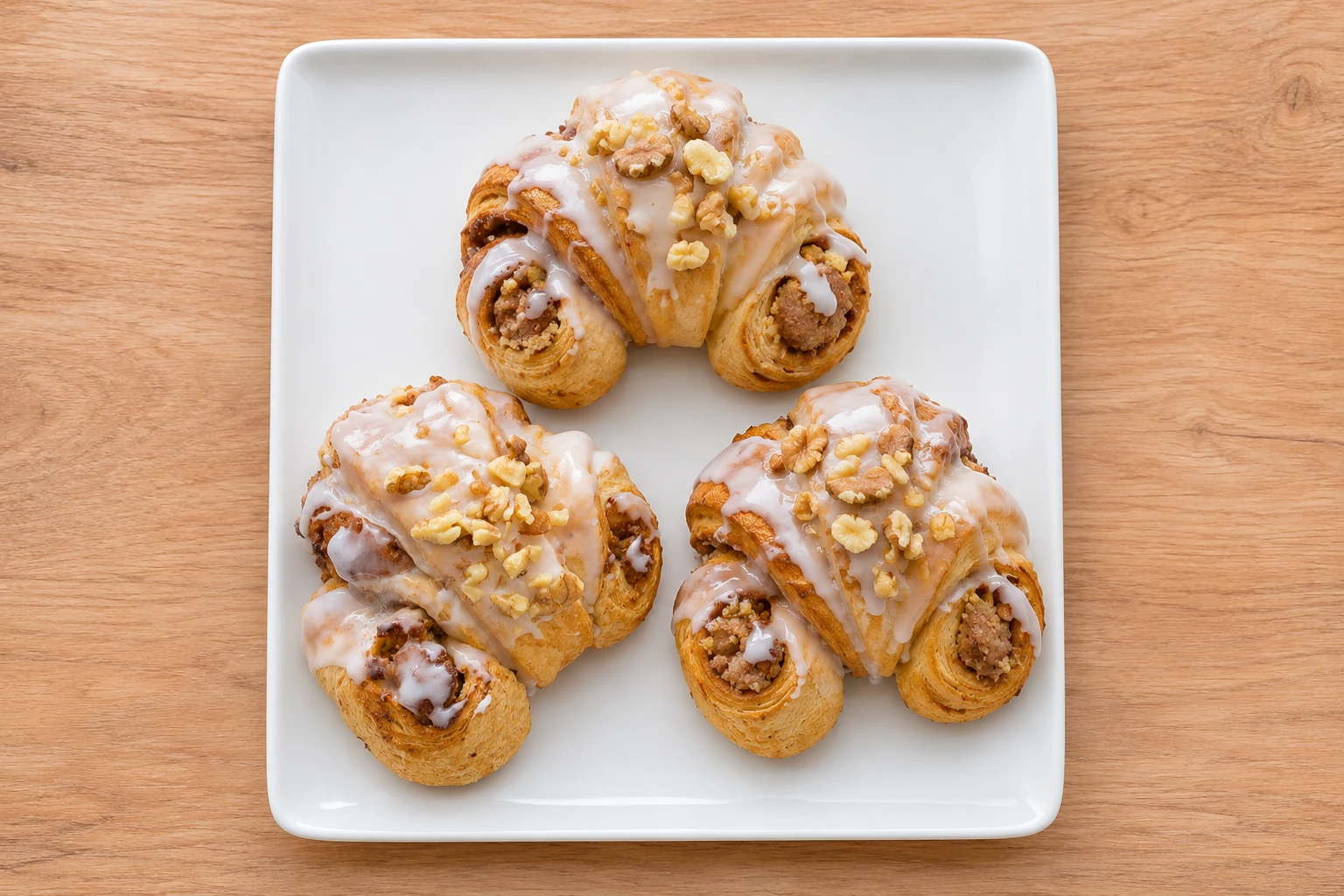
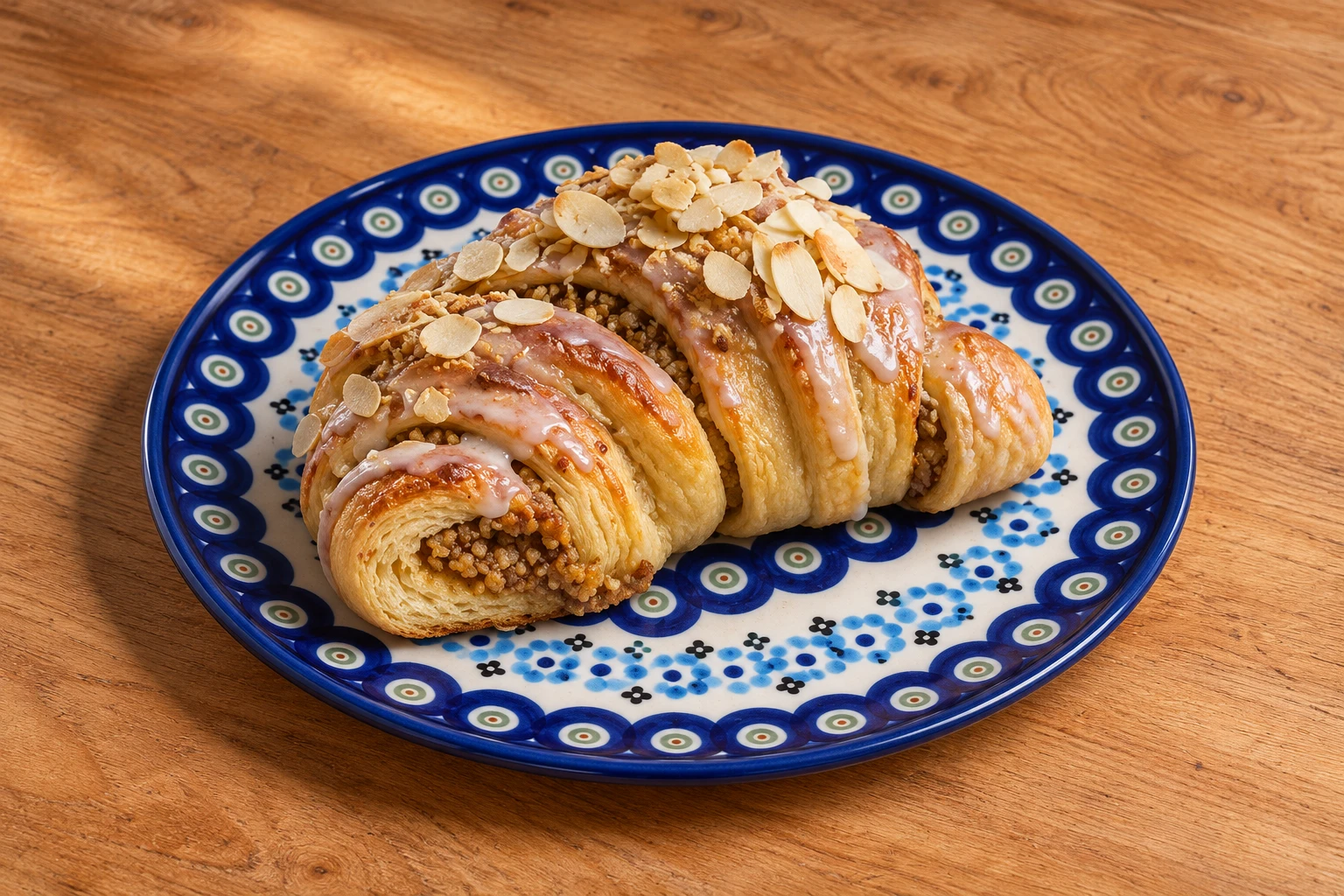
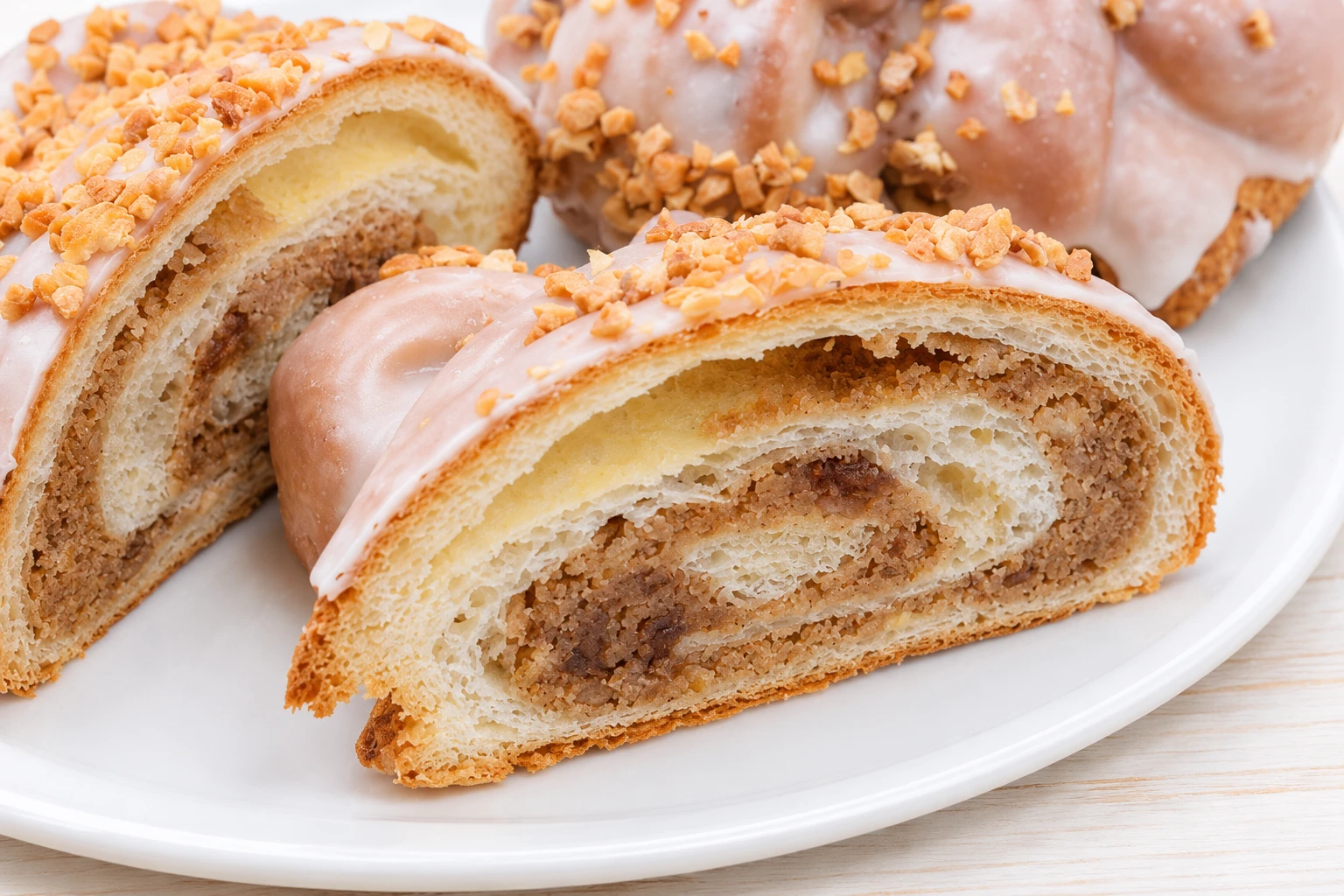
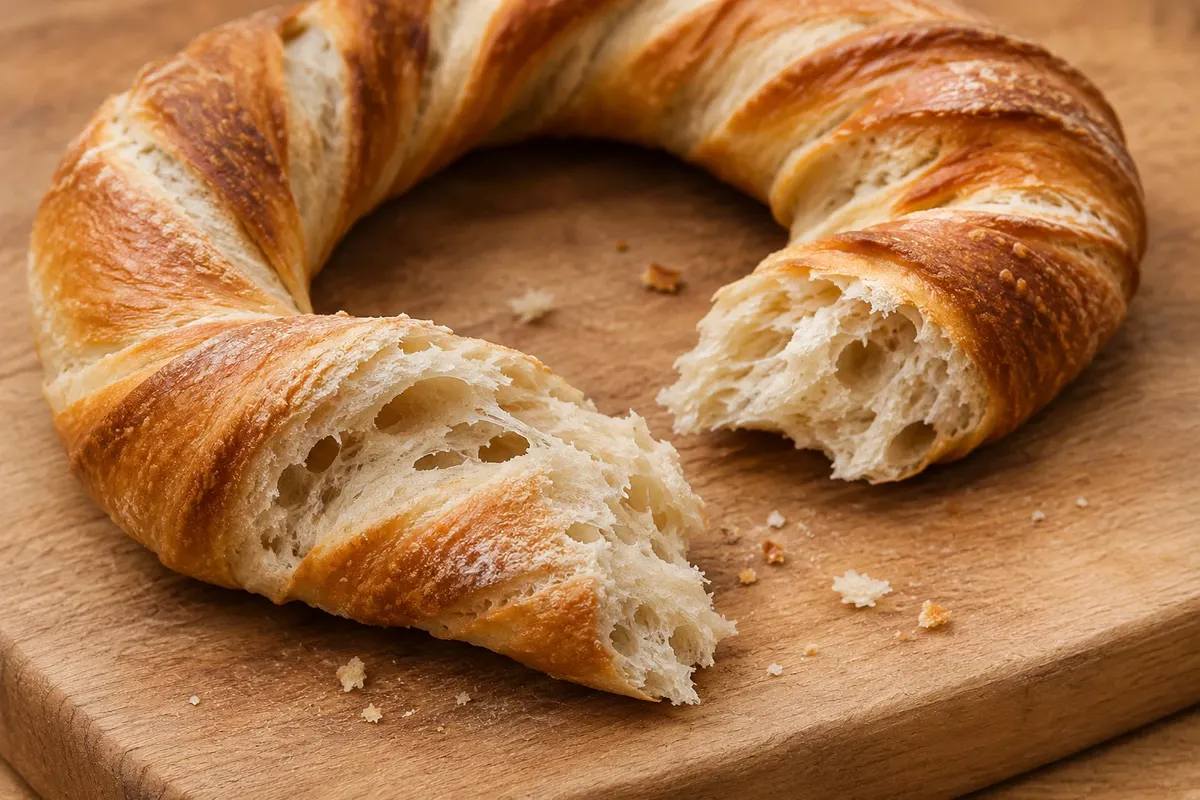
The rogal świętomarciński is a large crescent-shaped croissant. The dough is yeast-leavened, laminated with fat until it becomes a semi-flaky pastry that bakes into thin layers. The filling is based on white poppy seed paste mixed with sugar, sponge cake crumbs, eggs, raisins, walnuts and preserved or candied fruits. After baking, the rogal is coated with a layer of icing and sprinkled with chopped walnuts. Each one weighs between 150 and 250 g.
The pastry is associated with November 11, Saint Martin’s Day, the patron saint of Święty Marcin Street, one of Poznań’s main streets. On that day the street celebrates its saint with a parade and fair, and residents buy rogale in large quantities. The date coincides with Poland’s National Independence Day, but the rogal tradition is older and specific to Poznań.
The earliest known mention of rogale for Saint Martin’s Day appeared in 1852 in a Poznań newspaper. The name rogal świętomarciński is found in an advertisement dated November 11, 1860. A local story attributes the custom to confectioner Józef Melzer, who in 1891, inspired by a sermon from Saint Martin’s priest, reportedly persuaded his employer to bake rogale for the poor; this is a traditional, not documented, version.
Since 2008 the name has been a protected geographical indication of the European Union. Only bakeries in Poznań and in districts of Greater Poland that follow the specification book and undergo certification may make rogal świętomarciński. The pastry is sold year-round, but demand concentrates on the days around November 11. The city has a museum dedicated to the rogal, with demonstrations of its preparation.


 Brazil
 Argentina
 Bolivia
 Chile
 Colombia
 Ecuador
 Guyana
 French Guiana
 Falkland Islands (Malvinas)
 Paraguay
 Peru
 Suriname
 Uruguay
 Venezuela
 Germany
 Austria
 Belgium
 Croatia
 Denmark
 Spain
 Finland
 France
 Greece
 the Netherlands
 Hungary
 Ireland
 Iceland
 Italy
 Luxembourg
 Norway
 Portugal
 the United Kingdom
 the Czech Republic
 Sweden
 Switzerland
 Turkey
 Canada
 the United States
 Mexico
 the Dominican Republic
 South Africa
 Australia
 Fiji
 New Zealand
 Papua New Guinea