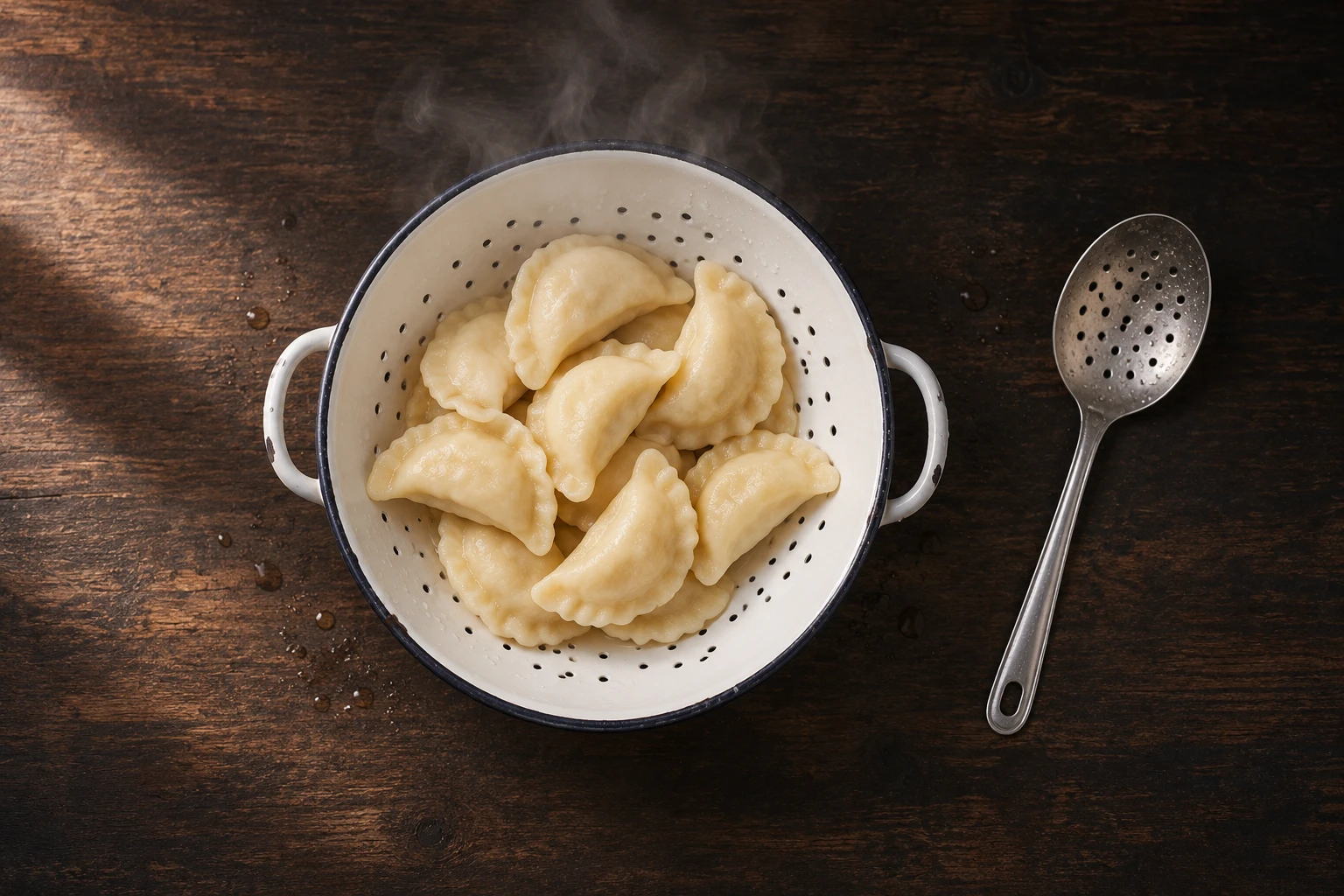
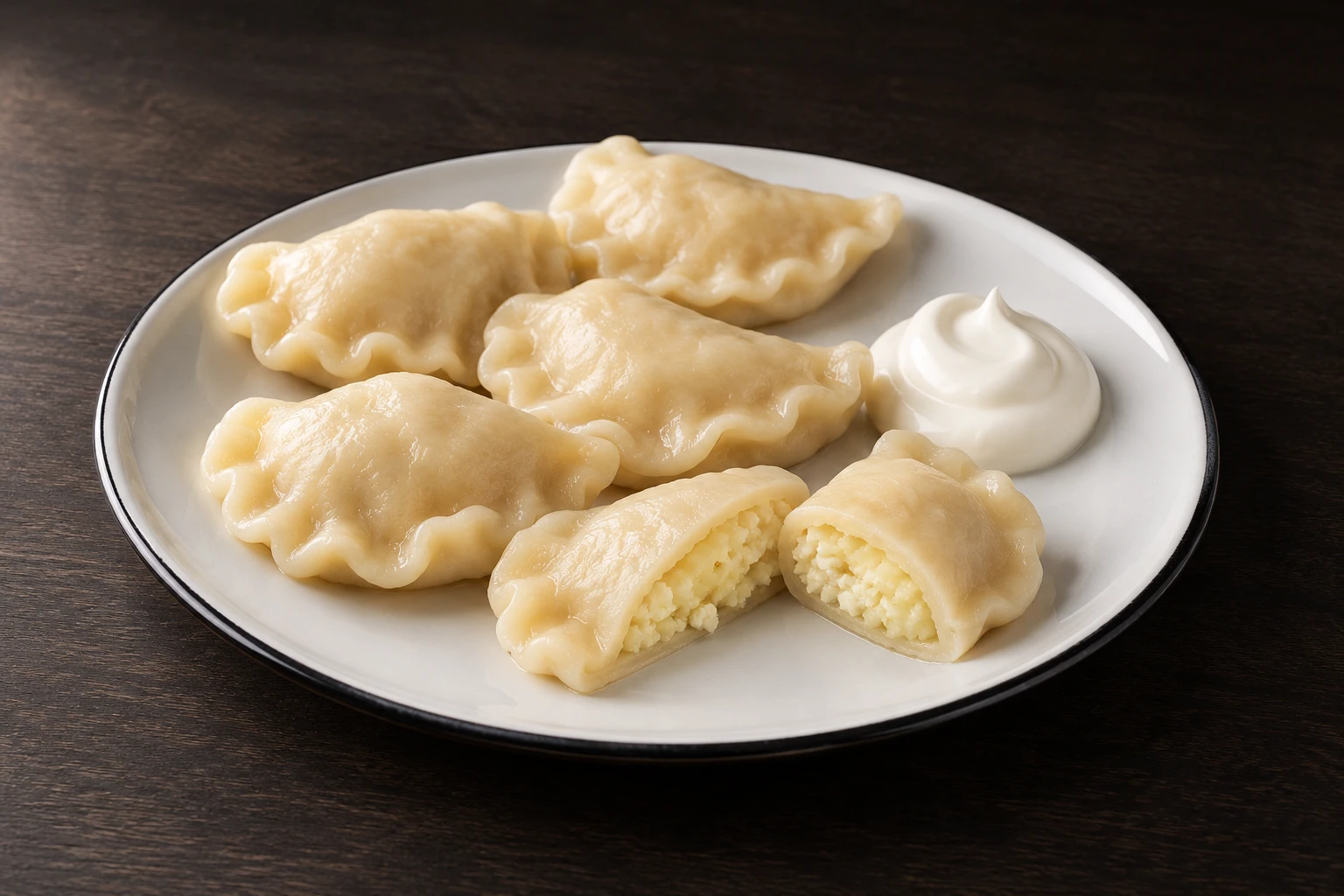
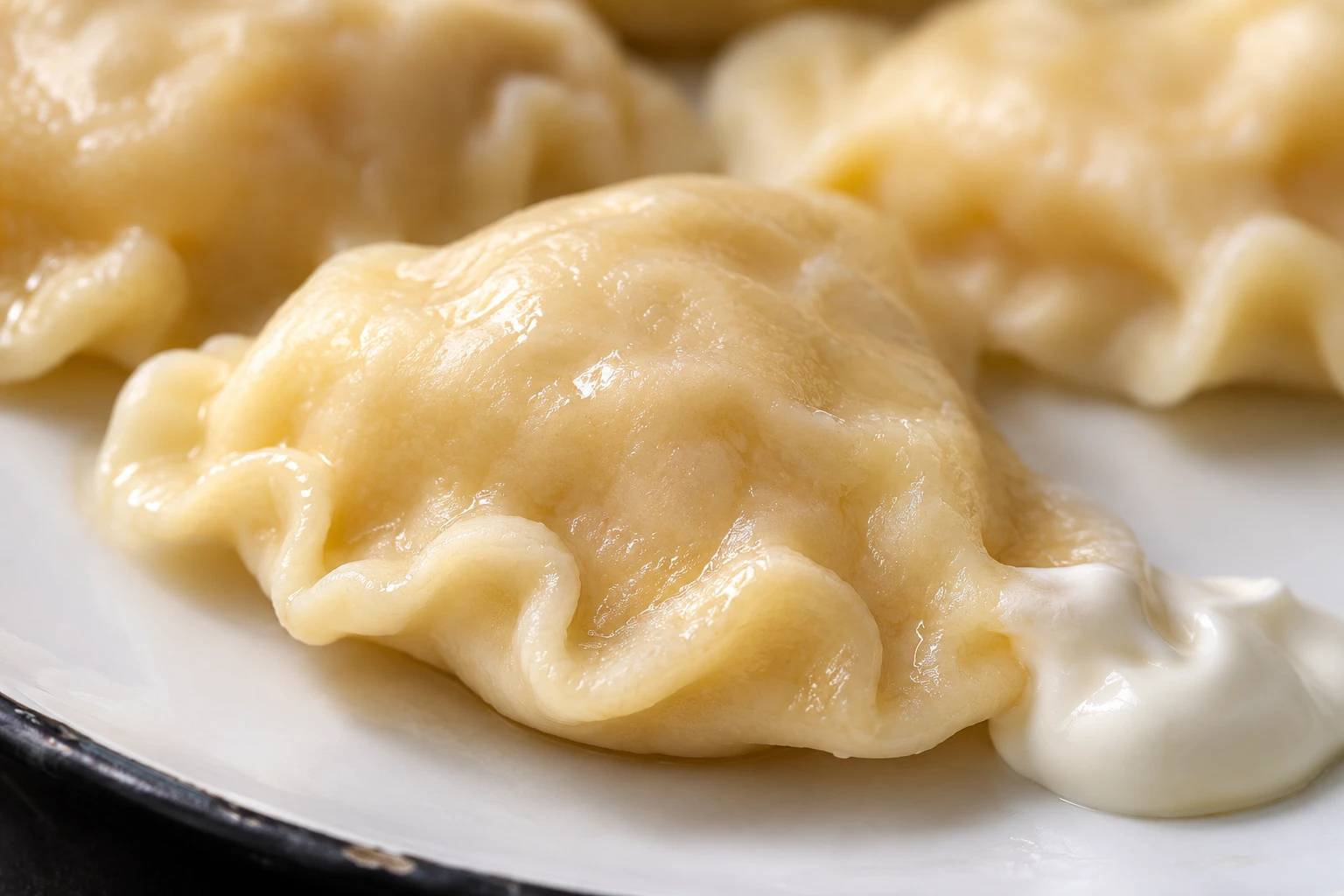
Pierogi are crescent-shaped dumplings made from a flour-and-water dough without leavening, hand-sealed and boiled in salted water. After boiling, they can be served as is or browned in butter; there are also baked and fried versions. They are topped with fried onion, cracklings, melted butter, or sour cream.
Fillings vary by region and season. Pierogi ruskie, made with potato and twaróg (Polish fresh cheese), are among the most common across the country; the name does not refer to Russia but to the historic region of Ruthenia, which before the war was Polish and is now in Ukraine. There are meat pierogi, ones with fermented cabbage and dried mushrooms, buckwheat, lentil, sheep’s-milk cheese from the mountains, and, in summer, fruit fillings such as blueberry, cherry, and apricot, eaten as a main course.
The history of pierogi in Poland is told in several ways. One version places their arrival in the 13th century, probably from the east, and tradition links their arrival to Saint Hyacinth, a monk who became associated with the dish; this is a legend. The first cookbook printed in Polish, Compendium ferculorum by Stanisław Czerniecki, from 1682, already includes several recipes: veal kidney with herbs and nutmeg and, especially, sweet fillings of jam, fruits, and rose.
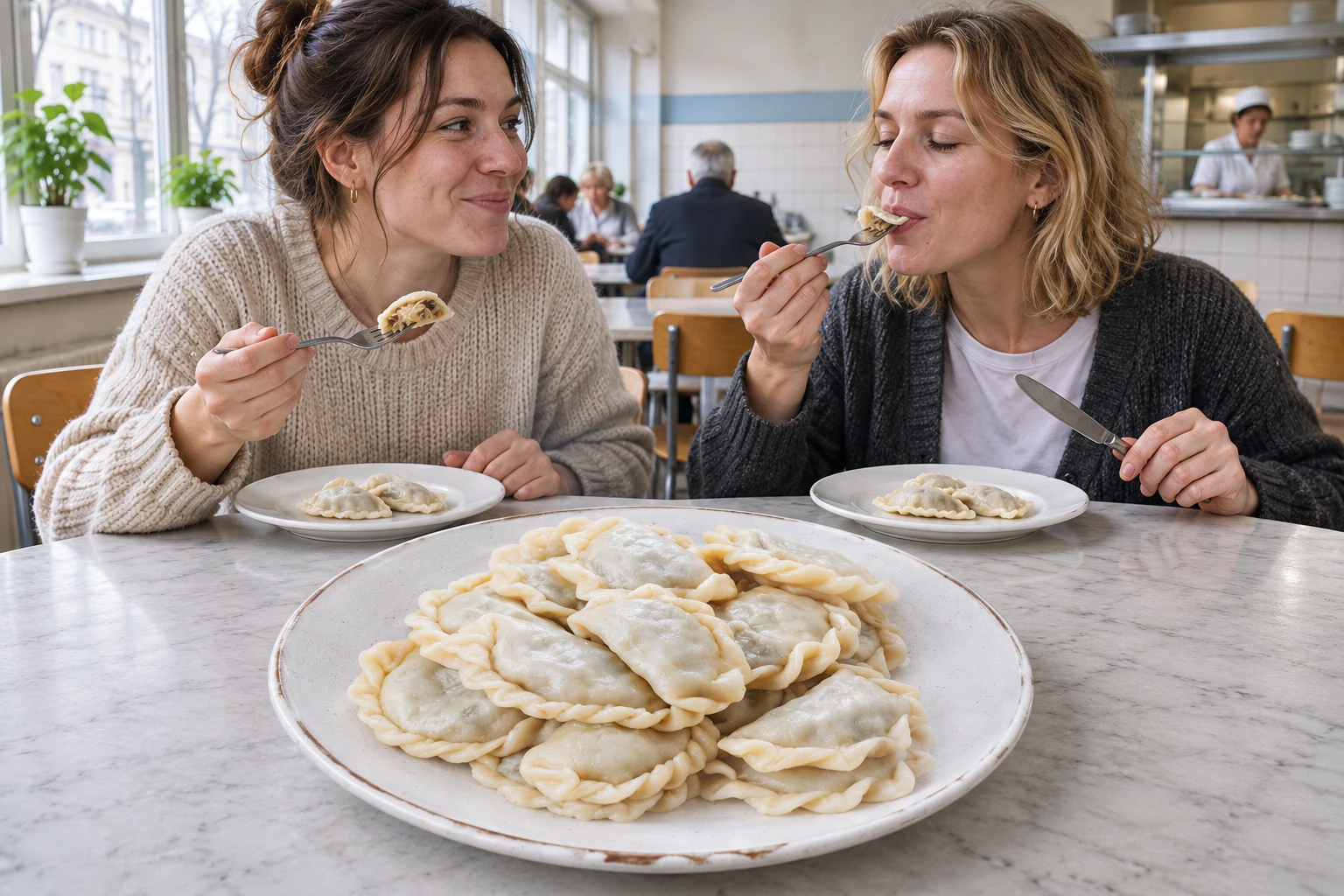
Pierogi are part of the Christmas Eve supper, filled with cabbage and mushrooms and, among the sweet varieties, with poppy seed. Throughout the rest of the year they appear in restaurants, in mleczne bars (simple canteens), and in pierogarnie, establishments dedicated to them that offer dozens of fillings.


 Brazil
 Argentina
 Bolivia
 Chile
 Colombia
 Ecuador
 Guyana
 French Guiana
 Falkland Islands (Malvinas)
 Paraguay
 Peru
 Suriname
 Uruguay
 Venezuela
 Germany
 Austria
 Belgium
 Croatia
 Denmark
 Spain
 Finland
 France
 Greece
 the Netherlands
 Hungary
 Ireland
 Iceland
 Italy
 Luxembourg
 Norway
 Portugal
 the United Kingdom
 the Czech Republic
 Sweden
 Switzerland
 Turkey
 Canada
 the United States
 Mexico
 the Dominican Republic
 South Africa
 Australia
 Fiji
 New Zealand
 Papua New Guinea