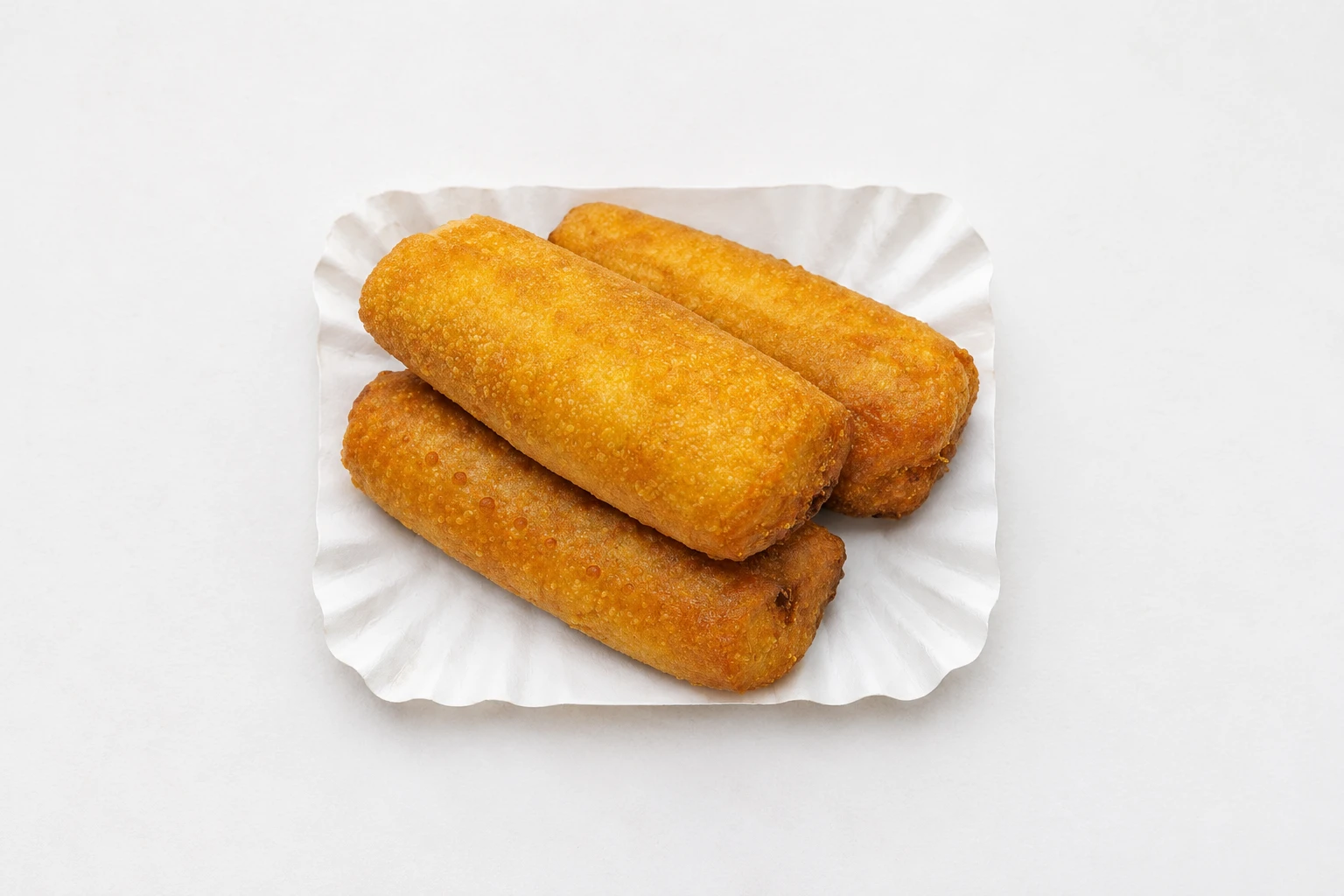
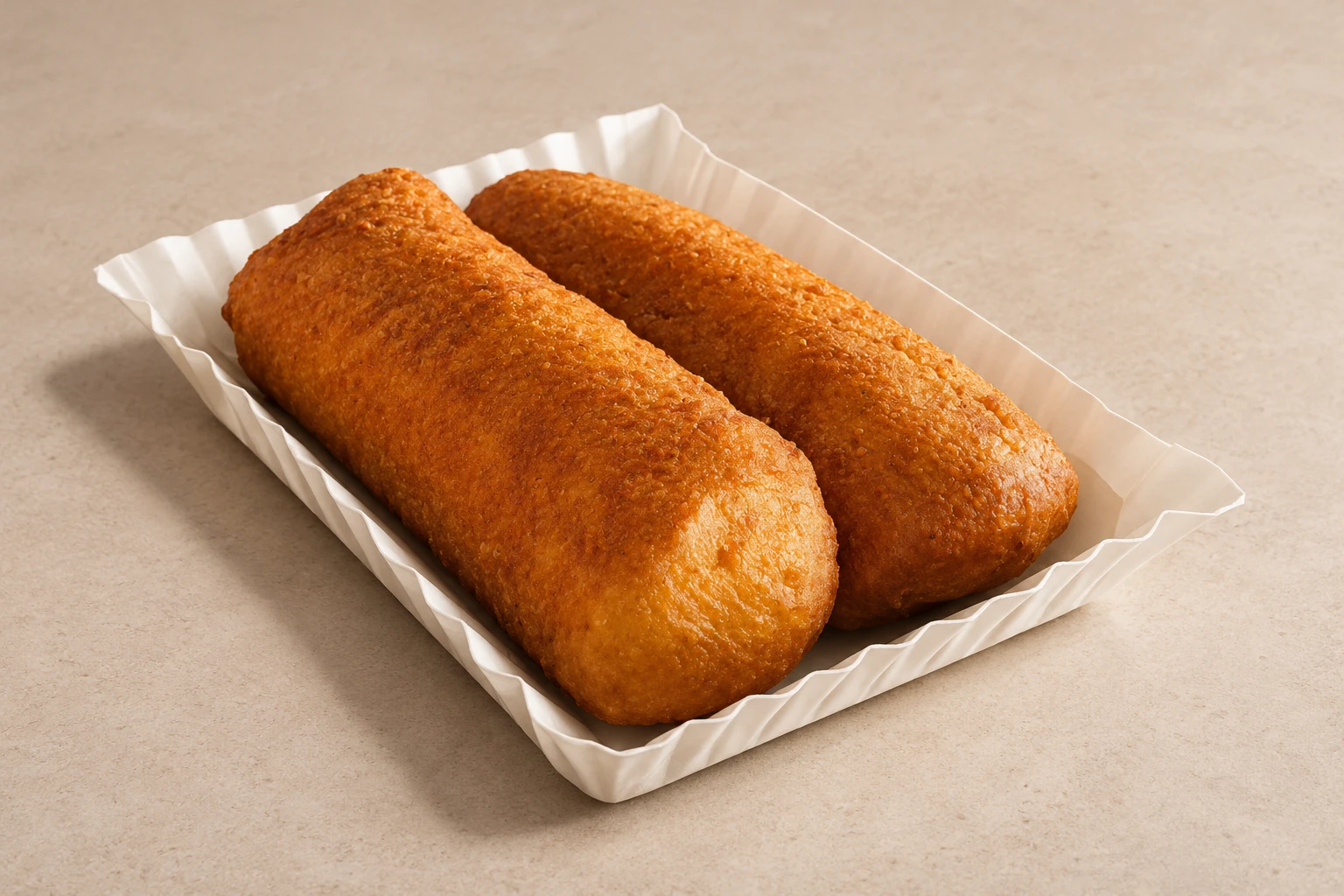
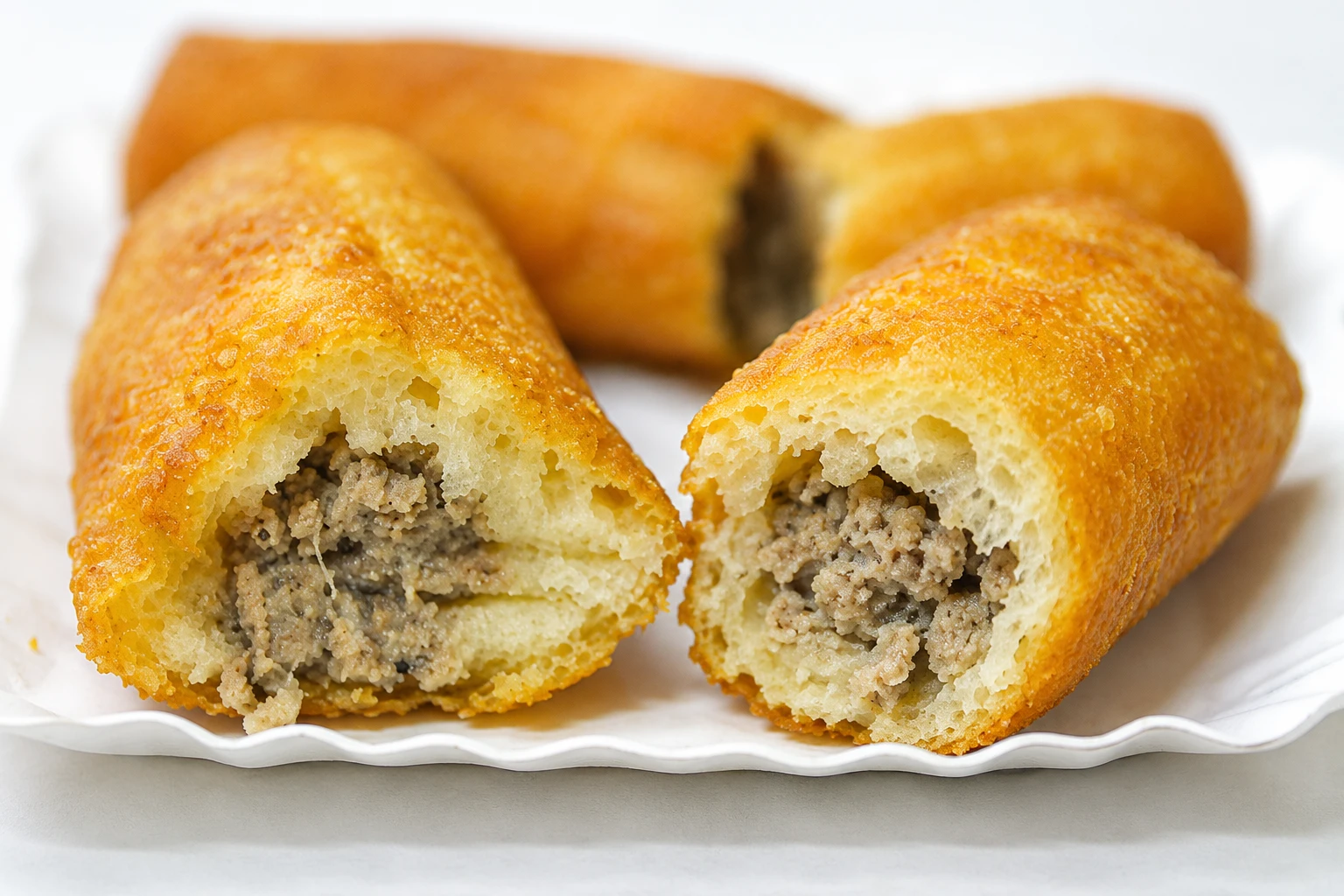
The pasztecik szczeciński has the shape of a long roll, 12 to 14 cm, with the filling visible in the center. The leavened dough rises a lot before frying, so it is porous inside, golden and crispy outside. The most common filling is ground meat seasoned mainly with pepper; there are also versions with other fillings. The recipe proportions have been kept secret by producers since the 1970s.
The story begins in 1969, when the Społem cooperative in Szczecin received a decommissioned Soviet machine made to produce small pastries in series. Employees adapted the recipe and gave the product a Polish name, pasztecik, which has nothing to do with pâté. The first pasztecik was produced in the early 1970s. In the 1980s, when meat was scarce, egg, fish and fresh cheese fillings appeared.
The pasztecik became popular among locals and visitors, especially those coming from East Germany, and turned into a city symbol. In 2010 it was added to the List of Traditional Products of the West Pomeranian Voivodeship. Since 2015, Szczecin celebrates Pasztecik Day on October 20.
According to the official description, the pasztecik should be eaten hot, as soon as it comes out of the machine; frozen or reheated, it is no longer the original product. It is sold at counters and bars in the city, to eat standing or to take away.


 Brazil
 Argentina
 Bolivia
 Chile
 Colombia
 Ecuador
 Guyana
 French Guiana
 Falkland Islands (Malvinas)
 Paraguay
 Peru
 Suriname
 Uruguay
 Venezuela
 Germany
 Austria
 Belgium
 Croatia
 Denmark
 Spain
 Finland
 France
 Greece
 the Netherlands
 Hungary
 Ireland
 Iceland
 Italy
 Luxembourg
 Norway
 Portugal
 the United Kingdom
 the Czech Republic
 Sweden
 Switzerland
 Turkey
 Canada
 the United States
 Mexico
 the Dominican Republic
 South Africa
 Australia
 Fiji
 New Zealand
 Papua New Guinea