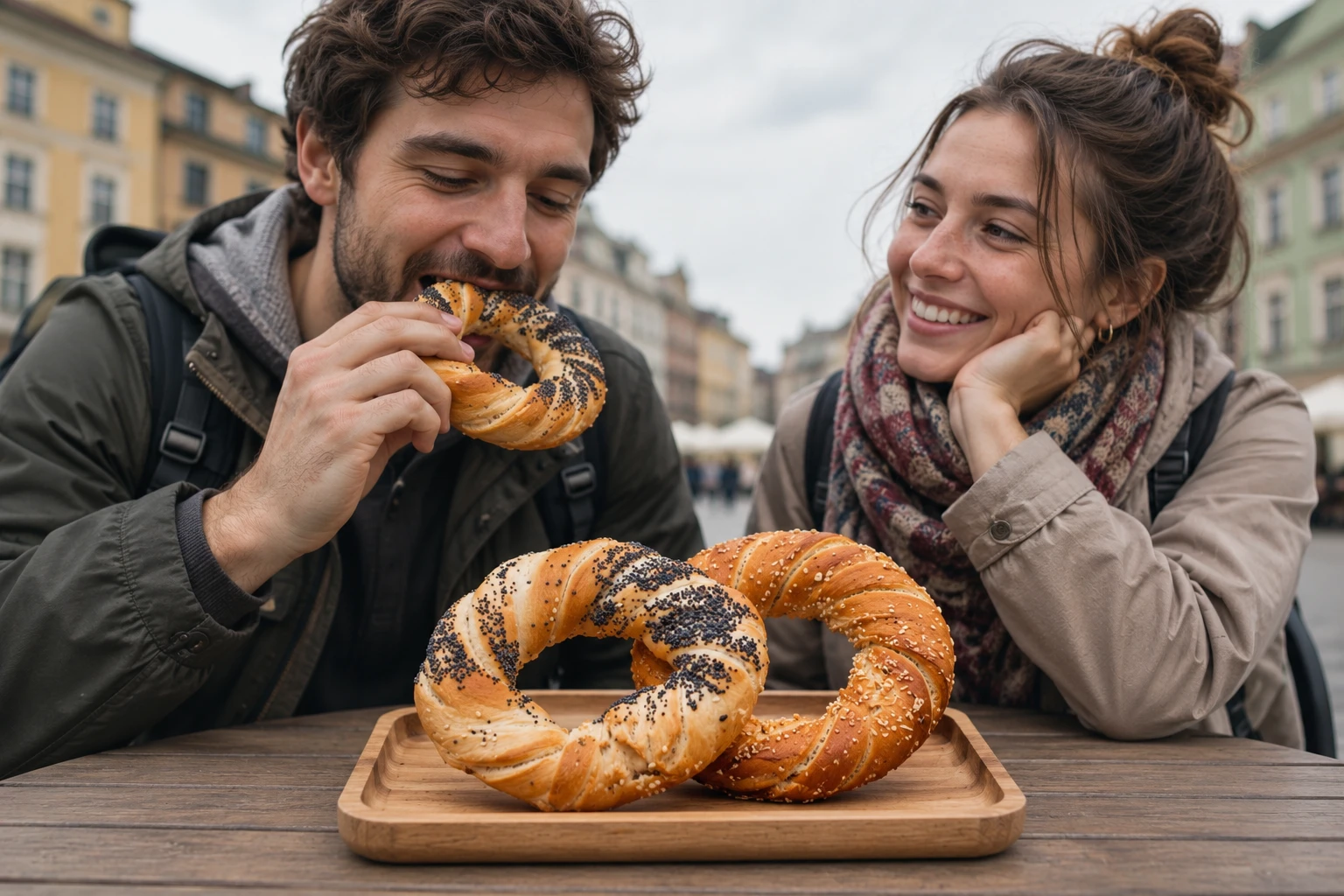
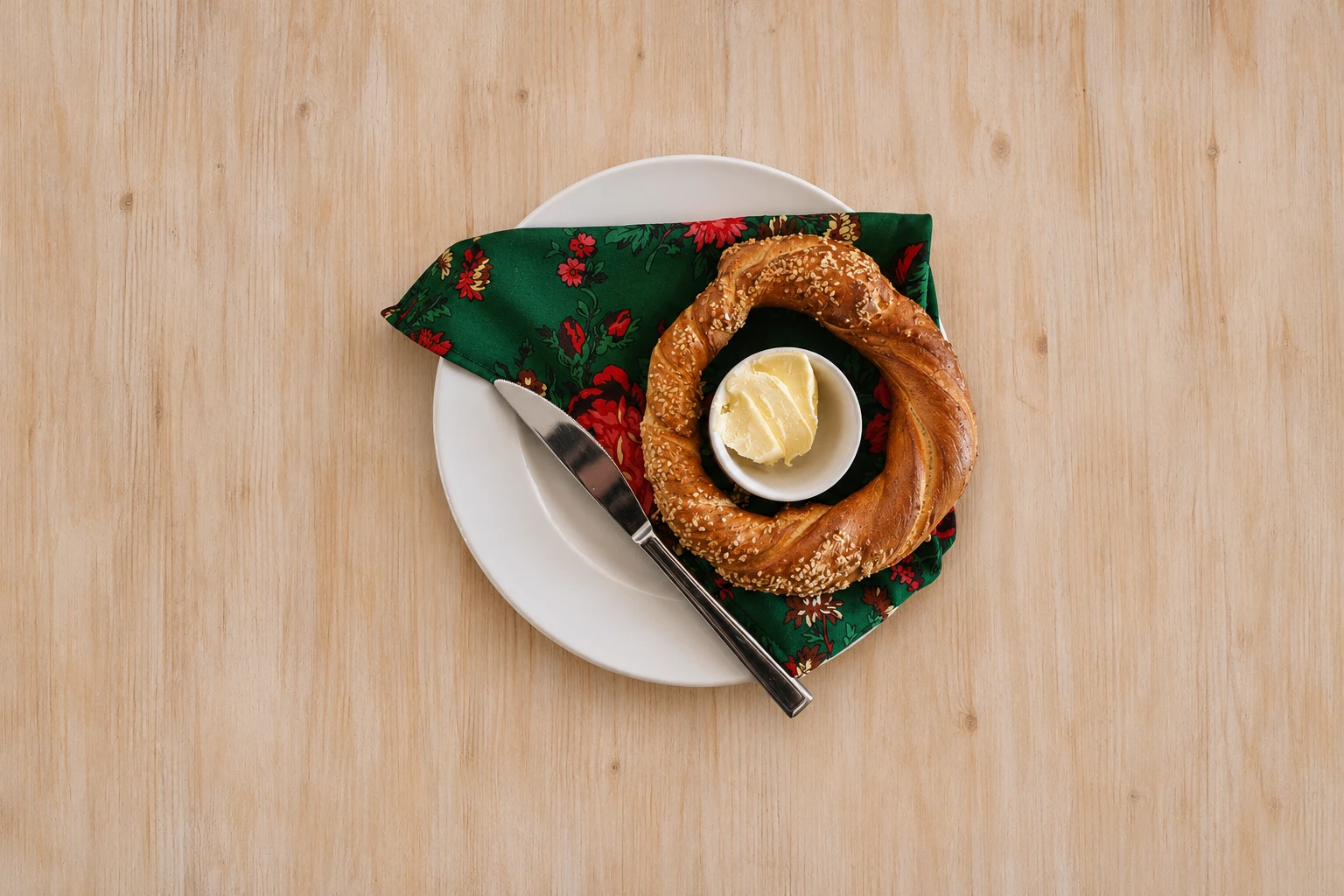
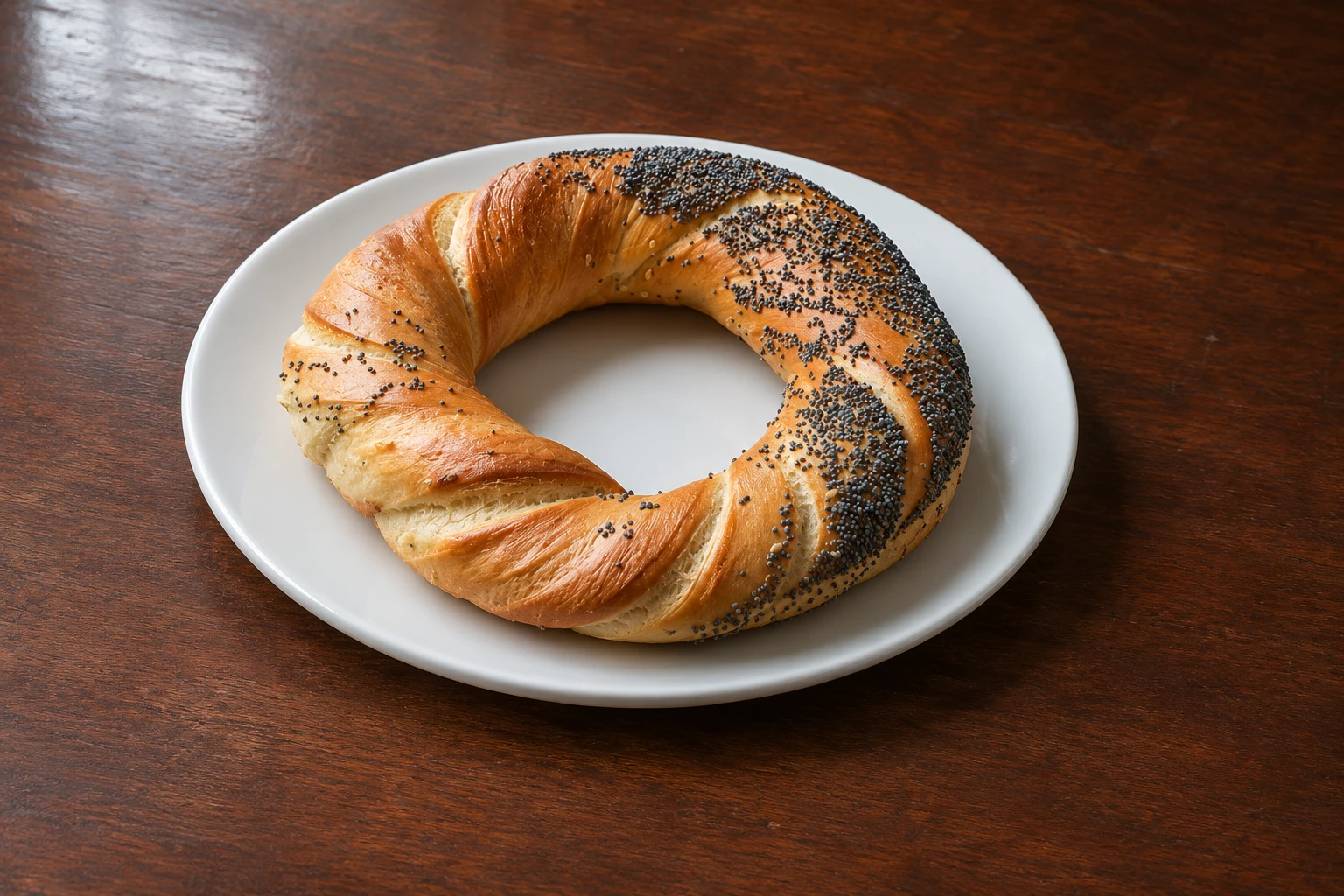
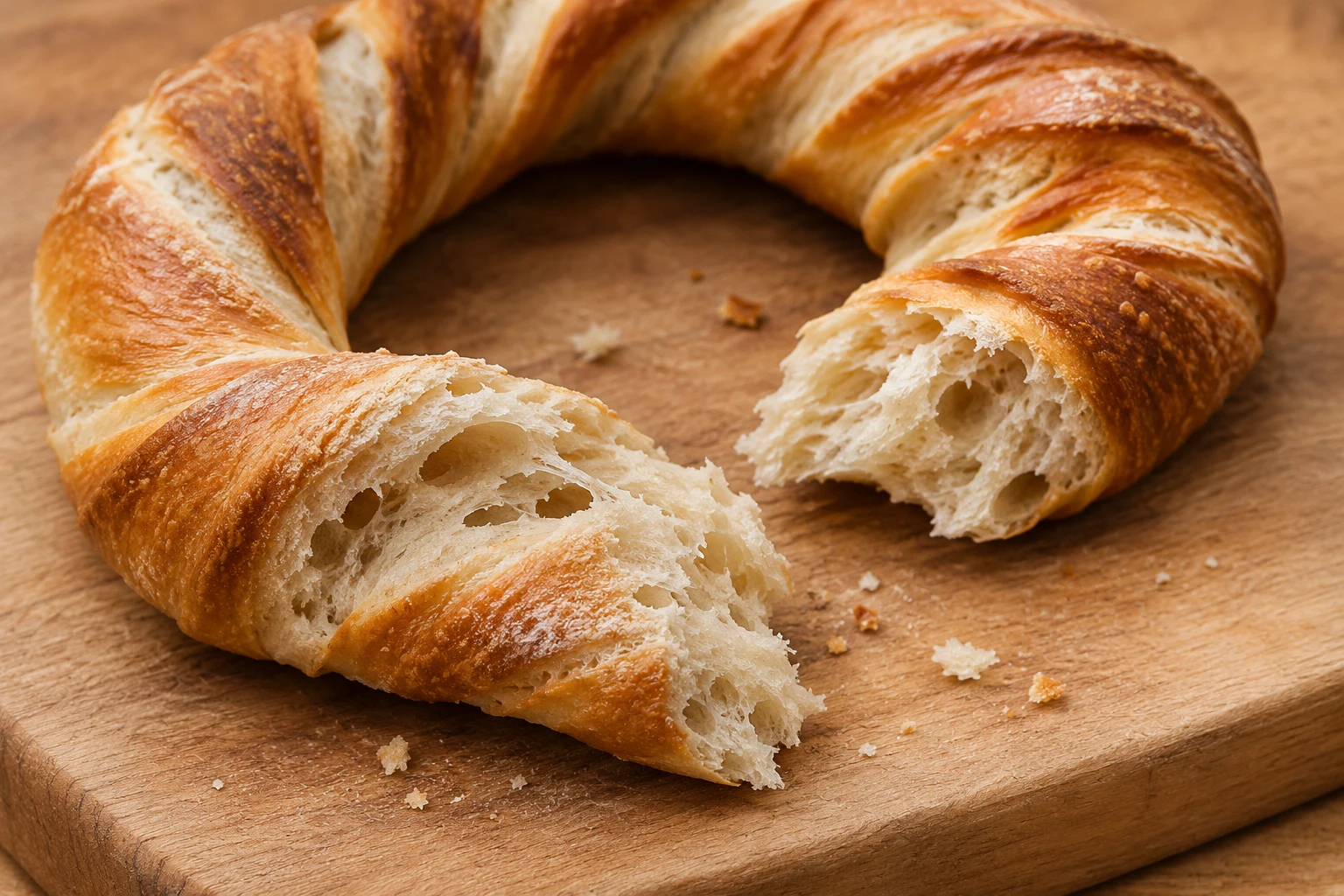
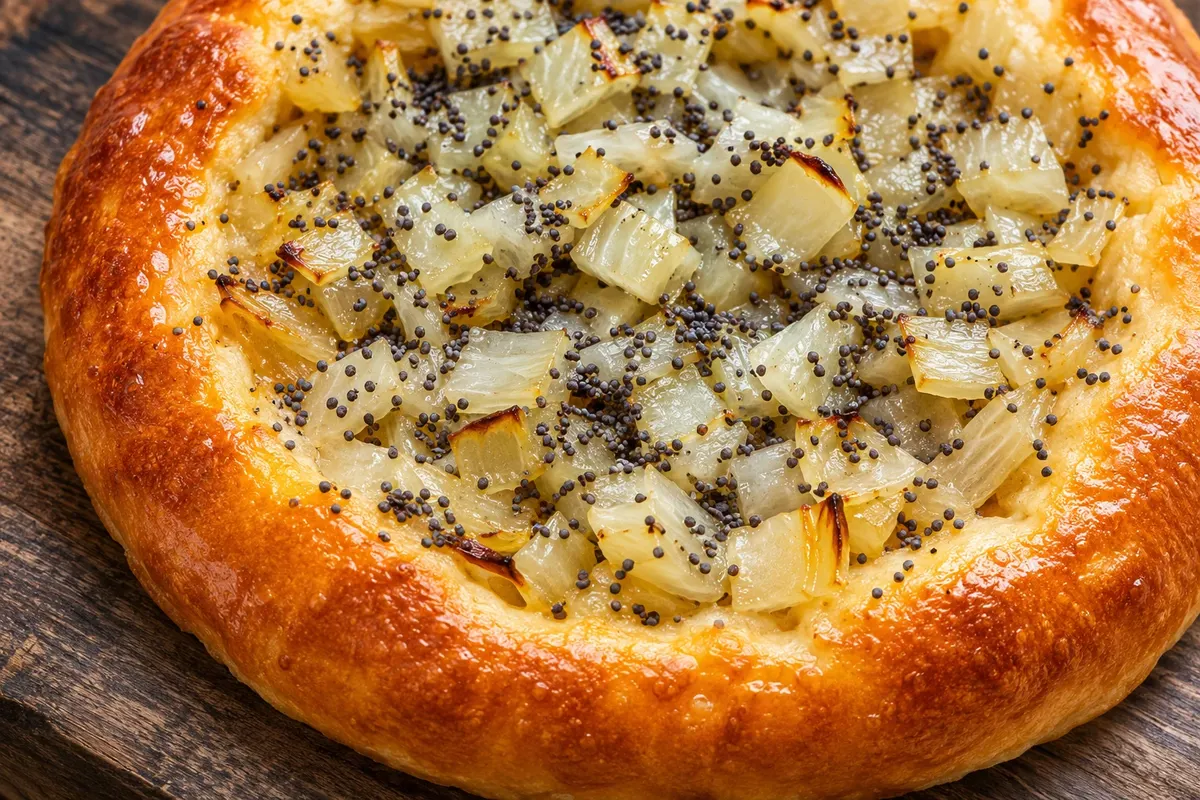
The obwarzanek krakowski is a ring-shaped braided roll made from two or three strands of dough coiled into a spiral and closed into a ring or oval. The dough contains wheat flour, fat, sugar, yeast, salt and water. Before baking, each ring is scalded in very hot water; this step, called obwarzanie, gives the bread its name and creates a shiny, firm crust with a soft, slightly sweet crumb. Toppings include salt, poppy seeds or sesame.
The earliest mentions of obwarzanek in Kraków date back to the late 14th century. In the Middle Ages, only bakers appointed by the guild could bake it, and it was sold only during Lent. Kraków city records show that permission was likely extended to all city bakers around 1849.
On October 30, 2010, the European Commission registered obwarzanek krakowski in the Protected Geographical Indications register. The product specification sets the size: 12 to 17 cm in diameter, braid thickness 2 to 4 cm, and weight between 80 and 120 g. Production is limited to the city of Kraków and the Kraków and Wieliczka districts. Because the shape is made by hand, no two rings are identical.
On the street, obwarzanek is sold from carts with display windows and eaten by hand as a snack. To identify a product covered by the geographical indication, you can look at the bottom of the ring, which shows the long grill marks from where it was baked, and check for the blue PGI seal at points of sale. The city holds a festival dedicated to obwarzanek and has a living museum where you can learn how to roll, scald and bake the ring.


 Brazil
 Argentina
 Bolivia
 Chile
 Colombia
 Ecuador
 Guyana
 French Guiana
 Falkland Islands (Malvinas)
 Paraguay
 Peru
 Suriname
 Uruguay
 Venezuela
 Germany
 Austria
 Belgium
 Croatia
 Denmark
 Spain
 Finland
 France
 Greece
 the Netherlands
 Hungary
 Ireland
 Iceland
 Italy
 Luxembourg
 Norway
 Portugal
 the United Kingdom
 the Czech Republic
 Sweden
 Switzerland
 Turkey
 Canada
 the United States
 Mexico
 the Dominican Republic
 South Africa
 Australia
 Fiji
 New Zealand
 Papua New Guinea