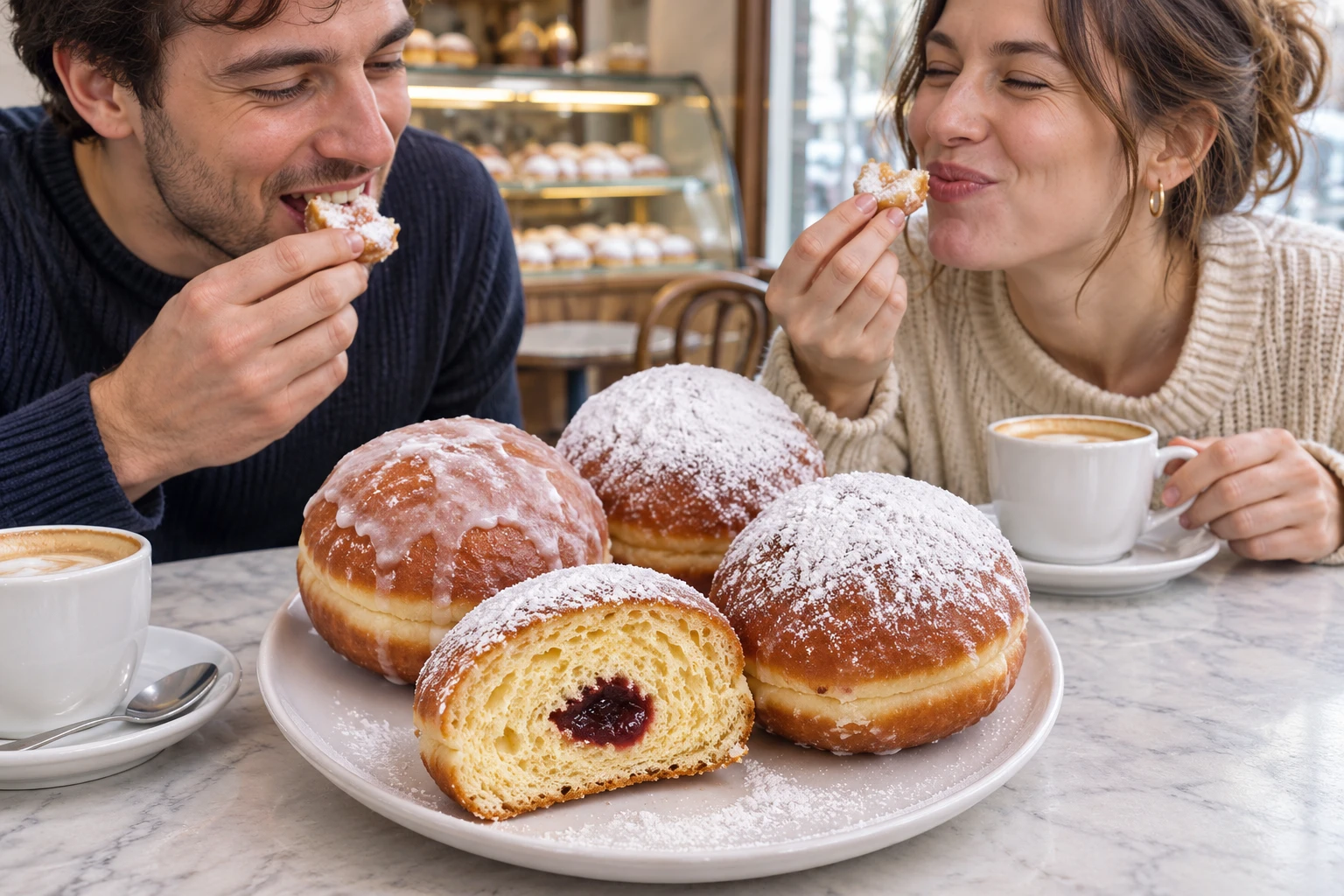
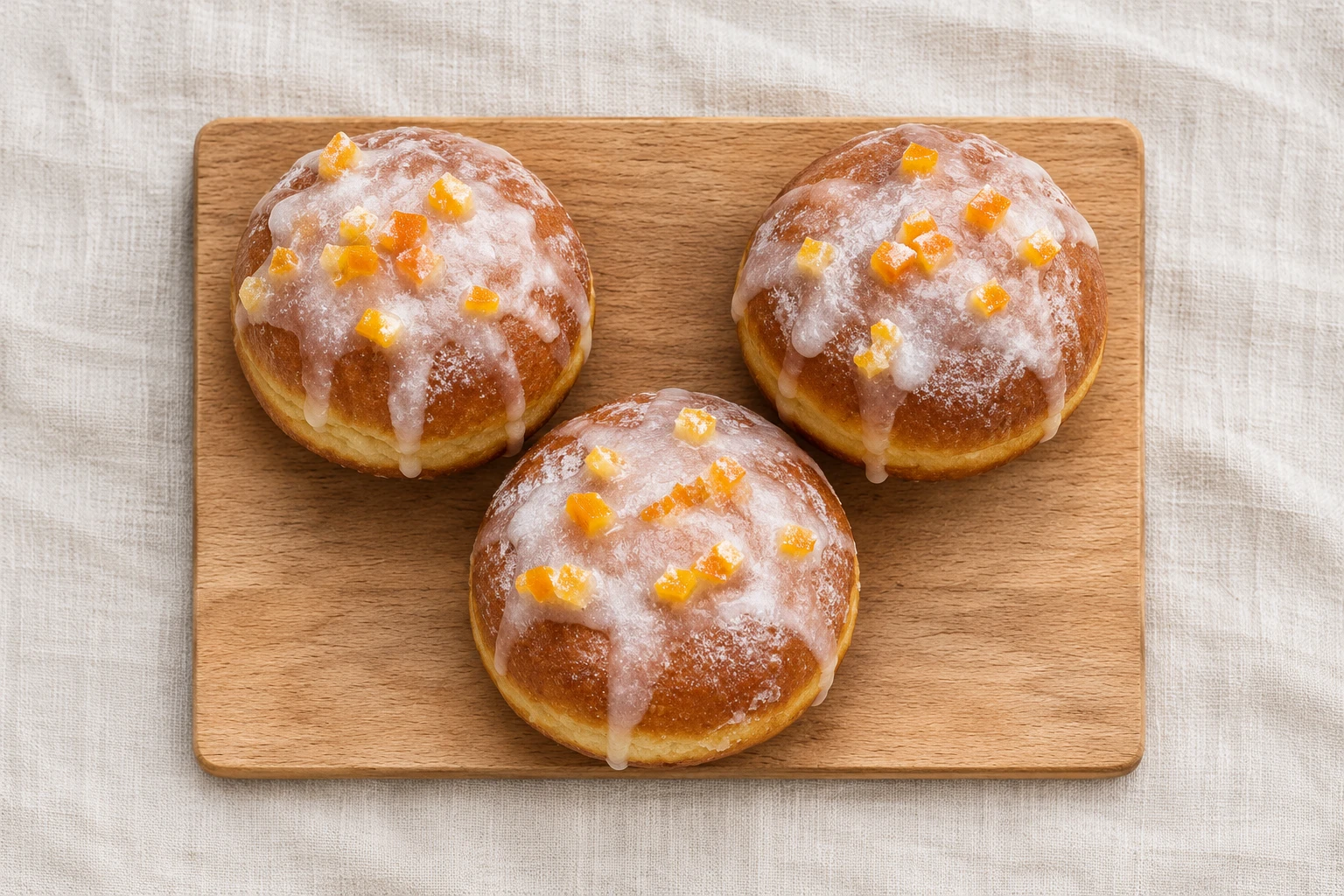
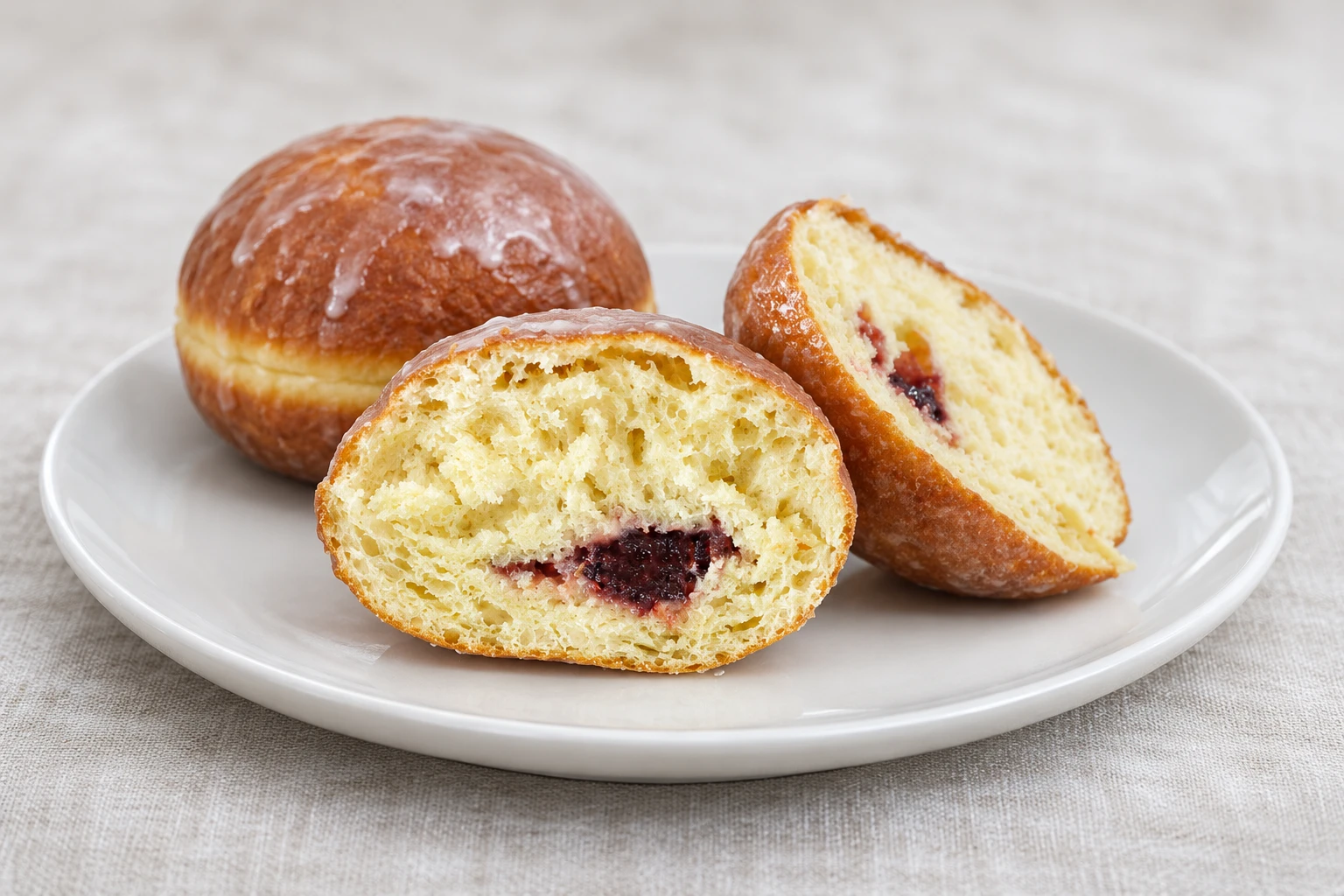
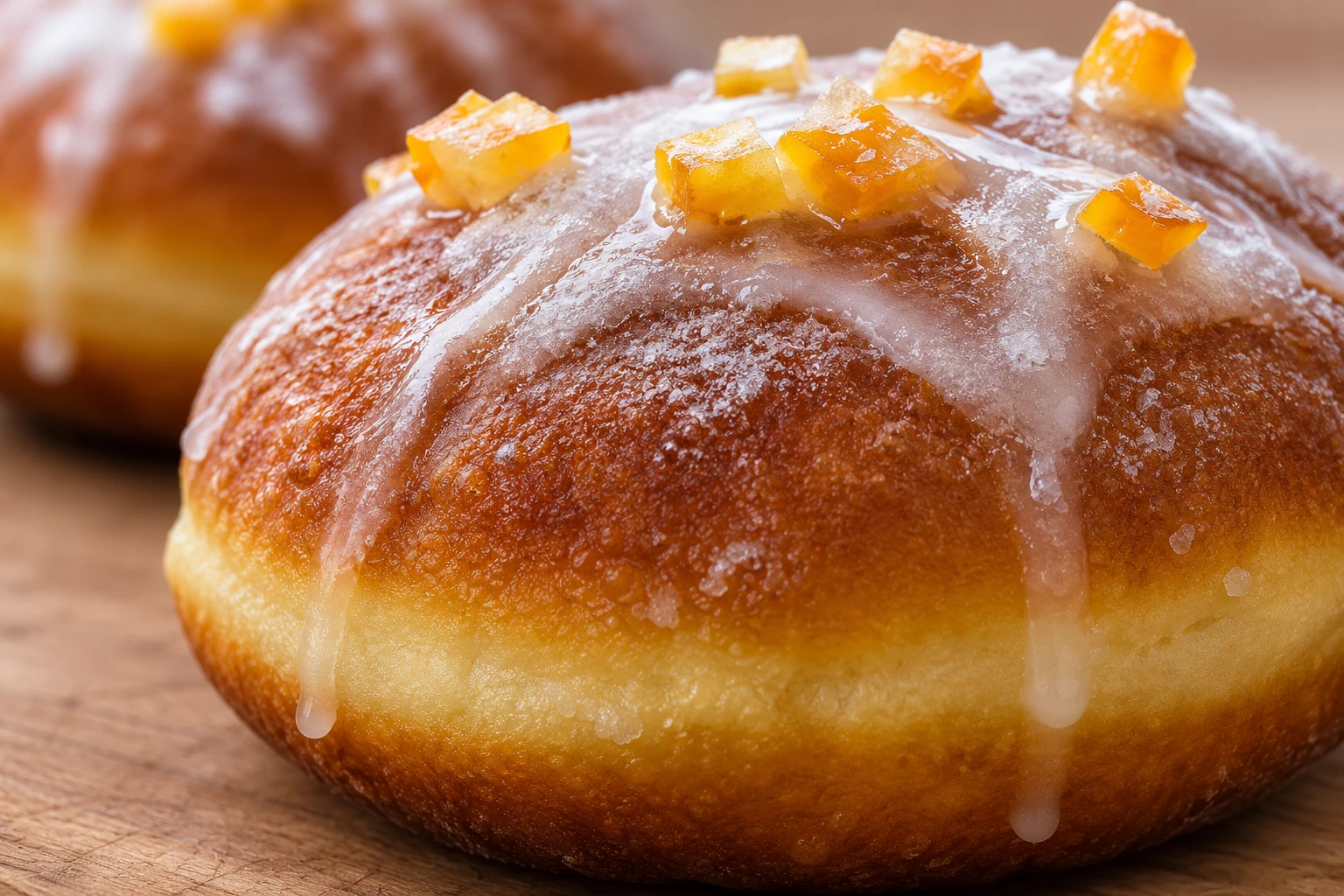
A pączek is a flattened ball of rich yeast dough with eggs and fat, fried until golden, filled and coated with confectioners’ sugar or icing, sometimes with candied orange zest. It has no hole in the middle. Traditional fillings are rose petal jam and plum; today there are also cream, berries, chocolate and others. A well-fried pączek often shows a lighter band around it where the dough rose above the oil.
The sweet is old in Polish cuisine. The Compendium ferculorum (1682) already describes fried yeast dough buns filled with rose or elderflower, then called pierożki. According to historian Jarosław Dumanowski, 17th– and 18th-century pączki were denser and more varied than today’s, and pastry manuscripts mention versions with almond, cinnamon and coriander.
The pączek is the symbol of Tłusty Czwartek, Fat Thursday, the last Thursday before Lent, which falls on a different date each year. Because older fasting rules forbade fat, eggs and butter, eating pączki was a symbolic farewell to carnival. On that day, bakeries and patisseries across the country have queues, offices share boxes of pączki, and superstition says those who don’t eat at least one will have bad luck all year. The rest of the year, a pączek is available at any bakery.


 Brazil
 Argentina
 Bolivia
 Chile
 Colombia
 Ecuador
 Guyana
 French Guiana
 Falkland Islands (Malvinas)
 Paraguay
 Peru
 Suriname
 Uruguay
 Venezuela
 Germany
 Austria
 Belgium
 Croatia
 Denmark
 Spain
 Finland
 France
 Greece
 the Netherlands
 Hungary
 Ireland
 Iceland
 Italy
 Luxembourg
 Norway
 Portugal
 the United Kingdom
 the Czech Republic
 Sweden
 Switzerland
 Turkey
 Canada
 the United States
 Mexico
 the Dominican Republic
 South Africa
 Australia
 Fiji
 New Zealand
 Papua New Guinea