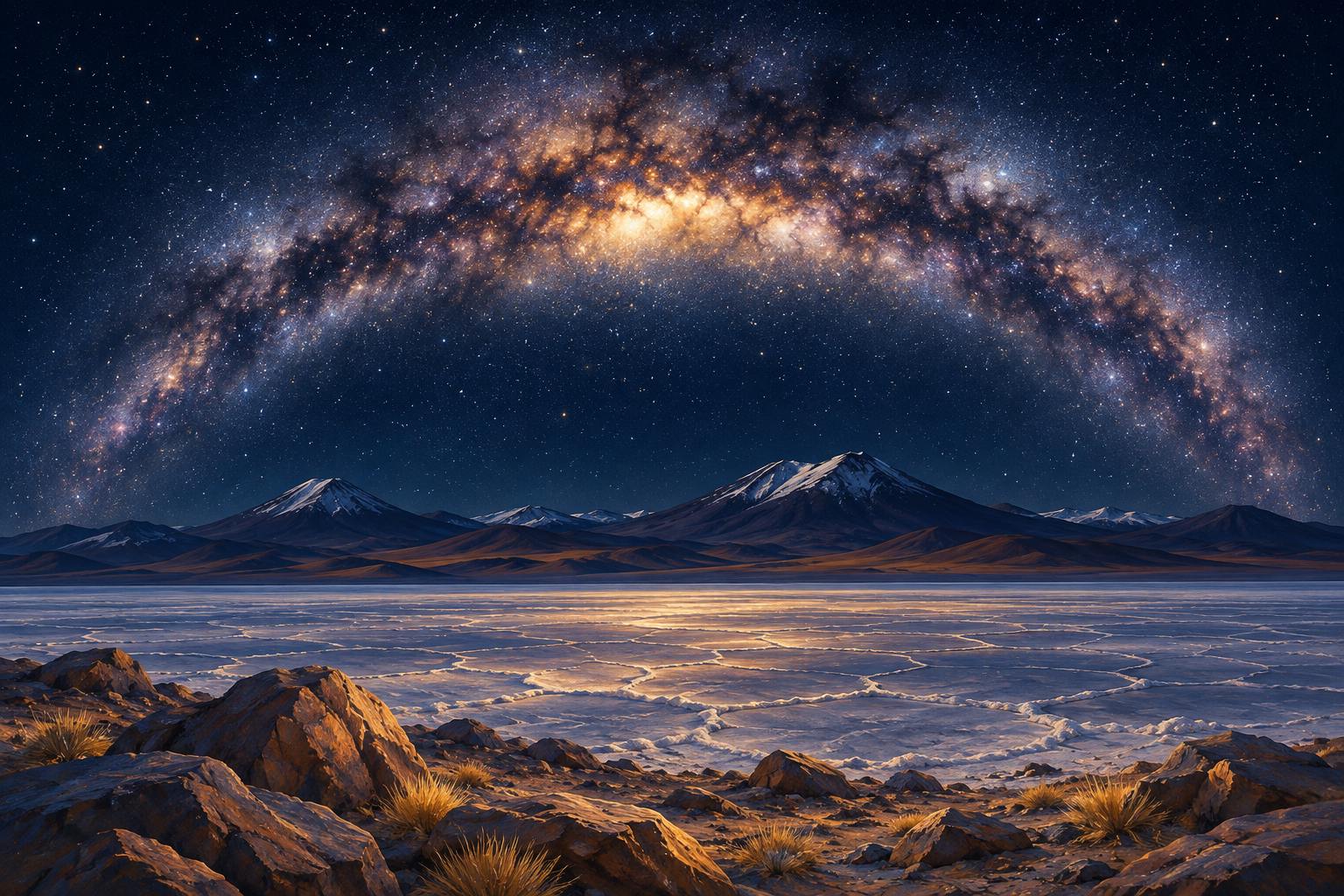
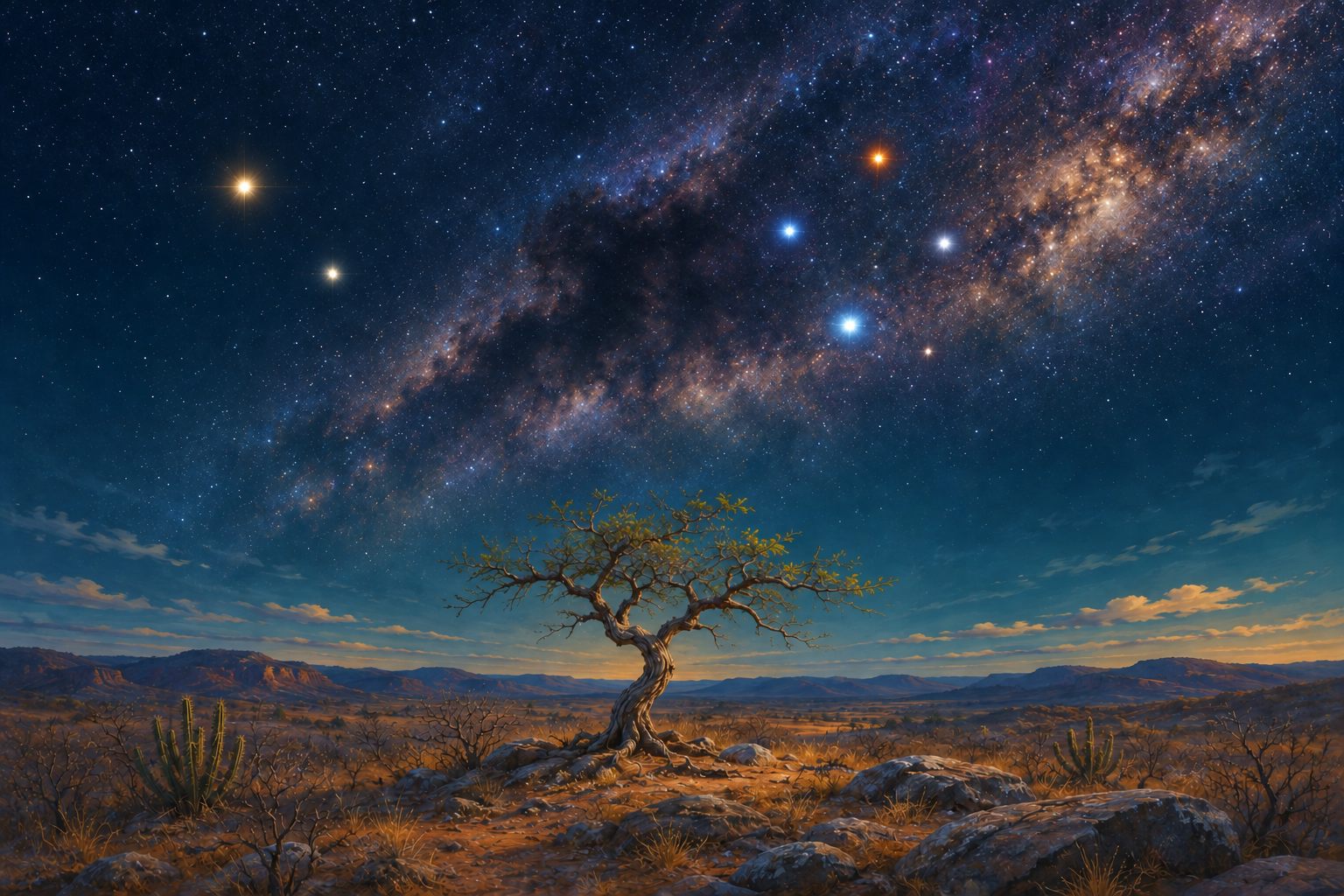
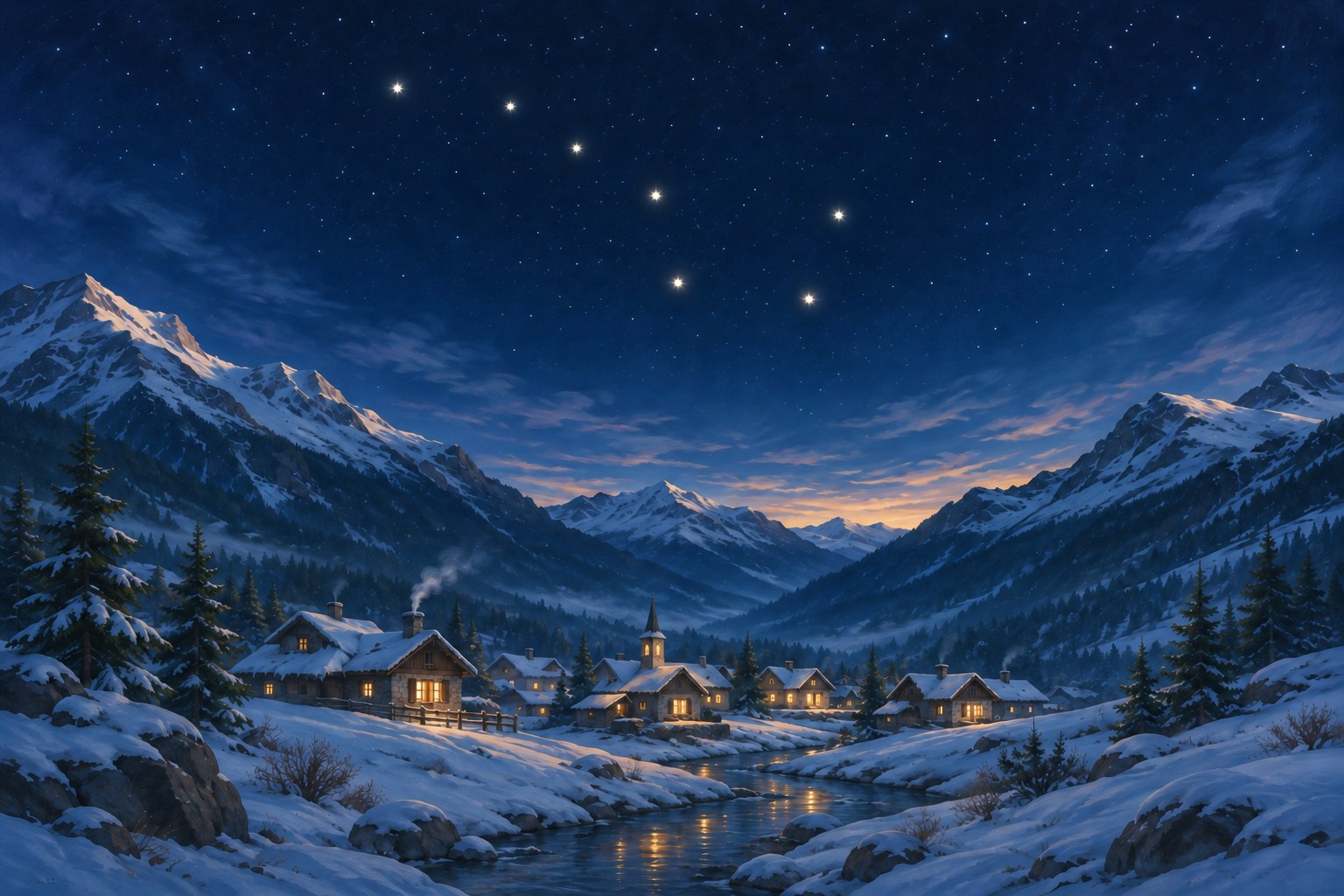
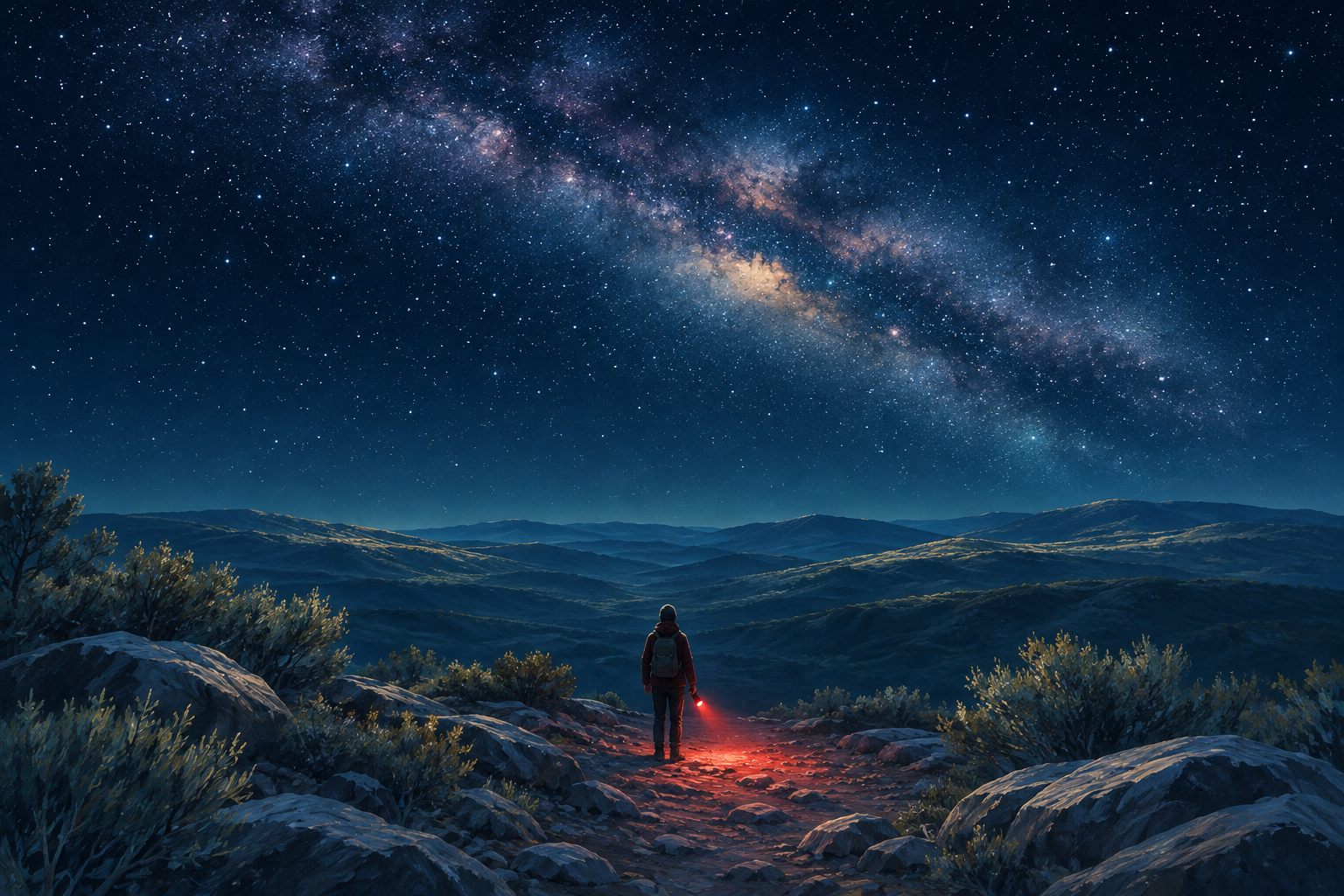
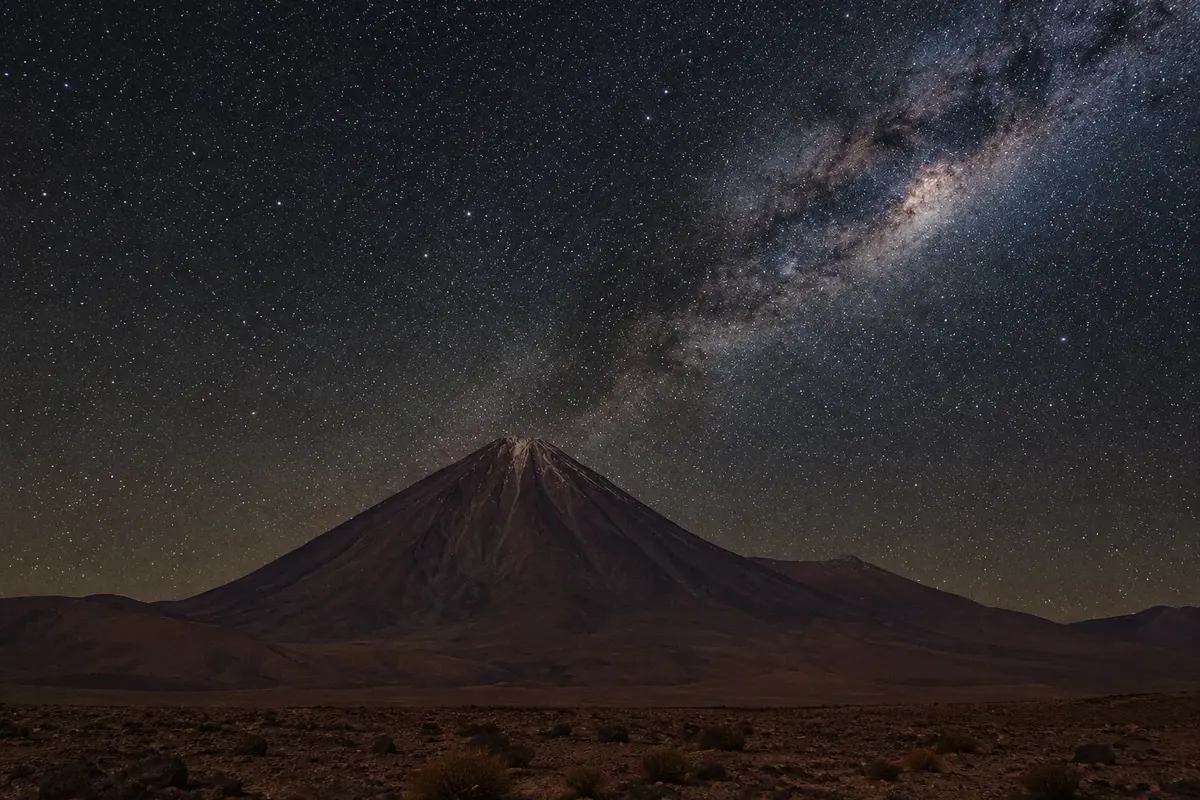
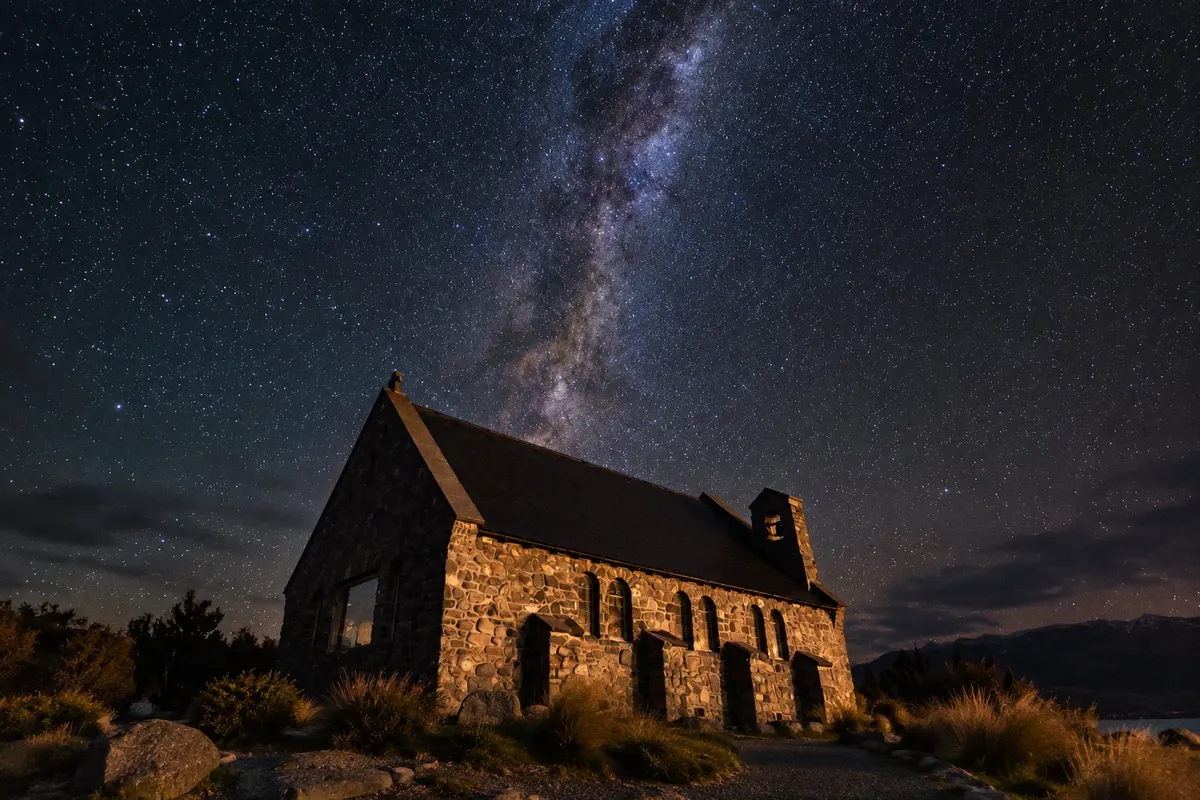
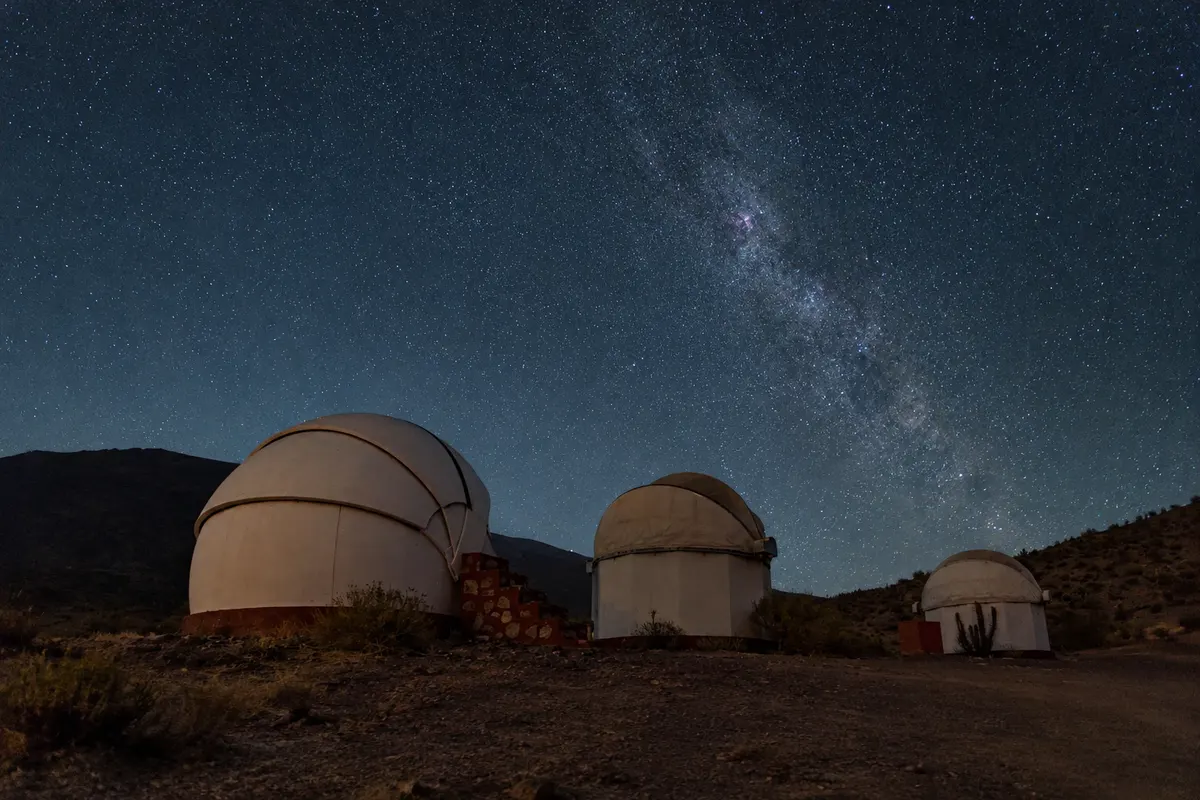
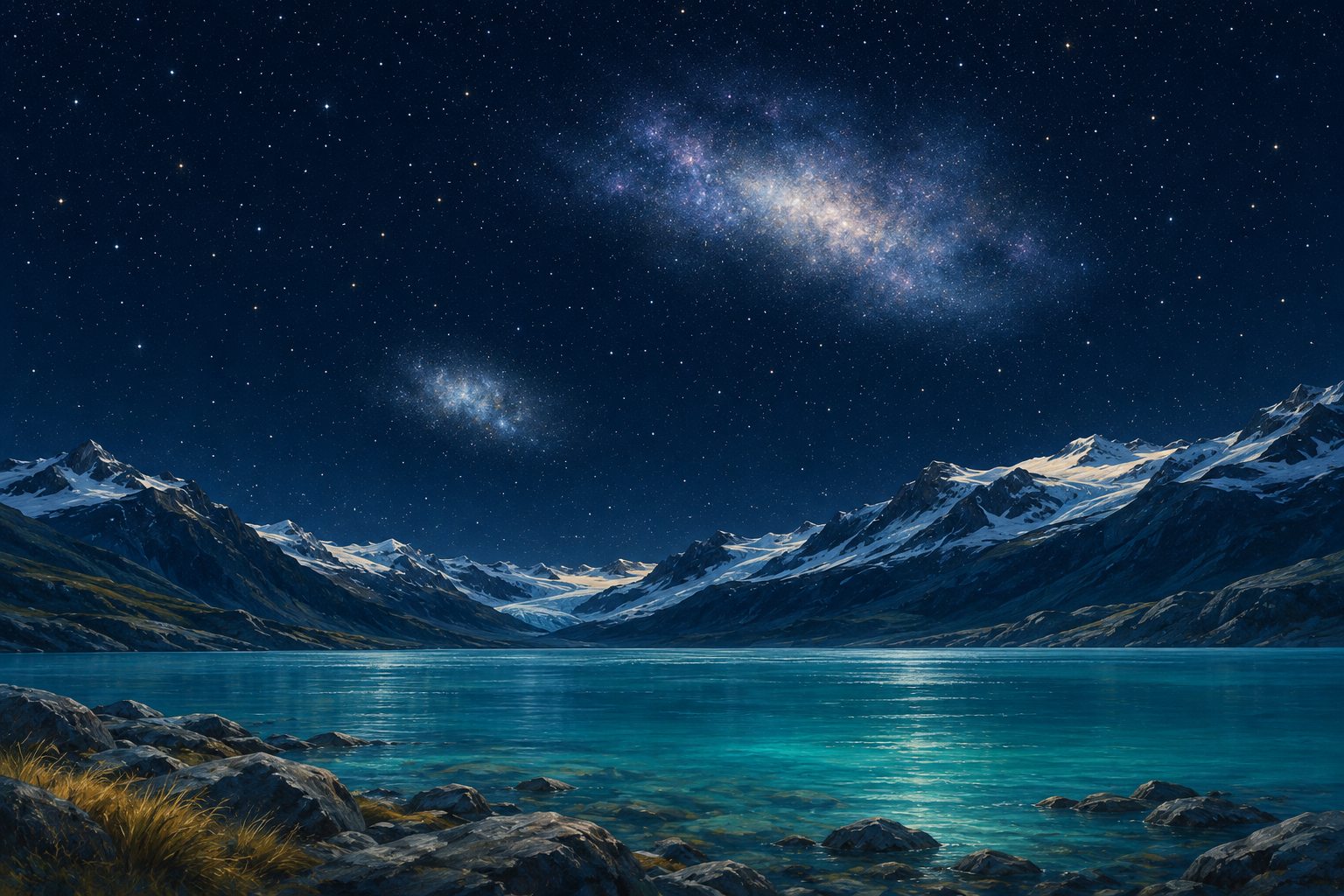
Illustrative images. The pictures in this guide are illustrations based on the real place, not photographs, and may differ from it.

Get it on Google Play

Earth and travel

Milky Way and the Universe

The sky at any place on Earth, with the Southern Cross, the Magellanic Clouds and the North Star, and where Earth sits within the Milky Way and the Universe.

Share: WhatsApp

The sky from each place: what you can see

Never setsRises and setsNever visible

    Where Earth sits in the Universe

    The drawings are not to scale: the real distances are too large to fit on a screen.

    Each place's sky is worked out from its latitude and each object's declination (its "latitude" on the sky). Months are the best for early-evening viewing.

    The Milky Way

    The center of the Milky Way is best seen from the Southern Hemisphere’s sky around midyear.
    The center of the Milky Way is best seen from the Southern Hemisphere’s sky around midyear.

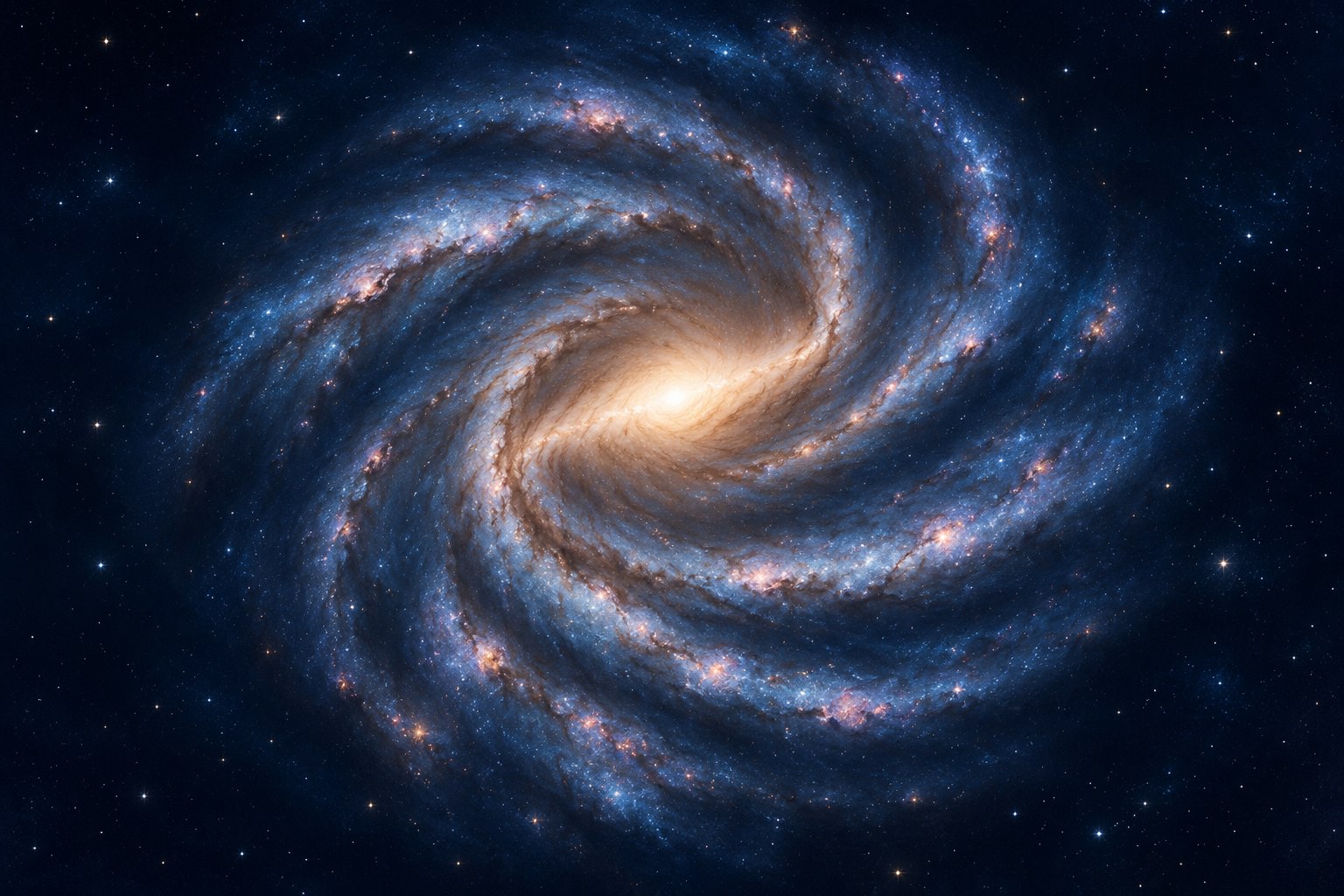
    The Milky Way is our galaxy: a disk of hundreds of billions of stars, gas and dust, about 100,000 light-years across. Because we are inside the disk, we see it edge-on, as a pale band that crosses the sky on dark nights.

    The name comes from the ancient Greeks, who saw a trail of milk spilled by the goddess Hera. In many languages the band has similar names, and for Indigenous peoples of Brazil, such as the Tupis, it is the tapir’s path.
    Where the Sun is

    The Sun is located in one of the galaxy’s arms, about 26,000 light-years from the center.
    The Sun is located in one of the galaxy’s arms, about 26,000 light-years from the center.

    The Sun sits in a smaller arm of the galaxy, the Orion Arm, about 26,000 light-years from the center. It orbits the center at roughly 800,000 kilometers per hour and takes about 230 million years to complete one full revolution.

    The center of the Milky Way lies in the direction of the constellation Sagittarius, where there is a black hole about 4 million times the mass of the Sun. It is also the brightest part of the band and the part that stands out most in photos.

    Neighboring galaxies

    The Magellanic Clouds are two nearby galaxies visible only from the southern sky.
    The Magellanic Clouds are two nearby galaxies visible only from the southern sky.

    The Milky Way is part of the Local Group, which contains dozens of galaxies. The Magellanic Clouds, two small galaxies that look like loose little clouds, are visible only from the southern hemisphere and were described to Europeans by 16th-century navigators.

    The largest neighbor is Andromeda, 2.5 million light-years away, the most distant object visible to the naked eye. It and the Milky Way are approaching each other and could merge in a few billion years, but recent studies show that this is not yet certain.

    The southern sky and the northern sky

    The Southern Cross points toward the celestial south pole.
    The Southern Cross points toward the celestial south pole.

    What you see in the sky depends on your latitude. The farther south you are, the higher the south celestial pole appears, and the stars around it never set. The farther north you go, the higher the North Star appears; in the southern hemisphere it never appears.

    The Southern Cross is the emblematic constellation of the south: it is visible across Brazil and is seen low on the horizon only up to about 25 degrees north latitude. The stars on Brazil’s flag show the sky over Rio de Janeiro on the morning of November 15, 1889, each one representing a state or the Federal District.

    On the equator, as in Macapá, the two celestial poles lie on the horizon, and throughout the year you can see stars from both hemispheres.

    Constellations through the year

    The Big Dipper, in the northern sky, changes position throughout the year.
    The Big Dipper, in the northern sky, changes position throughout the year.

    As Earth orbits the Sun, the night sky changes with the months. In the southern summer, from December to February, Orion and the Three Marys (the Belt of Orion) are high in the early evening. In winter, from June to August, Scorpio dominates, near the center of the Milky Way.

    In Brazil, the best time to photograph the brightest part of the Milky Way is from April to September, on moonless nights and far from city lights.

    Dark skies while traveling

    Far from city lights, the sky reveals thousands of stars.
    Far from city lights, the sky reveals thousands of stars.

    City lights wash out most stars: most people who live in large cities have never seen the Milky Way. That is why there are certified dark-sky places, protected against light pollution.

    In Chile, the Elqui Valley has the first International Dark Sky Sanctuary, created in 2015, and observatories open to tourists. In New Zealand, the Tekapo region is a dark-sky reserve, and in the United States, Flagstaff was the world’s first dark-sky city. In Brazil, Chapada dos Veadeiros, Jalapão and the Lençóis Maranhenses are among the most beautiful skies.

    Always tip: choose nights near the new moon, let your eyes adapt to the dark for about 20 minutes, and use your phone’s red light.

    Even at the darkest sites, seeing the Milky Way is not guaranteed: it depends on clear skies, a night without a bright Moon and the time when it is high in the sky.

    Where to see it on your trip

    Places in the guide related to this topic.

    Southern Hemisphere: Milky Way, Southern Cross and Magellanic Clouds

    San Pedro de Atacama
    Chile

    San Pedro de Atacama

    Vale do Elqui
    Chile

    Vale do Elqui

    Salar de Uyuni
    Bolivia

    Salar de Uyuni

    Tekapo
    New Zealand

    Tekapo

    Alto Paraíso de Goiás
    Brazil

    Alto Paraíso de Goiás

    Jalapão
    Brazil

    Jalapão

    Lençóis Maranhenses
    Brazil

    Lençóis Maranhenses

    Céu escuro do Atacama
    San Pedro de Atacama, Chile

    Céu escuro do Atacama

    Céu escuro de Tekapo
    Tekapo, New Zealand

    Céu escuro de Tekapo

    Céu escuro do Vale do Elqui
    Vicuña, Chile

    Céu escuro do Vale do Elqui

    Northern Hemisphere: Big Dipper and North Star

    Ilha do Havaí (Big Island)
    the United States

    Ilha do Havaí (Big Island)

    Tenerife
    Spain

    Tenerife

    Flagstaff
    the United States

    Flagstaff

    Abisko
    Sweden

    Abisko

    On the equator, both skies

    Macapá
    Brazil

    Macapá

    Marco Zero do Equador
    Macapá, Brazil

    Marco Zero do Equador

    Ecuador
    Country

    Ecuador

    Frequently asked questions

    What is the Milky Way?

    It is our galaxy, a disk of hundreds of billions of stars about 100,000 light-years in diameter. Seen from inside, it appears as a pale band across the sky.

    Why is it called the Milky Way?

    Because the ancient Greeks saw a pale band in the sky as a pathway of milk, linked to a myth about the goddess Hera. Lactic means ‘of milk.’

    Where is Earth in the Milky Way?

    The Sun, with Earth, sits in the Orion Arm, about 26,000 light-years from the galaxy’s center, and takes roughly 230 million years to orbit it.

    Can you see the Milky Way with the naked eye?

    Yes, under a very dark sky, far from city lights and with no Moon. It appears as a whitish band crossing the sky.

    What is the best time to see the Milky Way in Brazil?

    From April to September, when the brightest part, toward Sagittarius and Scorpio, is high in the night sky. Prefer nights near the new moon.

    Does the Southern Cross appear in the northern hemisphere?

    Only near the equator and up to about 25 degrees north latitude, low on the horizon, as in Hawaii. In Europe and most of the United States it never appears.

    What are the Magellanic Clouds?

    They are two small galaxies neighboring the Milky Way that look like little clouds in the sky. They are visible mainly from the southern hemisphere and were named after the navigator Ferdinand Magellan.

    What do the stars on Brazil’s flag represent?

    They show the sky over Rio de Janeiro on the morning of November 15, 1889, the day of the Proclamation of the Republic, and each star represents a state or the Federal District.

    Back to Tekapo