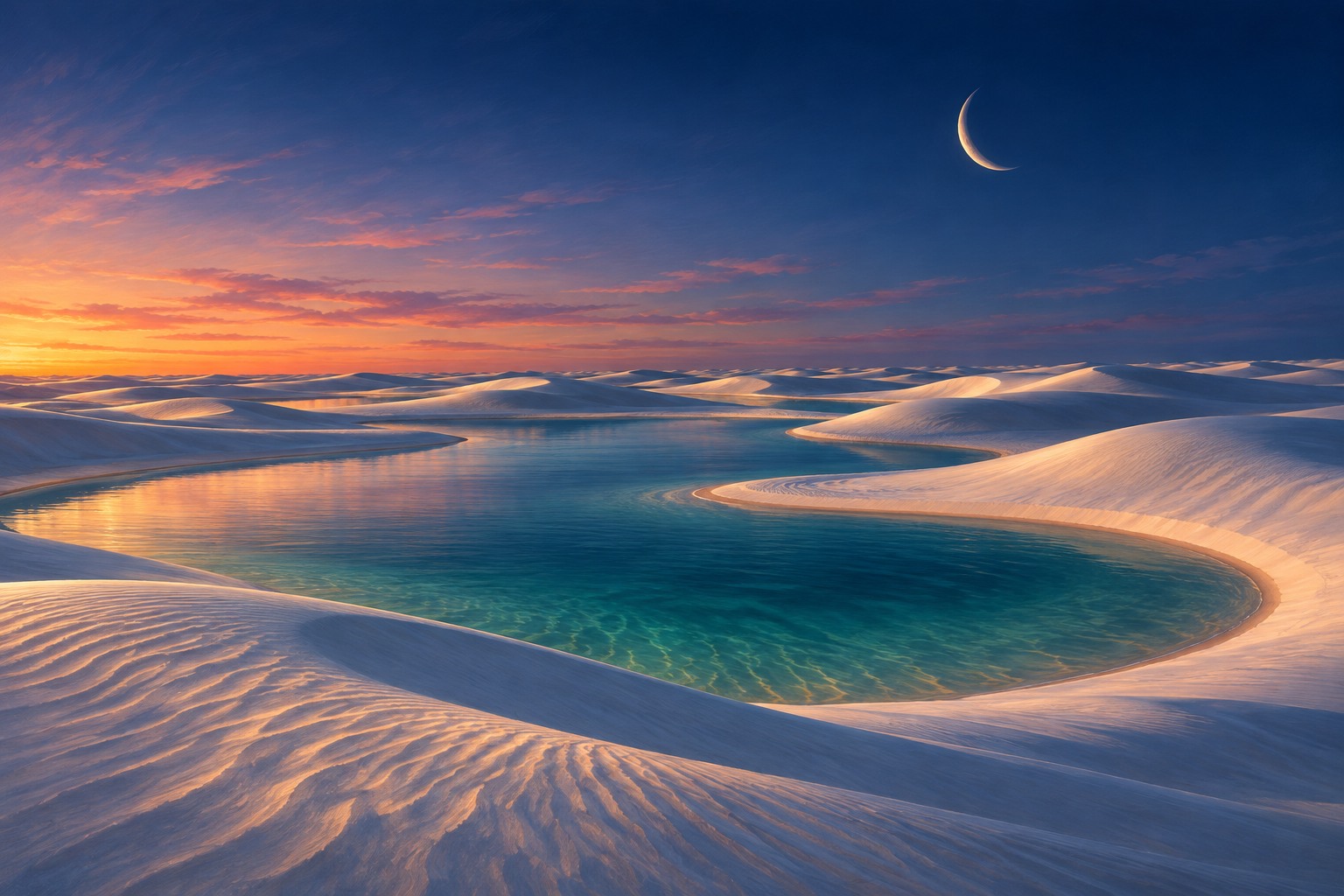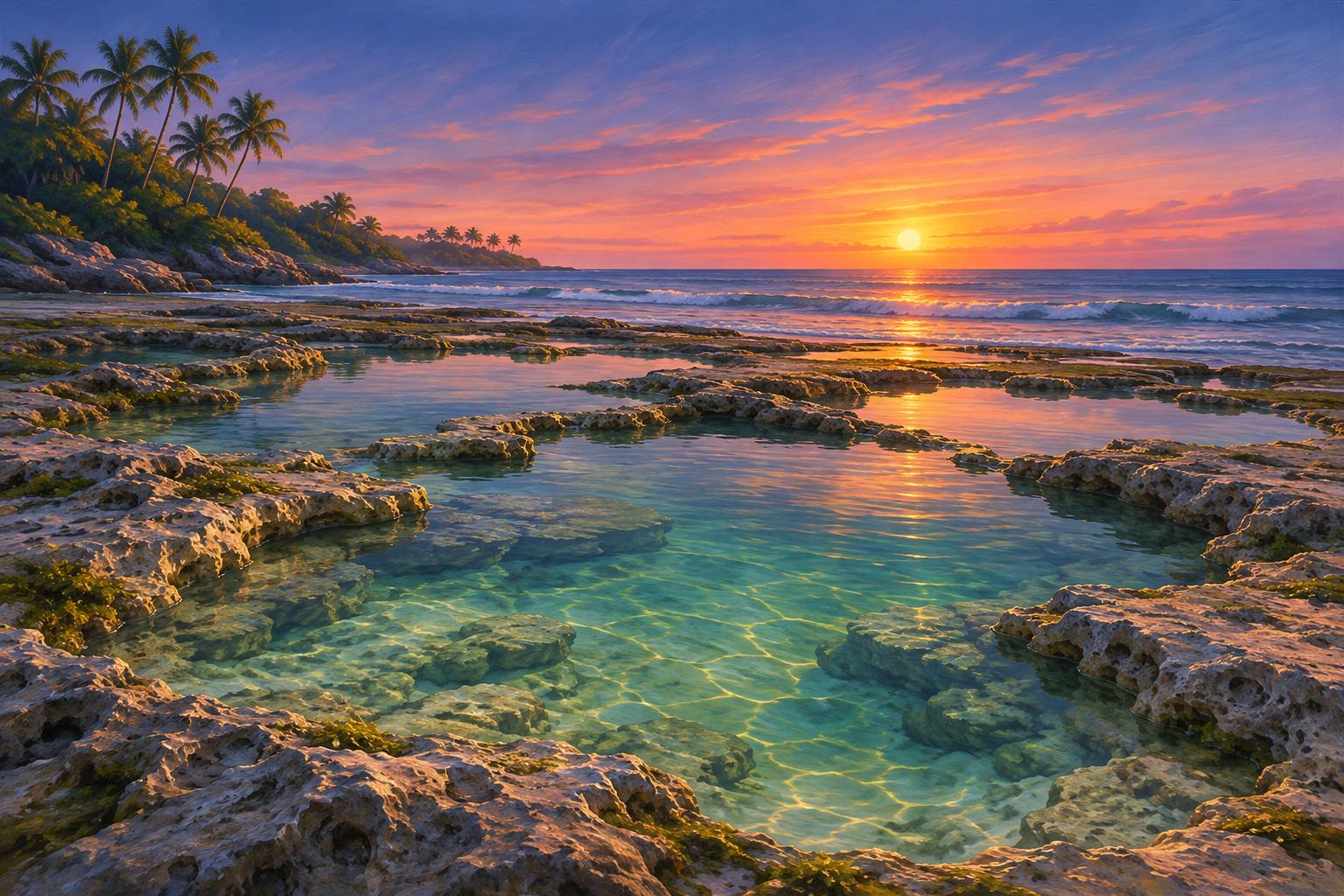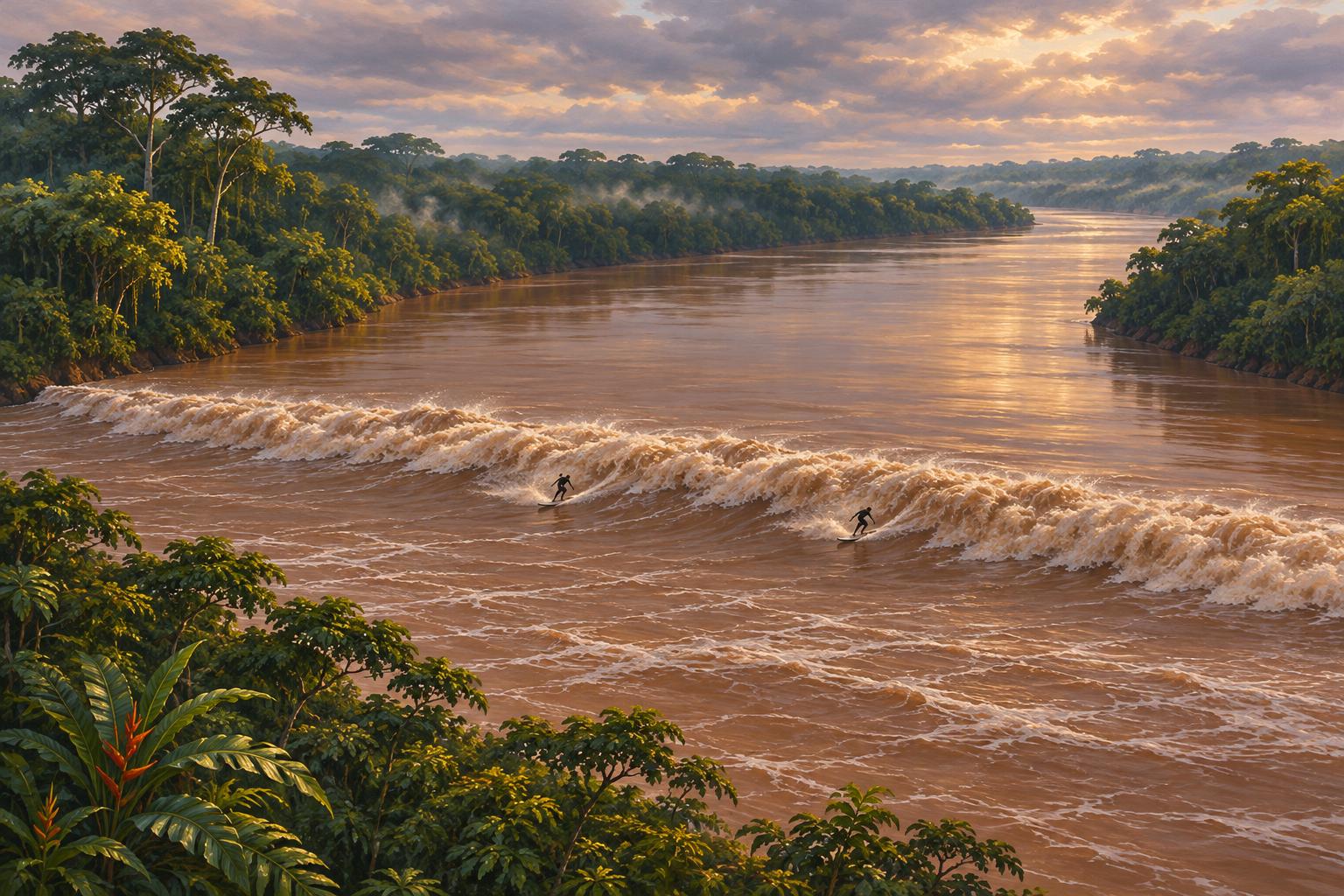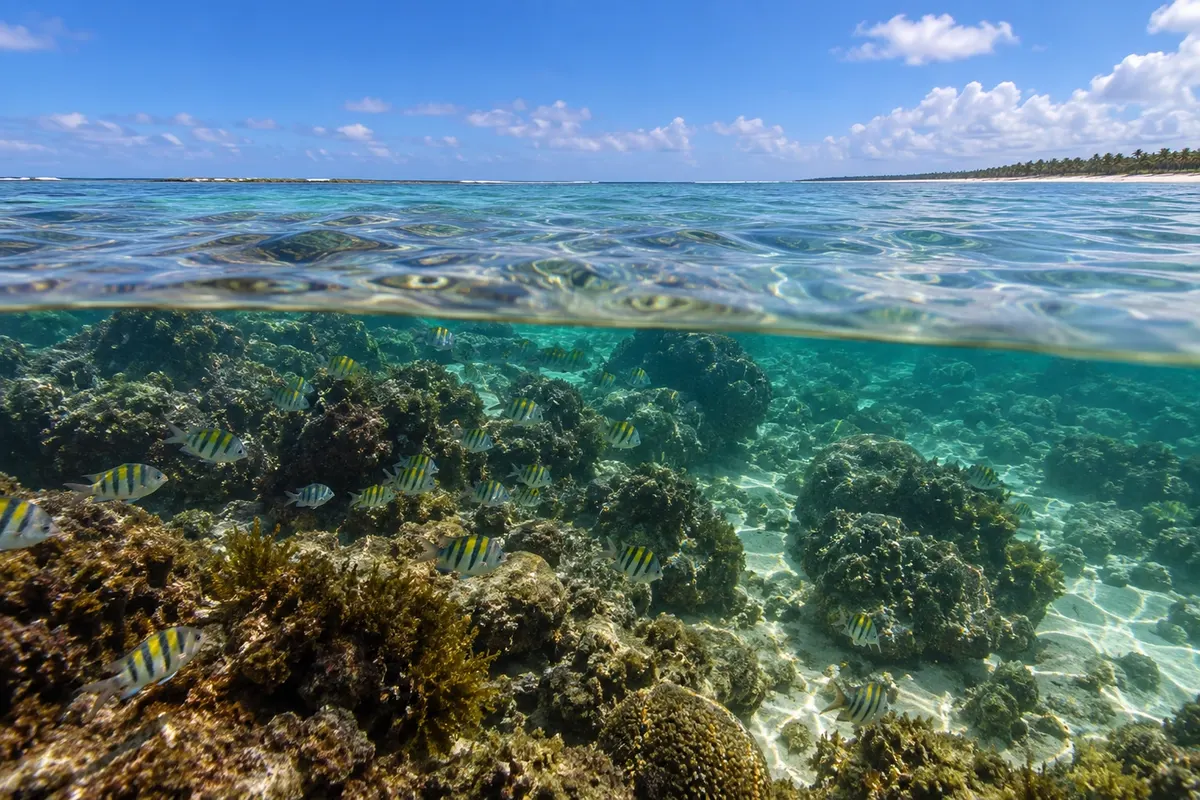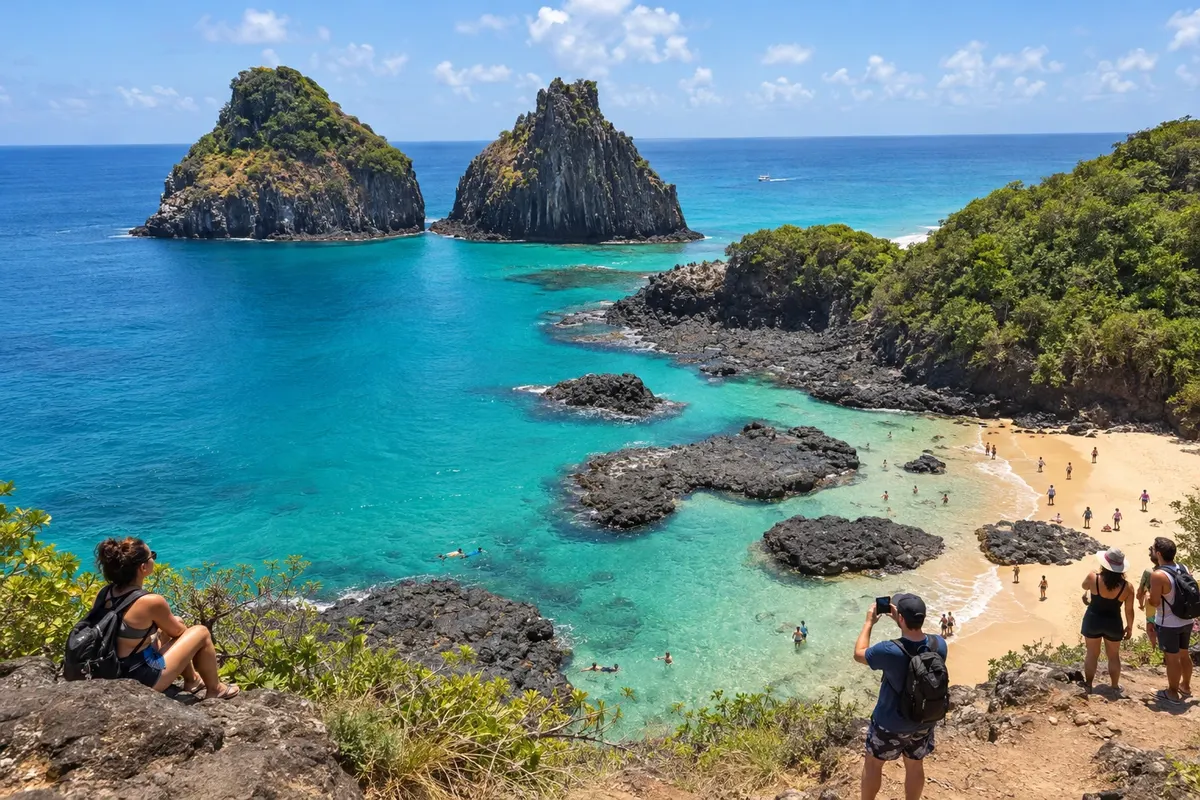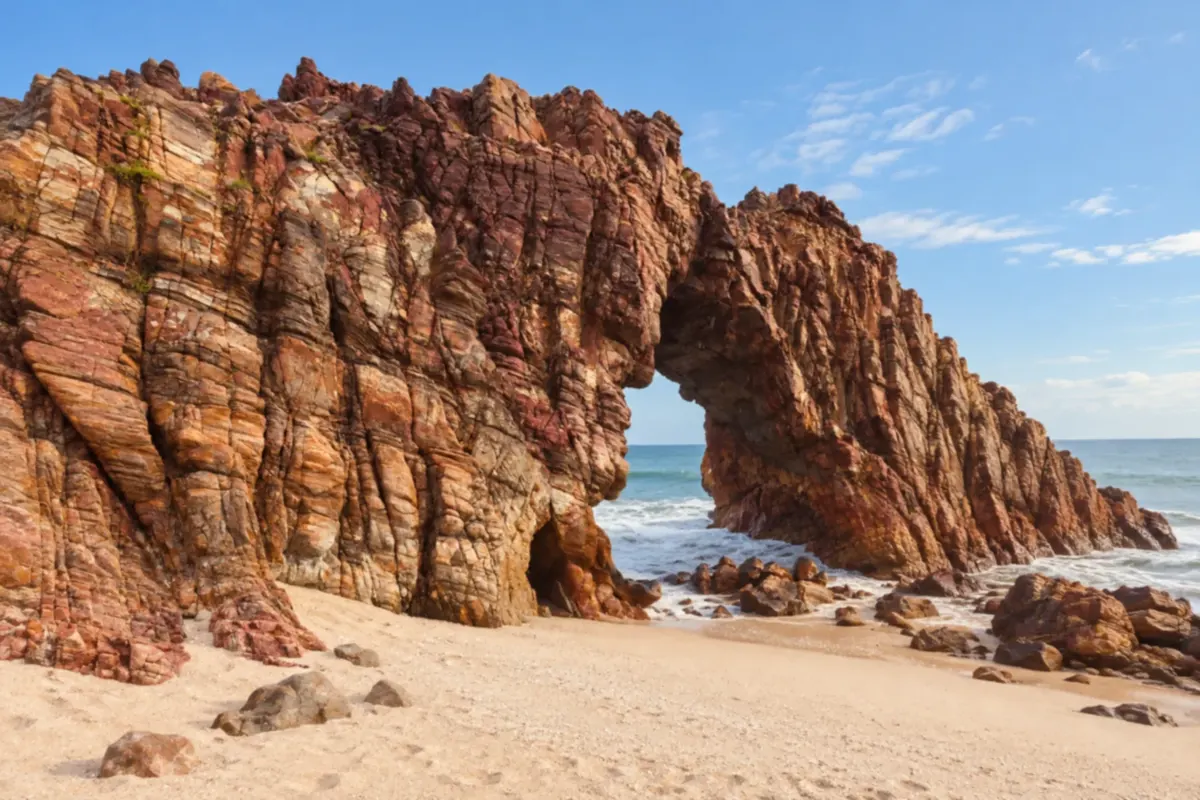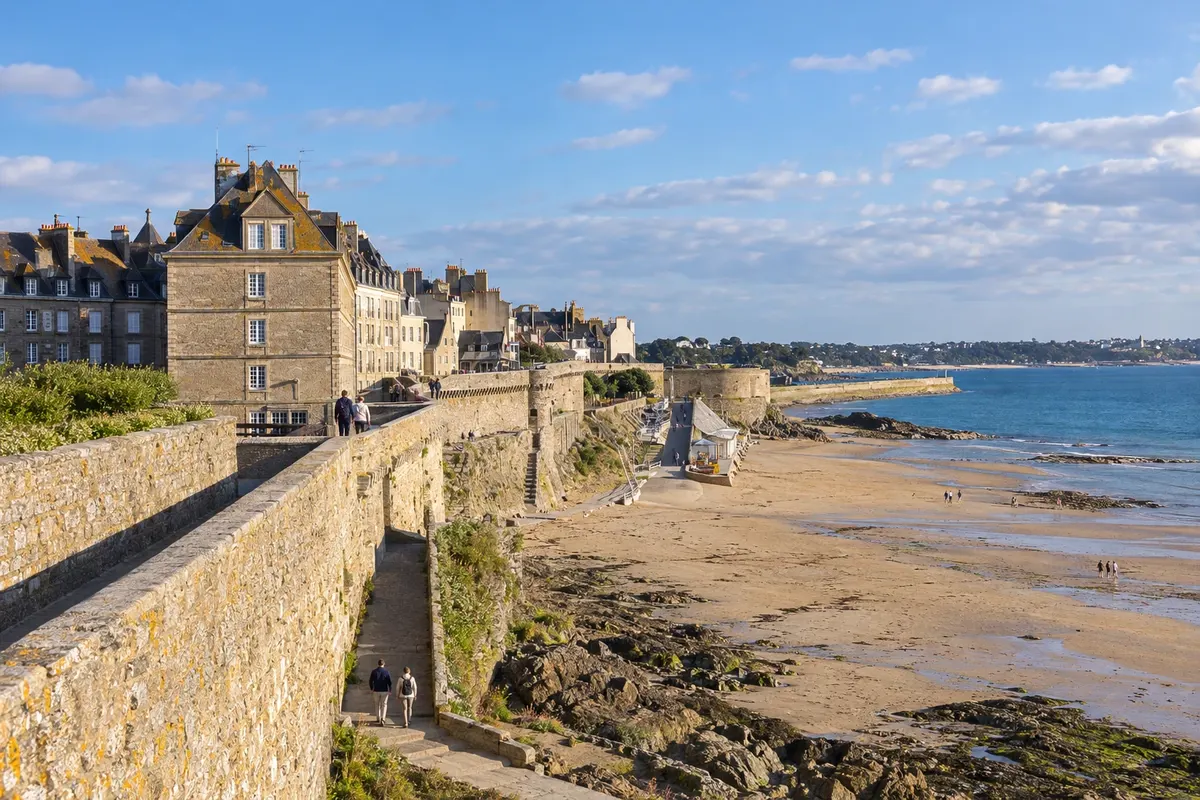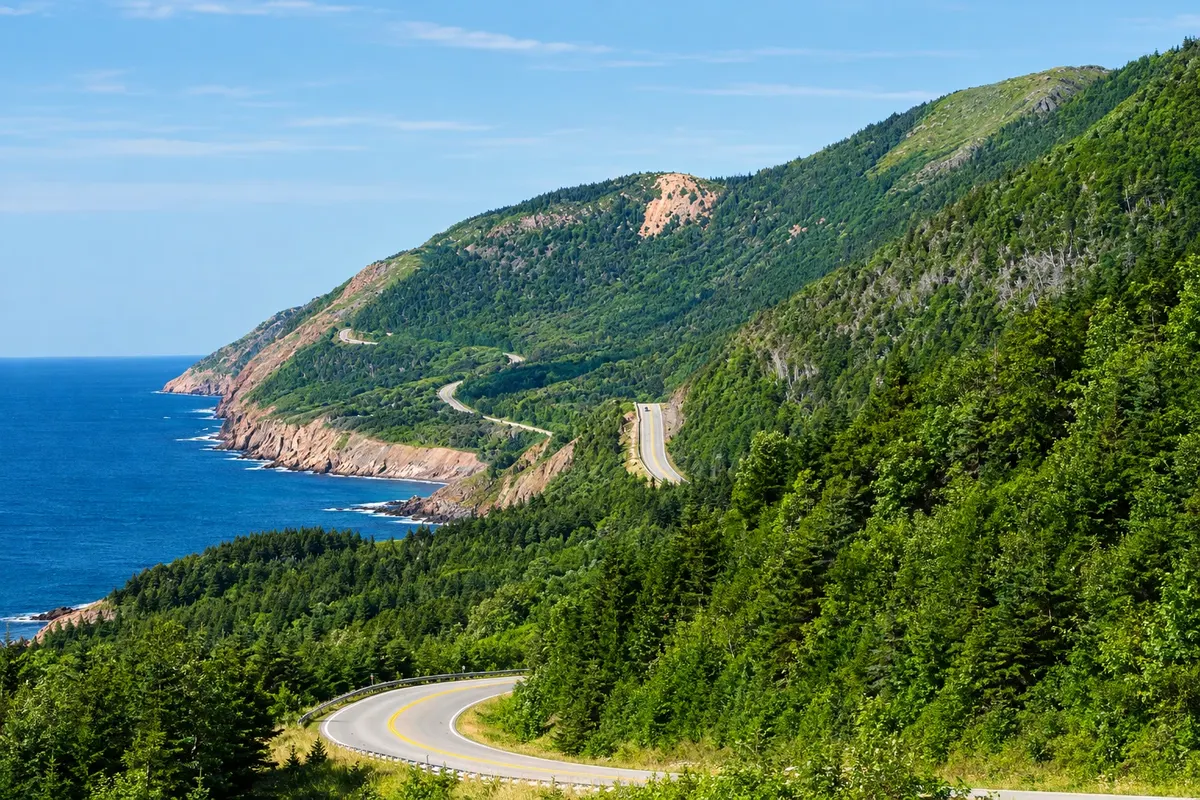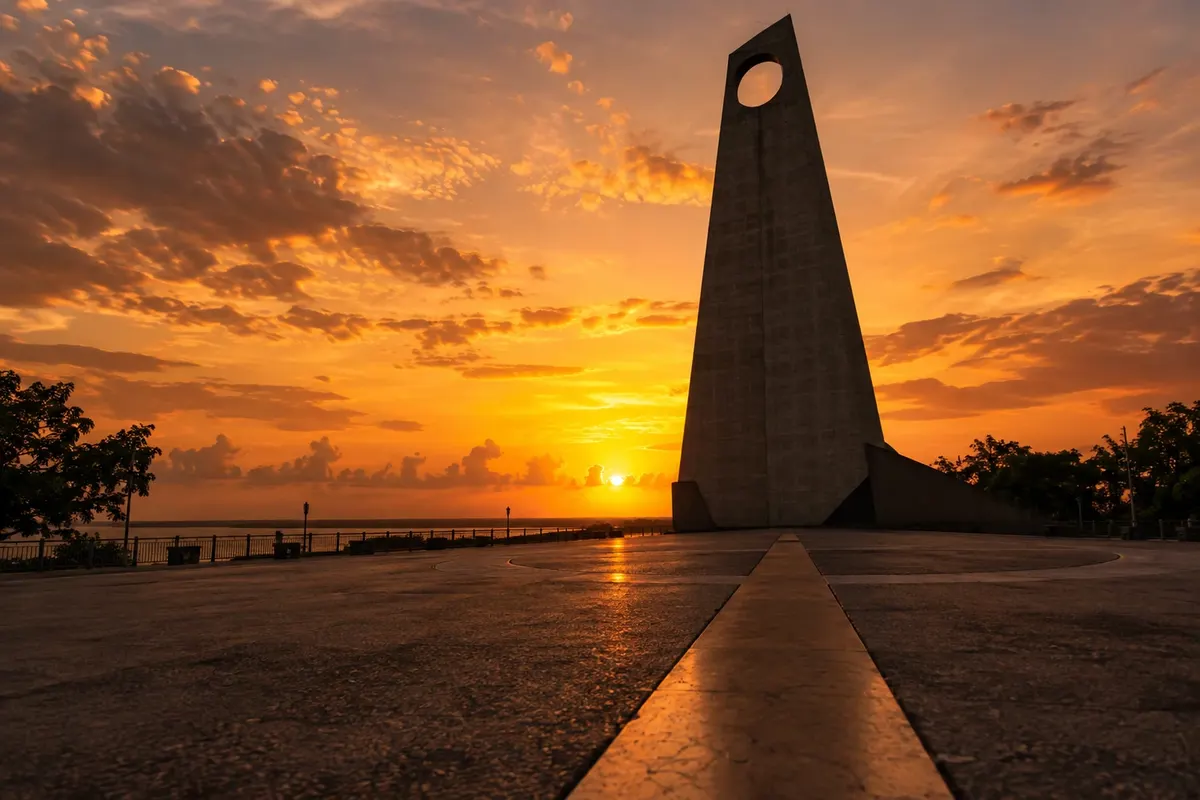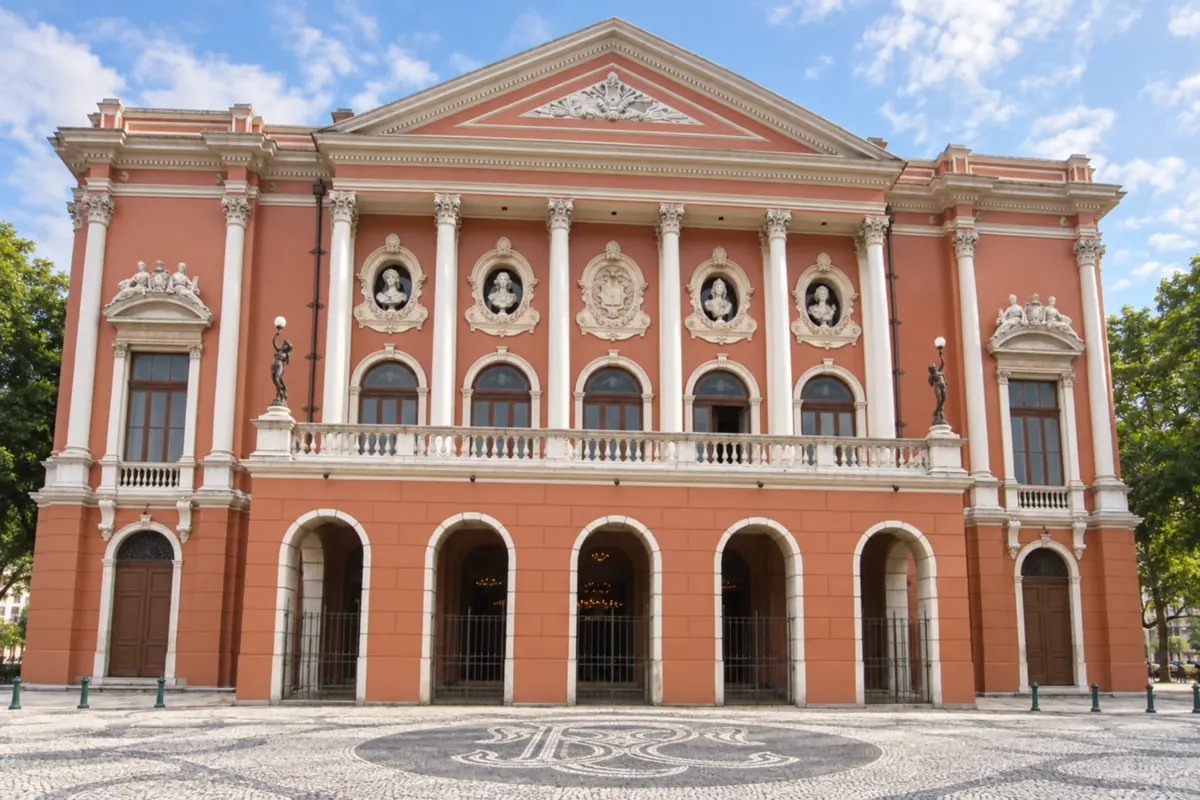




Illustrative images. The pictures in this guide are illustrations based on the real place, not photographs, and may differ from it.

Get it on Google Play

Earth and travel

Moon phases and tides

The current Moon phase, the dates of upcoming phases, and an illustration showing how the Moon and the Sun pull the sea water.

Share: WhatsApp

The Moon now

Next phases

How the Moon makes the tides

The Moon's gravity stretches Earth's water toward two sides: the one facing it and the opposite one. The Sun does the same with less than half the strength. Move the slider to watch the Moon go around.

In the drawing the water is greatly exaggerated and distances are not to scale: the Moon is about 30 Earth diameters away, and the Sun almost 400 times farther than the Moon.

Moon calendar: the next three months

Dates and times in your device's time zone. Supermoon: a full moon near perigee, the point of the orbit closest to Earth. Every new and full moon brings a spring tide.

Calculated on your device with Jean Meeus's formulas (Astronomical Algorithms); times may be off by a few minutes. For the tide time at a place, check the official tide table for that country.

Why the Moon changes shape

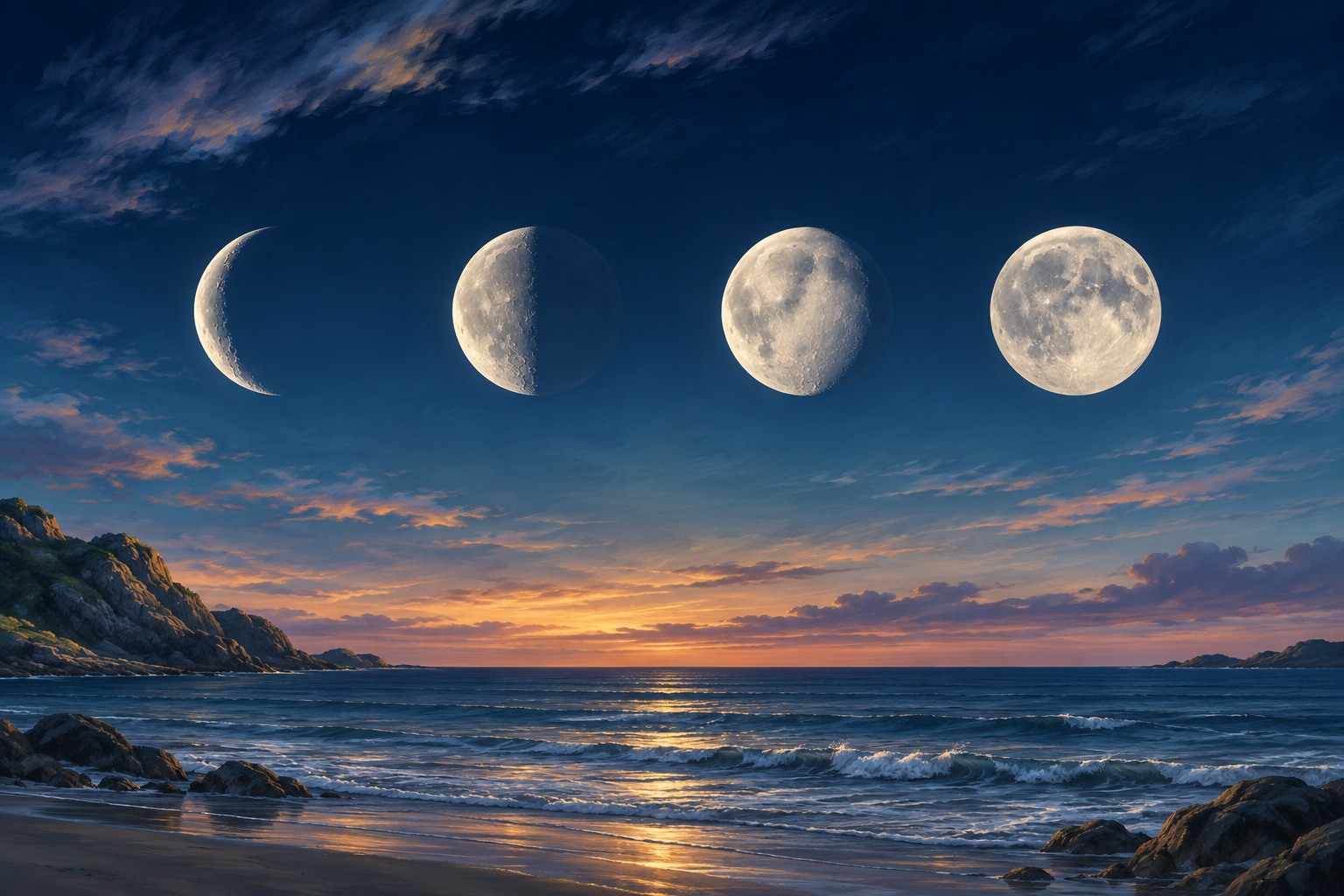
In the southern hemisphere sky, the crescent Moon appears illuminated on the left side.

The Moon has no light of its own: it reflects the Sun’s light. Half of it is always lit, but as it moves around the Earth we see that lit half from different angles. That produces the phases.

A full cycle, from one new moon to the next, takes 29.5 days. That’s the lunar month, the basis for the idea of a month in many ancient calendars.
The four main phases

It takes about two weeks for the Moon to go from new to full.

At new moon the Moon sits between the Earth and the Sun, with the lit side facing away from us, so it is barely visible. About seven days later comes the first quarter, with half the disc lit. At full moon the Earth is between the Sun and the Moon and the disc appears fully lit. One week later, at last quarter, only half the disc is visible again.

In the southern hemisphere the waxing crescent lights up on the left and the waning crescent on the right. In the northern hemisphere it’s the opposite. That’s why the saying that the Moon “lies” (the C of crescent looks like the waning shape and vice versa) only works in the north: here in Brazil the waxing crescent really looks like a C.

The crescent appears in the late afternoon in the west and sets during the night. The full moon rises at sunset and stays in the sky all night. The waning moon rises before dawn and can still be seen in the morning.

How the Moon makes the tides

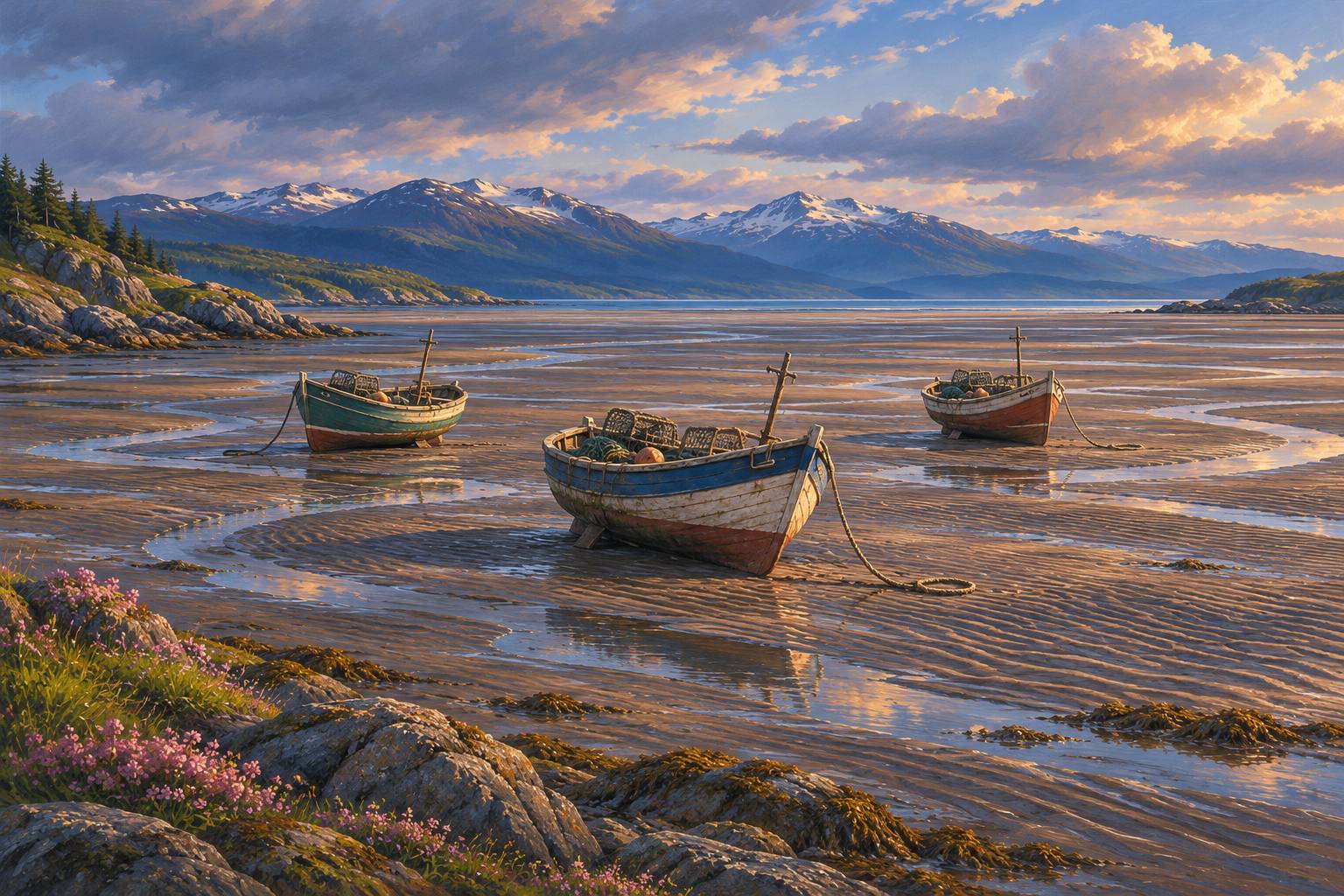
In bays with large tides, boats rest on the sand when the water recedes.

The Moon’s gravity pulls more strongly on the side of the Earth that faces it and less strongly on the opposite side. That difference stretches the oceans into two bulges, one on each side of the planet. As the Earth rotates, each coast passes through those bulges: those are the two high tides each day, with two low tides between them.

About six hours elapse between a high tide and the following low tide. Because the Moon also moves in its orbit, tides occur about 50 minutes later each day.

The Sun pulls on the water too, but because it is much farther away it exerts less than half the effect of the Moon.

Spring tides and neap tides

At full and new Moon the tides rise and fall more: this is the spring tide.

At new moon and full moon the Sun, Earth and Moon are aligned (syzygy). The forces add and a spring tide occurs: higher high tides and lower low tides.

At first and last quarter the Sun and Moon are at right angles (quadrature). They pull against each other and a neap tide occurs, with a small difference between high and low tide.

The largest tides of the year usually occur near the equinoxes, in March and September, and when the full or new moon coincides with perigee, the point where the Moon is closest to Earth.

Tides while traveling

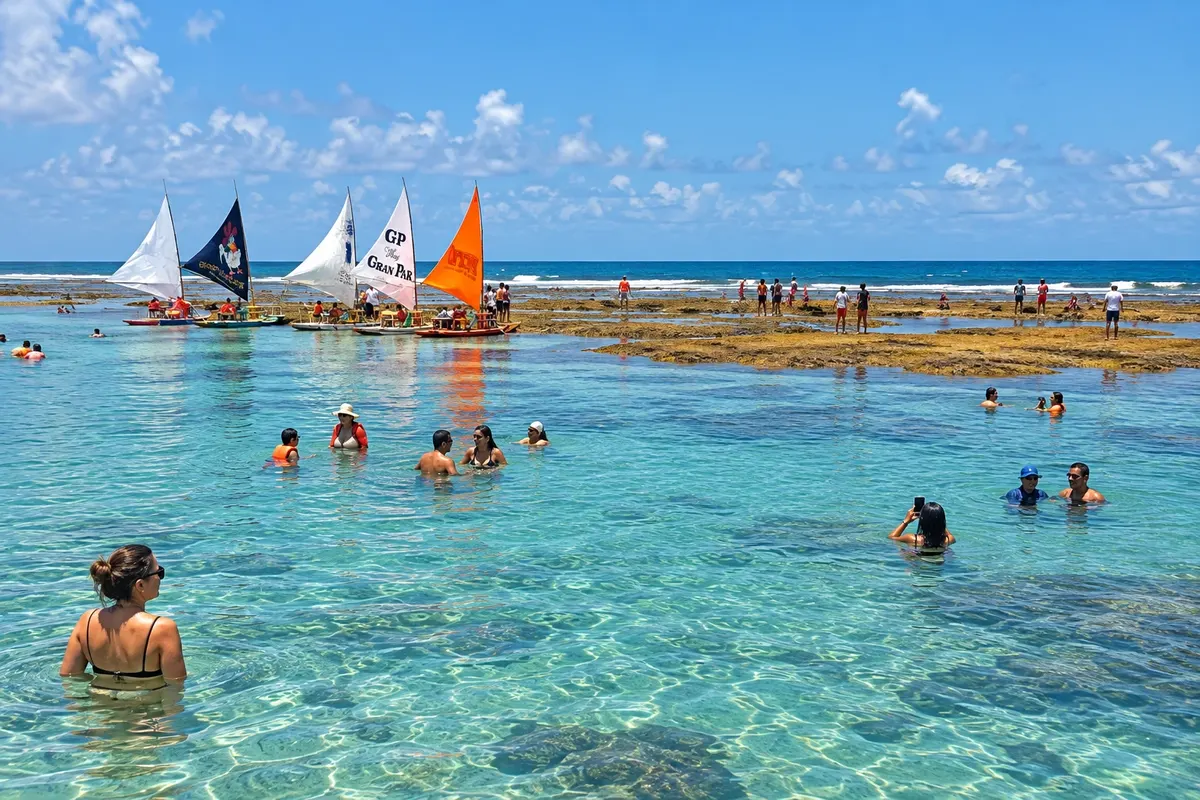
Natural tide pools appear at low tide, which changes its timing each day.

In many coastal destinations the tide controls what you can do. The natural pools of Porto de Galinhas and Maragogi, in Pernambuco and Alagoas, appear at low tide, and Pedra Furada in Jericoacoara can only be reached on foot along the beach at low tide. The best days are new moon and full moon, when low tides go lower.

São Luís, in Maranhão, has one of the largest tides in Brazil: it exceeds 6 meters and reaches about 7 meters at spring tide. Worldwide, the record is Bay of Fundy in Canada, at about 16 meters.

Before you go, check the tide table from the Brazilian Navy, which shows the time and height of tides for ports all along the coast.

Near the equator and the pororoca

The pororoca travels up Amazon rivers during the strongest tides.

When the Moon passes over the equator, the two daily high tides are similar everywhere on the planet. When it is farther north or south, away from the equator, one of the day’s high tides becomes much larger than the other, while near the equator they remain similar. Macapá, in Amapá, lies right on the equator line.

At the mouth of the Amazon and on rivers in Pará and Amapá, spring tide pushes seawater upriver and forms the pororoca, a wave that can exceed 3 to 4 meters and travel for kilometers. It is strongest from January to May, at full moon and new moon. In São Domingos do Capim, Pará, there is even a pororoca surfing festival.

Where to see it on your trip

Places in the guide related to this topic.

Natural pools at low tide

Piscinas Naturais de Porto de Galinhas
Brazil

Piscinas Naturais de Porto de Galinhas

Galés de Maragogi
Brazil

Galés de Maragogi

Fernando de Noronha
Brazil

Fernando de Noronha

Jijoca de Jericoacoara
Brazil

Jijoca de Jericoacoara

Giant tides

São Luís
Brazil

São Luís

Saint-Malo
France

Saint-Malo

Nova Escócia
Canada

Nova Escócia

On the equator and the tidal bore

Macapá
Brazil

Macapá

Marco Zero do Equador
Brazil

Marco Zero do Equador

Belém
Brazil

Belém

Frequently asked questions

What is the Moon phase today?

Today’s phase appears at the top of this page, calculated in real time by your device, with the illuminated portion, the Moon’s distance and the dates of upcoming phases.

How long does each Moon phase last?

The full cycle takes 29.5 days, so each of the four main phases lasts about 7 days. New moon, first quarter, full moon and last quarter are precise moments, and the days around them are given the same names.

Why does the Moon change shape?

Because half of it is always illuminated by the Sun and, as it orbits the Earth, we see that lit half from different angles.

How does the Moon influence the tides?

The Moon’s gravity stretches the oceans into two bulges, one facing the Moon and the other on the opposite side of the Earth. As the Earth spins, each coast passes through them and experiences two high tides and two low tides each day.

What is a syzygy tide?

It is a spring tide, which happens at new moon and full moon when the Sun, Earth and Moon are aligned and their forces add. High tides are higher and low tides are lower.

Which Moon phase is best to see the natural pools?

New moon and full moon, which bring spring tides and the lowest low tides. Check the low-tide time on the tide table, because it changes daily.

Why are there two high tides each day?

Because water piles up on both sides of the Earth: the side facing the Moon and the opposite side. As the Earth rotates each place passes through both bulges.

Where is the biggest tide in Brazil?

In Maranhão. In São Luís the tide exceeds 6 meters and reaches about 7 meters at spring tide.

What is the pororoca?

It is a wave that travels upriver when spring tide pushes seawater against the river current, at the mouth of the Amazon and on rivers in Pará and Amapá. It can exceed 3 to 4 meters and is strongest from January to May, at full moon and new moon.