

 Brazil
 Antarctica
 Argentina
 Bolivia
 Chile
 Colombia
 Ecuador
 Guyana
 French Guiana
 Falkland Islands (Malvinas)
 Paraguay
 Peru
 Suriname
 Uruguay
 Venezuela
 Germany
 Austria
 Belgium
 Croatia
 Denmark
 Slovakia
 Spain
 Finland
 France
 Greece
 the Netherlands
 Hungary
 Ireland
 Iceland
 Italy
 Luxembourg
 Norway
 Poland
 Portugal
 the United Kingdom
 the Czech Republic
 Sweden
 Switzerland
 Turkey
 Bermuda
 Canada
 the United States
 Greenland
 Mexico
 Saint Pierre and Miquelon
 the Dominican Republic
 Japan
 South Africa
 Egypt
 Australia
 Fiji
 New Zealand
 Papua New Guinea
Illustrative images. The pictures in this guide are illustrations based on the real place, not photographs, and may differ from it.

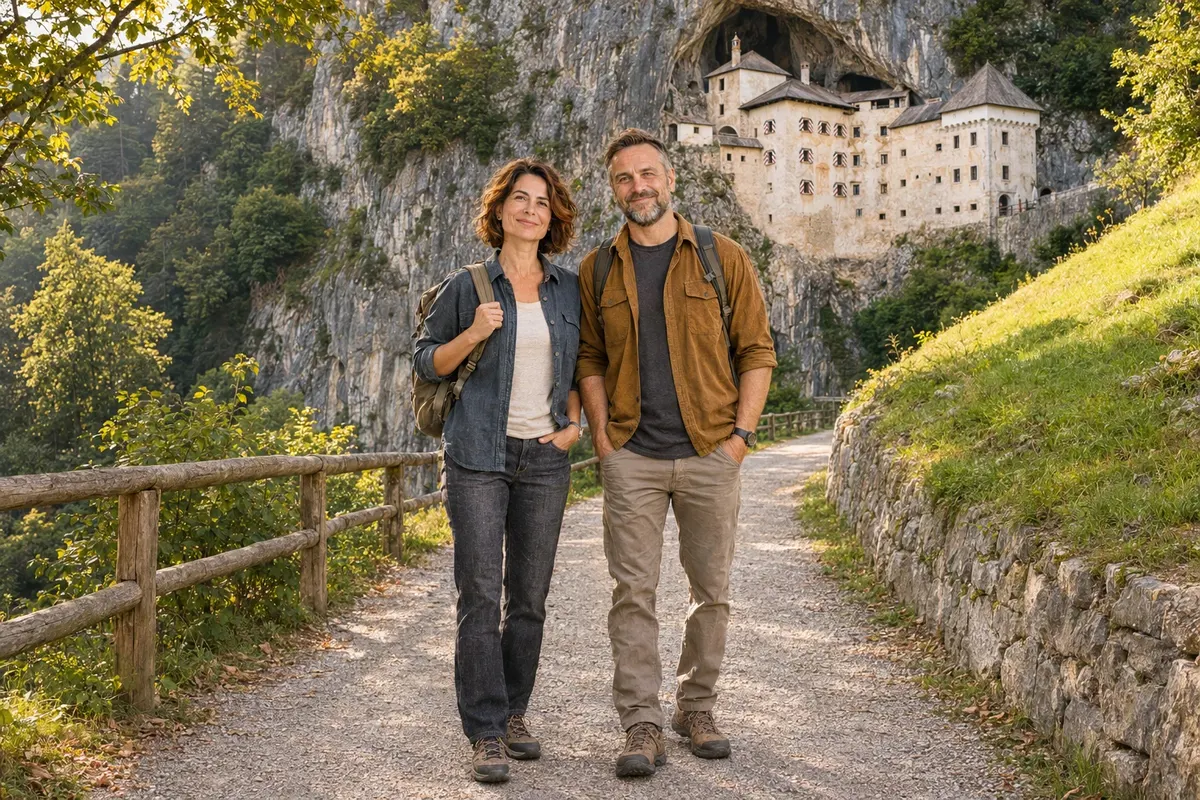
Cultural and heritage travel
Monuments and historic sites of Slovenia
Visit the Kobarid ossuary, Idrija’s mining heritage, and the frescoes of Hrastovlje.
On the hill above Kobarid, rows of inscriptions keep the memory of soldiers who died in the First World War. In Idrija, a gallery opened by the miners preserves part of the history of the work that sustained the town. And in Hrastovlje, near Koper, a small church houses the Dance of Death, a late-Medieval fresco that can still be seen in the place for which it was painted.
These are three ways to learn Slovenia’s history on the ground. The Kobarid memorial was erected after the fighting. The mine preserves places where work took place. The church continues to combine architecture, painting, and devotion under the same roof. How you visit each place follows from those differences.
The Italian ossuary and the Kobarid historic trail
On the ascent to the ossuary you pass the Stations of the Cross. When you arrive, note the Church of Saint Anthony sitting atop three octagonal tiers. The church already existed when the memorial was built around it. Opened in 1938, the complex received the remains of thousands of Italian soldiers from military cemeteries in the region, both identified and unidentified. The names and inscriptions deserve a pause before the view over the valley.
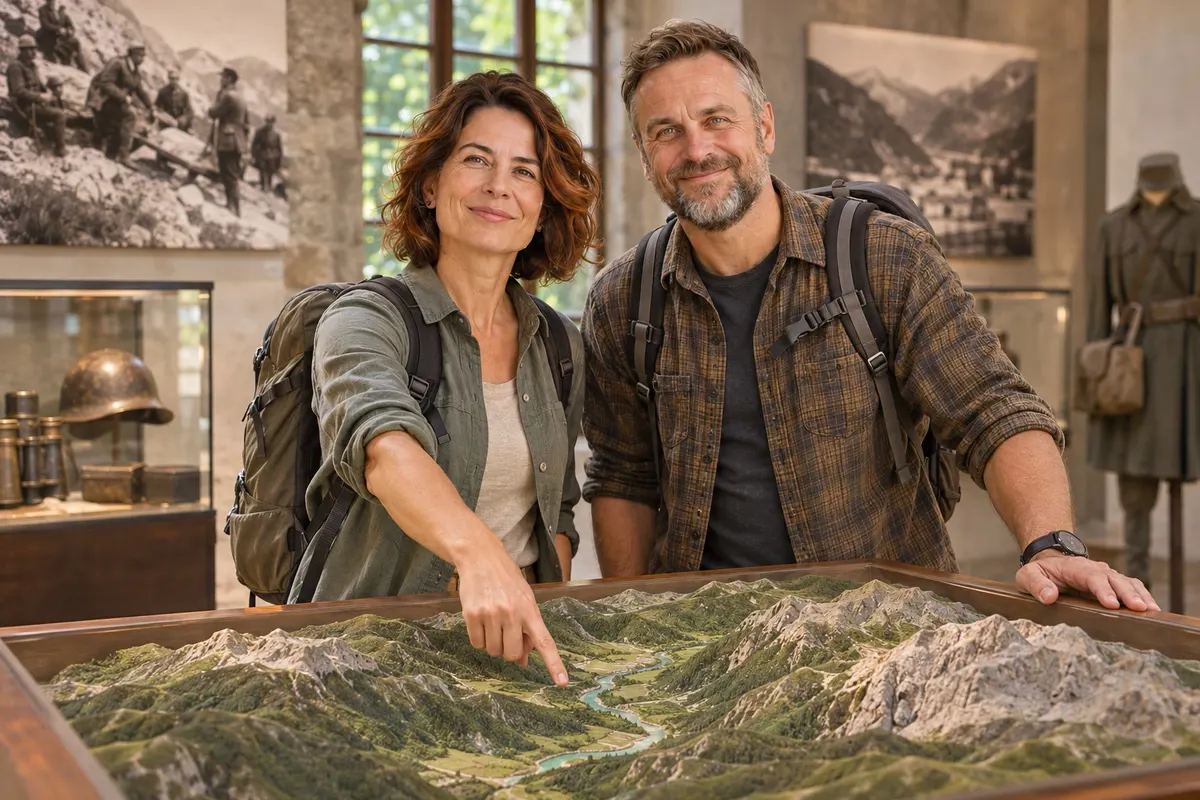
If you want to follow the Kobarid historic trail you can start at the town museum. There, a raised-relief map helps you understand the distances and altitude differences that shaped the Soča front. Check the walking map to locate the ossuary, other traces, and the return route. You can visit the memorial separately when available time or the group’s fitness calls for a shorter route.
Idrija and the marks of mining
In Idrija, the mercury heritage recognized as a UNESCO World Heritage site extends from underground to the town itself. A good entry point is Gewerkenegg Castle. Its stately appearance conceals a very practical function. The mine was administered there and mercury was stored there. The municipal museum housed in the castle places the visitor within the long period in which extraction organized work and family life.
The Antonijev rov gallery leads to the older part of the mine. On the guided route, the scale changes. Above ground you see the town that grew with mining. Below, the width of the tunnel and the distance to daylight help imagine the path of those who went in to work. Book this visit at the mine’s entrance point and ask about stairs, floor conditions, and recommended clothing for the underground sections.
The Dance of Death in the church of Hrastovlje
The Church of the Holy Trinity stands in the settlement of Hrastovlje, outside the center of Koper. Seen from afar, the first thing that draws attention is the stone wall. Inside, painting covers the walls and the vault. The frescoes, completed in 1490, show biblical episodes and agricultural labors through the seasons. Seeing the ensemble helps you understand how these images spoke to the community that attended the church.
In the Dance of Death, observe the clothing and the position of each character in the procession. Figures of different ages and social classes walk alongside skeletons. The signs of wealth or authority that distinguished them in life remain visible, although the procession brings all to the same end. Arrange access to the interior before leaving Koper. The view of the wall alone leaves out the main cultural reason to visit.
Frequently asked questions
Where is the Dance of Death in Slovenia?
It is part of the frescoes in the Church of the Holy Trinity, in Hrastovlje, on the outskirts of Koper. You must enter the church to see it.
What does UNESCO recognize in Idrija?
The heritage associated with mercury mining. The galleries and surface structures document the extraction, the administration, and the way of life that developed around the mine.
Can you see the ossuary without completing the historic trail?
Yes. The memorial sits above Kobarid and can be visited independently, as part of a shorter walk from the town.
Where to go: Monuments and historic sites
Pick a region or a state on the map, or type what you are looking for, to see the cities and who offers it in each.
-
Idrija GR
A herança do mercúrio, patrimônio mundial da UNESCO.
-
Kobarid GR
O ossuário italiano e a trilha histórica da Primeira Guerra.
-
Koper OK
A igreja da Santíssima Trindade de Hrastovlje, com a Dança da Morte.
More activities in Cultural and heritage travel
Beyond the guide


