

 Brazil
 Antarctica
 Argentina
 Bolivia
 Chile
 Colombia
 Ecuador
 Guyana
 French Guiana
 Falkland Islands (Malvinas)
 Paraguay
 Peru
 Suriname
 Uruguay
 Venezuela
 Germany
 Austria
 Belgium
 Croatia
 Denmark
 Slovakia
 Spain
 Finland
 France
 Greece
 the Netherlands
 Hungary
 Ireland
 Iceland
 Italy
 Luxembourg
 Norway
 Poland
 Portugal
 the United Kingdom
 the Czech Republic
 Sweden
 Switzerland
 Turkey
 Bermuda
 Canada
 the United States
 Greenland
 Mexico
 Saint Pierre and Miquelon
 the Dominican Republic
 Japan
 South Africa
 Egypt
 Australia
 Fiji
 New Zealand
 Papua New Guinea
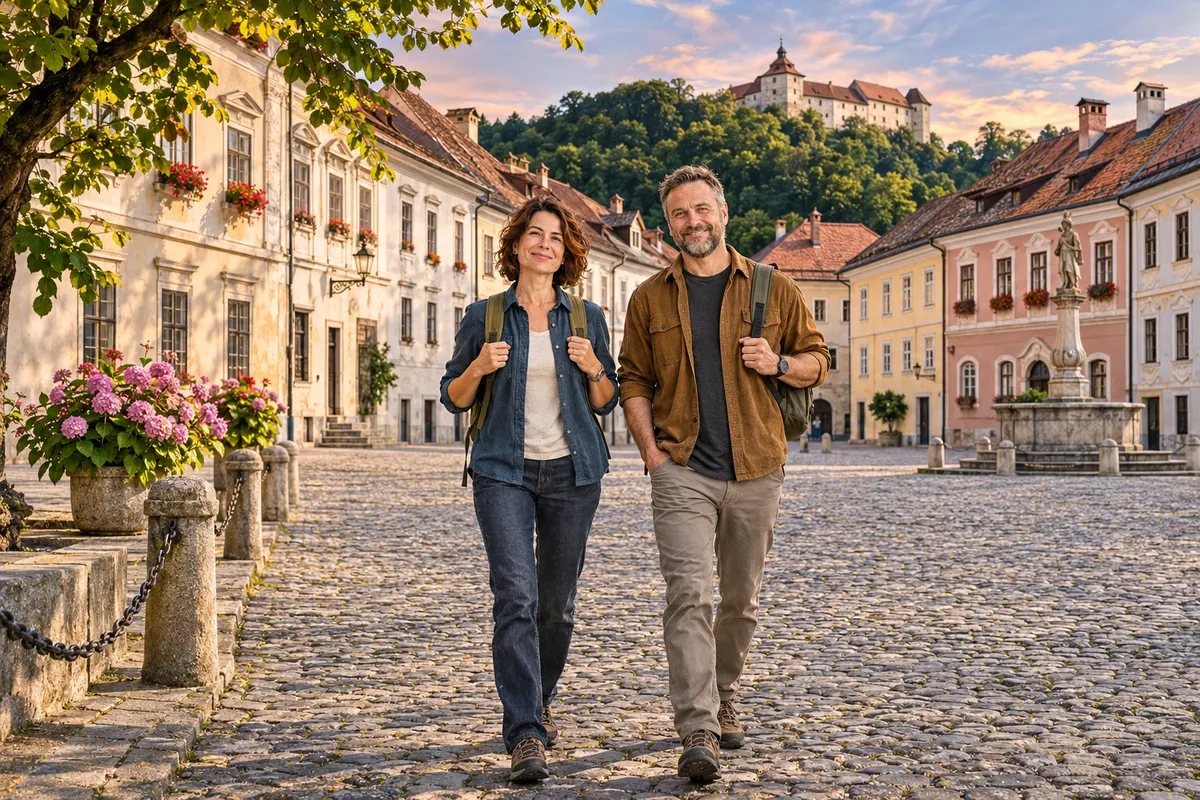
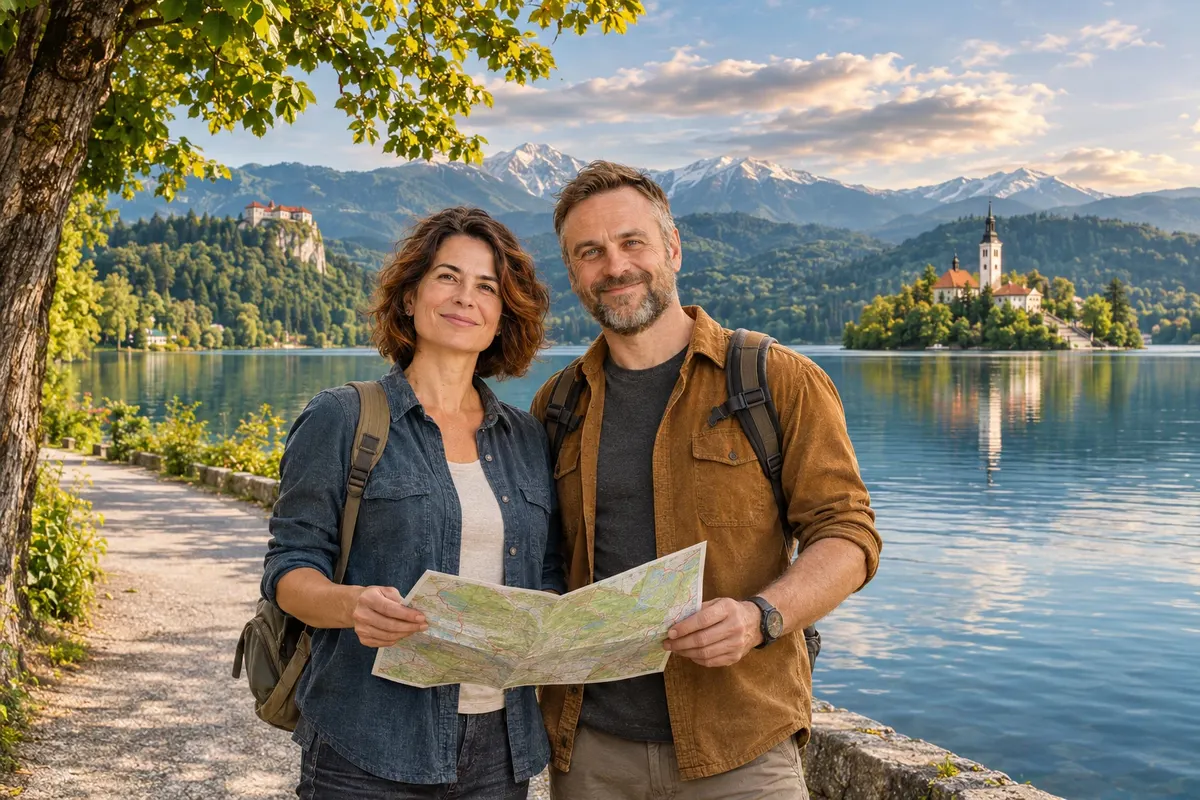
Illustrative images. The pictures in this guide are illustrations based on the real place, not photographs, and may differ from it.

Culture and history
Cultural and historical tourism in Slovenia
A square that used to be a port, a house by an architect and a mine gallery give three good reasons to explore Slovenia on foot.
In Piran, when you cross Tartini Square you are walking where boats once docked. In Ljubljana, crossing the Triple Bridge you can choose the old stone passage or the two side lanes that Jože Plečnik added for pedestrians. These are good starting points for a cultural and historical trip through Slovenia. In both cases, a small detail that would go unnoticed changes the way you see the city.
Things to do
Historic centers
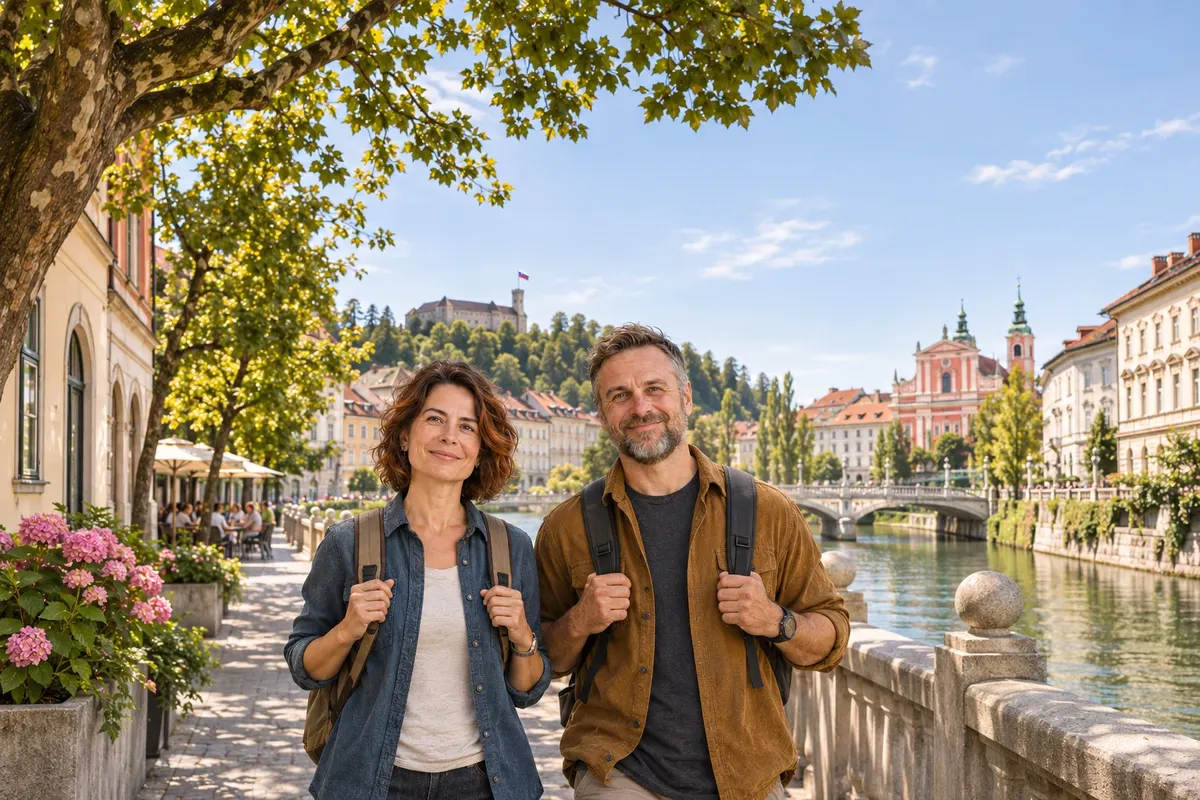
From the Triple Bridge to Tartini Square, the streets bear the marks of those who crossed rivers and built ports.
Learn more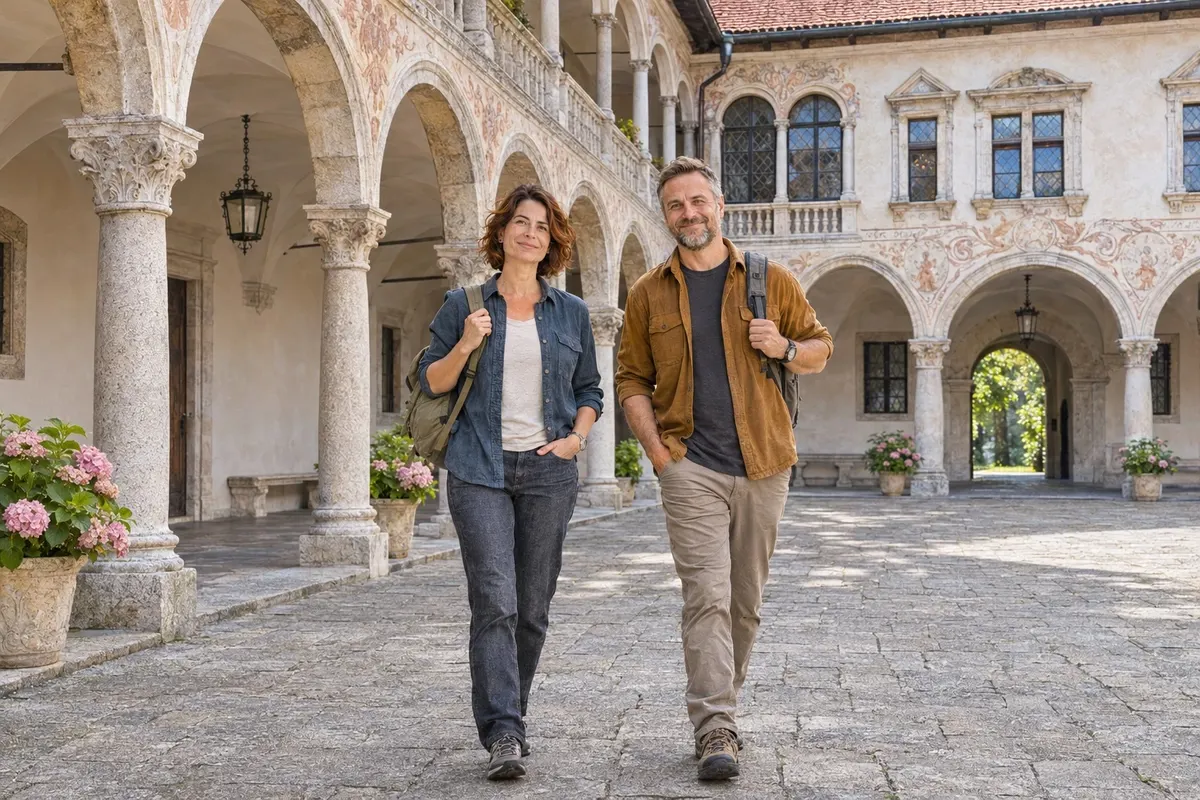
Mansion houses and palaces
See how the castles adapted to the Bled cliff, Ptuj hill, and the Predjama cave.
Learn more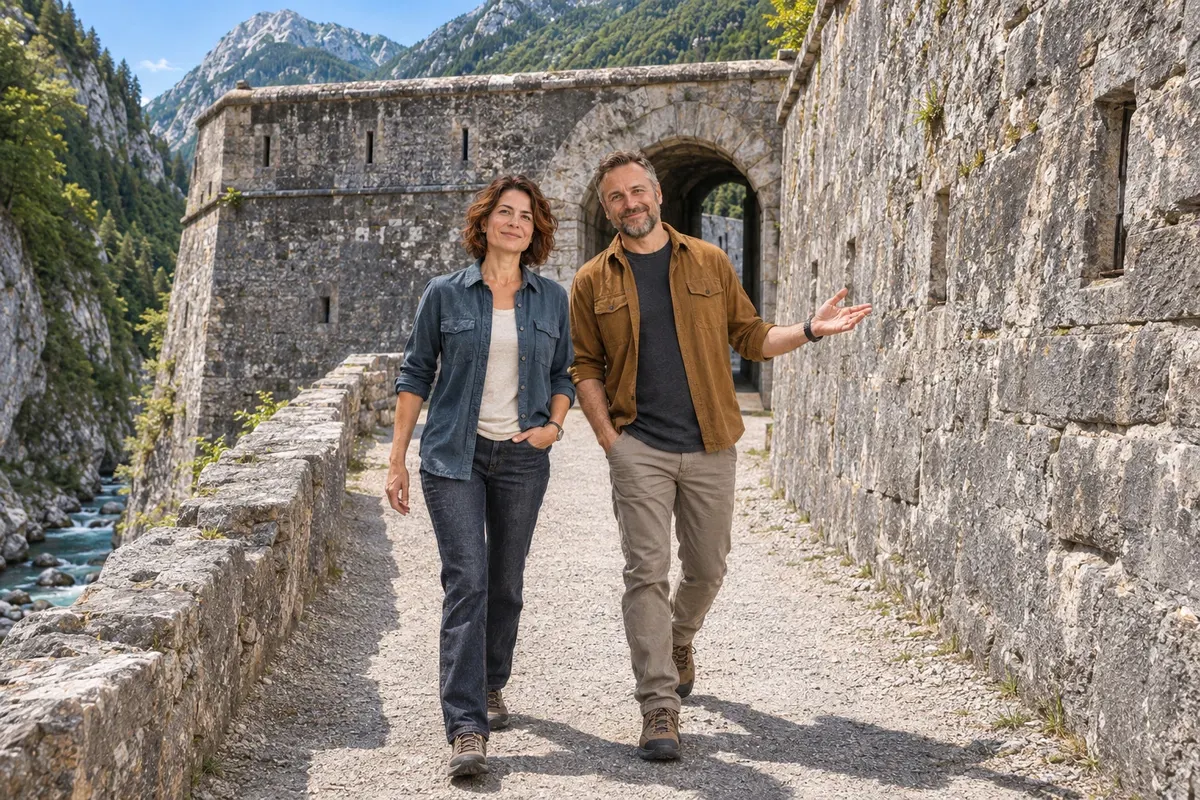
Forts
In Bovec, start at Kluže and consider the walk to the ruins of Fort Hermann.
Learn more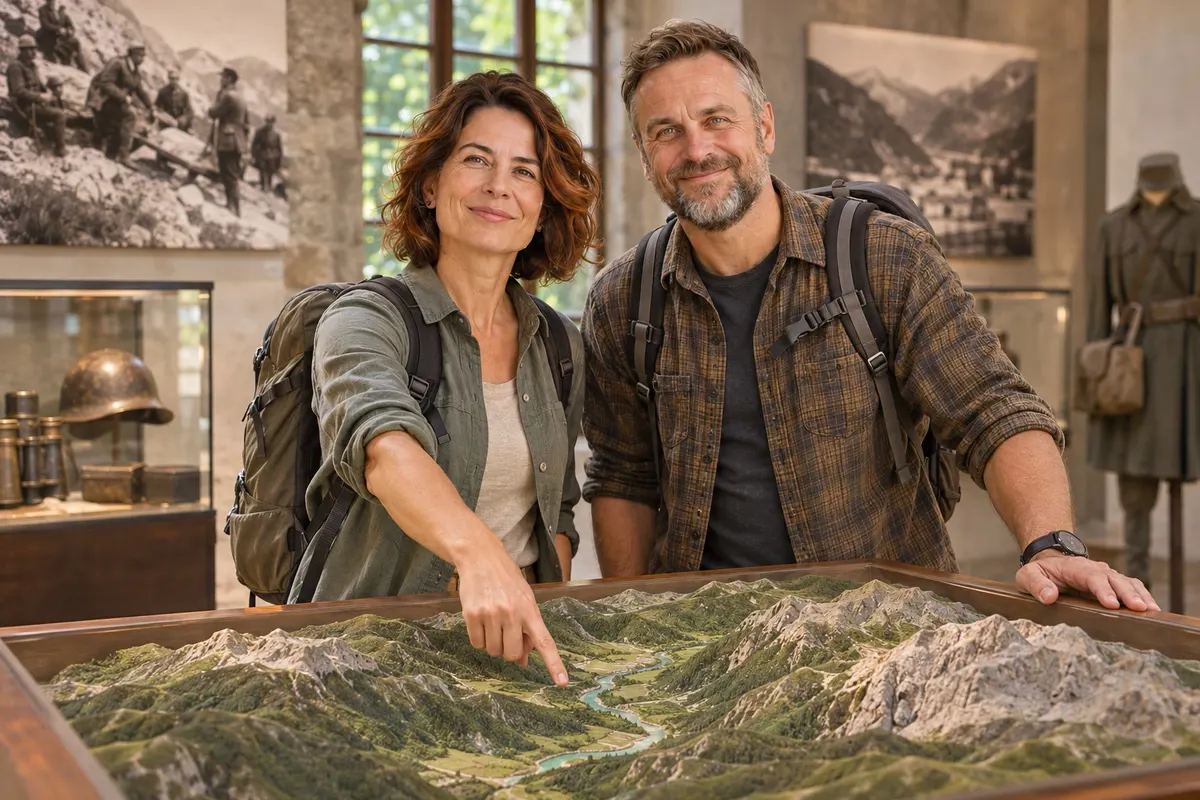
Museums
Kobarid, Ljubljana, and Idrija tell the story with war maps, drawings, and work objects.
Learn more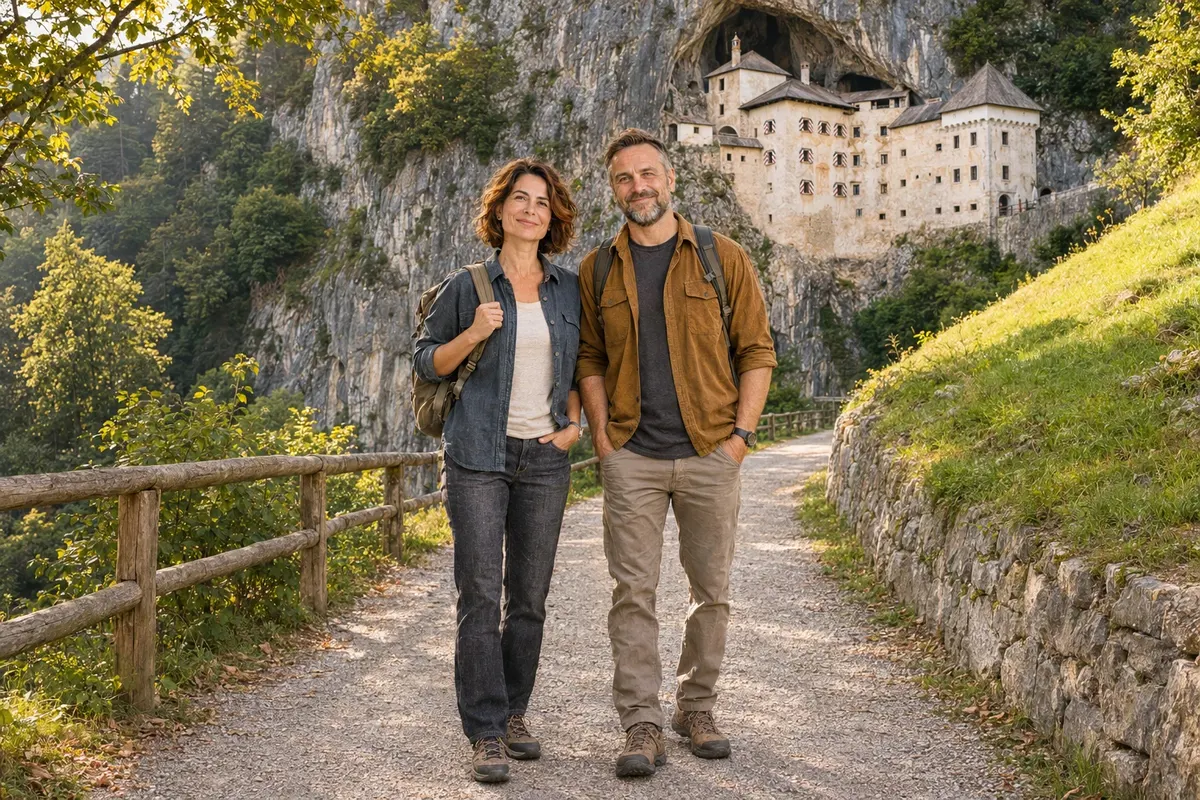
Monuments and historic sites
Visit the Kobarid ossuary, Idrija’s mining heritage, and the frescoes of Hrastovlje.
Learn more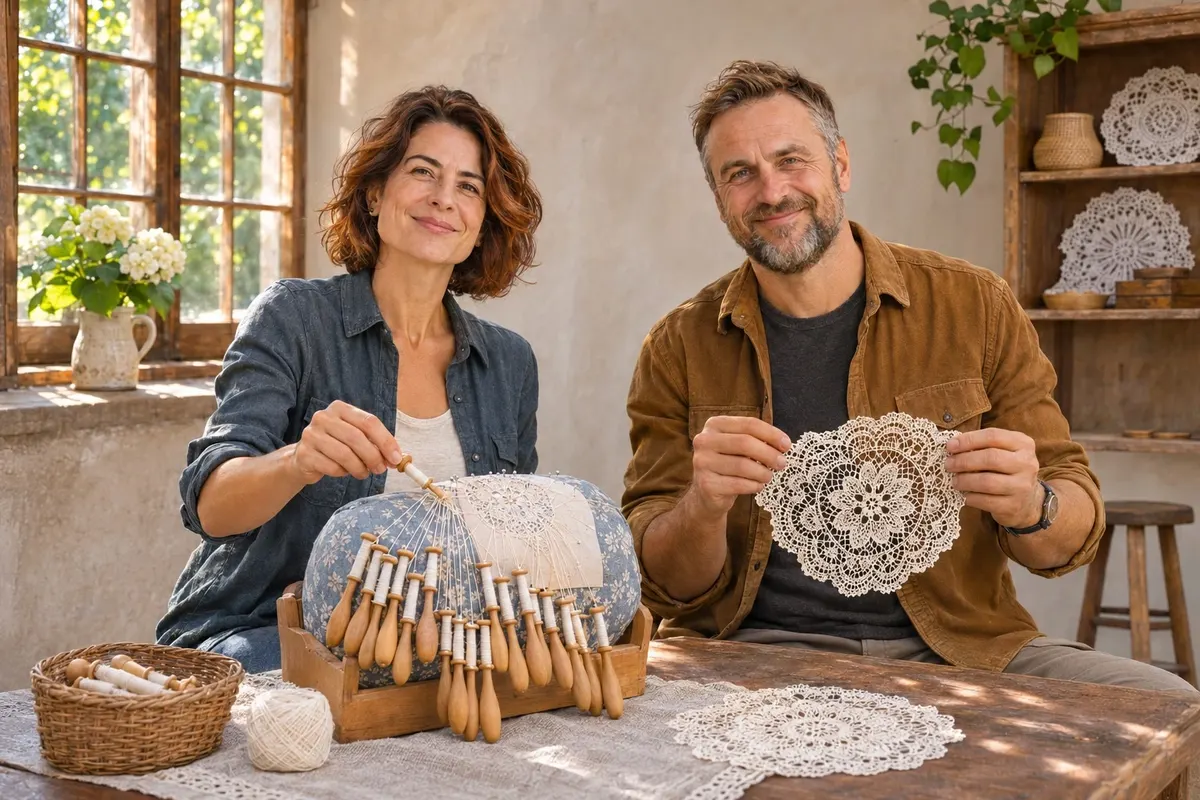
Handicrafts
Follow the threads of Idrija lace and the painted scenes on the beehive panels in Radovljica.
Learn moreWhere to go in Brazil
Pick a region or a state on the map, or type what you are looking for, to see the cities and who offers each activity.
- Liubliana OS
- Bled GO
- Radovljica GO
- Škofja Loka GO
- Bovec GR
- Idrija GR
- Kobarid GR
- Koper OK
- Piran OK
- Postojna PN
- Ptuj PD
- Celje SA
The choice of destination depends on the story that sparks your curiosity. In Ptuj, you can leave the medieval streets and continue the visit in the castle’s collection. In Idrija, the thread of a lace piece leads to the lives of families who depended on the mercury mine. In the Soča Valley, it is the remains of the First World War and the accounts of those who experienced it that give meaning to the route.
What makes a cultural trip in Slovenia
Slovenian heritage appears both in buildings and in crafts. In a fortress, the position of the windows and the view over the valley help explain why that spot was chosen. In a bobbin-lace demonstration, the heritage is also in the hands of someone who knows how to cross the threads, follow the pattern and teach another person to do it.
There are places where those two stories meet. The Gewerkenegg Castle in Idrija housed the mine administration. Today its museum brings together the history of mining and of bobbin lace. Visiting both collections makes it easier to imagine the work of the same family underground and at home.
Six ways to experience Slovenian heritage
To get to know a historic centre, choose a starting point that helps you orient yourself. In Radovljica it’s Linhart Square, in the old part of town above the Sava valley. To visit castles, pick the one you want to see inside. In Škofja Loka, the regional museum extends the walk through the medieval streets. In Postojna, Predjama is interesting for the encounter between the building and the cave.
In Bovec, the Kluže fortress and Fort Hermann sit at different heights beside the Koritnica gorge. To learn about the war from those who lived it, start at the Kobarid Museum. The historical trail and the Italian ossuary let you continue the visit outdoors.
There are also visits that require a close look. In Hrastovlje, near Koper, follow the row of painted figures in the Church of the Holy Trinity. In the Apiculture Museum of Radovljica, look for stories on a much smaller scale on the boards beekeepers used to place in front of the hives.
How to choose an outing the group will enjoy
For those traveling with children, propose a discovery that fits the walk. On the Triple Bridge, each person can cross on one of the side spans and see the central bridge from a different angle. In Radovljica, choosing a painted scene and trying to describe it aloud gives the museum visit a start that doesn’t require knowing the town’s history.
Those who prefer little walking can focus the visit on one square and the nearby streets. Check the access before including walls, cellars or towers. In Ljubljana, the funicular is an option to reach the castle. For those who like to draw or photograph, it makes sense to reserve time to return to the river after visiting Plečnik’s house and recognize the forms seen in the designs.
Where to go to see Slovenia’s historic towns
Ljubljana and Škofja Loka show two different relations between the old centre and the castle. In the capital, the bridges stitch the banks of the Ljubljanica and guide the walk even when the castle disappears behind the roofs. In Škofja Loka, the houses arrange themselves at the foot of the hill and the climb to the museum gives a good perspective on the ensemble.
In Piran, walk from Tartini Square through the peninsula’s alleys before climbing the walls. From above you understand how much of the town grew between the defensive line and the sea. In Ptuj, the Drava River, the medieval core and the castle on the hill are three easy reference points. For those in Bled, Radovljica lets you alternate the castle view over the lake with a walk among the houses around Linhart Square.
If military architecture is the purpose of the trip, Celje offers the courtyards and walls of the Old Castle. To explore industrial heritage, allow Idrija enough time to see the town on the surface and join the visit to the mine. They are different experiences, and each justifies planning the day around it.
When to visit squares, museums and fortresses
Historic centres can be toured at different times of year. For a walk on Piran’s walls or the route between Bovec’s forts, the weather forecast matters more than the month. Reserve daylight hours for outdoor sections and check whether the route is open, especially when there is ice or rain.
To attend the lace festival in Idrija, consult the edition’s programme before setting your trip dates. Outside the festival, the museum collection allows you to learn the craft. On cold or rainy days, a visit to Plečnik’s house or the Kobarid Museum is more rewarding when there’s time to read, view the objects and discuss what caught your attention.
How to plan a cultural itinerary
First choose a visit with organized entry, such as the mine in Idrija or Plečnik’s house in Ljubljana. Check language, duration and availability, and arrange walking tours around that commitment. In Koper and Postojna, locate the attraction on the map before booking transport. The Church of Hrastovlje and Predjama Castle are outside their urban centres.
In the Soča valley, choose between dedicating a day to Bovec’s forts or tracing Kobarid’s history from the museum. In both cases there are climbs. Check path conditions and plan the return before leaving. If the group has different paces, agree on a rendezvous point in the lower area so each person can choose how far to go.
Frequently asked questions
Where to start a cultural itinerary in Slovenia?
Ljubljana gathers architecture, museums and a castle around the old centre. For a first walk, cross the Triple Bridge and follow the bank along the market designed by Plečnik.
Which castle combines history and landscape?
In Bled, the cliff opens the view over the lake. In Predjama, the façade closes the cave entrance. Ptuj is a good choice for those who want to dedicate much of the visit to the collections.
Where to learn about the history of World War I?
Start at the Kobarid museum to understand the Soča front. The ossuary and the historical trail are in the same town. The Kluže and Hermann forts lie near Bovec.
What to include on a cultural tour near Bled?
Linhart Square and the Beekeeping Museum are in Radovljica’s old town. There you can see the painted panels that used to be part of beehives.
Where to see medieval art near Koper?
The Church of the Holy Trinity in Hrastovlje preserves the Dance of Death. Check visiting conditions for the interior before leaving Koper.
More in Culture and history
Beyond the guide


