

 Brazil
 Antarctica
 Argentina
 Bolivia
 Chile
 Colombia
 Ecuador
 Guyana
 French Guiana
 Falkland Islands (Malvinas)
 Paraguay
 Peru
 Suriname
 Uruguay
 Venezuela
 Germany
 Austria
 Belgium
 Croatia
 Denmark
 Slovakia
 Spain
 Finland
 France
 Greece
 the Netherlands
 Hungary
 Ireland
 Iceland
 Italy
 Luxembourg
 Norway
 Poland
 Portugal
 the United Kingdom
 the Czech Republic
 Sweden
 Switzerland
 Turkey
 Bermuda
 Canada
 the United States
 Greenland
 Mexico
 Saint Pierre and Miquelon
 the Dominican Republic
 Japan
 South Africa
 Egypt
 Australia
 Fiji
 New Zealand
 Papua New Guinea
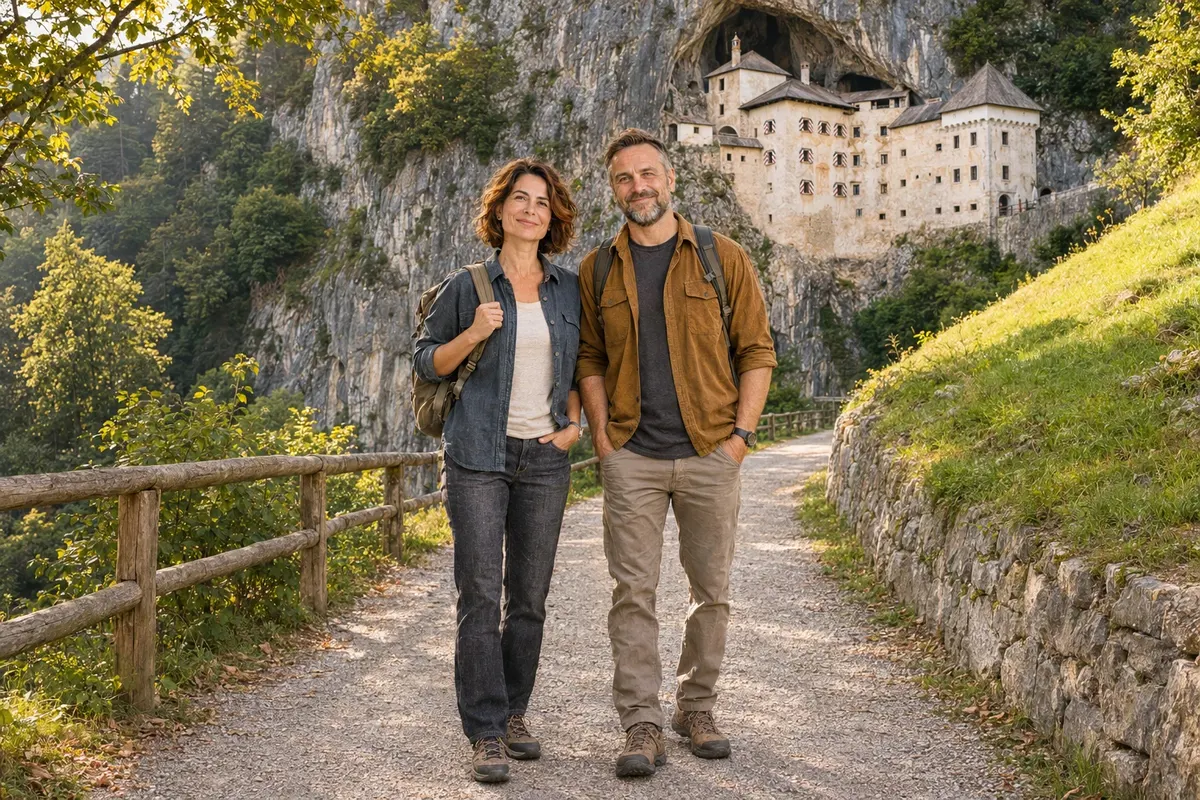
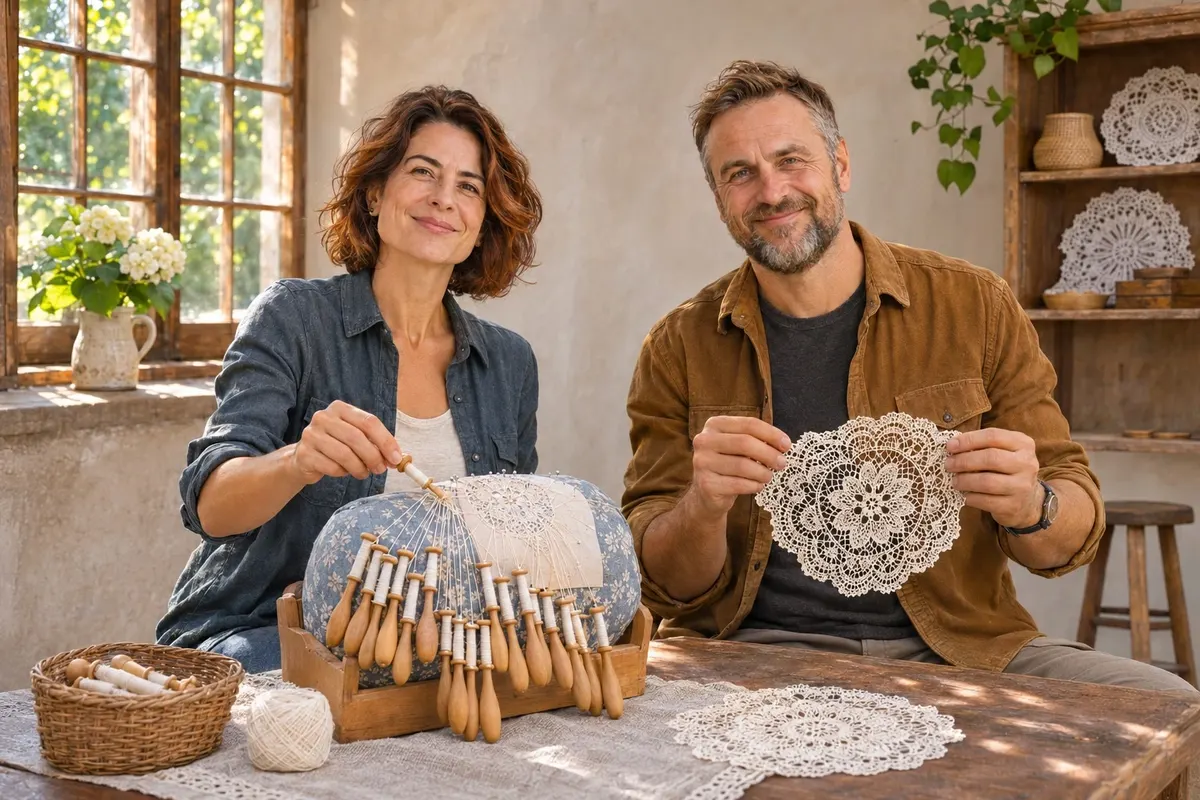
Illustrative images. The pictures in this guide are illustrations based on the real place, not photographs, and may differ from it.

Cultural and heritage travel
Historic centres of Slovenia
From the Triple Bridge to Tartini Square, the streets bear the marks of those who crossed rivers and built ports.
The shape of Tartini Square makes more sense when you know there used to be a small harbour there. In Radovljica, you need to reach the end of Linhart Square to perceive how high the houses were built above the Sava. In Slovenia’s historic centres, it’s worth keeping the map for a few minutes and looking from the square to the roofs, the river or the sea.
Ljubljana, Piran, Ptuj, Škofja Loka and Radovljica offer five very different walks. To choose, think about where you want to spend more time. One walk follows the water, another ends at the walls and another requires only two rows of houses and a viewpoint to fill a tranquil morning.
Ljubljana and Piran, from the bridge to the square
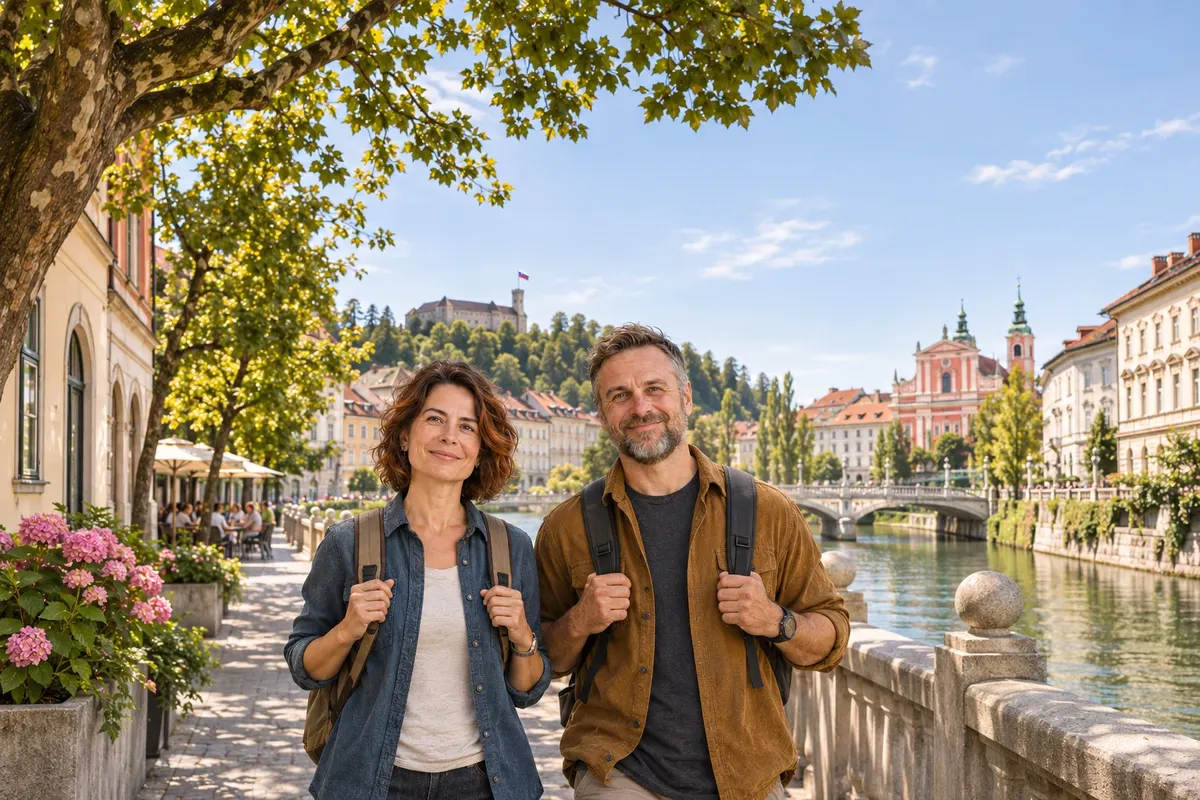
In Ljubljana, start at the Triple Bridge. The central stone crossing already existed when Jože Plečnik designed the two side pedestrian walkways. Cross on one side and return by the other. The short detour shows how the three arms empty into the square and distribute movement between the riverbanks. Then follow the curve of the Ljubljanica along the market colonnade, another work by the architect.
In Piran, begin at the statue of the violinist and composer Giuseppe Tartini, who was born in the town. The oval shape of the square preserves the outline of the former harbour. Around the edges, notice the windows and the stone balcony of the Casa Veneziana before entering the narrow streets. If you want to see the whole peninsula, save some breath for the climb to the walls. From above it is easy to spot the bright square among the roofs and trace the path back to the sea.
Ptuj and Škofja Loka beneath the castles
In Ptuj, by the Drava, first look at the castle from the lower part of town. Walk the streets up to the city tower and only then head to the hill. The walk gains another perspective on top, where you can see the houses pressed between the slope and the river. Those who prefer to stay in the centre can linger in the squares. To include the castle’s collection, set aside a second time slot and check the museum’s opening hours.
In Škofja Loka, Mestni trg square runs along a long row of houses. Cross it slowly and return along the other side to look straight at the façades. The path that climbs to the castle starts near this core. The regional museum and the view over the medieval centre give good reasons to extend the walk, but you can already perceive the relationship between the square and the former seat of power by looking from the street up to the slope.
Radovljica between the façades and the Sava valley
Linhart Square in Radovljica is elongated and has houses preserved from several centuries. On a first pass, pay attention to the width of each façade, the doors that open onto the street and the difference in scale between the houses and the small palace that houses the beekeeping museum. Walk to the viewpoint at the end of the square. The ground falls toward the Sava valley and explains why the old town looks so high when seen from below.
It’s a good choice for those staying in Bled who want a concentrated route. With children, you can combine the walk with finding a favourite scene among the painted panels in the museum. If the day is clear, leave time to return to the viewpoint before you go.
Frequently asked questions
Which old town should I visit to see Plečnik’s work?
Choose Ljubljana. The Triple Bridge and the covered market sit by the river and let you see, in a single walk, how the architect linked squares, riverbanks and places of commerce.
Where should I walk to see Venetian architecture?
In Piran. Start at Tartini Square at the Casa Veneziana and continue through the streets of the peninsula. The climb to the walls adds a view of the whole ensemble.
Can you visit the old town without climbing to the castle?
Yes. In Ptuj and Škofja Loka, the squares and streets of the lower part already form a walk. Check the terrain and surface conditions if someone needs a route without steps.
Where to go: Historic centers
Pick a region or a state on the map, or type what you are looking for, to see the cities and who offers it in each.
-
Liubliana OS
O centro antigo, com as pontes e a arquitetura de Jože Plečnik.
-
Radovljica GO
A praça Linhart e o centro antigo sobre o vale do Sava.
-
Škofja Loka GO
Um dos centros medievais mais bem preservados do país.
-
Piran OK
A cidade antiga veneziana, com a praça Tartini e as muralhas.
-
Ptuj PD
A cidade mais antiga do país, com o centro medieval.
More activities in Cultural and heritage travel
Beyond the guide


