

 Brazil
 Antarctica
 Argentina
 Bolivia
 Chile
 Colombia
 Ecuador
 Guyana
 French Guiana
 Falkland Islands (Malvinas)
 Paraguay
 Peru
 Suriname
 Uruguay
 Venezuela
 Germany
 Austria
 Croatia
 Denmark
 Slovakia
 Slovenia
 Spain
 Finland
 France
 Greece
 the Netherlands
 Hungary
 Ireland
 Iceland
 Italy
 Luxembourg
 Norway
 Poland
 Portugal
 the United Kingdom
 the Czech Republic
 Sweden
 Switzerland
 Turkey
 Bermuda
 Canada
 the United States
 Greenland
 Mexico
 Saint Pierre and Miquelon
 the Dominican Republic
 Japan
 South Africa
 Egypt
 Australia
 Fiji
 New Zealand
 Papua New Guinea
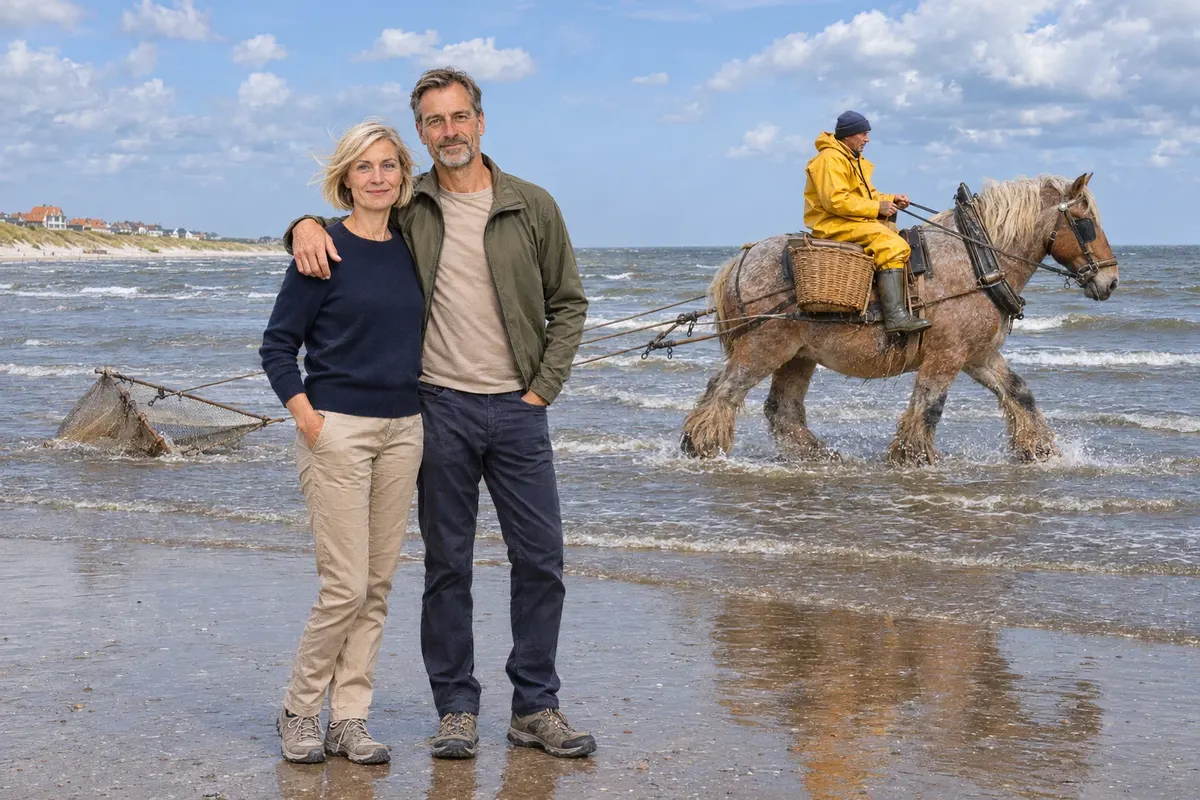
Illustrative images. The pictures in this guide are illustrations based on the real place, not photographs, and may differ from it.

Sun and beach
Shrimp fishing on horseback
Watch from the sand the teamwork of the fisherman and the draught horse.
From a distance, the first thing you see is the horse moving into the water with the fisher mounted. When the pair turns and moves sideways, parallel to the beach, it becomes clear that this is a fishing operation. A net attached to the tack is dragged along the sandy bottom to collect shrimp. Being mounted gives the fisher height to guide the animal while it pulls the net.
On the Belgian North Sea coast, this craft has passed through generations and can be watched from the beach in demonstrations announced to the public. It’s worth arriving in time to see the entry and staying for the return. In the water you can appreciate the force needed to pull the gear. On land you can make out the net, the baskets and the size of the shrimp it collects.
How the net gathers the shrimp
The draft horse moves through the shallow water while the fisher guides the route along the coast. The net is funnel-shaped. Two wooden boards keep the mouth open, and a chain drags along the sand. The vibration makes the shrimp leap from the seabed and enter the net that follows behind.
Seen from the sand, most of the mechanism’s details are underwater. To grasp the movement, first follow the horse’s direction and then watch where the net returns to the surface. When the net is hauled in, it becomes easier to distinguish the wide opening from the narrow section where the catch accumulates.
Returning to the beach and sorting the catch
The return brings the gear closer to the public. When the demonstration includes sorting, the fisher opens the net and separates the shrimp from the rest of the collected material. Baskets attached to the sides of the horse are used to carry the catch. Watch this stage to get a sense of the scale of the fishing that the movements between the waves conceal.
To see well, look for a position to the side of the work area indicated by the team. That way you can follow the fisher as they dismount or handle the gear without blocking the path of those coming from the water. A zoom lens or a pair of binoculars helps more than following the horse along the sand.
The knowledge passed among fishers
The craft brings together knowledge that the visitor sees at different moments. Preparing and repairing nets is one part. Another is reading the tide and sensing the animal’s effort on the sandy bottom. The most experienced teach newcomers how to handle the horse and the gear and how to choose the conditions for entering the water.
Horseback shrimp fishing was added to UNESCO’s list of Intangible Cultural Heritage of Humanity in 2013. The recognition covers this set of knowledge and its transmission. While watching, also note the pauses on land. Adjusting a piece of tack or checking the net before another pass is as much part of the work as guiding the horse through the surf.
How to plan your visit to the shoreline
Check the local program to confirm whether there will be a demonstration and which public access is indicated. The outing depends on the tide and the state of the sea. Use a tide table to understand beach conditions, but base your trip on confirmation from the organizers. Low tide alone does not guarantee the presence of fishers.
Bring a windproof layer for waiting times and choose footwear suitable for wet sand. Keep children on the side reserved for the public, where they will be able to see the whole horse as it passes. When the pair returns from the water, keep the space in front of, behind, and beside the animal clear so the team can maneuver the net.
Frequently asked questions
Can a visitor ride the horse during the demonstration?
The public watches the fishing from the beach. The person mounted in the water is the fisher who guides the animal and the net.
Why does the fishery use a draft horse?
The horse has the strength to pull the net through the sand under the water while carrying the fisher. The trust between them is part of learning the craft.
From where can you see the net working?
From the sand you can follow the path along the beach. To see the net’s shape and the boards that keep it open, the best moment is usually when the pair returns to land.
Does every demonstration include preparation or tasting of shrimp?
Check the program for the date. Observing the fishing, sorting on land, and any culinary preparation are distinct stages, and the program indicates which of them visitors will be able to follow.
More activities in Sun and beach



Beyond the guide


