

 Brazil
 Antarctica
 Argentina
 Bolivia
 Chile
 Colombia
 Ecuador
 Guyana
 French Guiana
 Falkland Islands (Malvinas)
 Paraguay
 Peru
 Suriname
 Uruguay
 Venezuela
 Germany
 Austria
 Croatia
 Denmark
 Slovakia
 Slovenia
 Spain
 Finland
 France
 Greece
 the Netherlands
 Hungary
 Ireland
 Iceland
 Italy
 Luxembourg
 Norway
 Poland
 Portugal
 the United Kingdom
 the Czech Republic
 Sweden
 Switzerland
 Turkey
 Bermuda
 Canada
 the United States
 Greenland
 Mexico
 Saint Pierre and Miquelon
 the Dominican Republic
 Japan
 South Africa
 Egypt
 Australia
 Fiji
 New Zealand
 Papua New Guinea
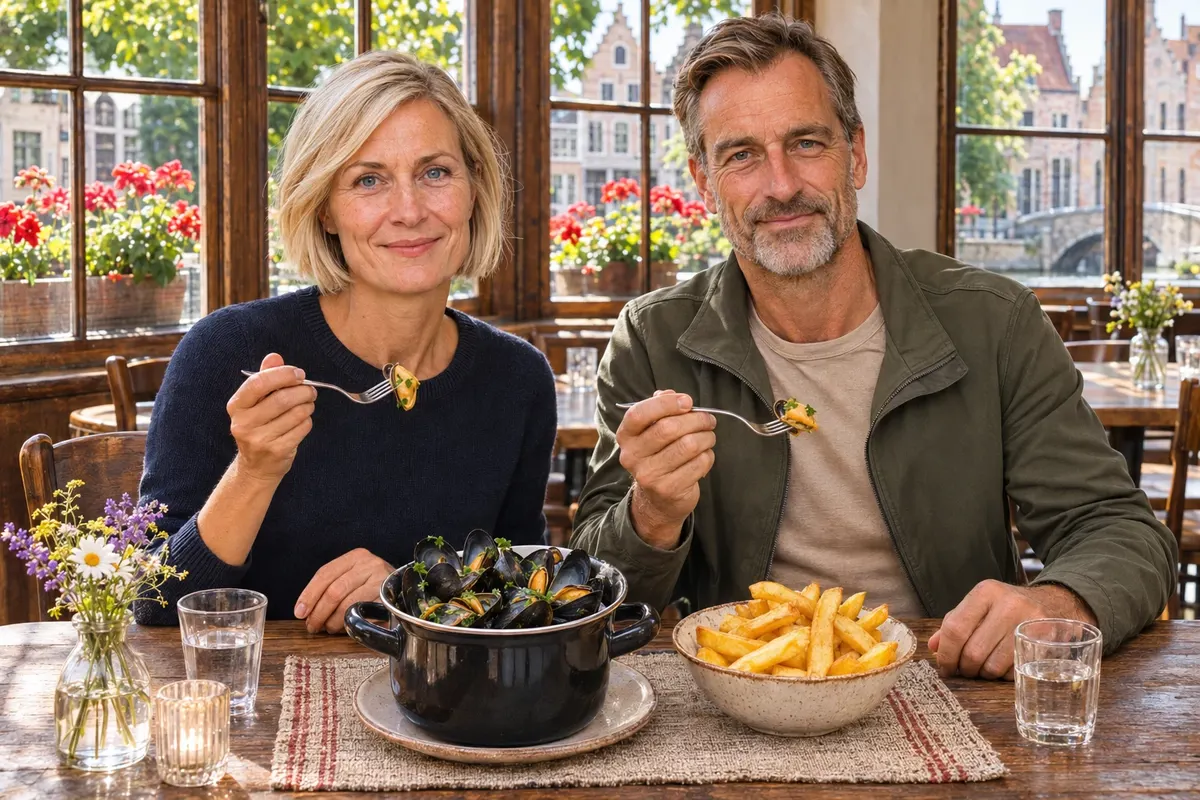
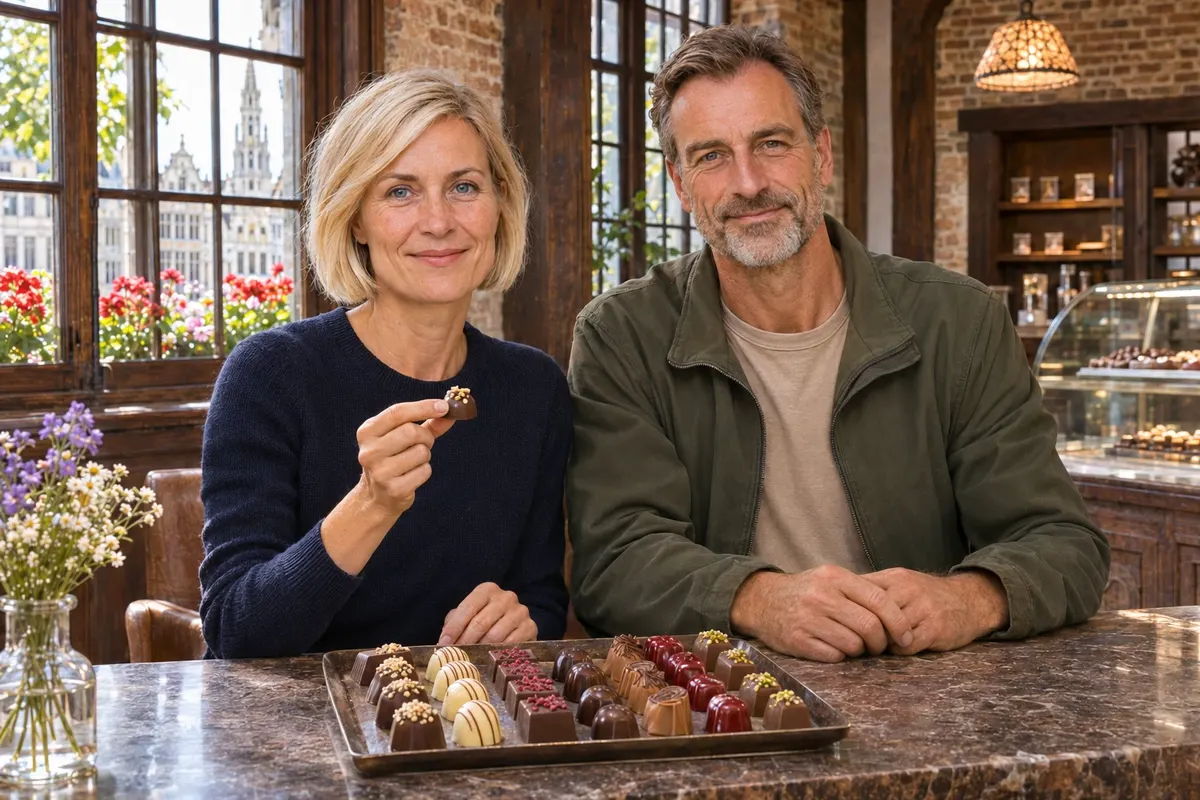
Illustrative images. The pictures in this guide are illustrations based on the real place, not photographs, and may differ from it.

Food travel
Local specialties of Belgium
Choose among the Liège waffle, the Dinant biscuit, the Ghent stew, Hasselt jenever, and Antwerp’s little hands.
The names you see in Belgian shop windows and on menus are good clues to decide where to eat. In Liège, ask for a waffle while it’s still warm when you smell the sugar on the iron. In Dinant, the first question on seeing a couque is usually another: how do you eat a cookie so hard and full of designs?
A local specialty can be a full lunch, as with the waterzooi in Ghent, or accompany a bar conversation at Hasselt’s Jenevermuseum. In Antwerp, a small butter cookie tells a city legend. Keep the name of what you want to try and leave room in your day to discover how it’s made.
The pearl sugar in the Liège waffle
The rounded, irregular edges help you recognize a Liège waffle. Whoever makes the dough adds the pearl sugar after kneading and lets the grains meet the hot iron. The surface develops caramelized spots while the interior keeps small crunchy bits. On the first bite, try a corner and then the center to feel the difference.
You can make this tasting a short break during your walk. A plain waffle lets you taste the butter and sugar. If you want to watch the preparation, choose a counter where you can see the iron and observe the portion of dough that goes in and the shape it takes when it comes out.
The patterns of the couque from Dinant
Leaves, animals and letters appear carved into the couques displayed in Dinant’s pastry shops. The design comes from wood. The baker presses the honey-and-wheat-flour dough against a carved mold, and the relief remains after baking. Choosing among the shapes is part of the experience, even for someone buying just one cookie.
The texture calls for a special way to taste it. Break the couque by hand, separate a small piece and let it soften in your mouth until you taste the honey. If you take a decorated piece home, ask for packaging that protects the points and edges in your luggage.
Fish or chicken waterzooi in Ghent
If your aim is to try the savory cuisine, sit down for a waterzooi in Ghent. The stew’s base brings together vegetables, potatoes and a creamy broth. Carrot, leek and celery are among the traditional ingredients. Spoon a little broth with the vegetables before trying the larger pieces.
The older recipe used the fish from the city’s rivers. Chicken came later and both versions remain linked to Ghent. The name waterzooi by itself can create doubt. Ask which version is being served, especially if you go to the restaurant expecting to eat fish.
A glass of jenever in Hasselt
At the Jenevermuseum, the specialty is first encountered through the distillation process. The route shows how cereals give rise to the drink and how flavors enter the recipe. Then, at the tasting bar, adults can ask for versions where the malt or the juniper is more noticeable.
To fit the experience into a day in Hasselt, check the conditions for individual or group visits. You can go through the exhibition and skip the drink, an option for those following the visit for the history of local production.
The history of the Antwerpse handjes
The open hand refers to the legend of Brabo and the giant who charged at the river crossing. The idea of turning that little hand into a cookie has an author. In 1934, pastry chef Jos Hakker won a contest to create an Antwerp specialty with the cookie that became known as Antwerpse handjes.
The recipe calls for butter and almonds. Over time, solid chocolate and filled chocolate versions in the same shape also appeared. If you order handjes in a bakery, specify which one you want to try. For those sharing a box, choosing one of each lets you compare the original cookie recipe with the later adaptations.
Frequently asked questions
Which typical dish should you order for lunch in Ghent?
Look for the waterzooi, a stew of fish or chicken with vegetables and potatoes in a creamy broth. Check the menu to see which version the kitchen prepares.
What is the difference between the sweets from Liège and Dinant?
In Liège, the waffle has a soft interior and caramelized sugar. In Dinant, the couque is firm and preserves the mold’s design. Taste it in small pieces, letting the cookie soften in your mouth.
Which specialty is a good gift from Antwerp?
The Antwerpse handjes are sold as cookies and as chocolate. The hand design alludes to the legend of Brabo and helps tell where the souvenir came from.
Where to go: Local specialties
Pick a region or type what you are looking for to see the cities and who offers it in each.
-
Antuérpia AN
Antwerpse handjes are hand-shaped sweets that recall the local legend of Brabo.
-
Gante OV
Waterzooi, a traditional creamy stew, is associated with the cuisine of Ghent.
-
Hasselt LI
The Jenevermuseum in Hasselt offers tastings that introduce visitors to the local distilling tradition.
-
Liège LG
The gaufre de Liège is a local specialty made with pearl sugar.
-
Dinant NA
The couque de Dinant is a traditional molded cookie from the city.
Beyond the guide


