

 Antarctica
 Argentina
 Bolivia
 Chile
 Colombia
 Ecuador
 Guyana
 French Guiana
 Falkland Islands (Malvinas)
 Paraguay
 Peru
 Suriname
 Uruguay
 Venezuela
 Germany
 Austria
 Belgium
 Croatia
 Denmark
 Slovakia
 Slovenia
 Spain
 Finland
 France
 Greece
 the Netherlands
 Hungary
 Ireland
 Iceland
 Italy
 Luxembourg
 Norway
 Poland
 Portugal
 the United Kingdom
 the Czech Republic
 Sweden
 Switzerland
 Turkey
 Bermuda
 Canada
 the United States
 Greenland
 Mexico
 Saint Pierre and Miquelon
 the Dominican Republic
 Japan
 South Africa
 Egypt
 Australia
 Fiji
 New Zealand
 Papua New Guinea
Illustrative images. The pictures in this guide are illustrations based on the real place, not photographs, and may differ from it.


Ways to travel
Railway tourism
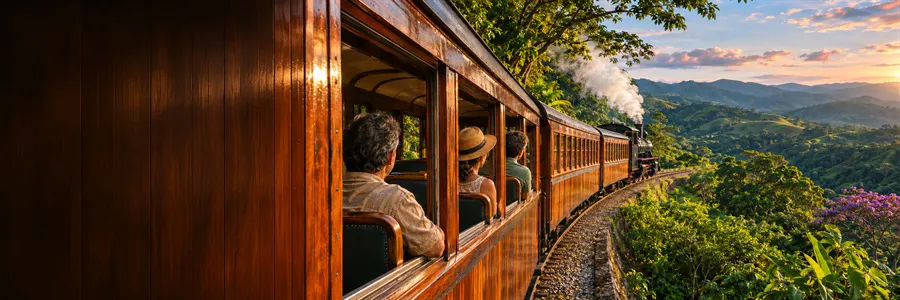
Steam locomotives, mountain ranges crossed by tunnels and viaducts, and a full-day train between two states: trips where the window is the attraction.
In railway tourism, the route matters more than the arrival. Travelers choose the trip for the train itself: the steam locomotive that whistles at departure, the wooden carriage, the mountain seen from the window, the old station where time seems to have stopped.
What to do
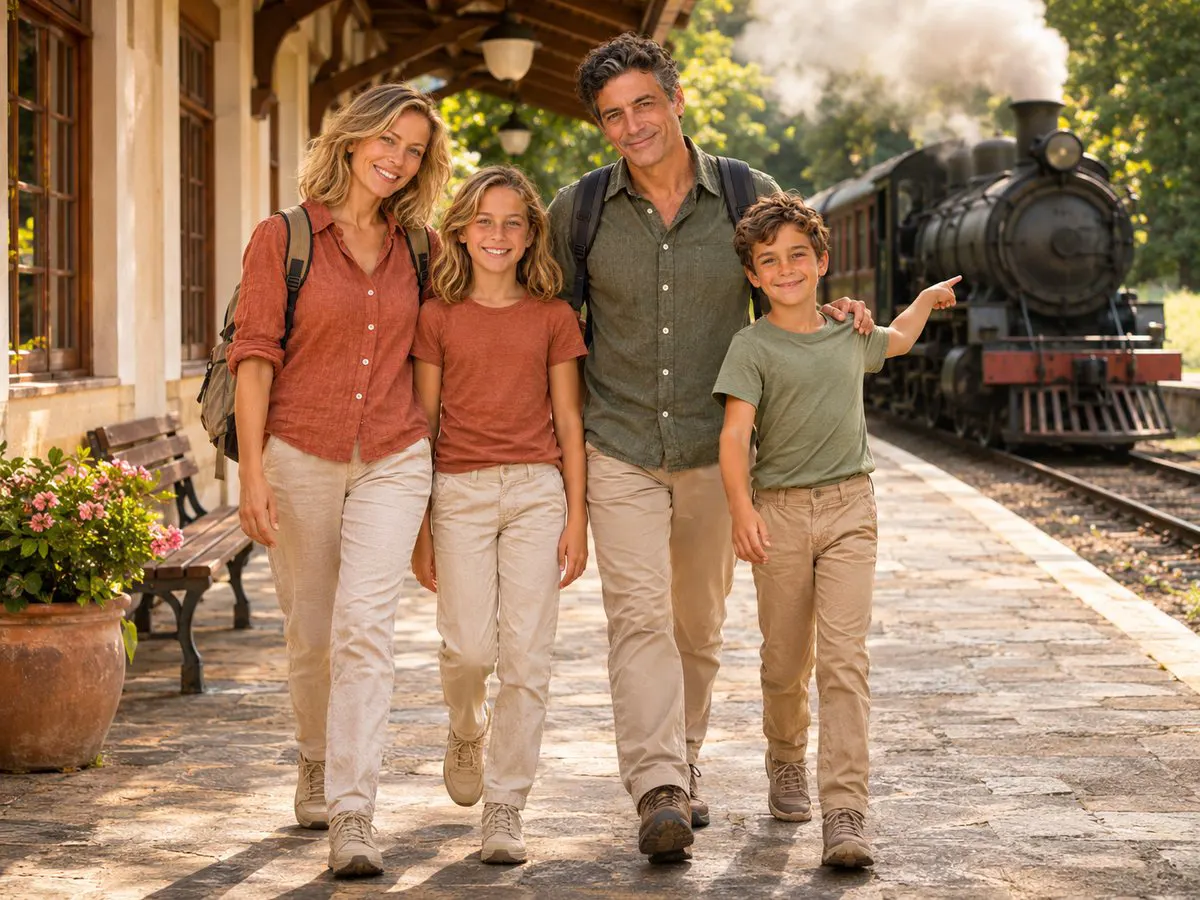
Maria‑fumaça steam locomotives
The steam locomotive whistles, releases smoke, and pulls wooden cars very slowly.
Learn more
Mountain trains
Tunnels, iron bridges and viaducts clinging to the slopes, with forest on both sides.
Learn more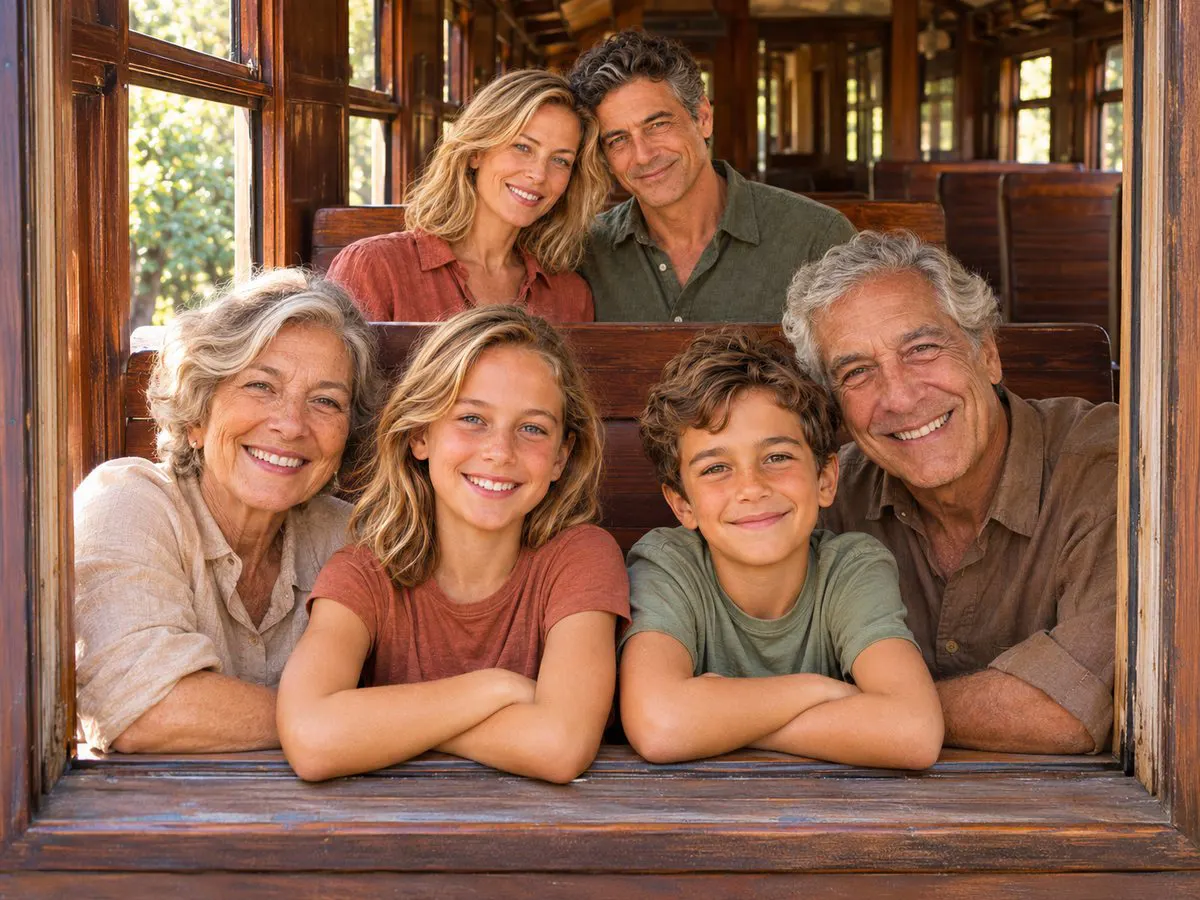
Grandparents and grandchildren on the train
An easy excursion for all ages: seated, at a slow pace, looking out the window.
Learn more
Historic stations
Brick and iron buildings with a clock on the façade and a covered platform open the excursion.
Learn more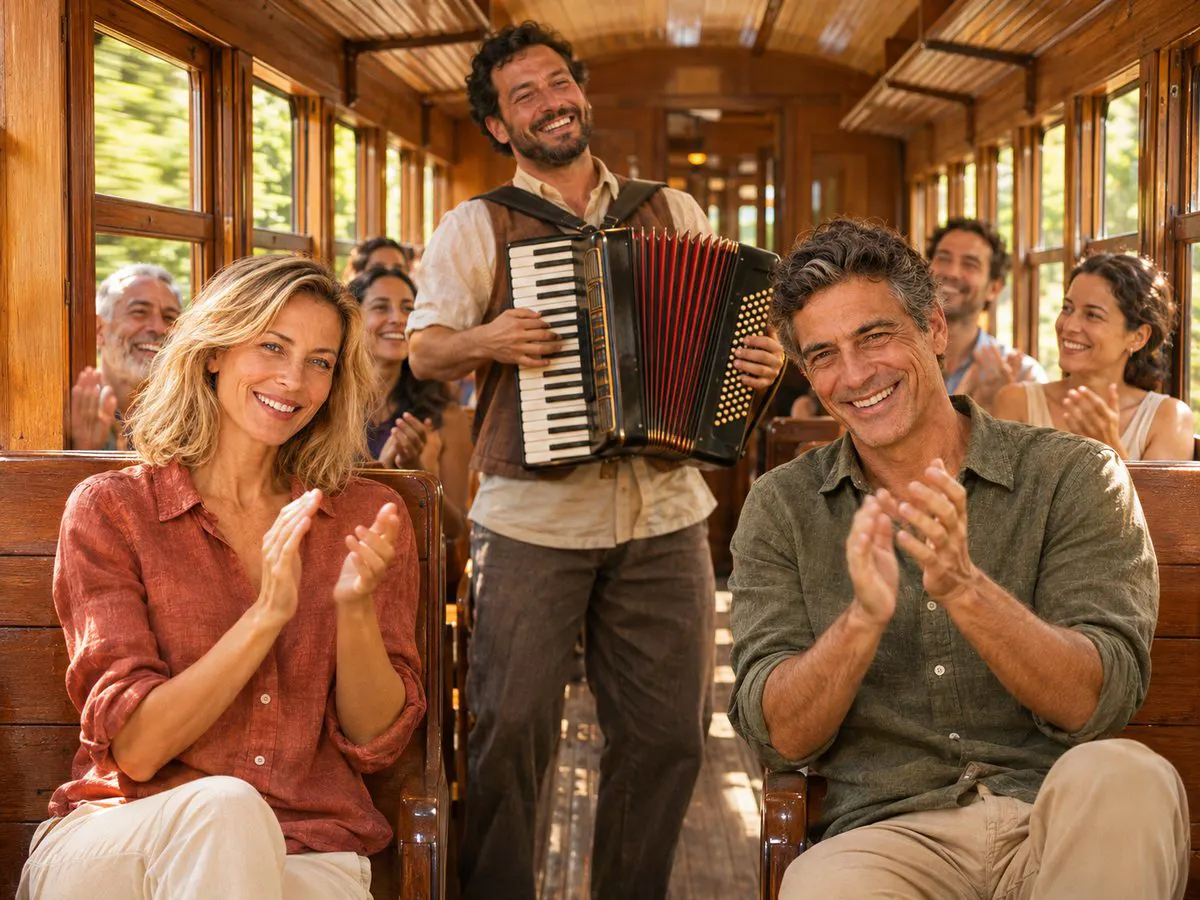
Life on board
Musicians move through the cars and, in grape regions, there are wine and grape‑juice tastings at stops.
Learn more
Full‑day journey
On a few lines, the train still crosses states: a whole day of window views and dining car.
Learn moreWhere to go in Brazil
Pick a region or a state on the map, or type what you are looking for, to see the cities and who offers each activity.
- Porto Velho RO
- Piranhas AL
- São Luís MA
- Campina Grande PB
- Miranda MS
- Alfredo Chaves ES
- Marechal Floriano ES
-
Viana ES
Operation suspended or changed: check before you go.
- Vitória ES
- Belo Horizonte MG
- Itabirito MG
-
Mariana MG
Operation suspended or changed: check before you go.
-
Ouro Preto MG
Operation suspended or changed: check before you go.
- Passa Quatro MG
- Santa Bárbara MG
-
São João del-Rei MG
Maria‑fumaça steam locomotives · Grandparents and grandchildren on the train · Historic stations
-
São Lourenço MG
Maria‑fumaça steam locomotives · Grandparents and grandchildren on the train · Life on board
- Soledade de Minas MG
- Tiradentes MG
- Engenheiro Paulo de Frontin RJ
-
Rio de Janeiro RJ
Mountain trains · Grandparents and grandchildren on the train
- São José do Vale do Rio Preto RJ
-
Campos do Jordão SP
Operation suspended or changed: check before you go.
-
Pindamonhangaba SP
Operation suspended or changed: check before you go.
- Santo Antônio do Pinhal SP
- São Paulo SP
- Antonina PR
-
Curitiba PR
Mountain trains · Grandparents and grandchildren on the train · Life on board
- Morretes PR
- Bento Gonçalves RS
-
Carlos Barbosa RS
Maria‑fumaça steam locomotives · Life on board · Historic stations
- Garibaldi RS
- Santo Ângelo RS
- São Leopoldo RS
-
Apiúna SC
Maria‑fumaça steam locomotives · Grandparents and grandchildren on the train
- Indaial SC
- Lauro Müller SC
-
Rio Negrinho SC
Maria‑fumaça steam locomotives · Mountain trains · Historic stations · Life on board
Brazil once had passenger trains across almost the whole country. Few lines remain, and some have become tourist routes: restored marias‑fumaça, mountain trains, and a few long journeys. These are short trips, generally a morning long, that fit into any regional itinerary.
What railway tourism is
It’s travel in which the train is the reason for the trip. It’s not an official category of the Ministry of Tourism or the World Tourism Organization: it’s a way of traveling that combines landscape, history and the memory of a time when people went everywhere by train.
Brazil’s tourist trains run on sections of old railways, many from the 19th century, with restored locomotives and carriages. A steam train is a locomotive powered by wood, coal or oil that emits smoke from its chimney and steam at the sides.
Railway museums without a train ride fall under cultural and historical tourism. Here, what matters is boarding.
Who it suits and at what stage of life
It suits people who like to watch the landscape without driving and those who have memories of trains: many passengers are grandparents who traveled by train in their youth and bring grandchildren to see a steam locomotive.
It’s an easy outing for all ages. Small children enchant at the whistle and the steam, and older people or those with limited mobility can make the trip seated. It’s worth asking in advance about access to old carriages, which have high steps.
For retirees with time, long train journeys, in Brazil and abroad, are a project in themselves: plan the route, choose the carriage class and spend the day seeing the country through the window.
Where to go: train rides in Brazil
In Paraná, the train linking Curitiba to Morretes descends the Serra do Mar on a 19th-century railway, with tunnels, bridges and viaducts hanging on the slope, amid one of the country’s largest continuous stretches of Atlantic Forest. The trip takes the morning, and many passengers have barreado for lunch in Morretes and return by road.
In Rio Grande do Sul, a steam train departs from Bento Gonçalves and crosses the grape-and-wine region of the Serra Gaúcha, passing two neighboring towns, with Italian and gaucho music on board. In Minas Gerais, the steam train between São João del-Rei and Tiradentes has run since 1881 on narrow gauge, with tracks only 76 centimeters apart, over a stretch of about 12 kilometers.
In Rio de Janeiro, the Corcovado Train climbs through the Tijuca Forest up to the Christ the Redeemer statue. The railway opened in 1884, before the statue itself.
For those who want a long journey, a passenger train connects the metropolitan region of Vitória to Belo Horizonte every day on the Vitória a Minas Railway. The trip takes the whole day, about 13 hours, and follows the Doce River valley for much of the route.
When to go
Train rides operate year-round, but the weather changes the view. In the Paraná Serra do Mar, winter months, June to August, usually have more clear-sky days; in summer, fog and rain are more common on the descent. In Minas, the dry season runs roughly from April to September.
Steam trains generally run on weekends and holidays, with more departures during the July and January school breaks. At those times and on long holiday weekends, seats sell out early. The Vitória–Minas train runs every day.
Autumn and winter have another advantage on steam trains: in the cold morning air, locomotive smoke and steam become more visible, producing the photographs passengers look for on the route’s curves.
How to plan the trip
Tickets should be purchased in advance, especially for higher-category carriages and holidays. Trains have different classes that change comfort, onboard service and window size: check the current chart and operating days before finalizing your itinerary.
On the descent of the Serra do Mar, the left side of the carriage is usually recommended, in the direction from Curitiba to Morretes, for the more open views. On any train, arrive at the station early, bring a warm layer because old carriages are open or very ventilated, and bring water.
Almost all tours are one-way. You must arrange the return trip—by train if available, or by bus or van—or plan to spend the night in the arrival town. On the long journey between Vitória and Belo Horizonte, it’s wise to bring reading material and a snack and to check how to get to the departure station, which is outside the city center.
Train trips around the world
In other countries, the train is both transport and attraction. In Switzerland, a panoramic train crosses the Alps between Zermatt and St. Moritz in about eight hours, over bridges and mountain passes. In Peru, the most used route to Machu Picchu is the train that leaves Ollantaytambo and follows the Urubamba River to Aguas Calientes.
In Japan, the bullet train connects Tokyo to Kyoto in just over two hours and is part of the experience of visiting the country. In Norway, the Flåm Railway descends from a plateau to the edge of a fjord on one of the steepest ordinary-track sections in the world. And in Argentina, the Train to the End of the World in Ushuaia and the Train of the Clouds in Salta are classic excursions.
Frequently asked questions
What are the best-known train tours in Brazil?
The Serra do Mar train, between Curitiba and Morretes; the maria‑fumaça in Bento Gonçalves, in the Serra Gaúcha; the maria‑fumaça between São João del‑Rei and Tiradentes; and the Corcovado Train in Rio de Janeiro.
What is a maria‑fumaça?
It’s the popular name for a steam locomotive. Water heated in a boiler becomes steam that turns the wheels, and the smoke from burning fuel escapes through the chimney. In Brazil, several have been restored and pull tourist trains.
How long is the train ride from Curitiba to Morretes?
The descent of the Serra do Mar takes the morning, generally a little more than four hours. Many passengers have lunch in Morretes and return by road the same day.
Are there long‑distance passenger trains in Brazil?
Yes, a few. The most used by travelers runs daily between the Vitória metropolitan region and Belo Horizonte, a journey of about 13 hours through the Doce River valley.
When is the best time to take a train tour?
All year round. In the southern and southeastern highlands, winter—June to August—tends to have more days of clear skies. Tickets sell out early during vacations and holidays.
Do I need to buy tickets in advance?
Yes, especially for weekends, holidays, and the July and January vacation periods. Higher‑category cars have fewer seats and sell out first.
Are train rides suitable for children and elderly people?
Yes. Travel is done seated, the pace is slow, and trips usually last from one to four hours. It’s advisable to ask about access to older cars, which have high steps.
Which side of the train should I choose on the Serra do Mar?
Traveling from Curitiba to Morretes, the left side is usually recommended, from which you can see the valleys and viaducts on the descent. When booking, it’s worth asking whether seats are assigned.
More in Ways to travel

Beyond the guide


