

 Brazil
 Antarctica
 Argentina
 Bolivia
 Chile
 Colombia
 Ecuador
 Guyana
 French Guiana
 Falkland Islands (Malvinas)
 Paraguay
 Peru
 Suriname
 Uruguay
 Venezuela
 Germany
 Austria
 Belgium
 Croatia
 Denmark
 Slovakia
 Slovenia
 Spain
 Finland
 France
 Greece
 the Netherlands
 Hungary
 Ireland
 Iceland
 Luxembourg
 Norway
 Poland
 Portugal
 the United Kingdom
 the Czech Republic
 Sweden
 Switzerland
 Turkey
 Bermuda
 Canada
 the United States
 Greenland
 Mexico
 Saint Pierre and Miquelon
 the Dominican Republic
 Japan
 South Africa
 Egypt
 Australia
 Fiji
 New Zealand
 Papua New Guinea
Illustrative images. The pictures in this guide are illustrations based on the real place, not photographs, and may differ from it.

Culture and history
Immigration and Memory in Italy
A letter kept at home can lead you to a birth register in Naples. In Genoa, emigrants tell you in their own words what happened after they said goodbye.
There’s a street name on the back of a photograph, your grandmother remembers two brothers who traveled together, and a letter mentions a wedding. Which of these clues should you take to Italy? On a trip to trace your roots, your itinerary starts with a detail you can place on a map. Sometimes it’s the town where someone was born. Other times, the only known place is the port they sailed from.
Where to go in Italy
Pick a region or type what you are looking for to see the cities and who offers each activity.
Genoa and Naples offer different ways to approach this journey. The state archives in both cities offer guidance to anyone looking for historical civil records. In Genoa, the Museo Nazionale dell’Emigrazione Italiana (MEI) also explores what a record rarely explains. How did people decide when to leave? Who sent news to relatives? Even without a family name to research, you can use these questions to follow the course of an entire life.
Where to Begin Your Family History
Choose one person at a time. On a sheet of paper, write down their name as it appears in the oldest document you have, the names of their parents or spouse, and an approximate date. If your only clue to a place comes from a conversation, write down the exact words. “He was from Genoa” and “He sailed from Genoa” suggest similar journeys but lead to very different searches.
In Italian catalogs, a municipality is listed as a comune. It is a small word that makes a difference when you open an archival inventory. The name of a large city may have been passed down through the generations as shorthand for the whole region. Look for the municipality’s full name in letters, on envelopes, or in marriage records, and check which event the address relates to.
With two or three clues, you can start planning a visit. A family that knows where and when someone was born can plan the trip around a visit to the archives. If all you know is a family story about a sea crossing, you can start at the museum in Genoa and return home knowing what to ask your relatives.
Genoa: The Archives and the Old Commenda
The State Archives of Genoa has a guide to civil registration records. It lists the municipalities, the periods covered, and the corresponding inventories. For example, there are records from 1866 to 1915 for municipalities within the jurisdiction of the Genoa court, some of which are available on the Antenati portal. Before setting aside time for the reading room, check which register covers the place and year you are researching.
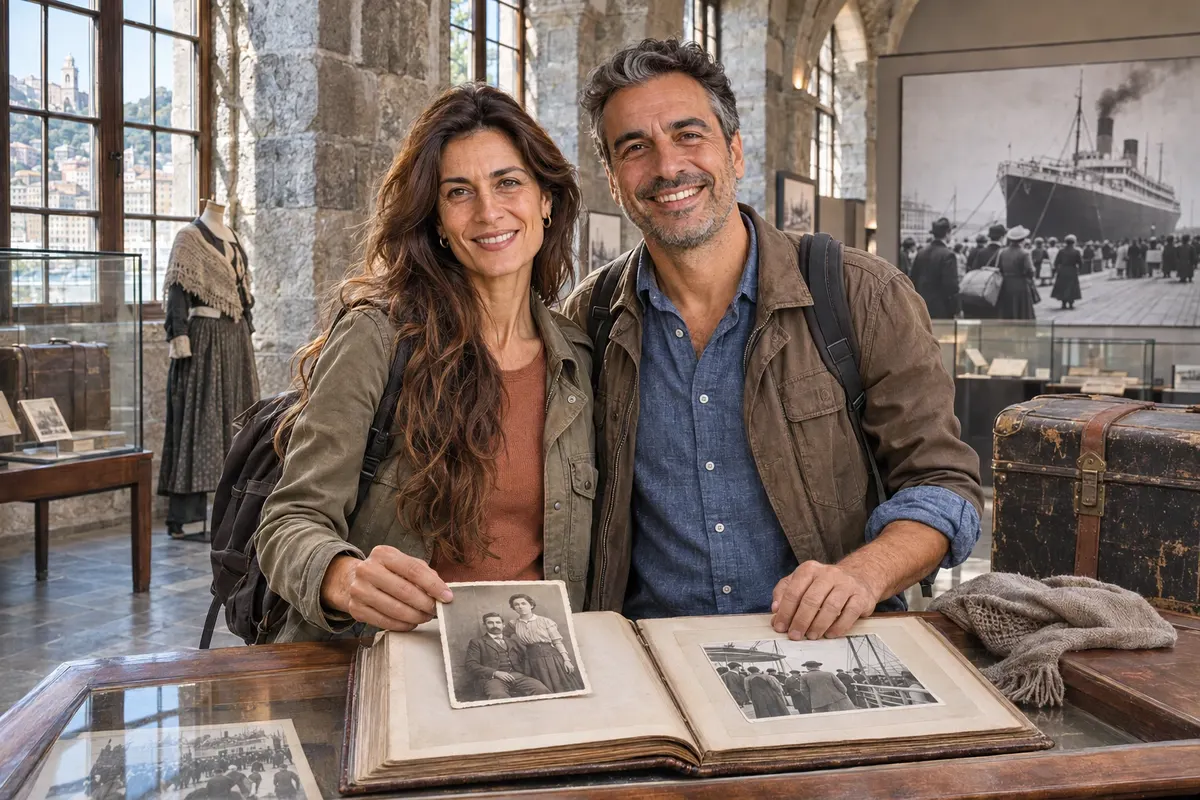
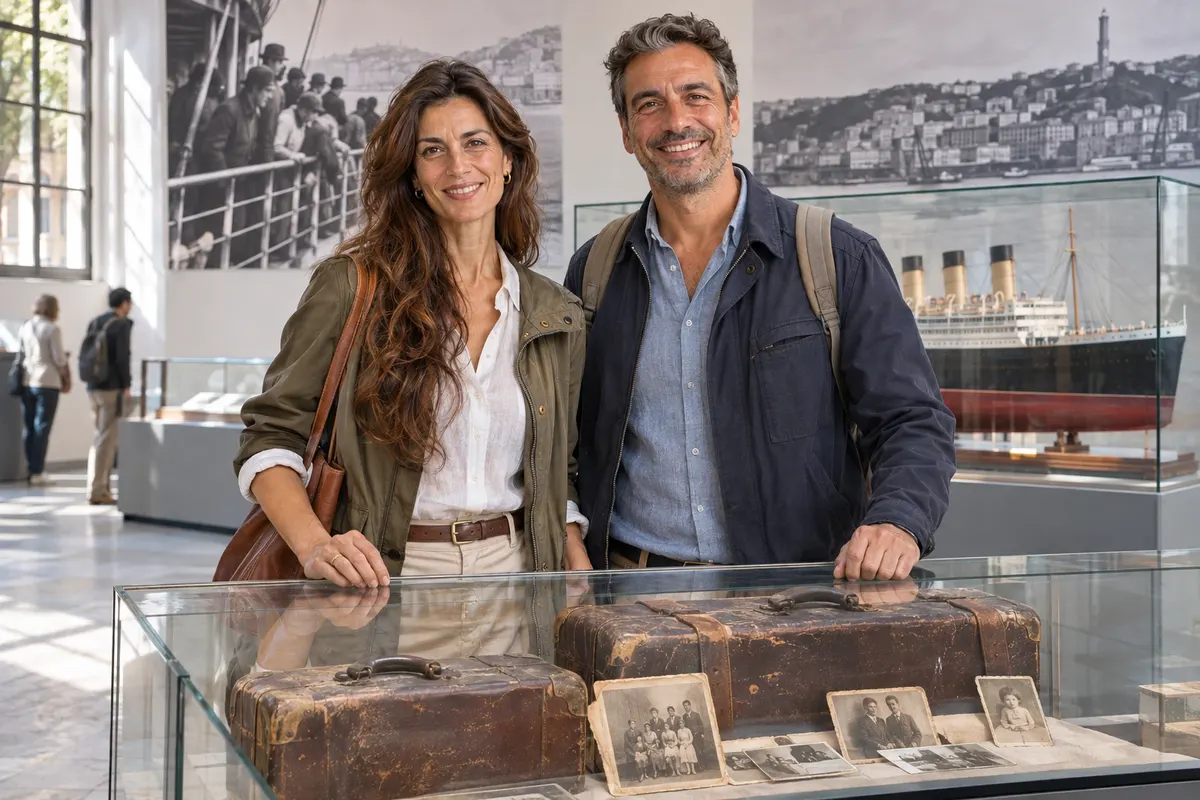
At another point in your visit, stop at the MEI, housed in the old Commenda di Pré. The multimedia exhibition traces Italian emigration from the country’s unification to recent times. Choose one person’s account and follow their story before departure and after arrival. Learning a trade back home, spending years apart, or switching to a new language can help you understand what was at stake on that journey.
When you leave, walk around the Commenda and think of Genoa as a city people passed through. Someone who came to Genoa to board a ship might have spent their entire childhood in another municipality. If all you know about your great-grandfather is his port of departure, the walk is meaningful in its own right, even if you need to look elsewhere for his birth record.
Exploring Naples Through Birth and Marriage Records
The State Archives of Naples directs you to the Antenati portal for digitized civil records from the city and province. Start at home. Once you have an image of a page, it is easier to decide what you would like to see in the city and whether you still have a question that calls for in-person help. The archives also specifies which resources you can consult remotely and which you can consult on site.
A marriage record can give your walk a starting point. Look at the places listed for the couple and their parents, taking care to distinguish places of residence from places of birth. If a street is named, copy the original spelling and note the date. Then compare it with a current map. Even when street numbers have changed, knowing which addresses were close to one another helps you picture how a family moved around the city.
Plan your walk around the stretch of the route you can identify from the documents. If the address gives only Naples, enjoy the city and leave the question open. Discovering a mother’s name or the spelling of a municipality to look into later can be a good research outcome, even if you never find the door of the old family home.
A Trip with Grandparents, Children, and Grandchildren
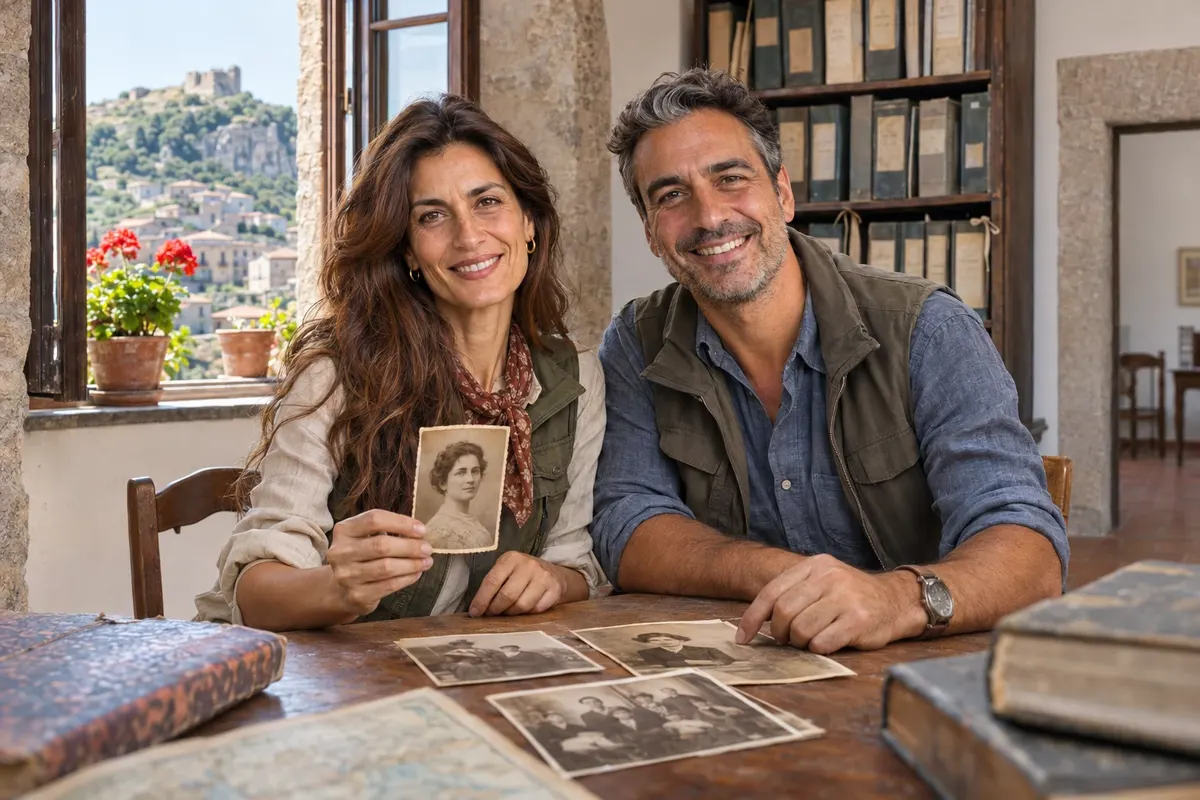
Before opening a map, spread a few copies of family photographs on the table. Ask each person to choose one and tell you who gave it to them. This can bring back memories that a general question about the family’s origins is unlikely to draw out. On the back of the copy, write down who told the story and on what date. If the versions differ, both are worth keeping.
Not everyone on the trip will want to spend the same amount of time with a handwritten register. Those who enjoy research can look through the records while the others go sightseeing, then meet up afterward. At the museum, a child can choose another child’s story, while an adult can follow the story of someone who worked in a familiar profession. Afterward, everyone has a story of their own to share.
If your plans include talking with local residents or relatives, arrange a time to meet and ask whether you may record the conversation. Let them choose which images to show you and how they would like to be identified. Offering them a copy of the photograph that prompted the visit is a simple way to keep the conversation going after the trip.
Choosing the Best Date to Consult a Collection
On a research trip, the most important date is usually the day you consult the records. Check the inventory to see whether the register exists for the period you need, whether it has been digitized, and how to access it. When you contact the archives, give the municipality, the type of record, and the likely year. This gives the staff the details they need to help you plan your visit.
Leave some time between your visit to the archives and your next appointment. Deciphering a handwritten page can take much of the morning, especially when several people share the same name. For your visit to the MEI, check the museum’s own schedule and choose a time when you can listen to at least one person’s account all the way through.
What to Keep After Your Visit
When you copy a name, note where you found it. For a civil record, write down the municipality, year, type of record, and entry or page number. For a story you heard at the museum, note the speaker’s name and what they talked about. When you put the album together, it will be easy to explain to someone else how you found the information.
A good caption can capture both what you see and what you still don’t know. “Street mentioned in the letter about the wedding” preserves a clue, while “the family home” would suggest the question is settled. Keep the map you used, a recent photo of the place, and a copy of the letter together. This small collection often sparks new questions the next time the family gathers around the album.
Frequently asked questions
Do I need to have Italian ancestry to visit the museum in Genoa?
Any traveler interested in migration can explore the exhibits at the MEI. The stories are about decisions that will feel familiar to anyone who has moved, started a job far from home, or waited to hear from someone.
Where can I research my Italian ancestors in Genoa or Naples?
Check the guide to civil records at the archives in the city connected to your family. Identify the municipality where the event took place and check which years are available. Some of the material can be viewed online through the Antenati portal.
Is it worth visiting both cities on the same trip?
If a letter mentions Naples and your family remembers someone setting sail from Genoa, the two places can help you explore different moments in your family’s history. If your clue points to just one city, you can spend more time there.
More in Culture and history


Beyond the guide


