

 Brazil
 Antarctica
 Argentina
 Bolivia
 Chile
 Colombia
 Ecuador
 Guyana
 French Guiana
 Falkland Islands (Malvinas)
 Paraguay
 Peru
 Suriname
 Uruguay
 Venezuela
 Germany
 Austria
 Belgium
 Croatia
 Denmark
 Slovakia
 Slovenia
 Spain
 Finland
 France
 Greece
 the Netherlands
 Hungary
 Ireland
 Iceland
 Luxembourg
 Norway
 Poland
 Portugal
 the United Kingdom
 the Czech Republic
 Sweden
 Switzerland
 Turkey
 Bermuda
 Canada
 the United States
 Greenland
 Mexico
 Saint Pierre and Miquelon
 the Dominican Republic
 Japan
 South Africa
 Egypt
 Australia
 Fiji
 New Zealand
 Papua New Guinea
Illustrative images. The pictures in this guide are illustrations based on the real place, not photographs, and may differ from it.

Immigration and heritage
Discover the history of Italian emigration
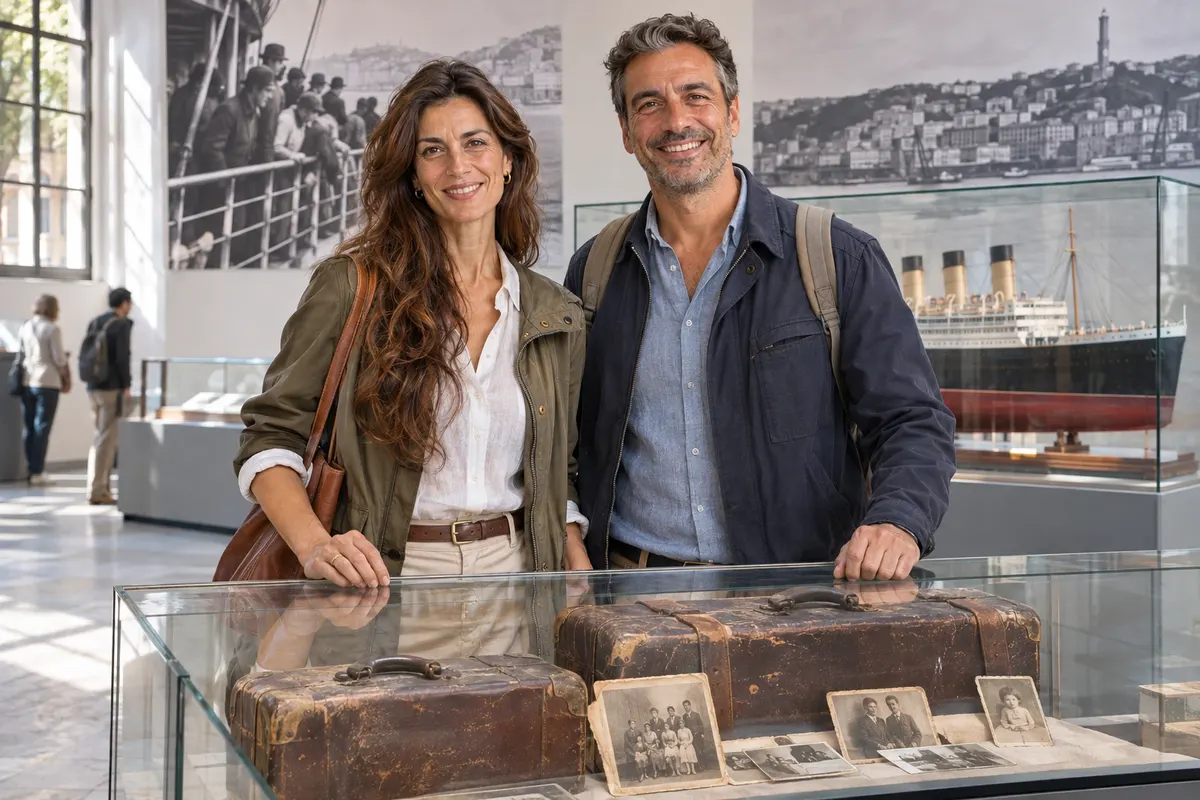
At the historic Commenda di Pré in Genoa, explore the choices made by people who left Italy.
How do you tell the story of a crossing when everyone boarded for a different reason? In Genoa, the Museo Nazionale dell’Emigrazione Italiana (MEI) tells it through the voices of those who left. One person remembers a first job far from home; another describes what it was like to hear a different language as a child. It’s worth choosing one person and giving them time to tell their own story.
The museum occupies the historic Commenda di Pré. Its multimedia exhibition traces migration from the unification of Italy to the present day. If you come to Genoa thinking about the ships that carried emigrants, the visit adds two chapters to the sea voyage. One takes place at home, before the decision to leave. The other begins back on land, on the far shore.
The place that welcomed travelers to Genoa
Take a look at the Commenda before you enter the exhibition. The medieval complex includes two churches, one above the other, and a building that once gave travelers shelter. Pilgrims, soldiers, and merchants were among those who stayed there. Long before emigrants began crossing the sea in large numbers, Genoa was already a meeting place for people who arrived by land and continued by sea.
Following a life from departure to arrival
The galleries at the MEI follow a timeline while exploring themes that span different eras. One way to explore the exhibition is to take a question with you from room to room. Who decided to make the journey? Some accounts bring out the difference between the adults’ decision and the experience of a child who had to learn new words for familiar things.
Pay attention to the people who stayed behind, too. The greeting in a letter tells you who it was written to, and a request for news may reveal who was still looking after the house. Sending a photograph home may have been a parent’s first chance to introduce a child to their grandparents. When you look at a keepsake like this, ask yourself what the relatives knew about one another before and after they received it.
Where to look for a family name in the museum
The MEI works with the Centro Internazionale Studi Emigrazione Italiana, known as CISEI. A multimedia station in the exhibition lets you search the center’s archive of emigrant records. If you’d like to search, bring the name as it appears in your family papers, along with any possible spelling variations and a rough idea of when the journey took place.
Found someone with the same name? Copy the details in the entry and note where the information came from. Two passengers may have the same last name but different destinations. A date or family relationship you already know about can help you assess the match later. If your family is trying to establish someone’s birthplace, the Genoa State Archives’ guide explains how to search historical civil records.
Choosing a focus for a family visit
Before your visit, explore the firsthand accounts on the MEI website. One person might be interested in work, another in childhood, sports, or language. Each of you can bring a question to the exhibition. With children, try suggesting something they can imagine doing themselves, like explaining a game to someone who has just arrived.
On your way out, compare two stories from different eras. How long did each person have to wait for news from home? If you’ve kept letters from relatives, you can reread them later and see how much time passed between replies.
Frequently asked questions
Which city is home to the National Museum of Italian Emigration?
The MEI is in Genoa, in the historic Commenda di Pré. When looking for visitor information, also try its Italian name, Museo Nazionale dell’Emigrazione Italiana.
Do I need to know my family history to enjoy the exhibition?
The personal accounts in the museum give you the context you need as you explore. You can follow someone’s story because it touches on something you’re curious about, such as learning a language or reuniting with relatives.
Where to go: Explore the history of Italian emigration
Pick a region or type what you are looking for to see the cities and who offers it in each.
-
Genoa LU
The National Museum of Italian Emigration traces the journeys of emigrants in the historic Commenda di Pré.
Beyond the guide


