Bryndzové pirohy
Dough dumplings boiled in water, filled with potato and bryndza, and served with fried bacon and sour cream. They are a traditional dish of eastern Slovakia, especially in the Šariš region around Prešov.
Region · The Tatras and Eastern Slovakia
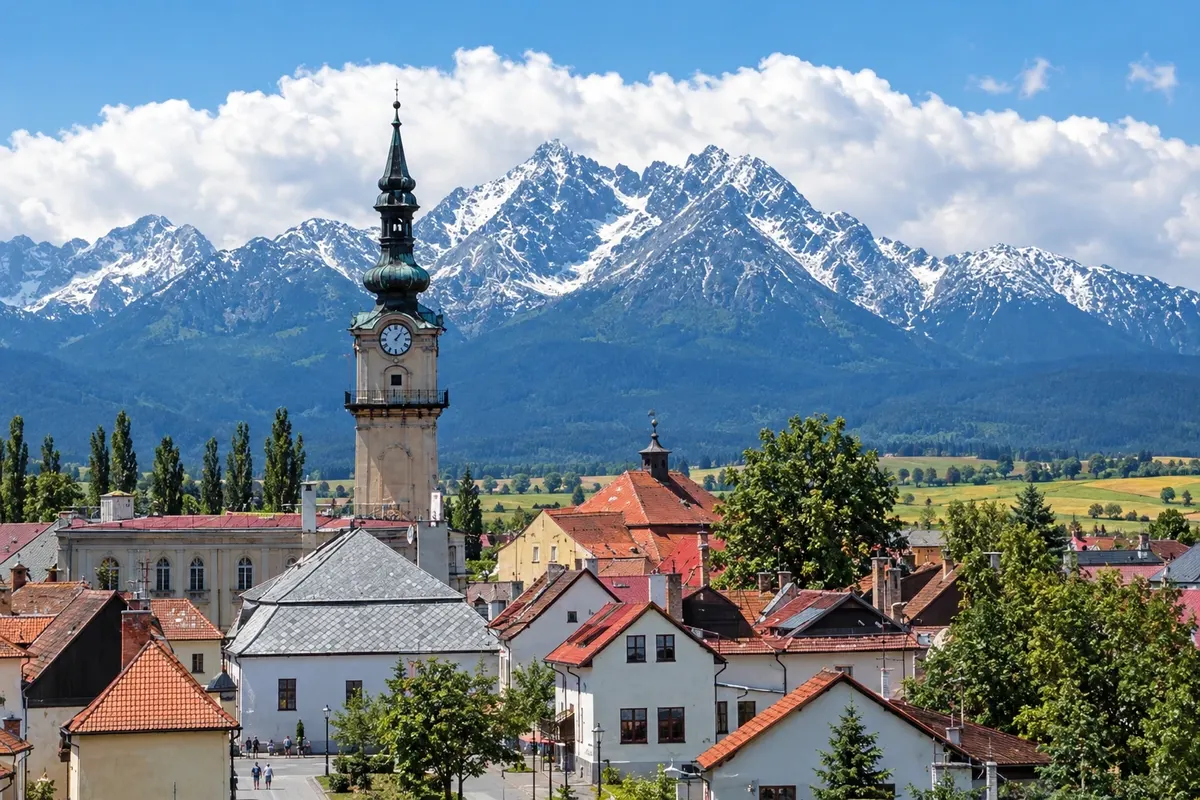
The High Tatras with lakes and peaks, Levoča, Spiš Castle and Kežmarok, the Dunajec River in Pieniny and Bardejov, with the wooden churches of the Carpathians.
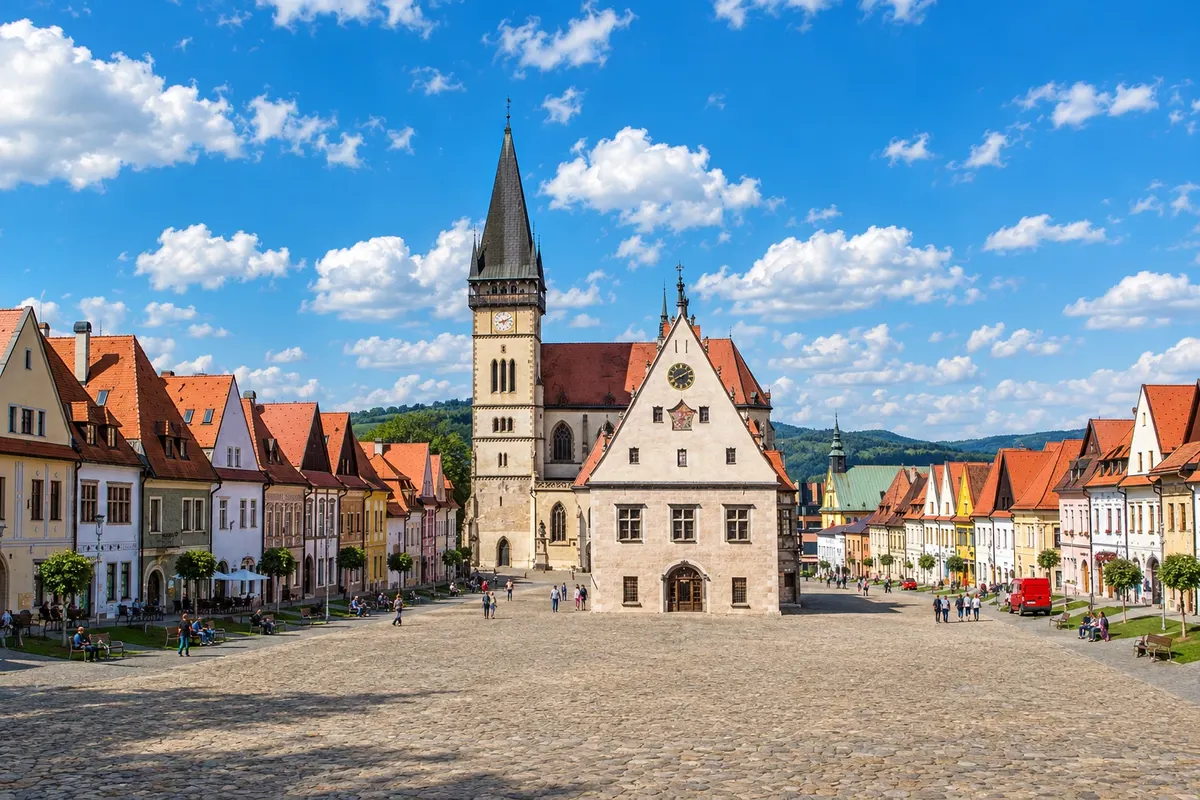
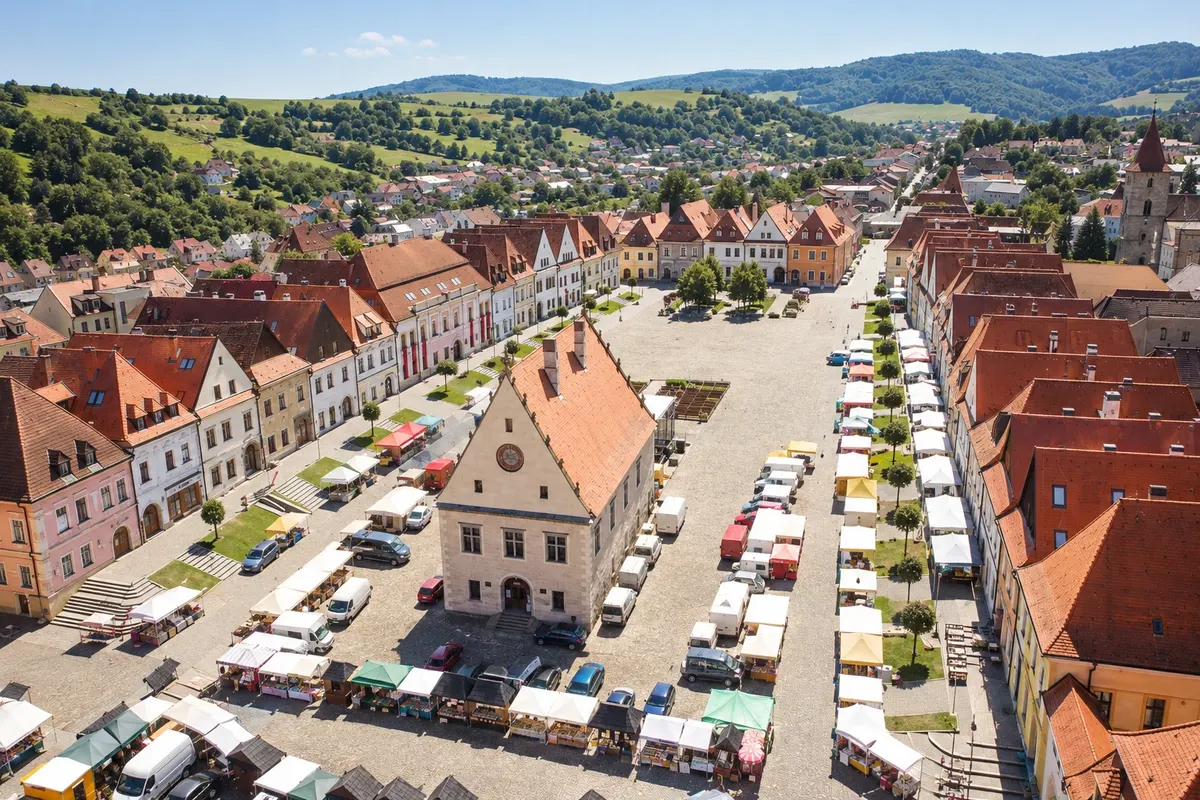
In the photo: Historic square of Bardejov.
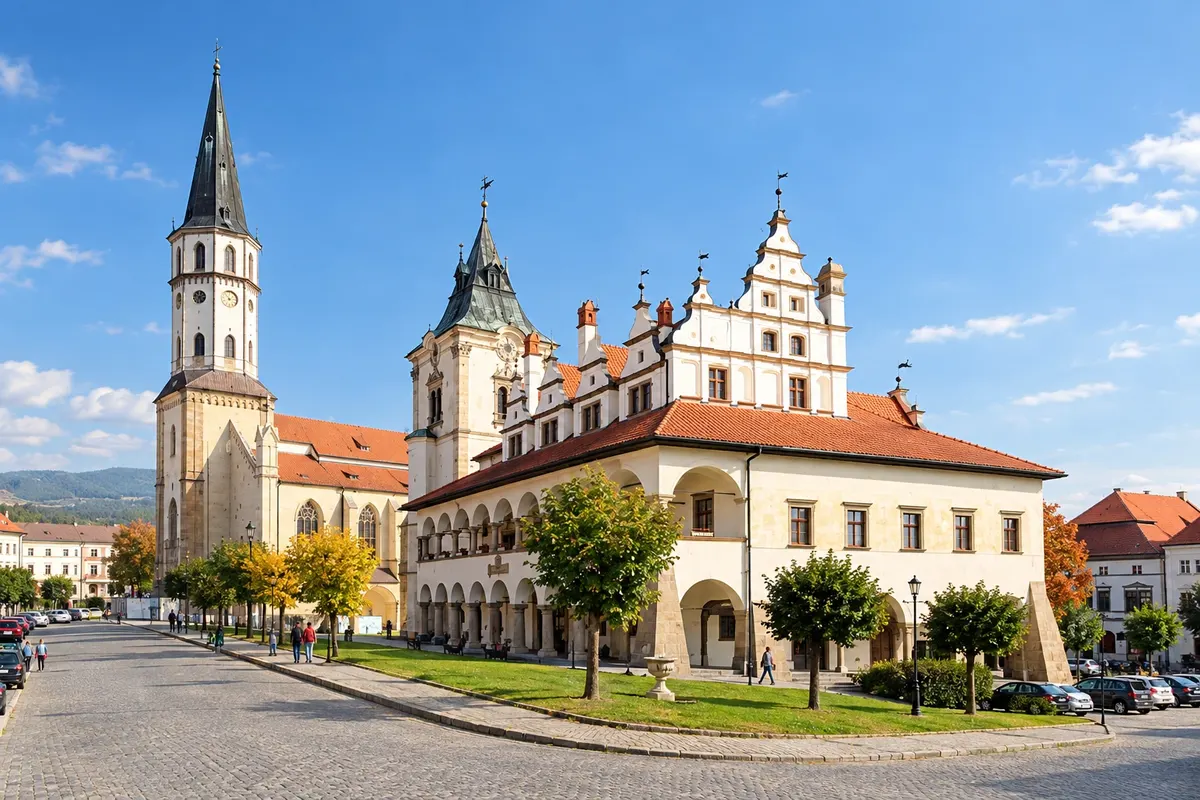
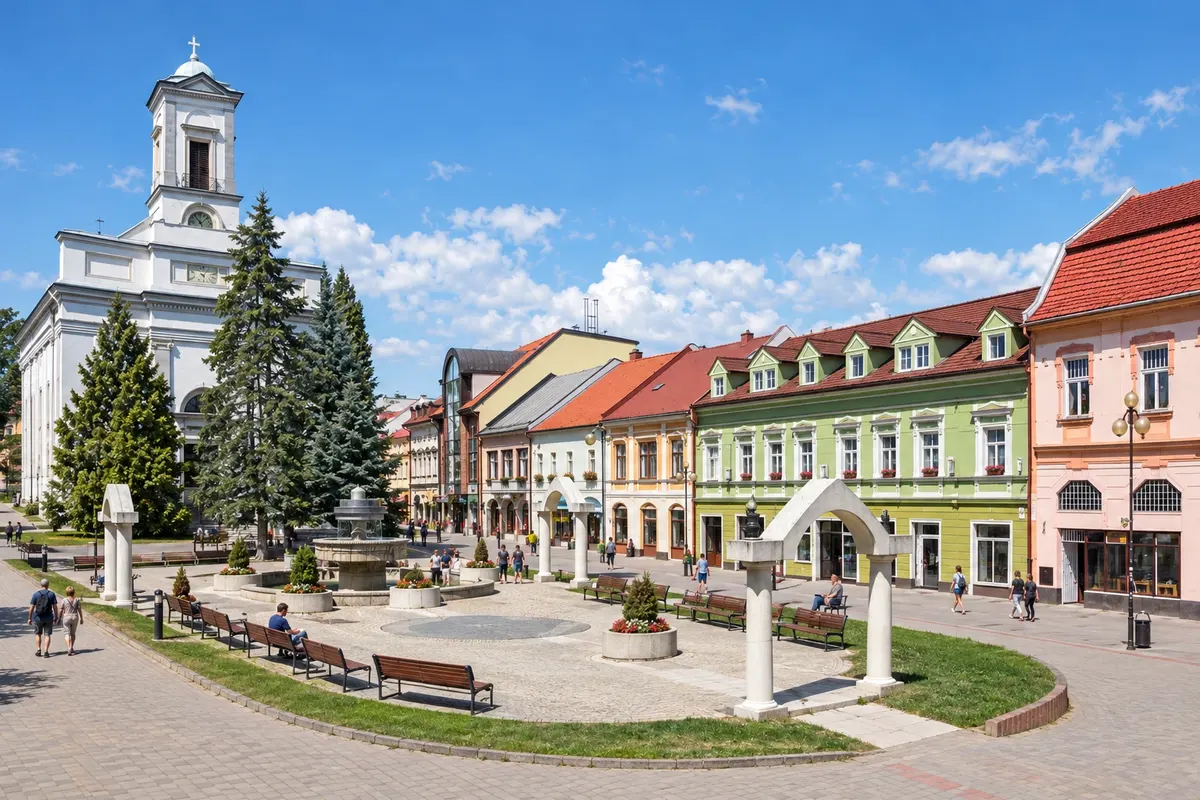
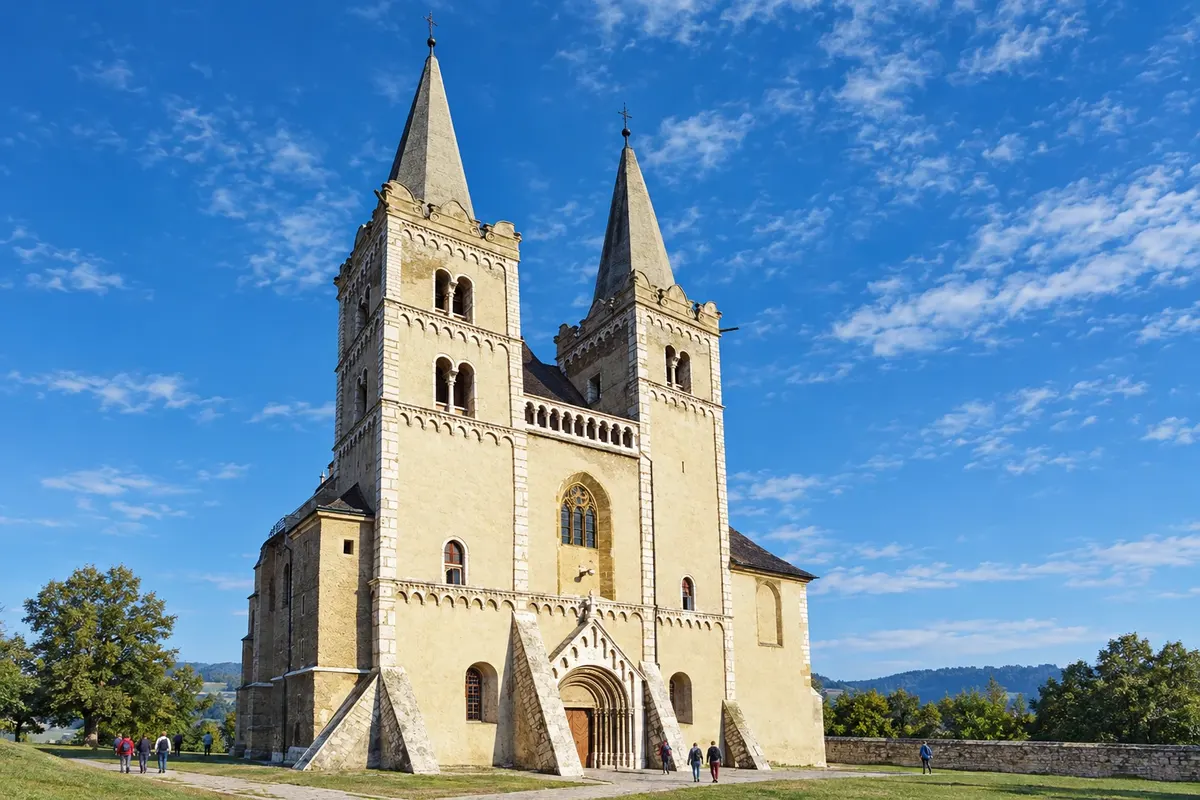
Illustrative images. The pictures in this guide are illustrations based on the real place, not photographs, and may differ from it.
The region
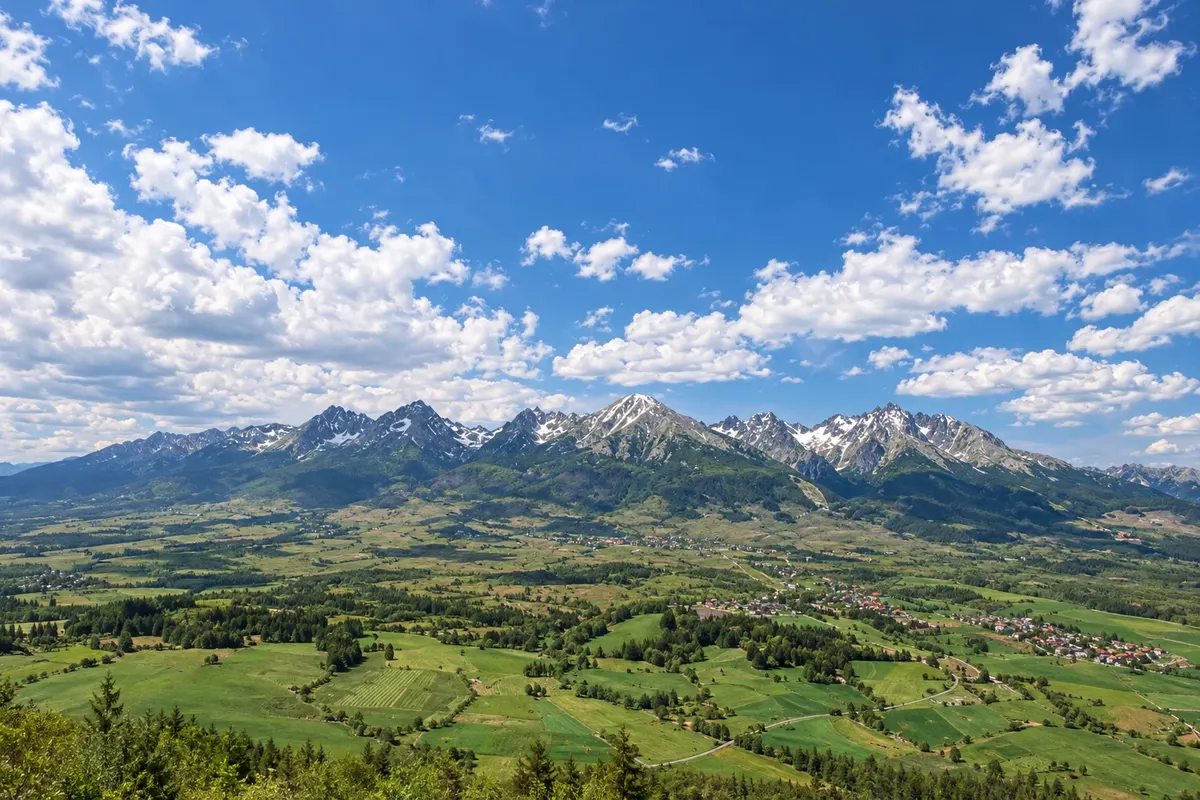
The Prešov region, in the northeast, borders Poland to the north and Ukraine to the east. Near the Polish border rise the High Tatras, the highest mountains of the Carpathians, with Gerlachovský štít at 2,655 m; to the east, hills covered in beech forests reach the borders. Between them lie the historic regions of Spiš and Šariš.
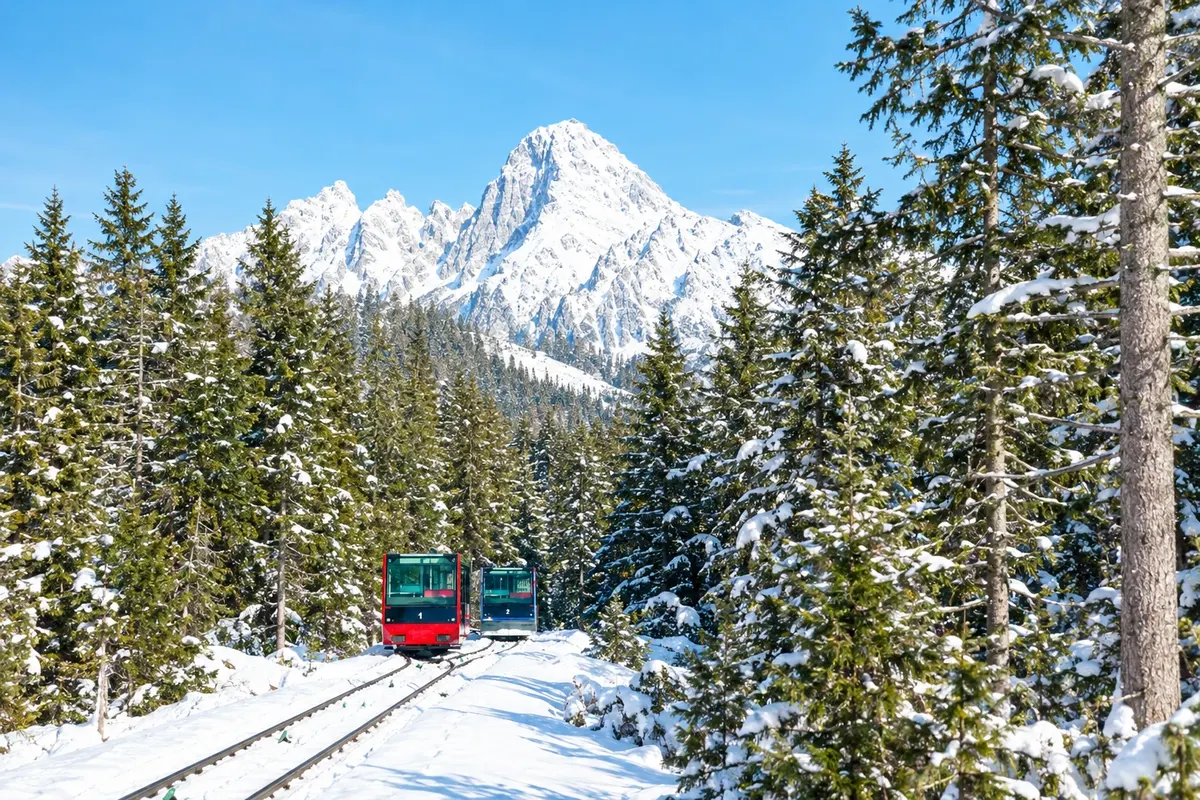
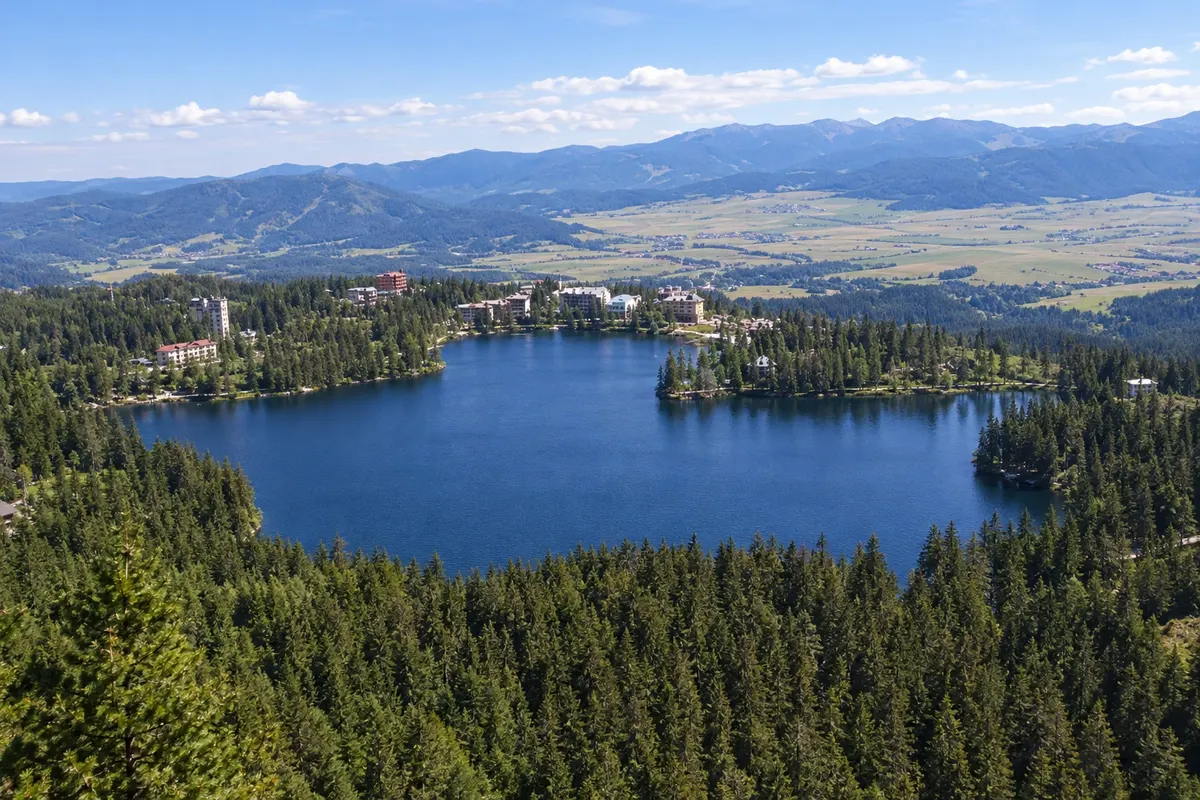
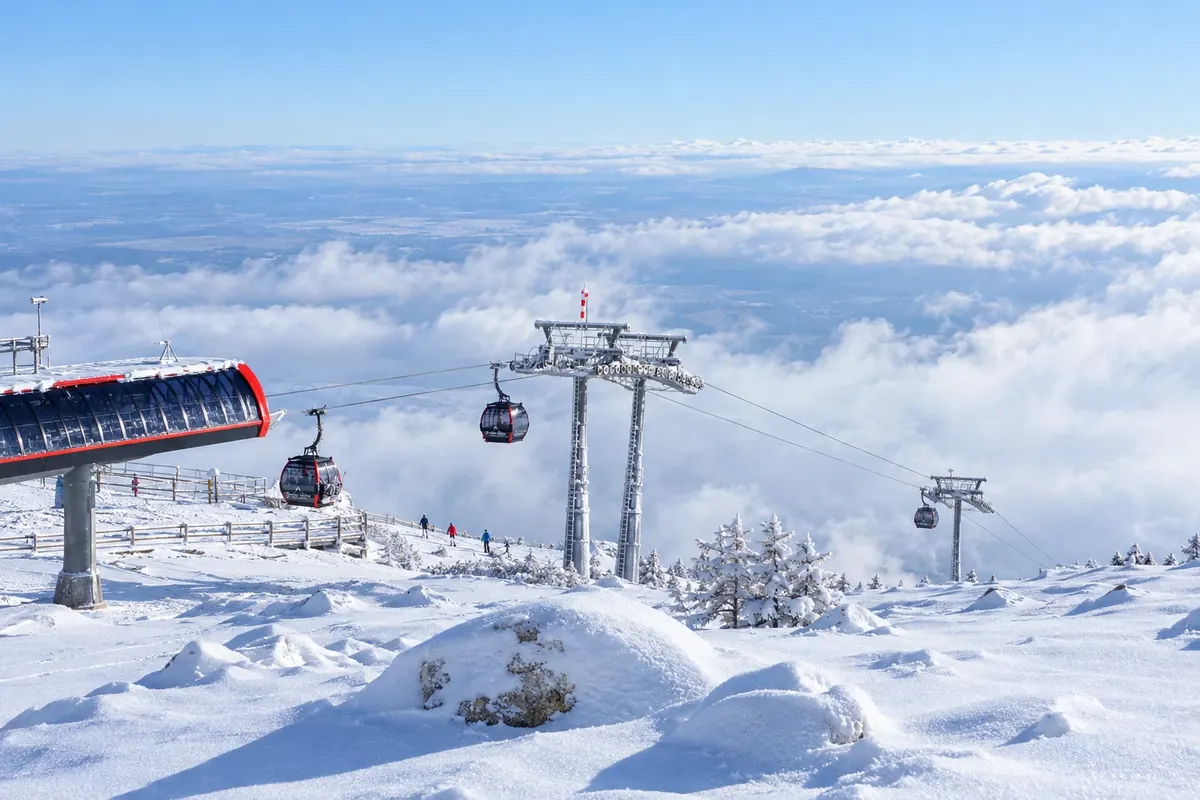
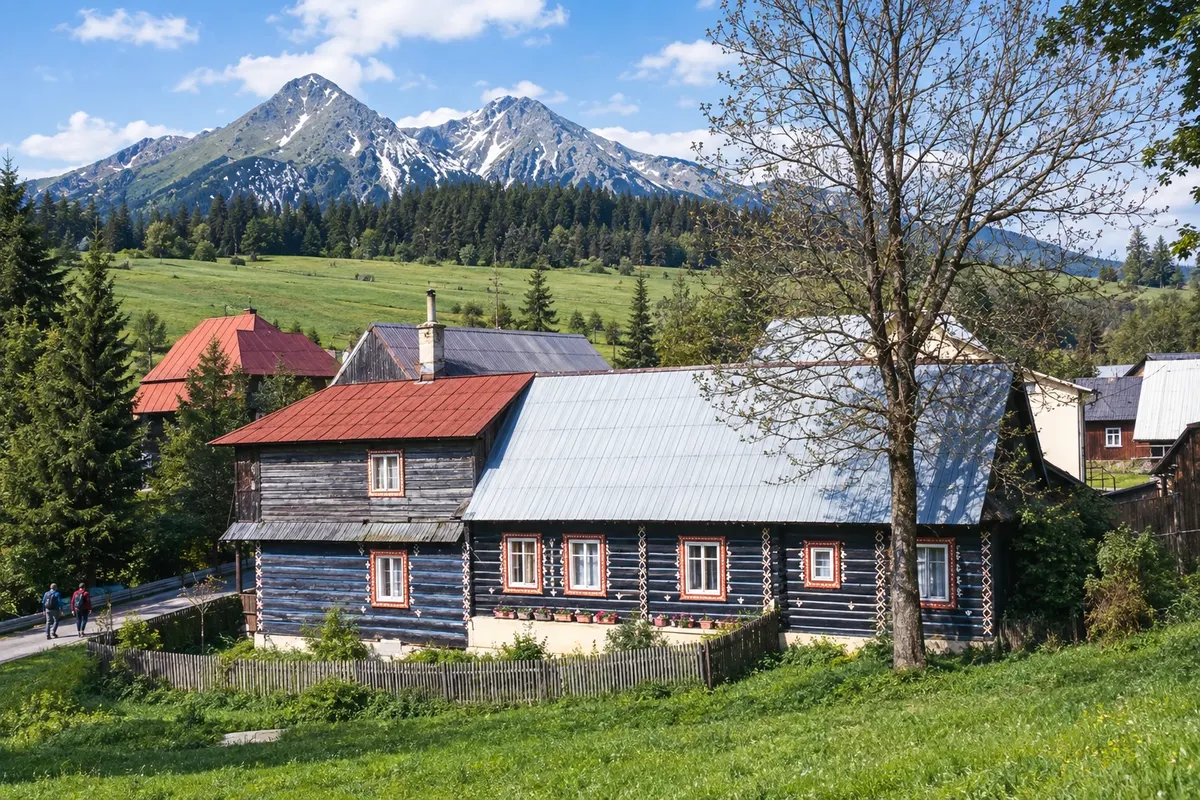
In the High Tatras, Štrbské Pleso, Starý Smokovec and Tatranská Lomnica lie along the road and the electric railway that run at the foot of the mountains, with trails to glacial lakes such as Popradské pleso, and cable cars like the one to Lomnický štít at 2,634 m. Ždiar, in the Belianske Tatras, preserves wooden houses painted in the goral tradition of the local highlanders. The Tatra National Park, created in 1949, is the country’s oldest.
Spiš holds towns founded by German settlers in the Middle Ages. Levoča houses in the Basilica of St. James the wooden Gothic altar by Master Paul, 18.6 m high. Spiš Castle, one of the largest castle ruins in Central Europe, and Spišská Kapitula, together with Levoča and Žehra, form a UNESCO World Heritage Site. Kežmarok has a castle and a wooden Lutheran church, also a World Heritage Site.
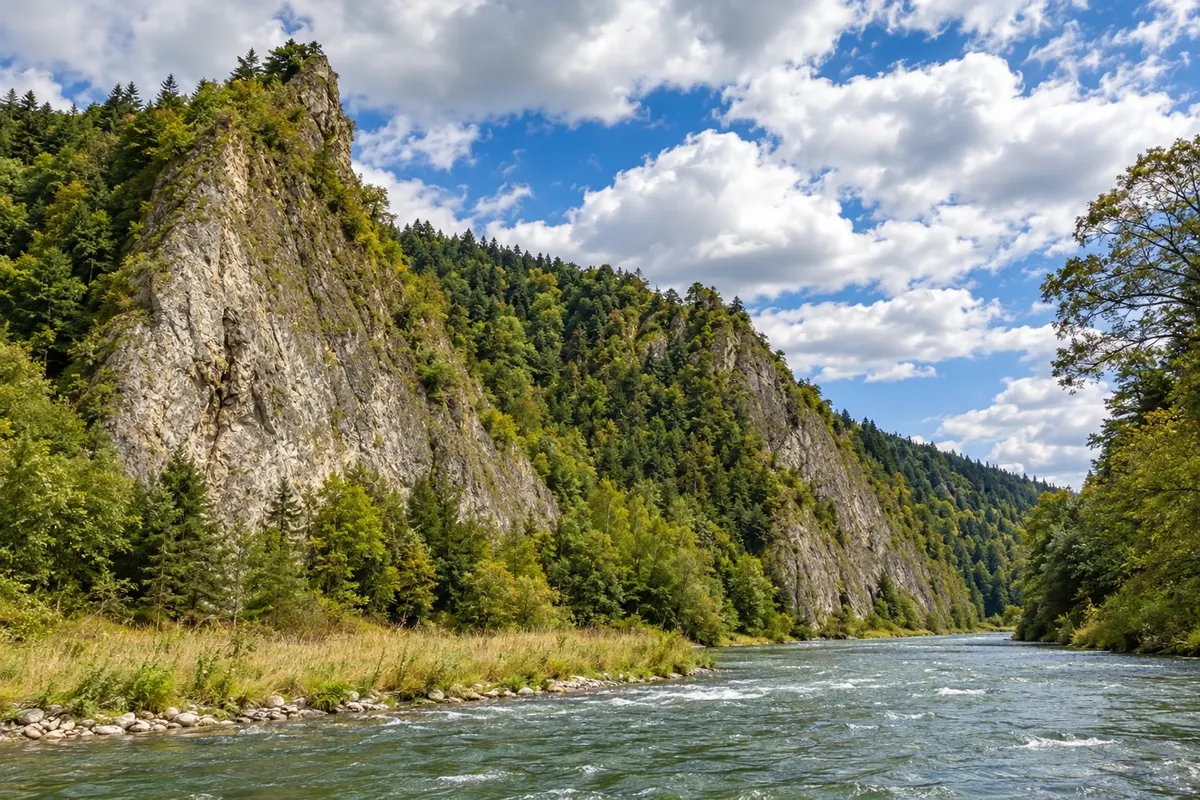
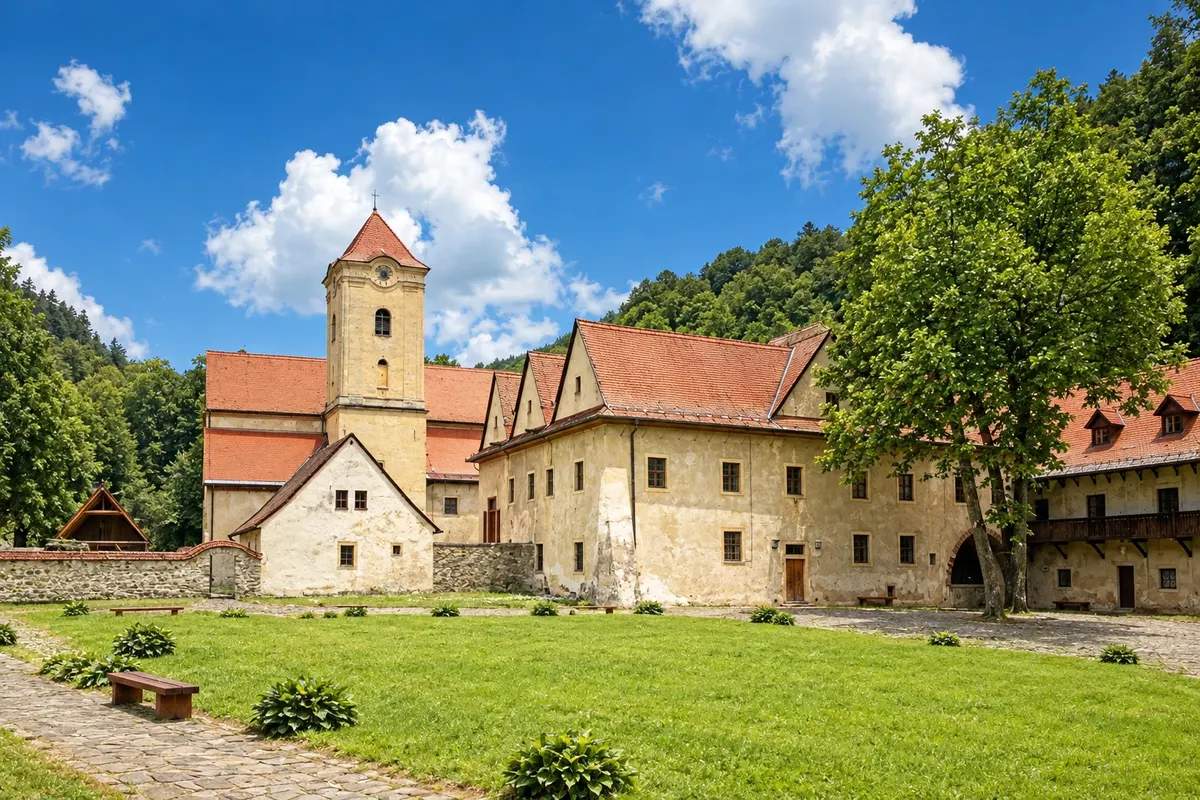
In Pieniny, on the border with Poland, raftmen guide wooden rafts through the Dunajec gorge from Červený Kláštor, where a medieval monastery stands. Bardejov, with its Gothic square and the Basilica of St. Giles, is a UNESCO site; nearby are Carpathian wooden churches, such as Hervartov, and the spa resort Bardejovské Kúpele.
At the far east, Poloniny National Park protects primeval beech forests recognized by UNESCO, and Medzilaborce houses a museum dedicated to Andy Warhol, the son of immigrants from the region. Prešov, the capital, has a long square with Renaissance and Baroque houses and the old salt works of Solivar.

Flavors of Slovakia
Destinations
Cities

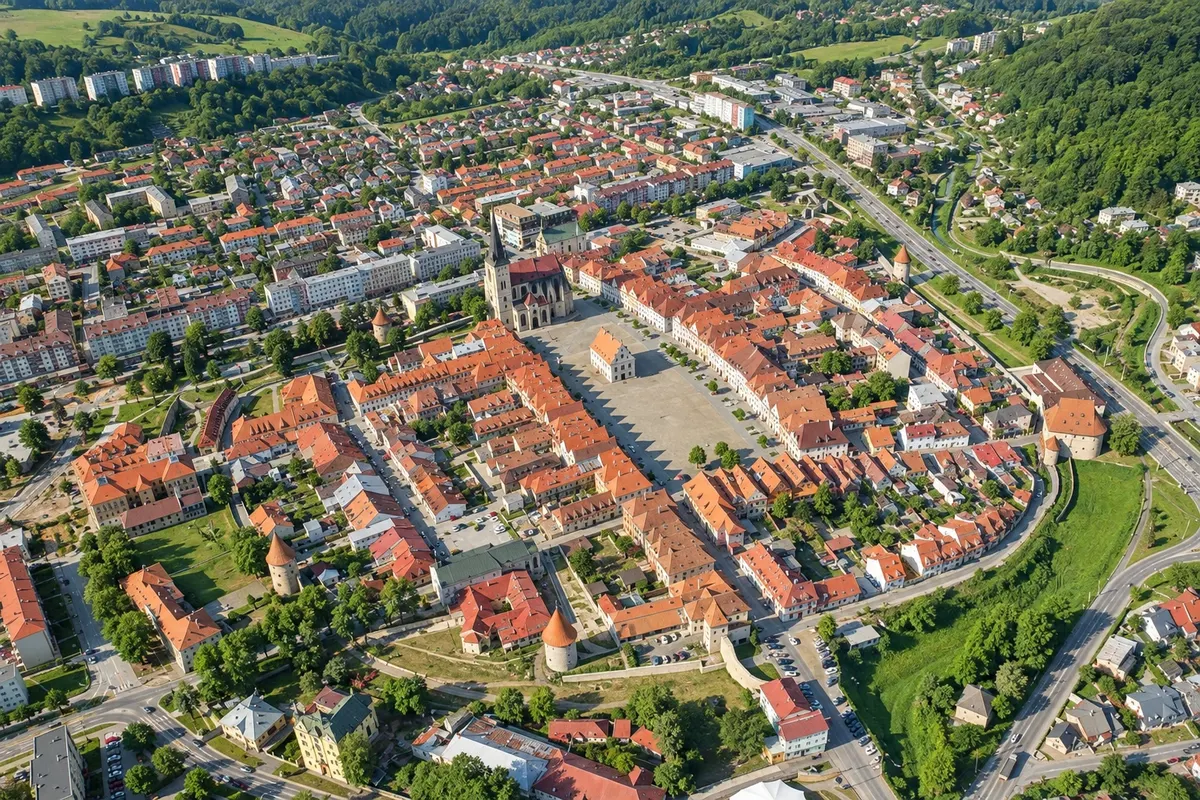
Town in the Šariš region, in northeastern Slovakia, with one of the best-preserved medieval centres in Central Europe. Radničné námestie features burgher houses with tall gables, the old town hall, now a museum, and the Gothic Basilica of St. Giles. The walls surround the centre, and the Jewish suburb lies just outside them. The spa of Bardejovské Kúpele is to the north, and the wooden church of Hervartov to the south.

Spa town in a wooded valley about 5 km north of Bardejov, of which it is part. The mineral springs have been used for treatments for centuries, and the spa is associated with Empress Elisabeth, Sissi, who visited it. It has parks, a colonnade and Slovakia’s oldest open-air museum, opened in 1965, with wooden houses and churches from the Šariš region.

Small village on the banks of the Dunajec River, on the border with Poland, within the Zamagurie region. The name, which means “red monastery,” comes from the 14th-century Carthusian monastery, now a museum. It is the embarkation point for the wooden rafts that descend the Dunajec gorge and the start of the trail that follows the river to Lesnica. A footbridge links the village to Sromowce Niżne in Poland.

Former free royal town of Spiš, at the foot of the High Tatras, with a historic centre of merchant houses, a Renaissance castle housing the town museum and the Wooden Articular Church, Lutheran, from 1717, a UNESCO World Heritage Site. In July, it hosts a European folk craft festival.

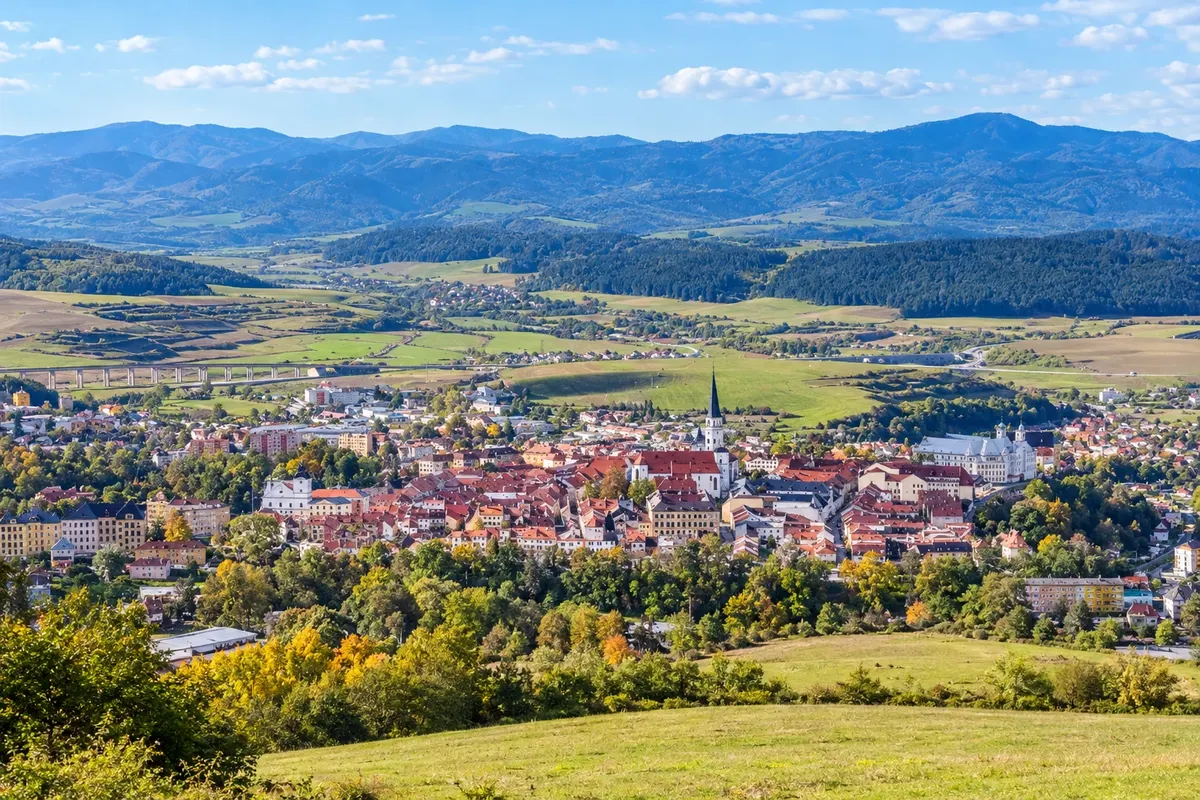
Former capital of Spiš, with a walled center and a rectangular square of Gothic and Renaissance houses. In its middle stand the Basilica of St. James, which houses the large carved altar by Master Paul, and the Old Town Hall with arcades. On the hill to the north, the Mariánska hora basilica hosts the country’s largest pilgrimage in July.

A town of about 50,000 inhabitants in the valley at the foot of the High Tatras, with a station on the country’s main line, an airport and the starting point of the mountain electric train. The center has the Gothic Church of St. Egidius, and 2 km away the historic district of Spišská Sobota with a medieval square and an altar by Master Paul of Levoča.

Small town at the foot of the Spiš Castle ruins, which occupy about 4 hectares on top of a hill, between the ecclesiastical district of Spišská Kapitula and the village of Žehra, with its medieval frescoed church. The three sites, together with Levoča, are a UNESCO World Heritage Site.

The oldest mountain resort in the High Tatras, founded at the end of the 18th century, in the middle of the string of villages at the foot of the massif. From there a funicular climbs to Hrebienok, from where short trails lead to the waterfalls of the Studený potok. It belongs to the town of Vysoké Tatry and is the main junction of the electric train.

The highest mountain resort in the Slovak Tatras, at about 1,350 meters, on the shore of the glacial lake of the same name. It has ski runs, ski-jump ramps and the start of trails to Popradské pleso and the western valleys of the range. It is one of the localities of the town of Vysoké Tatry.

Mountain station on the eastern side of the High Tatras, where cable cars ascend to the Skalnaté pleso lake and to the summit of Lomnický štít, at 2,634 meters. It has ski runs, the Tatra National Park Museum, and a botanical garden of Tatra plants. Administratively, it is part of Vysoké Tatry.

Village of the Górale, a mountain people, nestled between the Belianske Tatras and the Spišská Magura range, with wooden houses decorated with painted bands and the Ždiarsky dom museum. Nearby is the Belianska Cave, the only cave in the Tatras open to visitors. In winter there are ski slopes in the neighbouring valleys.
In the High Tatras, trails above mountain huts are open from June 16 to October 31, and visitor numbers peak during the July and August holidays; September is quieter. The Dunajec rafts operate from April to October, and Spiš Castle is generally open from April or May to October. In the snow season, usually December to March or April, Štrbské Pleso and Tatranská Lomnica operate as ski resorts.
Poprad is the gateway: fast trains between Bratislava and Košice stop there, and the D1 motorway passes the town, about 330 km from the capital and 120 km from Košice. From Poprad, the Tatra electric railway climbs to Starý Smokovec, Štrbské Pleso and Tatranská Lomnica. Poprad–Tatry Airport (TAT) has few flights; Košice (KSC) and Kraków (KRK) airports in Poland are alternatives. For Bardejov and Pieniny, access is by road, by car or bus.
Your questions
Three days allow for a hike to a lake, such as Popradské pleso or Skalnaté pleso, a cable car ascent to Lomnický štít and a walk around Štrbské Pleso. With more time, you can add Spiš, with Levoča and Spiš Castle, or the Dunajec descent in Pieniny.
By cable cars from Tatranská Lomnica, changing at the Skalnaté pleso lake. The last section carries few people per cabin, and tickets with set times tend to sell out in summer: buy in advance. In strong wind or fog the ascent can be suspended.
Trails above the mountain huts are closed from November 1 to June 15 to protect wildlife and vegetation. During that period, you may only hike up to the huts and to some permitted viewpoints. From June 16 to October 31 the trail network is fully open, except for any closed sections; check before you go.
It is the main altar of the Basilica of St. James, carved from limewood by the workshop of Master Paul of Levoča between 1508 and 1517. Due to its height, it is considered the largest wooden Gothic altar in the world. The church is visited at set times; check before you go.
It is a trip on wooden rafts piloted by raftmen in traditional dress, through the Pieniny gorge, starting at Červený Kláštor on the Polish border. It typically lasts about one and a half to two hours, and the return can be made on foot or by bicycle along the riverside trail. It generally operates from April to October.